Kathmandu
Saturday, July 18, 2026





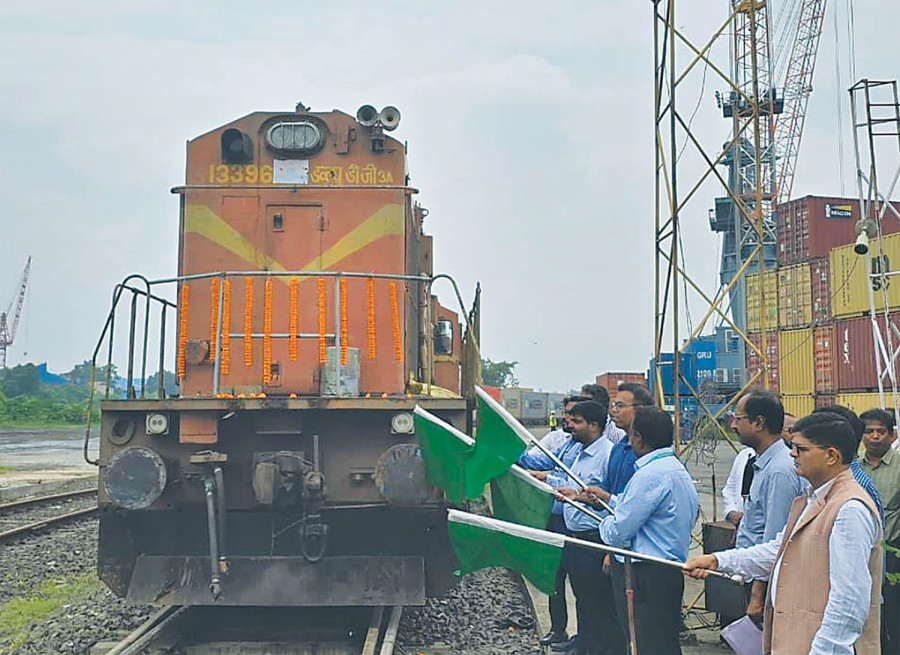
KOLKATA:The first direct rail cargo service from Kolkata Port to the Biratnagar Customs Yard in eastern Nepal officially commenced operations on Friday, establishing a new transit corridor for Nepal-India bilateral trade.
The inaugural freight train was jointly flagged off by Nepal’s Consul General in Kolkata, Jhakka Prasad Acharya, alongside officials from Kolkata Customs, the Syama Prasad Mookerjee Port, and the Container Corporation of India Limited (CONCOR). Prior to this operational launch, Birgunj was the only customs point in Nepal authorized and equipped to receive third-country rail cargo from Indian ports.
This operational shift follows recent legal amendments to the framework of the Nepal-India Transit Treaty. India’s Central Board of Indirect Taxes and Customs (CBIC) issued Notification No. 73/2025-Customs on November 4, 2025, amending the Electronic Cargo Tracking System (ECTS) Regulations of 2019 to designate Biratnagar as a rail transhipment point. Subsequently, the Kolkata Customs Commissionerate issued Public Notice No. 12/2026 on February 26, 2026, to outline the formal procedural guidelines for the route.
The maiden voyage was operated by a dedicated CONCOR train transporting 40 forty-foot containers managed by Maersk Line. The cargo consisted of bulk canola grain imported from a third country for Swastik Oil Industries in Nepal.
For security and regulatory compliance, each container was fitted with an ECTS tracking device. The transit route runs through the Indian customs point at Jogbani before directly entering the Nepal Customs Yard at the Biratnagar Integrated Check Post (ICP). Future shipments on this route are expected to carry up to 45 containers per trip.
According to the Consulate General of Nepal, the direct rail corridor is projected to lower overall logistics costs and improve transit efficiency for Nepali industries.
The rail journey between Kolkata and Biratnagar takes approximately 24 hours, providing an alternative to traditional road transport.
By utilizing rail instead of truck freight, importers are expected to reduce secondary transit expenses, including port demurrage charges and container detention fees caused by road delays.