Kathmandu
Thursday, July 23, 2026






KATHMANDU: The government has presented a budget of Rs. 2.124 trillion for the upcoming fiscal year.
Presenting the budget in a joint session of the Federal Parliament, Finance Minister Dr. Swarnim Wagle announced that Rs. 1.270 trillion, or 59.8 percent of the total allocation, has been set aside for current expenditure.
Additionally, Rs. 431.10 billion has been allocated for capital expenditure, while Rs. 422.64 billion has been designated for financial management.
In the infrastructure sector, the budget places a major focus on national connectivity.
The East-West Highway received the largest share at Rs. 37.46 billion, followed by the Tarai-Madhesh Fast Track at Rs. 17.64 billion.
Other significant allocations include Rs. 6.55 billion for the Prithvi Highway, Rs. 6.25 billion for the Koshi Corridor, Rs. 4.65 billion for the Postal Highway, Rs. 2.16 billion for the Pushpalal Mid-Hill Highway, Rs. 1.46 billion for the Maden Bhandari Highway, and Rs. 1.00 billion for the Karnali Highway.
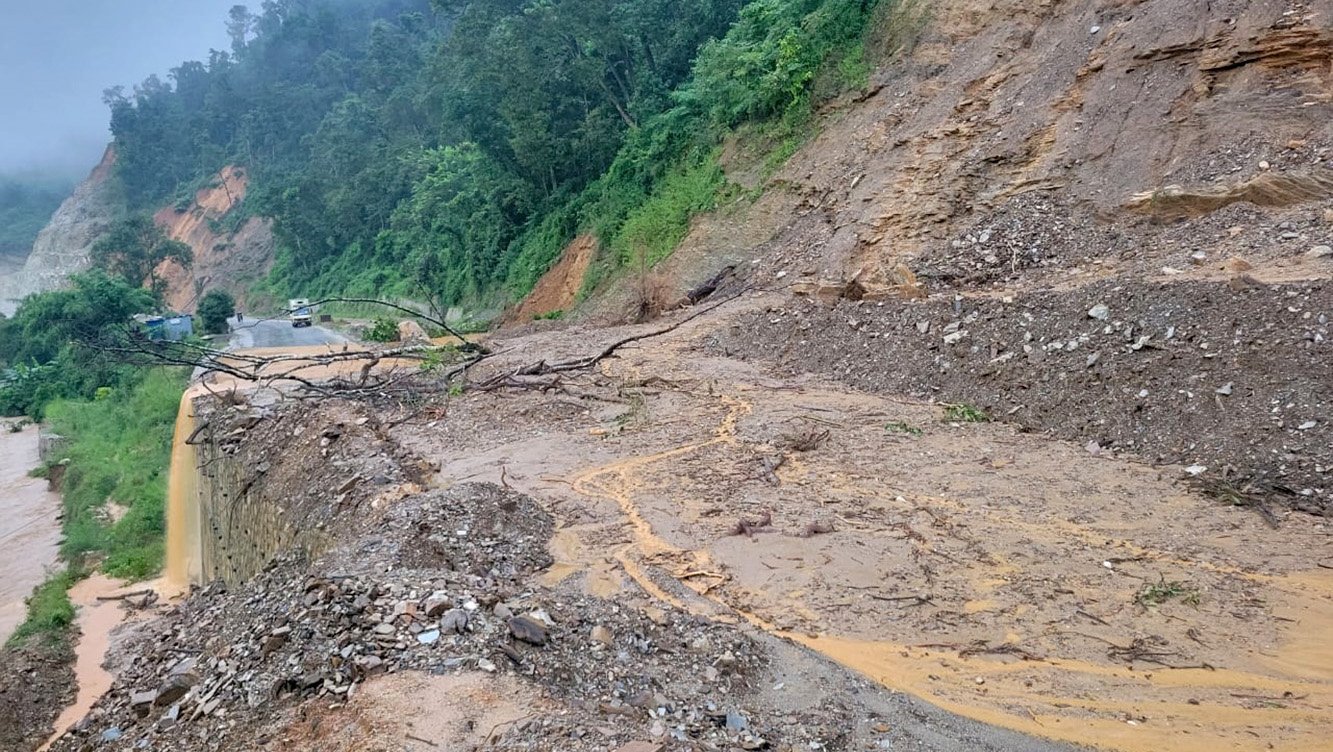
Additionally, Rs. 28.52 billion has been set aside for a nationwide road maintenance campaign, Rs. 9.87 billion for national highways and strategic local bridges, Rs. 5.14 billion for suspension bridges, Rs. 3.17 billion for landslide clearance on highways, and Rs. 1.35 billion for upgrading the Galchhi-Syaphrubesi-Rasuwagadhi road section.
For urban development and safety, Rs. 4.19 billion is dedicated to greening major cities, Rs. 2.46 billion for road safety, and Rs. 1.83 billion for land development in identified cities, bringing the total for road and urban infrastructure development to Rs. 286.48 billion.
For water resources, energy, and irrigation, the government has earmarked Rs. 85.54 billion for energy generation, transmission, and distribution lines, alongside Rs. 70.00 billion specifically for completing transmission lines and substations.
Total spending on water supply and sanitation stands at Rs. 37.17 billion, which includes Rs. 7.26 billion for expanding the water pipe network in the Kathmandu Valley, Rs. 3.46 billion for a wastewater treatment plant in Kathmandu, Rs. 2.50 billion to finish incomplete water projects in Tarai-Madhesh, and Rs. 2.34 billion for water and sewerage management in major cities.
Major irrigation and diversion projects also received substantial funding, including Rs. 5.63 billion for the Rajapur Irrigation and Bheri Babai Diversion, Rs. 5.13 billion for the Mahakali Irrigation and Rani-Jamara-Kulariya project, Rs. 2.98 billion for the Sunkoshi-Marin Diversion, Rs. 2.55 billion for the Sikta Irrigation Project, Rs. 1.21 billion for the Greater Dang Valley and Praganna-Badkapath projects, Rs. 1.83 billion for underground irrigation in Tarai-Madhesh, Rs. 800 million for lift irrigation systems, Rs. 530 million for expanding irrigation in Madhesh, and Rs. 440 million for system maintenance.
Social sectors like education, health, and social security received some of the largest overall chunks of the budget.
The education sector has been allocated Rs. 218.30 billion, which includes Rs. 8.60 billion for student scholarships and Rs. 1.00 billion for infrastructure mapping of community schools.
The health sector received Rs. 101.95 billion, with Rs. 15.00 billion dedicated to the health insurance program, Rs. 13.15 billion for health social security programs for indigent citizens, Rs. 5.90 billion for basic hospital operations and infrastructure, and Rs. 320 million as a capital grant for equipment at the BP Koirala Memorial Cancer Hospital.
Social security spending is set at Rs. 120.00 billion, with specific allocations of Rs. 3.00 billion for nutrition assistance for Dalit children, Rs. 2.27 billion for women, children, and gender or sexual minorities, and Rs. 310 million for juvenile rehabilitation centers. Information, communication, and sports were allocated Rs. 5.93 billion, Rs. 330 million (specifically for public welfare advertisements), and Rs. 4.03 billion, respectively.
Finally, the budget outlines funding for agriculture, tourism, industry, and national defense.
The agricultural and livestock development sector will receive Rs. 46.92 billion, driven by Rs. 32.46 billion for chemical fertilizer procurement, Rs. 2.19 billion for agricultural insurance premium subsidies, Rs. 2.07 billion for the National Agriculture Modernization Program, Rs. 360 million for organic and green manure promotion, and Rs. 240 million for animal disease control. Forestry, environment, and climate sectors are allocated Rs. 12.31 billion, including Rs. 1.00 billion for water conservation in the Chure and Tarai-Madhesh regions.
Tourism and culture received Rs. 7.34 billion, with an additional Rs. 830 million for the Greater Lumbini Development Program.
Civil aviation is funded at Rs. 2.93 billion, including Rs. 1.53 billion to upgrade Tribhuvan International Airport.
Industry, commerce, and supplies received Rs. 8.31 billion, which covers Rs. 1.18 billion for production-based incentives, Rs. 650 million for industrial infrastructure, Rs. 500 million for industrial area access, and Rs. 220 million for converting boilers to electric or bio-briquette systems.
Lastly, Rs. 4.00 billion is designated for science, technology, and innovation, Rs. 3.63 billion for labor and employment, Rs. 500 million for the Nepal Enterprises Facility, and Rs. 2.00 billion to upgrade housing for Nepal Army personnel.