Kathmandu
Monday, July 27, 2026





A defunct telecom company owed Rs 30 billion to the government, its assets had legally passed into state hands, and yet a private bank quietly auctioned everything off to Nepal's largest private mobile operator for Rs 4.60 billion. The Central Investigation Bureau is now untangling one of the most brazen acts of corporate and institutional collusion in Nepal's history

KATHMANDU: Smart Telecom Private Limited, which operated under the brand name SmartCell, was Nepal’s third largest mobile service provider before its downfall. Founded in 2008, the company launched services in April 2013 after receiving a license from the Nepal Telecommunications Authority (NTA).
By April 2023, after years of defaulting on renewal fees, royalties, frequency charges, and other state dues totaling nearly Rs 30 billion, the company’s license was automatically revoked.
Under Nepal’s Telecommunications Act, its entire physical infrastructure, towers, network equipment, and systems were declared state property.
What followed was not an orderly government takeover but a secretive bank-orchestrated auction that transferred those assets to Ncell, Nepal’s most powerful private telecom company — now operated by the very family that had co-founded and owned Smart Telecom.
What exactly is the Smart Telecom scandal and why does it matter?
The Smart Telecom scandal involves the illegal auction and transfer of assets belonging to a telecom company whose license had already been revoked by the Nepal Telecommunications Authority, making those assets the legal property of the government. Nepal Investment Mega Bank, which had extended loans to Smart Telecom, unilaterally proceeded to auction those state-owned assets in September 2025 without the NTA’s knowledge or consent, and sold them to Ncell Axiata Private Limited for Rs 4.60 billion in October 2025.
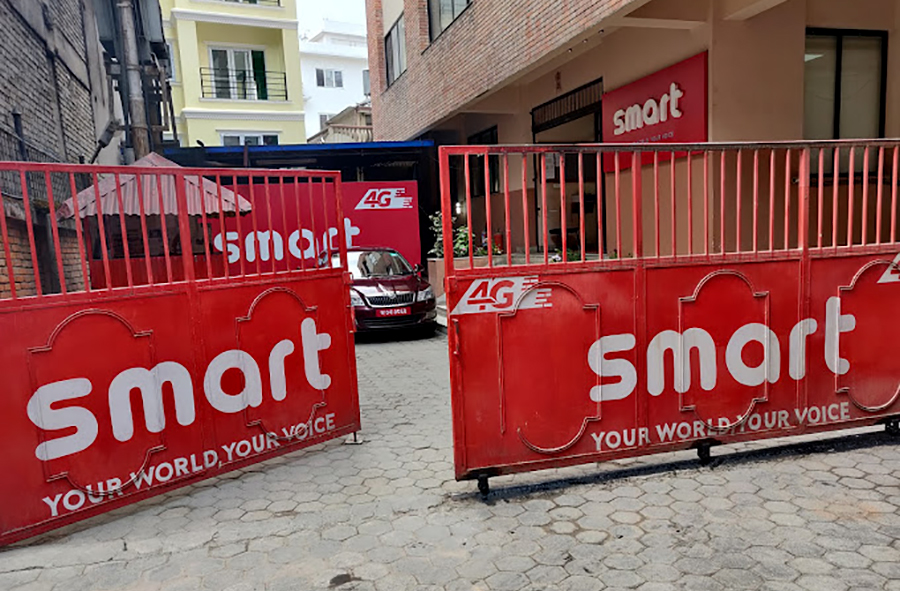
The government received nothing from this transaction despite being owed nearly Rs 30 billion in dues by Smart Telecom. What makes the case extraordinarily alarming is the overlap of ownership between the company that sold the assets and the company that bought them. The Acharya family, which co-founded and invested in Smart Telecom, now controls Ncell.
Investigators believe this was not a coincidence but a carefully orchestrated plan to move assets from one pocket to another while evading massive government liability. The Central Investigation Bureau is treating it as organized crime involving fraud, criminal breach of trust, and a coordinated conspiracy across telecom, banking, and regulatory institutions.
Who is behind Ncell and what is the Acharya family’s connection to Smart Telecom?
Ncell, Nepal’s largest private mobile operator, is now controlled by Satish Lal Acharya, a Singapore citizen of Nepali origin, who serves as its Chairman. His brother, Sachin Lal Acharya, sits on Ncell’s Board of Directors. His wife, Bhawana Singh Shrestha, is a Nepali investor who holds a 20 percent stake in Ncell. These three are the principal Nepali figures behind Ncell’s current ownership.
What makes their presence explosive in this investigation is that this same family was also embedded in Smart Telecom from its very beginning. Sachin Lal Acharya was the founding Chairman of Smart Telecom, and Satish Lal Acharya held shares in that company through his Singapore-registered firm, Lal Sahu Distributors Private Limited, which controlled 70 percent of Smart Telecom.

Ncell Corporate Tower at Lainchaur
Bhawana Singh Shrestha was also associated with Smart Telecom’s ownership structure. The CIB has pointed to an unmistakable conflict of interest: the Acharya family, which presided over the collapse of Smart Telecom and its failure to pay billions in government dues, now controls the company that purchased Smart Telecom’s assets at a fraction of the debt owed to the state.
How did Smart Telecom’s license get canceled, and what should have happened to its assets?
Smart Telecom received its initial 10-year license from the NTA when it launched services in April 2013. As the license approached its expiry in April 2023, the company was unable to pay the renewal fee, which had grown to over Rs 20 billion alongside nearly Rs 7 billion in accumulated penalties and arrears.
Despite receiving multiple extensions and installment facilities from successive governments, the company failed to deposit even the first agreed installment. The NTA had actually attempted to cancel the license as far back as July 2019, but Smart Telecom obtained a court stay order that temporarily blocked the move.
By April 2023, the stay had lapsed and the company had made no credible progress. The license was automatically revoked on April 16, 2023. Under the Telecommunications Act, 1997, and the Asset Management Regulations for Telecommunications Service Providers Whose License Is Not Valid, 2022, all of Smart Telecom’s physical infrastructure and equipment legally became state property at the moment of cancellation.
The NTA issued a formal public notice on May 22, 2023, declaring all Smart Telecom assets under its control. From that point, the authority was required to form a valuation committee, assess the assets, and proceed with an orderly government-managed auction to recover the state’s dues first.
What actually happened instead — how did the bank get involved?
Rather than allowing the NTA to manage the process, Nepal Investment Mega Bank took matters into its own hands. NIMB and Prime Commercial Bank had together extended over Rs 5.20 billion in loan facilities to Smart Telecom beginning around 2017, covering overdrafts, letters of credit, and long and short-term loans.
When Smart Telecom stopped repaying, the loan became non-performing. In September 2025, more than two years after the NTA had already declared Smart Telecom’s assets as government property, NIMB published a 35-day public notice announcing it would auction Smart Telecom’s pledged collateral to recover its outstanding dues. On September 5, 2025, Sarvesh Joshi, the then-Chairman of Smart Telecom, wrote a letter to NIMB formally authorizing the auction.
The critical and damning detail is this: Joshi signed that authorization at a time when Smart Telecom had no legal ownership over those assets. The NTA had declared them state property more than two years earlier.
Yet the bank accepted that letter, proceeded with the auction notice, and moved forward without informing or seeking permission from the regulatory authority. The entire process bypassed the government entirely.
What happened at the auction itself and why do investigators call it a “setting”?
The auction was held on October 6, 2025. Three companies submitted bids. Transtech Company, operated by Palina Shrestha, submitted a bid of Rs 450 million. Professional Business Network submitted a bid of Rs 420 million. Ncell Axiata Private Limited placed a bid of Rs 4.60 billion, which was accepted.
The CIB is not merely questioning the outcome of the auction. It has specifically alleged that the two lower bidders were dummy companies, set up purely to give the appearance of competition in a process that had already been decided in advance.
Investigators point to the sheer implausibility of the numbers: if the assets were worth Rs 4.60 billion, why did the other two bidders stop at figures barely one-tenth of that amount?
Conversely, if the physical assets were worth only around Rs 400 million as government valuation committees estimated, why did Ncell bid eleven times more than the market value?
Investigators believe the answer lies in Ncell’s motive to close out the financial obligations of the Acharya-connected Smart Telecom, protect the bank from further scrutiny over how the loan was extended in the first place, and secure physical telecom infrastructure cheaply relative to what that network would cost to rebuild from scratch.
What financial irregularities occurred during the bidding process itself?
One of the most striking pieces of evidence uncovered during the CIB investigation relates to money that appeared and disappeared from a bank account within three hours on the day of the auction.
A person named Khumnath Adhikari opened a new account the day before the auction. On October 5, 2025, Narendra Ulak transferred Rs 42.5 million into that account. On the morning of October 6, 2025, the day of the auction, the money was visible in the account at around 11:08 in the morning. By 2:05 that same afternoon, Rs 2.5 million of that amount had already been returned.
Shortly after, the bank formally notified Ncell and Smart Telecom that Ncell’s bid of Rs 4.60 billion had been accepted. Investigators believe this sequence was deliberately designed to manufacture the appearance of genuine competitive bidding.
Khumnath Adhikari’s participation in the auction appears to have been theatrical, intended to make the process look contested when, according to the CIB, the outcome had already been arranged. This three-hour money maneuver has become one of the most-cited examples of the coordination between the bank and the bidding participants.
What was the NTA’s role — and was it negligent or complicit?
The NTA’s conduct during this period has drawn intense scrutiny and raised questions of deliberate complicity. After the license was revoked and assets were declared state property, the Ministry of Communication and Information Technology approved the formation of a five-member asset valuation committee headed by Rajesh Parajuli on May 30, 2025.
The purpose of this committee was to determine the fair market value of Smart Telecom’s assets before any auction could proceed. However, documents obtained by investigators reveal that the NTA waited four months after the committee’s formation before sending the formal letter of appointment to Parajuli.
The letter notifying the committee of its mandate was finally delivered on October 21, 2025 — which is after Ncell had already purchased Smart Telecom’s assets in the October 6 auction. In other words, the NTA sent the valuation letter after everything was already done.
Investigators find it impossible to accept this as mere bureaucratic delay. The timeline strongly suggests that someone within the NTA deliberately held back that letter to allow the auction to proceed unhindered.
The CIB has framed this as evidence of institutional complicity, with NTA officials potentially coordinating with the bank and the telecom companies to ensure the asset transfer happened before any government valuation could block it.
What charges have been filed, who has been arrested, and what is the current status of those arrests?
The CIB has made four significant arrests in connection with this case. Sarvesh Joshi, who served as Chairman and Managing Director of Smart Telecom, was the first major figure taken into custody on May 4, 2026, from his residence in Khursanitar, Kathmandu, on the basis of an arrest warrant issued by the Kathmandu District Court. The CIB arrested him on charges of fraud and criminal breach of trust for authorizing the auction of assets he had no legal right to transfer.
Jyoti Prakash Pandey, the CEO of Nepal Investment Mega Bank, was arrested on the night of May 12, 2026, from Kamalamai Municipality in Sindhuli district after investigators tracked him down following reports that he had gone incommunicado. Pandey was arrested for his role as chairman of the bank’s loan recovery committee, the body that formally approved and carried out the auction.
Palina Shrestha, operator of Transtech Company, one of the alleged dummy bidders, was also arrested. Narendra Ulak, linked to the financial transactions around the auction process, was likewise taken into custody. However, all four were subsequently released.
Pandey was released the very next day following a Supreme Court order passed on May 15, 2026. The Supreme Court’s division bench of Justices Saranga Subedi and Shanti Singh Thapa ruled there was no need to hold him in custody for the investigation to continue. He was released on personal recognizance and barred from foreign travel without court permission. Joshi, Shrestha, and Ulak were released after courts denied police requests for extended remand.
Who are the Acharya family members under the CIB scanner and where are they now?
The three Nepal-based operators of Ncell who are directly under investigation are Satish Lal Acharya, his wife Bhawana Singh Shrestha, and his brother Sachin Lal Acharya. Within Ncell’s current structure, Satish serves as Chairman, Sachin is a board member, and Bhawana holds a 20 percent equity stake. Although of Nepali origin, both Satish and Bhawana hold Singaporean citizenship.
Sachin is believed to be based in Nepal. Informal sources indicate that Satish and Bhawana have gone into hiding since the CIB turned its investigation toward Ncell. Neither has been publicly accessible since the investigation intensified. The CIB has declined to officially confirm whether the Acharya family members are being sought or whether any warrants have been issued.
However, the Bureau’s spokesperson, Senior Superintendent of Police Shiva Kumar Shrestha, confirmed that if individuals under investigation are found to be abroad, standard legal procedures including extradition mechanisms will be pursued.
CIB Chief, Additional Inspector General of Police Manoj KC, has publicly stated that the focus on Ncell is justified because decisions of this scale involving asset purchases and ownership transfers could not have been made without authorization from the board level.
What is the government’s legal argument that the auction was illegal?
The government’s core legal argument rests on the Telecommunications Act, 1997, which states that once a company’s telecom license expires or is revoked, ownership of its assets reverts to the Government of Nepal. The NTA’s formal public notice in May 2023 announcing it had taken control of Smart Telecom’s assets is treated as the definitive legal marker of that transfer.
Once the state had formally declared those assets as its own, no private entity, including Smart Telecom’s former management or its creditors, retained the legal right to dispose of them. By proceeding with the auction without NTA clearance, the bank is accused of effectively conducting an unauthorized sale of government property. Additionally, under the asset management regulations enacted in 2022, the NTA had exclusive authority to conduct a proper valuation and manage the asset disposal process to recover state dues before bank dues.
The Rs 30 billion owed to the government was required to take priority over the approximately Rs 5.20 billion owed to the banking consortium. That legal hierarchy of creditors was entirely bypassed.
How does the banking sector and the legal defense respond to these charges?
The banking sector has pushed back vigorously, with some voices describing Pandey’s arrest in particular as a dangerous precedent. Bankers argue that loans are funded by public deposits, not private wealth, and that a bank’s legal obligation to recover non-performing loans by selling pledged collateral is established both under the Banks and Financial Institutions Act and under Supreme Court precedent.
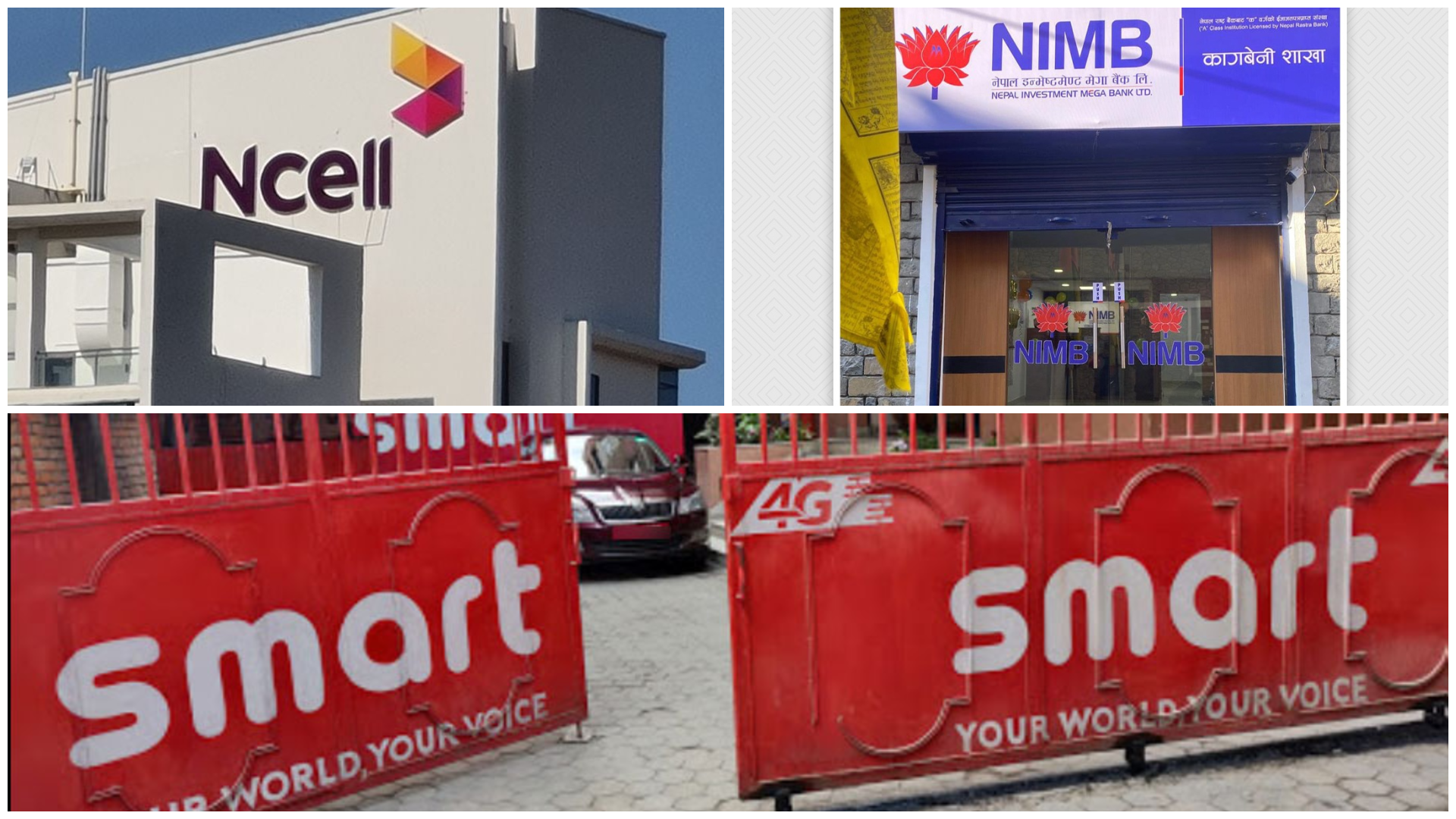
NIMB has maintained that it followed proper procedures: a public auction notice was issued, sealed bids were invited, the highest bid was accepted, and the money recovered was used to close Smart Telecom’s loan account. Legal experts have also raised a substantive challenge to the government’s claim under the Telecommunications Act, noting that Section 33 of that act specifies asset reversion to the state only for companies with more than 50 percent foreign ownership.
Smart Telecom was a domestically invested company. Critics argue that the 2022 asset management regulation may have unlawfully extended that provision to all canceled licensees regardless of ownership, which could make the regulation legally questionable.
The CIB and government maintain that the regulatory framework unambiguously established state ownership from the moment the license lapsed, and that the bank’s internal procedures cannot override that constitutional and statutory reality.
What role did successive governments play in allowing Smart Telecom to survive for so long despite its mounting debts?
The NTA first attempted to cancel Smart Telecom’s license in July 2019, when the company already owed Rs 2.32 billion in unpaid dues. Instead of allowing cancellation, a cabinet meeting held on January 6, 2020, under then-Prime Minister KP Sharma Oli overturned the NTA’s decision and granted Smart Telecom an installment facility.
When the company failed to meet even those reduced obligations, the government extended its deadline again on September 14, 2020, giving an additional six months. A third extension followed on March 14, 2021. A fourth extension was granted on July 12, 2021.
Despite four separate rounds of government-approved relief spanning years, Smart Telecom never managed to pay any meaningful amount toward its dues. Critics and investigators point to this extended political protection as a key enabler of the crisis.
The company reportedly cultivated close relationships with power centers across multiple political administrations, including those led by KP Sharma Oli, Pushpa Kamal Dahal, and Sher Bahadur Deuba.
The allegation is that Smart Telecom’s investors used their political access to buy time, delay enforcement, and create conditions that ultimately allowed the illicit asset transfer to occur before the state could act.
Former Acting Auditor General Sukadev Bhattarai Khatri has publicly stated that the then-communication minister had the power to stop the illegal auction and must be held accountable.
Who was the minister responsible at the time of the auction and has there been political accountability?
Jagdish Kharel was the Minister for Information and Communications Technology during the period when Smart Telecom’s assets were auctioned to Ncell. According to former Acting Auditor General Sukadev Bhattarai Khatri, the Ministry could have and should have intervened to block the auction process before it was completed.
The asset valuation committee was supposed to function under the Ministry’s overall supervision, and the Ministry’s failure to either accelerate the valuation process or formally order a halt to the bank’s unilateral auction represents a significant lapse. Kharel has not faced any formal legal proceedings in connection with the case thus far.
The investigation has remained focused primarily on corporate actors rather than political figures, though investigators and commentators have repeatedly noted that a transaction of this scale — bypassing an entire government regulatory body and evading Rs 30 billion in state liability — could not have succeeded without some degree of political protection or willful institutional negligence at the ministerial level.
How was the Ncell ownership transfer from Axiata handled, and why is that controversial too?
The broader Ncell ownership controversy predates the Smart Telecom auction and adds another layer of legal complexity. Malaysia’s Axiata Group held 80 percent of Ncell’s shares and agreed to sell that stake to Spectrlite UK Limited, a United Kingdom-registered entity associated with the Acharya group, for reportedly just five crore US dollars.
The government’s investigation committee led by former Auditor General Tankamani Sharma flagged this valuation as grossly undervalued and potentially structured to minimize capital gains tax liability. When TeliaSonera, the Swedish company, had sold its 80 percent stake in Ncell to Axiata in 2016, the transaction was valued at approximately Rs 144.78 billion.
The collapse in declared value from that level to a mere five crore dollars for the same 80 percent stake has been described by the investigation committee as deliberate under-invoicing.
The committee found that between its founding and the fiscal year 2022-23, Ncell sent abroad dividends of Rs 66.95 billion against verified foreign investment of only Rs 80.2 million, meaning dividend repatriation exceeded confirmed foreign investment by 825 times.
The entire ownership transfer process remains disputed, and the NTA has stated that no share transfer exceeding five percent is legally valid without prior regulatory approval, which was reportedly never obtained.
What is the significance of the valuation committee’s letter arriving one day after the auction?
This specific chronological detail is at the heart of the institutional complicity allegation. The Ministry of Communication and Information Technology approved the formation of a price determination committee for Smart Telecom’s assets on May 30, 2025. The NTA had a formal obligation to notify the committee’s coordinator, Rajesh Parajuli, and direct the committee to begin its work immediately.
Instead, the NTA reportedly sat on that ministerial instruction for four months. The letter was finally delivered to Parajuli on October 21, 2025, which was after Ncell had already acquired Smart Telecom’s assets at the October 6 auction. Investigators have concluded this was not administrative sloth but deliberate obstruction.
If the committee had been activated promptly and produced a formal valuation in June or July 2025, that figure would have been on record before NIMB published its auction notice. A formal government valuation would have legally complicated or potentially invalidated the bank’s auction.
By ensuring the committee never functioned before the auction closed, someone within the NTA — or working in coordination with NTA officials — cleared the path for the illegal transfer.
The CIB has described this four-month suppression of an official government letter as one of the clearest indicators of institutional involvement in the conspiracy.
What was Ncell’s response after the police investigation began?
Ncell’s response to the escalating criminal investigation has been legally revealing. On May 15, 2026, three days after the CIB arrested NIMB CEO Jyoti Prakash Pandey, Ncell CEO Michael Foley signed and dispatched a formal letter to NIMB. In that letter, Ncell demanded either immediate transfer of the auctioned assets to its possession or, failing that, the full return of the Rs 4.60 billion it had paid to the bank.
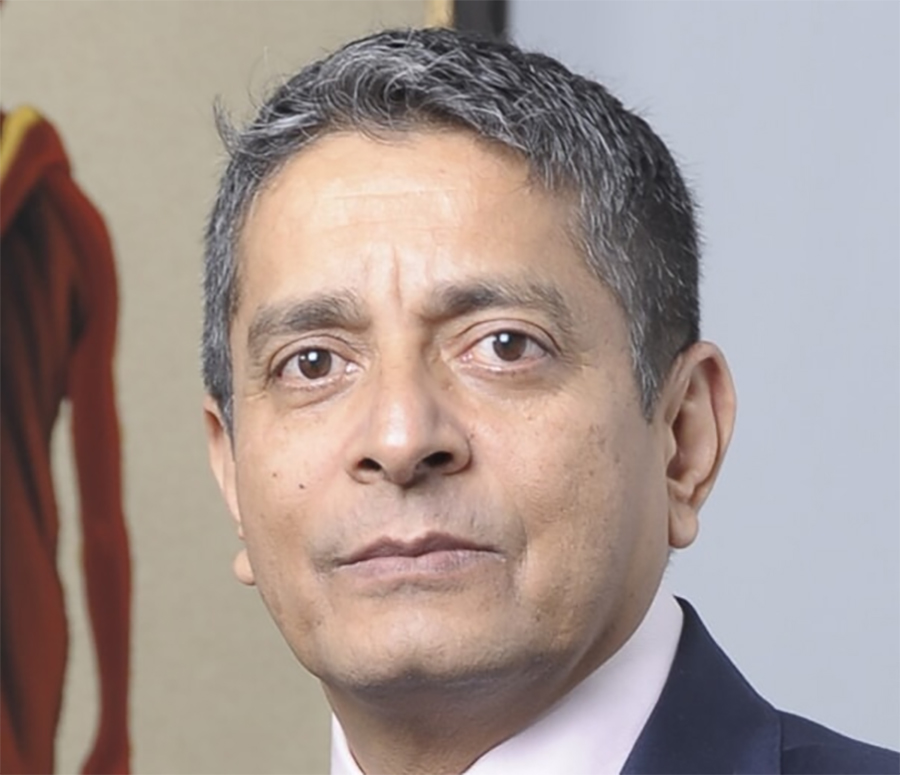
Jyoti Prakash Pandey
The CIB and investigators have pointed to this letter as an implicit acknowledgment by Ncell that the auction process may not have been legally sound. Separately, NIMB confirmed it had received the letter and stated that the matter had become part of the investigation, declining to elaborate further.
Ncell has not responded to media inquiries about the case, maintaining public silence throughout the investigation. The CIB raided Ncell’s headquarters in Nakkhu, Lalitpur, on May 14, 2026, and seized key documents related to the Smart Telecom transaction, including internal correspondence, ownership transfer records, and financial documents. Investigators have stated that Ncell’s board-level authorization for the asset purchase is a central focus of their evidence gathering.
What are the specific laws that investigators say were violated?
The investigation has identified potential violations across a wide range of statutes. The Telecommunications Act, 1997, is the foundational legal instrument, as it explicitly provides for state ownership of assets once a telecom license lapses. The Telecommunications Service Provider Asset Management Regulations, 2022, established the mandatory government-managed process for handling such assets, which was entirely bypassed.
The National Penal Code, 2017, provides the basis for charges of fraud and criminal breach of trust against the individuals involved. The Organized Crime Prevention Act, 2013, is being invoked given the multi-party coordination across telecom, banking, and regulatory sectors.
The Banks and Financial Institutions Act is relevant to the question of whether NIMB’s loan recovery actions were conducted legally or whether they violated conditions attached to the pledged collateral.
Investigators have also flagged potential violations of the Foreign Investment and Technology Transfer Act, the Foreign Exchange Regulation Act, the Anti-Money Laundering Act, and the Revenue Leakage Control Act in connection with the broader Ncell ownership issues, including concerns about round-tripping of funds and the suspicious source of Bhawana Singh Shrestha’s investment capital in Ncell.
How do investigators characterize the connection between Smart Telecom’s collapse and Ncell’s acquisition of the assets?
The CIB’s working theory is that Smart Telecom was not simply allowed to collapse but was deliberately run into the ground as part of a longer financial strategy. According to this theory, the Acharya group, which simultaneously had stakes in Smart Telecom and was acquiring Ncell, allowed Smart Telecom to default on its government obligations knowing that the eventual asset liquidation could be directed toward Ncell.
By the time the license was canceled and the assets were legally the state’s, the Acharya-associated operators of Smart Telecom still had the institutional connections and leverage necessary to ensure those assets ended up at Ncell rather than in government hands.
Former Auditor General Tanka Mani Sharma’s investigation committee report explicitly concluded that the group behind Smart Telecom’s collapse and the group that acquired 80 percent of Ncell were one and the same. The CIB’s additional concern is that Ncell paid Rs 4.60 billion for assets the government valued at around Rs 400 million, which means Ncell deliberately overpaid at auction.
Investigators believe this is explained by the fact that the payment was never really about the physical assets — it was about closing out Smart Telecom’s bank loans, protecting the Acharya group’s financial tracks, and securing the telecommunications infrastructure for Ncell’s future operations at a price that avoided legal challenge while eliminating state intervention.
What happened to the other suspects beyond the four arrested and released?
The four individuals arrested and subsequently released remain under active investigation. CIB Spokesperson Shiva Kumar Shrestha has been explicit on this point: release from custody does not mean release from investigation. The CIB continues to collect documentary evidence, financial transaction records, and statements from relevant parties.
The Acharya family, specifically Satish Lal Acharya, Sachin Lal Acharya, and Bhawana Singh Shrestha, are under the investigation scanner but have not been formally arrested. Reports suggest Satish and Bhawana have been unreachable since the investigation intensified, with sources describing them as having gone into hiding.
The CIB has stated that if individuals under investigation are found to be abroad, it will follow legal procedures for their return, which could include Interpol notices or extradition requests given that both Satish and Bhawana hold Singaporean citizenship.
Senior officials at the NTA who may have deliberately delayed the valuation committee letter are also reportedly under scrutiny. The investigation’s scope appears to be expanding rather than narrowing, with the CIB indicating it is still gathering evidence and has not concluded whom to formally charge.
What broader impact has this case had on Nepal’s banking sector and investment climate?
The arrest of a sitting commercial bank CEO sent a visible tremor through Nepal’s banking sector. The Nepal Bankers Association and multiple financial institutions publicly condemned Pandey’s arrest as harmful to investor confidence and described it as an abuse of police authority. Bankers argued that if executives can be criminally prosecuted for conducting loan recovery auctions under the Secured Transactions Act, no bank will feel safe extending credit to companies operating in regulated sectors.
The banking sector also raised the question of legal precedent: Supreme Court rulings have historically prioritized first-charge creditors in secured lending arrangements, and the CIB’s position appeared to many lawyers and bankers as an attempt to override that hierarchy without a clear statutory basis.
On the other side of the debate, economists and civil society figures pointed out that if a private bank can sell off government-designated state property and collect Rs 4.60 billion while the state recovers nothing from a Rs 30 billion claim, Nepal’s property rights regime, its state accountability mechanisms, and its regulatory architecture are all exposed as fundamentally ineffective.
The case has thus opened a serious national debate about what happens when banking law, telecom law, and state ownership law collide — and who has the authority to resolve that collision.
What legal battles remain unresolved and what comes next in the case?
The case is moving along several simultaneous tracks. On the criminal track, the CIB is continuing its investigation with the four released individuals still formally subject to the ongoing probe. Further arrests are possible, particularly if evidence gathered from Ncell’s headquarters points to board-level authorization. The Acharya family remains a looming question in the investigation.
On the civil and regulatory track, the NTA has told Ncell that it cannot use the auctioned equipment for its network until the legal status of the asset transfer is resolved. Ncell applied on December 30, 2025, to the NTA for permission to integrate Smart Telecom’s equipment into its network.
The NTA formally denied that request on March 9, 2026, citing the legally contested nature of the transfer. This means Ncell has paid Rs 4.60 billion for equipment it cannot currently deploy. On the judicial track, questions about the constitutional validity of the 2022 asset management regulations and their relationship to the parent Telecommunications Act are likely to require Supreme Court adjudication.
Additionally, the broader unresolved Ncell ownership dispute, including the capital gains tax controversy from the Axiata-to-Spectrlite share transfer, remains a separate live issue that the government has not yet formally concluded.
How significant is this case in the broader context of corporate and regulatory accountability in Nepal?
This case has no precedent in Nepal’s corporate history in terms of its scale, the number of institutions involved, and the brazenness with which regulatory mechanisms appear to have been neutralized.
A company owed the government Rs 30 billion, had its assets formally declared as state property by a regulatory body, and still managed to have those assets transferred to a private company through a bank auction that the regulatory body knew nothing about — until it was too late.
The list of actors who would have needed to cooperate in doing nothing at the right moment includes officials at the NTA, the Ministry of Communication, the banking sector, and the corporate management of both Smart Telecom and Ncell.
Former Acting Auditor General Sukadev Bhattarai Khatri has described the entire valuation and auction process as collusion by its very nature, noting that settling a Rs 30 billion government claim for Rs 4.60 billion paid to a private bank cannot be explained by any legitimate logic.
For Nepal’s telecommunications sector, the case raises fundamental questions about how licenses are issued, protected, and ultimately enforced. For the banking sector, it raises questions about the limits of secured lending rights when collateral has been claimed by the state.
And for ordinary Nepali citizens, it represents a direct loss: thirty billion rupees in government dues that were supposed to return to the public treasury have instead been functionally written off while a private company quietly absorbed the infrastructure those dues were meant to recover.
![NSU protests closure of public library, demands immediate reopening [Photo Feature]](https://english.nepalnews.com/wp-content/uploads/2026/07/1-6.jpeg)