Kathmandu
Thursday, February 26, 2026





With half of the time granted for reforms already gone, Nepal - unable to even build the foundation - faces the risk of being placed on the ‘dark grey list’.
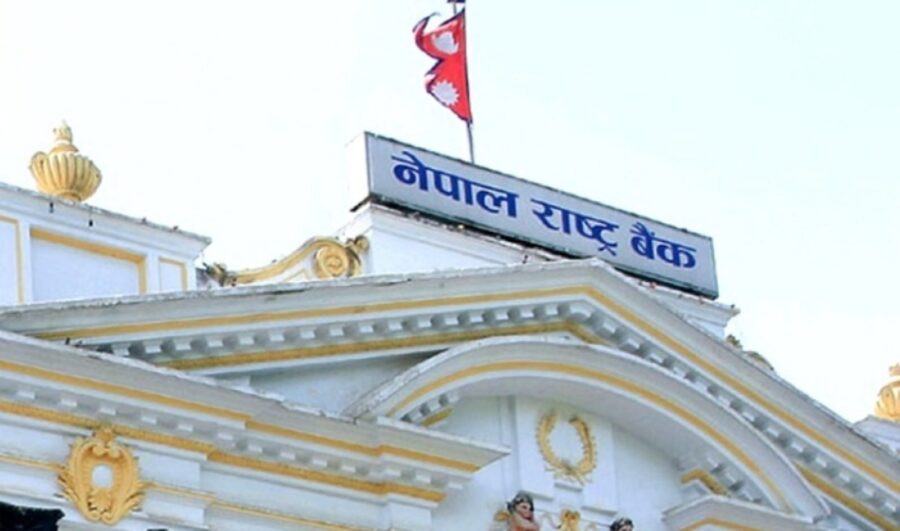
On December 21, 2025, Prime Minister Sushila Karki held discussions with Finance Minister Rameshwor Prasad Khanal, Nepal Rastra Bank (NRB) Governor Bishwo Nath Poudel, and director general of the Department of Money Laundering Investigation, Gajendra Kumar Thakur, regarding the work done over the past year to remove Nepal from the ‘grey list’ of the Financial Action Task Force (FATF). Finance Minister Khanal informed the meeting that sectoral reports were being prepared for the National Risk Assessment Report. Director General Thakur, meanwhile, informed the Prime Minister that 1,600 ropanis of land had been frozen within the Kathmandu Valley alone on suspicion of black money investment.
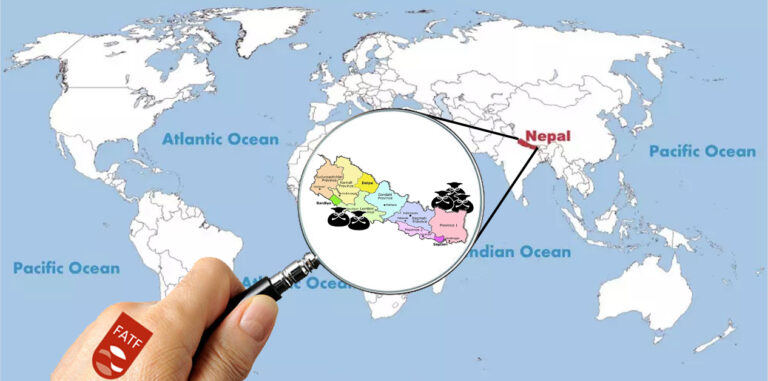
The FATF, the international body monitoring money laundering, placed Nepal on the ‘grey list’ in February 2025. To exit the list, it granted Nepal a two-year deadline to meet the required standards. As per FATF’s recommendations, the government prepared a two-year action plan to be removed from the list. According to this plan, Nepal must regularly report its reform efforts to FATF. The government was required to prepare the National Risk Assessment Report by mid-November 2025, incorporating the reforms undertaken. However, even the necessary sectoral reports for preparing this assessment report have not yet been completed. This alone is enough to understand how much Nepal has achieved in one year toward exiting FATF’s ‘grey list’.
The National Risk Assessment Report is prepared by the Office of the Prime Minister and Council of Ministers. For this, the Ministry of Finance, Ministry of Home Affairs, and the Office of the Attorney General must submit sectoral reports. None of these institutions have prepared their sectoral reports yet. Bhishma Kumar Bhusal, a joint secretary at the Prime Minister’s Office, says, “All three institutions say they are working on the sectoral reports. Until they submit these reports, the National Risk Assessment Report cannot be prepared.”
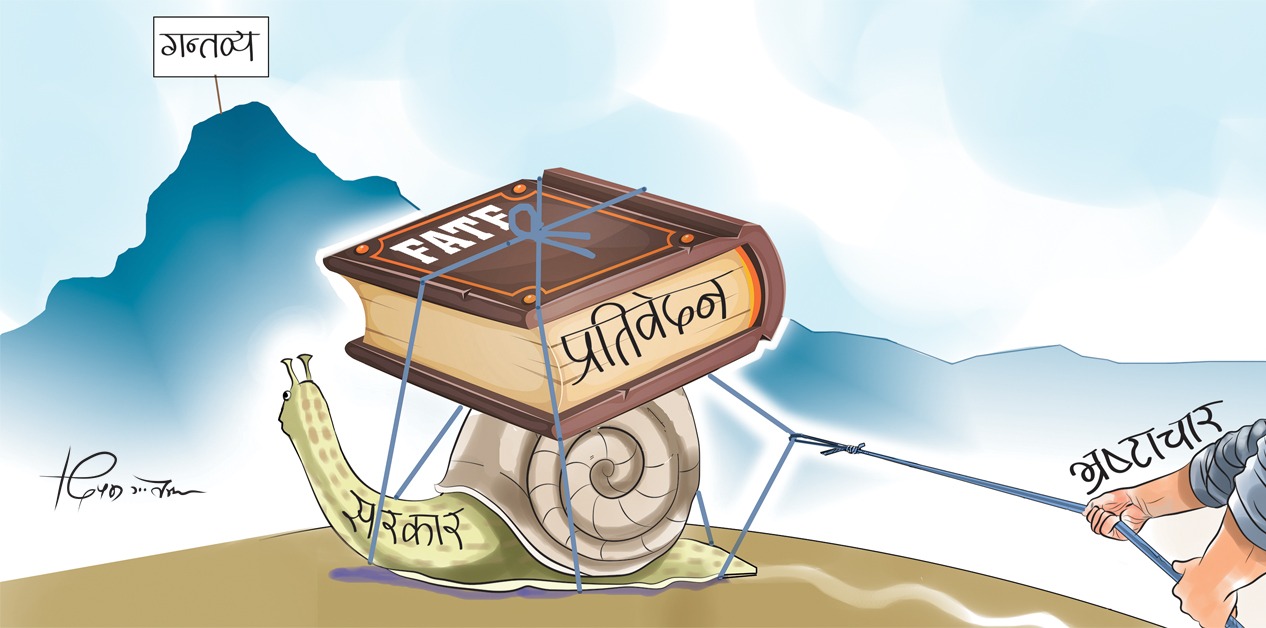
Had Nepal improved law enforcement and investigation aspects on time as outlined in the action plan and informed FATF accordingly, it might have exited the ‘grey list’ within a single year. However, if the remaining one-year period proceeds at the same snail-like pace and adequate reforms are not demonstrated, Nepal faces a serious risk of being placed on the ‘dark grey list’. The two years given to Nepal for improving financial discipline is the maximum time allowed.
On February 21, 2025, an FATF meeting held in Paris, France, placed Nepal on the list of jurisdictions with high risk of money laundering and terrorist financing. Currently under FATF’s enhanced monitoring, Nepal must, by January 2027, prove through data that it has carried out legal reforms, ensured effective implementation, and conducted investigations to control money laundering and terrorist financing.
Nepal had been under FATF’s enhanced monitoring since mid-July 2023. After Nepal committed to reforms across all sectors following a warning, FATF placed Nepal under enhanced monitoring and granted one year for improvements. When expected reforms were not achieved even within that year, Nepal was placed on the ‘grey list’. Another year has now passed without significant improvement in financial governance. The ‘grey list’ for money laundering is a sensitive issue linked to corruption, concealment or legalization of illegally acquired assets, and even terrorism. The lack of serious initiative for reform even in such a sensitive matter shows clear negligence.
Previously, Nepal had also been placed on the ‘grey list’ in 2008. At that time, it took six years of effort before Nepal was removed from the list in 2014
Basis of evaluation
For Nepal to be removed from the FATF “grey list,” it must show sufficient progress in both the legal and institutional framework (technical compliance rating) and in law enforcement and investigation (effectiveness rating).
There are 40 criteria under the technical compliance rating. Compliance with these criteria is divided into four categories: compliant, largely compliant, partially compliant, and non-compliant. Among these criteria, Nepal has received a compliant rating in five, largely compliant in 16, partially compliant in 16, and non-compliant ratings in three criteria.
To avoid the “grey list,” at least 21 of the 40 criteria in this group must be rated as either compliant or largely compliant. Nepal had already met the technical compliance requirements before being placed on the “grey list.” This means Nepal has enacted the minimum required laws to mitigate the risks of money laundering and terrorist financing. However, despite meeting the legal framework requirements, Nepal was placed on the “grey list” because it failed to meet the standards related to law enforcement and investigation (effectiveness rating). There are 11 criteria under the effectiveness rating. These are evaluated under four indicators: high, substantial, moderate, and low level of effectiveness.
To be removed from the “grey list,” Nepal must achieve either high or substantial effectiveness in at least three of the 11 effectiveness criteria. At the time, Nepal received moderate ratings in four and low ratings in seven. Since the FATF assessment found little progress in law enforcement, Nepal was placed on the ‘grey list’.
The FATF had identified around one and a half dozen tasks that Nepal needed to complete within two years. Among these, Nepal was advised to expand the scope of its risk identification, which was considered limited. The National Risk Assessment Report prepared in Fiscal Year 2019/20 identified corruption, tax evasion, human trafficking and smuggling, and smuggling and black marketing as high-risk areas in Nepal. Similarly, drug trafficking, organized crime, extortions, fraud, banking offenses, currency misuse, environmental crime, hostage-taking and kidnapping, theft and robbery, illegal trafficking of precious goods, forgery, fraud, and insider trading were identified as medium-risk areas.
The FATF also advised strengthening the capacity of the Anti-Money Laundering Supervision Division at the NRB, regulating the cooperative sector, and increasing regulation and investigation focused on casinos, real estate, and gold and silver trading. In addition, it instructed Nepal to take strict action against the widespread hundi (informal money transfer) system.
Controlling transactions conducted through hundi is currently a major challenge for Nepal. On the other hand, international mutual legal assistance has also become complicated. Although GB Rai, accused in five cooperative fraud cases, is said to be abroad, the Government of Nepal has been unable to arrest and bring him back. In the printing machine procurement case, Bikal Paudel, former executive director of the Security Printing Center who was convicted by the Special Court, was reported to have a bank account in Singapore. Paudel was also convicted for obtaining permanent residency (PR) of a foreign country and falsely declaring it during his appointment in Nepal. Due to ineffective international mutual legal assistance, such issues often remain limited to rumors.
When evaluating Nepal, FATF looks at data showing whether sufficient investigations have been conducted in areas identified as high risk, whether cases have been filed in court, and whether punitive verdicts have been delivered. To strengthen law enforcement and investigation, there must be a significant number of investigations, cases filed in court seeking punishment as per the law, and verdicts issued accordingly.
The FATF also seeks evidence that Nepal implements decisions within 24 hours of the United Nations designating any individual or organization as being involved in terrorist activities. For this purpose, a “Targeted Financial Sanctions” (TFS) portal has been developed and operated under the Ministry of Home Affairs, integrated with the UN Security Council’s software. Nepal’s security agencies, NRB, and heads of all banks and financial institutions are connected to this portal. As soon as the UN Security Council uploads any information into its system, notifications are simultaneously sent to all connected entities through the TFS portal. However, merely receiving the information is not sufficient; an immediate response confirming receipt and implementation must be sent. Officials at the Ministry of Home Affairs acknowledge that Nepal remains weak in sending such responses.
The timeline
After Nepal was placed on the “grey list,” the FATF divided the two-year period into five phases and set a work schedule. According to this schedule, during the first four months after being listed (from mid-February 2025 to mid-June 2025), Nepal was not required to do much beyond regular reporting. Since time was provided for internal preparation, the FATF did not exert additional pressure beyond routine inquiries during this period.
Formal reporting began from the first four-month period from mid-June 2025 to mid-October 2025. During this time, directives related to anti-money laundering were issued for the real estate, casino, gold and silver, and cooperative sectors. Previously issued directives now also need to be updated.
Arrangements related to individuals and institutions listed under UN sanctions are also an important part of the timeline. Accordingly, the NRB, the Securities Board of Nepal, and the Insurance Authority have already issued directives not to conduct financial transactions with sanctioned individuals or institutions, to halt any previous transactions, and to regularly report to the concerned authorities.
From mid-October to mid-February 2026, efforts must be made to prevent the proliferation of weapons of mass destruction, enhance the supervisory capacity of regulatory bodies, and make investigations and prosecutions of financial crimes related to money laundering more effective.
From mid-February 2026 to mid-June 2026, financial crimes across all sectors of the economy and a national risk assessment must be conducted. This phase also includes enhancing supervision capacity in the banking and financial sector, effective regulation of cooperatives, investigation and prosecution, and investigation and action against hundi transactions.
From mid-June to mid-October 2026, awareness and understanding related to the national risk assessment must be expanded, measures to control criminal activities implemented, and directives issued for supervision and enforcement in the casino, real estate, and gold and silver sectors. Government officials themselves say that it is difficult to show tangible progress through investigation and prosecution in these areas because Nepal lacks separate and effective regulatory bodies for these sectors.
From mid-October 2026 to mid-February 2027 is the phase in which high results must be delivered. During this period, evaluations are made on whether investigations, prosecutions, and actions have been taken against individuals involved in major crimes. Key considerations include whether assets and fines derived from crimes have been deposited into the state treasury, how criminal assets have been managed, whether action has been taken against reporting entities, and what results have been achieved. Only by effectively implementing existing laws and delivering concrete results can Nepal exit the FATF’s “grey list.”
Slow pace of reforms
The government has taken some initial steps to prevent money laundering and maintain financial discipline. From January 15, 2026, all Nepali citizens are required to conduct transactions exceeding RS 500,000 only through bank accounts. There is also a provision requiring clear disclosure of the source of the transacted funds.
One of the sectors suspected of money laundering in Nepal is real estate transactions. Due to insufficient monitoring of cooperatives and real estate dealings, these sectors have become safe havens for hiding assets with undisclosed sources. To make the real estate business transparent, dignified, and scientific, the government has introduced a provision requiring transactions above Rs 30 million to be conducted through companies. For this purpose, the Department of Land Management and Archives had called for applications, with a deadline of December 13, 2025, from firms, companies, or institutions seeking licenses to conduct real estate transactions. Based on the licenses issued by the department, those companies are allowed to buy and sell real estate worth more than Rs 30 million.
The Land Revenue Act, 1978, had already mandated the requirement of a license for conducting real estate transactions. However, this provision had not been implemented for a long time. On September 29, 2025, the department published a notice stating that, in the first phase, the operational jurisdiction of real estate companies would be limited to metropolitan and sub-metropolitan cities. In other words, transactions exceeding Rs 30 million in metropolitan and sub-metropolitan cities must now be conducted through companies.
Moreover, there must be ample evidence showing that court verdicts have been implemented and that criminal assets have been confiscated and brought under state control. For this purpose, the government established the Department of Criminal Asset Management under the Ministry of Home Affairs in mid-August to mid-September 2021. However, the department has failed to bring criminal assets under state control as per court verdicts. For example, the Special Court ruled that the late Nepali Congress leader Khum Bahadur Khadka had accumulated assets through corruption and ordered the confiscation of land worth Rs 2,092,000—equivalent to the value at the time of purchase—out of one ropani seven aana of land in Sanepa, Lalitpur. However, using power and influence, he avoided the confiscation of his land. Later, an attempt was made to save the land by interpreting the verdict in his favor and paying the same Rs 2,092,000 at present value. When the Special Court administration refused to implement this, an application filed by Khadka’s family is currently under consideration by the court. Had the verdict been implemented and the land confiscated at that time, the current unnecessary legal complications could have been avoided.
There are many examples where courts have ordered confiscation, yet the offenders continue to enjoy control over those assets. Even bringing assets confiscated by court verdicts under state control would significantly help Nepal exit the “grey list.” An official from the Department of Criminal Asset Management says, “The department does not have details on how many assets ordered confiscated by court verdicts need to be brought under state control. Only recently have we begun corresponding with courts to inquire about verdicts.”
On December 31, 2025, officials from the Department of Criminal Asset Management visited the Department of Money Laundering Investigation and reached an agreement to promptly transfer assets and instruments seized, frozen, or taken under control during investigations to the Department of Criminal Asset Management. According to the agreement, a total of Rs 249,746,014 – representing assets seized, frozen, and held as security during investigations – will be deposited into the management department’s escrow account. This figure shows that the Department of Money Laundering Investigation has so far won cases amounting to approximately Rs 249.7 million, including principal and fines.
However, Gajendra Thakur, the director general of the Department of Money Laundering Investigation, states that based on investigations related to money laundering, cases claiming more than Rs 10 billion in damages were filed in court from mid-October 2025 to mid-December 2025 alone. He says, “The department is doing as much as it can to maintain financial discipline and get Nepal removed from the FATF list. There are 12 agencies that deal with money laundering issues. Compared to other agencies, we are conducting more effective investigations.”
Lack of coordination
Nepal is implementing a national strategy and action plan related to preventing money laundering and terrorist financing, which was approved by the Council of Ministers. Approved on July 1, 2024, the plan outlines five objectives and corresponding strategies to reduce the risk of financial crimes in order to protect and stabilize the economy and financial system. A coordination mechanism has also been designated to implement the action plan based on these objectives and strategies. However, due to the coordination mechanism’s failure to function effectively, the foundation for exiting the “grey list” has not been established.
Bhishma Kumar Bhusal, chief of the Governance Reform Division and joint secretary at the Office of the Prime Minister and Council of Ministers, says, “Coordination among various agencies itself is a herculean task. Due to the lack of stability in those agencies and their staff, effective results have not been achieved.”
Government officials themselves admit that there are not enough staff who are knowledgeable about what needs to be done for Nepal to exit the “grey list.” On top of that, politically motivated transfers and transfers based on leadership preferences have made effective work impossible. Bhusal says, “There are already very few staff who understand this subject. If they are not allowed to work and are constantly transferred, it is impossible to achieve results.”
On February 28, 2019, then prime minister KP Sharma Oli decided to bring the National Investigation Department under the Ministry of Home Affairs, and the Department of Money Laundering Investigation and the Department of Revenue Investigation under the Ministry of Finance, under the Office of the Prime Minister and Council of Ministers. All these three agencies are considered crucial for maintaining financial discipline. However, the government formed after the Gen-Z revolt decided on September 25, 2025 to return all three agencies to their respective ministries.
Regarding the implementation of FATF recommendations and increasing investigations in areas identified as high risk, the Commission for the Investigation of Abuse of Authority (CIAA) recently held discussions with concerned agencies. When questions of institutional and staff stability were raised even in that discussion, the CIAA sent a letter of concern to the Prime Minister’s Office, requesting that staff working on efforts to remove Nepal from the “grey list” not be transferred.
The national strategy and action plan on preventing money laundering and terrorist financing assigns monitoring, investigation, and prosecution responsibilities to more than 30 agencies and sectors. However, there is no separate body to effectively coordinate all of them. Hari Kumar Nepal, chief of the Anti-Money Laundering Prevention Section under the Economic Policy Analysis Division of the Ministry of Finance, says, “Since there are already many permanent mechanisms, no new agency has been envisioned; results can be achieved by making existing agencies more effective.”
Virtual assets: another challenge
Growing investment and transactions in virtual assets have added another challenge to removing Nepal from the “grey list.” Investment in virtual assets is prohibited in Nepal. A strategic analysis report on virtual assets, 2025, published on January 1, 2026 by the Financial Information Unit (FIU) of the NRB, shows that suspicious financial activities involving prohibited virtual assets are increasing rapidly.
The report states that youth involvement is higher in the buying and selling of virtual assets. Among individuals conducting suspicious transactions using terms such as Binance, USDT, crypto, cryptocurrency, Bitcoin, HyperFund, Hyperverse, MetaMask, and MT Coin in bank statements, most are aged between 21 and 35. The report notes that 658 suspicious transactions were identified between 1 January 2021 and 16 July 2025. Of these, 232 cases were forwarded to Nepal Police, 115 to the Department of Revenue Investigation, and six to the Department of Money Laundering Investigation for further investigation.
The FATF considers suspicious transactions and their reporting, investigation, prosecution, and punishment as key bases for evaluation. According to the NRB’s report, reporting of suspicious transactions has been done almost exclusively by commercial banks. Of the 658 suspicious transactions reported, 600 were from commercial banks, 48 from development banks, six from remittance companies, two from finance companies, and only one from other payment service providers. Transactions conducted through cooperative institutions have yet to be effectively brought under the regulatory framework.
Learning from the UAE’s success
The FATF placed the United Arab Emirates (UAE) on the “grey list” in March 2022. However, the UAE managed to restore financial discipline and exit the list within just two years. In recent times, the UAE is the only country to have exited the “grey list” in the shortest period.
To get off the list, the UAE established a mechanism that reported directly to the head of state. The staff working in this mechanism were given full authority for investigation and prosecution. The UAE enacted laws with strict punishments against corruption, money laundering, and financing of terrorist activities. Under these laws, if any employee of an institution is found to be involved in such activities, the head of that institution can be sentenced to up to five years in prison.
To promptly resolve issues identified through investigations, the UAE set up specialized courts and delivered swift verdicts in cases related to financial crimes and money laundering. Sector-specific regulations were formulated and implemented to regulate businesses dealing in metals such as gold and silver, which were considered high-risk sectors.
Financial intelligence units and regulatory bodies were strengthened by providing them with sufficient skilled manpower and technical capacity, making them well-resourced. Systems for international mutual legal assistance and information exchange were made effective. As a result of these reforms, the reporting of suspicious transactions became more effective, and the number of investigations and enforcement actions increased significantly. Due to legal reforms, enhanced institutional capacity, strict penalties, effective implementation, and strengthened regulatory bodies, the UAE exited the “grey list” within two years. Nepal, however, continues to struggle due to the lack of effective coordination among existing institutions.