Kathmandu
Wednesday, February 25, 2026





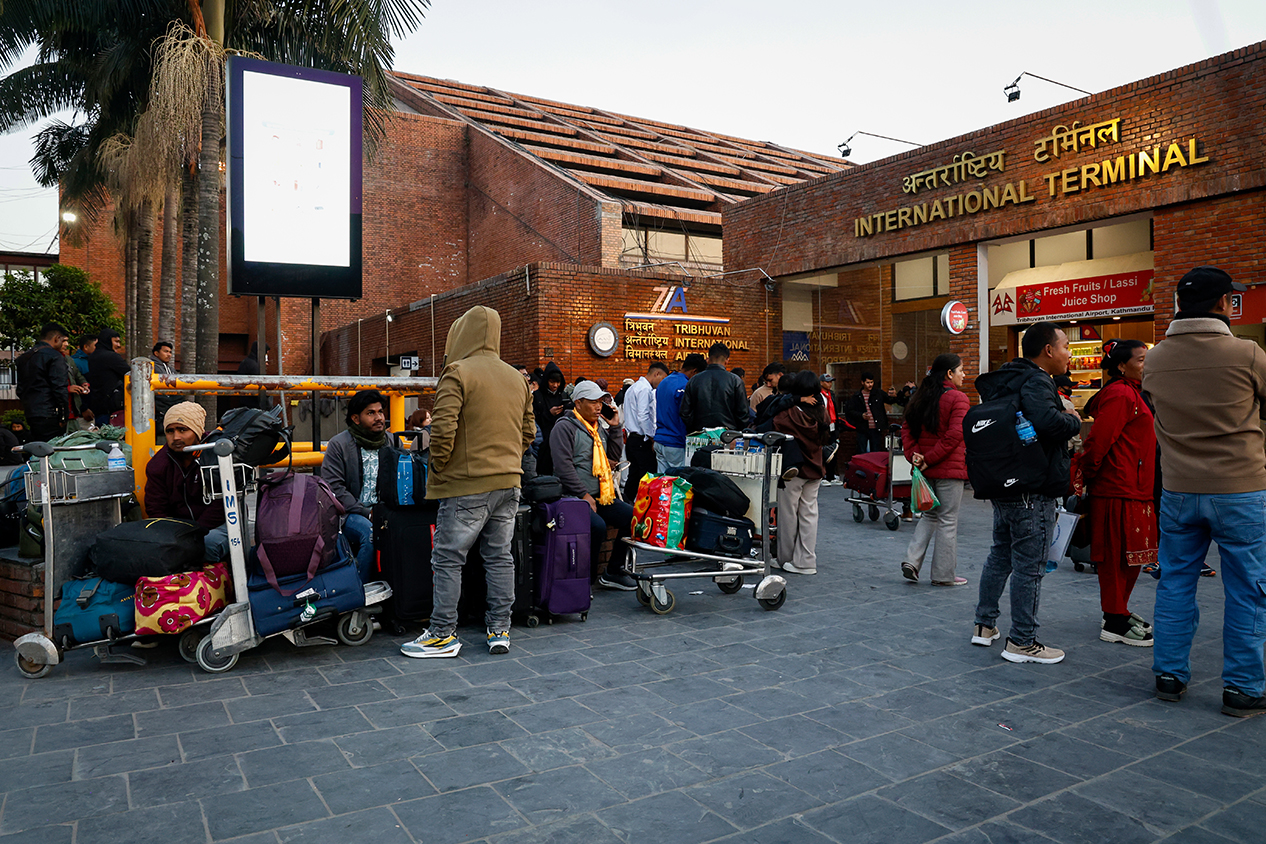
KATHMANDU: The destinations of Nepali foreign employment workers are changing fast. Until three decades ago, India was the main labor destination for Nepalis. However, now it has expanded to Europe, besides the Gulf and Malaysia. According to the ‘Nepal Labor Migration Report 2024’ published by the Ministry of Labor, Employment and Social Security on 11 December, the number of Nepalis going to Europe for employment has increased 368 times in the last five years. In 2017/18, only 11,760 Nepalis obtained labor permits to work in Europe. The government report states that this number had increased to as many as 55,117 by the end of 2024.
According to the ‘Status of Remittances in Nepal’ report published this year by the Center for the Study of Labor and Mobility (CESLAM), India’s share of remittances entering Nepal was 91.8 percent until the fiscal year 1995/96. By the fiscal year 2024/25, the share of remittances coming from India had shrunk to 40.4 percent. This figure shows that Nepalis are fast choosing countries other than India as their labor destinations.
New destinations for foreign employment for Nepalis in recent years include Romania, Croatia, Cyprus, Poland, Malta, Turkey, Albania, Jordan, Bulgaria, Serbia, Slovakia, and others in Europe. Nepalis have been obtaining work permits for these countries individually.
According to the ministry’s study report, 316 Nepalis went to Romania for employment in the fiscal year 2017/18. By 2024, this number had increased to 12,700. Seven years ago, five Nepalis obtained work permits to go to Croatia, while last year, 14,240 Nepalis obtained such permits.
Nepalis have started going to Albania, Bulgaria, North Macedonia, Serbia, and Slovakia only over the last five years. Two Nepalis went to Bulgaria in the fiscal year 2020/21. By 2024, as many as 1,677 Nepalis had reached there with work permits. By 2020, no Nepalis had reached Serbia and Slovakia for work. In 2024, however, 1,915 Nepalis went to Serbia and 389 to Slovakia with work permits. The data released by the government shows that there have been major changes in the labor destinations of Nepalis.
Labor and immigration expert Ganesh Gurung says that employment in the Gulf countries has enabled Nepalis to go to Europe. “Their economic situation has strengthened due to the employment they got in the Gulf countries and Malaysia. It also increased their access. Therefore, the number of Nepalis going to Europe has increased,” says Gurung. However, he notes that the labor destinations of Nepalis in Europe are comparatively the poor countries there.
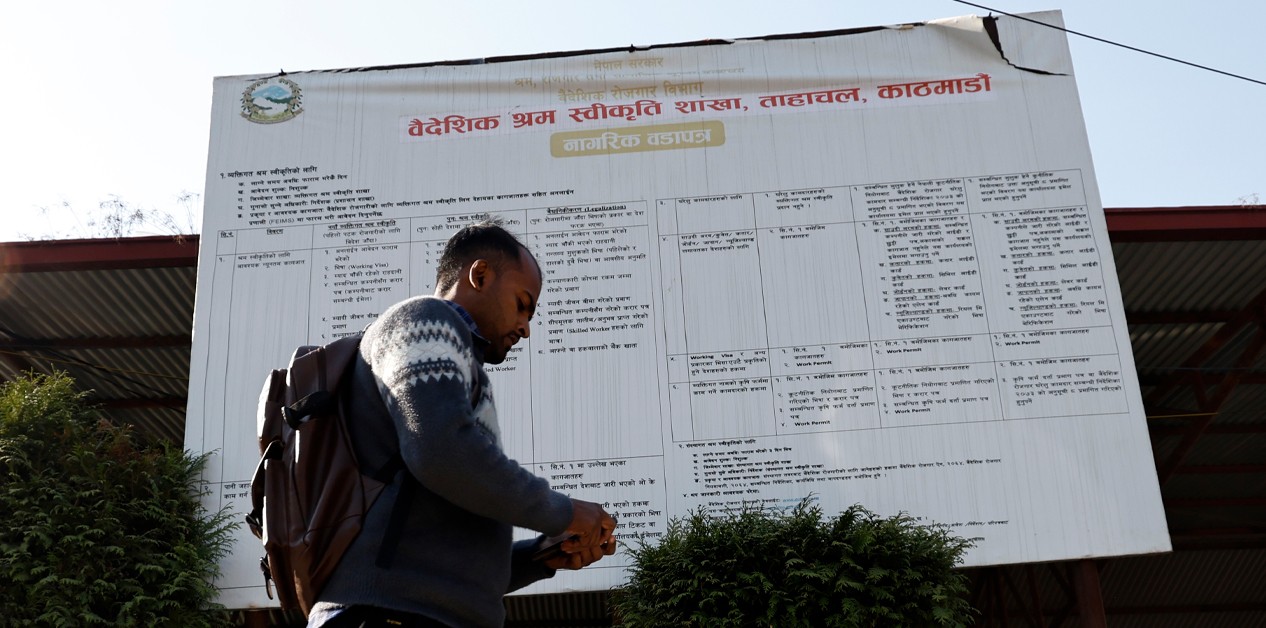
A service seeker at the Department of Foreign Employment. Photo: Bikram Rai
Arjun Kharel, a researcher at CESLAM, says that Nepali youth are attracted to Europe because labor facilities and social security are better in Europe compared to the Gulf countries. Nepali youth spend between Rs 600,000 and Rs 1.2 million to go to Europe for work. This cost is higher than that of going to Gulf countries for work. Kharel says, “Young people who can afford to pay more and have studied higher education are attracted to European countries for employment. Some have also made employment in Europe a matter of prestige. Young people may be attracted to Europe because it is also suitable in terms of labor and social security.”
As many as 7,636,825 labor permits have been issued since 2008. The Department of Foreign Employment has issued this many labor permits for foreign employment over a period of 13 years, including new permits and old renewals, as mentioned in the ‘Nepal Labor Immigration Report, 2024’.
According to the report, as many as 3,017,000 Nepalis are currently abroad for employment. Out of this, 1,088,371 are in India alone. Qatar, Malaysia, Saudi Arabia and the UAE have the highest number of Nepalis. There are 1,232,349 Nepalis in these four countries alone.
The Nepal government has allowed Nepalis to go to 111 countries for foreign employment. There are employment restrictions for Nepalis in Afghanistan, Iraq and Libya. However, Nepali workers go to various countries for foreign employment on their own initiative. Of late, Nepalis have started going to European countries for employment with work permits. According to the data of the Department of Foreign Employment, Nepalis have obtained work permits for 148 countries by the fiscal year 2023/24.
Since the fiscal year 1993/94, the number of Nepalis going to India has been gradually decreasing after Gulf countries started accepting Nepali workers. After that, Saudi Arabia, the United Arab Emirates (UAE), Kuwait, Qatar, Bahrain, and Oman under the Gulf Cooperation Council (GCC) became new destinations for Nepali workers. The employment opportunities created after these countries increased investment in infrastructure development have not only made life easier for Nepalis, but remittances from Gulf countries have also supported the country’s economy. In fact, the share of remittances in the gross domestic product (GDP) of Nepal has reached around 26 percent.

Nepali migrant workers at the Tribhuvan International Airport on their way to Saudi Arabia. Photo: Bikram Rai
In the first four months of the current fiscal year (mid-July to mid-November), remittance inflow has increased 31 percent. In the first four months of the fiscal year 2025/26, Nepal has received a total remittance of Rs 687.13 billion from various countries. According to Nepal Rastra Bank data, a total of Rs 133.82 billion was received from October 18 to November 16.
Women going abroad on the rise
The number of Nepali women going abroad for employment has also increased in recent years. According to a government study, the number of women out of the total Nepalis going abroad for employment was less than seven percent by 2008. By the end of 2024, the number of female workers going abroad for employment has increased to 12.9 percent. In 2023, as many as 193,534 workers went to the Gulf countries, of which 30,870 were women. In 2024, the number of women going to the Gulf increased to 34,402. This is the number of Nepali workers who have obtained new work permits.
About half of the workers going abroad for employment are in the 25-34 age group. Workers going abroad for employment are in the 18-44 age group, which is considered the most economically productive. However, the proportion of female workers going abroad at a young age is higher than that of men.
In the fiscal year 2023/24, the number of male workers aged 18 to 24 among those going abroad for employment was 29.6 percent. In the same year, the number of female workers in the same age group was 39.1 percent. While 45.7 percent of male workers in the 25-34 age group have migrated, 48 percent of women have reached various countries in search of opportunities.
Although the number of women going abroad for employment through formal channels has increased, there are more women going abroad informally, says immigration expert Meena Poudel. “Only a few women have gone abroad through formal channels. There are many who go abroad through informal channels, and they are the ones who have also faced many problems,” says Poudel.
Madhesh has the highest number of migrant workers
Among the seven provinces of the country, Madhesh Province has the highest number of workers going abroad for employment. In 2023/24, as many as 97,196 men and 2,947 women workers went abroad from the province. The lowest number is from Karnali.
In the previous fiscal year 2022/23, too, the highest number of workers went abroad from Madhesh Province. More than 90 percent of those going abroad for employment from Madhesh Province are in the Gulf countries and Malaysia. About 80 percent of Nepali workers go to the six Gulf countries and Malaysia alone.
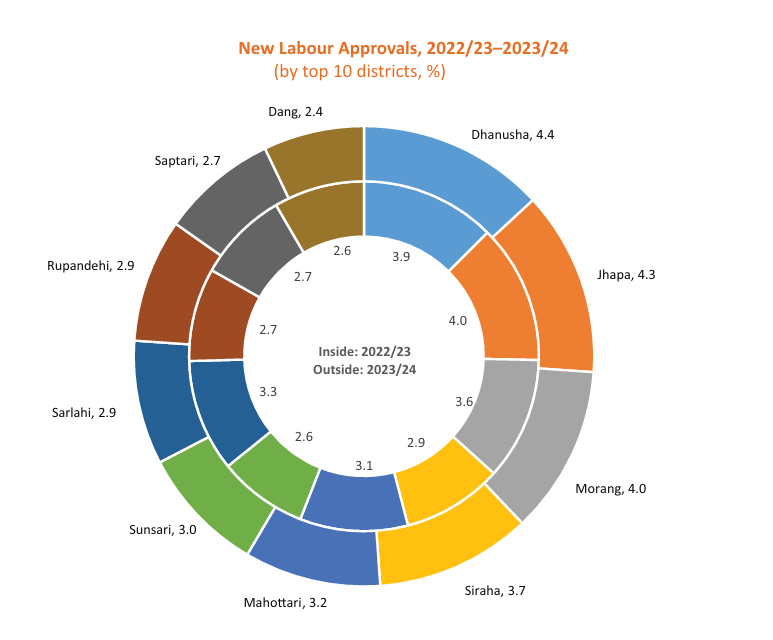
In Madhesh Province, Dhanusha district has the highest number of workers going abroad for employment. Last year, 4.4 percent of the total workers going abroad for employment were from Dhanusha. Similarly, 4.3 percent of Nepalis went abroad from Jhapa. The other districts with many Nepalis going abroad for employment are Morang, Siraha, Mahottari, Sunsari, Sarlahi, Rupandehi, Saptari and Dang.
Jhapa is the district with the highest number of female workers going abroad. Last year, 7.6 percent of the total female workers went abroad for employment from Jhapa. After Jhapa, the districts with significant numbers of female workers going abroad are Morang, Makawanpur, Sindhupalchowk, Kavrepalanchowk, Nuwakot, Chitwan, Dhading, Kathmandu and Sunsari.
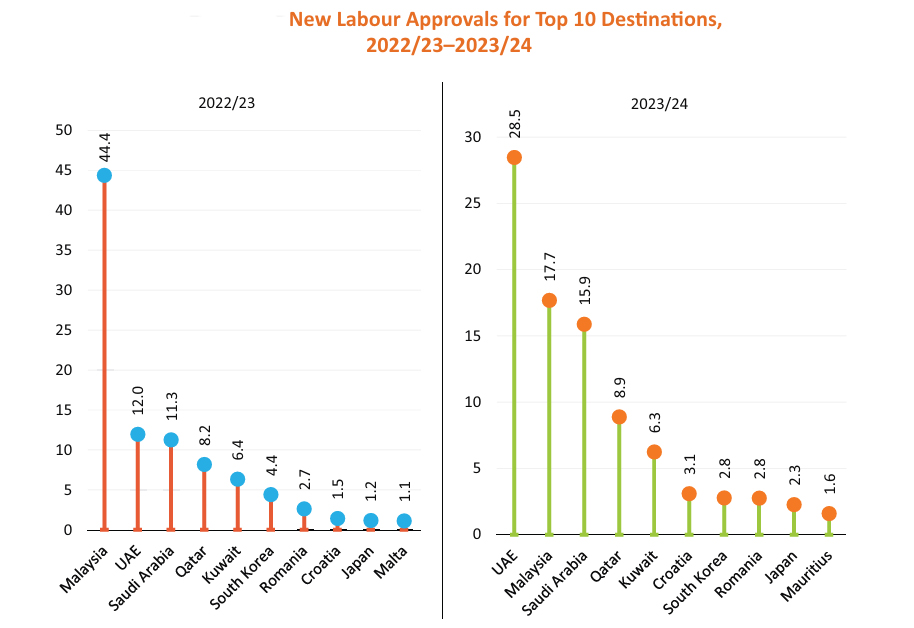
In the fiscal year 2022/23, the highest number of Nepali workers went to Malaysia. That year, 44.4 percent of the total workers from Nepal went to Malaysia. Only 12 percent went to the UAE. However, in the fiscal year 2023/24, the number of workers going to the UAE increased to 28.5 percent. The number of workers going to Malaysia decreased to 17.7 percent. In recent years, the top 10 labor destinations for Nepalis are the UAE, Malaysia, Saudi Arabia, Qatar, Kuwait, Croatia, South Korea, Romania, Japan, and Mauritius.
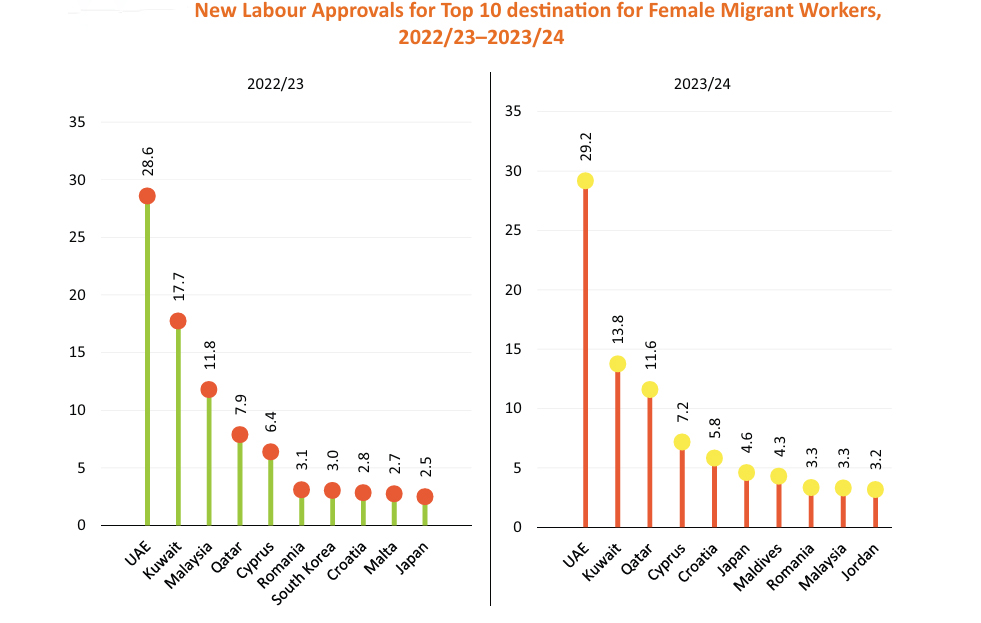
However, the labor destination countries for female workers are different. The top 10 labor destinations for Nepali female workers are the UAE, Kuwait, Qatar, Cyprus, Croatia, Japan, the Maldives, Romania, Malaysia, and Jordan. Of the total female workers who went for foreign employment in the fiscal year 2023/24, as much as 29.9 percent went to the UAE alone.
Individual labor permits rise
The number of Nepalis going for foreign employment without the help of manpower companies has also increased in recent times. The number of Nepalis going for employment with work permits through individual efforts has increased 468 times in the last decade, according to a study report by the Ministry of Labor, Employment, and Social Security. The share of those going abroad with individual work permits is 21.2 percent, out of the total number of Nepalis going abroad for employment.
In the fiscal year 2013/14, only 16,709 people reached various countries for employment with individual work permits. By the end of 2024, this number had increased to as many as 95,038.
In this way, the number of women going abroad with individual work permits has also increased 161 times. In 2014, only 7,903 women had obtained individual work permits, while in 2024 this number had increased to 20,635. For employment in Gulf countries and Malaysia, manpower companies bring the demand for workers and also help with the work permits. However, when going abroad for employment in European countries, the workers themselves have to find employment and obtain work permits.
In 2014, only 8,806 men obtained work permits through individual efforts. This number had increased to 74,403 in 2024, according to the Department of Foreign Employment.
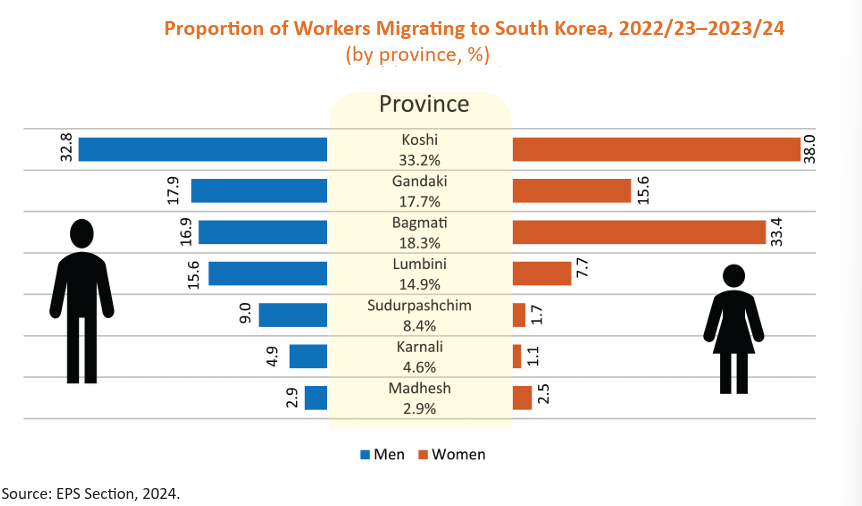
South Korea is also one of the major labor destination countries for foreign employment. Nepali workers are going to South Korea as per the labor agreement signed by the Nepal government with Korea. According to the data of the EPS branch of the Department of Foreign Employment, among those who have gone to South Korea for employment, the majority or 33.2 percent are from Koshi Province. Of those who have gone to Korea, only 4.6 percent are from Karnali Province and 2.9 percent are from Madhesh Province.
1 million Nepalis returned in two years
While the number of Nepalis going abroad for employment is high, the number of Nepalis returning home has also been increasing. According to a study by the ministry, 546,721 Nepalis returned home in 2023, while in 2024, this number was 538,605. This figure is only for workers returning home using the Tribhuvan International Airport.
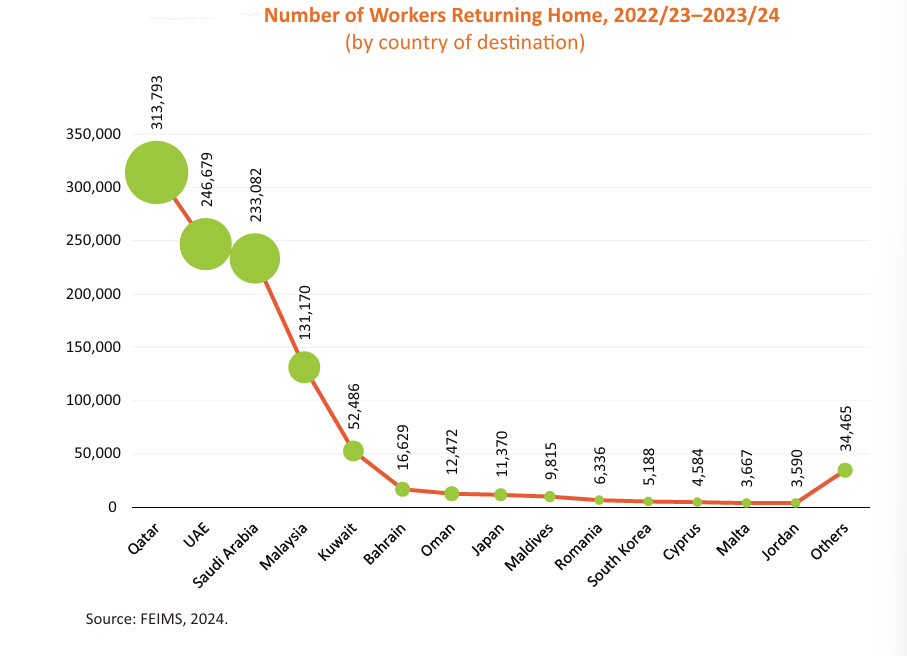
The report mentions that 1 million 85,000 Nepalis returned from foreign employment in a period of two years. The largest number of workers have returned to Nepal from Qatar, UAE, Saudi Arabia and Malaysia. As many as 313,793 Nepali workers have returned home from Qatar in a period of two years. According to the Department of Foreign Employment, 246,679 workers from the UAE and 233,082 workers from Saudi Arabia returned to Nepal during the same period.
13,000 lost their lives
Some of the Nepalis who reached foreign lands with dreams of higher earnings and better life have lost their lives in the course of employment. According to a study by the ministry, as many as 13,223 Nepalis have lost their lives in the course of employment in a decade and a half. Of these, 12,881 were men and 342 were women.
Six main causes have been identified in the deaths of those who had gone abroad for employment. The study report states that most of the deaths are attributed to ‘natural causes’, but there is no clear explanation for this. The number of deaths due to natural causes is 2,563. The number of deaths due to heart attacks is 1,613. The number of deaths due to road accidents alone is 1,636. Similarly, 1,509 Nepalis committed suicide while employed abroad. Likewise, 826 Nepalis died due to accidents while working.
Labor destinations changed, policy remains the same
For Nepalis, the destinations of foreign employment have changed. The structure of the labor market has also changed. Earlier, Nepalis used to go abroad for unskilled labor. When infrastructure construction accelerated in Gulf countries, Nepalis got employment opportunities. Now, the Gulf labor market has shrunk. Foreign employment and immigration expert Meena Poudel says, “Laborers were needed to build infrastructure in Gulf countries. Now, Europeans run markets in those infrastructures. They bring skilled workers there from Europe itself. The labor market for Nepalis has started to shrink in the Gulf. Nepalis have not even developed skills and capabilities according to the changing nature of the labor market.”

Service seekers obtaining labor permits at the Department of Foreign Employment. Photo: Bikram Rai
She says that there is a big gap between the changing nature of the labor market in the Gulf countries and the skills and capabilities of Nepali workers. Immigration experts say that this is why many Nepalis have started choosing easy jobs in European countries.
According to a report released by the Ministry of Labor, Employment, and Social Security, unskilled workers make up a majority of the Nepalis who have gone to European countries, which are considered new labor destinations. Many unskilled and semi-skilled workers have gone to countries including Cyprus, Romania, and Malta, among others. There are very few Nepali workers with high skills and professional competence in these countries.
Poudel says that the government has not paid attention to preparing Nepali workers according to the changing nature of the labor market. She says, “The market has diversified. It has also expanded. However, there are also problems within it. The government has not done anything to prepare workers according to the changing nature of the market and opportunities. If the government makes institutional, policy and managerial reforms, Nepal can work in a result-oriented way in the field of immigration.”
The government has made public the National Labor Immigration Policy on 9 December. Before this, Nepal did not have an immigration policy. There is a Foreign Employment Act that was amended in the year 2007. Immigration expert Gurung says that it does not reflect the changed labor market and its nature. “The current acts, regulations, procedures and decisions made by the government at different times do not cover the new trends in the labor market,” says Gurung. “The government should focus on formulating policies and laws according to the changing nature of the labor destination countries and labor markets.”
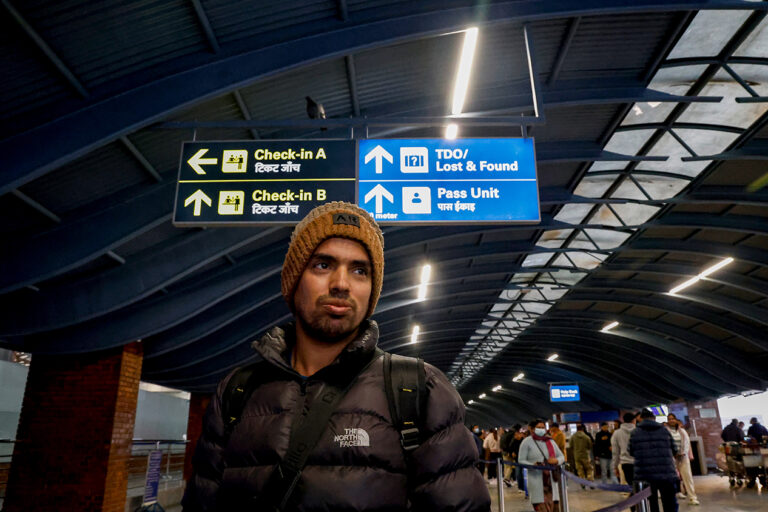
A Nepali worker departing for Malaysia for employment. Photo: Bikram Rai