Kathmandu
Saturday, February 14, 2026





Six of the 12 districts of Lumbini Province have airports. But only Nepalgunj Airport in Banke and Gautam Buddha Airport in Rupandehi have regular flights
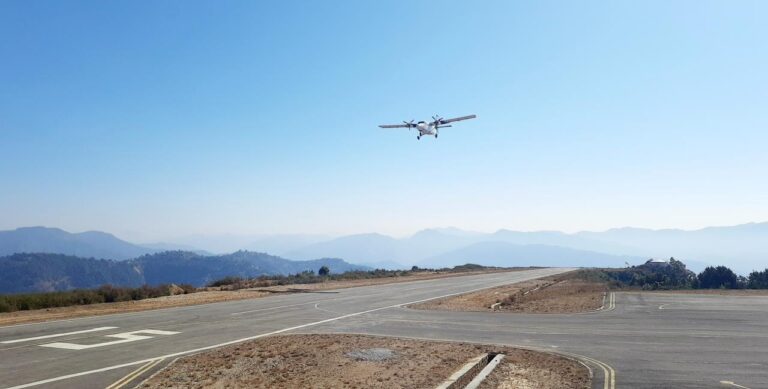
BUTWAL: The Badachour Airport in Lungri Rural Municipality of Rolpa, which came into operation around 1980, has been closed for three decades. Flights would be operated to Kathmandu and Pokhara from this airport, which was brought into operation at the initiative of Balaram Gharti Magar, a former leader of Rolpa and then minister. During the armed conflict, the Maoist rebels destroyed the physical infrastructure of the airport and dug bunkers along the runway, making the airport unusable.
However, flights at the airport had already been closed before that around 1989. The reason for the closure of flights at that time was the decrease in the number of air passengers due to the expansion of the road network. Another reason was that it was not given administrative and financial priority. Since then, the airport has been converted into a grazing area for cattle and a place for children to play, says Bharat Bahadur Thapa, chairman of Lungri Rural Municipality. Although it is not certain whether the airport can be operated again in terms of passenger availability, operating costs, etc., local people’s representatives have been demanding that the airport be repaired and brought back into operation.
The chairman of the rural municipality, Thapa, says that he has led delegations to ministries several times to run the airport and that the Civil Aviation Authority has not taken up the work even though the budget has been allocated. “If the airport were operational, it would be easier for people here to go for foreign employment and for tourists to visit the village.”
The Tarigaun Airport in Tulsipur of Dang, another district of Lumbini Province, is considered the oldest in Lumbini Province (established in 1954). However, there are no regular flights at the airport. In the past, Nepal Airlines and Sita Air used to operate regular flights. However, after Sita stopped flights citing the lack of regular passengers, now only the national flag carrier has been operating, says Kiran Gautam, a senior officer at the airport. “Earlier, there were flights five days a week and sometimes two days, but now, as the passenger traffic has increased, Nepal Airlines has flights four days a week,” says Gautam.
The government had put forward a plan to build another airport in Dang at a time when regular flights were not available due to a lack of passengers at the existing airport. A technical study was conducted around 2011 at the initiative of the then tourism minister Lokendra Bista to build an airport in Narayanpur. The study prepared a report on building a regional-level airport. In the fiscal year 2017/18, the government allocated Rs 20 million for the environmental impact assessment (EIA) of the airport.
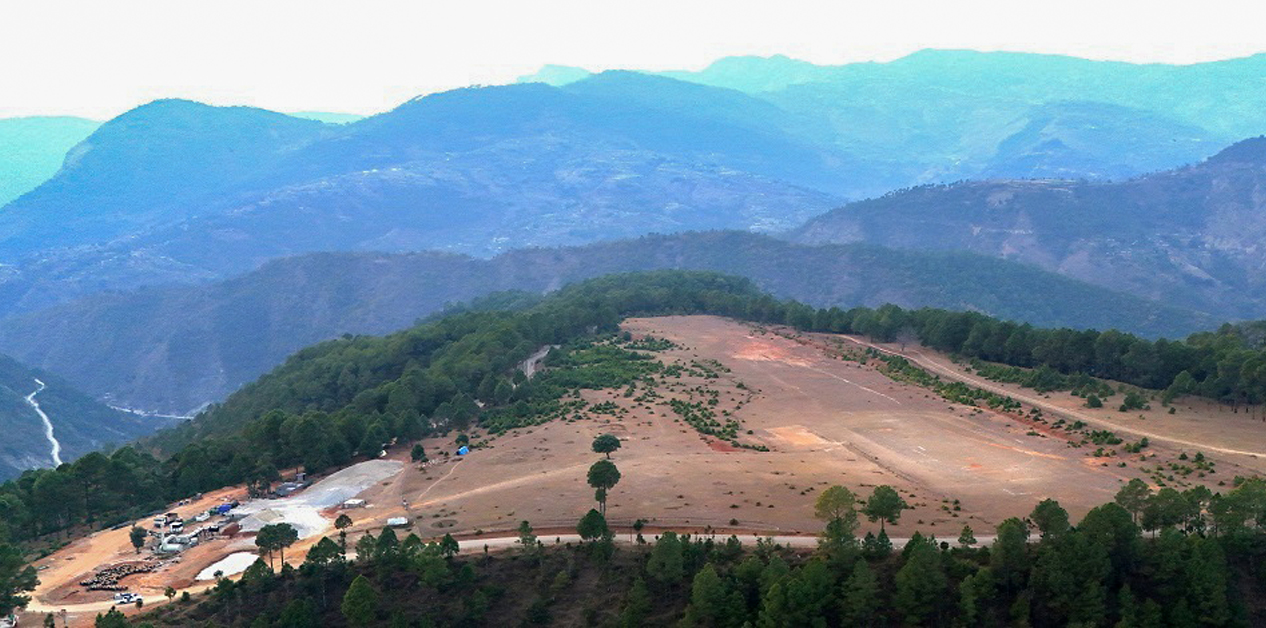
Badachaur Airport in Rolpa, currently repurposed as a sports ground for locals. Photo Courtesy Lungri Rural Municipality
The issue of building this airport was also mentioned in the budget for the fiscal year 2020/21. Accordingly, in the budget of that year made public by the Civil Aviation Authority of Nepal, Rs 5 million was allocated for acquiring land for the construction of an airport in Narayanpur. A feasibility study was conducted on 445.544 hectares of land and a survey was conducted from Gurjekhola to Hapur Khola in the west and from Nighuwar in the north to Ghorahi Tulsipur Road in south. However, when preparations for the construction of the airport began, the residents of Tulsipur area protested. Since then, the construction of the airport remains obstructed.
Work has been underway for the construction of Argha Bhagwati Airport in Sandhikharka Municipality-10 of Arghakhanchi since around 2019. The airport work, which has cost Rs 210 million so far, has been stalled due to budget shortage. Technicians estimate that it will cost an additional Rs 350 million to complete the airport. The foundation stone of this project was laid on 27 June 2016 by the then Deputy Prime Minister Top Bahadur Rayamajhi.
Mohan Singh Thakuri, ward chairman of Sandhikharka-10, says, “Despite budget allocation for two consecutive years, it could not be implemented. Now, it has transformed into a cricket and volleyball field.”
Regular flights have been operating at the Resunga Airport in Gulmi since 2018. In 2006, the then Minister for Culture, Tourism and Civil Aviation, Pradeep Gyawali, had laid the foundation stone of the airport in Resunga Municipality-10, Gulmi. The airport, which took 12 years to build at a cost of Rs 350 million, only has four flights a week. Nepal Airlines’ Twin Otter aircraft flies from here. According to airport chief Suman Thapa, flights are suspended during the rainy season from mid-June to July end, but flights are operating at other times.
Resunga Municipality Mayor Khildhwaj Panthi, who said that there have been various discussions to operate regular flights from the airport, also considers the current four-day flight operation a matter of satisfaction. He says, “The airport needs to be improved; it has not been able to operate as it should have been. However, Resunga-Kathmandu flights are being operated four days a week, which has benefited Gulmi and the eastern regions of Arghakhanchi.”
In 2016, the then Tourism Minister Jeevan Bahadur Shahi had assured that he would take the initiative to build an airport in Palpa during the inauguration of the Palpa Festival organized by Palpali Sangam in Kathmandu. Six years later, in 2022, CAAN officials inspected the Rampur Municipality area of Palpa for the construction of an airport. However, that plan did not move forward.
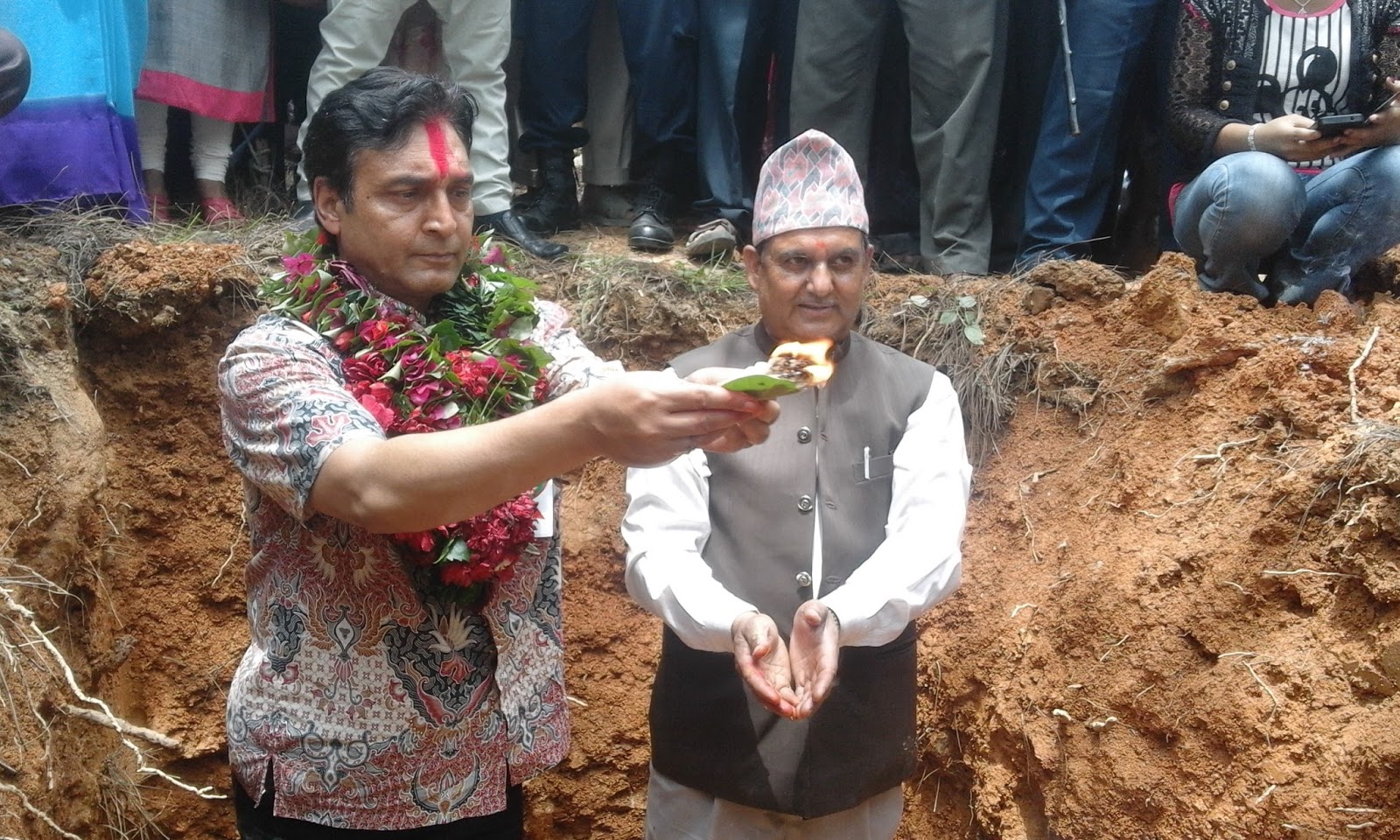
Foundation stone of Arghakhanchi Airport laid on August 7, 2019.
Money has also been spent on building an airport in Pyuthan, another hilly district of Lumbini Province. Former Deputy Prime Minister Bamdev Gautam, who was a candidate from Pyuthan and Bardiya simultaneously in the 2013 Constituent Assembly elections, had assured that an airport would be built in Pyuthan. When an EIA was conducted for the construction of an airport in Swargadwari Municipality-8 of Pyuthan in 2018, it was found that an area of 60.79 hectares would be required to build the airport. The cost of the airport was estimated at Rs 770 million at that time.
Six of the 12 districts of Lumbini Province have airports. One of these is closed and the construction of one is obstructed, while of the remaining four, only Nepalgunj Airport and Gautam Buddha Airport have regular flights. In most of the hilly districts of Lumbini, airports have been built based on the election-oriented whims of leaders rather than the needs of the people. Even though airports have been built, there are not enough aircraft. Also, there are few passengers, due to which regular flights cannot be conducted. As a result, airlines that were flying have stopped their services, and the airports cannot meet their daily operating costs. All this shows that billions of rupees invested by the state in airport construction is at risk of going waste. Especially, road networks are being expanded in the hilly districts of the province as well. Since air travel is more expensive than road transport, the planes do not receive the required number of passengers. Due to this, there are no regular flights from Tarigaun Airport in Dang and Resunga Airport in Gulmi. There are no regular international flights from Gautam Buddha International Airport, which was built at a cost of Rs 40 billion.
However, without paying attention to this important point, political party leaders are playing politics in the name of airport construction to impress the voters of their districts and regions by showing that they have brought a big development project. Leaders have made the issue of airport construction a matter of their prestige. Leaders like Bamdev Gautam of the Nepali Communist Party in Pyuthan, Surya Thapa of the CPN (UML), Top Bahadur Rayamajhi of the UML in Arghakhanchi, Pradeep Gyawali and Gokarna Bista of the UML and Chandra Bhandari of the Nepali Congress in Gulmi, Dal Bahadur Rana of the UML and Bir Bahadur Rana of the Nepali Congress and Nepali Communist Party leader Som Prasad Pandey in Palpa have been active in the name of the airport construction for a long time. In addition, provincial lawmakers and local level people’s representatives have also raised the airport agenda.
Ashish Gajurel, an expert in infrastructure and transport issues, says that the haphazard construction of airports and efforts for the same without considering the need and utility is a misuse of state coffers and taxes collected from the people. He says that it is ironic that airport projects are implemented without any extensive study and preparation on whether the airport is the main need of the district, whether the airport can be operated, and whether regular passengers would be available. “It seems that such projects are being put forward by politicians to show off how big a plan they have brought to the public and to impress the public. Otherwise, why would separate airports be needed in places that are two hours away from each other?” he asks.
He says that instead of analyzing from the perspective of long-term development, it is election-oriented development. “When the National Planning Commission makes a five-year plan, it plans what to do in five years, but it does not work according to that. It seems that planning work has progressed in their constituencies when the leaders want it.”
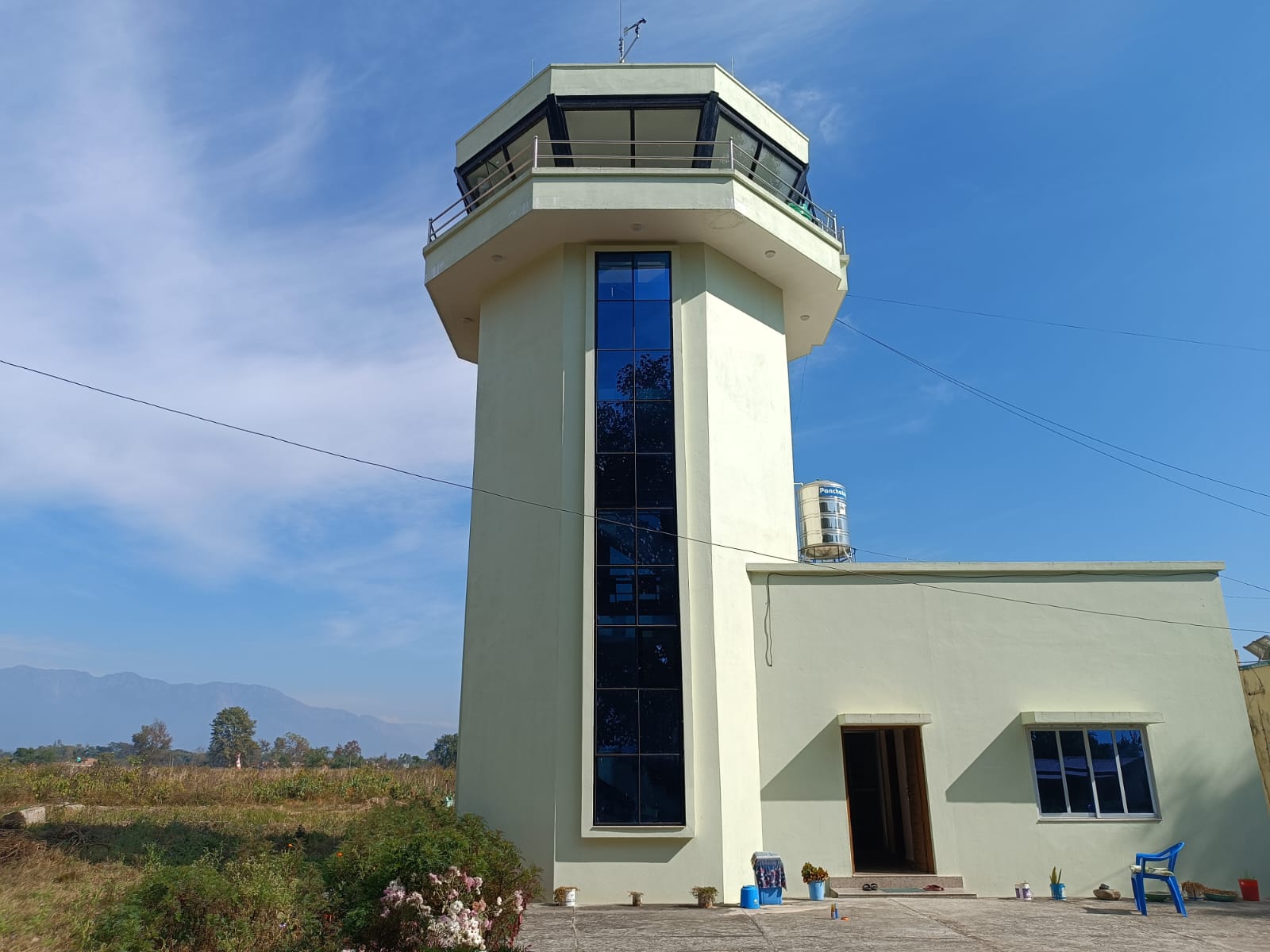
Navigation and control tower of Dang’s Tarigaun Airport
Gyanendra Bhul, information officer of CAAN, also admits that the leaders who have been in government since 1990 have had the mentality that airports must be built in their districts, and that this has wasted state resources. He says that even if CAAN refuses, there is pressure to implement such projects by allocating a budget and including such projects in the red book. Stating that there is a situation where regular flights cannot be made due to fewer aircraft and passengers have to wait at the airports, he says, “An airport is built with an investment of Rs 500-600 million but there are no aircraft for flights, which is why there are no regular flights.”
According to him, of the 55 airports currently operating, including three international airports, 30 have intermittent flights off and on while 25 airports are closed. He says that even if an airport runway is built for personal greed and prestige, regular flights cannot be conducted. “There are 45 airports in remote areas, with only eighty-nine aircraft. This situation has arisen because airports are being built but no aircraft are being added,” he says, “After an airport is built, the land cannot be cultivated or used for other purposes. A huge amount of money has been spent by the Nepal government and CAAN.”
Mahendra Pandey, an advocate for the Transparency Stakeholders’ Group, Rupandehi, says that if the state funds are unnecessarily spent in the name of infrastructure investment, the country will be pushed further backward. “Projects should be made in a way that will provide a return on the state’s investment. In our country, such projects are being made without thinking about the rate of return,” he says. “The villages have been emptied. All the people are migrating to the cities and there is no passenger traffic at the airport. Why build an airport then?” Instead, he suggests that attention should be paid to how to make the village dynamic, how to create an environment where people can live in villages.
Mismatch between people’s needs and development projects
Leaders who show ambitious dreams and talk about large-scale physical infrastructure development have not paid attention to human resource development, which is a priority for the citizens. The main needs of Gulmi, Arghakhanchi, Palpa, Pyuthan and Rolpa in Lumbini Province are clean drinking water, irrigation, agricultural markets, quality education and health facilities. Similarly, poverty and food insecurity are also a problem.
Looking at the development indices of these districts, health, education, drinking water and sanitation are the main problems. Some representative incidents and statistics show that the residents of these districts are deprived of basic needs like drinking water and health services.
On 28 April 2019, a 12-year-old boy died in Dajakot, Musikot Municipality-4, Gulmi due to contaminated water. Similarly, about 200 people were infected with diarrhea dysentery. According to the 2021 national census, out of 66,125 households in Gulmi, 22,300 households are without a single tap. Those without taps rely on wells and ponds for drinking water.
According to a statistic released by the Gulmi Health Office about six months ago, the number of patients with non-communicable diseases in the district is 6,386. Of these, 4,325 are high blood pressure patients, 1,298 are diabetic patients, 600 are chronic respiratory patients, and 163 are asthma patients. However, there is no well-equipped hospital in the district. When an outbreak of diarrhea and dysentery broke out in Dajakot, patients were taken to hospitals in Palpa and Rupandehi.
Rolpa also has a problem with clean drinking water. Around August 2024, cholera was confirmed in four people from Rolpa Municipality-10. Rolpa Hospital confirmed that cholera was caused by contaminated water. The people of Rolpa are also far from receiving basic health services. Due to this, newborns and pregnant and lactating mothers who reach health institutions for maternity services often die.
According to the 2021 census, the population of Rolpa is 236,226. This population requires 23,266 metric tons of food annually. However, the annual report of the Agricultural Knowledge Center, Rolpa, for 2021/22 states that there is a deficit of 16,262 metric tons of food in the district. Accordingly, those who cannot afford to purchase sufficient food become victims of malnutrition. According to a survey conducted by Sunchhahari Rural Municipality of Rolpa in 2017, as much as 64.40 percent of households are extremely poor. Some 20 percent of the population is in the list of poor.
According to the 2021 Census, 1,073 households in Rolpa, 932 in Pyuthan, 701 in Gulmi, 529 in Arghakhanchi, 474 in Palpa, and 678 in Dang do not have a toilet.
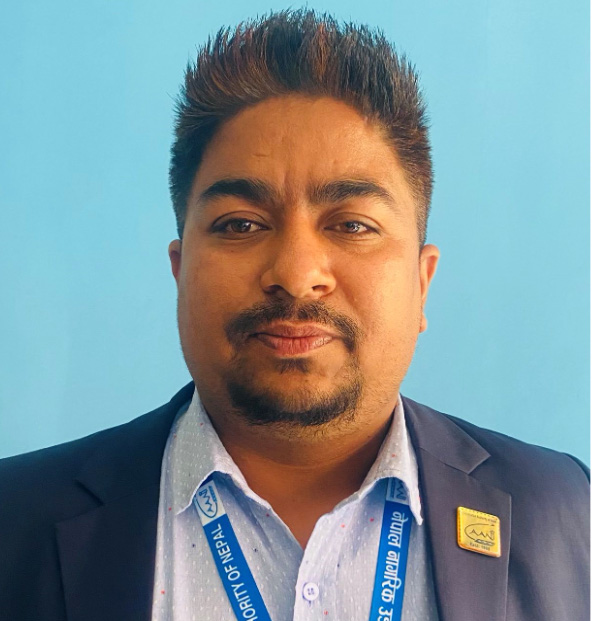
Gyanendra Bhul, spokesperson of the Civil Aviation Authority of Nepal
According to a report published by the Health Office, Pyuthan, there were 1,451 diarrhea patients in mid-July to mid-August and 886 in mid-August to mid-September of the fiscal year 2024/25. The report showed that the number of diarrhea patients increased from mid-July of 2021/22 to mid-August of 2023/24. The report concluded that regular programs should be implemented to address the problems of contaminated water and lack of sanitation.
The number of illiterates is also high in these districts. According to the 2021 Census, 24.3 percent in Rolpa, 19.84 in Pyuthan, 19.63 in Gulmi, 19.92 in Arghakhanchi, 16.29 in Palpa, and 18.56 in Dang are illiterate. In almost all districts, the illiteracy rate of women and children is higher than that of men, which indicates gender inequality in education.
Arghakhanchi District Hospital does not have enough manpower. The district hospital is being run by two physicians. Even when specialist doctors come, they do not stay for long. The 15-bed hospital receives more than 250 patients daily, says Dr Jagannath Tiwari, the head of the hospital. “A staff of 102 people has been created by hiring human resource from the hospital’s internal resources to the 60 positions, but it is still not enough. Specialist doctors come and go to another place after some time. If they come and stay here, there are no equipment,” he says, “The hospital building is in a dilapidated condition, the requested positions have not been approved.”
Due to the lack of basic health facilities in the hilly districts, hospitals in Rupandehi are very crowded with patients from those districts. Most of the patients who come for treatment at health institutions like Lumbini Provincial Hospital, Butwal Hospital, Meditech Hospital, Sajha Hospital, Devdaha Medical College, and Universal Medical College in Rupandehi are from the hilly districts.
Writer Rishi Azad says that while development and construction work should be carried out based on the needs of the citizens in the hilly districts of Gulmi, Arghakhanchi, Palpa, Pyuthan, Rolpa, Rukum and Dang, the districts are lagging behind in basic facilities while the leaders are working with election sin their minds. He says, “Projects should be carried out according to the principle of necessity, but work is being done to win the election. As a result, there is no investment in education, health and employment, and even if there is, it is not being utilized properly. This does not lead to holistic development.”