Kathmandu
Monday, July 27, 2026





The central root of the multi-billion rupee 'setting' connects directly to the top leadership of Ncell, revealing a conflict of interest aimed at evading a Rs 30 billion state liability.
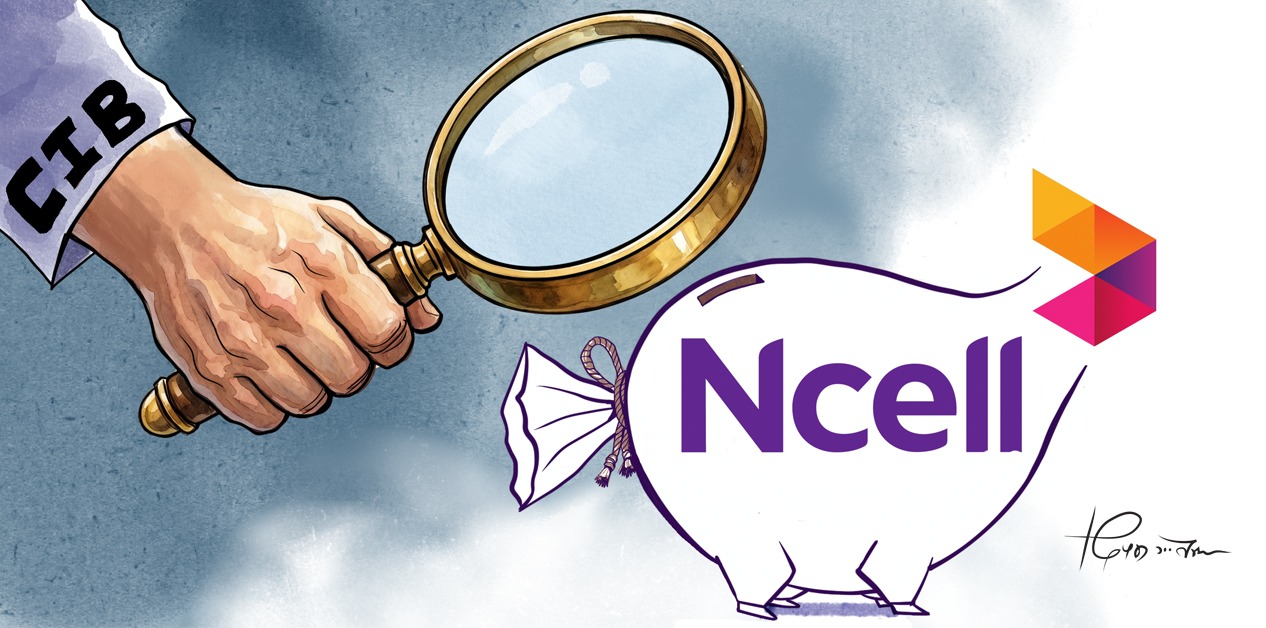
KATHMANDU: The Central Investigation Bureau (CIB) of Nepal Police, which has been investigating the illegal asset auction process of the defunct Smart Telecom, has discovered that the primary root of the scam lies within the private telecommunications service provider, Ncell.
Nepal-based operators of Ncell—Satish Lal Acharya, Bhawana Singh Shrestha, and Sachin Lal Acharya—are currently under the scanner of the CIB investigation.
Sachin is the brother of Satish, while Bhawana is Satish’s wife. In Ncell Nepal, Satish serves as the Chairman, and Sachin is a member of the Board of Directors. Bhawana is a Nepali investor who has long been associated with Ncell’s ownership structure. All three were previously associated with Smart Telecom.

Satishlal Acharya, Sachinlal Acharya, and Bhawana Singh Shrestha.
Although of Nepali origin, Satish and Bhawana hold Singaporean citizenship. Their commercial engagements span both Nepal and abroad. Informal sources indicate that they have gone “absconding” since the police initiated investigations into Smart Telecom’s asset auction. The CIB, which is focusing its investigation on Ncell regarding this case, has not given clear details about the Acharya family.
“It has been many days since we centered the investigation of Smart Telecom’s asset sale on Ncell,” says Senior Superintendent of Police (SSP) Shiva Kumar Shrestha, spokesperson for the Bureau. “The investigation is ongoing, and at this stage, we cannot disclose information about the individuals under investigation.”
Nevertheless, Shrestha states that the police will adopt their standard procedures if individuals under investigation need to be brought into the legal framework. “If the people to be arrested during the investigation are abroad, there is a legal process to bring them back; the police will deploy their own methods to track down absconding individuals,” he adds.
Investigating officers have reached the conclusion that top Ncell officials are involved in this case because decisions regarding the asset purchase and ownership transfer of Smart Telecom would have to come from the company’s highest echelons. The Bureau claims that top Ncell executives are the focus of the investigation since such strategic decisions are impossible without the approval of the Board of Directors and upper management.
Chief of the CIB, Additional Inspector General of Police (AIG) Manoj KC, states, “Since Ncell is primarily linked to the asset sale and transaction process of Smart Telecom, a detailed investigation became necessary. The police are currently gathered to collect evidence, including necessary documents.”
A ‘setting’ worth Rs 4.60 billion
The connection between Smart Telecom and Ncell is not limited merely to the purchase and sale of assets. Another crucial dimension of the investigation involves the roles of individuals tied to both companies. The Acharya brothers were the creators of Smart Telecom; today, they are the operators of Ncell.
Smart Telecom started its telecommunication services on April 15, 2013, after obtaining a license from the Nepal Telecommunications Authority (NTA). Operating as ‘Smart Cell’, it expanded its mobile services and built infrastructure across the country. When the company started, Sachin Lal Acharya was the Chairman, and Satish Lal Acharya also held shares.
Smart Telecom
Later, Smart Telecom fell into a financial crisis. Having failed to pay government royalties, frequency fees, and renewal fees, the company could not protect its license. The company, which initially received a 10-year license from the Authority, failed to submit a renewal application after the period expired, leading to its automatic cancellation on April 16, 2023.
While companies operating telecommunication services are granted licenses for a maximum of 25 years, the provision dictates an initial 10-year period, followed by 5-year renewals based on company applications.
Investigating officers state that since the auction process of a company whose license has already been canceled does not appear legally compliant, the CIB is focusing its probe on the auctioning bank and the buyer, Ncell.
Smart Telecom had taken a loan of Rs 1.06 billion from Nepal Investment Mega Bank (NIMB). After failing to repay the principal and interest, the loan turned into a Non-Performing Loan (NPL). In its debt recovery actions, the bank evaluated the total assets of Smart Telecom, auctioned them off for Rs 4.60 billion, and transferred them to Ncell.
Claiming to recover the loan taken by Smart Telecom, the bank published an asset auction notice on September 19, 2025. Seventeen days later, on October 6, 2025, Ncell accepted and acquired those assets. The CIB is investigating this exact process.
Legally, the infrastructure, equipment, and other assets of a telecommunications company whose license has been canceled should fall under the ownership of the Telecommunications Authority—meaning the government. The Telecommunications Act, 1997 contains a provision stating that once the license period of a company operated under NTA permission expires, its ownership reverts to the Government of Nepal. Furthermore, Smart Telecom owes a liability of Rs 30 billion to the government, combining renewal fees, the Rural Telecommunications Development Fund, frequency fees, and fines.
Executives of Smart and Ncell are accused of orchestrating a plot to evade this Rs. 30 billion liability owed to the government.
It is alleged that officials of Smart Telecom and Ncell conspired to evade a liability of Rs 30 billion that Smart Telecom owes to the government.
However, because the assets that should have come under government ownership were illegally auctioned and transferred to the private service provider Ncell without the Telecommunications Authority even knowing, the police are actively investigating. The CIB is studying the transactions between Smart Telecom and Ncell, the individuals involved during the ownership transfer, the decision-making process, and the ownership linkages.
An aspect that makes the investigation highly sensitive is the Acharya family’s relationship with both the asset-selling and asset-purchasing companies. Sachin Lal, the initial Chairman of Smart Telecom, is currently a member of Ncell’s Board of Directors. Similarly, Satish Lal, who held share investments in Smart at the time, is currently serving as the Chairman of Ncell. For this reason, investigating officers see a direct or indirect ‘conflict of interest’ in Ncell’s decision to acquire Smart Telecom’s assets. “We are looking into detail whether the key individuals across both institutions are the same,” says AIG KC.
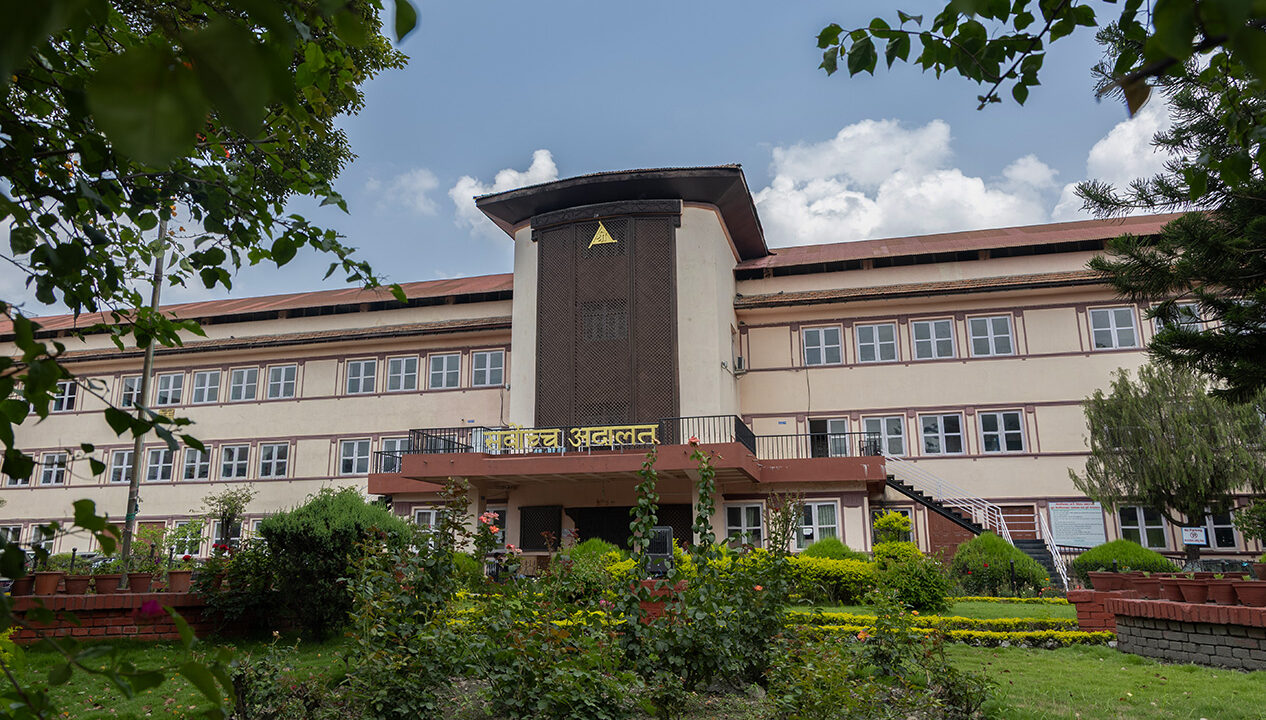
The police entered the case after allegations of an illegal nexus emerged during the auctioning of Smart Telecom. In the course of this, Jyoti Prakash Pandey, the Chief Executive Officer (CEO) of Nepal Investment Mega Bank, was arrested on May 13. The CIB had initiated an investigation against him for fraud, criminal breach of trust, and organized crime. Following the filing of a habeas corpus writ, he was released on personal recognizance under the orders of the Supreme Court.
After the police started investigating the auction process, Ncell corresponded with the bank on May 15 demanding its money back. Regarding this correspondence, bank spokesperson Pramod Acharya states, “This has also become a subject of investigation. Since investigators have asked us not to speak externally on this matter, we will not say anything at this time.”
When contacted via phone and email regarding this development, Ncell did not provide a response.
Three companies, including Ncell, participated when Smart Telecom’s assets were auctioned. Among them, the CIB claims that the bank set up two companies as ‘dummies’ just to showcase competition. According to the CIB, Transtech Company bid only Rs 450 million and Professional Business Network bid only Rs 420 million.
Ncell, which placed the highest bid, acquired ownership of Smart’s assets from Investment Mega Bank for Rs 4.60 billion. The police claim that because the bidding amounts of the two companies were unnaturally disparate, the bank had set these companies up as dummies.
Palina Shrestha, an operator of Transtech Company who was arrested in connection with this case, has already been released following a court order. Similarly, when Smart Telecom operators Sarvesh Joshi and Narendra Ulak were presented to the court to extend their remand for organized crime offenses, the court denied permission, leading the police to release them.
CIB Spokesperson Shrestha states that despite their release, investigations continue against all four individuals, including bank CEO Pandey. “An investigation does not stop just because arrested individuals are released,” he says. “The investigation is ongoing by collecting relevant documents from an auction process where a major ‘setting’ took place.”
In Smart Telecom, Singapore-based Lal Sahu Distributors Pvt. Ltd. held a 70 percent ownership stake, Gilette Company held 10 percent, and Sachin Lal Acharya’s Square Network Pvt. Ltd. held 20 percent.
Before Smart’s license was canceled, the Assets Management Regulation of Telecommunications Service Providers, 2022 had been enacted. The responsibility for managing Smart’s operations and asset auction was assigned to the management group of the Telecommunications Authority. Right when the Authority was preparing to initiate the process, the bank abruptly auctioned Smart’s assets and sold them to Ncell.
According to former Acting Auditor General Sukadev Bhattarai Khatri, settling a Rs 30 billion valuation for just Rs 4.60 billion is collusion in itself. “The valuation of Smart’s assets took place during the tenure of Communications Minister Prithvi Subba Gurung when KP Sharma Oli was Prime Minister, and the auction bid appears to have gone through during the interim electoral government,” he says.
“The Ministry could have intervened and stopped that file. It must be said loudly that the then-minister must be held responsible for that liability. Can one just remain a mute spectator after becoming a minister?” he asks.
Jagdish Kharel was the Minister for Information and Communications when Smart Telecom was auctioned to Ncell.
High-ranking officials on the investigation radar
Ncell is Nepal’s largest private mobile service provider. Entering Nepal in 2004 as Spice Nepal Pvt. Ltd. under the brand ‘Mero Mobile’, the company became ‘Ncell’ after the Swedish telecom company TeliaSonera took ownership in 2008. Following that, ownership of the company moved through Malaysia’s Axiata Group to its current holder, Spectrlite UK Limited, registered in the United Kingdom.
The connection between Smart Telecom’s initial investors and Ncell’s current Nepali partners, alongside the similarities in ownership structure, has become the main pillar of the investigation. According to the Bureau, the investigation originated from the fact that the asset auction and management process following the cancellation of Smart Telecom’s license did not proceed according to the law.
According to Min Prasad Aryal, spokesperson for the Nepal Telecommunications Authority, the bank had been written to requesting asset details of Smart Telecom before proceeding with the auction. After the bank failed to provide the details, a letter was also sent to Nepal Rastra Bank. “Correspondence was made repeatedly before and after the auction,” Aryal says.
Following the cancellation, the Nepal Telecommunications Authority decided to advance the company’s asset and management process by enforcing the ‘Assets Management Regulation of Telecommunications Service Providers Whose License is Not Valid, 2022′. For this, a management group was formed under the coordination of NTA Board Member Gokarna Mani Sitaula.
Clause 37 of the regulation empowers the management committee to regularize the service operations of a telecommunications company whose license is no longer valid. On that basis, the Authority called for Letters of Intent (LoI) on May 5, 2023 for an asset valuation committee.
Citing insufficient applications, notices were republished on May 19 and June 23. After that, claiming that applications with the necessary qualifications still did not arrive, expressions of interest were requested for a fourth time in September. Following the fourth call, the names of qualified consultants and alternative consultants for five members, including the coordinator of the valuation committee, were selected and recommended to the Ministry of Communication and Information Technology.
This timeline demonstrates that even after the regulatory body decided to cancel the license, repeated relief and protection were provided to Smart through cabinet decisions. This protection, the ownership structure, and the subsequent Ncell-Smart Telecom transaction relationship have now become the core subject of the investigation.
According to Clause 13(1) of the regulation, the Authority selects consultants for such asset valuations, recommends them to the government, and the final appointment is made by the government. However, the Ministry did not advance any decision-making process on the recommendation sent by the Authority. This effectively stalled Smart Telecom’s asset valuation and auction process.
Another critical angle of the investigation shows that the contemporary government itself was actively involved in protecting Smart Telecom. After the company failed to pay the dues it owed to the state, the Nepal Telecommunications Authority had decided to cancel Smart Telecom’s license as early as July 28, 2019. At that time, the company owed around Rs 2.32 billion in arrears. However, a cabinet meeting held on January 6, 2020 overturned the Authority’s decision and granted the company the facility to pay its dues in installments. Under that decision, Smart received relief on the condition of paying installments at the end of the fiscal year.
Under the frequency fee, it was specified that the company had to pay Rs 598.8 million in the first installment, Rs 832.3 million in the second installment, Rs 774.0 million in the third installment, Rs 715.6 million in the fourth installment, and Rs 657.2 million in the fifth installment.
Even after receiving the installment facility, Smart failed to deposit the specified amounts. Following this, the government kept extending the time frame to accommodate the company’s dues. To the company that failed to pay its first installment, the then-Oli-led government gave an additional six months for a second time on September 14, 2020. Following that, on March 14, 2021, the deadline was extended yet again, providing facilities to Smart up to the year 2021 (2078 BS).
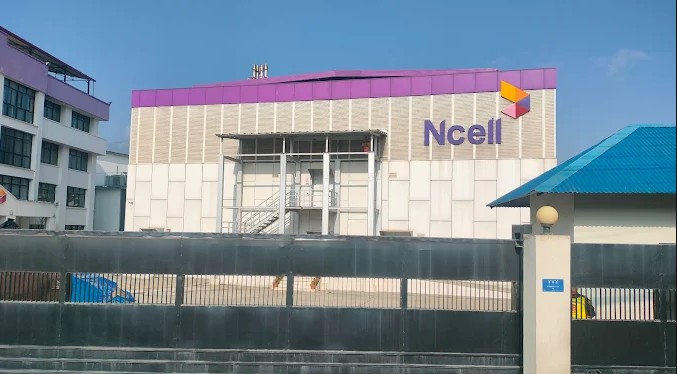
Ncell Headquarters
Not only this, on July 12, 2021, the cabinet made another decision, granting Smart a fourth extension until mid-January, 2022 to clear its dues. Despite repeated waivers and concessions, the company failed to pay its arrears. Ultimately, because the license could not be renewed, the permission was automatically canceled on April 15, 2023.
According to NTA Spokesperson Aryal, representatives from Ncell visited the office after the auction process, demanding the services and facilities typically provided post-auction. “However, we clearly told them that this process was not legally compliant, and therefore no form of service or facilitation could be provided,” he states.
The Smart-State Setting
The Smart Telecom case is not merely the story of a failed telecommunications company. This company, which slid into crisis under the protection of the Oli government, was given legal cover through regulations by the Sher Bahadur Deuba-led government. The Pushpa Kamal Dahal-led government preserved its core structure. Consequently, provisions that make a private company’s liabilities public, weaken competition, and cause the state to lose potential revenue remain active to this day.
After Smart Telecom’s license failed to be renewed, the company should have been taken through a liquidation process by forcing it to pay its dues according to the law. Instead, the government introduced the ‘Assets Management Regulation of Telecommunications Service Providers Whose License is Not Valid, 2022’. This regulation was brought into Nepal for the very first time, specifically targeting Smart Telecom. While drafting the regulation, the draft proposed by the Authority was significantly altered.
In the draft recommended by the Authority, provisions required service providers to clear their own taxes, royalties, bank loans, employee liabilities, and other arrears. However, in the final regulation, that provision was removed, and a mechanism was placed to clear liabilities solely from the sale of the company’s cash or assets. The question of who would bear the remaining liabilities if debts exceeded assets was left wide open. This established a precedent: once the license of a private company carrying billions of rupees in liabilities is canceled, its investors and operators are not held personally or institutionally accountable.
Another provision was slipped into this very regulation. A clause was inserted to provide additional license periods, frequencies, and special facilities in the telecommunications market to the company that takes over Smart Telecom’s liabilities. This laid the groundwork for the auction-purchaser to reap direct benefits in the future. The arrangement attempting to transfer licenses and frequencies—which should only be distributed through open competition—under the guise of ‘liability management’ does not align with the core spirit of the Telecommunications Act.
The Telecommunications Act, 1997 dictates provisions for asset transfer and re-competition only in the case of licenses that have completed their full 25-year tenure. By placing companies whose licenses were automatically canceled due to non-renewal into the same category, the regulation appears to create rights not granted by the Act. This indicates that the regulation attempted to stand above the Act itself.
Chief of the CIB, AIG KC, concludes, “Matters of Acts and laws are subjects of policy decisions; the police will investigate all relevant matters that fall within our jurisdiction.”