
Kathmandu
Monday, March 2, 2026






KATHMANDU: Nepal News presents today’s snapshot of Nepal’s economic activities. Get quick updates on major market movements, policy shifts, and financial developments shaping the economy of Nepal. Here are the key economic highlights for today:
NEPSE Drops by 7.86 Points
The Nepal Stock Exchange (NEPSE) index dropped by 7.86 points on Wednesday, settling at 2,606 points. The daily trading amount slightly decreased to Rs 3.73 billion, compared to Rs 3.75 billion on the previous day. While 79 companies saw their share prices rise, 169 companies experienced a decline. All sectoral sub-indices fell, though the drop was less than one percent for all sectors. Three companies, Swastik Laghubitta, Muktinath Krishi Company, and SY Panel (which began trading today), saw their prices increase by ten percent. Conversely, Jhapa Energy saw the steepest decline, dropping by 9.30 percent.
NRB to Withdraw Rs 40 Billion
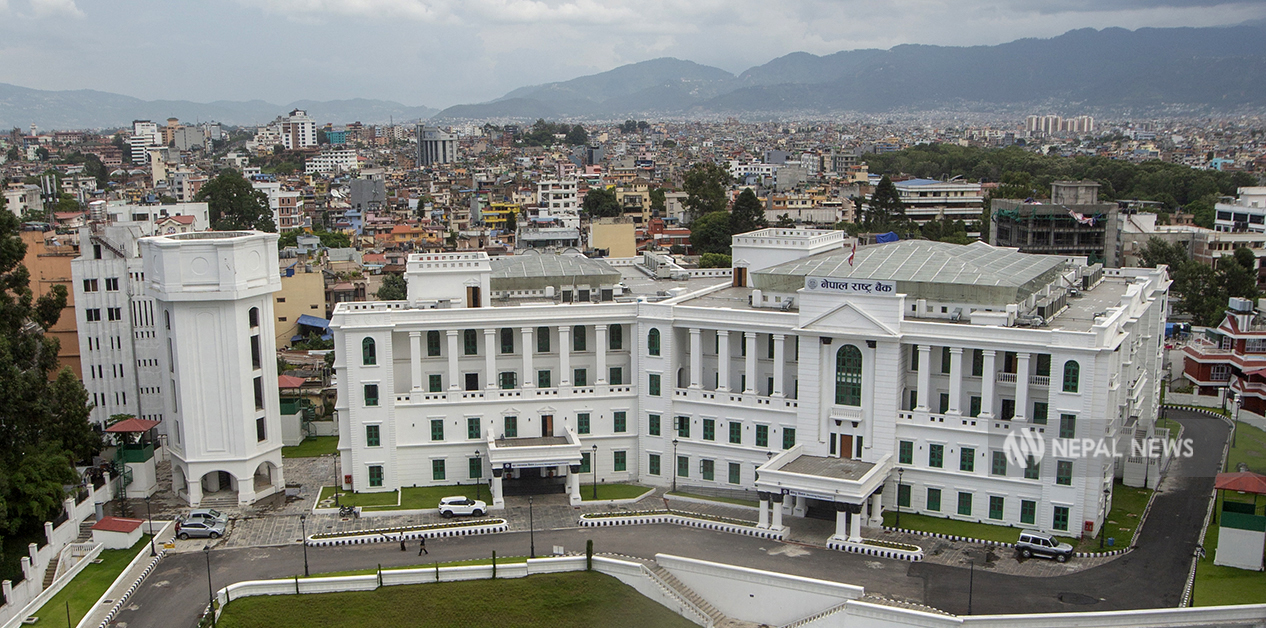
The Nepal Rastra Bank (NRB) is set to withdraw Rs 40 billion in liquidity from the financial system for an 18-day period by issuing deposit collection instruments today. This action is being taken to manage the persistently high level of liquidity and stabilize market interest rates. The Central Bank currently records total deposits exceeding Rs 7.5 trillion. Only ‘A,’ ‘B,’ and ‘C’ class banks and financial institutions licensed by the NRB are eligible to participate in the auction, which will determine the interest rate through a bidding process. The principal and interest for this deposit collection instrument will be paid on December 28.
Customs Agents Resume Service After Assurances
Customs agents across the country have decided to resume services, which had been halted due to dissatisfaction with certain provisions of the Customs Act implemented from Sunday. Kishor Bartaula, Director and Information Officer at the Customs Department, stated that all customs offices nationwide are now operational. The department has acknowledged the concerns raised by the Customs Agents’ Federation, particularly regarding penalties and certain provisions. The department has committed to gradually implementing management improvements and addressing concerns that can be handled internally. Furthermore, appropriate demands requiring regulatory changes will be forwarded to the Ministry of Finance to be addressed in the drafting of the regulations.
Revenue Department to Decentralize Key Services to 39 Local Units
The government is transferring several key services handled by the Inland Revenue Department (IRD) to 39 selected local units in the first phase, a move aimed at enhancing service delivery and transparency. Services being decentralized include issuing permanent account numbers (PAN cards) for individuals and businesses, granting excise duty licenses, and collecting federal revenue. This action follows the government’s decision to dissolve 36 tax service offices nationwide. The IRD aims to shift services to all local units within the next fiscal year. Training for local-unit representatives is commencing today, with the goal of starting service delivery from these 39 local units by the end of December.
Inactive Bank Accounts Swell to Rs 188 Billion
A total of Rs 188.35 billion is currently held in inactive (dormant) accounts across 54 operational banks and financial institutions, a figure that is growing annually. According to NRB regulations, savings accounts must be made inactive after three years of no transactions, and current/call accounts after one year. Pressure on employees to meet account opening targets contributes to the high number of inactive accounts. The NRB will soon implement a work plan to mitigate the risks associated with the high volume of inactive accounts, which currently number around 60 million, more than double Nepal’s population.
Nepal reaches 14.8 on Global Hunger Index
Nepal has shown significant improvement in addressing food insecurity, moving from the ‘Serious Hunger’ category to the ‘Moderate Hunger’ category in the Global Hunger Index (GHI). A report released on Tuesday by Welt Hunger Hilfe and Li-Bird showed Nepal’s GHI score has fallen to 14.8 in 2025, a substantial improvement from its score of 37.1 in 2000. The report attributes this progress to government policy reforms and remittances. Despite this overall positive trend, the report highlights that undernutrition and child stunting remain major public health challenges, with stunting affecting 26 percent of children under five. Finance Minister Rameshwar Prasad Khanal stressed that while the improvement is positive, continued efforts are necessary, especially collaboration with the private sector, to achieve the Sustainable Development Goal of zero hunger by 2030.
SSF and CNI to Expand Contribution-Based Social Security
The Social Security Fund and the Confederation of Nepalese Industries (CNI) signed a Memorandum of Understanding on Tuesday to enroll all businesses affiliated with the CNI into the contribution-based social security scheme. The agreement, signed by Kaviraj Adhikari, Executive Director of the Fund, and Dr. Ghanshyam Ojha, Director General of the CNI, aims to facilitate the inclusion of the CNI’s member organizations and industries. The Fund’s Chairman, Krishna Hari Pushkar, expressed confidence that this move is a significant step towards expanding the social security scheme among both employers and workers. Under the agreement, the CNI will facilitate the enrollment process, and the Fund will regularly conduct awareness and training programs on social security in collaboration with the CNI.
FTMC Sells Over 1,200 Quintals of Subsidized Food in Manang
The Food Management and Trading Company (FTMC), Manang Branch and Depot Office, has expanded the distribution of subsidized food items and essentials in the current fiscal year to strengthen food security. Over 1,200 quintals of food grains have been sold at subsidized rates, directly benefiting more than 1,000 consumers. The subsidy quota for the district increased significantly from 200 quintals last fiscal year to 1,080 quintals this year. Despite the challenging geography, the office is ensuring a regular supply of various types of rice, pulses, oil, and sugar by using mules to transport items to settlements not reachable by road.
Government Raises Price, Farmers Voice Dissatisfaction
The government has set the minimum support price for sugarcane at Rs 620 per quintal for fiscal year 2025/26, up Rs 35 from last year, as decided by the Council of Ministers on Monday. An additional subsidy of Rs 70 per quintal will also be provided. The Ministry of Agriculture and Livestock Development calculated the price based on Rs 437 production cost, Rs 81 transportation, and Rs 102 profit per quintal. Farmers expressed dissatisfaction, claiming the price was fixed without tripartite consultation with mill owners. Sugar mills, including Indushankar Sugar Industry, plan to begin crushing operations next week.
Nepalgunj Forms Committee to Manage Seven City Buses Worth Over Rs 30 million
Nepalgunj Sub-Metropolitan City has formed a six-member study committee to manage seven city buses, valued at over Rs 30 million, which have been unused for the past six years. The buses, purchased for Rs 35.8 million in the fiscal year 2018/19 with grant money intended for marginalized communities, were operated briefly before being permanently grounded. The committee has been given 15 days to study the current condition of the buses, including legal issues, and submit a report to the next Executive Committee meeting. Spokesperson Pramod Rijal emphasized the need to operate the buses to fulfill the initial objective of serving the residents, despite the legal hurdles.
Farmers Begin Apple Orchard Management Early in Mustang
Farmers in Gharpajhong, Thasang, and Baragung Muktikshetra rural municipalities of Mustang District have started apple orchard management earlier than usual this year. This proactive step is crucial for enhancing productivity and ensuring high-quality apple production. According to farmer Diwas Thapa, the early management began after the apple leaves quickly fell following the post-harvest period. Orchard management involves essential tasks such as proper pruning to ensure uniform sunlight and air circulation, applying fertilizers, providing irrigation, and spraying ‘Bordeaux’ and ‘Bordeaux mixture’ to protect against pests and diseases. Rajesh Gurung, chief of the District Agriculture and Livestock Development Office, confirmed that while the lower region is starting now, the upper Mustang region will begin management from December 30 to mid-February.
54 Percent of Chitwan Poultry Infected with Anemia Virus
The Chicken Anemia Virus (CAV) has been detected in 54 percent of the poultry sampled from Chitwan and its neighboring districts. An analysis conducted by the National Avian Disease Research Laboratory Chitwan from mid-July to mid-November found that 98 out of 182 samples were infected with CAV. According to Dr. Bijay Kumar Shrestha, Chief of the laboratory, the virus compromises the chicken’s immunity, making them susceptible to other diseases. Although immediate visible effects may be minimal, the virus causes anemia, stunted growth, and reduced production, leading to financial losses for farmers. Dr. Shrestha urges farmers in Chitwan, Makwanpur, and Nawalparasi to vaccinate their poultry against the virus and strictly implement biosafety measures, including complete disinfection of visitors and vehicles entering the farm.
Farmers’ Market Introduced in Siraha’s Padariya Baitar
An agricultural farmers’ market has been launched in Padariya Baitar, Lahan Municipality-11, Siraha, driven by community leaders to boost farmers’ income. The market, which operates twice a week on Saturday and Tuesday, sells locally produced vegetables, fish, meat, boiled rice, lentils, and mushrooms. Dharma Raj Chaudhary, Chairman of the Management Committee of the market, stated that the initiative aims to increase farmer income and support the local Small Farmers’ Cooperative, Padariya. The cooperative, led by chairman Magen Kamait, offers loans at a minimum 6 percent interest to over 400 farming families to prevent them from resorting to loan sharks and to support ventures like mushroom cultivation, goat farming, and fish production.
Baglung Sees 84.4 Metric Ton Increase in Paddy Production
Paddy production in Baglung district has increased this year, largely due to timely rainfall, according to the Agriculture Knowledge Centre. Pratibha Sharma, Information Officer at the Centre, reported that paddy production increased by 84.4 metric tons this year, totaling 20,784.4 metric tons, compared to 20,000 metric tons last year. The marginal increase is attributed to less damage from root rot disease, which affected crops last year. Farmers in the district, where only 6,148 hectares of the 46,148 hectares of cultivable land have irrigation facilities, cultivate various varieties, including Khulum 4, Jetho Budho, and Marsie. Despite the increase, Baglung is not self-sufficient in rice production.
Petroleum Imports Account for 54.36% of Revenue at Kakarbhitta Customs
Petroleum products were the top revenue-generating commodity at the Mechi Customs Office, Kakarbhitta, accounting for 54.36 percent of the total customs revenue from the top ten imported items. According to the Office, Rs 2.968 billion was collected from petroleum imports alone from July 17 to November 16 in the current fiscal year. The total value of imported fuel during this period was Rs 6.276 billion. The customs office failed to meet its annual revenue target of Rs 18.877 billion in this period, despite fuel imports increasing by 2.1 percent compared to the previous fiscal year.
KUKL Services to Halt for Three Days
All services provided by the Kathmandu Upatyaka Khanepani Limited (KUKL), including bill payments, will be suspended for three days starting from December 12 at 3:00 PM until December 14. According to Ashok Kumar Paudel, Chief Executive Director of KUKL, the closure is necessary to merge the software systems of the Chhetrapati and Tripureshwar branches and to integrate the software of the Maharajgunj and Kamaladi branches. During this period, all services, including online payment, revenue collection counters, and new water connection installations at the affected branches, will be temporarily unavailable due to the software integration work.
Locals Block Mid-Hill Highway Demanding Compensation
Local residents in Sundarbazaar, Lamjung, staged a roadblock today at Khatrithati demanding the immediate construction of the Pushpalal Mid-Hill Highway. The construction of this National Pride Project has been halted for about a two-kilometer stretch from the Campus Gate to Khatrithati in Sundarbazar Municipality-6 as locals demand compensation for land and property damage. The 11-member Struggle Committee, led by coordinator Rajendra KC, has organized a phased movement, complaining that the local government has failed to take positive steps, leaving residents to suffer from dust and poor road conditions. Future protest programs include locking the Municipal Office on December 12 and holding a peaceful rally on December 13.
Government Cancels Double Taxation Avoidance Agreement with Mauritius
The government has decided to cancel the Double Taxation Avoidance Agreement (DTAA) with Mauritius, a decision made at the Council of Ministers meeting on Monday. The agreement, which had been in place since August 3, 1999, was formally terminated via diplomatic channels under Article 29, Sub-clause 1 (termination provision) of the agreement. According to the Inland Revenue Department, this strategic decision was taken to align Nepal’s international tax structure with significant changes in domestic law and the global tax environment, which now demand greater transparency and control over tax abuse. The cancellation will take effect for Nepal from July 17 of the next fiscal year, 2026/27.
NRB Restructures KDB After Rs 3.2 Billion Fraud
The Nepal Rastra Bank (NRB) has initiated the restructuring and reopening of Karnali Development Bank following a severe financial crisis where it could no longer return savings to depositors. This pioneering process involves reducing the shares of individuals accused of fraud to just one percent and converting depositors’ savings into shares, making them the new shareholders. According to Tika Ram Khatiwada, coordinator of the bank’s management team, the three-phase plan first reduced the founders’ and ordinary shares held by 18 individuals and two companies involved in embezzlement to one percent. This move leaves 99 percent of the bank’s shares vacant for depositors. The central bank is now seeking depositors’ consent and will then look for new investors to revive the bank under a new name and management. The Central Investigation Bureau (CIB) had filed a case on July 30 against 109 individuals for the alleged misappropriation of Rs 3.2 billion.
Citizen Life Insurance Proposes 20 Percent Cash Dividend
Citizen Life Insurance has proposed a 20 percent cash dividend to its shareholders. The decision was made at the company’s Board of Directors meeting held yesterday. The proposed dividend is subject to approval from the Insurance Authority and ratification by the company’s General Assembly. As the company’s paid-up capital has reached Rs 5 billion, as mandated by the Authority, the proposal focuses entirely on a cash payout, unlike the previous year when it offered a 26.98 percent bonus share along with a total dividend of 28.40 percent.
Gold Price Jumps by Rs 200 Per Tola; Silver Rises by Rs 150
The price of gold increased by Rs 200 per tola (11.66 grams) in the domestic market on Wednesday. According to the Federation of Nepal Gold and Silver Dealers’ Association, the price of hallmark gold has been set at Rs 252,100 per tola, up from Rs 251,900 on Tuesday. Similarly, the price of silver saw a sharp daily increase of Rs 150 per tola, climbing to Rs 3,750 from Rs 3,600.


![Holi celebrations in Basantapur with foreign tourists [Photo Feature]](https://english.nepalnews.com/wp-content/uploads/2026/03/HOLI-1.jpg)