
Kathmandu
Tuesday, March 3, 2026






KATHMANDU: Nepal News presents today’s snapshot of Nepal’s economic activities. Get quick updates on major market movements, policy shifts, and financial developments shaping the economy of Nepal. Here are the key economic highlights for today:
NEPSE Index Sees Double-Digit Gain, Reaching 2,619.99 Points
The Nepal Stock Exchange (NEPSE) index showed a double-digit improvement on Tuesday, rising by 18.37 points to settle at 2,619.99 points. This positive trend was seen across all subgroups, with the exception of the trading group, which declined. A total of 325 companies were traded, resulting in a turnover of Rs 3.29 billion from the exchange of over 7.8 million units of shares. Ngadi Group Power recorded the highest trading volume and turnover, with shares worth Rs 198.2 million changing hands. Swastik Laghubitta and Narayani Development Bank hit the positive circuit, while Swet Ganga Hydropower and Construction was the biggest loser.
Government Terminates 22 Irrigation Contracts Worth Rs 14.23 Billion
The government has terminated 22 long-stalled irrigation project contracts after contractors failed to execute the work for years. The total contract value of the cancelled projects amounts to Rs 14.23 billion. The cancellations include 6 from the Babai Irrigation Project, 15 from the Janakpurdham Irrigation and Water Resource Management Project, and 1 major contract from the Sunkoshi Marin Diversion Multipurpose Project. The Sunkoshi Marin contract, worth Rs 14.8 billion (including tax) with Patel-Raman JV, was the largest single contract terminated. The Department of Water Resources and Irrigation confirmed that out of 215 active contracts, 33 are problematic, with 22 now cancelled as a result of Minister Kulman Ghising’s directive to end the trend of contractors abandoning projects.
Nepal’s Inflation Hits 22-Year Low of 1.11 Percent
Nepal’s inflation rate dropped to a 22-year low of 1.11 percent in mid-November, down sharply from 5.60 percent recorded during the same period last year, according to Nepal Rastra Bank (NRB). Economists attribute this record low to weakening global economic conditions, the stabilizing effect of India’s low inflation (0.71 percent) coupled with Nepal’s fixed exchange rate, and a decline in global prices of commodities like lentils and legumes. Crucially, domestic demand has weakened sharply due to continued high outmigration, as growing numbers of Nepalis leave for foreign employment or move to India for better opportunities. This massive exodus has resulted in historically low demand in the domestic market, leading to subdued price growth. Food and beverage inflation declined by 3.32 percent, driven by a sharp fall in vegetable, spice, and pulse prices, while non-food and services inflation stood at 3.69 percent. Inflation was highest in Koshi Province (1.80 percent) and lowest in Sudurpashchim Province (0.26 percent).
NRB Reports Economic Stability: Forex Reserves at USD 21.52 Billion
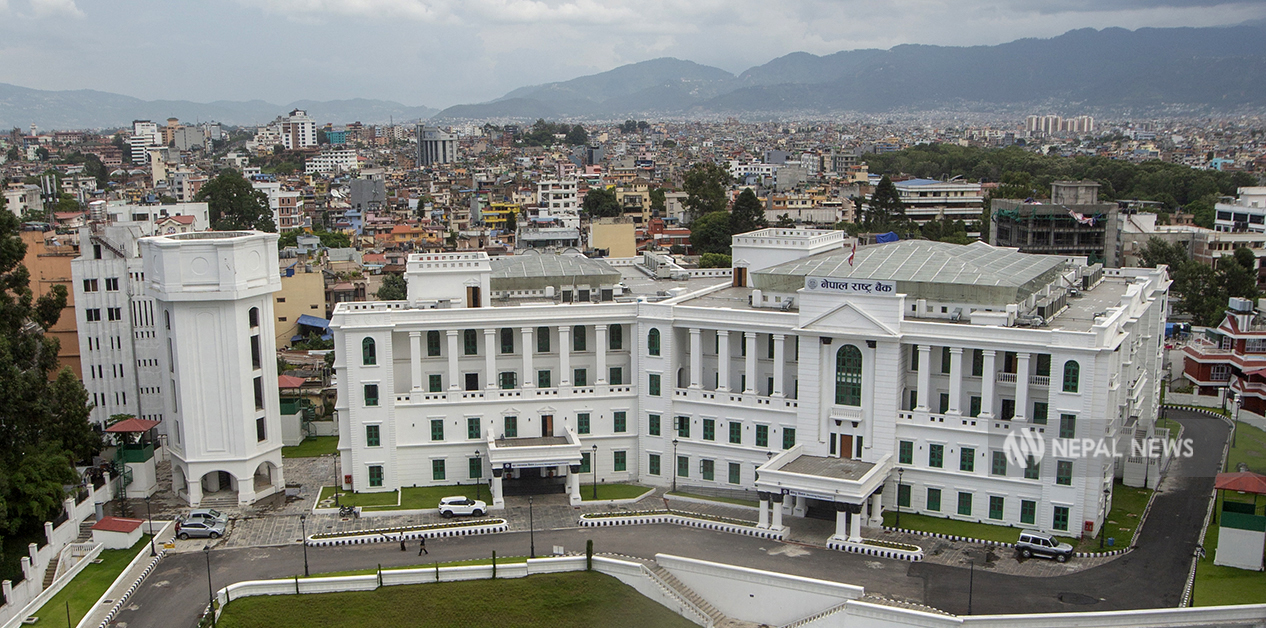
The current economic and financial situation of the country shows signs of stability, marked by controlled inflation, external sector balance, and eased liquidity in the banking system, according to the Nepal Rastra Bank (NRB) report for the first four months of the current fiscal year 2025/26. The total foreign exchange reserves reached USD 21.52 billion, sufficient to cover imports of goods and services for 17.4 months. Remittance inflow is nearing Rs 7 billion, having increased by 31.4 percent year-on-year to reach Rs 687.13 billion. The current account deficit stands at a surplus of Rs 279.65 billion, and the overall Balance of Payments (BOP) is in a surplus of Rs 318.40 billion. Broad money supply (M2) increased by 3.0 percent, deposit mobilization rose by 3.1 percent, and private sector lending grew by 1.2 percent. The weighted average interest rates for commercial banks are 3.74 percent for deposits and 7.38 percent for loans.
Capital Expenditure at 8.03 Percent, Revenue Collection at 78.74 Percent of Target in 5 Months
The government’s performance in both spending and revenue collection remains sluggish in the first five months of the current fiscal year. The development budget/capital expenditure reached only 8.03 percent of the allocated Rs 407.88 billion, totaling Rs 33.87 billion, which is significantly lower than the 11.58 percent spent in the same period last year. Revenue collection is also slow, reaching Rs 409.78 billion, which is 78.74 percent of the target set for Monday. In sharp contrast, non-developmental expenses are high: current expenditure (salaries and administration) has reached 33.39 percent (Rs 394.36 billion), and financial management costs (debt servicing, etc.) have surged to 35.32 percent (Rs 132.53 billion) of their allocated budgets.
NRB and IFC Sign MoU for Climate Finance Development
Nepal Rastra Bank (NRB) and the International Finance Corporation (IFC) signed a Memorandum of Understanding (MoU) to collaborate on developing climate finance in Nepal. Under the agreement, IFC will provide technical assistance to NRB to draft a climate finance strategy and its roadmap, including developing a framework for phased implementation. The project, which will run until September 2028, aims to enhance the capacity of NRB and the wider financial sector to address climate-related financial risks and promote the mobilization of financial resources for climate adaptation efforts in Nepal.
Customs Department Revenue Up 9.70 Percent Year-on-Year in Five Months
The Customs Department collected Rs 40.19 billion in revenue from November 17 to December 15. For the first five months (July 17 to December 15) of the current fiscal year, the department collected a total of Rs 194.55 billion, which represents 33.07 percent of its annual target. This collection marks a 9.70 percent increase compared to the revenue collected in the same five-month period of the previous fiscal year, indicating improved effectiveness in customs collection and/or increased import activity.
IRD Collects Rs 187.67 Billion in Five Months
The Inland Revenue Department (IRD) collected Rs 35.13 billion a month until yesterday. For the first five months (July 17 to December 15) of the current fiscal year, the IRD collected a total of Rs 187.67 billion, which represents 25.45 percent of its annual target. Although the IRD’s collection was slightly lower until yesterday compared to the previous year, the cumulative five-month collection showed a 1.32 percent increase compared to the same period last fiscal year. Other revenue (non-tax revenue) also showed positive growth, collecting Rs 24.07 billion over the five-month period.
11 Construction and Supply Companies, Including One Chinese Firm, Blacklisted
The Public Procurement Monitoring Office (PPMO) has blacklisted 11 construction and supply companies, including a Chinese firm, for failing to complete work as per their contracts. The Chinese company, Jinyu Technologies Company Limited, was blacklisted for three years following a recommendation from Nepal Telecom regarding a technology contract. Other blacklisted firms, which received penalties ranging from one to two years, are construction companies like Dilip Construction and New DP Nirman Sewa. Blacklisted companies are barred from participating in any public procurement process for the duration of the penalty.
Department of Commerce Fines 5 Firms Rs 10,000 Each for Violating Consumer Act
The Department of Commerce, Supplies, and Consumer Protection fined five firms Rs 10,000 each after conducting spot inspections in various locations in Kathmandu on Monday. The penalized firms include Sumesh Glass Traders, Krishna Tile and Sanitary House, and Universal Home Solution. The fines were imposed for violating sections 15 and 38(d) of the Consumer Protection Act, 2018. The department stated that it conducts inspections daily (except public holidays) to maintain a clean and regulated market.
Government to Build Rs 7 Billion Wildlife-Friendly Flyover on Narayangadh-Hetauda Road
The government is set to construct a two-kilometer-long wildlife-friendly flyover in the sensitive Tikuali forest area of Chitwan National Park, which is part of the Barandabhar Corridor. The flyover, estimated to cost approximately Rs 7 billion, is designed to prevent fatal accidents involving wildlife and vehicles. Due to its environmental sensitivity, UNESCO and WWF insisted that the road expansion could not proceed without a wildlife-friendly structure. Project Director Chudaraj Dhakal confirmed that ADB will provide USD 20 million as a grant for the project, with the remainder sourced through a concessional ADB loan. The construction tender is expected to be called by February.
Birtamod Agricultural Supply Office Reports No Winter Fertilizer Shortage
The Krishi Samagri Company, Birtamod Branch, has announced that there will be no shortage of chemical fertilizers for the upcoming winter crops. Branch Chief Deepak Kumar Rajbanshi reported that the office is receiving and distributing about 200 metric tons (MT) of fertilizer daily. The branch distributed 13,407.275 MT of chemical fertilizer up to yesterday. The office currently holds a sufficient stock of 1,100 MT of urea, 6,000 MT of DAP, and 500 MT of potash. Current selling prices per bag are urea at Rs 808.50, DAP at Rs 2,258.50, and potash at Rs 1,658.50.
Matihani Municipality Distributes 50 Percent Subsidized Wheat Seeds
The Matihani Municipality in Madhesh Province has started distributing quality variety wheat seeds with a 50 percent subsidy to local farmers, providing significant relief ahead of the 2026 new year planting deadline. The municipality’s agricultural branch is distributing seeds to meet the timely needs of farmers, with a target to reach 500 farmers within this week. According to Mayor Hari Prasad Mandal, the municipality has been following a policy for the past five years of providing subsidized seeds, fertilizers, and equipment for major crops (wheat, rice, vegetables, and makhana) to encourage modern agricultural practices and boost farmer income.
Low Public Participation Hampers Budget Spending in Rukum West
Six local levels in Rukum West are implementing a total budget of Rs 3.673 billion for the current fiscal year, but only Rs 675.9 million, which is about 18.4%, was spent during the first four months (July 17-November 16). The weak budget implementation is primarily blamed on low public participation in project selection and execution, a problem observed in previous years. Local residents complain that plans are often decided by “influential people” and representatives without informing the public, bypassing mandatory legal requirements for participatory processes from the settlement level up. Furthermore, projects executed through Consumer Committees (which mandate at least 10% contribution through public labor/volunteering) often see this labor contribution only on paper, leading to financial burdens on the committees, poor quality construction, and concerns over budget transparency.
Nepal (TAAN) and Korea (KATA) Sign MoU to Boost Korean Tourism
The Trekking Agencies’ Association of Nepal (TAAN) and the Korea Association of Travel Agents (KATA) have signed a Memorandum of Understanding (MoU) aimed at promoting Korean tourism in Nepal. The agreement outlines that KATA will organize various promotional activities and campaigns to attract more Korean tourists and trekkers and will assist TAAN with information and technology to enhance their safety. In reciprocity, initiatives will also be taken to encourage Nepali tourists to visit Korea. TAAN President Sagar Pandey stressed the need to increase the number of direct flights between Nepal and Korea to facilitate tourist growth, while TAAN assured security for Korean trekkers through the Trekkers’ Information Management System (TIMS).
Ramgram Stupa Attracts Over 15,000 International Tourists in 2025
The Ramgram Stupa in Ramgram Municipality, Nawalparasi (Bardaghat Susta West), which holds the original relics of Gautam Buddha, is experiencing a significant increase in foreign tourist attraction. Over 15,000 international tourists and Buddhist pilgrims from 31 countries (excluding Nepal and India) visited the Stupa by November 2025. The top countries of origin were Thailand (6,160), China (2,207), Burma (975), and South Korea (796). The municipality is prioritizing the conservation and promotion of the Stupa area to establish it as a valuable global Buddhist heritage site.
Jajarkot Solar Minigrid Halts Service After Province Government Fails to Pay 10 Percent Share
Electricity service has been suspended from the 85-kilowatt Solar Minigrid Project in Thantichaur, Kushe Rural Municipality-8, Jajarkot, because the Karnali Province Government failed to release its promised 10 percent contribution of Rs 5,457,725 towards the project cost. Although the Alternative Energy Promotion Centre (AEPC) paid 90 percent of the total amount, the construction company, Sunshine Peak Power (Jajarkot JV), halted the service after not receiving the balance from the Province’s Ministry of Economic Affairs and Planning (MoEAP). Despite the Ministry having agreed to the payment, Minister Rajiv Bikram Shah is now reportedly reluctant to release the funds, leading to the disruption of electricity for hundreds of local households.
Standard Chartered Bank Declares 19 Percent Dividend
Standard Chartered Bank Nepal Limited announced a 19 percent dividend for its shareholders during its 39th Annual General Meeting (AGM). The bank reported an operating profit of Rs 4.7 billion and a net profit after tax of Rs 3 billion. Standard Chartered Group holds a 70.21 percent stake in the bank, with the remaining 29.79 percent held by the general public.
Gold Price Drops by Rs 1,600, Silver Price Rises by Rs 15
The price of gold dropped significantly on Tuesday, decreasing by Rs 1,600 per tola (11.66 grams) to trade at Rs 259,000 per tola, according to the Federation of Nepal Gold and Silver Dealers’ Association. In contrast, the price of silver saw a marginal increase of Rs 15, trading at Rs 3,885 per tola. In the international market, gold is currently trading at USD 4,278 per ounce.


![Holi celebrations in Basantapur with foreign tourists [Photo Feature]](https://english.nepalnews.com/wp-content/uploads/2026/03/HOLI-1.jpg)