Kathmandu
Sunday, December 21, 2025






KATHMANDU: Nepal News presents today’s snapshot of Nepal’s economic activities. Get quick updates on major market movements, policy shifts, and financial developments shaping the economy of Nepal. Here are the key economic highlights for today:
NEPSE Falls 19.92 Points
The share market index, Nepal Stock Exchange (NEPSE), dropped below the 2600 mark on Sunday, falling 19.92 points to close at 2595. Trading volume also saw a slight decline to Rs 4.52 billion from the previous session’s Rs 4.57 billion. While SY Panel’s value hit the 10 percent upper circuit, 207 companies saw a decline in their prices. The hotel and tourism sector dropped the most, by 1.63 percent, while Sindhu Bikash Bank hit the 10 percent lower circuit. Swastik Laghubitta led the turnover on the NEPSE.
NRB to Withdraw Rs 20 Billion Liquidity to Stabilize Interest Rates
Nepal Rastra Bank (NRB) has announced it will withdraw Rs 20 billion from the banking system today through a deposit collection instrument. The move comes as total deposits in the financial system hit a record Rs 7.5 trillion, leading to high liquidity and falling interest rates. Banks and financial institutions from categories ‘A,’ ‘B,’ and ‘C’ can participate in the bidding process. The central bank aims to manage this surplus to maintain financial stability, with the maturity date for these collected funds set for March 15, 2026.
Government Reinstates Original Medical Exam Fees for Migrant Workers
The Ministry of Labor, Employment, and Social Security has scrapped the recent hike in health examination fees for migrant workers, restoring the previous rates. Labor Minister Rajendra Singh Bhandari made a ministerial-level decision to overturn the fee increase implemented by former minister Sharat Singh Bhandari. The fee, which had been raised from Rs 6,500 to Rs 9,500, faced widespread opposition for imposing an additional Rs 3,000 burden on workers. Ministry Spokesperson Pitambar Ghimire confirmed that all health institutions must now conduct examinations at the original rates, providing financial relief to those seeking employment in the Gulf and Malaysia.
Ministry Calls for Grant Proposals for Upcoming FY
The Ministry of Federal Affairs and General Administration has invited local levels to submit proposals for federal supplementary and special grants. Following the first amendments to the Supplementary and Special Grant Procedures, 2025, provincial and local governments must submit their project details by the end of mid-February, 2026. Proposals must be filed through the National Planning Commission’s electronic system. This timeline aligns with the constitutional requirement for the federal budget presentation, ensuring projects are prioritized for the next fiscal year’s financial planning and resource allocation.
Minister Ghising Warns Narayanghat-Butwal Contractor; Inspects Rs 16.255 Billion Project
Minister for Physical Infrastructure and Transport Kulman Ghising warned that the contractor for the Narayanghat-Butwal road section will face termination if the current pace does not improve. During a site inspection, the minister noted that while physical progress has reached 76%, the delay in blacktopping and bridge completion is unsatisfactory despite four deadline extensions. Additionally, the minister inspected the Model District Headquarters in Kawasoti, a massive project with a master plan cost of Rs 16.255 billion. He instructed that the integrated office buildings, currently being built under a Rs 3.61 billion phase, must be completed without further technical delays.
Committee Suggests Reducing Expensive Embossed Number Plate Fees
A government study committee has recommended lowering the fees for embossed number plates, citing they are unnaturally expensive for citizens. Current fees range from Rs 2,500 for two-wheelers to Rs 3,600 for heavy vehicles. The study found that production costs are around Rs 2,200, yet consumers are overcharged to cover infrastructure and software expenses. While the 2016 contract with a Bangladesh-USA joint venture for 2.5 million plates remains incomplete, the committee noted that changing the language from English to Nepali is legally complex.
Electrical Equipment Worth Rs 110 Million Left on Streets in Jumla
Expensive electrical equipment for the Tila Hydroelectric Project in Jumla has been left stranded on the streets due to a halt in the project. The 1 MW project, initiated in 2017/18 with an investment of Rs 110 million from the Infrastructure Development Fund, is currently non-operational. Local residents are protesting the neglect of these materials, which were purchased using public funds to expand electricity to remote areas. Current officials stated that the equipment was acquired during the previous leadership’s tenure but remains unused.
Commission Proposes New Dual-Tariff System for Storage Projects
The Electricity Regulatory Commission has unveiled a draft guideline for storage-based hydropower projects, proposing a choice between single and dual-part tariff systems. Under the single-part system, current rates are Rs 12.40 for winter (December 2, 2025, to May 29, 2026) and Rs 7.10 for summer. The new dual-part system introduces separate charges for energy and declared capacity availability to encourage investors. To qualify, projects must have a 15-day full-capacity water storage and ensure dry-season energy accounts for 35 percent of annual production. The equity investment cap is set at 30 percent for rate-setting purposes.
Minister Kulman Ghising Proposes 225 MW Saptagandaki Project
Minister Kulman Ghising has proposed the construction of the 225 MW Saptagandaki Multi-purpose Hydropower Project near the Devghat pilgrimage site. Speaking in Narayangarh on Saturday, he suggested lowering the dam’s height to ensure the religious site is not submerged while maximizing benefits from upstream storage projects like Budhigandaki. The project, first studied by JICA in 1985, aims to control downstream erosion in Chitwan and Nawalparasi while providing irrigation and inland water transport. Minister Ghising highlighted that this project would be a milestone in developing the Bharatpur-Butwal-Pokhara “Green Triangle” economic zone.
Solar Mini-Grids Bring Electricity to Remote Himalayan Regions
Two solar mini-grids have been launched in remote Sudurpashchim to serve areas beyond the national grid. In Darchula, the Rs 41.3 million Chhangru Solar Mini-Grid (53 kW) now provides electricity to 112 households and four government offices. Meanwhile, a 68 kW project costing Rs 62.2 million is nearing completion in Saipal, Bajhang, and is expected to operate from mid-January to mid-March, 2026. These projects, supported by the Alternative Energy Promotion Center and 10 percent local labor contribution, replace unreliable small hydro plants that previously struggled to even charge mobile phones during winter snowfall and floods.
Trash Barriers Installed in Kathmandu Rivers for Rs 6.5 Million
The High-Powered Committee for Integrated Development of the Bagmati Civilization has installed “trash barriers” at six locations in Kathmandu’s rivers to collect floating waste. According to Minister Kulman Ghising’s secretariat, the Rs 6.5 million project covers Gokarna Barrage, Guhyeshwari, Tilganga, Bagmati-Manahara confluence, UN Park, and Karmanasha confluence. These barriers, featuring rubber conveyor belts and floating structures that adjust with water levels, trap plastics, bottles, and wood without obstructing water flow. This initiative aims to reduce pollution, preserve aquatic life, and enhance the aesthetic beauty of the Bagmati, Bishnumati, Manahara, and Dhobikhola rivers.
Nepalgunj Sub-Metropolis Amends Economic Act and Plans Reconstruction
The Nepalgunj Sub-Metropolis municipal assembly has passed the amended Economic Act, 2025, and the Public Policy Partnership Act. Following Gen Z protests that damaged city infrastructure and vehicles, the assembly redirected 5 percent of ward budget ceilings toward reconstruction and maintenance. The sub-metropolis, operating with a budget of approximately Rs 1.64 billion, also approved a monthly allowance of Rs 1,000 for 200 contract employees starting this month. Mayor Prashant Bista presided over the session, which prioritized city beautification and the management of e-rickshaws.
Baglung Farmers Face Low Prices for Orange Harvest
Farmers in Baglung’s famous orange-producing regions, including Sigana, are struggling as traders buy fruit at low farm-gate prices. While oranges retail for over Rs 120 per kg in urban markets, traders pay local farmers only Rs 40 to Rs 50 per kg. Last year, the district produced 4,071.6 metric tons of oranges, valued at Rs 264.6 million. Farmers expressed frustration over the lack of direct market access, which allows middlemen to reap excessive profits while both producers and consumers suffer.
Irregular Weather Causes Decline in Bhojpur Paddy Production
Paddy production in Bhojpur dropped to 36,998 metric tons this year, down from 37,790 metric tons last year, due to irregular rainfall. Production was hit by late rains during the plantation season and unseasonal downpours afterward. The cultivation area also shrank from 12,154 hectares to 11,500 hectares. Approximately 78 hectares of paddy fields suffered partial or total damage from unseasonal floods. Despite 96 percent of the district completing plantation, the climatic shifts significantly impacted farmers in the lower river basin areas.
Foreign Employment Seekers from Karnali Reach 30,000 Annually
In Karnali Province, nearly 30,000 individuals seek labor permits annually for foreign employment. In the fiscal year 2024/25, at least 28,049 people took permits, with Salyan recording the highest at 7,587, followed by Surkhet at 6,387. During an interaction for International Migrants Day, SaMi program manager Kamal Bahadur Rokaya revealed that 264 migrants from Karnali have died abroad to date. Officials, including Ministry Secretary Ajit Kumar Karna, emphasized that the SaMi program now covers 51 local units to provide counseling and prevent fraud as citizens seek opportunities abroad due to limited local jobs.
NIC Asia Bank Chairman Tulsiram Agrawal Resigns
Tulsiram Agrawal, chairman of NIC Asia Bank, resigned during a board meeting on Sunday, citing personal reasons. Chief Information Officer Jayendra Rawal confirmed the resignation was accepted immediately. While a successor has not yet been appointed, a decision is expected within a few days. This leadership change follows a recent shift in the bank’s CEO, marking a strategic transition for the institution that was once known for its aggressive banking approach. The bank is currently moving toward a more balanced strategic path under revised governance.
Global IME Microfinance and Suryajyoti Life Announce Dividends
Two financial institutions announced dividends following board meetings. Global IME Microfinance has proposed a 5 percent dividend, consisting of 4.75 percent bonus shares and 0.25 percent cash for tax purposes. Separately, Suryajyoti Life Insurance announced a 13 percent cash dividend from its last fiscal year’s profits. Both proposals are subject to approval from Nepal Rastra Bank and the Nepal Insurance Authority, respectively, before being presented at their upcoming Annual General Meetings. These announcements follow the completion of financial audits for the fiscal year 2023/24.
Salapa Bikas Bank to Launch IPO on December 31
Salapa Bikas Bank is scheduled to issue its Initial Public Offering (IPO) for the general public starting December 31. The bank will offer 1.4 million and 39,179 shares at a face value of Rs 100 per share, totaling Rs 143.9 million. This follows a first-phase allocation to migrant workers and mutual funds. After the issuance, the bank’s paid-up capital will reach Rs 694.7 million. Established in 2012, it is the only private-sector financial institution remaining to go public before Rastriya Banijya Bank.
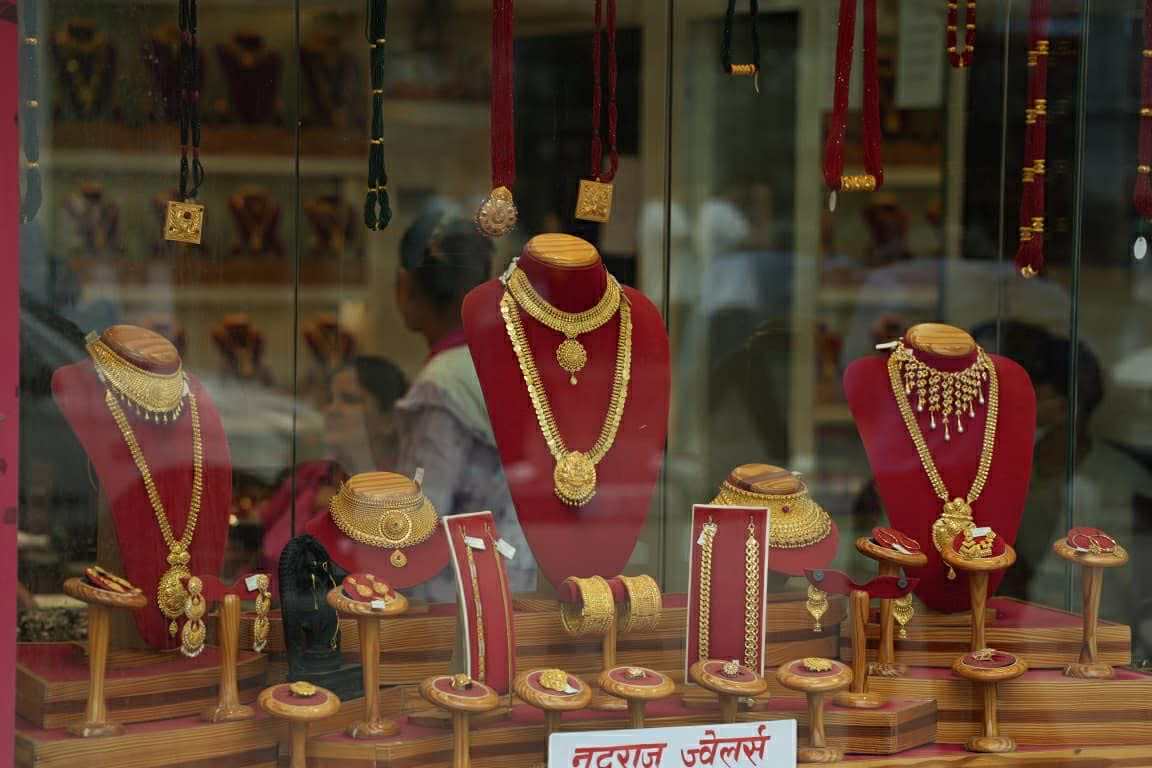
Gold Prices Drop While Silver Increases
Gold prices witnessed a slight decline on Sunday, while silver prices recorded an increase. According to the Federation of Nepal Gold and Silver Dealers’ Association, gold is being traded at Rs 258,300 per tola (11.66 grams), marking a decrease of Rs 100 compared to the previous day. Conversely, silver is trading at Rs 4,105 per tola, an increase of Rs 100. In the international market, gold reached USD 4,341 per ounce on Sunday.