Kathmandu
Saturday, February 7, 2026






KATHMANDU: Nepal News presents today’s snapshot of Nepal’s economic activities. Get quick updates on major market movements, policy shifts, and financial developments shaping the economy of Nepal. Here are the key economic highlights for today:
NEPSE Dips Slightly Amid Political Uncertainty; Hotels and Tourism Lead Gains:
Nepal Stock Exchange (NEPSE) closed last week down 5.35 points (0.20%), ending at 2,708.70 amid election-related political uncertainty ahead of the March 5 general election. The index fluctuated between 2,659.86 and 2,719.62 points during the week. Sector-wise, Hotels and Tourism led gains with 2.19%, while the finance sector fell the most at 1.03%. SY Panel Nepal had the highest share turnover of Rs 2.65 billion, and Kalinchowk Darshan Limited gained 34.36% in market value. Total turnover dropped nearly 36% to Rs 45.04 billion, and market capitalization fell to Rs 4.547 trillion, causing investors to lose over Rs 9 billion in book value.
Loan Portfolio Review Shows 7.7% NPLs in Nepal’s Top 10 Commercial Banks:
Howlader Yunus & Company, a Bangladesh-based auditing firm, submitted a loan portfolio review of Nepal’s 10 largest commercial banks to Nepal Rastra Bank. The review found an average non-performing loan (NPL) ratio of 7.7%, with two banks exceeding 10%, one bank at 11%, and the lowest at 4%. The report highlighted issues such as “evergreening” loans, inflated financial projections, inconsistent valuations, and improper NPL classification. Some banks, including Himalayan and Rastriya, were below the NRB’s minimum capital requirements, while four others fell short on primary capital ratios. The NRB will allow banks to respond before corrective actions.
Non-Performing Loans Rise in Nepali Banks Amid Economic Slowdown and Strikes:
Nepali banks saw a rise in non-performing loans (NPLs) during the second quarter of FY 2082/83 (Saun–Pus), with the average NPL ratio climbing to 5.07% from 4.48% in the previous year. The increase is attributed to sluggish economic activity and disruptions from the Genji strike, affecting loan recovery. Among commercial banks, Everest Bank reported the lowest NPL at 0.68%, while Himalayan Bank reached 7.96%. While some banks improved recovery, overall loan disbursement and collection remain slow. The IMF has questioned the banks’ loan quality, requiring audits of major banks’ portfolios before releasing extended credit facilities.
Tribhuvan International Airport Handles Record 5 Million International Passengers in 2025:
Tribhuvan International Airport (TIA) in Kathmandu recorded a historic 5.04 million international passengers in 2025, up 1.64% from 2024, driven largely by outbound migrant workers and students, while tourist arrivals grew modestly to 1.15 million. The airport handled 34,600 international flights, averaging 95 per day, despite operational constraints from taxiway construction. Nepal Airlines led carriers with 606,333 passengers, followed by Air India (499,743), Himalaya Airlines (474,987), and Qatar Airways (446,825). Indian carriers gained market share due to higher frequency and lower fares. Capacity is expected to rise once TIA’s parallel taxiway project is completed by end-2026.
Kathmandu District Court Orders US-Bangla Airlines to Pay Unlimited Compensation to Families of 2018 Plane Crash Victims:
Kathmandu District Court has ordered US-Bangla Airlines to pay nearly Rs 38 crore in compensation to families of 17 victims of the March 12, 2018, crash at Tribhuvan International Airport, marking the first unlimited liability award in Nepal’s aviation history. The crash killed 51 of 71 passengers and crew aboard the Bombardier Dash 8 Q400 from Dhaka. While insurance and funeral expenses were previously paid, the court held the airline fully liable due to crew negligence and reckless operation. Compensation considers victims’ income potential, profession, and dependents’ losses, exceeding the standard Warsaw Convention limits of $23,654 per passenger.
IPO Issuance Picks Up Pace in Nepal’s Capital Market, 10 Companies Already Listed Since Poush:
Nepal’s capital market has seen a surge in initial public offerings (IPOs), with 10 companies issuing shares since Poush and three more receiving approval. In FY 2081/82, 19 companies raised Rs 8 Arab 7 crore via IPOs. In the current FY 2082/83, 12 approved companies have already issued IPOs, including Super Khudi and Ridgeline Hydropower, initially targeted at domestic and overseas Nepalis. Remaining IPOs include Snowb Reverse Hydropower, Kalinchok Hydropower and Apollo Hydropower . After a one-year halt due to regulatory concerns, approvals are now accelerating, though industry experts urge further streamlining to expedite the process.
11 out of 12 Listed Life Insurance Companies Announce Dividends; Cash Payouts Favored:
Of the 12 life insurance companies listed on NEPSE, 11 have announced dividends for the previous fiscal year, with most holding annual general meetings, while only Himalayan Life has not yet distributed dividends. Companies like Asian Life, IME Life, Nepal Life, Citizen Life, Sun Nepal Life, National Life, Sanima Reliance Life, Prabhu Mahalaxmi Life, Surya Jyoti Life, Reliable Nepal Life, and LIC Nepal declared dividends combining cash and bonus shares, with cash dividends receiving more emphasis. Himalayan Life will hold its 19th AGM on Magh 28. The total declared payouts reflect the companies’ profitability and shareholder returns for FY 2081/82.
Life Insurance Coverage in Nepal Reaches 50%, Business Grows Over 16%:
As of Poush 2082, life insurance coverage in Nepal has expanded to 50% of citizens, up from 43.62% a year ago, according to the Insurance Board. Growth is attributed to increased public awareness, branch expansion, and the entry of new companies. Active policies reached 1.625 million, with 12.31 lakh policies pending renewal, representing Rs 37.8 billion in lapsed premiums. Life insurance business grew 16.47% in the first six months of the current fiscal year, with annual premiums collected totaling Rs 182.27 billion. Policy surrenders declined by 6.13%, reflecting stronger engagement and financial planning among citizens.
Nepal’s IT Service Exports Bring Over NPR 45 Billion in Six Months:
In the first six months of the fiscal year, Nepal earned more than NPR 45 billion from IT-related service exports. According to the central bank, NPR 12.41 billion came from IT and telecom services, while NPR 33.81 billion was generated through other business process outsourcing. Additional revenue of NPR 204 million came from Nepali content creators and audiovisual services, and NPR 7.5 million from cultural and other services. Net earnings reached NPR 9.14 billion, up 10% from last year. The government has facilitated overseas investment by IT companies and eased foreign exchange transfer limits to encourage continued growth.
Government to Classify Insurance Sector Crimes as ‘Insurance Offenses’:
The government is set to allow insurance-related crimes to be prosecuted under the category of ‘insurance offenses,’ rather than general fraud, filling a long-standing legal gap. Under Section 140 of the Insurance Act, 2079, offenses include unauthorized insurance operations, fraudulent claims, collusive payments, and economic misuse. Following a proposal from the Insurance Authority, the Council of Judges has recommended granting all 77 district courts authority to handle such cases. Once implemented, investigations will be conducted like banking offenses, enabling effective prosecution. Violations can carry penalties including fines equivalent to the loss and imprisonment of three to ten years.
Nepal’s Electricity Exports Reach NPR 23.73 Billion to India and Bangladesh:
Nepal exported electricity worth NPR 23.73 billion to India and Bangladesh from mid-June to mid-January, according to the Nepal Electricity Authority. In the first six months of the fiscal year, exports totaled NPR 19.41 billion. Between mid-July and mid-November, 147.43 GWh of electricity was supplied to Bangladesh, generating USD 943,600. Most of Nepal’s hydropower projects are river-flow-based, producing more electricity during the rainy season, enabling exports, while winter requires imports due to lower production. Exports to India reached around 1,200 MW under approved quotas. The rise in exports reflects limited domestic consumption and higher export capacity.
Environmental Impact Assessment Reports Released for 11 Hydropower Projects in First Half of Fiscal Year:
In the first six months of the current fiscal year, environmental impact assessment (EIA) reports for 11 hydropower projects in Nepal have been made public. The combined capacity of 19 projects with public reports is 1,530 MW, with the 11 highlighted projects estimated to cost over NPR 349 billion. Major projects include the 98.17 MW Chuwa Khola, 570 MW Humla-Karnali 1 and 2, 306 MW Upper Mugu Karnali, and 35.15 MW Upper Apsuwa Khola. The EIAs detail construction plans, costs, environmental mitigation, and social responsibility programs. These projects aim to significantly boost Nepal’s hydropower generation capacity.
Breakthrough Achieved in Sabhakhola ‘B’ Hydropower Project Tunnel in Sankhuwasabha:
The 21.5 MW Sabhakhola ‘B’ Hydropower Project in Sabhapokhari Rural Municipality, Sankhuwasabha, has achieved a major milestone with the breakthrough of its 4,110-meter main tunnel on Monday. The tunnel, connecting the intake to the penstock pipe, was inaugurated by Ganesh Karki, Managing Director of Arbit Energy Limited, the private developer. With 75% of construction completed, water from the main tunnel will be conveyed through a 1,045-meter penstock to the powerhouse, feeding electricity into the under-construction Nepal Electricity Authority substation in Khandbari-10, Sheetalpati. The project, costing around NPR 500 crore, also supports local employment, education, health, roads, and bridges.
Indian Companies Hold Ownership of Nearly 5,000 MW of Nepal’s Hydropower Projects:
Indian companies currently hold ownership stakes in nearly 5,000 MW of Nepal’s hydropower projects, though most projects have not progressed to construction. The Nepalese government assigned large hydropower projects to Indian public and private firms to attract foreign investment. Except for the 900 MW Arun-3 project, Indian firms have yet to commit capital or begin construction on projects such as West Seti (750 MW), Seti River-6 (450 MW), Phukot Karnali (480 MW), and Upper Karnali (900 MW). Legal, procedural, and financial hurdles in Nepal have hindered foreign investment, leaving most projects stalled despite long-term ownership by Indian companies.
India’s Draft National Electricity Policy 2026 Signals New Opportunities for Nepal’s Hydropower:
India’s Ministry of Energy has drafted the National Electricity Policy 2026, the first major revision in two decades, aiming to strengthen cross-border electricity interconnections under the “One Sun, One World, One Grid” framework. The policy emphasizes solar, wind, hydro, battery storage, and green hydrogen, targeting 80% of installed capacity from non-fossil sources by 2047. For Nepal, this could create new hydropower export opportunities, as India signals a move toward regional energy cooperation and removal of restrictive import rules. With rising Indian electricity demand and green energy goals, Nepal can become a strategic partner rather than a temporary supplier.
Local Stakeholders Urge Government to Fast-Track Long-Delayed Budhigandaki Hydropower Project:
The Dhading Chamber of Commerce and Industry has launched a signature campaign at the 10th Dhading Festival to pressure the government to advance the stalled Budhigandaki Hydropower Project, Nepal’s largest reservoir-based, multipurpose project. With a planned capacity of 1,200 MW and an estimated total cost of nearly Rs 400 billion, the project has faced 14 years of delays, mainly in land acquisition and compensation. Around 50,000 residents have relocated in anticipation, but construction has yet to begin. The project, approved for a PPP model, will generate an estimated 3,383 GWh annually.
Janak Shiksha Samagri Kendra Limited Printing 20.3 Million Ballots for House of Representatives Election:
Janak Shiksha Samagri Kendra Limited in Sanothimi is printing ballots for the House of Representatives election scheduled for Falgun 21. Managing Director Yadunath Paudel reported that out of 20.3 million direct-vote ballots, 8 million have been printed by Thursday evening, with a daily output of 1.3 million. Printing for proportional ballots totaling 20.85 million has been completed and packed. Distribution of proportional ballots will start from Magh 25/26, and all direct ballots are expected to be printed and delivered to districts by Falgun 1/2. The Election Commission oversees procurement of 37 other election-related materials.
Agriculture Ministry Disburses Rs 3.05 Billion in Farmer Subsidies, Boosts Insurance and Crop Support:
In FY 2081/82, Nepal’s Ministry of Agriculture and Livestock Development provided Rs 3.05 billion in subsidies to farmers, supporting crop and livestock insurance premiums and sugarcane cultivation. Of the total, Rs 1.43 billion went toward livestock, poultry, and fish insurance premiums, and Rs 170.7 million for crop insurance. Over 1.6 million animals and 1,677 farmers were insured. Additionally, sugarcane farmers received Rs 1.45 billion. The ministry also spent Rs 2.726 billion on fertilizer procurement, distributed vaccines for cattle disease prevention, and recommended 21 new crop varieties. Dairy, meat, fish, and egg production increased, while outstanding arrears fell by 37.3% to Rs 5.76 billion.
Nepal Sees Significant Rise in Taxpayers in First Half of FY 082/83:
In the first six months of fiscal year 082/83, Nepal’s active taxpayer base grew notably, reaching 7.36 million, an increase of 361,003 from last year. Business PAN registrations rose from 2.06 million to 2.11 million, adding 55,242 new commercial taxpayers. Individual PANs increased from 4.90 million to 5.20 million, with 304,890 new additions. Foreign worker (W-PAN) registrations also grew to 36,741. VAT-registered taxpayers rose to 364,992, and customs taxpayers increased to 129,949. Officials attribute this growth to expanding economic activity, improved digital registration systems, and enhanced government efforts to broaden tax compliance, reflecting a strengthening revenue collection framework.
Pokharebagar–Ghodapani Road Upgrade in Annapurna Rural Municipality Completed Two Months Ahead of Schedule:
The road connecting Pokharebagar to the tourist hub of Ghodapani in Annapurna Rural Municipality has been completed two months ahead of schedule. Funded with NPR 5 million this fiscal year, the project was executed by SS Wilders Pvt. Ltd., which began work after winning the contract at NPR 36.18 million. Key upgrades include 300 meters of RCC paving, widening, drainage, and retaining walls in landslide-prone areas. The 21 km route benefits local residents and tourists visiting Ghodapani-Punhill, while connecting to the Mid-Hill Highway via Ulleri. Improved infrastructure enhances safety, accessibility, and promotes tourism in the region.
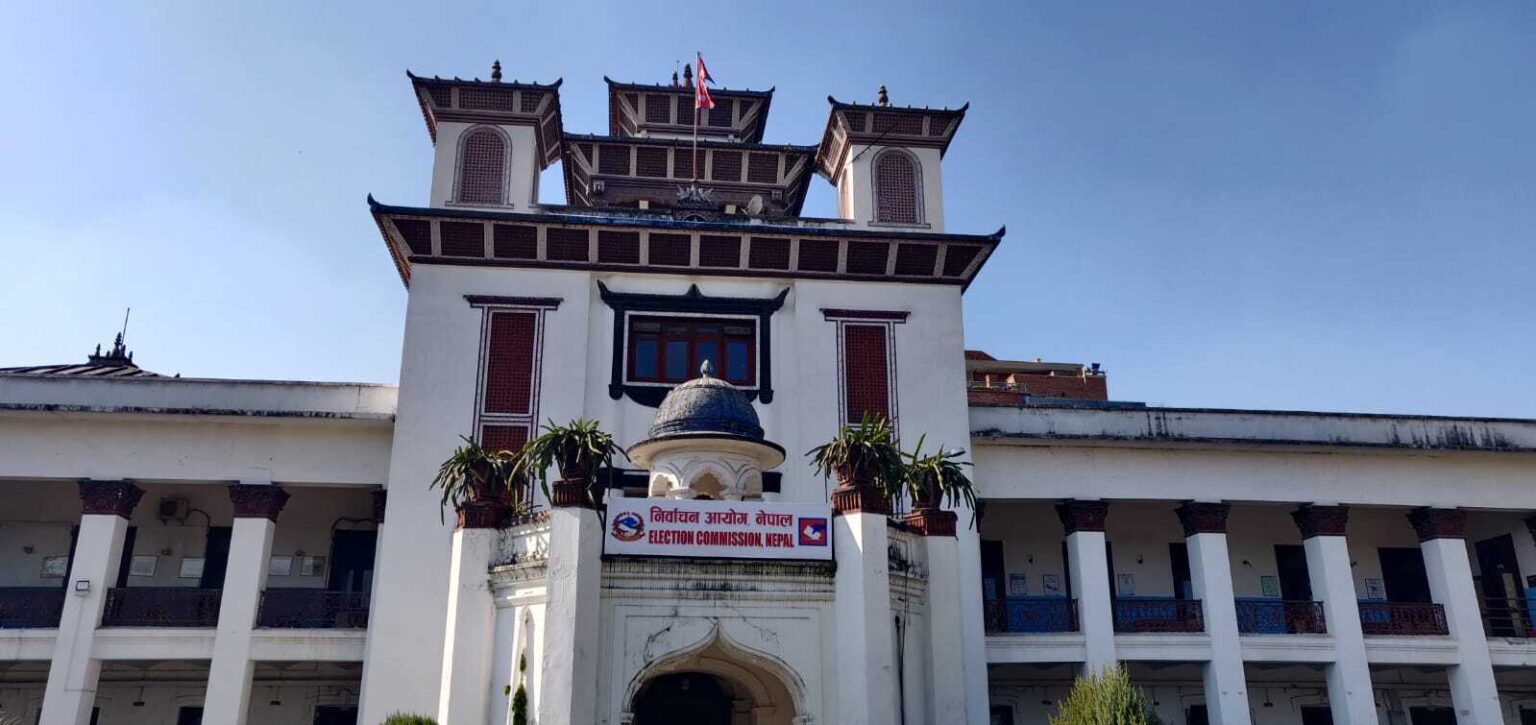
Election Commission Introduces New Rules to Regulate Candidate and Party Finances:
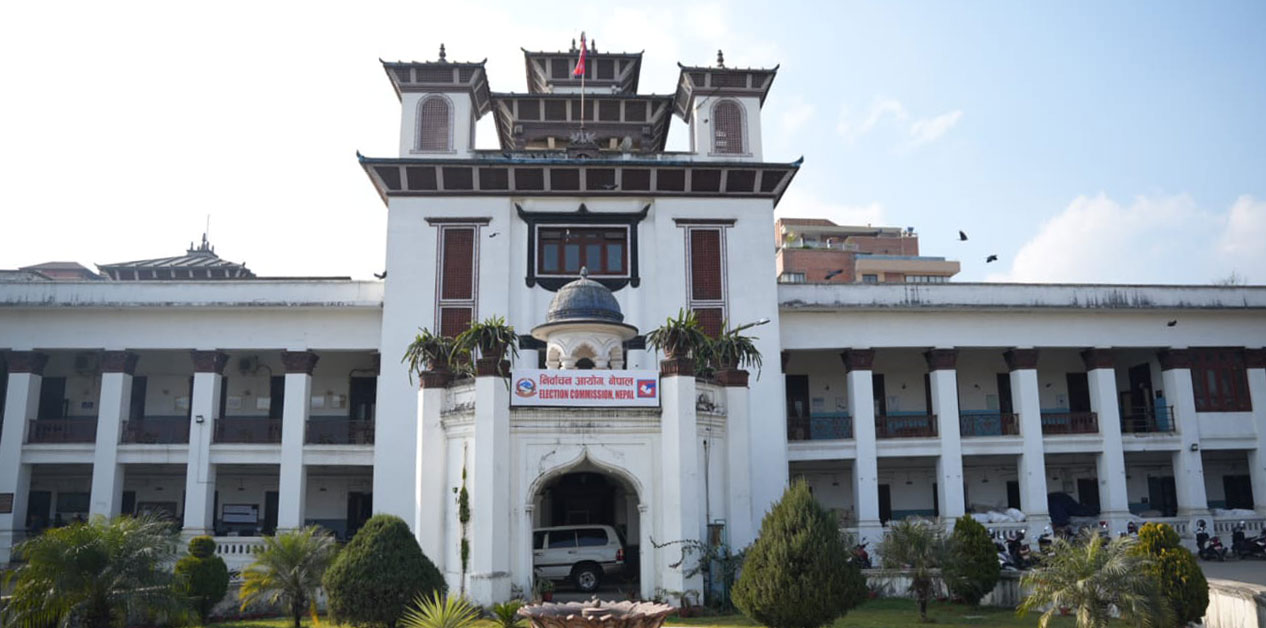
Ahead of the 2082 House of Representatives elections, the Election Commission has issued new regulations to monitor the financial activities of candidates and political parties. Under the rules, all donations and financial support must be received and spent through bank accounts, whether cash or cheque. Contributions of NPR 25,000 or more must be directly deposited in a bank, while even smaller amounts must be recorded and used via banking channels. The regulations prohibit receiving financial support from the government, public agencies, public companies, or foreign entities. The new system aims to ensure transparency, accountability, and proper record-keeping of election finances.
Five Marwari Candidates to Contest Morang Seats in March 5 HoR Elections:
Five candidates from the Marwari community, known for their business acumen, are contesting the March 5 House of Representatives elections in Morang district. CPN-UML has fielded Dilip Agrawal (Morang–2) and Manoj Agrawal (Morang–5), with Dilip resigning as Rangeli mayor to contest. The Nepali Congress has nominated Phul Kumar Lalwani in Morang–5. Krishna Atal, an anti-corruption activist, represents the Shram Sanskriti Party in Morang–4. Additionally, the Pragatisheel Loktantrik Party has included industrialist Rakesh Surana, former president of the Chamber of Industries Morang, fifth on its proportional representation list under the Madhesi quota to bring private-sector expertise into governance.
Nepal Rastra Bank Encourages Opening Bank Accounts for Children to Promote Savings:
Nepal Rastra Bank is promoting the opening of bank accounts in the names of children to cultivate savings habits and help parents plan financially for their future. There is no age restriction, allowing children to be introduced to the banking system from an early age. Accounts can be opened using a birth certificate or minor identification, and until the child reaches legal adulthood, account operations are managed by parents or guardians. The central bank expects this initiative to enhance financial literacy and contribute to the development of a culture of secure, long-term savings among Nepalese youth.
Marsyangdi River’s Rafting Glory Fades as Hydropower Projects Replace Tourism:
Once Nepal’s premier rafting destination, the Marsyangdi River attracted thousands of tourists and supported hundreds of hotels and local livelihoods. Rafting routes from Bhulbhule to Narayangadh offered five-day adventures, but the construction of multiple hydropower projects has drastically shortened routes, left debris, and made rafting increasingly difficult. Today, commercial rafting has nearly disappeared, occurring only during festivals, though short-distance packages were recently launched during the ninth Lamjung Festival. Local tourism advocates stress preserving the river’s natural beauty and rafting potential, arguing that sustainable tourism can coexist with hydropower development, protecting aquatic life, supporting local employment, and reviving the region’s once-thriving river-based economy.
Cooking Oil and Rice Prices Surge Across Nepal, Authorities Step In to Control Hikes:
Households across Nepal are facing rising prices of essential commodities, particularly cooking oil and rice. Cooking oil has increased by Rs. 40–50 per litre, now around Rs. 280, while rice has risen by Rs. 10–15 per kilogram. The Nepal Retailer Association stressed that retailers are not responsible, with price hikes driven by producers, importers, rising raw material costs, a stronger dollar, and election-related demands. The Department of Commerce, Supplies and Consumer Protection has summoned major producers and distributors, warning against unfair pricing, and emphasized legal action under consumer protection laws to ensure a transparent market and relief for consumers struggling with higher household expenses.
Local Farmers Turn to Sugarcane Farming, Producing Medicinal Jaggery in Panchthar:
Farmers along the Henwa River, bordering Hilihang Rural Municipality and Phidim Municipality in Panchthar, are busy harvesting sugarcane and producing molasses and jaggery each winter. The locally grown Gyanbara sugarcane, valued for its medicinal properties, has encouraged a shift from rice to sugarcane cultivation. Seedlings are planted in February–March and harvested by mid-December. About 25 families now practice commercial sugarcane farming, processing most of their produce into jaggery rather than selling raw. The products are sold locally and exported to Jhapa, Kathmandu, and Pokhara. Jaggery is used in traditional foods and as a natural sweetener, even benefiting patients with hypertension, diabetes, and jaundice.
Koteshwor Bhat-Bhateni Reopens After Damage During Gen-Z Protests:
The Koteshwor Bhat-Bhateni supermarket has reopened following fire and looting damage sustained during the recent Gen-Z protests. The store resumed operations on Saturday after restoration efforts, including religious rituals led by the supermarket’s chairman, Min Bahadur Gurung. According to COO Panu Paudel, Bhat-Bhateni recovered quickly thanks to the support of employees, customers, and stakeholders. The Maharajgunj store is scheduled to reopen in two weeks, with other affected stores under reconstruction. Nationwide, 21 out of 28 Bhat-Bhateni outlets suffered damages totaling NPR 10.856 billion, with 12 stores completely destroyed.