Kathmandu
Tuesday, February 17, 2026






KATHMANDU: Nepal News presents today’s snapshot of Nepal’s economic activities. Get quick updates on major market movements, policy shifts, and financial developments shaping the economy of Nepal. Here are the key economic highlights for today:
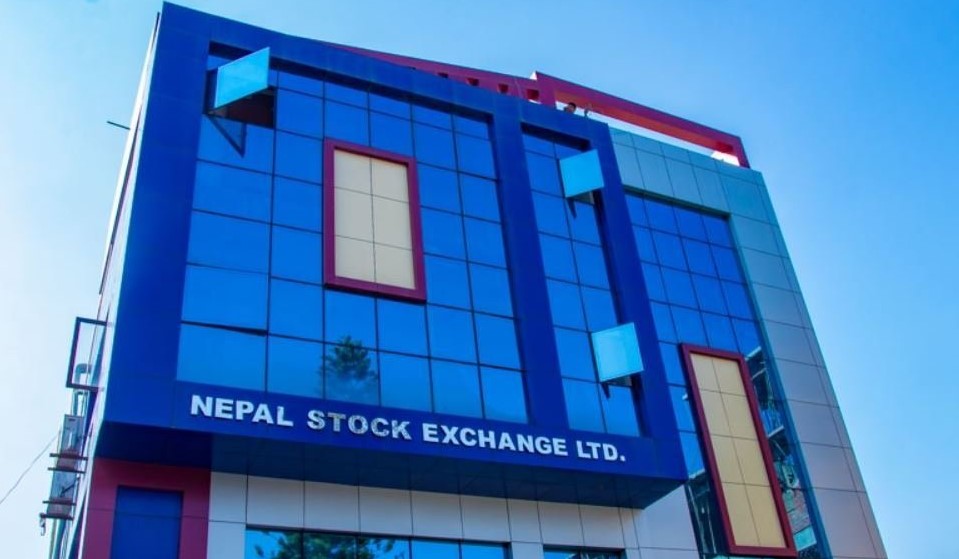
NEPSE Falls 20.75 Points; Most Sectors End in Red
The Nepal Stock Exchange (NEPSE) index fell by 20.75 points, or 0.77 percent, on Tuesday to close at 2,642.15, with the market under pressure throughout the session as most listed companies ended lower. Total turnover reached Rs8.36 billion with 20.55 million shares traded. Of the traded stocks, 214 declined, 42 advanced, and six remained unchanged. Most sub-indices lost ground, led by Finance, down 2.11 percent to 2,418.23. Hydropower fell 1.63 percent to 3,498.17, and Hotels and Tourism slipped 1.19 percent to 7,159.34. Development Bank dropped 1.18 percent, Life Insurance 0.78 percent, and Non-Life Insurance 0.75 percent, while Manufacturing and Processing edged down 0.73 percent. Banking declined 0.45 percent, microfinance 0.50 percent, investment 0.48 percent, and others 0.58 percent. Only Trading rose 0.22 percent, and Mutual Fund gained 0.48 percent.
NRB Collects Rs 40 Billion from Financial Institutions
The Nepal Rastra Bank (NRB) successfully mopped up Rs 40 billion in excess liquidity from the banking system through a deposit collection instrument on Tuesday. The central bank invited bids for an 89-day period, with the principal and interest set for payment on May 17, 2026. Banks and financial institutions submitted online bids by 3:00 PM, with interest rates determined through a competitive bidding process. This move aims to stabilize the financial market as banks struggle with high liquidity. The NRB prioritized the lowest interest rate bids for the final fund allotment to ensure cost-effective monetary management.
Nepal Spends Only 11% of Foreign Aid in Six Months
Infrastructure project delays have led to a disappointing expenditure of foreign aid. Out of Rs 2.617 billion allocated from 10 development partners for fiscal year 2025/26, only Rs 28.47 billion was spent by the mid-term review. The Asian Development Bank (ADB) saw only 7.61% utilization of its Rs 1.17 billion budget, while the World Bank recorded 14.08%. Expenditure from the Asian Infrastructure Investment Bank (AIIB) remains at zero. The Ministry of Finance attributes this to poor project readiness, weak interagency coordination, and frequent staff transfers. To fix this, the government is now enforcing a “Project Readiness Filter” and digitizing forest clearance processes.
Nepal Grants USD 350,000 for Myanmar Heritage Sites
The Government of Nepal has provided USD 350,000 to Myanmar for the reconstruction of two religious sites damaged by last March’s earthquake. Ambassador Harishchandra Ghimire handed a USD 300,000 check to General Secretary Than Oo at the Mahamuni Pagoda in Mandalay. Additionally, USD 50,000 was granted to President Pawan Bajoria for the Gangaghat Hindu Temple, a vital site for the Nepali community in Myanmar. This assistance reflects Nepal’s commitment to preserving shared cultural heritage and supporting disaster-hit nations. The ceremony underscored the deep-rooted spiritual and diplomatic ties between the two South Asian neighbors.
Hydropower Firms Suffer Losses Due to NEA Directives
Several listed hydropower companies have reported lower profits in their second-quarter financial statements, blaming the Nepal Electricity Authority (NEA). Firms like Dordi Khola and Himalayan Power Partner claim the NEA frequently orders them to reduce production below installed capacity due to transmission line bottlenecks. Rapti Hydro and Nyadi Hydropower also cited frequent disruptions in the 32 KV lines. While companies report significant revenue losses and reduced dividends for shareholders, NEA spokesperson Rajan Dhakal maintains that power is purchased according to contracts, attributing minor interruptions to technical issues rather than systemic failure to fulfill purchase agreements.
Nepal Opens ‘Automatic Route’ for Foreign Investors
The Ministry of Industry, Commerce, and Supplies has published a list of sectors where foreign investment will now be approved through an “Automatic Route.” This reform covers energy projects, including solar, wind, and biomass, as well as agricultural processing, infrastructure like film cities and cargo complexes, and the IT sector. Notably, the government has removed the previous Rs 500 million ceiling for automatic approval, allowing investments of any scale in these specified fields. This move aims to simplify the entry of multinational firms into Nepal, particularly in manufacturing, tourism, and services like hospitals and software development, to boost the national economy.
Singha Durbar Vaidyakhana Returns to Profit
Singha Durbar Vaidyakhana, Nepal’s oldest Ayurvedic medicine producer, has returned to profit after a 3-year slump. Executive Director Pradip KC reported that production has scaled up to 86 types of medicines, compared to just 12 in 2021. After resolving raw material supply issues and blacklisting a non-performing contractor, the facility has cleared staff salary backlogs. Current demand has surged to Rs 4 billion, with government clinics alone requesting Rs 20 million worth of products. High-demand items like Chyawanprash and Shilajit are currently being prioritized for government dispensaries as the institution aims to regain its historical market dominance.
Lumbini Records Rs 13.57 Billion Investment in Six Months
Lumbini Province saw a massive investment of Rs 13.57 billion in the industrial and commercial sectors during the first half of fiscal year 2025/26. According to the Ministry of Industry, Tourism, and Transport, Rs 7.60 billion was invested in 1,771 small industries, while Rs 5.96 billion went into 1,920 commercial firms. The province also collected Rs 52.6 million in revenue. Despite 1,456 businesses closing, 3,691 new ventures were registered, showing a growing attraction for entrepreneurship. Rupandehi led the revenue collection, followed by Dang and Banke, signaling robust economic activity across all 12 districts of the province.
Dhankura Police Collect Rs 180K from Vehicle Sale
The District Police Office, Dhankura, generated Rs 180,600 in revenue by auctioning 36 unclaimed and seized vehicles. Under the leadership of Superintendent of Police Sharat Kumar Thapa Chhetri, the auction included 35 motorcycles and 1 scooter. These vehicles, which had remained in police custody for a long period without legal claimants, were sold through a transparent public bidding process following legal evaluations. The police highlighted that the auction was necessary to manage limited storage space and prevent the further decay of the assets. All proceeds from the sale have been deposited into the government’s national revenue account.
Dang Emerges as Key National Supplier of Mustard Oil
Mustard production in Dang has reached record levels, with 2,198.19 metric tons produced from 1,278.02 hectares this fiscal year. Navaraj Bhandari, head of the Agriculture Knowledge Center, noted that the district’s mustard oil is in high demand in Kathmandu, Pokhara, and Chitwan. Farmers are currently selling mustard at Rs 14,000 per quintal. Through the National Agriculture Modernization Project, farmers receive a 50% seed subsidy and technical support. Due to the short growing cycle, many farmers are switching from wheat to mustard. Production has steadily climbed from 1,932 metric tons in 2023 to current levels, boosting the local economy.
Litmus Industries Approved for Indian Power Grid
Litmus Industries Limited has become the first Nepali manufacturer approved by the Power Grid Corporation of India (PGCIL) to supply cables and conductors for cross-border projects. Following a rigorous quality audit, Litmus will produce and supply 2,799 kilometers of 400 KV ACSR Moose Conductors. These will be utilized in the Deding-Dhalkebar and Bathnaha cross-border transmission lines, crucial for the 900 MW Arun-3 Hydropower Project. This approval marks a significant achievement for Nepal’s industrial capacity, proving that domestic products meet international standards for high-voltage energy infrastructure and can compete in the South Asian energy market.
Gorkha Farmers Earn Rs 210 Million from Orange Harvest
The Gorkha district recorded a record-breaking orange harvest this year, with sales reaching Rs 210 million. According to the National Agriculture Modernization Program, 3,000 metric tons of oranges were produced from 1,097 hectares, a significant increase from last year’s 2,500 metric tons. Favorable weather and improved pest control helped farmers in hubs like Manakamana and Phinam secure prices between Rs 80 and Rs 120 per kilogram. Merchants from Kathmandu and Pokhara traveled directly to the orchards to purchase the fruit. The high profitability has encouraged more young farmers in the region to switch from traditional grain crops to modern orange citrus farming.
Sugarcane Fire Destroys Rs 11.6 Million in Lahan
A massive fire in Lahan Municipality-13 destroyed sugarcane crops across 15 bighas of land on Monday, causing an estimated loss of Rs 11.6 million. The blaze, which started near Saraswati and Ghale Tol, affected 15 farmers, including Ramlahan Mandal and Bisundev Yadav. Locals criticized the municipality for failing to maintain its fire engines, forcing them to wait over an hour for a fire truck from Golbazar. Mayor Mahesh Prasad Chaudhary has pledged relief for the affected farmers. The Central Member of the Farmers’ Federation, Ram Narayan Mahato, is coordinating with Himal Sugar Mill to assess the damage for compensation.
Ncell Axiata Reports Rs 8.18 Billion Quarterly Revenue
Ncell Axiata Limited generated Rs 8.18 billion in revenue during the first quarter of the current fiscal year ending October 16, 2025. The company’s operational income (EBITDA) stood at 49%. Amidst ownership transition hurdles involving Spectrlite UK Limited, the company increased its credit rating to Rs 32 billion to secure long-term and short-term loans. ICRA Nepal assigned an ‘LA’ rating for Rs 20 billion in long-term debt. Currently, Reynolds Holding owns 80% of the company, while Sunivera Ventures holds 20%. Despite legal delays in share transfer, Ncell remains a dominant player in Nepal’s telecommunications landscape.
Gold Price Drops Further, Silver Sees Slight Increase
The price of gold has decreased in the domestic market today. According to the Federation of Nepal Gold and Silver Dealers’ Association, the price of gold has decreased by Rs 900 per tola (11.66 grams) on Tuesday and is being traded at Rs 301,900. On the previous trading day, Monday, fine gold was maintained at Rs 302,800 per tola. Similarly, the price of silver increased on Tuesday. According to the Federation, the price of silver, which was maintained at Rs 4,860 per tola on Monday, increased on Tuesday to be maintained at Rs 4,885.