Kathmandu
Monday, January 26, 2026






KATHMANDU: Nepal News presents today’s snapshot of Nepal’s economic activities. Get quick updates on major market movements, policy shifts, and financial developments shaping the economy of Nepal. Here are the key economic highlights for today:
NEPSE Index Dips Slightly Amid High Trading Volume of Rs 16.35 Billion
The Nepal Stock Exchange (NEPSE) index experienced a correction on Monday, dropping 3.07 points to close at 2,769.09. Despite the slight decline, market enthusiasm remained high as turnover surged to Rs 16.35 billion, an increase of Rs 2.50 billion from Sunday. A total of 36,264,000 shares were traded through 147,676 transactions involving 332 companies. While sectors like hotels and hydropower saw gains, 165 companies ended in the red. Investors show increased activity as the nationwide election atmosphere intensifies, signaling continued liquidity and interest in the secondary market.
High Milk Prices in India Benefit Nepali Dairy Farmers
Nepali dairy farmers are finding a stable market as milk prices in India have risen to match Nepali rates. Previously, cheaper Indian milk was smuggled into Nepal, causing surpluses and “milk holidays.” According to the Central Dairy Cooperative Association, Indian milk is now Rs 0.46 more expensive than in Nepal when transport is included. Consequently, smuggling has reversed toward India. Daily production in Nepal is estimated at 4.5 million liters, a slight decrease from last year. Chitwan Milk reported processing only 70,000 liters daily compared to 200,000 last year, indicating better direct market consumption.
Edible Oil Prices Surge by Rs 50 Per Liter Within a Week
Cooking oil prices in the country have increased by Rs 40 to Rs 50 per liter over the past week. Soybean and sunflower oil now retail between Rs 290 and Rs 300, while mustard oil has reached Rs 400. Consumers reported paying Rs 295 for oil that cost Rs 245 just seven days ago. Industry insiders cite rising global raw material costs and high demand in India ahead of the Holi festival as reasons. However, consumer activists allege that traders are creating artificial shortages and exporting 95 percent of stock to India for higher profits.
Nepal, India Governors Discuss Cross-Border QR Payments
Nepal Rastra Bank (NRB) Governor Bishwo Nath Poudel met Reserve Bank of India (RBI) Governor Sanjay Malhotra in Mumbai on January 19. The discussions focused on enabling seamless QR code payments for Nepali citizens traveling in India. The governors also deliberated on monetary policy, liquidity management, and AI-based bank supervision. Governor Paudel later met officials in Ahmedabad to discuss the Gujarat International Finance Tec-City model and potential collaborations. High-level directors from the foreign exchange and payment systems departments accompanied the governor to explore technical cooperation and experience sharing with the RBI.
Investment Proposals Worth Rs 1.30 Billion in Second Quarter
The Department of Industry reported investment proposals totaling Rs 1.30 billion from 781 industries during the second quarter of the current fiscal year. Between mid-July 2025 and mid-January, at least 712 small, 35 medium, and 34 large industries were registered. These projects are expected to create 32,627 jobs. Additionally, the department approved 161 foreign investments and 314 through the automatic route, totaling Rs 39.23 billion in foreign commitments. During this six-month period, the department also handled 113 trademark cases and recommended 37 Certificates of Origin for concessional exports to India.
Hydropower Loans Increase 145 Times Over Sixteen Years
A study by IPPAN reveals that banking sector investment in hydropower reached Rs 402.41 billion by mid-July 2025. This is 145 times higher than the Rs 2.76 billion recorded in the fiscal year 2009/10. Hydropower now accounts for 8.10 percent of total banking credit, compared to just 0.69 percent sixteen years ago. The surge is credited to a 2020 Nepal Rastra Bank policy requiring banks to allocate 10 percent of loans to the energy sector. Currently, 347 private projects have seen a total investment of Rs 1.310 trillion.
Arun-III Hydropower Project Hits 74 Percent Completion Milestone
The physical construction of the 900 MW Arun-III hydropower project has reached 74.61 percent, with financial progress at 74.6 percent. Developed by SJVN Arun-III Power Development Company (SAPDC), the project carries an estimated cost of Rs 144 billion. While the generation aspect is advanced, the 253 km transmission line to Sitamarhi, India, is 58.3 percent complete. Due to delays, the developer has requested an 18-month extension for the Commercial Operation Date (COD) until September 2026. A Project Review Panel (PRP) consisting of Dr. Pawan Kumar Shrestha, Dr. Pawan Kumar Bhattarai, and Dr. Ganesh Prasad Nyaupane will evaluate the extension request.
Health Insurance Board Orders Review Committee for Payment Claims
The Health Insurance Board has requested health institutions to form internal committees to review payment claims before submission. Information Officer Bikesh Malla stated that many claims currently contain errors, leading to high rejection rates. Under the Real-Time Claims Procedure 2023, these committees must verify documents against board standards. Currently, institutions submit claims worth Rs 100 million daily, and the board owes approximately Rs 12 billion in outstanding payments. By implementing internal reviews, the board aims to streamline the evaluation process and ensure that only valid, well-documented claims are processed for timely reimbursement.
Chhurpi Exports Earn Nepal Rs 1.875 Billion in Six Months
Businesses earned Rs 1.875 billion from exporting Chhurpi (a traditional, high-protein cheese from the Himalayas) during the first half of the fiscal year. Data from the Department of Customs shows 1.3 million kg of chhurpi was sent to 30 different countries. The USA is the largest buyer, importing 911,163 kg worth Rs 1.613 billion for use as dog and cat treats. Other major markets include Canada at Rs 122.7 million and the UK at Rs 32.3 million. The product is also exported to Japan, Korea, Germany, and France, among others.
Export of Thysanolaena Worth Rs 412.1 Million in Six Months
The country exported Thysanolaena (Nepali broom grass) worth Rs 412.1 million during the first six months of the current fiscal year. According to the Department of Customs, a total of 6,299,270 kg was exported to India and Bangladesh. India remains the largest market, importing 6.1 million kg valued at Rs 407.8 million. Bangladesh imported 144,000 kg worth Rs 4.2 million. This highlights the growing international demand for Nepali agricultural products, providing significant revenue for farmers in the eastern and mid-hill regions of the country, where Thysanolaena is primarily cultivated.
Film Development Board Releases Domestic Box Office Collection
The Film Development Board published commercial data for films as of January 24. Jhari Pachi Ko Indreni, directed by Arjun Ghimire, earned Rs 12.3 million with 3,217 tickets sold. Gobar Ganesh leads the Maghe Sankranti releases with Rs 11.4 million from 40,234 tickets. Other films, including Muglan, earned Rs 631,000, while Eklo collected Rs 4.6 million. The documentary Dimag Ghochne Manchhe, based on Ujjwal Thapa, earned Rs 312,000. Viral Gorkhey and Mirmire recorded earnings of Rs 3.4 million and Rs 3.3 million, respectively.
FCAN Postpones General Convention Due to Election Code of Conduct
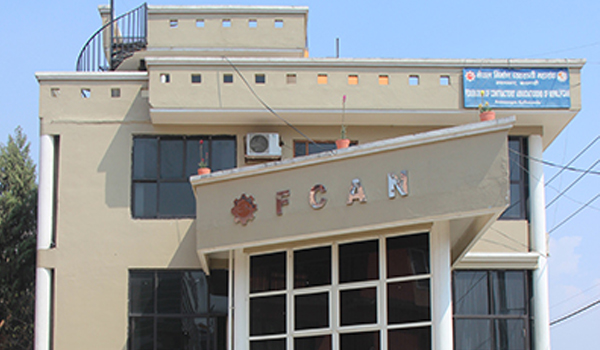
The Federation of Contractors’ Associations of Nepal (FCAN) has postponed its 26th general convention and 13th conference, originally scheduled for January 29 to 31. The decision follows a formal directive from the Election Commission, as the election code of conduct is now in effect for the March 5 polls. All related activities, including elections for provincial, district, and commodity-based organizations under the federation, are suspended until further notice. FCAN officials confirmed they will remain on hold to comply with national regulations, delaying the selection of new leadership and the assembly of construction stakeholders nationwide.
Mandatory Online One-Door System for Certificates for Businesses
All agencies issuing Certificates of Origin for goods must now provide services exclusively through an online one-door system. Finance Minister Rameshwar Khanal announced this transition on International Customs Day, stating that certificates will now include a QR code for authentication. Previously, these documents were issued through both physical and digital methods. This new mandatory digital system aims to eliminate the need for office visits, reduce the risk of forged documents, and enhance international trade credibility. The customs administration has already implemented a transaction-based valuation system to ensure transparency in import and export pricing.
Kathmandu Firm Fined Rs 50,000 for Violating Consumer Rights
The Department of Commerce, Supplies, and Consumer Protection fined Carters Enterprises Rs 50,000 during a market inspection on Sunday. The firm, located in Kathmandu Metropolitan City-4, was found in violation of Section 20(2) and Section 38(T) of the Consumer Protection Act 2018. While this specific firm faced a financial penalty, 16 other commercial establishments inspected on the same day received general warnings and instructions for improvement. The department has intensified monitoring to ensure businesses comply with legal standards and protect consumers from unfair trade practices during the election season.
Nepal Signs Labor Agreement with Saudi Arabia to Protect Workers
Nepal and Saudi Arabia signed a long-awaited bilateral labor agreement in Riyadh, the capital of Saudi Arabia. Labor Minister Rajendra Singh Bhandari and Saudi Minister Ahmad bin Sulaiman Al-Rajhi finalized the deal to ensure transparent recruitment and stronger rights protection. The pact guarantees a minimum monthly salary of 1,000 riyals and 300 riyals for meals for unskilled workers. It aligns with International Labour Organisation standards, aiming to end dual contracts and curb excessive recruitment fees. A joint technical committee will monitor implementation to address labor disputes and safety for nearly 500,000 Nepali workers.
Orange Sales Reach Rs 91 Million in Chitwan
Farmers in the Chitwan district have sold oranges worth Rs 91 million this season. The Agriculture Development Office, Chitwan, reported that growers in Ichchhakamana Rural Municipality and Bharatpur Metropolitan City-29 produced 1,002.8 metric tons. This is a decrease from last year’s 1,120 metric tons across 92 hectares. Experts attributed the decline to aging trees, citrus greening disease, and lack of proper management. Despite the production dip, the fruit remains a vital income source, with sales reaching markets in Kathmandu, Pokhara, and Narayanghat. Experts emphasize the need for scientific technology to boost production in Ichchhakamana.
Bhujung Hydropower Limited Opens IPO for General Public
Bhujung Hydropower Limited has opened its Initial Public Offering (IPO) for the general public starting Monday. Following a first-phase issuance for locals and migrant workers, the company is now offering 830,000 shares worth Rs 83 million. This follows a reservation of 20,000 shares for employees and 50,000 for mutual funds. Investors can apply for a minimum of 10 shares up to a maximum of 50,000 until January 29. ICRA Nepal assigned a “B+” rating, indicating high risk. Kumari Capital is managing the sale.
Gold and Silver Prices Set Another Record on Monday
Gold and silver prices climbed sharply in Nepal on Monday, setting new records. The price of gold rose by Rs 5,200 per tola (11.66 grams), while silver increased by Rs 280. According to the Federation of Nepal Gold and Silver Dealers’ Association, gold reached Rs 309,000 per tola on Monday, breaking the previous record of Rs 303,800 per tola set on Sunday. Silver prices also touched a new high, with the metal trading at Rs 6,765 per tola. On the previous trading day, silver was priced at Rs 6,480 per tola. In the international market, gold was trading at USD 5,065 per ounce, while silver stood at USD 107.89 per ounce.