Kathmandu
Monday, March 2, 2026






KATHMANDU: Nepal News presents today’s snapshot of Nepal’s economic activities. Get quick updates on major market movements, policy shifts, and financial developments shaping the economy of Nepal. Here are the key economic highlights for today:
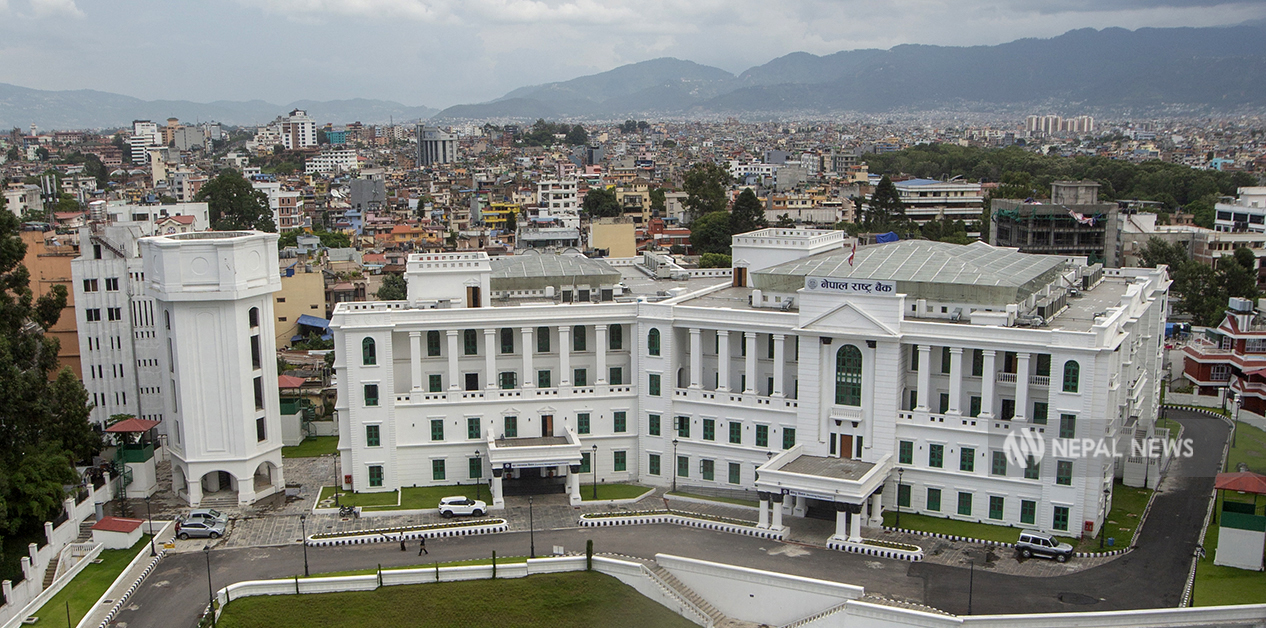
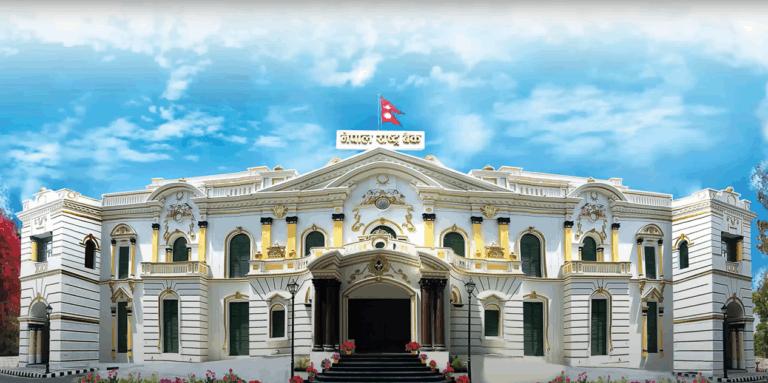
NRB Directs Financial Institutions to Operate on Holidays
The Nepal Rastra Bank (NRB) has instructed all banks and financial institutions to remain operational during upcoming public holidays, including Holi and the election day on Thursday. The NRB mandated that commercial banks designated for government transactions must facilitate revenue collection and payments. Furthermore, institutions holding election campaign accounts are required to provide uninterrupted services for cash and check deposits or payments for political parties and candidates. This directive aims to ensure that essential financial activities and election-related fiscal management are not hindered by the three-day public holiday announced by the government.
Global Oil Prices Surge Amid Escalating Middle East Conflict
Global oil prices spiked on Monday, as military tensions between the United States, Israel, and Iran intensified. Brent Crude rose 9% to USD 79.42 per barrel, while US Crude increased 8.6% to USD 72.61. Gold prices also climbed 1.4% to USD 5,350 per ounce as investors sought safe-haven assets. Analysts warn that the potential closure of the Strait of Hormuz, which handles one-fifth of global oil trade, could block 15 million barrels daily. With US President Donald Trump suggesting the conflict could last four weeks, markets face prolonged pressure, impacting stock indices like the Nikkei and S&P 500.
Holi Colors Worth Rs 156 Million Imported into Nepal
Data released by the Department of Customs for the period ending mid-February shows that Nepal imported 251.97 metric tons of colors for the Holi festival, valued at Rs 156.1 million. These imports generated Rs 33.8 million in customs revenue. According to the department, the colors were primarily sourced from India, China, Germany, Qatar, and the United Arab Emirates (UAE). As the festival approaches, the high volume of imports reflects significant market demand, though authorities continue to monitor the quality of synthetic dyes entering the country through various border points.
Govt. Suspends Labor Permits for Middle East Amid Escalating War
Labor Minister Rajendra Singh Bhandari announced the immediate suspension of labor permits for Middle Eastern countries due to the conflict involving Israel, the United States, and Iran. With over 1,729,288 Nepalis working in the region, including 478,144 in the UAE and 384,865 in Saudi Arabia, safety concerns have peaked. Iran has targeted US military bases in Qatar, Kuwait, and Oman, prompting the government to urge workers at airports to return home. The Non-Resident Nepali Association (NRNA) and the Ministry of Labor have put rescue plans and 24-hour call centers on high alert.
Govt. Solicits Public Suggestions for 2083/84 Revenue Policy
The Revenue Advisory Committee, led by the Revenue Secretary, has officially requested public and stakeholder suggestions for the fiscal year 2026/27 budget. Formed by a ministerial decision on February 11, the committee seeks input on tax structures, customs rates, and digital service taxes by April 13. Nine subcommittees have been established to analyze internal revenue, customs, and industrial protection. The committee includes experts from Tribhuvan University, the NRB, and private sector bodies like FNCCI. A final report containing recommendations for economic reforms and tax-base expansion is scheduled for submission to the finance minister by mid-May 2026.
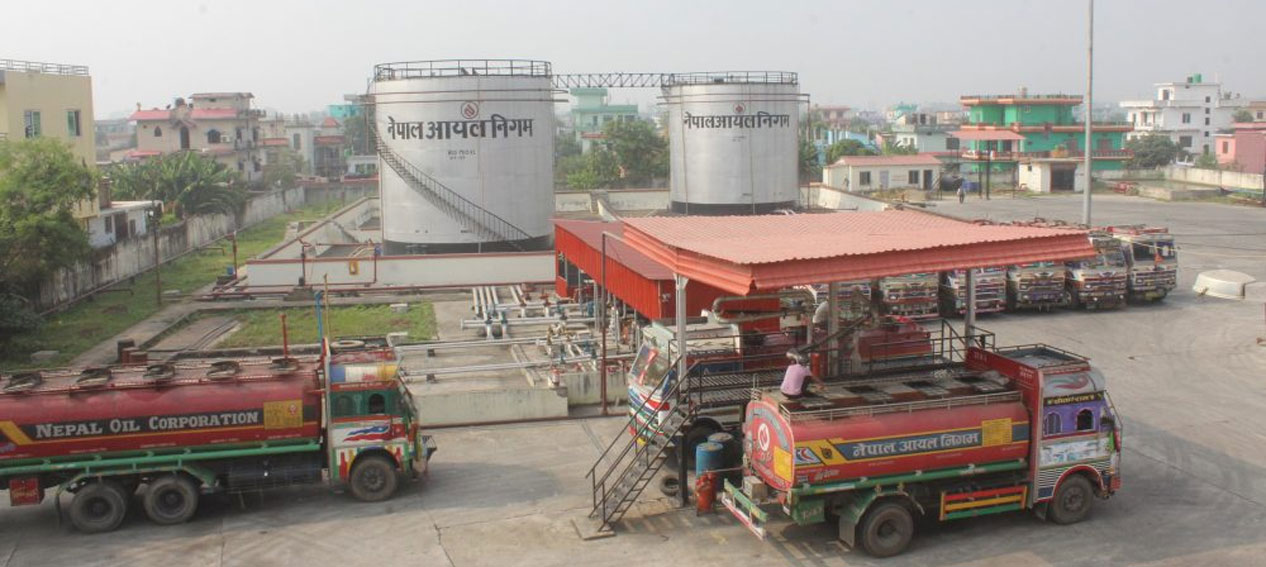
Fuel Depots to Remain Open During 3-Day Election Holiday
The Nepal Oil Corporation (NOC) announced that its provincial offices and depots will remain open during the three-day election holiday from March 4 to March 6. This measure aims to prevent fuel shortages as consumption spikes due to voters traveling home. Depots in Biratnagar, Amlekhgunj, Pokhara, Bhairahawa, and Kathmandu (Thankot) will operate on staggered schedules. NOC Spokesperson Manoj Kumar Thakur confirmed that fuel imports are steady and stocks are sufficient. Despite long queues at gas stations on Sunday, authorities assured the public there is no scarcity and urged citizens not to engage in panic buying.
Middle East Tensions Force Cancellation of 27 International Flights
The Tribhuvan International Airport (TIA) office reported the cancellation of 27 international flights on Sunday due to escalating military conflict in the Middle East. Out of 71 scheduled movements, flights to and from major hubs, including Hamad (Qatar), Dubai and Sharjah (UAE), King Khalid and King Fahd (Saudi Arabia), Kuwait, and Muscat (Oman), were halted. The airport administration cited airspace safety concerns as the primary reason for the disruption. Passengers traveling to these destinations have been advised to stay in touch with their respective airlines as regional security remains volatile.
Regional Airspace Closures Strand 3,800 TIA Passengers
The Civil Aviation Authority of Nepal (CAAN) confirmed that 23 international flights were canceled on Sunday, following US and Israeli strikes on Iran. The subsequent closure of airspace by Iran, Iraq, Syria, Kuwait, and the UAE has stranded approximately 3,800 passengers at Tribhuvan International Airport. Information Officer Gyanendra Bhul stated that 18 flights were canceled on Saturday and 23 more on Sunday, causing global aviation disruptions. Airport authorities are coordinating with airlines for re-bookings and temporary management. Until the regional “control of sky” declarations are eased, the resumption of regular flights to West Asia remains uncertain.
Nepalgunj-Simkot Flight Fares Double to Rs 14K for Elections
Airfares from Nepalgunj to Simkot, Humla, have surged to Rs 14,000 as voters rush home for the upcoming election. Private airlines, including Sita, Summit, and Tara Air, have reportedly halted scheduled flights in favor of expensive charter flights. Passenger Sonam Tamang confirmed that his group of 14 people each paid Rs 14,000 after waiting four days for a ticket. Previously, scheduled flights cost approximately Rs 9,000. Airlines justify the hike by citing empty return legs from Simkot to Nepalgunj. Despite the high costs, travelers complain of limited availability, with only one flight operated daily on a rotational basis between the companies.
Nepalgunj Customs Reports Rs 44 Billion Imports in Seven Months
The Nepalgunj Customs Office recorded imports worth over Rs 44 billion from 18 countries during the first seven months of the fiscal year 2025/26. Chief Janardan Paudel reported that India remains the largest partner, accounting for Rs 41.059 billion. In contrast, exports totaled only Rs 1.632 billion, resulting in a staggering trade deficit of 96.41%. The office has collected Rs 11.046 billion in revenue, which is only 45.01% of the annual target. Authorities face the challenge of collecting the remaining 55% in the next five months.
Ilam Tea Factory Reconstruction Stalled by Delayed Insurance Payment
The Jasbire Tea Factory in Ilam, which suffered Rs 70 million in damages during a fire on February 25, faces a financial crisis due to delayed insurance settlements. Owner Sharad Subba, recognized as a ‘West Tea Maker,’ expressed frustration with Neco Insurance, which has yet to release the Rs 4.1 billion insured amount. Although supporters provided Rs 17 million in loans for reconstruction, the lack of official compensation prevents the factory from resuming full operations. The insurance company cited the absence of a final evaluation report from the surveyor as the reason for the year-long delay in payment.
Nepal Telecom Launches Mass SMS Service for up to 10,000 Recipients
Nepal Telecom (NTC) has introduced a bulk SMS feature allowing users to send messages to up to 10,000 recipients simultaneously. The service offers three tiers: 2,000 messages for Rs 1,243, some 5,000 for Rs 3,108, and 10,000 for Rs 6,215. Interested individuals or organizations must use a registered SIM card and can upload recipient lists via Excel sheets through the company’s website. Nepal Telecom clarified that senders bear full responsibility for the content and sentiment of the messages. This group messaging facility is expected to assist businesses and political candidates during the election period.
Mango Production in Madhesh Province Expected to Triple This Year
Agricultural experts in Mahotari and across Madhesh Province predict a massive surge in mango production this year. Abiral Kumar Mahto, Horticulture Development Officer at the Agriculture Knowledge Center Mahotari, noted that trees are heavily covered in blossoms, indicating a high-yield ‘on-year’ cycle. Production could triple compared to last year if weather conditions remain favorable. Commercial orchards in Bardibas, Gaushala, and Jaleshwar cover approximately 6,600 hectares in Mahotari alone. Nationwide, Madhesh Province accounts for 77.1% of total mango cultivation, with 29,099 hectares dedicated to popular varieties like Malda, Dasheri, and Amrapali, largely serving markets in Kathmandu and Pokhara.
Karnali Province Allocates Rs 156 Million for Local Infrastructure
The Karnali Province Government has ensured funding of Rs 156.6 million for road and bridge projects in Sinja Rural Municipality, Jumna. Facilitated by Provincial Assembly Member Tek Raj Pachhai, the budget includes Rs 151.9 million for the multi-year upgrading of the Jhachulel-Narakot-Dhapa-Kottghar-Kunauta-Laudisim-Ludku-Hatsinja road. Additionally, Rs 4.7 million is allocated for the construction of the Ghattekhola Trust Bridge to assist residents of the Pighi, Gothi, and Narakot settlements. Rupak Rawal, Chief of the Infrastructure Development Office in Jumla, confirmed that the tender process will commence soon to ensure timely completion despite the region’s challenging geography and limited manpower.
Gold Price Increases by Rs 5,600 Per Tola Today
Gold prices increased in the market on Monday. According to the Federation of Nepal Gold and Silver Dealers’ Association, the price of gold rose by Rs 5,600 per tola (11.66 grams) today, reaching Rs 326,100 per tola. On the previous day, gold was traded at Rs 320,500 per tola. Similarly, silver prices also went up by Rs 35 per tola, reaching Rs 6,020. The previous day, silver was traded at Rs 5,985 per tola. Over the past two days, gold prices have increased by Rs 11,200 per tola. From Monday to Thursday last week, gold had risen by Rs 10,700 per tola. However, on Friday, the price dropped by Rs 500 per tola to settle at Rs 314,900.