Kathmandu
Sunday, January 11, 2026






KATHMANDU: Nepal News presents today’s snapshot of Nepal’s economic activities. Get quick updates on major market movements, policy shifts, and financial developments shaping the economy of Nepal. Here are the key economic highlights for today:
NEPSE Drops 20.56 Points as New Listings See 10 Percent Surge
The Nepal Stock Exchange (NEPSE) stock market index declined by 20.56 points on Wednesday, closing at 2544 points. The trading volume saw a slight increase to Rs 3.84 billion, up from Rs 3.62 billion the previous day. Market breadth was negative, with 198 companies declining and only 49 advancing. The Trading group was the steepest loser, dropping 2.35 percent, while the Manufacturing sector was the sole gainer, increasing by 0.23 percent. Notably, four companies, including Bhugol Energy and three new listings, hit the 10 percent upper circuit, even as the market showed widespread losses.
NRB to Absorb Rs 50 Billion to Manage Market Liquidity
The Nepal Rastra Bank (NRB) is set to withdraw Rs 50 billion in deposits from the financial system on Wednesday through the Deposit Collection Instrument to manage the persistent high liquidity observed post-Dashain and Tihar. Currently, total bank deposits exceed Rs 7.4 trillion. This structural open market operation allows A, B, and C class licensed banks to participate, with the NRB prioritizing bids offering the lowest interest rate. The principal and interest for this instrument, which has a minimum bid amount of Rs 100 million, will be payable on May 6, 2026.
Sana Kisan Declares 15 Percent Dividend
The Sana Kisan Bikas Laghubitta Bittiya Sanstha has announced a 15 percent dividend for its shareholders, following a decision by the company’s Board of Directors. The total dividend package comprises 14.25 percent in bonus shares and 0.75 percent in cash dividends for tax purposes. This dividend is contingent upon approval at the company’s upcoming Annual General Meeting. Currently, the company’s share price stands at Rs 854 per unit. The financial institution’s decision reflects its stable performance and commitment to distributing profits to its investors.
Fonepay Approves 19 Percent Cash Dividend and IPO Issuance
Fonepay has announced that its Sixth Annual General Meeting (AGM) has approved a 19 percent cash dividend for its shareholders. The AGM also ratified the company’s financial statements for the fiscal year 2024/25 and several other proposals, including the decision to proceed with the issuance of an Initial Public Offering (IPO). Furthermore, the assembly re-elected Sushin Joshi as an independent director and appointed NBSM & Associates for the current fiscal year’s audit. The company released the information through a press statement following the conclusion of its general assembly.
Pure Energy Records 71 Percent Net Profit Surge in Q1
The Pure Energy Limited, a subsidiary of the Golyan Group, has reported a significant 71 percent increase in net profit, earning Rs 9.05 million in the first quarter of the fiscal year 2025/26, up from Rs 5.2 million in the same period last year. The company, which operates two 10-megawatt solar projects in Banke, generated Rs 65.5 million from electricity sales in the quarter. Following an IPO in 2024, the company’s paid-up capital reached Rs 800 million. The earnings per share rose from Rs 3.29 to Rs 4.50, while the net worth per share increased to Rs 101.61 from Rs 97.27.
NRN Infrastructure Announces 42.105 Percent Dividend and 1:1 Rights Share
The NRN Infrastructure and Development Company has declared a substantial 42.105 percent dividend for its shareholders. The dividend package, approved by the Board of Directors, includes 40 percent in bonus shares and 2.105 percent in cash dividends for tax purposes. Immediately following the issuance of the bonus shares, the company plans to issue a 1:1 ratio (100 percent) rights share based on the capital achieved after the bonus distribution. The company has called for its Annual General Meeting on December 19 and has set November 27, 2025, as the book closure date.
Bagmati Province’s Economic Growth Accelerates to 5.2 Percent
The Bagmati Province’s economic growth rate is estimated to reach 5.2 percent for the current fiscal year, up from 3.7 percent in the previous fiscal year. The province contributes a significant 36.5 percent to Nepal’s total Gross Domestic Product (GDP). The service sector is the largest contributor, projected at 77.1 percent, followed by agriculture at 11.8 percent and industry at 11.1 percent. While the production of millet and vegetables/horticulture increased by 5.2 percent and 16.2 percent, respectively, the production of essential crops like paddy, maize, and wheat saw decreases ranging from 1.1 percent to 18.5 percent during the review period.
Cabinet Prohibits Construction Near MCA-Nepal Power Transmission Line
The Cabinet on Monday resolved to prohibit construction or planting of trees within 23 meters on either side of the centerline of the 400 kV power transmission line being built by MCA-Nepal. This restriction applies to approximately 1,381 hectares of land across 10 districts, including Nawalparasi, Palpa, Tanahun, and Kathmandu. The USD 697 million project, funded by a USD 500 million grant from the U.S. government and a USD 197 million investment from Nepal, aims to clear obstacles for the construction of the critical power line and road upgrades.
Justice Dissemination Achieved for 1,697 Usury Victims in Parsa
The Parsa District Police Office has successfully resolved 1,697 usury complaints through mediation, offering relief to victims of predatory loan sharks. Police Spokesperson Hari Bahadur Basnet reported that out of 2,367 complaints filed across the district, 635 cases are still pending. These extensive mediation efforts have resulted in the recovery of Rs 291.2 million in disputed principal. Furthermore, 40 bigha (2916000 square feet), 15 kattha (54675 square feet), and 19 dhur (3462.75 square feet) of land have been returned to the victims. Despite these significant successes, Shambhu Prasad Yadav of the Usury-Victim Farmer-Worker Movement noted that some creditors persist in their fraudulent practices, inflating Rs 100,000 loans into debt bonds valued up to Rs 300,000.
Corruption Trial Commences Over Pashupati Electric Crematorium Procurement
A corruption trial commenced at the Special Court on Wednesday regarding the machine procurement for the Pashupati Electric Crematorium. The Commission for the Investigation of Abuse of Authority (CIAA) filed the case on June 22 against 14 individuals and two companies, including then-member secretary Dr. Milan Kumar Thapa. The CIAA claims the defendants caused a loss of Rs 103.3 million by conspiring to award the contract to a favorable company. The investigation also found a machine valued at INR 3.2 million was falsely quoted at Rs 15.2 million.
Bagmati Province Hotel Occupancy Rate Rises to 57 Percent
Hotels in Bagmati Province, the region with the highest investment in Nepal’s hospitality sector, saw their average room occupancy rate rise to 57 percent in the last fiscal year, up from 51.9 percent in the fiscal year 2023/24. The increase is attributed to a surge in both foreign and domestic tourists, boosting the trekking and restaurant businesses. The highest occupancy was recorded from mid-October till Tuesday at 67.8 percent, while the lowest was from mid-January to mid-February at 44.7 percent. HAN President Binayak Shah noted that the closure of major five-star hotels in Kathmandu after the Gen Z protest (September 8 and 9) has led to increased business for other larger hotels.
Bagmati Province Industrial Loan Investment Soars to Rs 1.2 Trillion
The loan investment in industries operating in Bagmati Province surged to Rs 1.211 trillion by mid-June, reflecting a 13.8 percent increase from the previous year. According to the Nepal Rastra Bank’s annual report, industrial loans constitute 36.4 percent of the total credit extended in Bagmati Province. A staggering Rs 1.119 trillion of this industrial credit is concentrated in Kathmandu District, primarily because most industrial head offices are located there, while Rasuwa District has the lowest investment at Rs 130 million (0.01 percent).
MCA-Nepal Initiates Land Acquisition for 400 kV Power Project in Kathmandu
The Millennium Challenge Account Nepal (MCA-Nepal) Development Committee has commenced the land acquisition process for the 400 kV electricity transmission project in Shankharapur Municipality, Kathmandu. The Kathmandu District Administration Office issued a notice on Wednesday, announcing the acquisition of land in Wards 1 and 2 of the municipality. The acquisition specifically targets areas within the Ratmate Substation to Lapsiphedi Substation section, including land in the former Nanglebhare and Lapsiphedi Village Development Committees. This is a crucial step for the successful implementation of the multi-million-dollar power transmission project.
Labor Ministry Prepares to Repeal 2009 Japan TITP
The Ministry of Labor, Employment, and Social Security is preparing to repeal the Japan Technical Intern Training Program (TITP) Worker Sending Directive, 2009. A committee, led by Joint Secretary Pitambar Ghimire, has been formed to study the issue, which is expected to recommend abolition. The existing directive, based on the JITCO framework, which was scrapped by Japan in 2017, allows only JITCO-listed manpower agencies to send workers. Manpower agencies have long demanded the repeal of this outdated system. Japan is planning to introduce the Employment for Skill Development (ESD) Program from 2027, replacing the current TITP system, necessitating the regulatory change in Nepal.
Tourist Arrivals from Europe Dominate Despite Indian Volume Lead
A total of 128,443 tourists arrived in October 2025, a 3.3 percent increase over the same month the previous year. Although India topped the list with 17,298 arrivals, European tourists accounted for the largest regional share at 31.6 percent (40,600 people). The South Asian region followed with 22.6 percent (29,060 people). In the 10 months of 2025, at least 943,716 tourists arrived, with India leading (243,350), followed by the US (93,985) and China (78,929).
Government Prioritizes Health and Wellness Tourism for Economic Growth
The government has formally begun developing a strategic concept paper to utilize health and wellness tourism as a new economic opportunity, following a decision by the National Tourism Council four months ago. The initiative, led by former Tourism Minister Badri Prasad Pandey, aims to create a long-term, inclusive framework for tourism. The concept paper will focus on five main pillars: infrastructure, human resources, investment, service quality, and international promotion. According to Joint Secretary Indu Ghimire, the 13-member subcommittee, including representatives from the Health and Forest Ministries, will first prepare a policy blueprint to institutionalize the sector, capitalizing on Nepal’s natural beauty and Ayurvedic heritage.
Hyatt Hotel Faces Dispute Over Termination of 133 Permanent Staff
The Hyatt Regency (Taragaon Regency), closed since the Gen Z protest on September 9, has announced the termination of 133 permanent employees, despite a prior agreement with its three labor unions. The hotel issued the termination notice on November 1, citing Labor Act 2017, Section 145, and claiming repairs prevented continued employment. The broken agreement stipulated that the hotel would pay the minimum wage of Rs 12,170 for one year during closure and rehire staff at the previous salary. The hotel’s last-minute condition, demanding the withdrawal of all personal labor lawsuits, caused the collapse of the consensus with the unions.
Insurance Authority Poised for Fixed Deposit Investment Mobilization
The Nepal Insurance Authority is preparing to invest its existing bank balance into fixed deposits across various commercial and development banks. The Authority issued a sealed bid proposal on Sunday, inviting interested banks to submit their maximum potential returns within seven days. Banks are required to disclose key financial metrics in their proposals, including their maximum interest rate, Capital Adequacy Fund details, latest quarterly statements, non-performing assets, and the bank’s establishment year. Although the Authority has not specified the exact amount it intends to invest, the policy aims to utilize its cash reserves effectively.
Finance Ministry Cuts Election Commission Budget to Rs 4.960 Billion
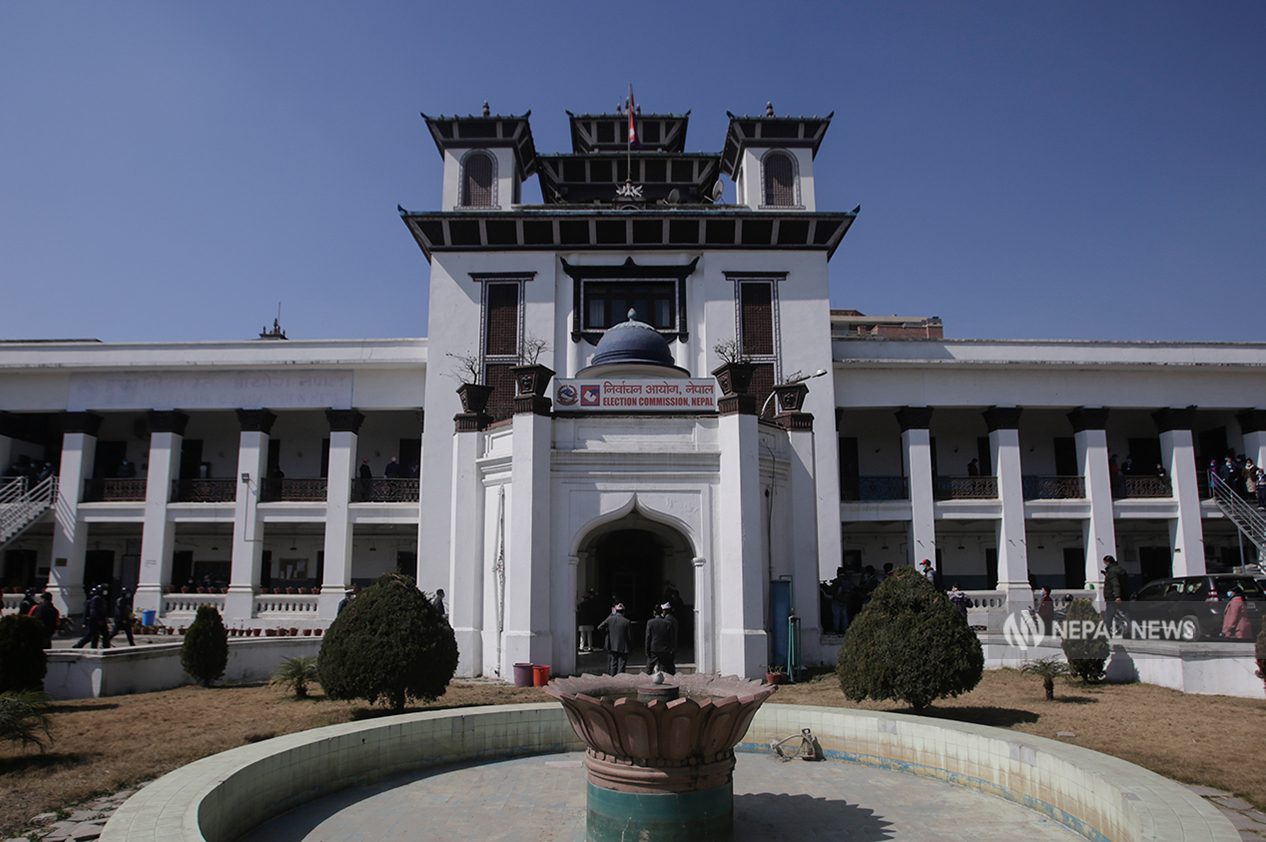
The Ministry of Finance has approved a budget of Rs 4.960 billion for the upcoming House of Representatives (HoR) election, scheduled for March 5, 2026. This figure is significantly lower than the Rs 7.810 billion initially requested by the Election Commission. A senior official from the Finance Ministry stated the reduction was made after discussions but assured that supplementary funding could be provided if needed. For comparison, the 2022 HoR election cost Rs 6.500 billion. The source of the current budget is being secured by cutting funds allocated to small projects, as Finance Minister Rameshore Khanal aims to avoid external assistance.
Foxconn Achieves 17 Percent Profit Surge Driven by AI Server Demand
Foxconn (Hon Hai Precision Industry), the world’s largest contract electronics manufacturer, reported a 17 percent rise in third-quarter net profit, exceeding forecasts. For the July-September period, net profit reached USD 1.89 billion, driven by sustained global demand for AI servers. For the second consecutive quarter, revenue from the Cloud and Networking business, including AI servers, surpassed that of the Smart Consumer Electronics division, like iPhones. The company, which is Nvidia’s biggest server maker, forecasts significant year-on-year revenue growth for the full year and expects strong quarter-on-quarter growth in AI server revenue for the fourth quarter.
Gold Dips Slightly, Silver Inches Up
Gold prices in Nepal fell by Rs 2,100 per tola on Wednesday, with the metal trading at Rs 244,300, down from Rs 246,400 on Tuesday, according to the Federation of Nepal Gold and Silver Dealers’ Association. Meanwhile, silver gained Rs 5 per tola, rising to Rs 3,175 from Tuesday’s Rs 3,170.