Kathmandu
Sunday, January 18, 2026






KATHMANDU: Nepal News presents today’s snapshot of Nepal’s economic activities. Get quick updates on major market movements, policy shifts, and financial developments shaping the economy of Nepal. Here are the key economic highlights for today:
CNI Calls for Prioritizing Economic Issues in Parties’ Election Manifestoes
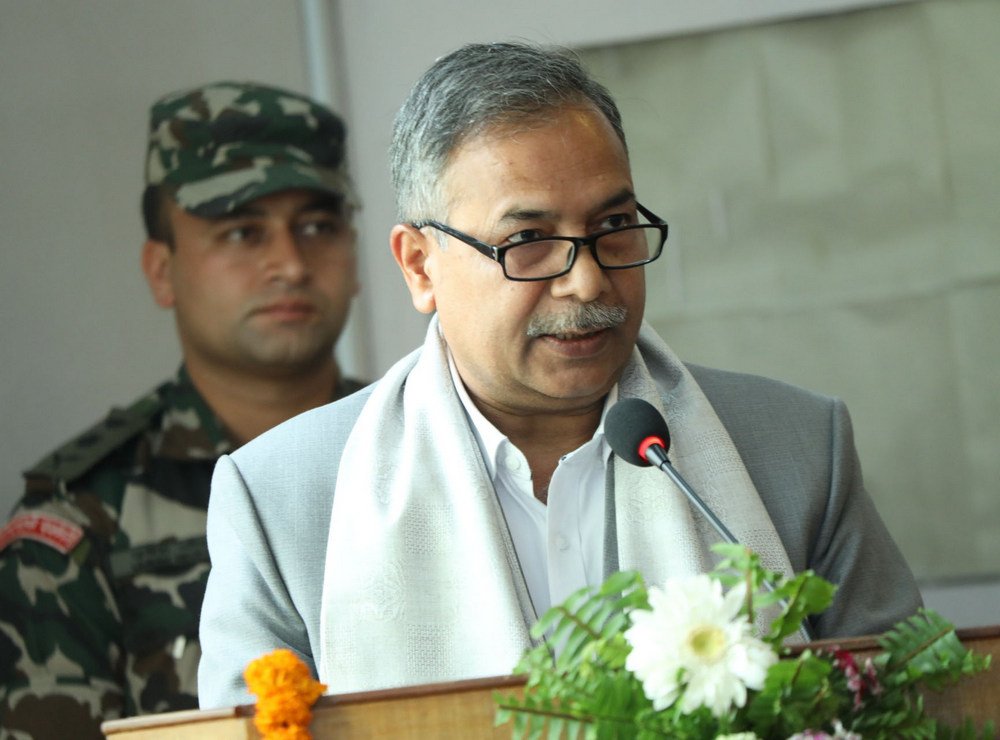
The Confederation of Nepalese Industries (CNI) has urged political parties to prioritize economic issues in their manifestoes for the upcoming elections. Addressing a program organized on Sunday, CNI President Birendra Raj Pandey stressed that the country should get the government within the stipulated time and achieve both political and economic way-out. He said, “It appears that only the political agenda is being prioritized at present, but a clear plan and roadmap are essential for improving the country’s economy.” Pandey further said that, although political changes occur in the country almost in every decade, the country’s average economic growth rate has not significantly improved. According to him, the trend of declining contribution of the production and industrial sectors to the economy and the increasing share of the service sector in recent years is worrying. “Increasing the contribution of the productive sector to the economy is today’s need. Without this, long-term economic stability is not possible,” he said adding that the economic growth rate could not be achieved due to issues such as weak capital expenditure, investment not expanding despite sufficient liquidity, and policy instability. CNI has suggested that to improve the economy, an investment-friendly environment must be created, annual changes in tax policy should be stopped, administrative hassles reduced, and the situation where multiple agencies have to be approached for the same task should be ended.
Capital expenditure of Karnali Province government minimal
The Karnali Province government has spent 13.74 per cent of its annual budget in six months of the current fiscal year. The provincial government has been able to spend 7.90 per cent of the capital expenditure and 23.83 per cent of the current expenditure in the first six months of the current fiscal year. The provincial government had allocated Rs 19.98 billion for development headings and Rs 1.57 billion has been spent so far. The Karnali government had allocated Rs 32.91 billion budget in the fiscal year 2024/25. According to Chief of Karnali Province’s Comptroller Office, Ratna Subedi, only 13.74 per cent budget has been spent till mid-term review of the current fiscal year. He said, ” Out of the total budget of Rs 12.39 billion allocated for current expenditure, Rs 2.95 billion (23.83 per cent) has been spent so far. This is three folds more as compared to implementation of development budget.” A total of Rs 10.73 billion budget has been allocated for the Ministry of Physical Infrastructures and Urban Development in the current fiscal year, only Rs 1.8 billion has been spent. The Ministry of Water Resources and Energy Development has been seen very weak in budget implementation. It has spent only Rs 205.9 million out of the allocated Rs 3.55 billion.
Investment Board Nepal to Launch One-Stop Service Center
The Investment Board Nepal (IBN) is set to bring a One-Stop Service Center into operation with the objective of delivering fast and efficient services, thereby attracting more national and international investors and increasing investment inflows. For the coordination of the One-Stop Service Center, the IBN has appointed Joint Secretary Hemraj Tamang. Fourteen government agencies have designated focal persons with decision-making authority to coordinate and move forward with the Center’s operations. These agencies include the Ministry of Land Management, Cooperatives and Poverty Alleviation; the Ministry of Physical Infrastructure and Transport; the Ministry of Forests and Environment; and Nepal Rastra Bank. Similarly, focal persons have been appointed from the Department of Immigration, Inland Revenue Department, Department of Industry, Department of Mines and Geology, Department of Customs, and the Department of Labour and Occupational Safety. In addition, representatives have also been designated from the Department of Electricity Development, the Office of the Company Registrar, and the Nepal Telecommunications Authority. Other agencies designated by the Board may also appoint focal persons as required. The IBN’s office has prepared a draft operating procedure for the One-Stop Service Center in coordination with the relevant ministries, departments, and agencies.
Paddy Production Declines by 4.2 Percent
Paddy cultivation, regarded as the backbone of Nepal’s economy and food security, has witnessed a decline this year. According to the preliminary estimates for the current fiscal year 2025/26 released by the Ministry of Agriculture and Livestock Development, paddy production, cultivated area, and productivity have all decreased compared to last year. According to the latest data from the National Statistics Office, the agricultural sector contributes around 24.16 percent to Nepal’s Gross Domestic Product (GDP), while paddy alone accounts for nearly 12 percent of agricultural GDP. In the current fiscal year, the total area under paddy cultivation stands at 1,376,872 hectares, which is 3.8 percent lower than in the previous fiscal year 2024/25, when paddy was cultivated on 1,420,636 hectares. Along with the reduction in cultivated area, total production has also declined by 4.20 percent. While paddy production stood at 5,955,476 metric tons last fiscal year, it is estimated to decline to 5,705,126 metric tons this fiscal year, according to the ministry. Similarly, per-hectare productivity has fallen by 1.16 percent, dropping from 4.19 metric tons last year to 4.14 metric tons this year.
Nepal Life Samriddhi Investment Scheme Opens for Unit Issuance
Nepal Life Capital has opened the public issuance and sale of units of the “Nepal Life Samriddhi Investment Scheme” under its mutual fund from Sunday. The Capital plans to issue 160 million units worth Rs 1.60 billion at a face value of Rs 10 per unit. The scheme, operated under the Nepal Life Mutual Fund, is a 10-year closed-end investment plan. Out of the total 160 million units to be issued, a minimum of 15 percent – or 24 million units – has been reserved, of which 14 percent (22.4 million units) is allocated to the fund promoter, Nepal Life Insurance Company Limited, and 1 percent (1.6 million units) to the scheme manager. The remaining 136 million units will be offered to the general public. Investors can apply for a minimum of 100 units and up to a maximum of 160 million units. Applications will be accepted until January 22. If all units are not subscribed within this period, the application deadline will be extended until February 1, according to the Capital. Nepal Life Capital Limited has been appointed as the issue and sales manager for the scheme. Investors can apply through all ASBA member banks and financial institutions approved by the Securities Board of Nepal, as well as their designated branch offices. Applications can also be submitted via the ‘Mero Share’ online platform developed by CDS and Clearing Limited using the C-ASBA system.
Energy Import Dependence Must be Reduced: Vice President
Addressing a program organized on the occasion of the 26th anniversary of the Independent Power Producers’ Association, Nepal (IPPAN), Vice President Ramsahay Prasad Yadav stated that IPPAN’s role in the development of Nepal’s energy sector has been commendable. He noted that for more than two decades, IPPAN has played a significant role in strengthening the country’s energy sector and advancing energy self-reliance, which he described as a cornerstone of national development and economic prosperity. Emphasizing that Nepal is rich in hydropower and renewable energy resources, Vice President Yadav stressed the need to utilize these valuable resources effectively to reduce dependence on energy imports. He said energy self-reliance is directly linked to economic independence and national security, adding that development is not possible without adequate energy. According to him, the availability of affordable and sufficient energy would drive rapid growth in sectors such as industry, agriculture, tourism, and information technology, leading to job creation and sustained economic prosperity. He further stated that the expansion of renewable energy would help reduce carbon emissions, maintain environmental balance, and address the challenges posed by climate change.
NRB Mops Rs 20 Billion from Banks for Liquidity Management
The Nepal Rastra Bank (NRB) mopped Rs 20 billion from the market to manage excess liquidity in the banking system. The central bank on Sunday invited banks and financial institutions to submit bids for investment through its deposit collection instrument. Under the plan, NRB will withdraw funds from the system for a period of 84 days. Banks and financial institutions were invited to submit their bids online until 2:00 PM. The interest rate will be determined through a bidding process and the central bank has said the repayment will be made on March 29. With weak credit demand leading to an accumulation of excess liquidity in banks, NRB has absorbed around Rs 200 billion over the past month through nine separate instruments. Currently, banks are estimated to be holding excess liquidity of around Rs 800 billion. Due to high liquidity, interest rates in the banking system have fallen to below 2.75 percent. The interbank interest rate has also dropped below this level, indicating surplus liquidity in the system.
Hotel Forest Inn Launches IPO
Hotel Forest Inn Limited has launched its Initial Public Offering (IPO), opening applications from Sunday in the first phase for Nepalis employed abroad. The company has allocated shares worth Rs 40 million for migrant workers, issuing 400,000 ordinary shares at a face value of Rs 100 per share. Eligible investors can apply for a minimum of 10 shares and a maximum of 200,000 shares until January 22. Hotel Forest Inn has received approval to issue an IPO amounting to 20 percent of its issued capital of Rs 2 billion, equivalent to Rs 400 million. Following the allotment to Nepalis working overseas, the company will proceed with issuing shares to the general public in the second phase. For the IPO, Infomerics Credit Rating Nepal has assigned the company an IRN BB- issuer rating, indicating a moderate level of risk in meeting its financial obligations.
‘Rhino Cruise’ to Come into Operation from Gaindakot
Nepal’s first ‘Rhino Cruise’ is to come into operation from the Gaindakot-based Narayani River in Nawalparasi (Bardaghat-Susta East) from this month. The Cruise is being operated with a plan to develop Nawalpur and the nearby areas into a sustainable and promising new tourist destination. Thee Rhino Cruise is going to be jointly operated in the Narayani River by Rhino Water Entertainment Pvt Ltd and Hotel River Crown Pvt Ltd. Sources said the cruise, intended for tourism purposes, is planned to operate from Gaindakot Pulchowk to Devghat. The Rhino Cruise is going to be operated not for transportation but for promoting tourism, the organizers said, adding that they are going to operate the Rhino Cruise focusing on dinner cruises (including in-cruise dining packages).
NEPSE Rises by 31.12 Points on first Trading Day of the Week
On the first trading day of the week, Sunday, the Nepal Stock Exchange (NEPSE) index rose by 31.12 points. The index increased by 1.17 percent compared to the previous trading day, closing at 2,672.55 points. The Sensitive Index also gained 4.70 points to settle at 459.43 points, marking a rise of 1.03 percent from the previous session. On Sunday, shares of 338 companies were traded through 95,445 transactions. A total of 16,611,479 shares were bought and sold, resulting in a total turnover of Rs 8.40 billion. All 13 trading groups on NEPSE ended the day in the green. The commercial banking group rose by 0.85 percent, development banks by 3.03 percent, finance by 5.73 percent, hotels and tourism by 2.02 percent, hydropower by 0.70 percent, and the investment group by 0.93 percent. Similarly, the life insurance group gained 1.25 percent, manufacturing and processing 2.42 percent, microfinance 1.31 percent, mutual funds 0.51 percent, non-life insurance 0.68 percent, other 0.45 percent, and the trading group 0.54 percent.
Gold Price Increases by Rs 600 Per Tola
On Sunday, the first trading day of the week, the price of gold increased in the domestic market. However, the price of silver decreased today. According to the Federation of Nepal Gold and Silver Dealers’ Associations, gold was traded at Rs 277,800 per tola (11.66 grams) today against Rs 277,200 on Friday. The price of the yellow metal went up by Rs 600 per tola on Sunday. Similarly, the price of silver stood at Rs 5,625 per tola on Sunday, decreasing by Rs 20 per tola from the previous day. Silver price was Rs 5,645 on Friday. According to the Federation, the price of gold and silver in the domestic market has been affected due to the fluctuation in the price in the international market, dollar exchange rate and geopolitical uncertainty. As per the international media, gold is being traded at 4,596 US dollar per ounce and silver at 90 US dollar per ounce.