Kathmandu
Wednesday, January 7, 2026






KATHMANDU: Nepal News presents today’s snapshot of Nepal’s economic activities. Get quick updates on major market movements, policy shifts, and financial developments shaping the economy of Nepal. Here are the key economic highlights for today:
NEPSE Falls by Double Digits on First Trading Day of the Week
On the first trading day of the week, the Nepal Stock Exchange (NEPSE) index witnessed a double-digit decline. The NEPSE index dropped by 10.29 points to settle at 2,610.63. According to NEPSE, a total of 10,274,126 shares of 323 companies were traded through 79,702 transactions, resulting in a total turnover of NPR 5.01 billion (NPR 5,01,75,87,294). In today’s trading, the Hotel and Tourism group rose by 0.62 percent, Manufacturing and Processing by 1.04 percent, and Trading by 0.34 percent. All other sectoral indices declined. Banking fell by 0.14 percent, Development Bank by 0.80 percent, Finance by 0.13 percent, Hydropower by 0.49 percent, Investment by 0.32 percent, Life Insurance by 0.88 percent, Microfinance by 0.32 percent, Mutual Fund by 0.29 percent, Non-Life Insurance by 0.86 percent, and the Others group by 1.69 percent. Shares of Win Nepal Laghubitta Bittiya Sanstha Limited and Srinagar Agritech Industries Limited hit the positive circuit today. Meanwhile, Nyadi Hydropower Limited recorded the highest loss, with its share price falling by 4.32 percent.
Import Resumes in Full Swing from Rasuwagadhi Transit
With the resumption of the Rasuwagadhi border checkpoint, the import of goods from neighbouring China has begun. According to the Border Security Post Rasuwagadhi, 18 electric vehicles (EV Micro-bus) entered Nepal from the Rasuwagadhi border checkpoint on Saturday. These vehicles were imported for the first time in the current fiscal year and are currently in the parking area at Timure. The customs office has stated that the importers of these vehicles are working to pay the due revenue. Similarly, on Saturday alone, 39 cargo containers carrying apples, ready-made clothes, garlic, vehicle spare parts, walnuts, batteries, and medical supplies entered Nepal. Customs Office Spokesperson Thakur Gautam shared that since the reopening of the Rasuwagadhi border crossing last Thursday, 96 containers of goods have entered Nepal till Saturday and the inspection and clearance process for ready-made goods will begin from today. He said that perishable goods such as apples and walnuts are given priority for the customary inspection for clearance. Meanwhile, the Office collected Rs 90.87 million in revenue in two days after the border crossing came back to regular operations.
Government Moves to Form ‘Special Task Force’ to Investigate Foreign Employment Fraud
The government has moved forward with the process of forming a ‘Special Task Force’ to investigate cases of fraud related to foreign employment. The Ministry of Labour, Employment and Social Security has initiated the procedure to establish the task force. Officials from the Department of Foreign Employment, the Office of the Attorney General, and security agencies under the Ministry of Home Affairs will be included in the task force. At present, more than 35,000 fraud cases are under investigation at the department. Hundreds of new complaints are being registered every day. More than 5,000 complaints are filed annually, and there are also many pending cases from previous years. The mechanism is being developed to ensure faster and more efficient investigation and resolution of both new and backlog cases.
Solar Energy Worth Rs 47.1 Million Sold in Five Months
Solar energy producer, Jhapa Energy, has sold power worth Rs 47.1 million to Nepal Electricity Authority in five months. The company produced 6.52 million units of power during the period from Shrawan to mid-Mangsir of the fiscal year 2082/83 from its 10-megawatt solar power project based in Buluchowk, Ward No. 4, Shivasatakshi Municipality, according the chair of the company’s board of directors, Lal Bahadur Sanwa Limbu. The Nepal Electricity Authority purchases the power produced by Jhapa Energy at the rate of Rs 7.30 per unit. It has been producing electricity commercially since the past two years. Jhapa Energy has established the project in an area of 22 bigaha of land in Buluchowk, where 21,600 solar panels have been installed.
Jyoti Bikash Bank Provides Baby Warmers to Remote Health Posts in Koshi Province
Under its corporate social responsibility initiative, Jyoti Bikash Bank has provided ‘Baby Warmer’ machines to health posts in various remote districts of Koshi Province to help save the lives of newborns. To maintain proper body temperature in newborns and protect them from hypothermia, the bank has installed the equipment at Sisuwakhola Health Post and Num Primary Health Center in Sankhuwasabha, Pujansewa Municipal Hospital in Khotang, and Ektin Health Post in Panchthar. The bank aims to ensure access to safe maternity services by delivering these devices even in areas where it does not have branch offices. Along with the handover of the equipment, the bank also provided special training to concerned health workers on operating the machines.
Jhapa Energy Sells Electricity Worth Rs 47.09 Million to NEA in Five Months
Solar power producer Jhapa Energy has sold electricity worth Rs 47,093,497 to the Nepal Electricity Authority (NEA) within a five-month period. According to the company’s Board Chairman Lal Bahadur Sawa Limbu, during the period from Shrawan to the end of Mangsir of Fiscal Year 2082/83, the company produced 6,521,260 units of electricity. Jhapa Energy is operating a 10-megawatt solar power project at Buluchok, Ward No. 4 of Shivasatakshi Municipality. The electricity produced by the company is purchased by the Nepal Electricity Authority at the rate of Rs 7.30 per unit. Jhapa Energy has been commercially producing electricity since Magh 10, 2080, while the Power Purchase Agreement (PPA) with NEA was signed earlier on Mangsir 12, 2078.
Salpa Bikas Bank IPO Oversubscribed by 19.37 Times
Applications for the Initial Public Offering (IPO) of Salpa Bikas Bank have exceeded demand by 19.37 times. The company had issued 1,439,179 shares, but applications were submitted for 27,884,570 shares by 2,383,407 applicants. As per the rule of allotting 10 shares per applicant, only 143,917 applicants will receive shares, while the remaining 2,269,490 investors are expected to be left empty-handed. The bank has stated that out of the funds raised through the IPO, Rs 30 million will be invested in branch expansion. Similarly, Rs 128.9 million will be invested in various investment sectors, and the remaining Rs 13.488 million will be allocated to other purposes. Salpa Bikas Bank was established in 2069 BS (2012/13 AD) and began operations after receiving approval from Nepal Rastra Bank on Ashar 1 of the same year. Its head office is located in Diktel Bazaar, Khotang. The bank currently operates six branches in Diktel, Aiselukharka, Baksila, Halesi, Simpani, and Chisapani.
NRB to Issue Rs 25 Billion Worth of Debentures
Nepal Rastra Bank (NRB) has announced that it will issue debentures worth Rs 25 billion. The central bank will issue “Nepal Rastra Bank Debenture 2083 ‘C’.” Commercial banks, development banks, and finance companies (Class A, B, and C financial institutions) will be eligible to apply for this debenture. According to the central bank, the online bidding process will remain open until 2:00 PM, and the interest rate will be determined through the bidding process itself. This is a one-year debenture. The principal repayment date is Poush 20, 2083, while interest will be paid semi-annually. During allocation, bids will be arranged from lowest to highest interest rates, and up to the announced amount or the allocation limit set by the committee. The interest rate at the cut-off point will be treated as a single interest rate, and the debenture will be sold at that rate to bidders who quoted the same or lower interest rates. NRB has stated that if a counterparty does not maintain sufficient balance in its account on the issuance date, the approved bid amount will be cancelled, and the institution will be penalized 2.5 percent of the approved amount. Additionally, such counterparties will be barred for six months from participating in open market operations and any bidding under the interest rate corridor.
NIC Asia Bank to Issue 50% Right Shares
NIC Asia Bank has announced plans to issue right shares at a ratio of 2:1, equivalent to 50 percent of its existing paid-up capital. The bank has sought approval from Nepal Rastra Bank to issue the 50 percent right shares. A meeting of the bank’s Board of Directors held on Poush 20 decided to proceed with the issuance at this ratio. Currently, the bank’s paid-up capital stands at Rs 14.91 billion. Accordingly, the bank will issue 7,45,87,835 right shares worth Rs 7.45 billion. The bank has sought approval from Nepal Rastra Bank to issue the 50 percent right shares. A meeting of the bank’s Board of Directors held on Poush 20 decided to proceed with the issuance at this ratio. Currently, the bank’s paid-up capital stands at Rs 14.91 billion. Accordingly, the bank will issue 7,45,87,835 right shares worth Rs 7.45 billion. The bank stated that the right share issuance will proceed after receiving approval from Nepal Rastra Bank and endorsement from the upcoming Annual General Meeting (AGM).
Returnee Migrant Thrives in Commercial Poultry Farming in Tanahun
Arjun Bahadur Basnet of Vyas Municipality–1, Ratauli is now successfully engaged in commercial poultry farming after returning home from abroad. After working in Dubai for 17 years, Basnet returned to Nepal and is now earning more than he did overseas through poultry farming. Basnet shared that he earns around Rs 100,000 per month from selling eggs. He returned home nine months after his father passed away during the COVID-19 period and started the business five years ago. His success has become a strong example that one can earn double the income in Nepal compared to foreign employment. Currently, his enterprise, Basnet Broiler Poultry and Egg Farm, houses 2,000 layer chickens. He initially invested Rs 3 million, constructing two modern sheds on six ropanis of land, and has been generating a steady income since. The farm produces around 1,800 eggs daily, with a monthly turnover exceeding Rs 500,000. After deducting expenses for feed, medicine, and labor, Basnet manages to save over Rs 100,000 per month.
Nepal Electricity Authority to Construct New Butwal–Lamahi 400 kV Transmission Line
The Nepal Electricity Authority (NEA) has announced plans to construct a new Butwal–Lamahi 400 kV capacity electricity transmission line. The 161-kilometer-long transmission line is being developed to transmit electricity generated in eastern Nepal to the western region and to evacuate power produced by hydropower projects built along the Gandaki Corridor. The project will be implemented across Nawalparasi, Rupandehi, Palpa, Kapilvastu, Arghakhanchi, and Dang districts of Lumbini Province. NEA has published a public notice seeking suggestions and feedback from stakeholders for the preparation of an Initial Environmental Examination (IEE) report in the project-affected areas. For the 400 kV transmission line, a 46-meter right-of-way has been designated—23 meters on each side from the centerline. The project will include a total of 405 transmission towers. Additionally, a 400/220, 132/33/11 kV substation will be constructed at Rihar, Ward No. 9 of Lamahi Municipality in Dang.
Gold and Silver Prices Decline
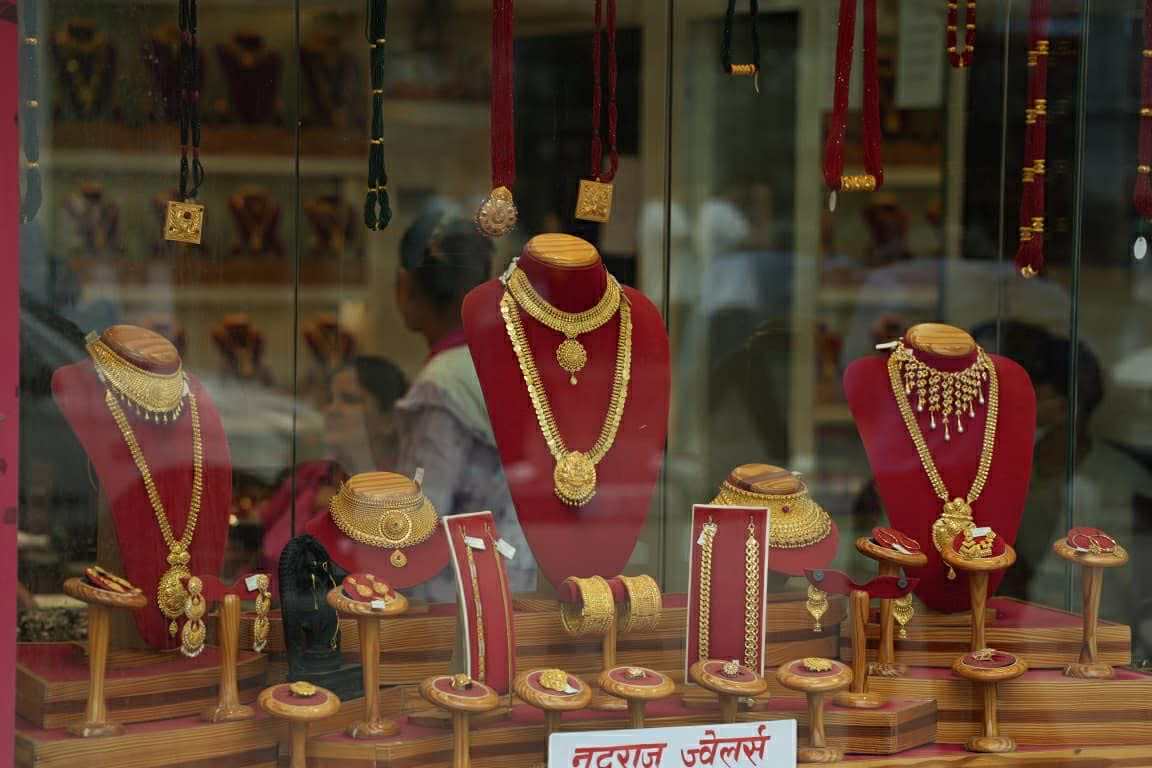
Gold prices in the local market declined slightly on Sunday, falling by Rs 2,100 per tola. According to the Federation of Nepal Gold and Silver Dealers’ Association, the price of gold fell by Rs 2,100 per tola to Rs 260,400. On Friday the price stood at Rs 262,500 per tola. Similarly, silver has decreased by Rs 25 per tola. On Friday, silver was traded at Rs 4,525 per tola. On Sunday, this price remained at Rs 4,500.