Kathmandu
Saturday, January 10, 2026





KATHMANDU: Average income exceeds expenditure among people aged 27–46 years in Nepal, according to the National Transfer Account (NTA) report released today by the National Statistics Office.
The report, which focuses on Lifetime Deficit Analysis, highlights that consumption among those below 27 and above 46 exceeds their income, indicating a lifetime deficit.
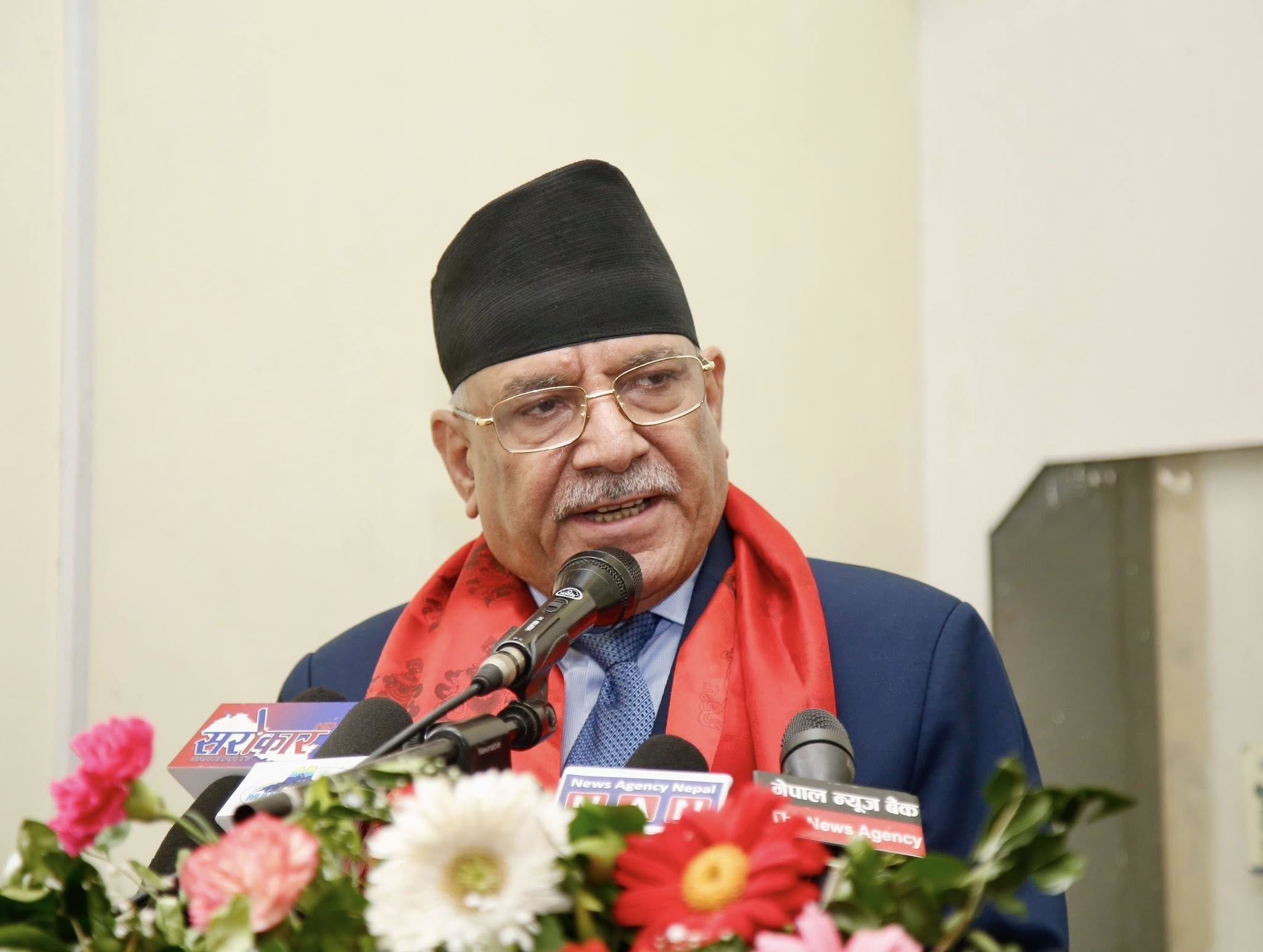
During the report launch, Finance Minister Rameshore Prasad Khanal said that the document will be crucial for the effective implementation of social security programs, industrial policies, and job creation initiatives.
“Without reliable statistics, we cannot formulate genuine policies. The National Transfer Accounts and Small Area Estimation of Poverty reports guide us on the types of policies and plans we need to develop,” he said, stressing the importance of generating such data domestically.
He further added that government-funded studies and reliable data play a significant role in policy reform and development planning.
At the programme, National Statistics Office Chief Statistics Officer Kamal Prasad Pokhrel stated that the NTA report was prepared for the first time in Nepal, analyzing income, consumption, savings, and resource transfers across different age groups. Similarly, the Small Area Estimation of Poverty report has been prepared for the first time following the implementation of federalism in the country. These reports are expected to help formulate accurate, poverty-targeted plans and programs at the federal, provincial, and local levels.
The NTA report analyzed life-cycle accounts of individuals based on per capita and total figures. When the population is divided into three age groups: children and youth (0–24), working-age population (25–64), and the elderly (65 and above), the lowest lifetime deficit for the fiscal year 2078–79 BS was found in the 25–64 age group. However, the report notes that even this group does not save adequately.
The highest per capita lifecycle deficit is in the age of 65 years and the above as well as in overall, the highest deficit is seen in the age group of 0-24 years.
The highest per capita consumption is seen in the age group of 25-65 years while the lowest in the age between 0-24 years.
Similarly, there is a big gap between the consumption and labour income and labour income is relatively lower than consumption that results lifecycle deficit. Lifecycle surplus is seen as income of people aged 27-47 years is exceeding than consumption. There is lifecycle deficit above 47 years as consumption exceeds than labour income.
As per the report, in Nepal per capita lifecycle profit is comparatively seen in around the age of 20. Per capita private consumption is wise than public consumption while separating private and public consumption.
In fiscal year 2021/22, per capita net labour income was around 87,814. Of the total labour income, salary and remuneration stands at 69 per cent while employment at 31 per cent.
As per the age groups, the share of income received from salary and remuneration of the age group 25-64 years is 71 per cent which is the highest and lowest 35 per cent of the individuals of 65 years and above.
This shows a relatively large difference between consumption and labor income. The report states that there is a large lifecycle deficit because total labor income is less than total consumption in the country.
The Nepal Labour Force Survey 2017/18 shows an unemployment rate of 11.4 percent in Nepal, which clearly indicates that unemployment has created a significant gap between consumption and labor income in the country.
This means that in the absence of adequate employment opportunities, low wages and the limited income from self-employment have not been sufficient for labor earnings to meet the necessary basic consumption.
“In Nepal, the working-age group of 15 to 64 years constitutes 65 percent of the total population, which shows ample potential for economic growth. However, strategic policy interventions are needed for its effective utilization,” the report stated.
According to the report, the labor force participation rate in the labor market is only 38.5 percent, while youth unemployment stands at 12.7 percent, and this situation of unemployment highlights the urgent need to enhance skill development and employment creation programmes.
The report mentions that labor income is much lower than the country’s total consumption. Although the share of the working-age group is higher, limited employment and skill inequalities are increasing youth unemployment.
A significant portion of the working-age population is employed abroad, which has prevented domestic economic activities from growing as expected.