Kathmandu
Friday, December 19, 2025





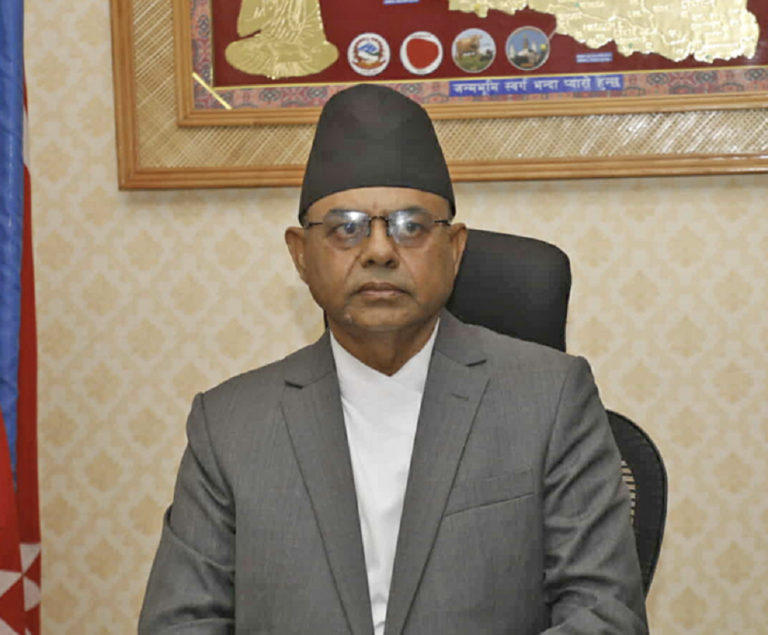
KATHMANDU: Minister for Industry, Commerce and Supplies, Anil Kumar Sinha, has shared that the public’s trust towards the state is weakening due to the trend of spending public expenditure without analyzing plan, priority and outcome.
At a ‘Policy dialogue programme for improving effectiveness of public expenditure and service delivery’ organised by Society of Economic Journalists Nepal (SEJON) here today, Minister Sinha expressed the view that dissatisfaction is being increased due to failure of appropriate and responsible use of tax collected from the people.
“Dissatisfaction among the citizens is naturally increased if public resources are not properly utilized and economic good governance is not maintained. The Gen Z protest occurred on September 8 and 9 is the example of dissatisfaction seen in recent period,” he added.
The Minister mentioned that the government was serious to end black marketing, monopoly and artificial shortage in the market.
Though the government formed after the Gen Z protest is committed to maintain good governance, transparency, and financial discipline , it has not been able to carry out activities in expected pace due to some structural and implementation limitations, he confessed.
Minister Sinha further said, “Handing over the responsibility along with positive environment by bringing clear improvements in good governance and service delivery till coming elections is our responsibility.”
The incumbent government has cut down such projects and programmes as the trend of incorporating plans in budget programme on the basis of power and access rather than necessity is at play, he clarified.
Use of digital technology, human resources management, prioritization of spending and result-oriented allocation for essential for improving service delivery, he mentioned.
Also, speaking in the event, Financial Comptroller General Shobakant Poudel attributed the failure to spend public funds as expected as a structural problem.
He worried that the expenditure is being spent in unproductive sector. “There’s no political stability and the structure for the spending of the social security has not been reviewed,” he voiced his concern.
Hinting at the private sector, Comptroller General Poudel criticized the tendency of holding on to the Project’s license.
“Despite the implementation of the privatization and economic liberalization in the country, power remains concentrated in the hands of few individuals and business houses are in power, with resources confined to a limited number of institutions,” he mentioned.
According to him, the interim government formed after the Gen-Z uprising during September 8 and 9 has cut down on unnecessary expenditure.
He urged the political leadership and bureaucracy to deliver with high morale and acute sense of responsibility,” the Financial Comptroller General urged.
Citing the wide gap between rhetoric and delivery, he asserted that economic growth could not be achieved without investment in the productive sector and effective mobilization of available resources.
Likewise, Suresh Pradhan, member of Public Expenditure Review Commission, expressed concern over the absence of clear criteria for public spending.
According to him, the process of budget formulation remains unclear, adding that the lack of defined standards for budget allocation and public spending emerge as one of the most pressing problems at present.
He stated that the regulatory agencies have been raising voices against the delays in project completion, ambiguity persisting for division of works between the government agencies and civil employees and problems arising from the ad hoc decision-making among others.
Similarly, youth entrepreneur Vedika Murarka highlighted the need for radical changes in the public service delivery. She viewed that economic transformation is not achievable without an investment that promotes innovation and new ideas.
Other speakers univocally emphasized improving public service delivery by making public spending more result-oriented, transparent and accountable which, they said, has emerged as a major challenge and opportunity at this moment.
Similarly, Economist Dr Dilli Raj Khanal shared that effectiveness of public expenditure is weak and there is not expected improvement in service deliver.
He pointed out the need of dissolving the boards, committees and institutions that are failed to give any outcome. Though social security obligation is rapidly increasing in recent periods, the results have not been consistent, opined economist Khanal.
He viewed that the government has provided concession and incentive in manufacturing sector, no expected results have been achieved.
“Nepal is the weakest countries in South Asia in terms of poverty, per capita consumption and living standard. Efforts for public expenditure administration improvement are not enough. Problems have been surfacing in lack of remarkable improvements in service delivery,” Khanal added.