Kathmandu
Thursday, January 22, 2026





Among those who have fallen victim to sexual violence over the past three years, school and college-going female students constitute the largest group

KATHMANDU: On 5 January 2026, students staged a day-long protest alleging that an accounts section employee of Rajaji Ramji Mahato Das Secondary School in Inaruwa Municipality–2, Sunsari, had sexually abused female students of the same school. Videos of students protesting on the school premises and at the District Police Office circulated widely on social media.
The students accused accounts employee Suresh Kumar Mehta of taking advantage of moments when female students came alone to fill out examination forms, touching their sensitive body parts, speaking obscenely, and sending messages containing sexual proposals while luring them with promises of helping them pass exams by cheating.

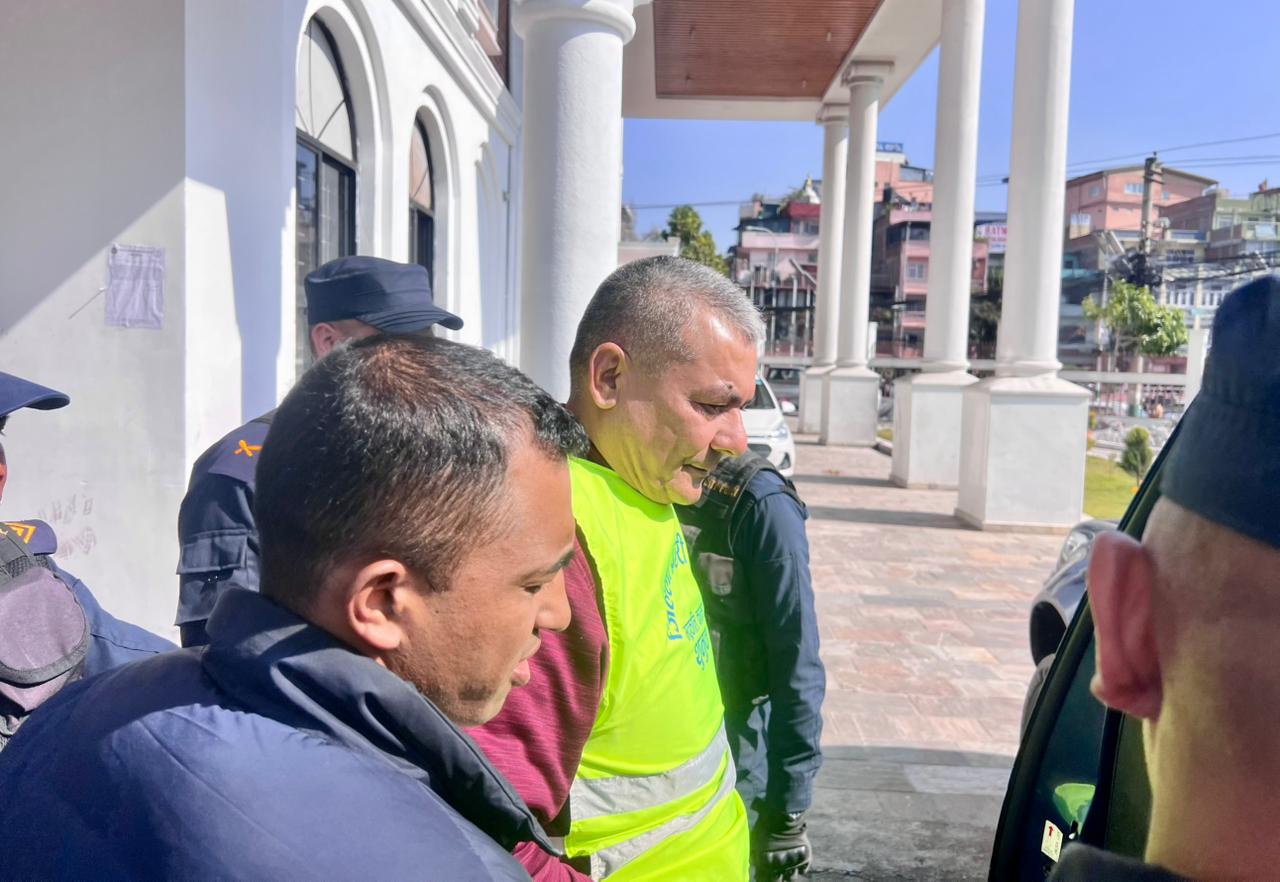
Accused Suresh Kumar Mehta
Police said that Mehta, who absconded after a complaint was filed, is currently being searched for. Deputy Superintendent of Police (DSP) Chandra Khadka of the Sunsari District Police Office told Nepal News that permission had already been obtained from the district court to arrest Mehta for investigation under charges of child sexual abuse. “After two female students filed complaints stating that the accounts employee had abused them, the case has moved forward,” DSP Khadka said. “We are continuing the search for the accused.”
On 30 November 2025, a 17-year-old 10th-grade student was allegedly lured to a private room and raped by Ishwar Raj Regmi, then ward secretary of Sunbarshi Municipality in Morang district. On 1 January 2026, the Morang District Court ordered Regmi to be kept in custody for trial, after which he was sent to prison.
On 8 October 2025, Kunsang Sherpa, the principal of Ogyen Sangak Chholing Buddhist Primary School in Aiselukharka Rural Municipality of Khotang, was arrested on charges of raping a 13-year-old girl studying at the same school. However, on 29 December 2025, the Khotang District Court released him, citing insufficient claims by the victim.
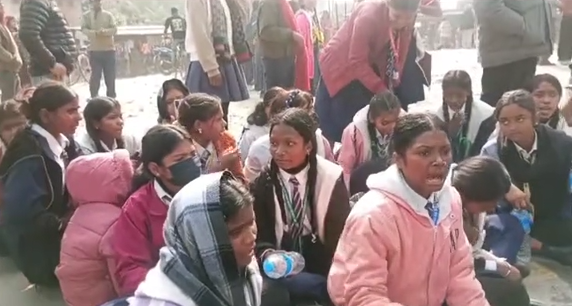
Students of Rajaji Ramji Mahato (Das) Secondary School, located in Inaruwa-2, Sunsari, chanting slogans in protest against the misconduct of accounts staff member Suresh Kumar Mehta.
Madan Rai, known as an agricultural expert, was arrested on 12 May 2023 for allegedly sexually abusing girls studying at a school operated through the Subhadra–Madan Foundation, which he himself ran. However, a month later, on 5 June 2023, he was released on bail of Rs 400,000 by the order of the Khotang District Court.
On 23 January 2025, the same court found Rai guilty of child sexual abuse. On 7 February 2025, the court sentenced him to two and a half years in prison, a fine of Rs 50,000, and ordered him to pay Rs 150,000 in compensation to the victim. Rai had reportedly used obscene language with female students, appeared naked and made them massage him, touched their sensitive body parts, and pressured them for physical contact.
Raj Kumar Khadka, who was the principal of Blooming Lotus English School in Sunsari, was arrested on 26 May 2022—four years after the incident—from Tokha, Kathmandu, in connection with the rape of a 15-year-old student. He had lured the sick student by promising to take her out and provide medical treatment, then taken her to a guesthouse in Dharan, where he raped her while threatening to expel her from school if she disobeyed him.
The above cases are only a few representative examples of sexual violence and abuse faced by girls. New data from Nepal Police reveals that female students account for the largest proportion of victims of sexual violence. According to the data, more than 57 percent of sexual violence victims are female students.
57.32 percent of victims are female students
The Police Headquarters publishes an annual fact sheet on gender-based violence nationwide. Since fiscal year 2022/23, the data has also categorized victims by occupation. Students attending schools or colleges are included under the occupational group “Study.”
Data from the past three years since this categorization began shows that female students from schools and colleges make up 57.32 percent of all sexual violence victims.
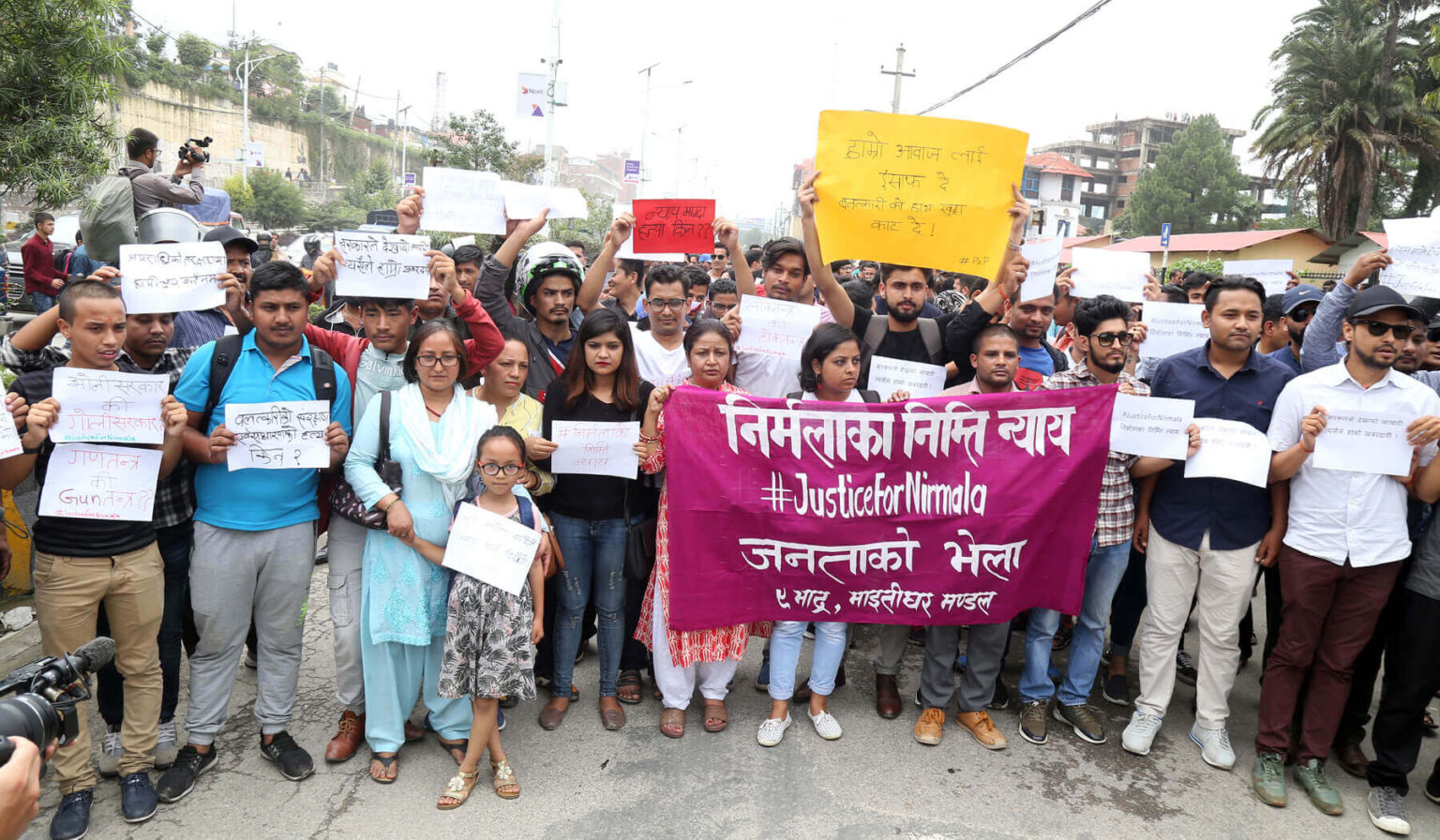
A protest held at Maitighar on 25 August 2018, demanding justice for Nirmala Pant, who was raped and murdered. Photo: RSS
In the fact sheet for fiscal year 2024/25, out of 3,204 sexual violence victims whose occupations were identified, 56.52 percent were from the “study” group. In fiscal year 2023/24, as much as 58 percent of the 3,479 victims with known occupations were students, while in fiscal year 2022/23, students accounted for 57.45 percent of the 3,401 identified victims.
Analysis of nationwide police complaint data shows that, on average, nine women and girls experience sexual violence every day. Of them, five are school- or college-going female students.
Police Headquarters Co-spokesperson and Information Officer Gopal Chandra Bhattarai said, “Girls in the 11 to 16 age group are the most affected by sexual violence. Since girls of this age attend school, their numbers appear higher in the data.”
Police define sexual violence to include rape, attempted rape, child sexual abuse/harassment, unnatural intercourse, abduction or detention leading to rape, human trafficking for the purpose of rape, and indecent behavior (sexual harassment against women and children in public spaces).
Section 219 of the National Penal Code, 2017 defines rape as engaging in sexual intercourse with a woman or girl by coercion, undue influence, fear, threat, deception, abduction, or detention. Sexual intercourse with a girl under 18 years of age is considered rape even if consent is obtained.
Why female students are a high-risk group
Reporting of sexual violence incidents to the police has increased compared to the past. However, many victims still hesitate to file complaints due to shame, fear, or concern about social stigma.
Former Additional Inspector General of Police (AIG) Kiran Bajracharya says that society often blames the behavior of the victim rather than the perpetrator, which causes many cases to remain unreported. She notes that girls, in particular, are unable to speak about sexual violence and abuse, making them more vulnerable targets.
“School- and college-going girls cannot speak about the violence and abuse they face. Even if they do, families suppress the issue out of fear of losing social honor,” she says. “When perpetrators realize that girls cannot speak up and will not question them, their confidence increases, and sexual violence continues.”
Former AIG Bajracharya also points out that the lack of reliable support mechanisms discourages girls from filing complaints. “The number of cases reported to the police is extremely low,” she adds.
Renu Adhikari, a women’s rights activist with over three and a half decades of experience, says that girls are unsafe everywhere—from homes and schools to society and online spaces. She attributes sexual violence to misogynistic thinking that views women as weak across power structures, including families, schools, politics, and the judiciary. Because of their young age and vulnerability, female students are disproportionately affected.
“Attacks happen against those who are weak. There are cases where teachers have impregnated their own students,” she says. “Parents often do not listen seriously to the suffering students endure, nor do teachers show concern. Even when complaints reach the police and courts, perpetrators are released under pressure, influence, or the pretext of bail. Students bear the consequences of this system.”
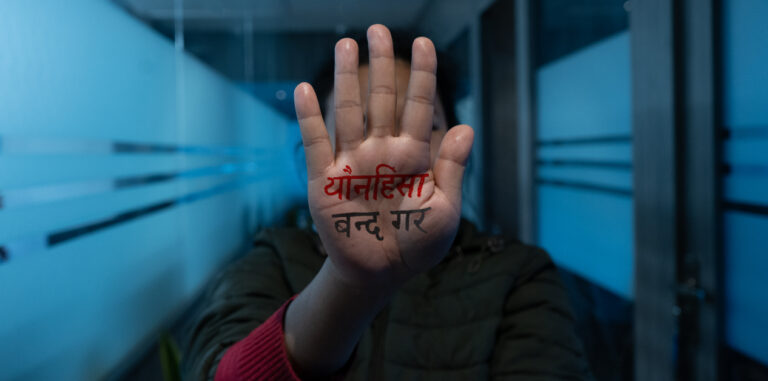
Symbolic photo
Studies have shown that female students face sexual violence from classmates, teachers, administrative staff in schools and colleges, as well as male relatives, neighbors, and both known and unknown individuals in their homes and communities.
A 2023 study titled ‘Experience of Sexual Violence among College Students: A Case Study of Kathmandu District’ conducted by the Nepal Philosophical Research Center, Kathmandu, found that female students experienced sexual violence from male family members and men outside the family. Participants reported being touched on sensitive body parts against their will, sexually harassed, verbally abused with sexual intent, and exposed to male genitalia.
According to a research paper titled “Sexual Harassment in Female Students at Tribhuvan University: A Narrative Inquiry Research” published two years ago in the Quest Journal, female students of Tribhuvan University reported experiencing verbal, physical, and online sexual harassment from their own classmates, teachers, professors, and administrative staff. The research paper notes that sexual harassment carried out through online platforms has had a serious impact on the mental and physical health of university students.
Researcher Bhagyashree Rawal says that school and college-going female students are at high risk of sexual violence because they are unable to tell elders, parents, or teachers about the violence and abuse they experience. And even when they do speak up, they are often not believed. Having studied sexual violence against students, she explains that girls belonging to risk groups suffer more abuse due to the growing tendency to normalize sexual violence across structures ranging from families and society to the judiciary.
She notes that families often do not support pursuing legal action out of fear of losing social honor, and when offenders who reach the courts manage to escape punishment, victims become even more reluctant to speak out. This, she says, emboldens people with criminal tendencies.
“When even accused perpetrators of heinous crimes like rape are released by courts on bail, the distorted mindset of men who believe women and girls should be suppressed and exploited becomes even stronger,” she says. “Such men cast predatory eyes especially on schoolgirls, who are easier to lure and intimidate.”
Researcher Rawal further states that due to the lack of strong complaint mechanisms for reporting sexual violence in schools and colleges, female students are forced to silently endure abuse and become victims of repeated exploitation. According to her, the absence of practices that ensure confidentiality while advancing disciplinary or legal action discourages students from speaking about their experiences.
“Those who have filed complaints were only able to do so because they received support from family, relatives, or friends,” she says. “The belief that students cannot file complaints against crimes further boosts the morale of perpetrators.”
She also analyzes that social media has made it easier for perpetrators to lure and sexually exploit girls and adolescent minors. “If a girl or child is active in conversations on social media, perpetrators misuse this thinking it will be easier to manipulate or influence her,” she explains.
Former AIG Bajracharya also says that female students are compelled to tolerate sexual violence perpetrated by their own classmates, teachers, professors, and staff in schools, colleges, and campuses due to the lack of mechanisms that encourage and support them to pursue legal action. “Some schools may occasionally have complaint-hearing mechanisms or CCTV cameras in classrooms and school premises, but most schools lack such systems altogether. Families also hesitate to support victims due to fear of social disgrace. Discouraged by this, victims are forced to endure silently,” she says. “The number of complaints that reach the police is extremely low; without supportive mechanisms, students are afraid to report.”
Police Headquarters Co-spokesperson Bhattarai notes that in recent years, more female students have been living away from their families for education, which increases their vulnerability to sexual violence due to the lack of safety nets. “They rent rooms and live away from their parents for studies. They have little support or protection, and it is during this time that they are most at risk of sexual violence,” he says.
Impact on education
Sexual violence and abuse by teachers and school staff adversely affect students’ education. A study titled “Effects of Sexual Harassment on Learning Activities among Teenager Girls” published in 2022 in Nepal Journals Online, found that among respondents affected by sexual harassment, 64 percent reported disruptions in self-study, 63 percent said they could not concentrate on their studies, and 23 percent said they felt discouraged from attending classes and participating in learning activities.
Psychiatrist Rishabh Koirala explains that since students are in a critical stage of physical and mental development, sexual violence and abuse during this period have negative impacts and obstruct learning. Trauma, anxiety, and feelings of insecurity caused by sexual violence often trouble victims for a long time.
“When a person’s mental state is not stable, it naturally affects their ability to concentrate, leading to a decline in academic performance,” he says. “If a student’s academic performance deteriorates, they appear distracted, or they fail to socialize properly, instead of scolding them, we should gently try to understand their problems and provide support.”
Legal provisions on rape
Under the Criminal Procedure Code, 2017, rape is categorized as a heinous crime for which amnesty is not permitted. Depending on the circumstances of the crime and the age of the victim, Section 219 of the National Penal Code, 2017 provides for imprisonment and fines.
If the victim is a girl under 10 years of age, a fully incapacitated woman, a woman with disabilities, or a woman over 70 years of age, the perpetrator is punishable by life imprisonment and a fine of Rs 700,000.
If the rape victim is a girl aged between 10 and under 14, the punishment is 18 to 20 years of imprisonment and a fine of Rs 700,000.
If the victim is aged between 14 and under 16, the perpetrator faces 12 to 14 years of imprisonment.
If the victim is aged between 16 and under 18, the punishment is 10 to 12 years of imprisonment and a fine of Rs 500,000.
If the victim is a woman aged 18 or above, the punishment is 7 to 10 years of imprisonment and a fine of Rs 300,000.
Marital rape is punishable by up to five years of imprisonment. Incest carries penalties ranging from one to three years of imprisonment to life imprisonment, along with fines.
If a woman or child receiving services in an office or professional setting is raped, the perpetrator may be sentenced to up to four years of imprisonment and fined Rs 40,000.
Sexual harassment, child sexual abuse, and unnatural sexual acts are punishable by up to three years of imprisonment and a fine of Rs 30,000.
Except in cases of incest, victims of all the above crimes are entitled to appropriate compensation from either the perpetrator or the state.
In cases where children come into conflict with the law due to juvenile misconduct, investigation and legal proceedings are carried out in accordance with the Act Relating to Children, 2018.
To reduce gender-based violence and abuse against students and improve educational quality, the Education and Human Resource Development Center under the Ministry of Education, Science, and Technology has implemented the Complaint Hearing Procedure, 2017 (First Amendment, 2020) across all local units.
Under this procedure, students can lodge complaints about problems faced on school premises, while commuting to and from school, or within their families and communities, by approaching complaint-hearing committees, designated teachers, principals, or school management committee officials. Each school is required to have a complaint-hearing committee coordinated by the chairperson of the school management committee or a female member recommended by the chairperson, or a designated representative. Victims can also submit complaints through complaint boxes. Confidentiality must be maintained while hearing complaints and taking necessary action.
Ram Prasad Sharma, director of the Inclusive Education Branch at the Education and Human Resource Development Center, says, “The procedure is designed to address cases—except those that must go to the police—through mediation and facilitation.” However, school-level complaint mechanisms have not been found to be effective.
Human rights activist Adhikari states that among female students under 20 who participate in her gender equality training and workshops, 80 percent report having experienced sexual violence and abuse from teachers. “They say none of them were able to file complaints. Their main grievance is that there is no support system in schools,” she says.
What should be done to reduce violence?
Former AIG Bajracharya emphasizes that reducing sexual violence against female students requires effective implementation of legal provisions, inclusion of awareness-based content in curricula and textbooks, and greater responsibility from parents and families in caring for and guiding their children. Given that many cases now originate through social media contact, she stresses the need to teach students how to stay safe online.
“When parents tell daughters to be careful and not roam freely, they must also teach sons values, discipline, and the difference between right and wrong, and educate them about gender-based violence,” she says.
Feminist activist Sanjog Thakuri argues that awareness activities aimed at reducing sexual violence should target adolescents. “Police data shows that girls aged 11 to 16 are most affected by sexual violence, while perpetrators are often men aged 19 to 25. Therefore, it is essential to run awareness programs targeting these age groups,” he says.
He also recommends making complaint-hearing mechanisms effective in both public and private schools, with regular monitoring and evaluation by the Ministry of Education and local-level education offices.