Kathmandu
Tuesday, February 10, 2026





Following the Gen Z revolt, courts and judges have become targets of attack
KATHMANDU: Nepal’s first Chief Justice Hari Prasad Pradhan used to say, “The government is an eagle. The people are the chicks. And the judiciary is the mother chicken which must protect the chicks.” That is, the judiciary must stand firm to protect the rights of the people no matter how complex the situation is.
But in recent times, the mother chicken or the judiciary, which is supposed to protect the chicks or the people, itself, has been the target of attacks such as threats and blackmail.
For example, on 16 December, an SMS came to the public mobile number designated for information exchange at the Kathmandu District Court. ‘Within 24 hours, the lives of you and your judges… may be at stake.”
That SMS terrified both the court staff and the judges.
A similar incident took place at the Patan High Court on 18 December. The Patan High Court ordered the release on bail of a person who had been sent to prison by the Kathmandu District Court in a rape case. Dissatisfied with the verdict, the complainant threatened to consume poison in the courtroom and went outside and started consuming poison. Fortunately, the court security personnel saw her and immediately took her to a hospital. The girl is now in good health. But later, she posted a photo on Facebook, accusing the judges of give-and-take.
Despite the provision that if a person is not satisfied with the verdict of the district and high courts, they can go to the Supreme Court and appeal, the tendency to directly attack the court has increased of late. Similarly, despite the legal provision of filing a complaint at the Judicial Council against a judge who issues verdicts and decisions against the law, acts of abuse, insult, and smearing soot on judges’ faces have occasionally occurred. A similar incident happened in the case of the late Nepali Congress leader Aftab Alam. On 28 May 2025, the Birgunj bench of the Janakpur High Court acquitted Alam, the main accused in the Rautahat bomb blast case, and four others. After this, the parties unhappy with the verdict, claiming to be the workers of the Nepal Communist Party (Bahujan), smeared soot on the faces of the two judges, Khushi Prasad Tharu and Arjun Maharjan at the bench itself.
This verdict became very controversial. A complaint was also filed with the Judicial Council against the two judges. A decision has not been made on this matter yet.
After the Gen Z movement, the evil trend spiraled
Various study reports have shown that there are distortions and inconsistencies in the judiciary. Accordingly, the judiciary has also been making efforts for reform.
However, following the Gen Z protests on September 8 and 9, a trend of posting the pictures of the judges of the Supreme Court, high courts and district courts on social media, Facebook, TikTok, and YouTube, where they are openly accused and abused, has started.
On September 9, as many as 23 courts across the country were vandalized, torched, and looted. In these attacks, 10 courts were completely damaged, nine courts were partially damaged, and four courts suffered minor damage. Around 39,745 files with the details of active cases and 909,534 archived files were destroyed across the country. The Supreme Court, the highest body of the judiciary, was reduced to ashes.
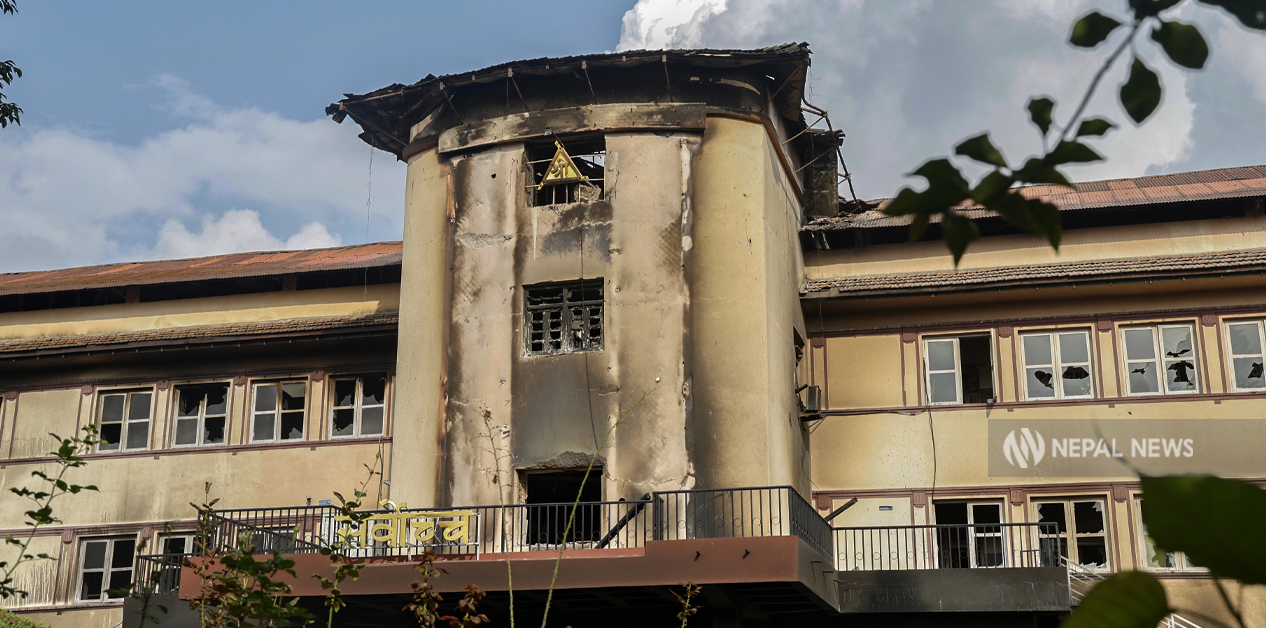
The Supreme Court Building which was set on fire during the Gen Z protests on September 9. Photo: Bikram Rai
That this incident of arson at the apex court has boosted the morale of those with criminal mind is exemplified by the recent attacks on the courts. The judiciary, the center of citizens’ hope, is being attacked not only physically but also psychologically through cyber tools.
Supreme Court Spokesperson Arjun Prasad Koirala says that although it is natural for one party to win and the other to lose after a case is heard, organized attacks by the losers are posing a challenge to the rule of law.
Losing parties getting angry
Usually, the court cannot make both the plaintiff and the defendant win in any case. However, the losing parties have started frequently abusing the judges deciding their cases, accusing them of taking bribes to decide the cases.
Due to the rising cases of cyber-attacks on courts, the Judges’ Society, Nepal, issued a statement on 12 December and said – “Attacks, comments and criticisms targeting the judiciary and judges through social media and the media should be taken seriously.”
“There may be some shortcomings in the judiciary, both systemic and individual. They may need to be improved,” the statement said, “Looking at the criticism and comments, it seems that they are biased, vindictive and without facts rather than from the spirit of improvement.”
It can be easily understood from this statement by the Judges’ Society that the judiciary is facing unnecessary pressure and threats. “This does not have a positive impact on the administration of justice, but rather poses a direct threat to the right to justice in a fair and fear-free environment,” the Judges’ Society said.
The Judges’ Society has stated that portraying the losing parties as victims of the court is not within the bounds of judicial dignity. “Not even complaining about the facts but portraying every defeat as an irregularity will damage the public’s trust in and dignity of the judiciary,” the Judges’ Society has expressed concern.
“Let the truth be understood about whether the judiciary is intentionally not doing [justice] or it has not been able to do so despite the intent. The society believes that the judiciary management should welcome any suggestions regarding reforms to be made at the managerial or other levels to increase the effectiveness of the judicial process,” the statement reads.
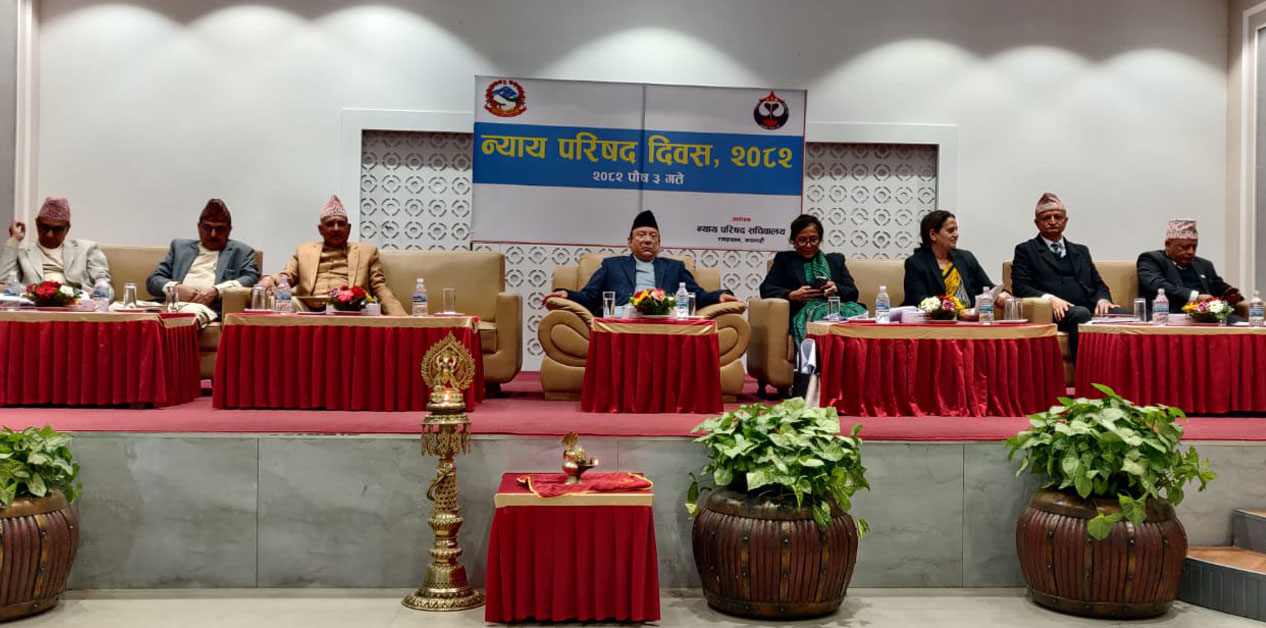
Chief Justice Prakash Man Singh Raut made a similar statement at a program organized on December 18 on the occasion of the 35th Judicial Council Day. He gave his speech targeting the increasing cyberattacks on courts. He told the judges to be fearless and resolve cases according to the law, assuring them that the Judicial Council is with them.
“Looking at social media, is the working environment comfortable/uncomfortable? If it is not comfortable, isn’t everyone’s effort necessary?” he asked, ‘How can justice prevail, given the threatening environment, vindictive environment and expressions?”
He had said that although it is not wrong to question in democracy, there is a suspicion that judiciary staff alone may not be sufficient when looking at the environment. “How is a judge appointed? How is accountability determined?” he asked, saying that it is necessary to explain these things publicly.
Supreme Court’s senior-most Justice Sapna Pradhan Malla also said that threats and hateful expressions have started being made at a time when constructive criticism of the judiciary should be made. “Burning the judiciary cannot be justified for any reason,” she said, “Terrifying the judges and making hateful expressions do not work. Work fearlessly and honestly. The entire Judicial Council is with you.”
Former Chief Judge Surendra Bir Singh, on the other hand, comments that the distortions introduced to the appointment of judges have led to attacks on the judiciary. He assesses that discrepancies and distortions started happening in the judiciary after 1990 when politicians started appointing their people to the judiciary. Singh mainly sees the fault in the system and methodology. Admitting that there are problems in the judiciary and that there are issues that need to be improved, he says, “The court should not do anything that undermines public trust.”
Cyber Bureau investigating the matter
The Cyber Bureau of Nepal Police is also investigating the attacks on the judiciary from social media. Bureau Spokesperson Deepak Raj Awasthi says that he is aware of the threats to the judiciary issued on social media. “The court is an important organ. Such issues are increasing due to fake accounts. Work is underway,” he said.
However, there is no way to immediately take action against those who spread violence, hatred, and malice through the internet. Such activities carried out through social media are punishable under the Electronic Transactions Act, 2006. Section 47 of the act deals with “publishing illegal matter in electronic form”. Under this act, legal action is taken against those who spread hatred or malice against anyone through the internet against public morality and decency. Such a person, if found guilty, is liable to a fine of up to Rs 100,000 or imprisonment for up to five years or both.