Kathmandu
Friday, January 23, 2026





Balancing her seven month old on set, Bardewa reveals the joys, strains and stolen breastfeeding breaks that shaped her performance
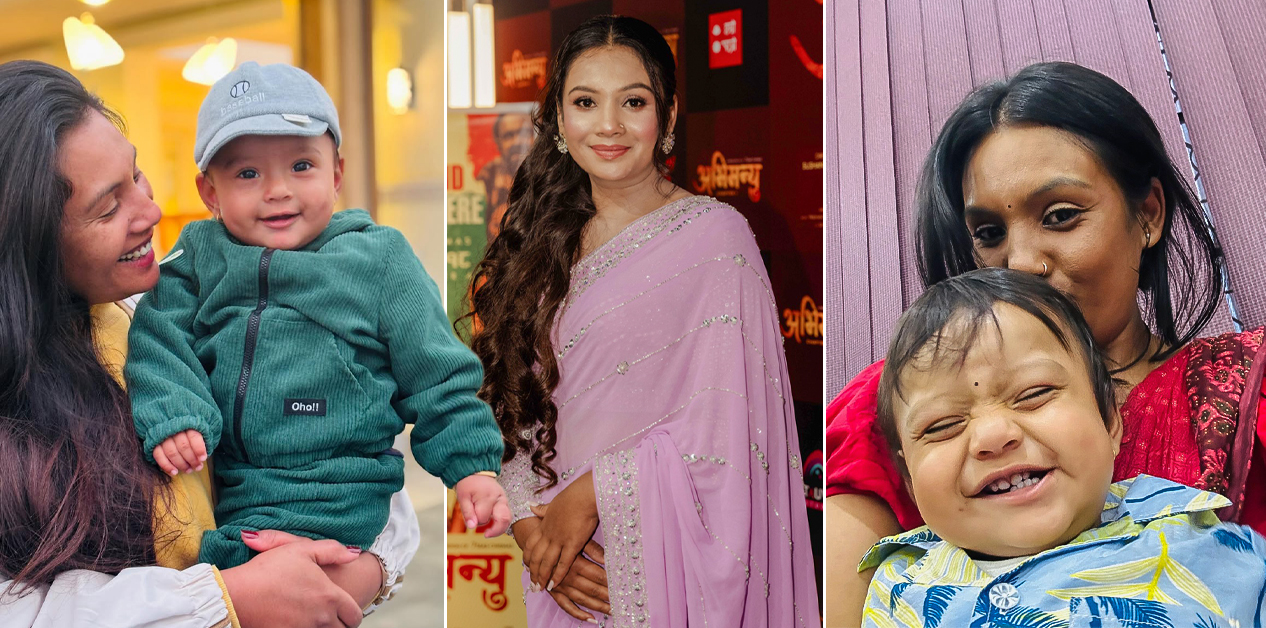
KATHMANDU: Laxmi Bardewa is recognized as one of the few artists capable of breathing authentic life into written characters.
Seven years ago, she gained acclaim for her role as Bhima, a tempo driver, in the film Bulbul. Although she subsequently acted in various feature and short films and directed dozens of music videos, the discussion surrounding Bulbul was followed by a prolonged wait for a role substantial enough to further elevate her career trajectory.
Bardewa, originating from a theater background, strategically sought roles that were substantive and satisfying rather than brief simply to maintain visibility in film. While her desire to play a lead role in a feature film long remained unfulfilled, the release of the movie Abhimanyu-Chapter 1 on December 4 finally realized her ambition. Audiences are currently commending her performance in the role of Leela.
During the filming of Abhimanyu, Bardewa gained another important experience. When the film proposal came, her son had just turned seven months old. She set a condition for producer Binod Poudel: ‘My baby is breastfeeding. If the shooting is in Kathmandu, the baby must be brought for breastfeeding. If the shooting is outside Kathmandu, the baby must be taken along. Otherwise, I cannot do this film.’ Poudel accepted her condition.
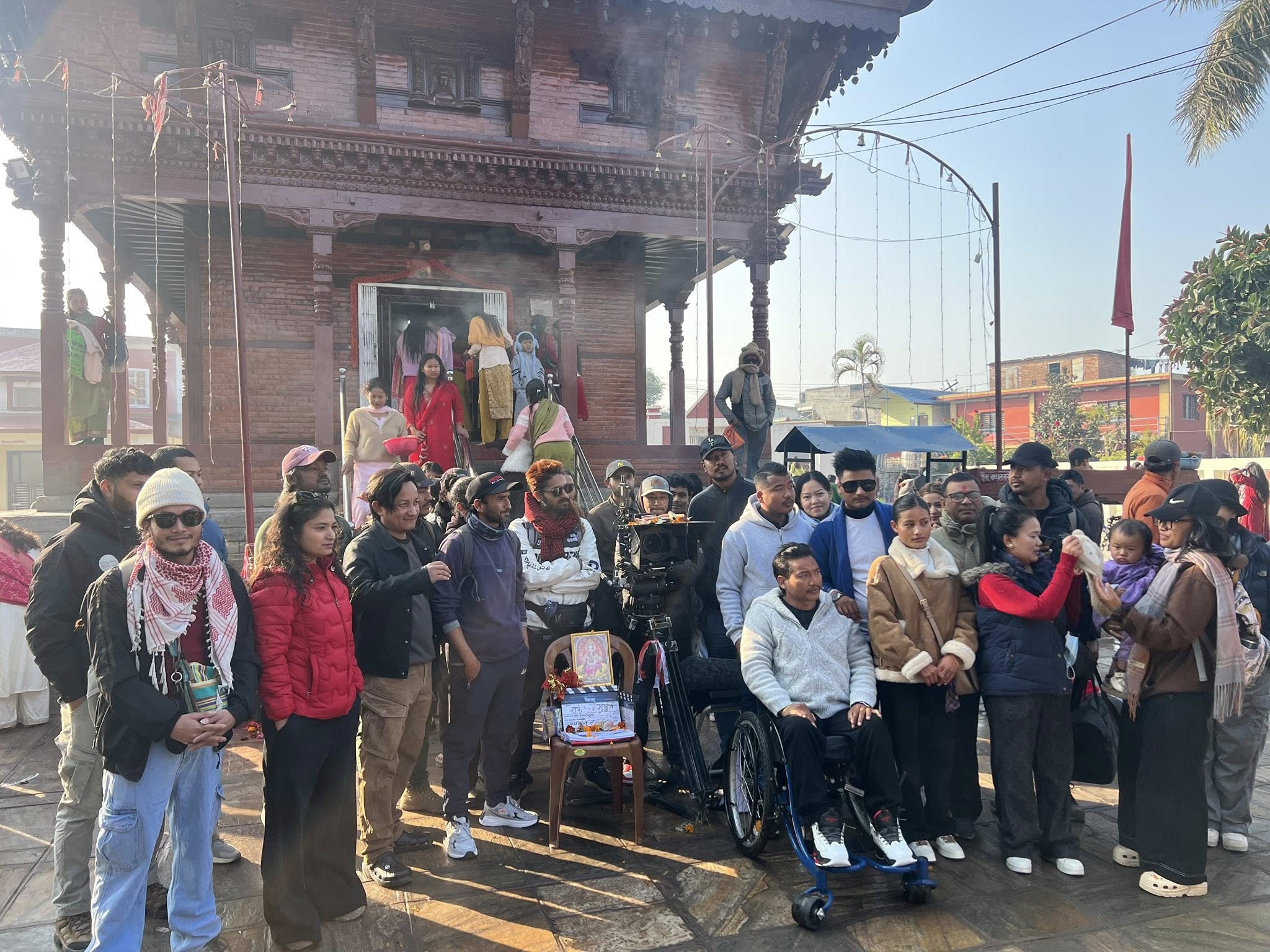
Most of Abhimanyu was shot in Kathmandu, and a few scenes were filmed in Chitwan. According to Bardewa, she took her husband, Jiban Bhattarai, who is also an actor, along for about one week to look after their son.
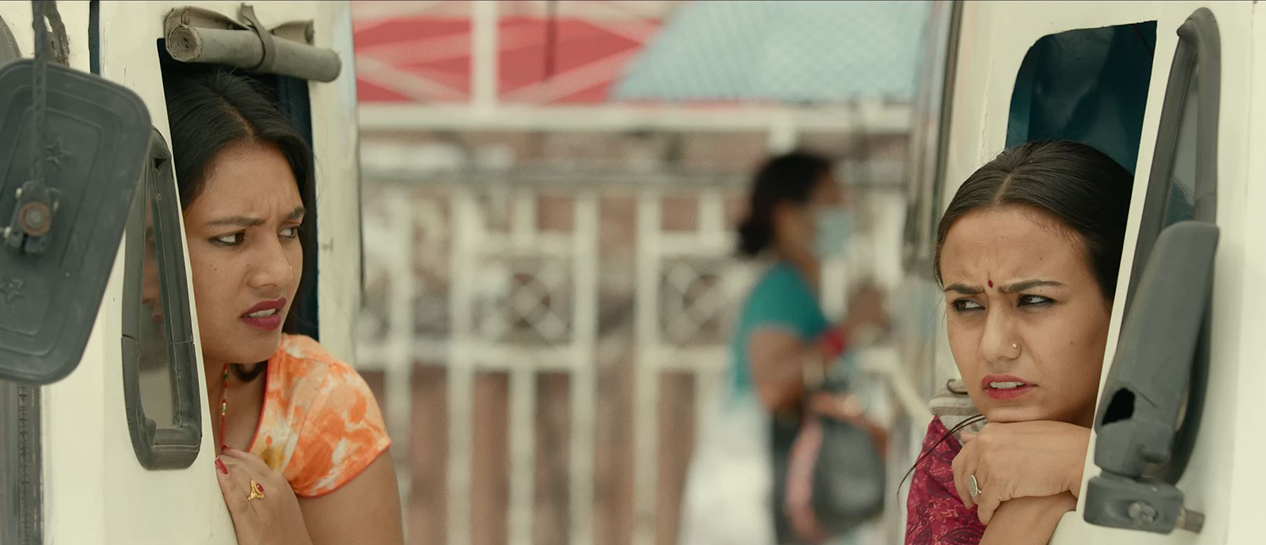
Bardewa alongside actress Swastima Khadka in a scene from the film ‘Bulbul’
The initial filming for Abhimanyu commenced in Kathmandu. On the first day, Bardewa attempted to leave her baby at home, but as the shoot progressed, the separation induced such profound homesickness that she became physically unwell. She recounted, “It became difficult to even deliver a take. I felt like I was developing a fever. After becoming a mother, the body autonomously sounds an alarm, instinctually searching for the child.”
After that, the baby was brought to the shooting location for breastfeeding for one and a half to two hours every day. She says, “Abhimanyu also became an experience of balancing work and motherhood.”
There was a time in the life of the struggling artist Bardewa when the question of when to have a child arose. That question was directly linked to her career. For the sake of her career, she delayed the desire to give birth for some time. But when some good films she did after Bulbul were postponed for various reasons, her work did not gain the momentum she had hoped for. Furthermore, the uncertainty of the Covid-19 period halted many plans.
“Then I thought, I would have to remain empty for one or two years anyway. If I become a mother, I will just not work for those same one or two years,” she said. “Looking back, I made the right decision at the exact right time.”
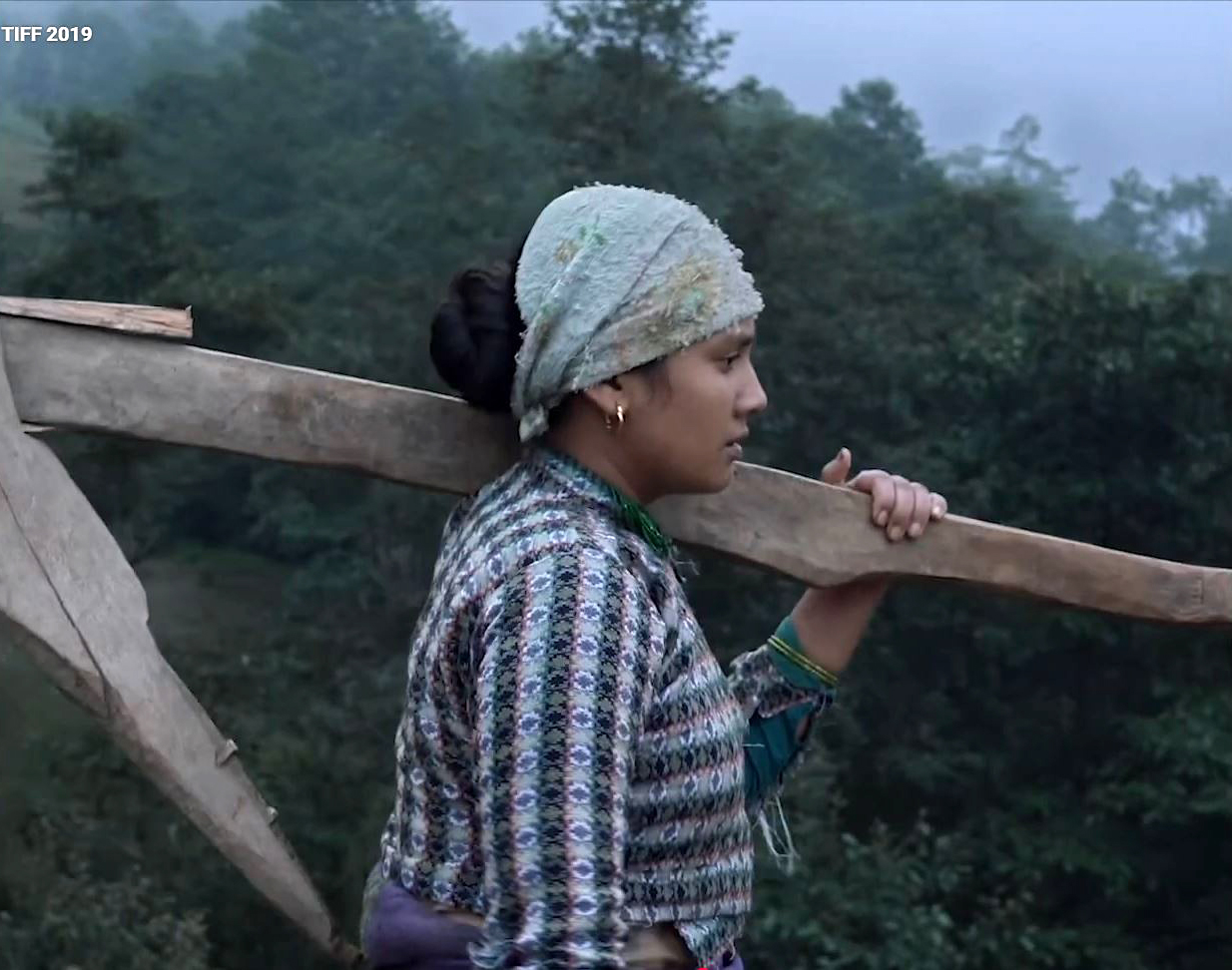
Bardewa in a scene from the short film ‘Bare Trees in the Mist’
Nevertheless, she encountered inherent difficulties while working with a small child close to the set. While the presence of her son added positive energy to her work during shooting, her focus was instantly diverted whenever the child fussed or became restless. Seeing someone else’s baby on the set would often make her cry for no reason. “It got to the point where seeing a monkey’s baby, a cat’s kitten, or a dog nursing would also make me cry,” Bardewa recalls. She added that this emotional distress was compounded by professional worry: “And at such times, the worry that my work might be affected distressed me even more.”
There was also the worry about whether the climate in Chitwan would be suitable for her son. “It was difficult for the baby for one or two days. Fortunately, Jiban took on the full responsibility of handling the baby. Otherwise, we might have had to face many more problems,” she shares. She is grateful to the Abhimanyu team for making it easier for her to work by allowing the baby to be near her when needed.
Bardewa had seen many female artists of the generation before her whose careers ended or whose roles diminished simply because they became mothers. She says, “My experience also signals a change in the working environment for women in the film industry.”
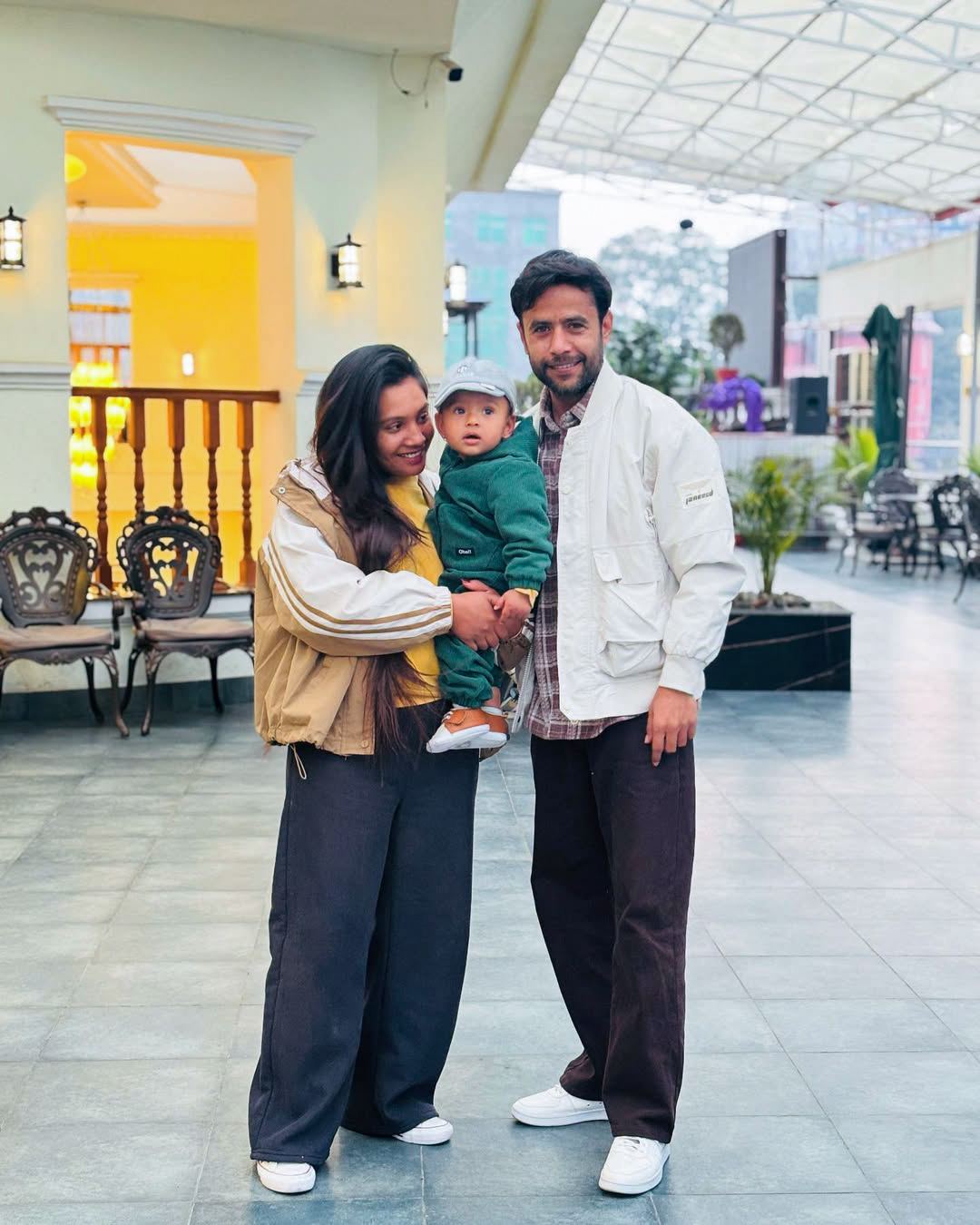
Laxmi Bardewa with husband Jiban Bhattarai and their son
Despite the positive changes, she also felt the need for improvement in some areas during the filming of Abhimanyu. According to her, outdoor filming poses more problems than indoor filming, the main one being the lack of secure restrooms. In this context, the request made by actress Niti Shah to the Minister of Communications last month for vanity vans on set is relevant. While Shah claimed that installing these vans, equipped with toilets, would make things easier for women, some on social media called her statement superficial. Bardewa agrees with Niti’s statement. She says, “A toilet for women is not a luxury but a matter of hygiene.”
According to Bardewa, the lack of a secure place to change clothes is another problem. “Most of the time, we have to change clothes inside a car. The crowd of people who come to watch the shooting makes it even more difficult to change clothes,” she says. Listening to these problems, it seems the demand for a separate space for ‘breastfeeding’ on the set is still a long way off.
Abhimanyu, however, is not the first film where Bardewa and her husband, Jiban, took their baby to the set. Before this, the three of them had traveled to Biratnagar and Rajbiraj for the shooting of the film Biman. She mentioned that all three of them can be seen acting in the film. “In our society, there is a belief that the child should be with the mother. If I went against that belief, I might have felt ‘mom guilt.’ But since the baby was also enjoying being with his father, I did not have to suffer that problem,” she explains.
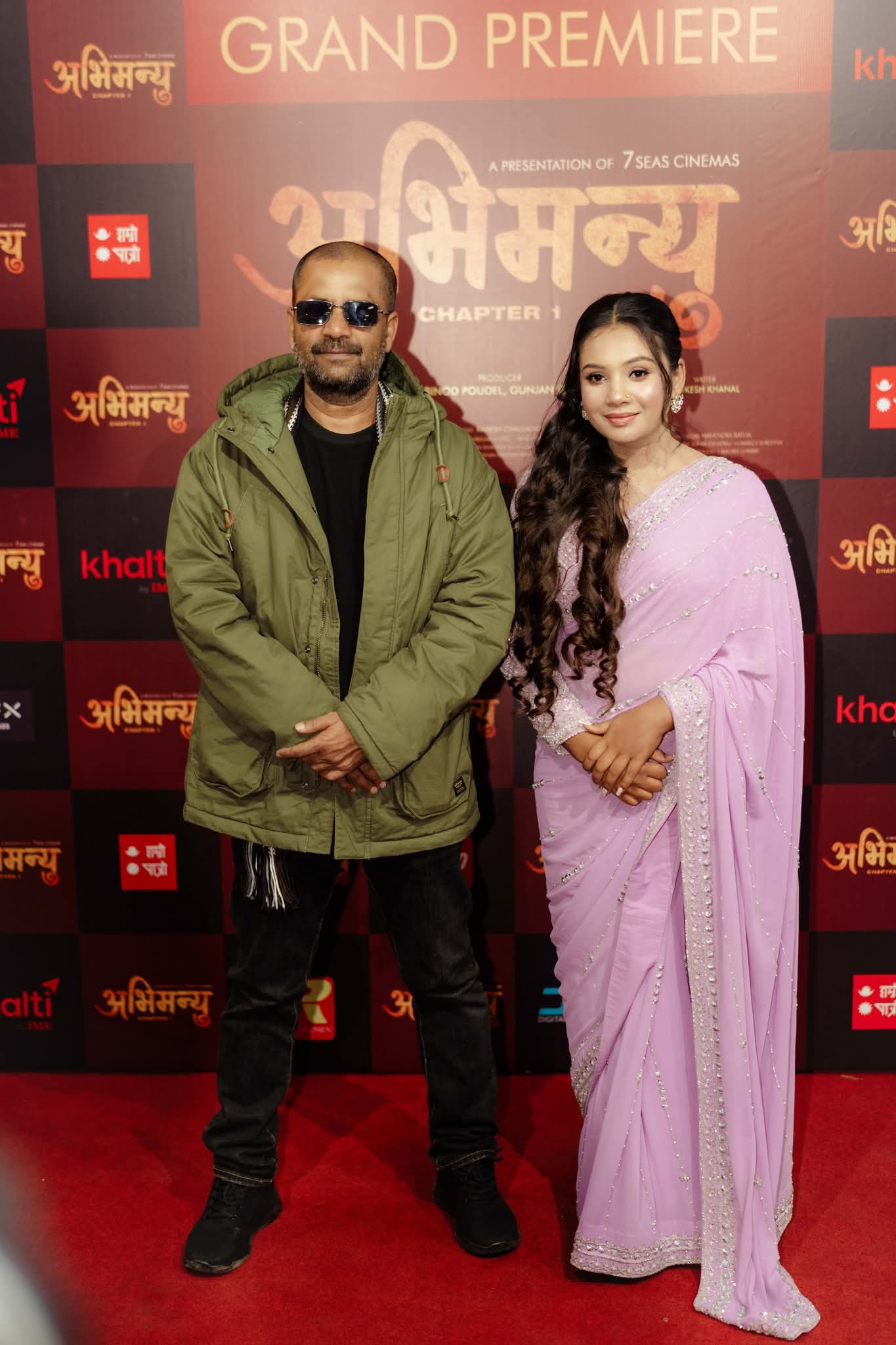
Bardewa with actor Kameshwor Chaurasiya at the premiere of the film ‘Abhimanyu-Chapter 2’
Bardewa still laughs alone, recalling some funny moments from taking the baby along. There is a Bhojpuri song in Abhimanyu, Ladki Gori. Her son was present during the song’s shooting. “The baby really enjoys dancing. He was so happy and enjoyed the song’s shooting that he did not want to leave,” she says.
She is also satisfied that her son became emotionally close to other artists during the shoot. “Makeup artist Bishakha Bikram Thapa, the main character of the film Abhimanyu (Kameshwor Chaurasia), and Prakash Dahal became very close to the baby. Even now, when he sees Prakash’s photo on Abhimanyu’s T-shirt, he keeps saying, ‘That is Prakash uncle,” she says.
Abhimanyu is not the first film in which Laxmi Bardewa has played a lead role. She has demonstrated her acting ability in lead roles in short films like Rajan Kathet’s directed Bare Trees in the Mist and Lachhamaniya.
Emphasizing the importance of broader exposure, Bardewa stated, “But a feature film is necessary to reach a large group of viewers. That is why Abhimanyu is a special film for me.” She then concluded by highlighting the social significance of her journey: “Moreover, my experience that motherhood and work can be advanced simultaneously can also become an example for other female artists.”
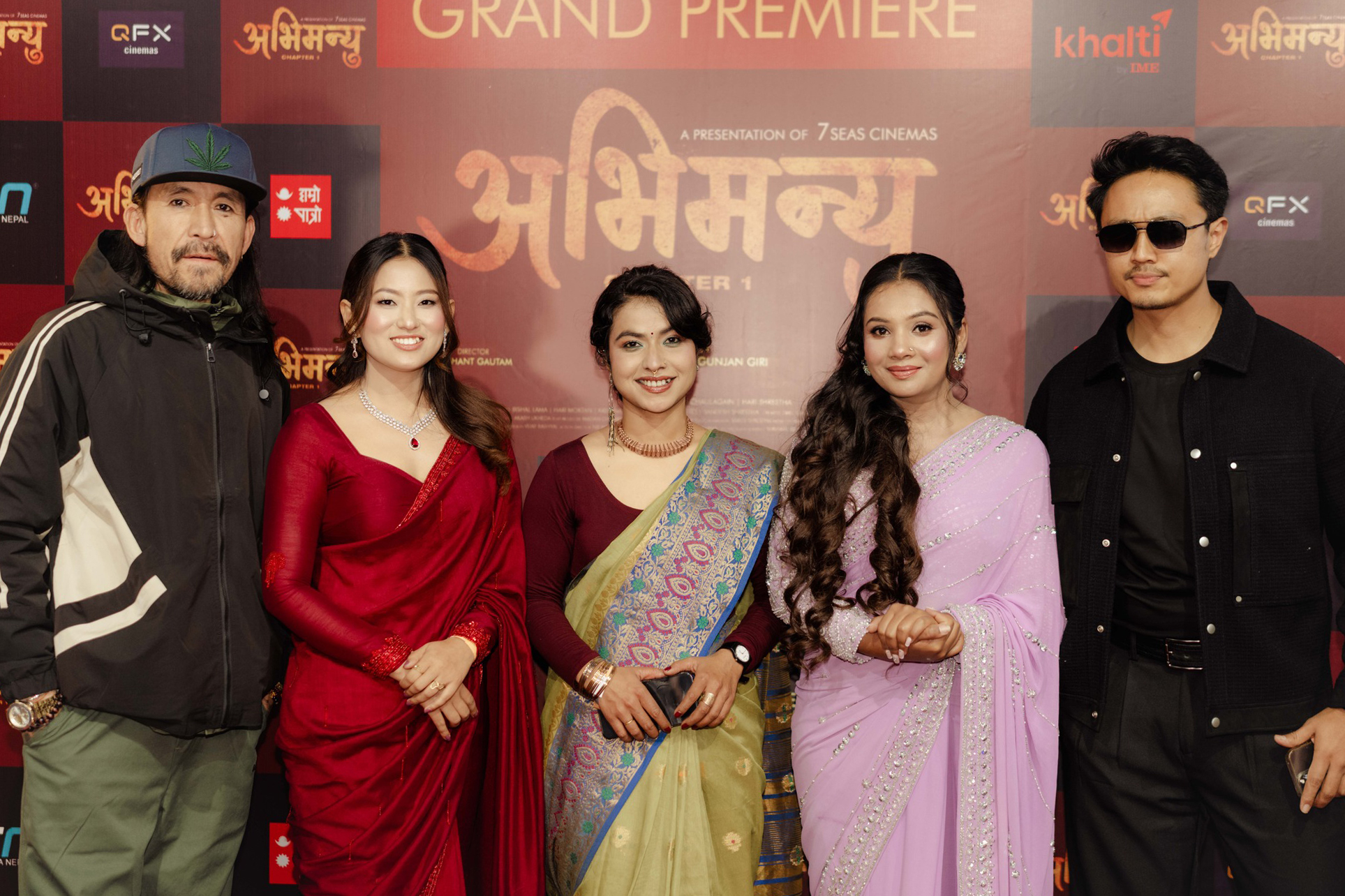
Bardewa and with the ‘Abhimanyu-Chapter 2’ co-stars at the premiere