Kathmandu
Tuesday, July 28, 2026





A personal account of how protest, press, and migration came together to shape a journalist, where each story may feel like a daily miracle, yet the craft itself remains demanding, unpredictable, and often unforgiving
KATHMANDU: In a multidimensional sense, study may seem greater. Yet, I have come to believe that experience ultimately carries more weight. With that thought, I find myself pausing and looking back at my own life.
Sometimes, I wonder how a person who set out in one direction ends up somewhere entirely different.
During the 30-year darkness of the Panchayat era (a 30-year period of partyless, absolute monarchy in Nepal), I threw myself into the movement to dismantle that system. I was not struck by a bullet. I did not become a martyr. For that, I remain grateful. The Panchayat eventually fell. But under the guise of a ‘constructive king,’ Gyanendra suspended and usurped the power of the Constitution of the Kingdom of Nepal, 1990, and imposed a harsh autocracy on the people. Once again, risking my life, I joined the struggle to end it. Among the thousands of flames that rose against autocracy, I was just a small spark.
Life, however, rarely follows a straight road. Mine unfolded like the long, winding journey of going to Kashi through Kuti, an indirect path full of detours. Along the way, I became a journalist. It was not planned. It simply happened as life moved forward. Yet, journalism gave me a deep sense of purpose, pride, and identity, and it remained my primary profession.
Around 1986, I enrolled at Lalitkala Campus in Bhotahiti, Kathmandu, hoping to become an artist. I left midway. Life had other intentions. I then joined Ratna Rajya Laxmi Campus, where, on the advice of friends and for practical reasons, I chose to study journalism. At the same time, I was actively involved in student politics. Time, more than choice, made me a journalist. I did both politics and journalism, but within journalism, I remained only a journalist.
I had set out to become an artist but arrived in journalism. In the end, I told myself that as long as I remained a creator, the essence of my journey had not changed.
Over the years, I worked for about a decade in major media outlets, including Radio Nepal, Abhilekh Weekly, Spacetime Daily, Rajdhani Daily, and Nepal Television. I was also associated with weekly publications such as Dristi, Pratipaksh, Janmanch, and Chhalphal. As a freelance writer, I contributed to Himal Khabar Newspaper, Kantipur, and Annapurna Post. Throughout, I never compromised on professional ethics or dignity. I completed my bachelor’s degree in journalism at Ratna Rajya Laxmi Campus and later earned a master’s degree from the University of Queensland in Australia, where I had gone to study journalism 27 years ago.
In my understanding, if mass media is the mirror of society, then journalists are the glass that makes reflection possible. Some may disagree with this comparison, but few would deny that journalists are, in essence, daily historians. They record both the finest and the darkest moments of our society.
Mass media, in many ways, functions like a public forum for strengthening democracy. It is through informed media that citizens fill ballot boxes with awareness during elections. At the same time, people’s ability to raise their voices and express themselves freely depends on their access to this media space. Like a musical instrument, it produces both harmonious and harsh notes, capturing the debates and tensions within society. It allows people to observe, analyze, and draw their own conclusions.
It reflects the strengths and weaknesses of communities, society, and the nation. As American actor and writer Arthur Miller once said, “A good newspaper is simply a nation in dialogue with itself.”
Becoming a journalist requires more than desire. It demands education, discipline, and continuous learning. A journalist must engage with everything, from epics like the Mahabharata to the everyday realities of illness and conflict. But reading alone is not enough. One must study deeply. Reading is common. Study requires commitment.
“A good newspaper is simply a nation in dialogue with itself.”
Above all, a journalist must understand the many layers of society. As one American political columnist put it, becoming a journalist is like jumping from a great height. It is a risky profession.
Journalism may begin with formal study, but it does not end there. For a professional journalist, it is a lifelong commitment. This is not a job confined to fixed hours. Anyone who approaches it with a routine, eight-hour mindset will not last. Rushed writing, or what I call “the literature of haste,” reduces the craft to something mechanical and superficial. It becomes performance rather than purpose.
An editor once explained it well: “Journalism is like the work of teachers or the calling of priests, lamas, and mullahs. It is a mission. And like any mission, it demands sincerity and responsibility.”
It is worth noting that journalists today can live reasonably stable lives. But this was not always the case. Janardan Acharya, a prominent editor of the 1990s, once said, “In our time, society was not ready to accept a journalist as a son-in-law. It was difficult even to find a wife.” Nepali journalism has come a long way since then.
Still, journalism remains unpredictable. It is not like making bricks or weaving baskets, where outcomes are certain. The results of journalistic work may not satisfy everyone. What a journalist creates may feel like a daily miracle, but at times, it can also be a harsh one. This profession is not always easy, pleasant, or safe.
The best journalists are driven by a commitment to challenge injustice and immorality. Yet, their work is never personal. They set aside their own doubts, act with courage, and often step away from easier paths.
“Professional journalists are never for sale. Those who are for sale can never be journalists.”
They believe that journalism is not a personal service but a service to the public. Whether inside a newsroom or beyond it, they observe, study, listen, and understand. They stay attuned to what is happening in their surroundings and bring those realities into focus with clarity and rhythm.
They uncover the story behind individuals and the individuals behind stories. While power centers may trust them with information, it is the trust of the public that remains paramount.
My teacher, journalist, and professor David Conley of The University of Queensland, once said, “Professional journalists are never for sale. Those who are for sale can never be journalists.” This principle has guided both my professional and personal life. Where Nepali journalism stands today is a question I leave to you.
Life has taken me across many landscapes, through rises and falls, crossroads and peaks. In search of better opportunities for my children’s education and my family’s future, I moved to Canada. It has now been more than a decade. Today, I work as a teaching assistant in a government school. Yet, I have never stopped writing. I admit, I have not written as much as I could have. But I continue, and I will continue.
What concerns me, however, is the decline in reading culture. I once asked around 150 people across Kathmandu Valley, Kavre, Dhading, Sarlahi, and Rautahat, “What are you reading?” The common response was, “We read as much as we did in college. After that, we stopped.” Many of them had completed higher education. That answer stayed with me.
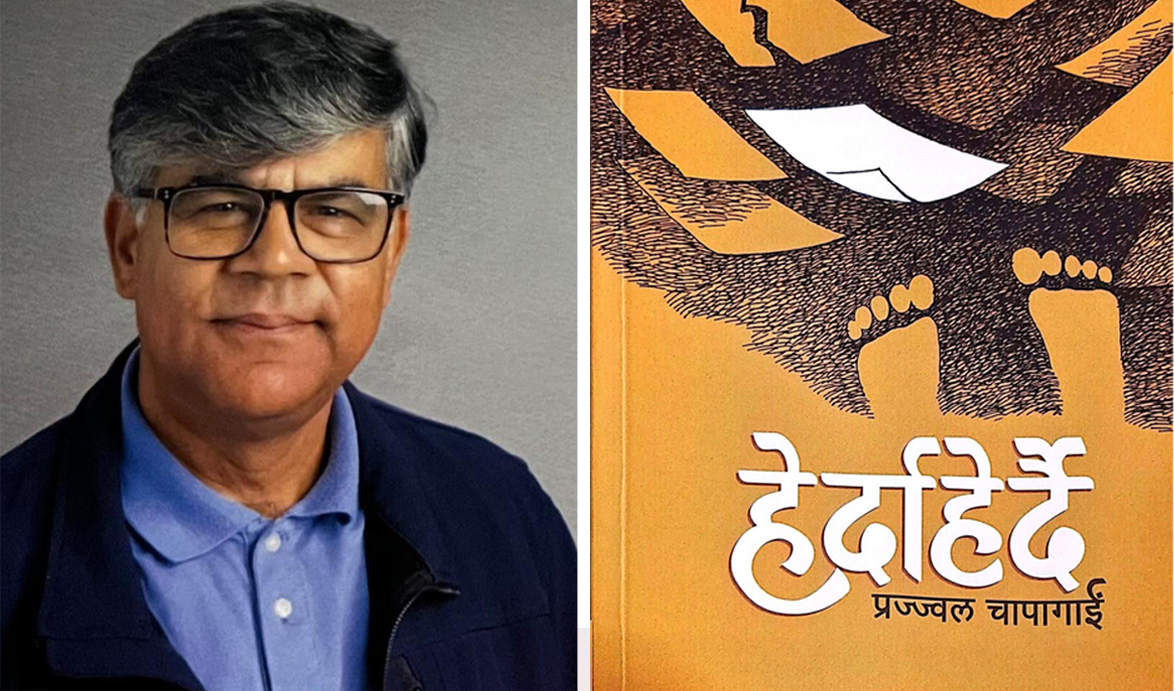
This book is meant for those who wish to study seriously. It brings together sociology, humanities, anthropology, history, economics, social management, and literature. It may serve as a resource for those interested in research. More than that, it is a collection of my memories, thoughts, and journeys, strung together like a garland.
Just as life takes unexpected turns, this book, too, is a reflection of those turns. Through this collection of essays, I have tried to share my experiences as they unfolded before me.
This is my journey, seen as it happened.
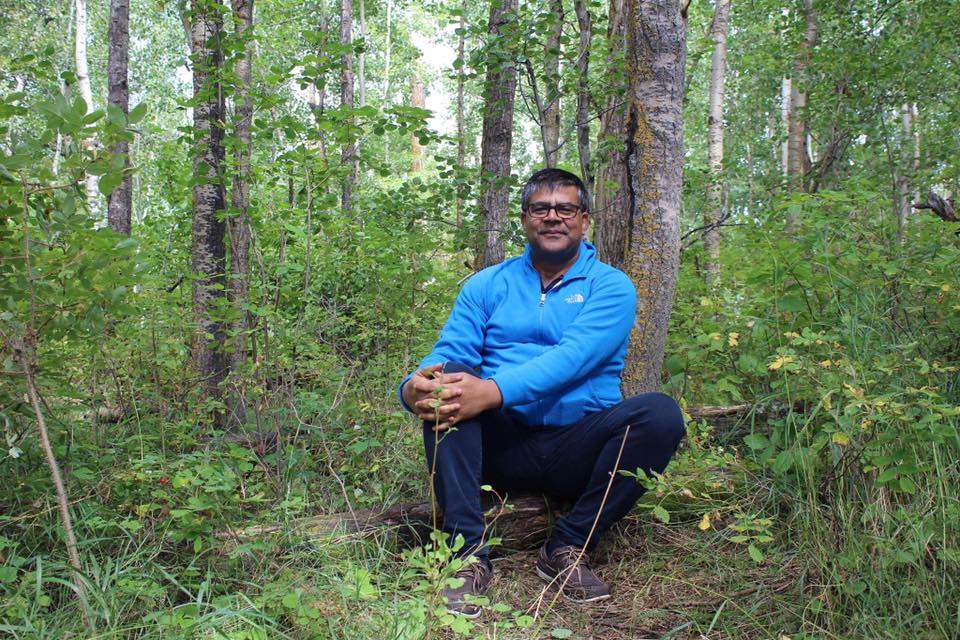
(Edited excerpt from the foreword of ‘Herdaherdai,’ a collection of memories, reflections, and journeys by Prajwal Chapagain, currently based in Edmonton, Canada, where he works as a teaching assistant in a government school.)