Kathmandu
Tuesday, July 28, 2026





Even as Nepali films tighten their grip on the domestic box office, fiscal 2025/26 signals a drift back toward conventional, formula-driven narratives

KATHMANDU: Nepal’s box office is undergoing a quiet reset. What began in fiscal 2025/26 as a dip in Indian films’ dominance and a rise in Nepali cinema has, by year’s end, become a sustained trend marked by record business, stronger local stories, and a more confident domestic industry.
According to statistics from the Film Development Board, a total of 56 Nepali films were released by April 5. Including director Michael Chand’s ‘Ram Nam Satya,’ which will be screened from April 10, the total number has reached 57.
How did Nepal’s film sector fare in fiscal year 2025/26 from a commercial standpoint? What defined the presence of new and established directors and actors? Which films captured the attention of critics? And in terms of subject, presentation, and innovation, can the year truly be called productive?
Through these questions, let us take a closer look back at the Nepali film industry in the current fiscal year.
Box office collection
The fiscal year 2024/25 was the year the Nepali film industry succeeded in setting a historic record by doing business over Rs 1 billion for the first time. In the current fiscal year 2025/26 as well, the business of Nepali films has already exceeded Rs 1.08 billion. In this regard, the continuity of the domestic market expansion from last year was maintained in the current fiscal year as well.
Looking at the list of the 10 highest-earning films this year, four films crossed the Rs 100 million mark, three films crossed Rs 50 million, and the remaining three films crossed the Rs 40 million mark. These became the decisive films to keep the Nepali box office moving.
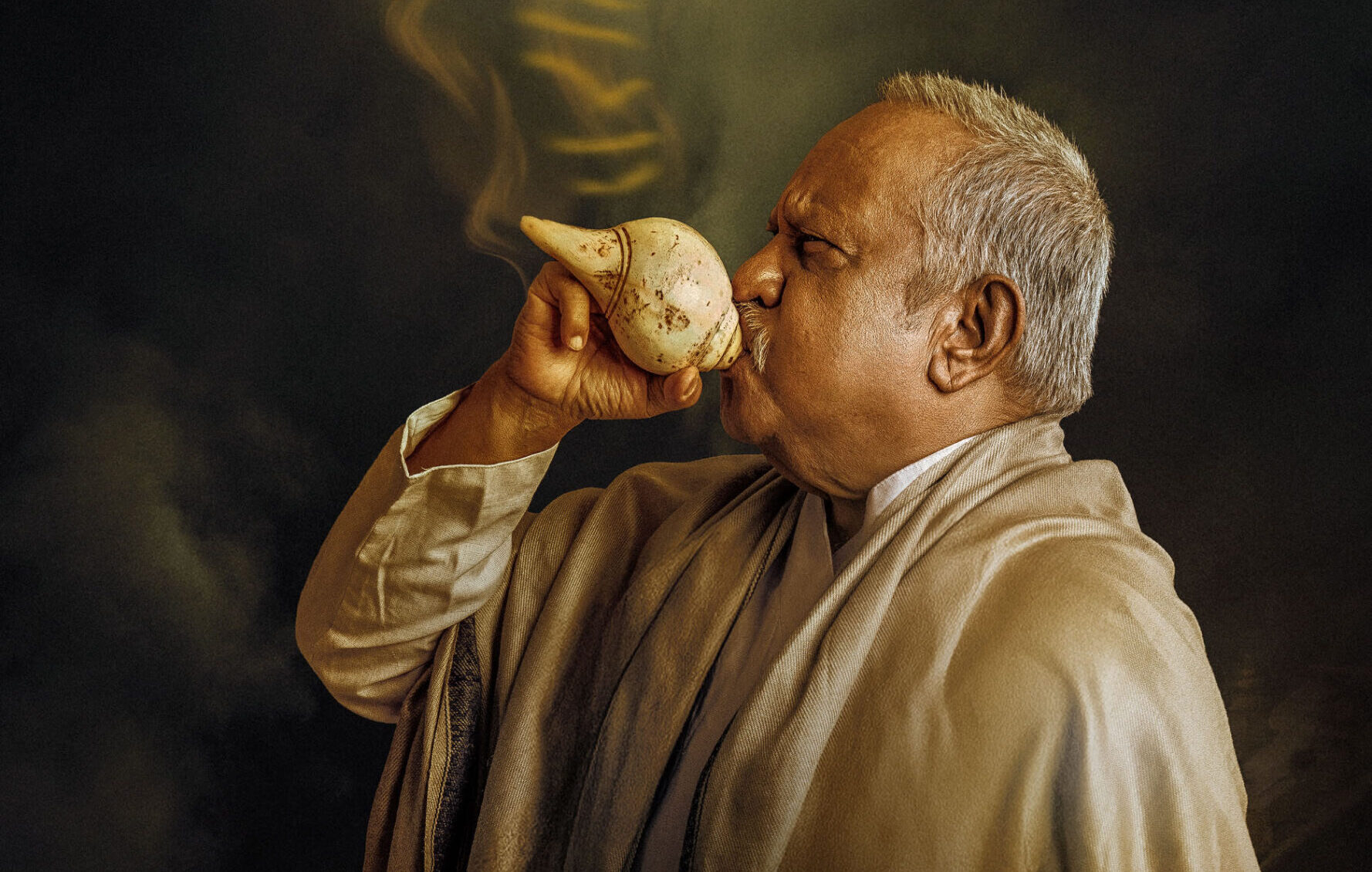
This year, the film Paran, directed by Dipak Acharya, became the highest-earning film, making a gross collection of Rs 177.6 million at the domestic box office. The number of ticket sales for the film is 630,691.
The film Aa Bata Aama, directed by Chandra Pant, occupied the second position by doing business with Rs 131.3 million. According to the Film Development Board data, at least 504,329 tickets for this film, which is still running in theaters, were sold by April 5.
At number three, Jerry on Top, made under the direction of Suyog Gurung, earned Rs 122.8 million. The number of ticket sales for this film is 396,597.
The fourth highest-earning film is Unko Sweater. This film, directed by Nabin Chauhan, collected Rs 114.1 million, and its ticket sales count is 392,243.
Director Upendra Subba’s Jaari 2, Santosh Sen’s directed Balidan, and Om Pratik’s directed Mohar are the films that crossed Rs 50 million in the current fiscal year. While the sequel to ‘Jaari,’ ‘Jaari 2,’ made a gross collection of Rs 62.4 million, ‘Balidan’ did business of Rs 51 million. And ‘Mohar’ succeeded in making a gross collection of Rs 50.8 million.

The remaining three highest-trading films are ‘Hari Bahadur Ko Jutta,’ ‘Magne Raja,’ and ‘Maitighar’. The earnings of these films are Rs 47.1 million, Rs 46.9 million, and Rs 41.6 million, respectively.
From social drama and love stories to thrillers
It had been a long time since Nepali audiences were able to see a touching love story with melodious music on the screen. The presentation from Artmandu, ‘Unko Sweater,’ which was released on May 9, 2025, fulfilled this lack. Listeners liked songs like ‘Phool‘, ‘Chaineyjo Jindaganima‘, ‘Makhamali‘, and ‘Kafle‘, and the audience also liked the pair of lead actors Bipin Karki and Miruna Magar. The background music of the film was also of high quality.
The sequel to Jerry, Jerry on Top, is another film that succeeded in gaining much discussion this year. This film, which tells a story of the thrill of climbing Mount Everest and a triangular romance, stars Anmol KC, Jassita Gurung, and Aanchal Sharma in lead roles.
The fact that the audience felt novelty in the story of climbing Mount Everest, which had not come in mainstream films before, became one reason for Jerry on Top to run. Although it wandered while using old formulas of love stories in an adventurous film, critics gave feedback that improvement was seen in Anmol KC’s acting. Jassita Gurung, who played the role of a trekking guide in the film, won the hearts of many with her acting.
The film Paran, directed by Dipak Acharya, is the film that succeeded in doing the highest business of the year. This film, which seemed as if it would be removed from theaters due to a lack of audience in the first week, worked wonders at the box office because of “word of mouth.”
Interestingly, many coincidences of the letter ‘P’ were also seen between last year’s Purna Bahadur Ko Sarangi, directed by Saroj Paudel, and Paran, directed by Dipak Acharya.

Both are family films starting with the name ‘P’. Both films were seen to make the audience cry intensely inside the theater. Father and son are at the center of the stories of both films. In both, there is a friction between tradition and modernity.
The success of ‘Paran’ and ‘Aa Bata Aama’ shows the inclination of both creators and audiences toward stories of parents and family relationships. After the success of these films, the possibility of a wave of making films on fathers’ stories in the coming days has also increased. Composer Hari Lamsal has already announced the production of ‘Ba: Ek Yoddha.’
Like the story of the father, Aa Bata Aama, which has the mother’s story at its center, also did aggressive business this year. This film, which did the second most business after Paran, has a story of love, affection, sacrifice, and dedication between children and parents. In the film, Bipana Thapa is in the role of the mother and Paul Shah is in the role of the son.
The compulsion of youth to go abroad and the destiny of old parents having to spend their days waiting for their children’s return are common experiences of Nepali society. The story of this very experience is shown in Aa Bata Aama. Along with the success of the film, the announcement of its sequel has already been made.
Director Upendra Subba’s sequel to Jaari, Jaari 2, was a film that carried high expectations this year. The film neither made expected earnings nor received critics’ praise. Nevertheless, Jaari 2 succeeded in falling at number five among the films that earned the most this year.

In the first part, the socio-cultural dimensions of the results created by the Jaari practice in the Limbu community were shown. In the sequel, an attempt has been made to explore the effects it had on individuals and culture by picking up the context of Nepal during the Maoist conflict, which is starting to be forgotten. However, as this effort was not tight, the film received average feedback.
Jaari 2 has put a break on the notion that simply making a sequel to a hit film will earn a lot of money.
Character is the hero
Neer Shah, who has spent six decades in Nepali cinema, used to be seen in various supporting roles. In Paran, he not only appeared in a central role but also succeeded in leaving a distinct mark with his acting. Neer himself declared the role to be excellent, proclaiming, “Paran is the peak of my acting journey.”
Film analyst Yagyash says that a trend of trusting stories and characters rather than stardom is slowly starting to be seen. He says, “A film like Paran is a celebration for artists like Neer Shah, who have been working in supporting roles for a long time.”

He says that Paran has proven that experienced artists can also run a film, breaking the notion that a strong young hero is definitely needed in the lead role.
Often in films, younger artists are made to look old using makeup. Yagyash, giving the example of Paran, says, “The naturalness that comes when actual artists are kept in roles according to their age was also proved by Neer Shah’s acting in Paran.”
The closer a character is to life, the more the audience relates and connects. The creation of characters according to the story and the selection of artists were also seen in last year’s Purna Bahadur Ko Sarangi. Before that, Bijay Baral was also limited to supporting artists. The role of the father he performed in Purna Bahadur Ko Sarangi established him as a lead actor.
Talented artists Kameshwor Chaurasiya and Laxmi Bardewa, who had been confined to supporting characters for a long time, appeared in central roles for the first time in Abhimanyu Chapter 1. Many appreciated this practice of choosing artists according to the character within the story. One can expect that such selection will give priority to actors according to the character rather than a ‘hero’ in Nepali films in the future.

Another important film released in 2015 was Gunyo Cholo. This film, directed by Samudra Bhatt, raised a sensitive story of discrimination, identity, internal struggle, and self-respect regarding the sexual minority group. In the film that challenges the traditional perspective toward the transgender community, Najir Husen gave the best performance of his career. In the role of a transwoman, Najir appeared in two types of characters: Dev and Gulabi. Settling into both characters, he succeeded in leaving a special mark in the role of Gulabi.
New generation, new energy
The new generation are the carriers of new thoughts and new styles. Their entry adds energy to the film sector. The fiscal year 2025 was a significant year in terms of debut directors and artists.
Paran and Unko Sweater are both films by debut directors. Although it did less business commercially, director Sushant Gautam’s first film Abhimanyu Chapter 1 received positive feedback this year. In terms of storytelling, Abhimanyu is a suspense thriller full of ‘twists’ and ‘turns.’
In the Nepali film industry, where the number of female directors is low, the presence of directors like Sudipta, Ekta Paudel, and Aastha Shrestha became an achievement in itself this year. Sudipta told a story of the ups and downs of relationships and the freedom of urban women through her debut film Rammita Koo Pirati. Ekta Paudel depicted the priority given to lineage continuity within Nepali society in her first film Harsha.
Samipya Raj Timalsena, president of the Film Critics Society, says that the arrival of female directors has also brought changes to the subject matter. Timalsena, who is also a screenwriter, says, “This year, the practice of making films with female characters at the center was seen to increase. This has strengthened the notion that the story itself is important.”
Women’s stories were not limited only to the films of female directors. This year, films with woman-centric stories like Koshedhunga, Laalimaa, and Kumari were also released. Among them, the pain and suffering of female sex workers are depicted in director Roshan Mijar’s Laalimaa. In the film, a new generation actress, Roshni Karki, appeared in the lead role. According to the production side, the life experiences of more than 3,000 female sex workers were taken as a basis in the process of making the film.

The film Khel, co-directed by Anurag Pradhan and Aastha Shrestha, is also a film where new generation female artists are dominant. In this, along with Surakshya Panta, Hena Nagarkoti, Monika Thapa, Nikita Acharya, Samapika Gautam, and others are in the lead roles.
The fiscal year 2025/26 has been prosperous for Bipin Karki, Miruna Magar, Anmol KC, Jessica Gurung, Bipana Thapa, Neer Shah, Paul Shah, among others. However, for old artists, it proved to be an average or weak year. Established director Dinesh Raut brought two films this year: Mahabhoj and Kumari. Neither film ran commercially, nor did they catch the eyes of critics.
Even though there was a gathering of stars like Dayahang Rai, Khagendra Lamichhane, Aryan Sigdel, Miruna Magar, Anjana Baraili, and Malika Mahat, the audience did not find the taste of Mahabhoj sweet. Films like Rimai and Mirmire starring Dayahang did not show much impact. Even though the name of Pradeep Khadka was attached for promotion, the sci-fi film Eklo-1 could not pull the audience to the theater.
Actress Benisha Hamal appeared active through films like Eklo-1, Bigul, and The Blue Light, but in terms of results, 2025 could not become a memorable year for her. Films starring Saugat Malla like Cetaamol and Viral Gorkhey appeared weak.
In Kumari, where a woman-led story was told against the cultural background of Kathmandu, director Raut connected not only new generation actors and actresses but also Gen Z generation composers, singers, and technical artists. However, that also did not work. In this film, said to be a love story of the new generation, Abhishek Khadka and Akriti Rajbhandari performed the lead roles.

Even though songs of Kumari like ‘Doko Bunne‘, ‘Kata Chau Mero Phool‘, and ‘Timi Bina‘ ran, they could not contribute to the success of the film. Nevertheless, Abhishek’s acting has signaled the arrival of a promising new artist in the film sector.
The story of the new generation is also in Arjun Ghimire (Pande)’s directorial debut Jhari Pachhi Ko Indreni. Touching everything from corruption to the latest Gen Z protest, this film marked the debut of Bimochan Dawadi and Jesika Pokharel’s acting. Old artist Ganesh Upreti also returned in an important role after a long time.
Timalsena, president of the Film Critics Society, considers the presence of debut directors and artists in the current fiscal year to be encouraging. Whether the films ran or not, he believes the new generation is continuously trying, and in this, the presence of directors is even stronger than artists. He says, “This year, the arrival of the new generation increased significantly; the dominance of established big stars was seen to decrease a bit.”
The domestic market expanding
Only limited films among those released every year achieve success. Among those, even fewer films receive critics’ praise. It is even unknown when many films came or went. Even so, the market for Nepali films appeared expanded and strong this year.
Particularly after the record-breaking commercial success of the Chhakka Panja and Kabaddi series, Nepali names are continuously increasing in the list of the highest-earning films of the year. In the domestic market itself, an environment has already been created where good films can earn more than Rs 100 million to Rs 200 million. Even films that run just okay have become able to collect Rs 50 million to Rs 70 million.
For decades, the film market in Nepal was under the control of Indian cinema. The Indian influence was reflected in the stories, presentation, and music of the cinema. After decades, that dominance is now starting to be broken.
Theater owners and distributors who used to wait for Indian cinema have nowadays started to hesitate to take the risk of bringing foreign films other than blockbusters to Nepal.
Film distributor Manoj Rathi says that for the past two to three years, the trade of Indian films has decreased and the earnings of Nepali films have increased.

This year, limited blockbuster films like ‘Saiyaara,’ ‘Kantara Chapter-1,’ ‘Dhurandhar,’ and ‘Dhurandhar: The Revenge’ did business of over Rs 100 million in the Nepali market. Even ‘Border 2,’ which did aggressive business in India, saw a box office collection of Rs 26.3 million in Nepal.
According to distributor Rathi, due to the fear of not making a profit, many Indian films like De De Pyaar De 2 and Masti 4 were not even screened in theaters in Nepal this year. He says, “Previously, the trade of Indian films in Nepal was 70 percent. Now, the trade of Nepali and Indian films has reached a 50/50 percent situation.”
Distributor and director Prachanda Man Shrestha says that such a changed situation is decreasing the trade of Indian medium-budget films and increasing the trade of Nepali medium-budget films inside Nepal.
This year, the number of foreign films screened appears more than Nepali films. While 56 Nepali films were released from April 14, 2025, to April this year, at least 93 foreign films were screened. Even with 37 more films, the earnings of Indian and Nepali films at the box office are almost equal. While Nepali films did business of Rs 1.08 billion, foreign films collected Rs 1.11 billion. However, in terms of audience numbers, Nepali films appear ahead. While about 3.7 million plus tickets were sold for Nepali films, there are 3.3 million viewers who watched foreign films.

In this way, being able to maintain the domestic market, which has been expanded for a few years, in the current fiscal year as well can be considered an achievement of Nepali films.
Where are the good films?
Evaluating a film based only on box office success or failure can be erroneous. Commercially successful films can be weak, and unsuccessful films can be of high quality. Therefore, despite some achievements, one question remains alive: Where, then, are the quality films?
From mid-April 2025, it was seen that the audience liked stories of human relationships. But how long-lasting is the impact of those films?
Admittedly, it is not that films with some different stories were not made this year either, but due to weak presentation, the timing of the film’s release, or other reasons, those could not catch the eyes of the audience.
Analyst Yagyash says, “However artistic, realistic, or melodramatic the presentation of the film is, the impact the film makes depends on that.” He holds the opinion that among those that came in the year 2025, only one or two films have that capability.
Yagyash says that this year, fewer films carrying regional, community, or cultural diversity, like Jaari or Kabaddi, came compared to previous years. Films focused on art or subject matter like Shambhala, Rajagunj, and The Red Suitcase were also seen less. “A sign of an increase in films that return to the old commercial formulas again has been seen,” he says.
Samipya Raj Timalsena, president of the Film Critics Society, also argues that the balance between commercial and artistic cinema, which had been gradually improving in recent years, has tilted off course this time.
“The trend of Nepali films is once again leaning toward formula-driven, commercial melodrama and overly sentimental storytelling,” he says, adding that the renewed interest of mainstream stars like Biraj Bhatta and Nikhil Upreti in the current market reflects this shift.
There remains a strong belief that the industry’s long-term growth depends on commercial and artistic cinema progressing side by side. Film analyst Yagyash emphasizes that only films rooted in diversity, originality, and a distinct voice can offer audiences a truly fresh experience.
As the industry looks ahead, there is hope that 2026 will usher in a more creatively vibrant phase, one that moves beyond recycled formulas and embraces new stories and innovative storytelling styles.