Kathmandu
Saturday, July 25, 2026





Born near wartime military camps in Kolkata, jhal muri crossed borders into Nepal to undergo a flavor revolution that created the globally famous Nepali chatpate
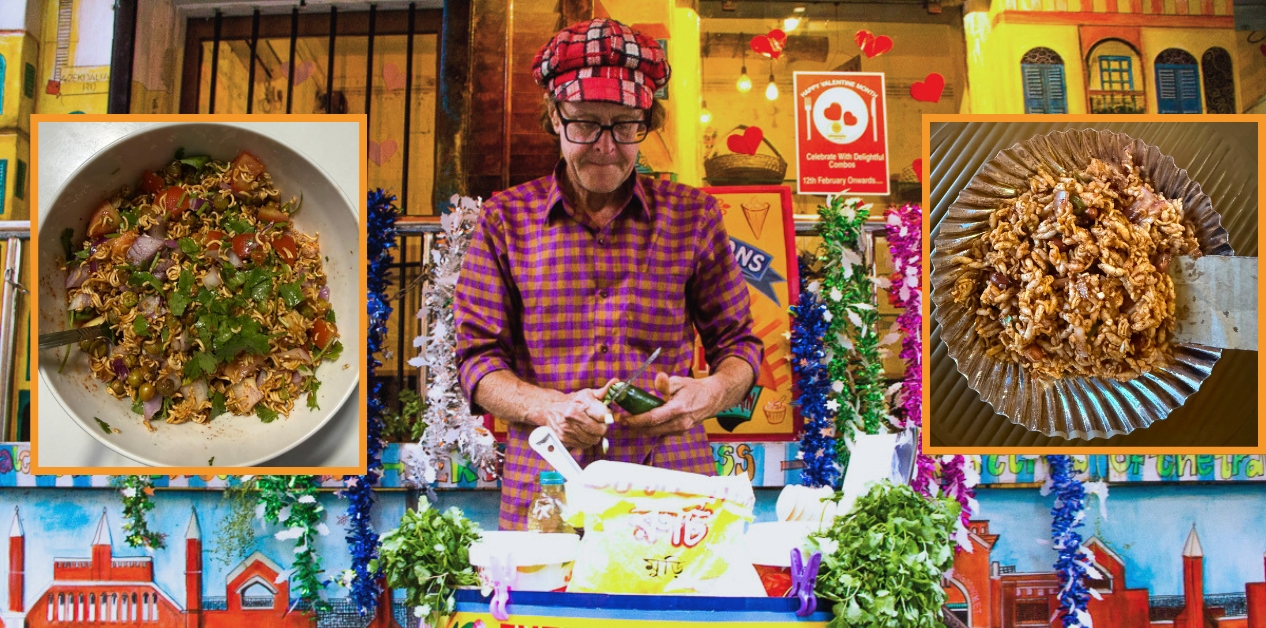
KATHMANDU: Do you remember standing in front of a street stall, cart, mobile cart, or shop, awkwardly eating chatpat or chatpate from a paper cone using a “spoon” made of thick paper? Or, before that, do you remember the scene where the chatpate vendor, asking, “How sour and spicy do you want it?” held a plastic jar or tin can with puffed rice and soaked chickpeas right in their palm and cut onions, tomatoes, green chilies, and potatoes using an index-finger-sized knife, adding the bright red pickle (sauce) bottle, the strong aroma of raw mustard oil, and the “chhyak-chhyak” sound made by rotating a round wooden stirrer to mix every ingredient and then tapping the jar against the wooden stand before pouring it into the cone?
What else do you remember? Was it the tears coming from the eyes of your childhood or teenage friends as they ate chatpate, the water running from their noses, or their faces turned red from the spice? Or do you remember both your tongue and brain tingling at the very first bite of the sour and spicy chatpate? Could it be that those very memories, or the nostalgia for them, are what still make chatpate your most memorable snack today?
Because of these very memories, chatpate is rapidly gaining popularity not only among the Nepali diaspora living in Australia, the United Kingdom, the United States, Canada, Japan, and countries of the Middle East, but also among non-Nepalis through them. After momo, the snack that has emotionally connected Nepalis across the globe and given Nepal an authentic identity among foreigners is indeed chatpate. Chatpate has become a mandatory presence at every Nepali gathering abroad.
In fact, the roots of chatpate were planted in Kolkata, India, around the time of the Second World War. According to food historians, during the Second World War, many people reached Kolkata from the Indian states of Bihar and Uttar Pradesh in search of work. Those migrant workers started making and selling a spicy puffed rice snack on the street pavements, which was called “jhal muri” in the Bengali language.
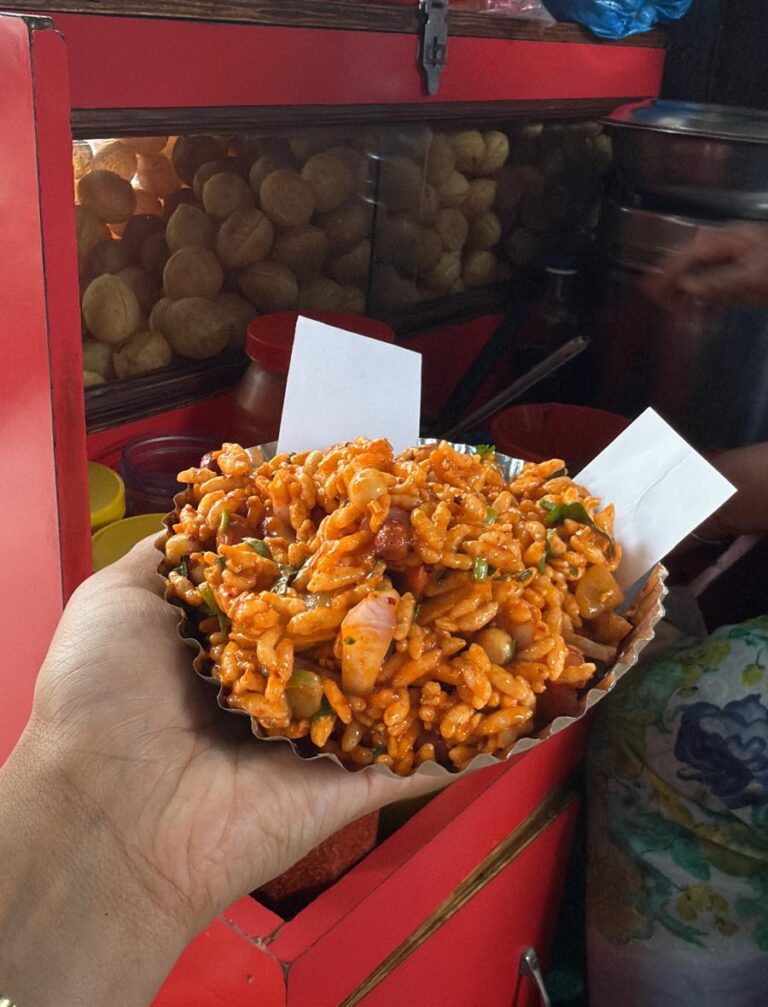
In the Bengali language, “jhal” means spicy and “muri” means puffed rice. Jhal muri was prepared in a steel or tin jar by adding puffed rice, crushed roasted chickpeas, roasted peanuts, various spices, finely chopped onions, green chilies, and raw mustard oil, vigorously mixing them while shaking the jar. Due to the strong aroma and taste of mustard oil, it became a favorite snack for the local Bengalis along with the people from Bihar and Uttar Pradesh. It also influenced several foreign soldiers deployed during the Second World War.
The popularity of this simple snack sold on the streets of Kolkata did not remain limited to just that. When British chef Angus Denoon visited India, he was captivated seeing the jhal muri vendors on the streets of Kolkata mixing the snack at rapid speed while rattling their jars. He learned the art of making jhal muri, returned to the United Kingdom, and started selling jhal muri on the streets of London under the name “Everybody Love-Love Jhal Muri Express.” On the streets of London, British people also eagerly embraced this spicy and crunchy Bengali snack, and this indigenous flavor of Bengal became famous worldwide.
Due to the open border between Nepal and India, it was entirely natural for jhal muri to spread from Kolkata through the cities of the Terai region of Nepal into various parts of the hills. In Kathmandu, there was a tradition of making chatpate by mixing chickpeas soaked overnight or boiled, along with potatoes, onions, and other ingredients, with sour and spicy flavors, black salt, and roasted cumin powder.
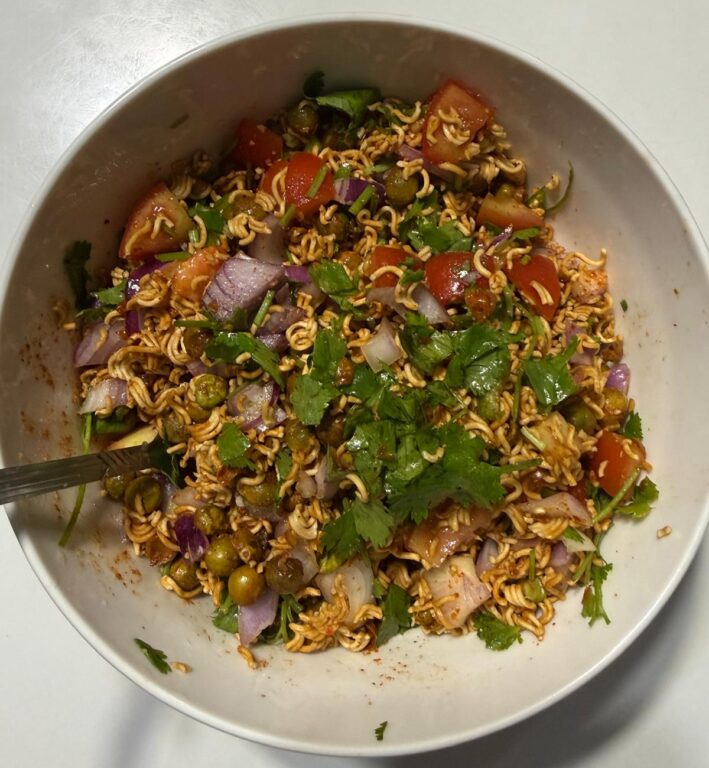
The trend of adding puffed rice came a bit later. A major historical change occurred long after it arrived in Nepal, which in a way was a culinary revolution. In the 1980s, Wai Wai instant noodles arrived in Nepal. Bengalis made jhal muri dry, crunchy, and fragrant with mustard oil. However, Nepali palates preferred a slightly wet, sour, and spicy flavor. Therefore, Nepalis started adding raw instant noodles and the flavorful seasoning found inside them to jhal muri.
The use of raw instant noodles gave jhal muri an entirely new flavor, texture, and Nepali identity. Because of its tongue-tickling flavor, its name changed from the Bengali “jhal muri” to “Nepali chatpat” or “Nepali chatpate” depending on the place in Nepal. Eventually, even in its birthplace, India, Indian food vloggers have recognized and praised it as Nepali chatpate.
In eastern Nepal, dry chatpate is still called “jhal muri.” Since the original dish imported from Bengal was made dry and with mustard oil, people in eastern Nepal retained its old historical name, jhal muri. After the development of “wet chatpate” made with tamarind, acidic liquids, and gravy, they began to clearly distinguish between the wet dish as “chatpate” and the traditional dry, crunchy dish as “jhal muri.”
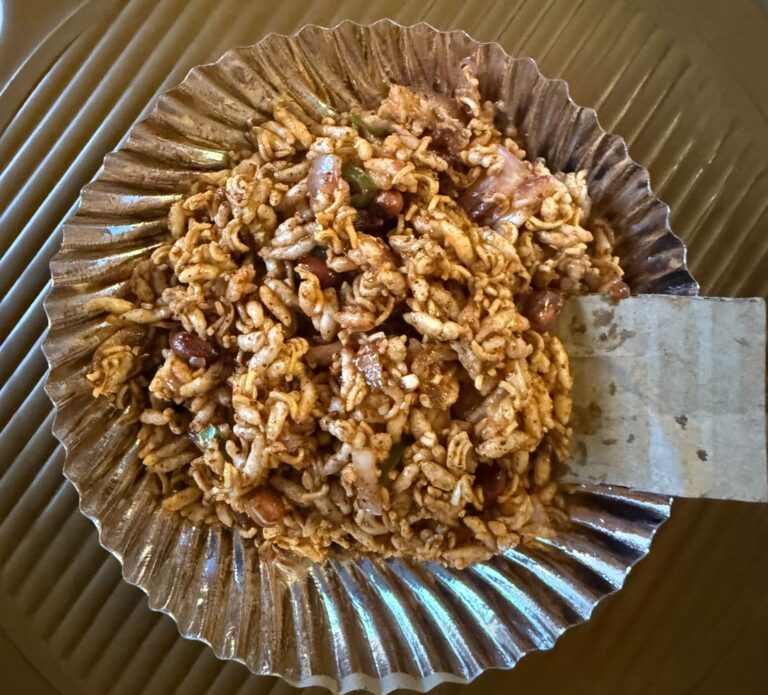
Wet chatpate comes quite close to the South Indian dish uggani. The difference between uggani and wet chatpate is that in uggani, the puffed rice is soaked and the spices are cooked, whereas wet chatpate is a mixture of prepared raw and cooked ingredients. In Nepali street food culture, both wet and dry varieties of chatpate have their own connoisseurs.
Wet chatpate became famous particularly starting from Jhapa and eastern Nepal. It is somewhat gravy-like. When making wet chatpate, thick tamarind water or lemon juice, boiled and mashed potatoes, and spices are added to make it slathered in sauce. Some people also make wet chatpate by adding the gravy used in aloo nimki.
Gram flour (chickpea flour) or refined wheat flour is dissolved in water, and a thick gravy is made by adding tomatoes, turmeric, chilies, black salt, sugar, and lemon juice or souring agents. To make it even more attractive, red or orange food coloring is also added. In a large bowl, boiled and mashed potatoes, finely chopped onions, tomatoes, cucumbers, boiled chickpeas or green peas, and other preferred vegetables are added. Noodle seasoning, chaat masala, black salt, thick tamarind water or other souring liquids, gravy used in aloo nimki, lemon juice, and mustard oil are added and mixed. Finally, crushed raw noodles and puffed rice are added and beaten at rapid speed. It is usually served in a bowl or plate and eaten with a spoon. A distinct delight is felt when its sour and spicy juice spreads across the tongue.
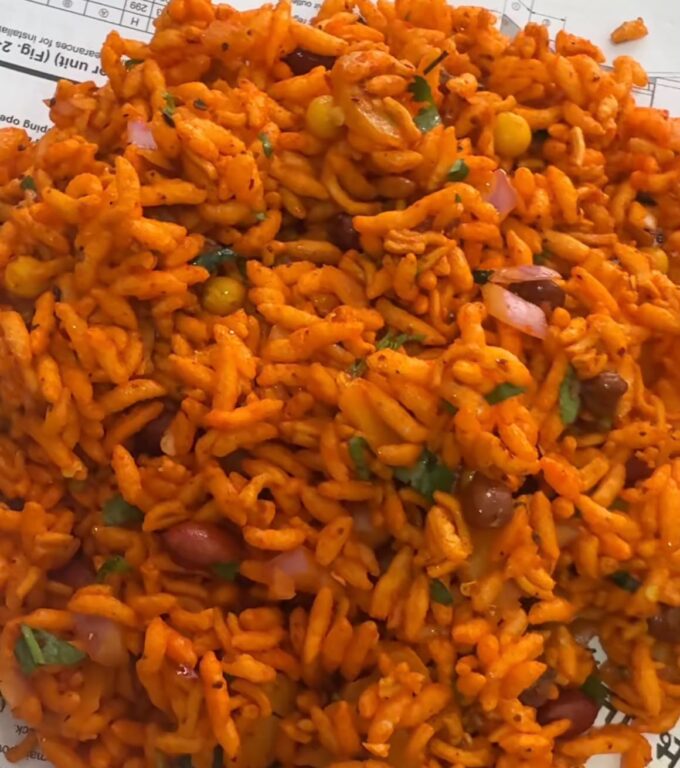
On the other hand, dry chatpate or jhal muri represents the traditional Bengali style and the style of the old alleys of the Kathmandu Valley. It must be extremely dry and crunchy. When making dry chatpate or jhal muri, onions, green chilies, small pieces of potato, and dry tomatoes are added to a bowl. Roasted cumin powder, black salt, a little lemon juice, and raw mustard oil as the key element are added to it. Immediately after, puffed rice and raw noodles are added and stirred well within a few seconds. The puffed rice must not become soggy; it must remain crunchy. Therefore, when making chatpate, noodles and puffed rice are always added last so that their crunchiness is not lost due to the sour liquid and moisture.
Nepalis have not only added noodles to chatpate, but they have also created sukuti chatpate by adding dried meat (sukuti) to make it non-vegetarian. Further experiments like chicken chatpate, choila chatpate, and sweet corn chatpate are ongoing. Let us wait and see how far this transformation of flavor will go.