Kathmandu
Sunday, January 25, 2026





Why Balen chose this electoral constituency in eastern Nepal, a traditional hold for the CPN (UML), challenging four-time prime minister and UML Chairman KP Oli
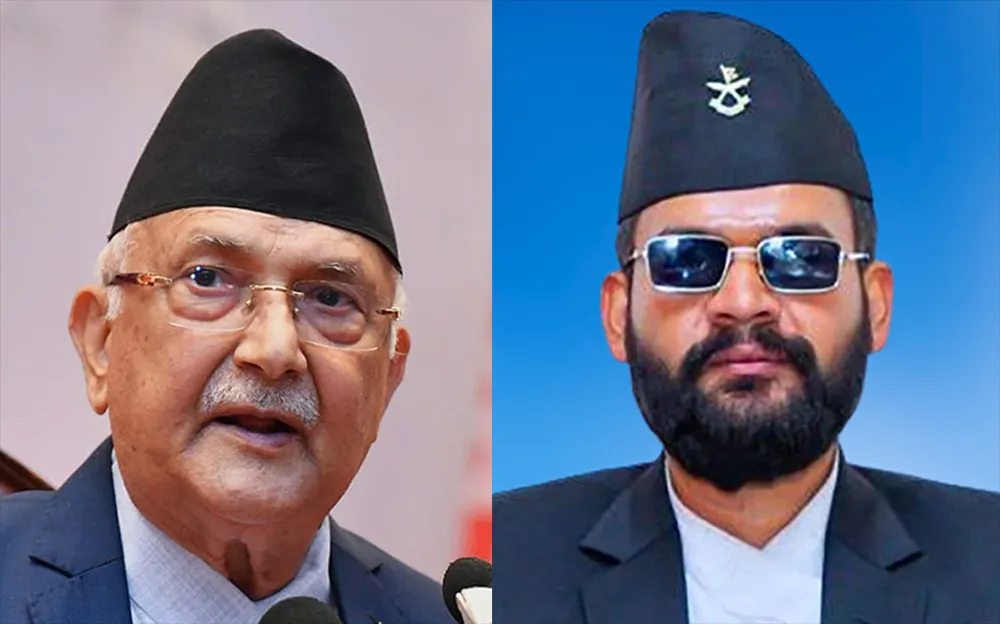
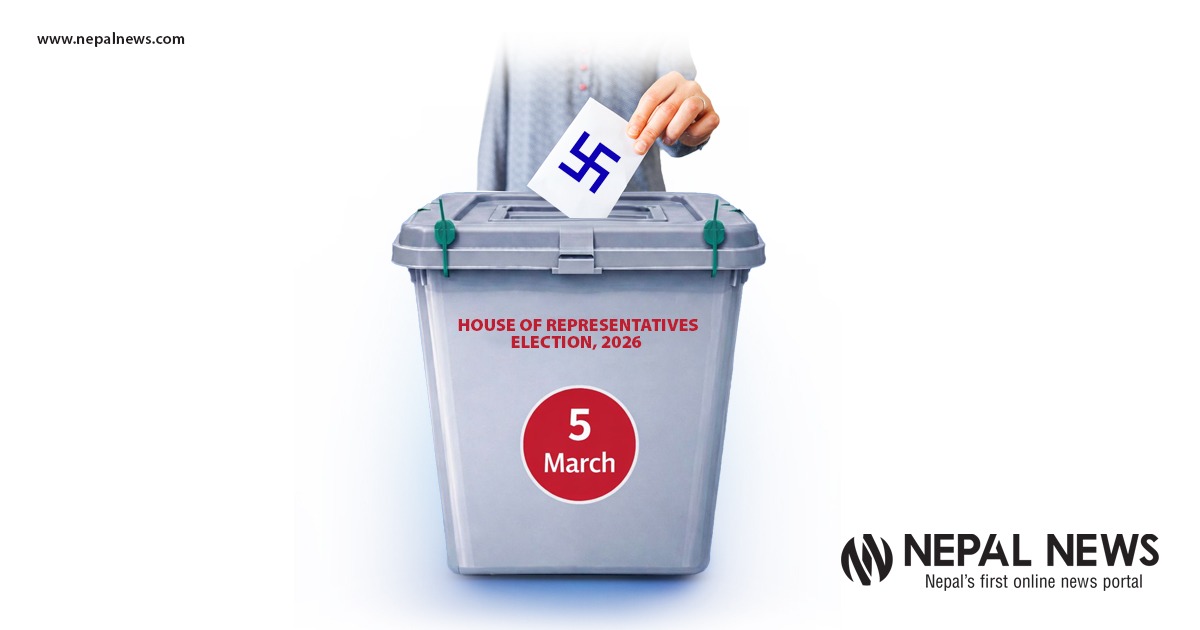
KATHMANDU: Nepal is preparing for the House of Representatives (HoR) elections slated for March 5 this year. Although the polls are still more than a month away, election fever has seemingly gripped the country, and people are already speculating election results according to their comfort and convenience.
However, the 2026 elections carry a unique dimension which many describe as a fight between the so-called old, entrenched political class and the so-called new, emerging political forces. In fact, this battle between the ‘old’ and the ‘new’ forces is what makes the March 5 polls different from all past elections.
This classic electoral battle in Nepal is reflected in all the 165 electoral constituencies, most strongly in constituency number 5 of the eastern district of Jhapa. In fact, no other constituency in the country has received more attention than Jhapa Constituency Number 5. A traditional stronghold of the Communist Party of Nepal (Unified Marxist-Leninist) – CPN (UML) – this constituency has been dominated for decades by four-time prime minister and UML Chairman KP Sharma Oli.
But, representing the so-called new force – the Rastriya Swatantra Party (RSP) – former mayor of Kathmandu Metropolitan City, Balendra Shah (Balen) has set out to end this ‘Oligarchy’, standing in the election from “Oli’s den”: Jhapa-5. The RSP’s senior leader Balen has thrown his hat into the ring to contest this high-profile seat and his move has electrified both political watchers and ordinary voters.
The Jhapa-5 electoral battle is not any ordinary electoral confrontation. It is a symbolic face-off between an old political legacy and a rising new generation – a duel that may reshape Nepali politics in more than one way.
Many political observers were surprised by Balen’s decision to contest from Jhapa-5, especially because he had a comparatively much easier way of choosing a constituency in the capital “and winning the election comfortably.” After all, Kathmandu is a place where his personal brand and popularity among the urban voters would be stronger and more certain. Yet, Balen chose Jhapa, a district historically loyal to KP Oli and the UML. Needless to say, this decision carries both risk and strategy.
Indeed, Balen’s move is both a challenge and a symbolism. Balen’s entry into Jhapa-5 is aimed not only at garnering more votes for his party but also at breaking up the stranglehold of the long-dominant political force – Oli. By opting to contest against Oli in his own backyard, Balen has projected himself as a national-level challenger, not a mere local figure. He has portrayed himself as a leader capable of reshaping Nepal’s political landscape.
Personal and political dynamics between Balen and Oli have added more fuel to this electoral fire. The personal relations between Oli and Balen that were once warm gradually turned sour. After winning the mayoral election in Kathmandu against UML’s Keshav Sthapit, Balen emerged as a vocal critic of Oli’s style of governance. In no uncertain terms, he pointed out to instances of corruption and inefficiency where Oli and the UML were linked.
Balen’s alignment with the so-called youth-led reform movements makes this race a direct confrontation between Nepal’s old political guard and the emergent new generation. The move by Balen is seemingly part of a larger strategy by the RSP to assert its presence on the national stage. Perhaps, the party also wants to relay the message that political change is achievable even against entrenched power.
Traditionally, Jhapa-5 has been a bastion of KP Oli and the UML. In fact, Jhapa district has sent Oli to parliament several times since the 1991 parliamentary election. Oli has achieved many of these victories by a landslide margin. For instance, in the 2022 parliamentary elections, Oli secured more than 52,000 votes, defeating his nearest rival from the Nepali Congress by over 28,000 votes. His long tenures, development initiatives in the region, and local networks make him an almost unbeatable candidate.
However, with Balen entering into contention in Jhapa-5, it cannot and will not be considered a foregone victory. Political analysts note that with a duel in process in the electoral contest entering into play, not only are votes from its inhabitants but from all over Nepal on display.
Moreover, the elections have also focused the spotlight upon youth politics. The constituency of Jhapa-5 has approximately 163,000 voters. Of them, nearly 10,000 are newly registered voters who tend to favor Balen, as they are more likely to be influenced by his youth politics movement to reform society. Similarly, local youth leaders from other political parties including the Nepali Congress and Oli’s own party, the UML, have also endorsed Balen.
The stakes are higher than a single seat. While any parliamentary election carries significance, the stakes in Jhapa-5 are unusually high. For KP Oli, this is not a battle for just a single seat. Rather, it is a test of his sustained clout. A loss here would weaken the legacy of the UML and question the perception of Oli’s invincibility as a political force.
This constituency is closely monitored as a bellwether of the party’s fortune nationally, and Oli’s campaign has run on both development records and leadership on issues related to national stability.
For Balen, the stakes are just as monumental. Victory in Jhapa-5 would catapult him onto the national stage. Balen’s victory in Jhapa-5 would also mean that the RSP can compete with the established giants of Nepali politics. It will also signal that a new generation of political leaders with their roots in reformist agendas and experience in urban governance can make their presence felt even in the traditional remote strongholds of the old political forces. Analysts say that this victory might motivate other youngsters to take on the established political personalities and thereby redefine party politics in Nepal.
The electoral battle has brought under the spotlight the contrast in campaigning styles. Balen has relied heavily on mass rallies, personal outreach, and direct engagement with youth voters. Reports from Jhapa-5 describe streets filled with enthusiastic supporters, and Balen’s team has established local offices to coordinate outreach. In a strategic move, Balen sought to engage disaffected youth leaders from other parties. No doubt, this is a maneuver aimed at consolidating a broader reformist vote base.
On the other hand, Oli relies on experience, legacy, and development achievements. Campaigning in local wards, he spoke at length on how much his administration had been able to achieve in infrastructure, urban planning, and economic policy. His team is also working to mobilize traditional party loyalists, ensuring the UML’s organizational strength translates into votes on Election Day.
This contrast underlines an overriding theme of the contest in Jhapa-5: experience versus innovation, legacy versus change, and old political machinery versus new political energy. The response to these competing appeals would explain not only who wins in Jhapa-5 but also the nature of Nepal’s political evolution.
However, there is another layer to Jhapa-5 that is rooted in its historical and metaphorical importance. While Oli’s constant presence within the constituency has come to make Jhapa-5 synonymous with dominance within Nepal’s political landscape, his opponent’s move to compete within Jhapa-5 is indicative of a challenge to political authority. This, according to analysts, is indicative of wider developments within Nepali political dynamics.
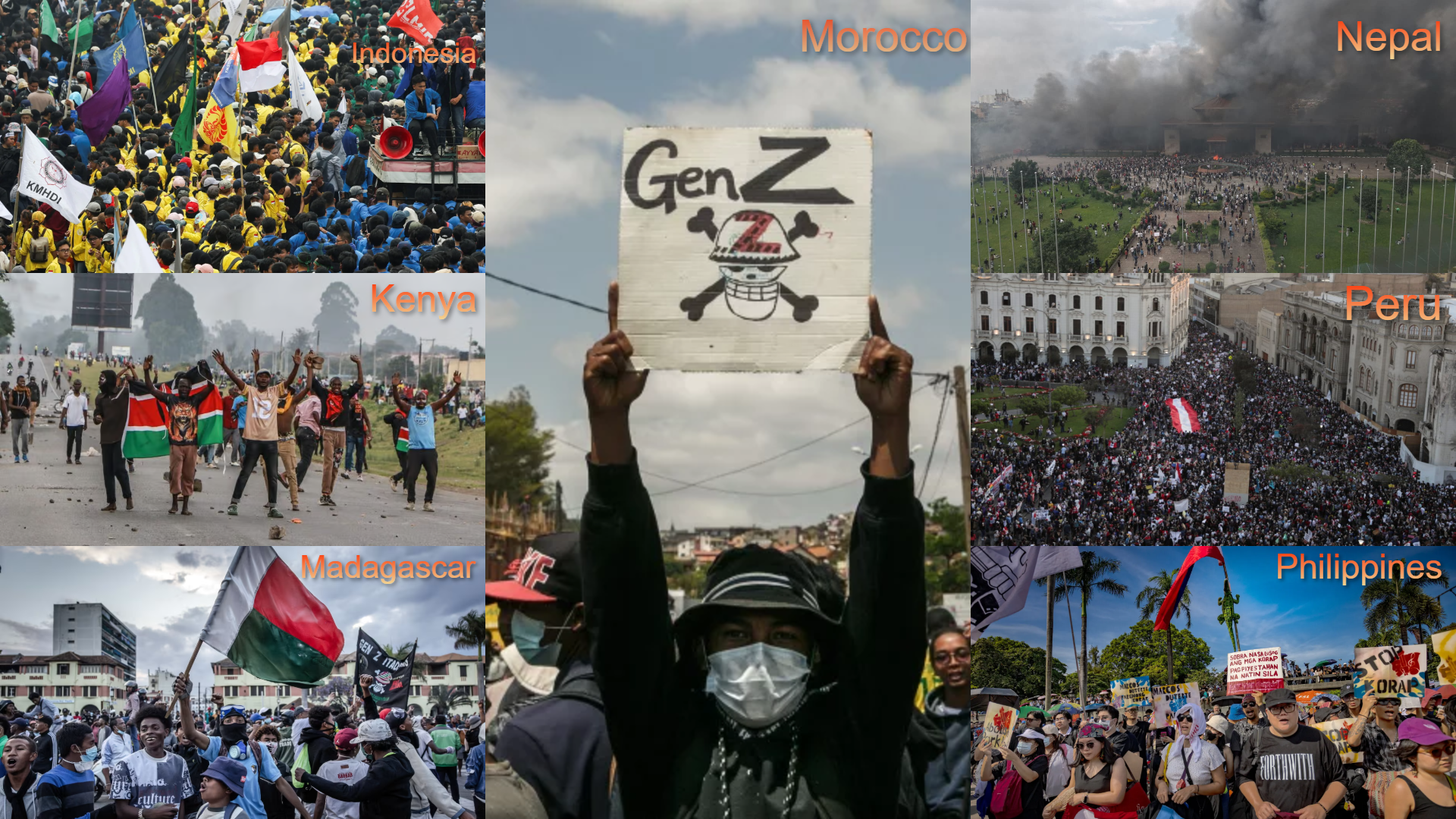
The younger generation is making its presence felt across Nepal, largely because of movements such as the Gen Z protests.
Balen’s campaign also reflects the role of personal branding in contemporary Nepali elections. His tenure as the mayor of Kathmandu Metropolitan City showed his ability to get things done in this domain. By seeking to tap into this popularity base, Balen’s attempt at being elected to the seat in Jhapa-5 transcends the ordinary constituency election race; rather, he’s seeking to impose a referendum on the people regarding matters of change in general.
Possible outcomes and implications
As Election Day draws near, analysts seem to highlight the fact that Jhapa-5 certainly promises to be a neck-and-neck race. Here, the choice may depend on minor changes in voting turnout patterns among the youth population. Balen’s win in Jhapa-5 could mark a new shift in the history of Nepali politics by emphasizing the impact of new political movements. Similarly, in case Oli succeeds in the constituency, it would underscore the influence of old political parties.
Additionally, Jhapa-5 is drawing significant concern given its national-level implications. Balen and Oli are both the prime ministerial candidates of their political parties and thus represent a litmus test for what will become of Nepal in the days to come. The ground for this contest is far bigger and extends way beyond geographical concerns. This is turning out to be a national-level referendum.
Jhapa-5 is no longer just a parliamentary election venue. Rather, it represents Nepal’s political transformation and contrasts traditional political structures with a new class of people seeking political change. In seeking to do so, and defying convention and expectations, Balen’s move to contest this election rather than in his home constituency of Kathmandu has placed this constituency at the center of political discourse.
Oli is largely considered the main person responsible for the killing of 76 young people during the Gen Z protests of September 8 and 9 last year. Although Oli reemerged as the chairman of the UML through the party’s general convention held recently, showing that his grip on the party is still intact, he fears this allegation like anything. It goes without saying that all those who will be casting their votes on March 5 in Jhapa-5 are not the cadres of the UML. Therefore, this grave charge against Oli is likely to affect the voters’ mood and decision.
Balen is already trying to cash in on this allegation against Oli by saying that he will not share a platform with “the murderer of 76 young people.”
On the other hand, though Balen is still apparently the most popular figure in the country, he too fears the nickname ‘Lucifer’ given to him by his critics in the aftermath of the Gen Z revolt. He can only hope that the voters of Jhapa-5 won’t judge him solely on the basis of this allegation.
In short, the Balen and Oli showdown is a tale of ambition, challenge, and political symbolism. The contest brings forth imagery of experience and energy, legacy and reform, and political conformity and political change led by youth movements around Nepal. With Nepal gearing up to make its political pronouncements on March 5, Jhapa-5 is sure to be at the forefront of it all, not only as a tale of winning a political seat but as a metaphor of what is to come for Nepal in the future.