Kathmandu
Monday, July 27, 2026





A 60-year-old legal loophole, political muscle, and billions of rupees in land dealing combine to make the Giribandhu Tea Estate case one of the most explosive corruption scandals in Nepal's modern history

KATHMANDU: A decades-old tea estate in Jhapa has become the center of one of Nepal’s most controversial land scandals, involving allegations of policy corruption, political protection, and attempts to unlock billions of rupees worth of protected land for commercial gain.
The Giribandhu Tea Estate, exempted from land ceiling laws since the 1960s for tea cultivation, came under scrutiny after the then KP Sharma Oli government amended land laws and approved a controversial land swap in 2021. The Supreme Court later annulled the decision, triggering legal battles, contempt petitions, and wider corruption investigations involving senior political figures.
This Nepal News explainer delves into the origins, legal twists, political decisions, and ongoing implications of the case.
What exactly is the Giribandhu Tea Estate, and who owns it?
Giribandhu Tea Estate is a private company based in Birtamod, Jhapa, in eastern Nepal’s Koshi Province. It was established in the early 1960s by four brothers from the Giri family, namely Shamsher Giri, Tek Bahadur Giri, Padam Bahadur Giri, and Bhagawan Giri. The family had originally accumulated around 500 bighas (1 bigha equals to 6772.63 square meters)) of land in and around Birtamod, a town that would later grow into one of Jhapa’s most commercially active urban centers.
The estate grows and processes tea, and it has historically been positioned as one of Nepal’s largest tea producers, operating two estates and a processing facility. It sits along both sides of the East-West Highway, to the east of Birtamod, and is easily visible to anyone passing through the area. The company has been a family-run private enterprise passed through generations since its founding.

Land under Giri Bandhu Tea Estate. File photo
What eventually made it a magnet for land brokers and political operators was not its tea production but the extraordinary rise in value of the land it sat on. As Birtamod urbanized rapidly, the market price of land adjacent to the town’s commercial zones rose to between Rs 200,000 and Rs 3 million per square meter. That kind of valuation, attached to hundreds of bighas of legally protected land, made the estate one of the most coveted and contested pieces of real estate in all of eastern Nepal.
How did the Giri brothers manage to hold so much land when Nepal had a land reform law?
This is the very foundation of the entire scandal, and understanding it requires going back to the early 1960s. In 1964, Nepal enacted its Land Reform Act, which imposed strict ceilings on how much land a private individual or family could hold. In the Tarai plains, the ceiling was set at a maximum of 10 bighas per person. Any land beyond that limit was to be acquired by the government for redistribution to landless farmers. However, the law included an important carve-out: land being actively used for industrial purposes, including tea cultivation, was exempted from the ceiling restrictions.
The Giri brothers had already been growing tea on their land before this law came into effect. Sensing what was coming, they formally registered the Giribandhu Tea Estate in 1963, just before the land reform regulations could be applied to their holdings. Because the land was registered under an operational tea estate, the reform rules could not seal it.
On December 25, 1964, the Nepal Gazette published a formal notice exempting the Giribandhu Tea Estate’s land from the land ceiling, on the explicit condition that it continued to function as a tea estate.
This exemption became a durable legal shield that protected hundreds of bighas from state acquisition for the next six decades, surviving every change of government, every political system change, and every amendment to the land law that followed, as long as the tea estate remained nominally operational.
What happened to portions of the land before the current scandal emerged?
Well before the controversy of the 2020s erupted into national headlines, there had already been suspicious land dealings tied to the estate that had escaped serious scrutiny. The original formally recorded total area of the estate was approximately 343 bighas, 19 kathas, and 12 dhurs (2,329,431 square meters).
Out of this, around 51 bighas were exchanged through what critics have called clearly illegal transactions in the early 2000s. Reports and parliamentary discussions indicate that approximately 32 bighas were sold during then Prime Minister Sher Bahadur Deuba’s government tenure around 2003, and a further 19 bighas were sold in 2003 under then Prime Minister Surya Bahadur Thapa’s government during King Gyanendra’s period of direct rule.
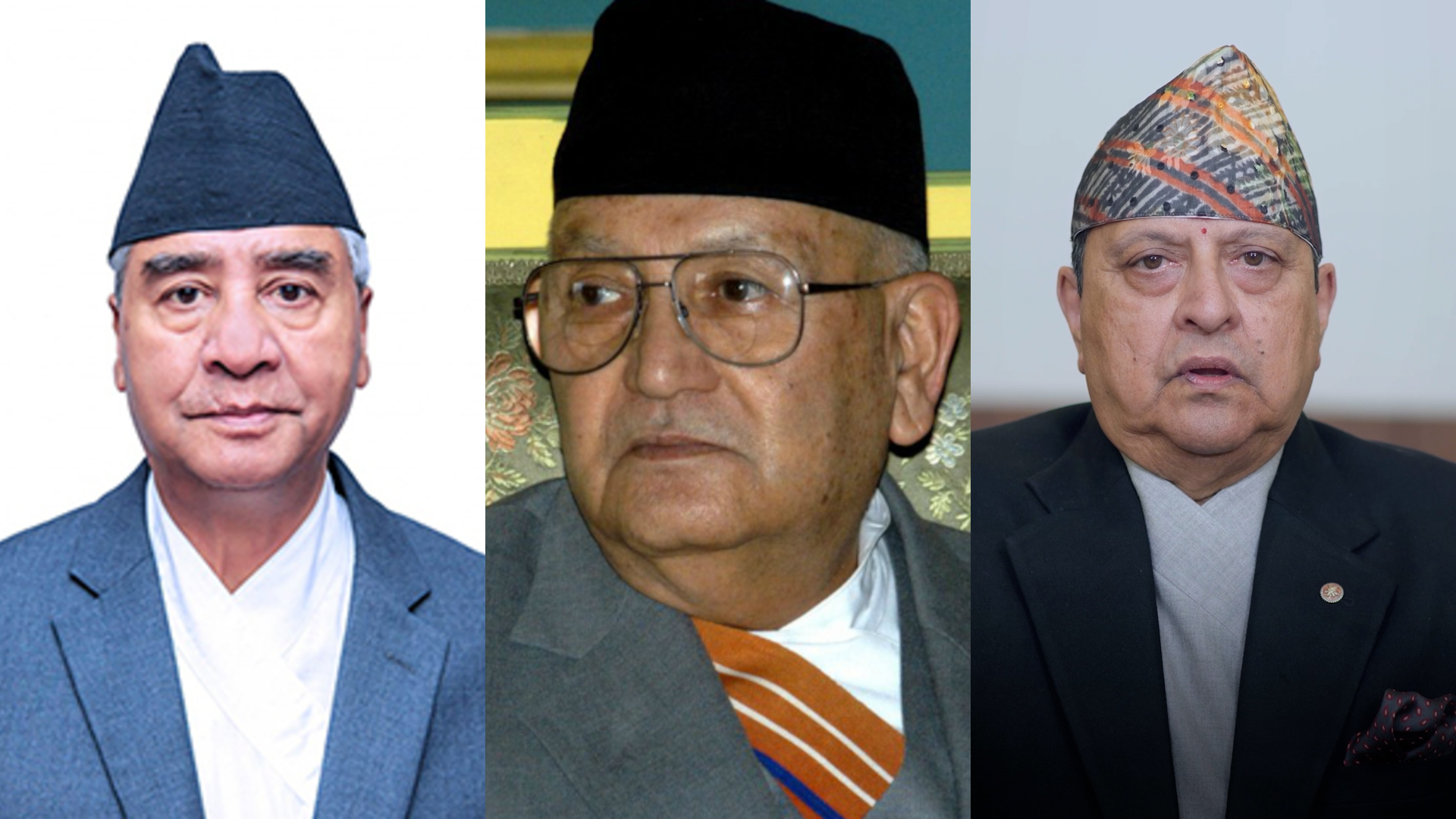
Sher Bahadur Deuba (left), Surya Bahadur Thapa (center), and former king of Nepal Gyanendra Bir Bikram Shah Dev (right)
That land was rapidly absorbed into the urban fabric of Birtamod. Today, what was once protected tea estate land in those sold portions now contains a busy bus park, a college, hotels, organizational offices, and densely packed residential settlements.
Around 400 families, living across more than 1,153 individual plots, now call that land home. These early sales demonstrated that the estate’s exempted status was not an absolute barrier but one that could be circumvented with the right political connections and government approvals.
By the late 2010s, roughly 280 bighas of the original estate remained, and those remaining acres, sitting on some of the most commercially valuable land in eastern Nepal, became the target of a far more ambitious and politically connected scheme.
What did KP Sharma Oli’s government do in 2020 that became the heart of the scandal?
This is where the scandal transforms from a story of historical irregularity into one of active and deliberate political corruption. In January 2020, the then government led by Prime Minister KP Sharma Oli pushed through what is formally known as the Eighth Amendment to the Land Management Act.
Before this amendment, the legal position was clear: land held above the statutory ceiling under an industrial exemption could not be sold, bought, or exchanged. It had to remain in use for the purpose for which it had been exempted. The Eighth Amendment fundamentally changed this.
It introduced provisions allowing companies holding land above the legal ceiling to relocate, exchange, or sell that land, ostensibly to pay off company liabilities. Critics immediately identified the amendment as legislation tailor-made for the Giribandhu estate and its associates.
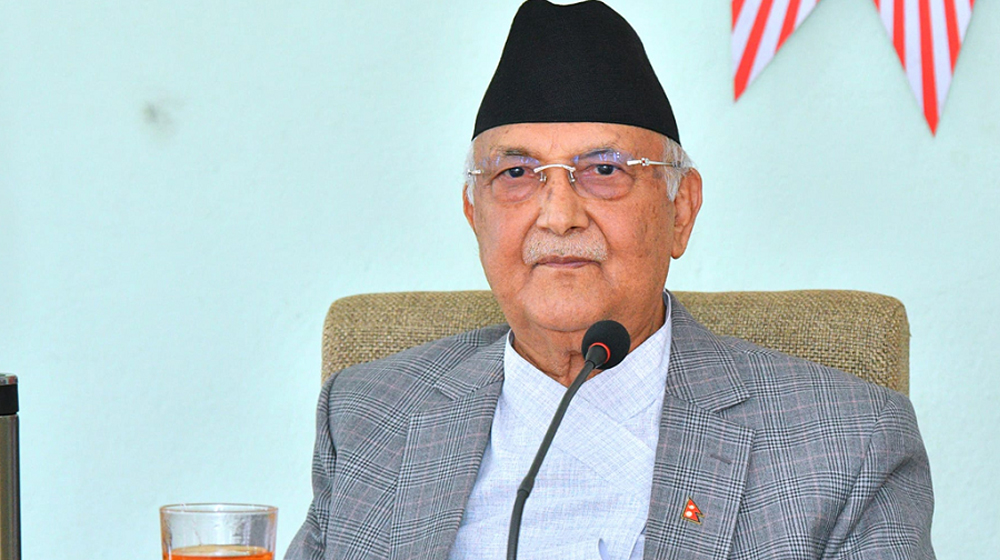
KP Sharma Oli. File photo
Then, on April 26, 2021, the Oli Cabinet formally approved the Giribandhu Tea Estate’s application to exchange its entire remaining 343-plus bighas of Birtamod land for cheaper, rural parcels in Kachankawal Rural Municipality and Jhapa Rural Municipality within Koshi Province.
Proponents described this as helping a struggling tea company manage its assets during a liquidation process. But investigators, journalists, and legal advocates argued it was a political cover operation designed to enrich a specific network of landowners, land brokers, and their political patrons by freeing enormously valuable urban land from its protected status and making it available for commercial real estate development.
Why did the Supreme Court call the Cabinet’s decision illegal?
The Supreme Court’s Constitutional Bench delivered its landmark verdict on February 7, 2024, and the full reasoning was released on May 12, 2024. The bench was led by then Chief Justice Bishwambhar Prasad Shrestha and included Justices Ishwar Prasad Khatiwada, Prakashman Singh Raut, Sapana Pradhan Malla, and Sushma Lata Mathema. Together, they ruled that the Oli Cabinet’s approval of April 26, 2021 directly violated Section 12(c) of the Land Act, 1964, and described the decision as “immature.”
The court found multiple procedural and substantive failures in how the Cabinet had reached its decision. It had not conducted any proper feasibility study to verify how much of the land was still being actively used for tea cultivation. It had not assessed the comparative pricing between the Birtamod land being given away and the rural land being received in exchange. No environmental impact assessment had been conducted.
The terms of the proposed exchange were described in the court’s own language as vague and abstract, without proper legal foundation. The bench applied two legal instruments in its ruling: a writ of certiorari to formally cancel the Cabinet’s approval and all subsequent actions taken on its basis, and a writ of mandamus directing the government to take concrete steps to bring land exceeding the legal ceiling under state ownership.
The court made clear that an industrial exemption exists to serve a specific purpose, and when that purpose is no longer being fulfilled, the justification for the exemption disappears and the excess land must revert to the state.
What is “policy corruption,” and why does this case exemplify it?
Policy corruption refers to the manipulation of legislative or executive processes so that laws, rules, or formal government decisions are crafted not to serve the public interest but to benefit specific private parties. It is a particularly insidious form of corruption because it wraps private gain in the appearance of legal legitimacy.
The Giribandhu case has become a textbook example of this concept in the Nepali context. The allegation is not simply that someone bribed a land official. The allegation is that an entire amendment to a national land law was designed specifically to enable a transaction that would otherwise have been prohibited, and that a Cabinet decision was then issued to formally approve that transaction.
Then Kathmandu Mayor Balendra Shah, now Prime Minister, was among the most prominent voices to publicly use the phrase “policy corruption” in relation to Giribandhu, accusing KP Oli of engineering a scheme worth Rs 100 billion and publicly challenging him to return advance payments that buyers had allegedly made.
The Supreme Court’s verdict reinforced this interpretation when it described the Cabinet decision as “immature,” a word that, in the context of judicial reasoning, signals that the court believed the decision lacked genuine deliberation and served interests that were not in the public good.
Legal commentators have pointed out that policy corruption is especially difficult to prosecute precisely because it hides inside official procedures, which is why the Madhav Kumar Nepal case involving Patanjali Yogpeeth, which the CIAA has framed as a corruption case arising from a Cabinet decision, is being watched closely as a potential precedent for the Giribandhu situation.
Did any parliamentary committee take action before the Supreme Court ruled?
Yes, Nepal’s Parliament did not remain entirely silent, and parliamentary intervention came relatively early after the Cabinet approved the swap. In August 2021, just a few months after the Oli Cabinet’s April 2021 decision, the Parliament’s Agriculture, Cooperatives and Natural Resources Committee formally directed the government to halt implementation of the swap decision and not proceed with exchanging approximately 280 bighas of estate land.
The committee’s direction was a meaningful political statement, reflecting unease among lawmakers from multiple parties about the deal’s legitimacy. However, parliamentary directives of this nature are not legally enforceable in the way court orders are, and the committee’s intervention did not stop the estate or its associates from continuing their informal sales network and planning activities.
The committee’s move nonetheless served several important functions. It placed the issue on the public record, made it difficult for subsequent governments to ignore, and emboldened civil society actors and advocates to pursue legal remedies.
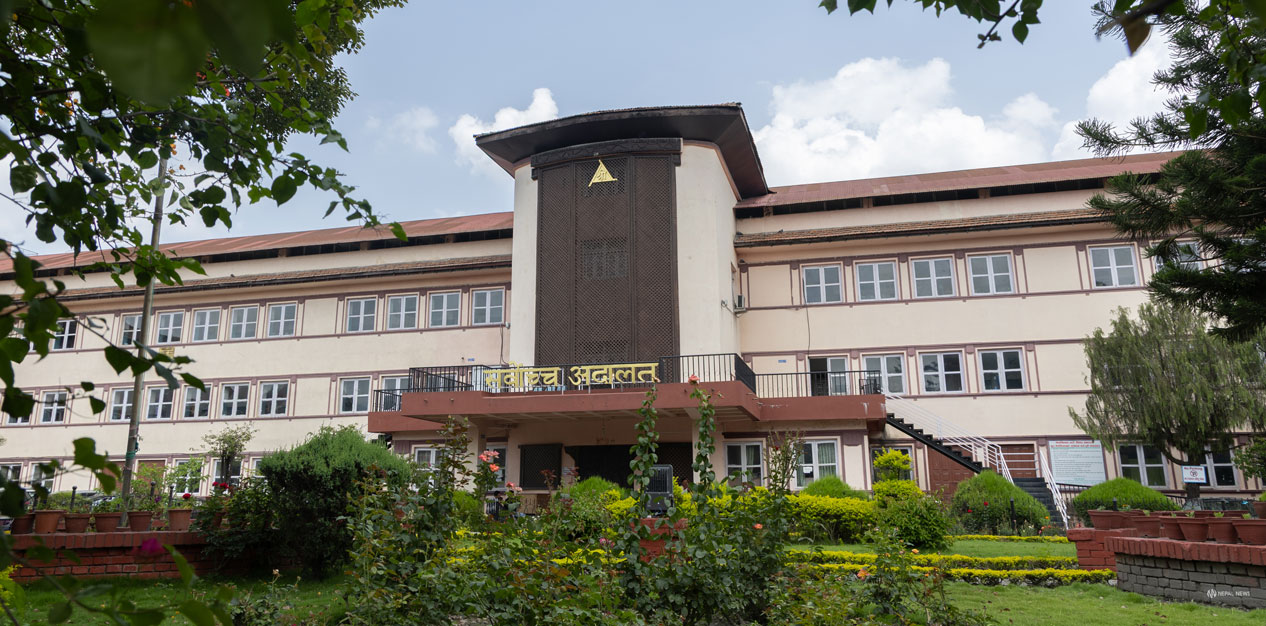
The Supreme Court of Nepal. File photo
Politicians from across the spectrum began using the Giribandhu case in debate and public statements, though the fact that both the UML and Nepali Congress were alleged to have facilitated earlier land sales from the estate created a mutual deterrence that slowed calls for accountability.
The parliamentary attention ultimately helped build the political and public foundation that made the Supreme Court’s eventual engagement with the case both expected and welcomed.
What is the contempt of court case about?
The contempt of court petition filed on February 10, 2025, by Advocate Om Prakash Aryal represents one of the most direct legal confrontations between a sitting prime minister and the judiciary in Nepal’s recent history. Aryal filed the petition at the Supreme Court, naming the Office of the Prime Minister and Council of Ministers as well as the Ministry of Land Management, Cooperatives and Poverty Alleviation as defendants.
The petition formally accused then Prime Minister KP Sharma Oli and then Land Management Minister Balaram Adhikari of deliberately obstructing the implementation of the Constitutional Bench’s February 2024 verdict over a period of more than seven months, and then actively undermining it through the January 2025 ordinance.
Aryal argued that the government was fully aware of what the court had ordered and made a conscious political choice to defy it. He described the ordinance as a direct constitutional affront, saying it challenged not just one ruling but the very authority of the judiciary as an institution.
In an unusual move, Aryal’s petition also included a demand that the court consider ordering the removal of the Prime Minister from office as a consequence of the contempt. The Supreme Court registered the case and scheduled an initial hearing for February 16, 2025.
The petition drew widespread attention because it framed what had started as a land case into a fundamental question about whether Nepal’s executive branch considers itself bound by judicial decisions or free to legislate around them whenever politically convenient.
What is the current condition of the physical land today?
The physical state of the Giribandhu land tells a story of incremental transformation that reflects both the estate’s decades-long decline as an agricultural operation and the urban growth that has made the land so desirable.
The areas sold through earlier exchanges in the early 2000s have been fully absorbed into Birtamod’s urban fabric. Those roughly 51 bighas now contain a bus park, commercial establishments, a college, hotels, and dense residential settlements where approximately 400 families live across more than 1,153 individual plots.
The remaining land, approximately 280 bighas that are still formally registered under the Giribandhu estate’s name, sits on both sides of the East-West Highway to the east of Birtamod. Tea plantations and some forest cover remain visible on portions of the property, but the estate’s own chairman publicly acknowledged that tea production had dropped by around 70 percent compared to the estate’s productive years, largely because urban expansion has encroached on and degraded the agricultural environment around the plantation.
Market valuations of land adjacent to Birtamod’s commercial center range from Rs 200,000 to Rs 3 million per square meter, making even a modest portion of the remaining 280 bighas worth an extraordinary sum by any measure.
The Supreme Court directed the government to identify land above the ceiling that is not being used for tea production and reclaim it for the state. As of the latest available reporting, that process has not been meaningfully executed, meaning the most consequential part of the verdict remains unimplemented on the ground.
How does this case connect to the broader money laundering investigation into former prime ministers?
In October 2025, the Department of Money Laundering Investigation took the historic step of launching formal asset investigations against three former prime ministers simultaneously: Sher Bahadur Deuba, KP Sharma Oli, and Pushpa Kamal Dahal, along with former ministers Arzu Rana Deuba and Dipak Khadka.
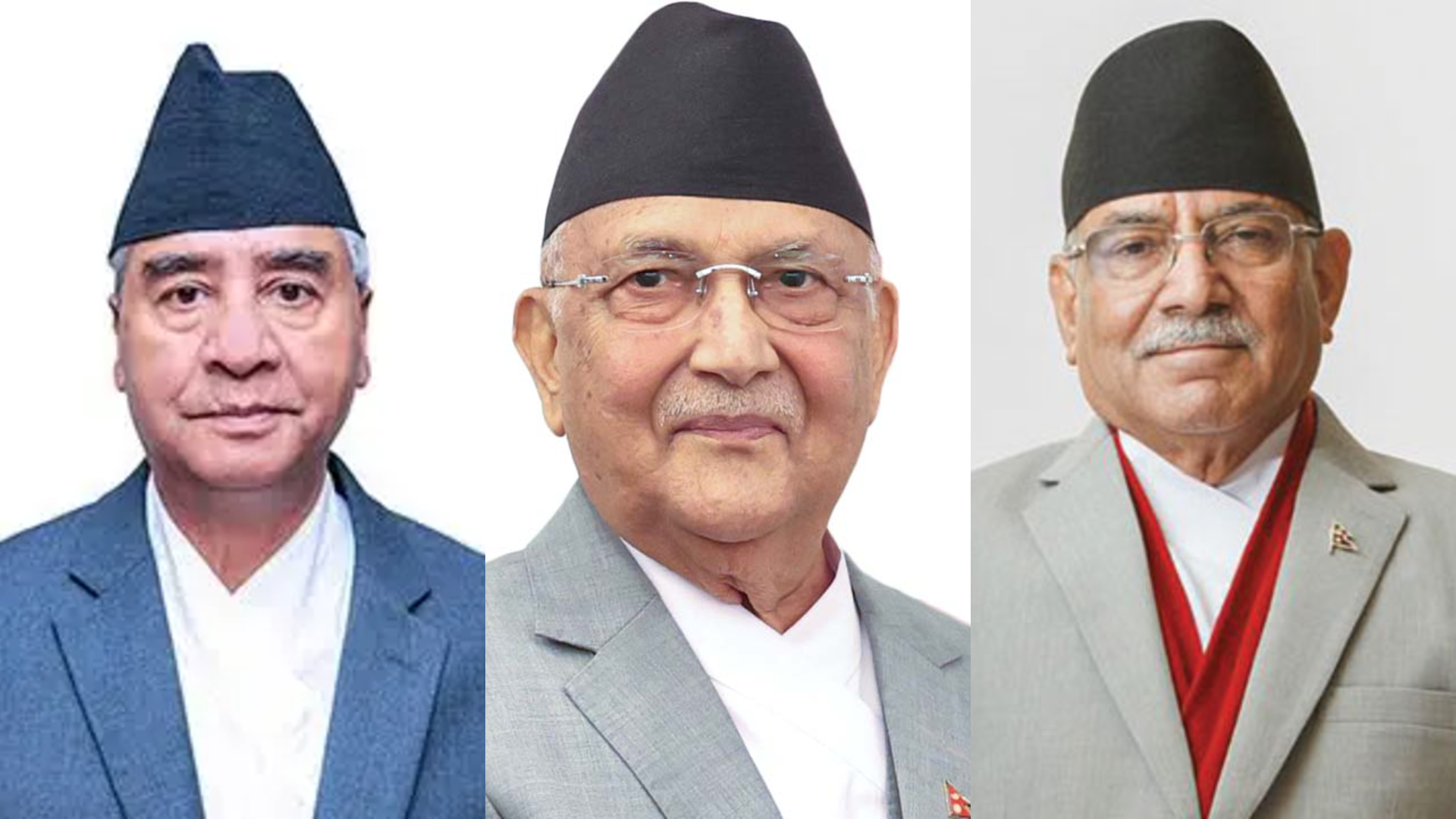
Former prime ministers Sher Bahadur Deuba (left), KP Sharma Oli (center), and Pushpa Kamal Dahal (right)
This was widely reported as the first time in Nepal’s political history that former heads of government had been subjected to this kind of coordinated institutional scrutiny. The Giribandhu Tea Estate decision figures as one of the specific corruption allegations against KP Sharma Oli within this broader investigation.
The accusation is that he misused his position as prime minister to amend the land law and secure Cabinet approval for a transaction that transferred legally protected state-exempted land at terms massively favorable to private parties, causing enormous potential loss to the state treasury.
To build their case, the Department wrote formal letters to Nepal Rastra Bank requesting bank account details, cash balances, jewelry holdings, and transaction records; to the Securities Board of Nepal for share investment data; to the Office of the Company Registrar for business ownership records; and to the Department of Land Management and Archives. Land revenue offices across all 77 districts of Nepal were individually asked to provide property ownership details relating to the accused and their families.

Former ministers Arzu Rana Deuba (left) and Dipak Khadka (right)
The investigation scope was also extended to include relatives up to three generations, including in-laws, a sweeping approach that signals investigators are looking for assets that may have been dispersed across family networks to avoid detection.
What role did lawyers and civil society play in this case?
Without the sustained engagement of legal advocates and civil society voices, the Giribandhu scandal might well have proceeded without any serious institutional check. Advocate Om Prakash Aryal stands out as the most consequential individual in the legal battle. He filed the original writ petition at the Supreme Court in May 2021, joined by co-petitioners including Advocates Om Prakash Mishra and Bhaktaraj Bharati.
Aryal’s core legal argument was that land held above the statutory ceiling under an industrial exemption is a conditional privilege, not a permanent property right, and that when the specified industrial purpose is no longer being fulfilled, the excess land must revert to the state. This argument ultimately prevailed at the Supreme Court.
After the 2024 verdict, Aryal returned to court to file the contempt petition in February 2025, framing the government’s defiance of the ruling as a challenge to judicial authority itself. He also publicly described the January 2025 ordinance as unconstitutional and called for the Prime Minister’s removal. Media institutions played an equally important role.
Investigative reports in media mapped the network of investors, local businessmen, and political connections surrounding the scheme, naming individuals and financial amounts that forced the issue into public consciousness.
Then Kathmandu Mayor (now Prime Minister) Balendra Shah used social media and public statements to keep the scandal in political discourse, directly challenging KP Oli and calling the operation a multi-billion-rupee scam. This combination of legal advocacy, investigative journalism, and political commentary is what prevented the deal from proceeding quietly.
What were the estate owners’ own arguments in their defense?
The Giribandhu estate and its representatives have not accepted the characterization of themselves as corruption actors and have made their own case publicly on several occasions. Estate chairman Chhatra Giri led a press conference in Jhapa in which he pushed back strongly against what he called misinformation circulating on social media and in political discourse.
He insisted that the estate had never received its land for free from the government, that the exemption was properly earned through genuine, large-scale tea cultivation that the Giri family had been conducting for decades, and that the legal provisions under which they sought the land exchange were properly enacted by a constitutional government through a legitimate parliamentary process.
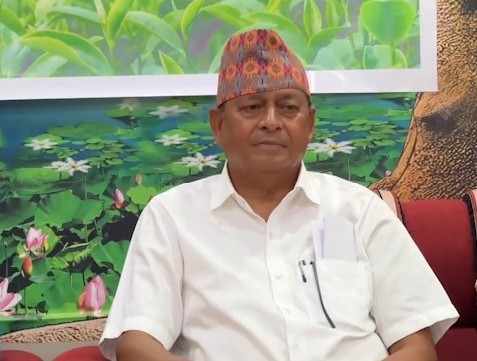
Chhatra Giri. File photo
Giri argued that the family had expanded tea cultivation before the Land Reform Act came into force, making their claim to the land historically and legally solid. He also pointed to the practical reality that urban expansion around Birtamod had dramatically changed conditions for the estate.
The town had grown around the plantation, reducing soil quality and tea productivity by approximately 70 percent compared to peak production years, making it genuinely difficult to operate the estate as a viable agricultural business. The estate’s position was that the proposed land exchange was a reasonable business solution for a struggling agricultural enterprise, not a scheme to defraud the state.
The Supreme Court heard these arguments and did not find them sufficient to override the legal requirements of the Land Act, but the estate’s representatives maintain that they acted in good faith within the framework of laws that were in place at the time.
Has anyone been formally charged or convicted in this case?
As of the most recent available reporting, no criminal charges have been formally filed against KP Sharma Oli, the Giri estate owners, or businessmen specifically in relation to the Giribandhu land deal, and there have been no convictions connected to it.
The Supreme Court’s February 2024 ruling was a civil and administrative matter that annulled the Cabinet decision and issued a directive to the government, but it did not refer anyone for criminal prosecution. The contempt of court petition filed in February 2025 is a civil contempt matter at the apex court level and could result in penalties or orders against the government if the bench finds the case proven, but it is not a criminal prosecution in the conventional sense.
The money laundering investigation launched by the Department of Money Laundering Investigation in October 2025, which includes Giribandhu as one element of the allegations against Oli, is in its early stages of evidence collection and has not yet produced any formal charge sheet or indictment.
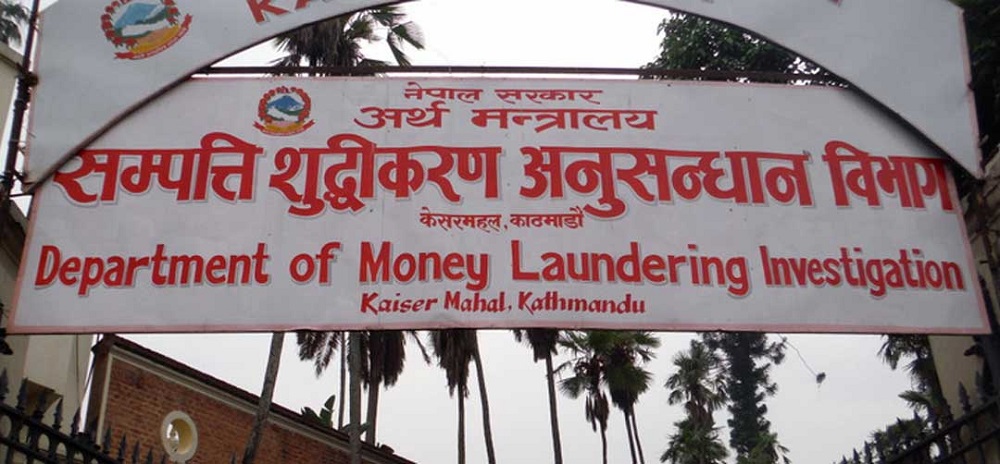
Office of Department of Money Laundering Investigation, Patan
Legal analysts have observed that the Commission for the Investigation of Abuse of Authority case filed against former Prime Minister Madhav Kumar Nepal over the Patanjali Yogpeeth land deal may prove to be the most important legal development for the Giribandhu case indirectly, because it would establish whether Cabinet-level decisions can be treated as acts of corruption under Nepali law.
If that precedent holds, it would substantially lower the legal bar for pursuing a similar case against those who approved the Giribandhu swap.
What does this case reveal about land governance in Nepal more broadly?
The Giribandhu scandal functions as a detailed and damning window into the structural failures of Nepal’s land governance system, and understanding those failures matters far beyond the specific parcels in Jhapa.
The original loophole that the Giri brothers exploited in the 1960s was not an accident. It was a feature of a land reform architecture that prioritized industrial exemptions without building in adequate accountability mechanisms for what happens when those industries shrink, become unviable, or simply become less profitable than the land beneath them in a changing economic environment.
Successive governments across decades allowed the tea estate exemption to continue without ever genuinely evaluating whether large-scale commercial tea cultivation was actually occurring at a scale that justified shielding hundreds of bighas of increasingly urban real estate from ceiling rules.
Each amendment to the Land Related Act that maintained or extended exemptions for agricultural industries added another layer of legal insulation around holdings that had outgrown their original justification.
The Giribandhu case also shows how policy corruption functions as a system rather than an isolated act. It requires legislators willing to pass amendments, cabinet ministers willing to approve decisions, land department officials willing to process applications, and real estate operators willing to sell shares in land they do not yet legally own.
The Supreme Court’s verdict was a rare institutional response that worked as intended. But the government’s subsequent use of an ordinance to circumvent that verdict demonstrates that even judicial victories can be undermined when the executive branch is controlled by the very people the verdict was meant to check.
What happens next, and why does it matter for ordinary Nepali citizens?
Several active legal and political threads remain unresolved as of the latest available information. The contempt of court case filed in February 2025 is pending at the Supreme Court and could produce significant consequences for the government if the bench rules that the January 2025 ordinance constituted deliberate obstruction of a judicial order.
The money laundering investigation involving Oli and others is in its evidence-gathering phase, with no charge sheet filed yet. The physical land that the Supreme Court directed the government to reclaim has still not been formally transferred to state ownership, meaning the most materially important part of the ruling remains unexecuted on the ground.
16579484331689644844.jpg)
File photo of landless settlers’ settlement in Thapathali, Kathmandu, on the bank of the Bagmati River
For ordinary Nepali citizens, especially those who are landless, marginalized, or living in regions where land remains unequally distributed, the stakes of this case are not abstract. Nepal’s 1964 land reform was enacted with the explicit purpose of breaking the power of large landlords and creating conditions for fairer land distribution.
If a protected tea estate exemption can be converted into a commercial real estate windfall through a single Cabinet decision backed by a conveniently timed law amendment, then the entire premise of land reform becomes negotiable by whoever holds executive power at any given moment.
The land in question, if sold at Birtamod market rates, could yield tens of billions of rupees, money that critics argue belongs to the state and ultimately to the public.
Whether Nepal’s institutions, its courts, its anti-corruption bodies, and its legislature, prove capable of reclaiming that land and holding accountable those who tried to privatize it is, for many observers, a genuine test of whether constitutional governance in Nepal means what it is supposed to mean.



![NSU protests closure of public library, demands immediate reopening [Photo Feature]](https://english.nepalnews.com/wp-content/uploads/2026/07/1-6.jpeg)