Kathmandu
Monday, July 27, 2026





Nepal keeps 44 missions across five continents, yet diplomatic ties with 183 nations and now the government is debating whether to shut several down, starting with the one lonely outpost keeping a foothold in all of South America
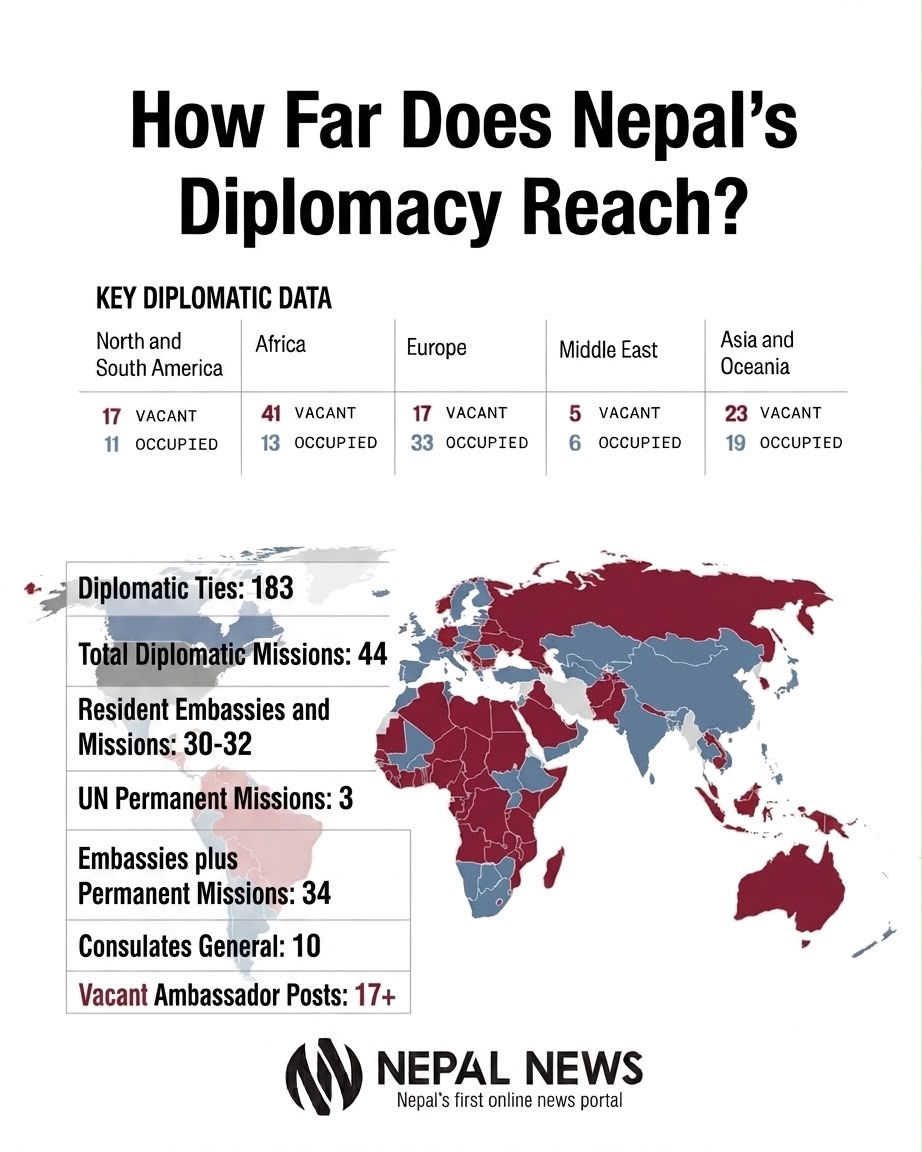
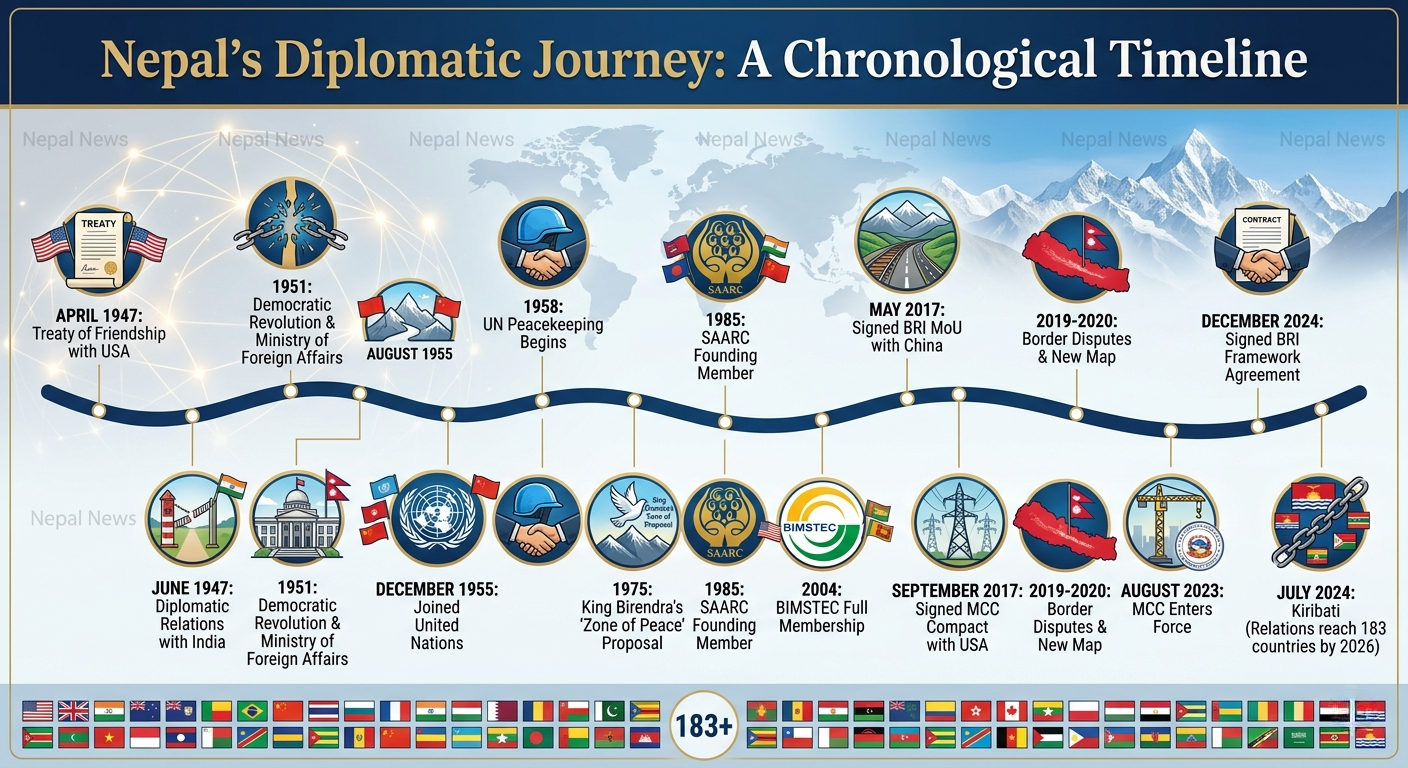
KATHMANDU: Nepal’s diplomatic network grew from near-nothing in 1950, when the country had formal ties with only four nations, to 44 missions spanning five continents today. The network includes embassies, high commissions, consulates general, and three permanent UN missions in New York, Geneva, and Vienna.
Nepal has formal diplomatic ties with 183 countries, though it has resident embassies in only around 30 host nations. The current government of Prime Minister Balendra Shah is pushing hard for a sweeping overhaul, recalling politically appointed ambassadors, opening the selection process to public competition for the first time, and seriously weighing the closure of missions in Brazil, South Africa, Denmark, and Myanmar: a move that could leave all of South America without any Nepal diplomatic foothold.
How many diplomatic missions does Nepal maintain abroad in total, and how are they categorised?
As of June 2026, Nepal maintains a total of 44 diplomatic missions around the world. Of these, 34 fall into the category of embassies and permanent missions, while the remaining 10 are consulates general. Within those 34, three are specifically designated as permanent missions to the United Nations, stationed in New York, Geneva, and Vienna, giving Nepal a voice in the three major UN hubs where global policy is debated and shaped. The remaining 31 are bilateral embassies or high commissions spread across Africa, Asia, Europe, North America, and South America.
The consulates general, which handle a heavier load of citizen services, particularly for Nepali migrant workers, are concentrated in countries with the largest Nepali populations abroad. China alone hosts a main embassy in Beijing plus consulates general in Chengdu, Guangzhou, Hong Kong, and Lhasa.
The United States has a main embassy in Washington DC plus consulates general in New York, Dallas, and San Francisco. India hosts the main embassy in New Delhi and a consulate general in Kolkata.
This figure of 44 represents the total under the Ministry of Foreign Affairs umbrella, though the breakdown across different classification systems can vary slightly depending on the source, since permanent missions to the UN are sometimes counted separately from bilateral embassies.
Where exactly are Nepal’s three UN permanent missions located, and what do they cover?
Nepal runs permanent missions to the United Nations at three locations: New York, Geneva, and Vienna. Each covers a distinct cluster of international organizations and represents Nepal at multilateral platforms that go well beyond any bilateral relationship.
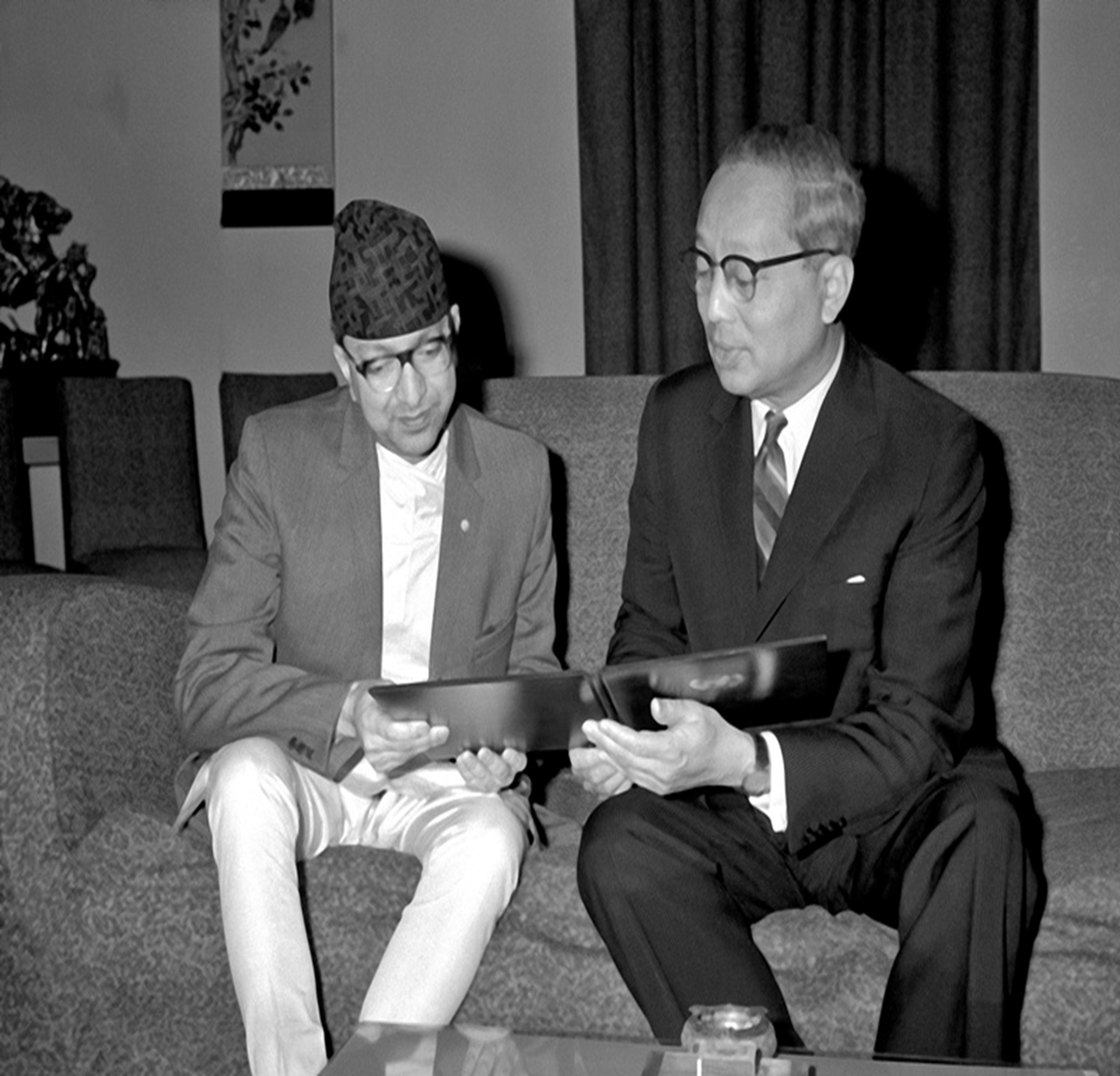
The then King Mahendra with UN Secretary-General U Thant at the Royal Palace in 1967. Photo courtesy: United Nations Nepal/Facebook
The Permanent Mission in New York, based at 820 Second Avenue, Suite 17B, is Nepal’s primary voice at the UN General Assembly, the Security Council proceedings, and major bodies like ECOSOC. It is perhaps the most strategically important of the three, given that the General Assembly is where Nepal’s positions on everything from climate finance to peacekeeping get formally registered before the world community.
The Geneva mission, at 81 Rue de la Servette, covers the sprawling ecosystem of UN agencies headquartered in Switzerland — the Human Rights Council, the ILO, the WHO, the WTO dispute mechanism, and others. Nepal’s participation in human rights reviews and labor migration frameworks runs primarily through Geneva.
The Vienna mission handles Austria-based international bodies, including the IAEA and UNODC. All three missions are overseen by the United Nations, International Organizations and International Law Division within the Ministry of Foreign Affairs, which coordinates Nepal’s multilateral diplomacy from Kathmandu.
Nepal has diplomatic ties with 183 countries — so how many of those don’t have a Nepal embassy at all?
This is the diplomatic gap that rarely makes front-page news but speaks volumes about Nepal’s limited reach. Nepal has formal diplomatic relations with 183 nations, yet it maintains resident embassies or missions in only around 30 to 32 host countries.
That means Nepal does not have a physically present mission in approximately 150 or more of the countries with which it has official ties — a staggering difference between recognition on paper and presence on the ground.
For most of these countries, Nepal handles relations through concurrent accreditation — meaning one embassy covers multiple countries at once. The Nepal Embassy in Brasilia is concurrently accredited to Argentina, Bolivia, Chile, Colombia, Peru, Venezuela, and about a dozen other Latin American and Caribbean nations. The embassy in Cairo covers a wide sweep of African countries. The embassy in South Africa serves as the concurrent hub for much of sub-Saharan Africa.
In practice, citizens of many countries who need a Nepali visa or consular assistance often have to travel to a third country or apply through an indirect process. The entire Pacific island region, most of Central America, and large parts of Africa have no resident Nepali diplomatic presence whatsoever.
What is the situation with the Nepal Embassy in Brazil, and what happens if it closes?
The Embassy of Nepal in Brasilia, inaugurated on January 21, 2010, holds a distinction that makes it uniquely irreplaceable: it is the only Nepali diplomatic mission in all of South America. Not just in Brazil — in the entire continent. The embassy is concurrently accredited to around fifteen other nations in the region: Argentina, Barbados, Bolivia, Chile, Colombia, Dominica, Guyana, Paraguay, Peru, Saint Lucia, Saint Vincent and the Grenadines, Suriname, Trinidad and Tobago, Uruguay, and Venezuela.
In late May 2026, Nepal’s Ministry of Foreign Affairs formally confirmed it is considering closing the Brasilia mission as part of a broader embassy consolidation drive. If that happens, Nepal would have zero resident diplomatic presence across the entire South American continent — a region of twelve countries covering roughly 17.8 million square kilometers, home to over 430 million people.
The embassy was opened in 2010 and Brazil reciprocated by opening its own mission in Kathmandu in 2011. Shutting it would effectively erase Nepal’s footprint from an entire continent. Proponents of closure argue that South America sees minimal trade volume, few labor migration flows, and limited high-level engagement with Nepal.
Critics counter that this short-term cost-cutting will damage long-term diplomatic credibility and leave tens of thousands of Nepali nationals in the region without any consular recourse. The decision has not yet been finalized as of June 3, 2026, but it remains on the active shortlist.
What other missions are on the government’s potential closure list?
Beyond Brazil, the Ministry of Foreign Affairs has been weighing closures at the embassies in South Africa, Denmark, and Myanmar, as well as the consulates general in New York and China — though the exact final list had not been confirmed as of early June 2026.
Foreign Minister Shisir Khanal has been under sustained pressure from Finance Minister Swarnim Wagle to drastically reduce the diplomatic footprint as part of the Balen Shah government’s broader agenda of trimming a bloated public administration.
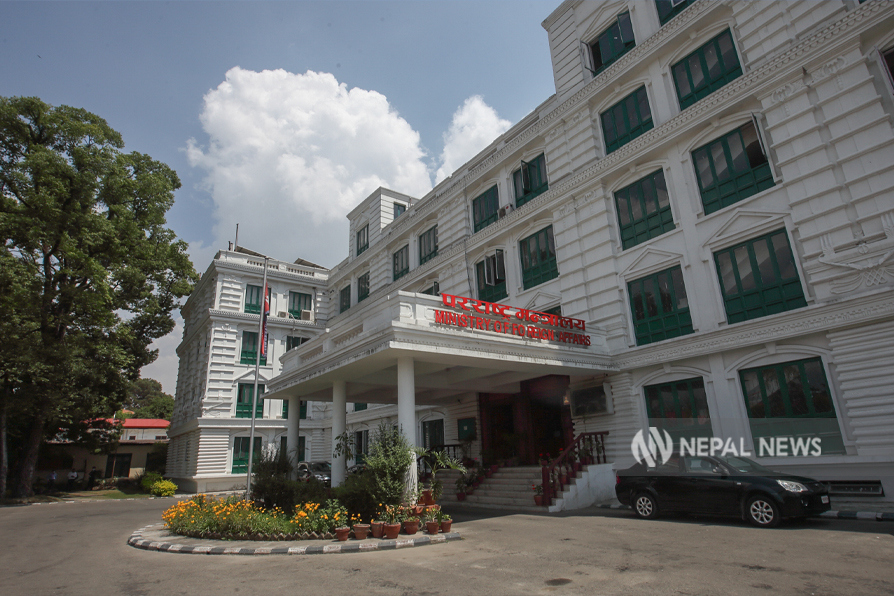
The Ministry of Foreign Affairs. Photo: Bikram Rai/Nepal News
The government has already slashed the number of ministries from 21 to 18, and a separate committee is working on cutting over 25,000 civil service positions. Diplomatic missions are expensive to run — particularly since nearly all of the expenditure goes toward salaries and allowances that are far higher than what staff would earn at home.
Simultaneously, and in what appears to be a contradictory signal, the government has floated plans to open new missions in Romania and Croatia, where the number of Nepali citizens is growing rapidly due to labour migration. This suggests the restructuring is not purely about cost-cutting but also about realigning the network to follow where Nepali people actually are, rather than where they were assumed to be decades ago when current missions were first established.
How much money does Nepal spend annually on its diplomatic missions abroad?
Data obtained through Right to Information requests from the Ministry of Foreign Affairs revealed that Nepal spent over Rs 11.36 billion on its diplomatic missions abroad across three fiscal years — roughly from 2021 to 2024. That works out to approximately Rs 3.5 to 3.8 billion per year on average, though the figure fluctuates as missions open, close, or change staffing levels.
What is particularly striking is what the money actually gets spent on: almost the entirety of that Rs 11.36 billion went directly toward salaries, foreign allowances, and benefits for ambassadors, consul generals, and staff posted abroad.
Capital expenditure and operational costs for representing Nepal’s actual national interests — trade promotion, tourism campaigns, labor welfare — account for a sliver of the total. In fiscal year 2023/24 alone, staff salaries at 40 missions came to Rs 136 million, with ambassador and consul general salaries adding Rs 30.24 million on top.
Several auditor general reports have flagged irregular and illegal allowance claims at missions including New York and Lhasa.
One deputy consul general in New York was found to have collected an additional USD 250 per month without holding the requisite rank — and the Rs 1.08 million he owed had still not been recovered years later. The expense structure, critics argue, makes the missions serve career civil servants more than the Nepali state or citizens abroad.
How does the ambassador appointment process work in Nepal?
Nepal’s ambassadors are appointed through two distinct tracks. The first is through career diplomats — officials who have spent years in the Ministry of Foreign Affairs, climbed through the foreign service ranks, and are posted as ambassadors after decades of institutional experience.
The second is through political appointees — individuals selected by the ruling parties, often as reward for political loyalty, party fundraising, or holding the trust of political leadership.
The legal framework is the Guidelines on the Appointment of Ambassadors, originally published in 2018 and subsequently amended in 2021 and 2022. These guidelines stipulate that at least 50 percent of ambassadorial posts must go to career diplomats, with the remaining 50 percent open to political nominees.
Once a candidate is selected, the process requires Cabinet recommendation followed by a parliamentary hearing. The President then formally appoints the ambassador, after which the host country must grant its agreement — known as agreement — before the envoy can take up their post.
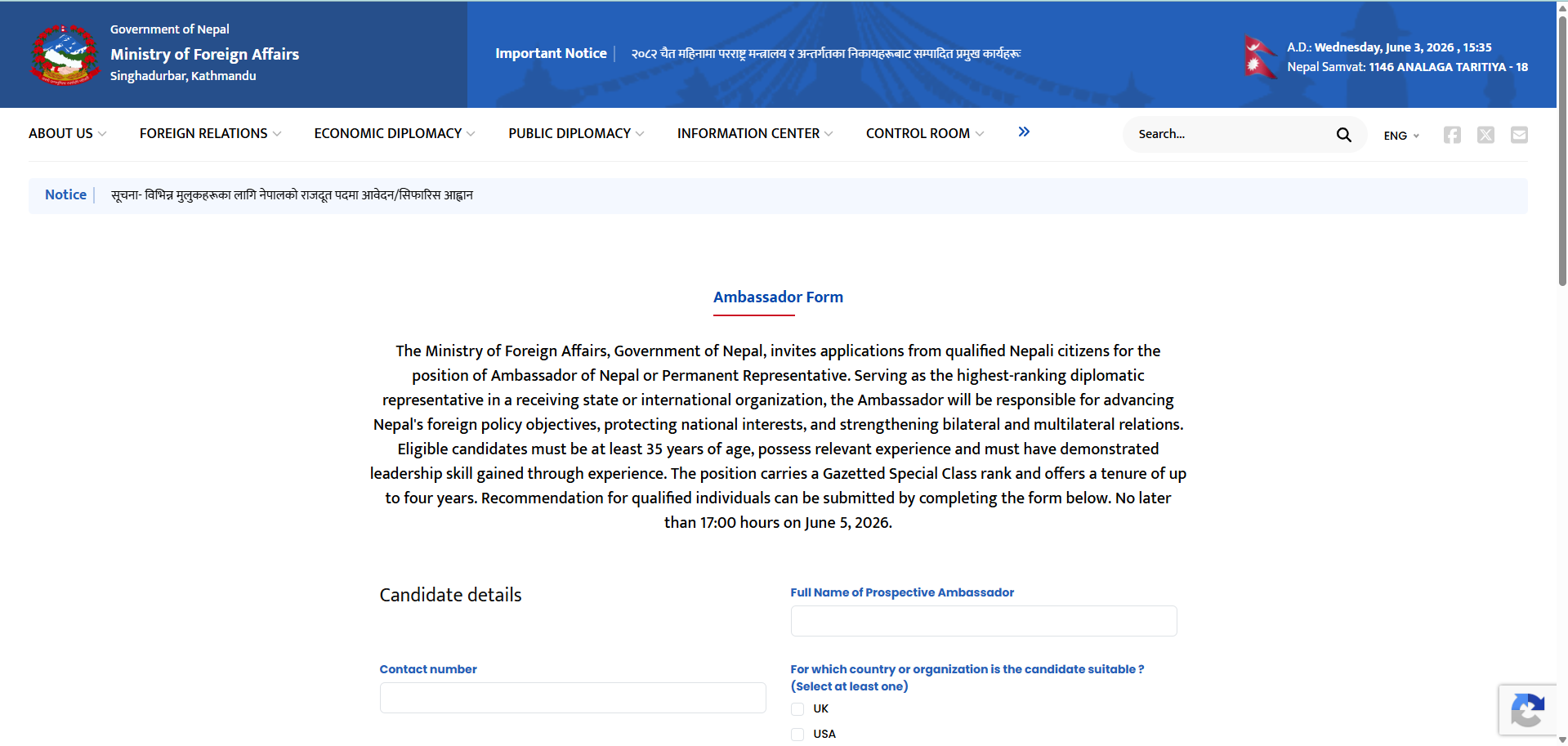
The Balen Shah government has now introduced a landmark reform: for the first time, Nepal is conducting an open competitive process where any qualified citizen can apply for an ambassadorial position, with applications due by June 5, 2026. Candidates must be at least 35 years old, hold a bachelor’s degree, and demonstrate knowledge of Nepal’s foreign policy. A master’s degree in relevant fields carries additional preference.
Do ambassadors change every time a new government comes to power?
In Nepal, this has historically been as close to a guaranteed pattern as anything in politics gets. Each new government — and Nepal has had dozens of them since the political transition to democracy — typically recalled or replaced a large chunk of politically appointed ambassadors to install its own people. The turnover was rarely about performance or national interest; it was about party quotas, coalition arithmetic, and rewarding loyalists with prestigious postings abroad.
The clearest recent example was after the Gen Z uprising of 2025 brought down the KP Sharma Oli government. The interim government under former Chief Justice Sushila Karki recalled ambassadors from 11 countries almost immediately. Then when Balen Shah’s Rastriya Swatantra Party won the 2026 election, his government recalled further batches of Oli-era appointees.
Some of those recalled ambassadors challenged the decisions in the Supreme Court, which issued an interim order saying they need not return immediately — leaving them in legal limbo while continuing to collect salaries.
Even recalled ambassadors who did return to Kathmandu were found to still be drawing substantial salaries and foreign allowances while performing no duties.
Career diplomats are generally more insulated from these political swings since their appointments are governed by service regulations, but even their posting choices and promotions can be influenced by whichever party controls the foreign ministry at any given moment.
What is the historic reform the Balen Shah government has introduced for ambassador recruitment?
On May 29, 2026, Nepal’s Ministry of Foreign Affairs published Terms of Reference formally inviting qualified Nepali citizens to apply for ambassadorial and permanent representative positions — the first time in the country’s diplomatic history that such a vacancy notice was opened to the general public. This covers postings to India, China, the United States, the United Kingdom, Australia, Saudi Arabia, and several others.
Under the published criteria, applicants must be at least 35 years old and hold a minimum of a bachelor’s degree. A postgraduate qualification in international relations, political science, law, economics, or public administration is treated as a significant advantage. Proficiency in English is mandatory. Applicants can either put themselves forward directly or nominate a peer they believe is qualified — an unusual provision that allows a form of peer recommendation within an otherwise competitive process.
Applications go through internal Ministry screening before being forwarded to the Council of Ministers. The Cabinet makes recommendations on merit, nominees undergo parliamentary hearings, and the President issues the final appointment once the host country grants its agreement.
Appointed ambassadors will serve a four-year tenure — equivalent to a Gazetted Special Class position — and will be required to sign performance agreements with the Ministry before taking up their posts. The government plans to increase the career diplomat share from 50 percent to 60 percent, with the remaining 40 percent drawn from open competition rather than direct political allocation.
How many ambassador positions are currently vacant, and why?
As of late May 2026, at least 17 diplomatic missions are without a resident head of mission, and another seven are expected to become leaderless by the end of August 2026 — bringing the potential total to 24 vacant or soon-to-be-vacant posts.
The Ministry of Foreign Affairs confirmed this while announcing the open competition process, noting the final number could shift depending on whether some missions are consolidated or closed.
The vacancies piled up for a combination of reasons. The Balen Shah government came to power in March 2026 and, as is customary for incoming administrations, moved quickly to recall politically appointed envoys installed under the then KP Sharma Oli government.
The Karki interim government had also recalled 11 ambassadors before that. Some recall decisions were challenged in court, creating legal uncertainty that prolonged the vacancies further.
The result is a situation where nearly half of Nepal’s 44 missions are either headless or approaching that status. In diplomatic terms, a mission without a head of mission — even if staffed by a chargé d’affaires — operates at a significant disadvantage when seeking high-level access in host countries, negotiating agreements, or advocating effectively for Nepali citizens in distress.
What role does resistance within the Foreign Ministry play in slowing down these reforms?
The internal resistance is substantial. When Foreign Minister Shisir Khanal convened a meeting with senior ministry officials to discuss trimming the number of missions, almost every under secretary and section officer in the room objected. The reason is not hard to understand: overseas postings are among the most coveted career benefits in Nepal’s foreign service, and reducing missions directly shrinks that pool.
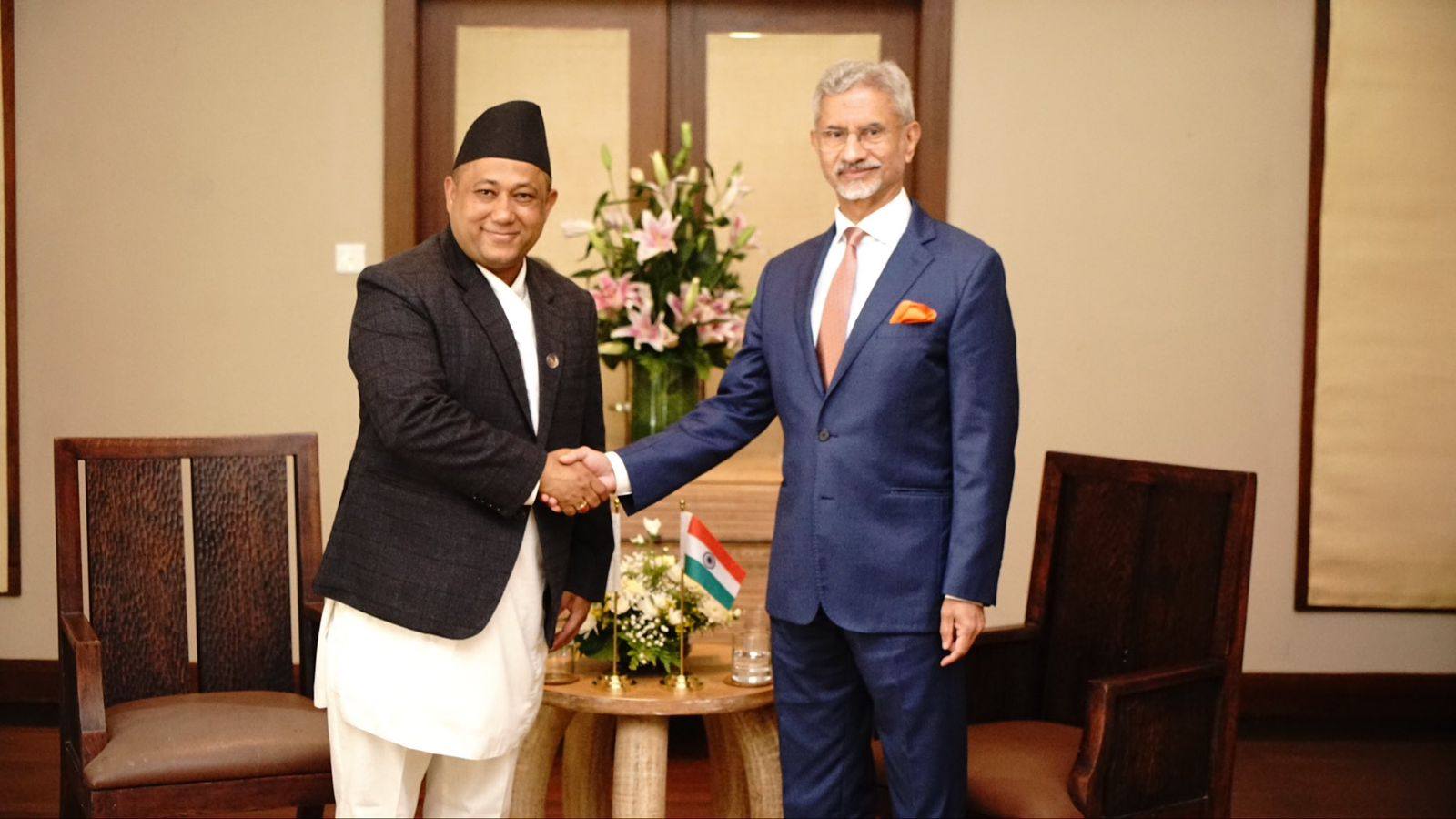
Photo courtesy: Ministry of Foreign Affairs/Facebook
Between July 2024 and September 2025, the then Oli government created over 100 new positions at the ministry — from joint secretary to officer level. Officers holding those positions now fear that closing embassies would block their career path and eliminate the foreign postings that come with significantly higher salaries and allowances.
For civil servants who have spent years climbing toward a foreign posting, the prospect of embassy closures is deeply threatening to their personal professional plans, regardless of whether those closures make sense for Nepal’s national interest.
Finance Minister Wagle has reportedly been firm about wanting a specific announcement of mission reductions included in the 2026/27 budget speech.
But the internal resistance, combined with legal challenges from recalled ambassadors and broader coalition politics, has slowed the process considerably — leaving the reform agenda in a state of publicly declared intention but uncertain execution.
Which regions of the world are most underserved by Nepal’s current diplomatic network?
South America is the most glaring gap, with only one mission in Brasilia covering the entire continent — and that one is now at risk of closure. The Caribbean is similarly thin, with most island nations under the concurrent accreditation of either Brasilia or Ottawa.
Africa presents the largest structural problem. Nepal has only two resident embassies on the continent — in Cairo and Pretoria — and each carries a sprawling concurrent accreditation list running to over a dozen countries.
The Cairo embassy covers nations as geographically and politically distinct as Cameroon, Djibouti, Ethiopia, and Ghana.
The Pretoria mission attempts to serve Angola, Botswana, Burkina Faso, Burundi, and a long list of others. Citizens of these countries and Nepali nationals living there have very limited access to any form of resident diplomatic service.
The Pacific region has no Nepali diplomatic presence whatsoever. Australia covers some of it through concurrent accreditation, but Pacific island nations — Fiji, Papua New Guinea, Samoa, Tonga, Vanuatu — have no meaningful Nepali diplomatic engagement.
Southeast Asia is partially covered through Kuala Lumpur and Bangkok, but the density of Nepali migrant workers in countries like Malaysia and Singapore relative to the level of consular staffing remains a persistent concern for labor welfare advocates.
How does Nepal’s diplomatic network compare to its neighbors in the region?
Nepal’s 44 missions is a relatively modest number for a country with 183 formal diplomatic relationships, though it is not out of step with nations of similar population and economic size. Bhutan, a smaller Himalayan neighbor, operates only 6 embassies, 3 consulates, and 2 permanent missions — a far smaller footprint reflecting Bhutan’s restrained foreign policy and its unique arrangement with India, which handles significant portions of its external affairs.
Nepal, sitting geographically and geopolitically between these two giants, has historically run a diplomatic network shaped by the need to signal openness in multiple directions simultaneously, rather than by a clear commercial or strategic calculus.
Sri Lanka, with a somewhat comparable population, operates a larger diplomatic network of over 60 missions, reflecting its longer tradition of active multilateral engagement and a large diaspora spread across more countries. Bangladesh runs an extensive network partly because of its massive garment export industry and the need to maintain commercial relationships across dozens of markets.
India and China, as major regional powers, operate among the world’s largest diplomatic networks — India with well over 180 missions globally and China topping global rankings with 274 posts as of 2024.
Nepal, sitting geographically and geopolitically between these two giants, has historically run a diplomatic network shaped by the need to signal openness in multiple directions simultaneously, rather than by a clear commercial or strategic calculus. The current reform debate is partly about shifting toward the latter — building a network that serves Nepal’s economic and migration interests rather than simply reflecting political reward structures.
What is the difference between a career diplomat and a political appointee in Nepal’s context?
A career diplomat in Nepal is someone who entered the Ministry of Foreign Affairs through a competitive civil service examination, rose through defined grades — from officer level to section officer, under secretary, deputy secretary, joint secretary, and eventually special secretary — and accumulated years of experience in bilateral and multilateral diplomacy.
These are professional bureaucrats governed by the Nepal Foreign Affairs Service Regulation and the Civil Service Act. Their expertise is built through rotations between Kathmandu and overseas postings.
A political appointee, by contrast, is someone selected directly by the government of the day — typically a politician, retired official, academic, journalist, or business figure who has the trust or backing of the ruling party or coalition.
Political appointees are not required to have any foreign service background whatsoever. Their appointment is governed primarily by the constitutional provision that the Council of Ministers recommends ambassadors to the President, with the only formal constraint being the 50 percent floor reserved for career diplomats under the 2018 guidelines.
The criticisms of political appointees are well-documented: they tend to be more loyal to the party that sent them than to the ministry, they may lack technical knowledge to effectively navigate multilateral forums, and they typically depart with the government that appointed them — disrupting institutional continuity.
Career ambassadors bring deeper protocol knowledge and cross-cultural competence, though critics note they can be overly cautious and bureaucratic in practice.
How has Balen Shah’s approach to foreign policy signaled a departure from previous governments?
Prime Minister Balendra Shah, who took office on March 27, 2026, after his Rastriya Swatantra Party’s landslide victory, made his diplomatic posture clear from day one. Instead of receiving foreign ambassadors in the traditional one-by-one courtesy call format — a system that gave individual envoys disproportionate informal access to Nepal’s top leadership — Shah met the entire diplomatic corps together in a collective group briefing. The signal was deliberate: Nepal would set the terms of engagement, not be guided by the preferences of individual embassies.
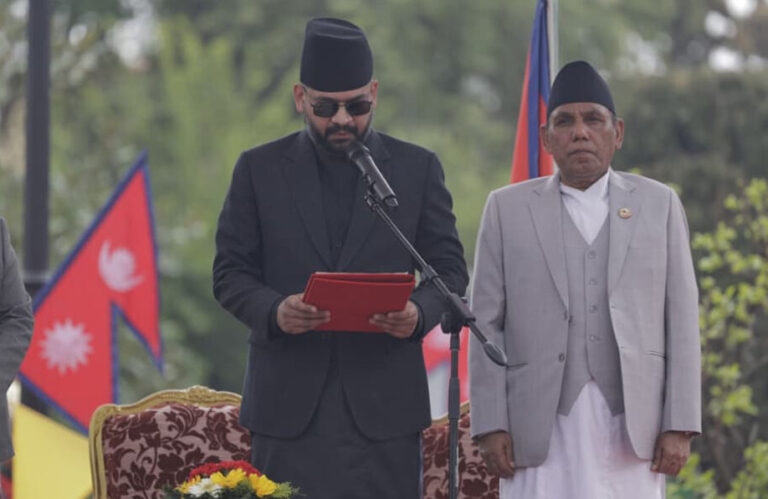
Prime Minister Balendra Shah. Photo: Bikram Rai/Nepal News
He then reinforced this by declining a meeting with Sergio Gor, the US Ambassador to India and special envoy for South and Central Asia, who visited Kathmandu in April 2026. Shah’s office stated he meets only heads of state or government, not envoys. The move was widely interpreted as an assertion of sovereignty by a young prime minister with no patience for performative diplomacy.
On the structural side, the open ambassador competition, the mission closure review, and the push to transform what has historically been a patronage network into an economically focused instrument are all consistent departures from prior practice.
The government’s 2026/27 policy document explicitly calls for converting traditional diplomacy into economic diplomacy, with missions serving as platforms for Brand Nepal campaigns, investment promotion, and digital tourism outreach — not just formal bilateral protocol exchanges.
What is Nepal’s history with diplomatic missions — how did the network start and grow?
Nepal’s diplomatic history has roots going back much further than most people realize. In 1769, King Prithvi Narayan Shah established a foreign affairs office called Jaishi Kotha — a rudimentary diplomatic coordination body for what was then a newly unified kingdom. The office evolved slowly over the centuries, eventually becoming a government department in 1934.
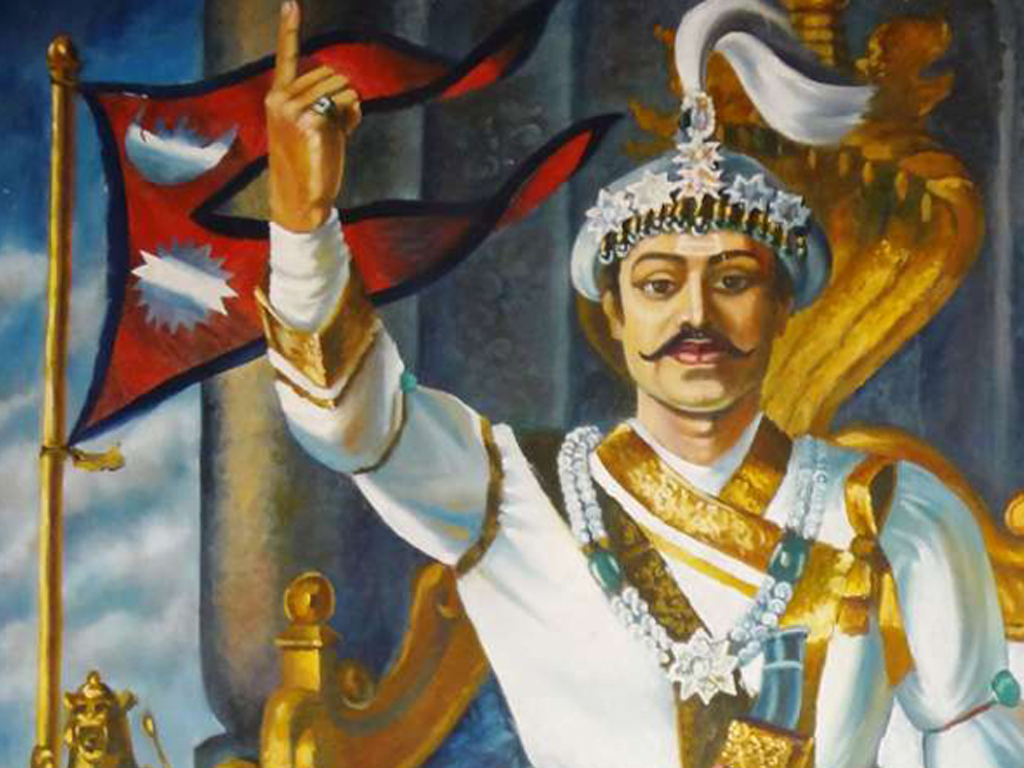
King Prithvi Narayan Shah
But at the time of Nepal’s political revolution in 1950, which opened the country to the world after decades of isolationist Rana rule, Nepal maintained formal relations with only four nations: India, Britain, France, and the United States.
The Ministry of Foreign Affairs expanded rapidly through the 1950s and 1960s, driven in large part by Nepal’s strategic position between India and China. The Cold War era turned Nepal into a diplomatic battleground for influence, with both superpowers and multiple regional powers keen to maintain good relations with a country sitting astride Himalayan trade routes and sensitive border areas. This geopolitical reality incentivized Nepal to build relationships broadly and quickly.
By the 1990s, after the transition to multiparty democracy, the network had grown substantially but ambassador appointments became increasingly politicized as coalition governments multiplied and parties sought to reward loyalists with overseas postings.
The result, over time, was a network that grew in size but not necessarily in strategic coherence. The current debate about what to keep and what to close is, in one sense, the first serious reckoning with that legacy.
What are the salary and allowance structures for Nepal’s ambassadors and mission staff?
The compensation structure for Nepal’s diplomatic staff posted abroad is substantially higher than what they would receive at home, reflecting the cost-of-living differential in most host countries. Officers posted abroad receive foreign allowances that, in many cases, are several times their domestic salary — covering housing, education for children, health insurance, and travel.
Recalled ambassadors are entitled to the equivalent of a secretary-level salary while remaining in Nepal after their recall, plus one month’s foreign allowance of approximately Rs 500,000.
The total salary bill for 40 missions in fiscal year 2023/24 came to Rs 136 million for staff and an additional Rs 30.24 million for ambassadors and consul generals — but these are base figures. The actual expenditure is significantly higher when all allowances, benefits, and operational costs are added in.
Health insurance is particularly expensive: one ambassador in China submitted a proposal requesting Rs 13.3 million for health insurance coverage alone — a proposal the ministry eventually rejected.
The total salary bill for 40 missions in fiscal year 2023/24 came to Rs 136 million for staff and an additional Rs 30.24 million for ambassadors and consul generals — but these are base figures.
Auditor general reports have consistently found irregular allowance claims. In Lhasa, staff were found receiving educational and family allowances in violation of applicable rules. In New York, a deputy consul general at under-secretary level was collecting joint-secretary-level allowances without holding that rank.
The financial controls around mission expenditure have long been described as inadequate relative to the scale of spending, and the recurring nature of these findings suggests systemic weakness rather than isolated incidents.
Are there any plans to open new embassies even as old ones face closure?
Yes, and this is one of the more revealing aspects of the current reform debate. Even as the government weighs shutting missions in Brazil, South Africa, Denmark, and Myanmar, Foreign Minister Shisir Khanal has publicly expressed interest in opening new missions in Romania and Croatia.
The reasoning is practical: both countries have seen significant growth in their Nepali populations in recent years, primarily through labor migration, and Nepali workers there currently have no resident mission for passport renewal, emergency assistance, or consular services.
This points to a recognition — at least in principle — that the diplomatic network needs to be redrawn around where Nepali people actually live and work in 2026, rather than where historical or political considerations placed embassies decades ago.
Romania and Croatia are part of Europe’s expanding labor market and increasingly attract Nepali workers seeking better wages than the Gulf or Malaysia can offer.
The 2026/27 government policy document also references the need to fully digitalize consular services, which could in theory reduce the need for physical offices in some locations.
A 24-hour Central Response Unit at the Foreign Ministry is also proposed to handle citizen assistance without requiring a resident mission in every country. Whether digital alternatives can genuinely substitute for physical diplomatic presence — especially in emergencies — remains actively debated among foreign policy practitioners in Kathmandu.
What legal framework governs ambassador appointments, and has it been challenged in court?
The primary legal basis for ambassador appointments is Article 76(1) of the Constitution of Nepal, which gives the Council of Ministers the authority to recommend ambassadors to the President.
The 2018 Ambassador Appointment Guidelines — amended in 2021 and 2022 — layer additional procedural requirements on top, including the 50 percent career diplomat floor, parliamentary hearings, and the requirement for agreement from the host country.
The Nepal Supreme Court has weighed in on the matter in at least one significant case involving Maya Kumari Sharma, then ambassador to Qatar, where the court clarified that the constitutional provision is the governing law for ambassadorial appointments.
The ruling also highlighted the gap between career and political appointees in terms of the rules governing their service — career diplomats have clear regulatory frameworks through the Nepal Foreign Affairs Service Regulation, while the legal position of political appointees is considerably murkier.
This murkiness created problems when ambassadors recalled by the interim Karki government in 2025 went to the Supreme Court challenging their recall. The court issued an interim order stating they did not need to return immediately, raising the question of whether an interim government had the constitutional mandate to recall ambassadors at all.
The case underscored that Nepal’s legal architecture for diplomatic appointments, while nominally clear on paper, becomes contested territory the moment political transitions create ambiguity about which government has the authority to act — a reflection of the country’s broader constitutional instability.
What would a genuinely reformed Nepali diplomatic network look like, and is the current government on track to build it?
A reformed network would do a few things differently. First, it would place missions where Nepali citizens actually need them — which today means consolidating in Gulf labor corridors, strengthening consular presence in Malaysia and South Korea, and putting something in place for the growing population in Romania and Croatia.
Second, it would ensure that every mission has a clear economic mandate: trade facilitation, investment attraction, tourism promotion, export market development. The days of embassies that function primarily as diplomatic status symbols need to be over.
Third, it would insulate ambassador appointments from government change cycles. A professional diplomat who has built deep expertise on Japan-Nepal bilateral relations over five years should not be recalled the moment a new party comes to power simply because they were seen as the previous government’s pick.
The four-year tenure introduced under the new Terms of Reference is a start, but without independent oversight mechanisms it risks being overridden by political pressure as it has been in the past.
Is the Balen Shah government on track? The signals are more positive than what Nepal has seen in decades — the open competition, the performance agreements, the frank acknowledgment that the current network is too large and misaligned.
But the internal resistance within the ministry is real, the political pressure to continue using ambassadorial posts as party patronage runs deep, and Nepal’s political history is full of reforms that were announced loudly and implemented quietly.
The real test will come in how the first batch of competitively selected ambassadors actually perform, and whether the government holds the line on merit when coalition partners start calling in their expected rewards.
![NSU protests closure of public library, demands immediate reopening [Photo Feature]](https://english.nepalnews.com/wp-content/uploads/2026/07/1-6.jpeg)