Kathmandu
Wednesday, December 24, 2025





Endless series of pouring budget into various organizations opened in the name of deceased political party leaders

KATHMANDU: In the budget for the fiscal year 2025/26, which was made public on 29 May 2025, the Ministry of Urban Development had allocated Rs 30 million under the title of ‘Construction of Ganeshman Singh Memorial Building’. This issue came into public discussion and controversy when the Nepali Congress’s fraternal organization Tarun Dal thanked party president Sher Bahadur Deuba for allocating budget for the construction of its central office building. On June 7, Tarun Dal President Bidwan Gurung issued a press release and expressed special gratitude to Deuba and Nepali Congress leader and then Urban Development Minister Prakash Man Singh for allocating the budget.
After widespread criticism over the allocation of funds from the state treasury for the construction of a party’s fraternal organization’s building, Tarun Dal President Gurung hastily issued another press release. In the new press release, he corrected his previous statement and clarified that the budget had been allocated for the Ganeshman Singh Memorial Building at the request of the party and that it was not for the Tarun Dal building.
Although he tried to cover up the budget, and the ministry had allocated the budget in the name of the Ganeshman Singh Memorial Building, the Rs 30 million was actually allocated for the construction of the Tarun Dal building itself. Preparations are being made to erect the Tarun Dal building on 18 aanas of land in Ravi Bhavan, Kathmandu Metropolitan City-13, donated by Nepali Congress leader Maiyadevi Shrestha. Initially, Tarun Dal had collected money internally, saying that it would build the building from its own resources. However, the Ministry of Urban Development provided the budget for it.
However, the government formed after the Gen-G protests dismissed 106 projects, including the construction of the Tarun Dal building, from the budget for the current fiscal year 2025/26 as part of its strategy to cut unproductive expenditure and maintain austerity.
The Cabinet meeting on 21 September had decided to cut the spending on the grounds of reconstruction of structures destroyed by vandalism and arson during the protests on September 8 and 9, expenditure management for elections, and making public expenditure economical. In the process, budget allocations for projects that were not included in the budget information system and were of low priority, lacked preparation, and did not appear to be useful were canceled.
When the government decided to withdraw from the budget the projects taken up by the then MPs and political party leaders and activists in their areas based on political access, the budget for the Ganeshman Memorial Building was also cut. The then Deputy Prime Minister and Urban Development Minister Singh had allocated funds for two dozen projects, including this one, in the name of his father and renowned Nepali Congress leader Ganeshman in the current fiscal year’s budget. The Ministry of Urban Development was the one to allocate maximum budget for fragmented projects in the current fiscal year. When the government cut Rs 114.14 billion from the capital expenditure of the budget, budgets for projects worth Rs 64.02 billion announced by the Ministry of Urban Development alone were cut.
Ministry Spokesperson Narayan Prasad Mainali says that the budget allocated for projects such as academies and memorial buildings, which were promoted under the influence of political parties and leaders, and named after their leaders, has been cut. “The budget allocated for various projects including academies and memorial buildings has been cut,” he says.
The programs under this ministry that have been cut range from Rs 4.5 million to pay for the construction of buildings to Rs 50 million allocated for the construction of halls named after leaders. The lowest amount is Rs 450,000 to pay for the construction of the Nona-Sushila-Shailaja Memorial Hall built in Dumraha, Ramdhuni Municipality-2, Sunsari, and the highest is Rs 50 million allocated for the construction of the Madan Bhandari Memorial Hall in Triyuga, Udayapur. The 106 projects named after leaders that have been cut are worth Rs 1.45 billion.
As soon as the budget was made public on May 29, there was criticism over the large amount allocated for projects named after deceased leaders.
Parties’ control over the budget
In the current fiscal year’s budget, a large amount was allocated through the Ministry of Urban Development for the construction of structures named after the late party leaders and institutions opened in their names. The then Urban Development Minister Prakash Man Singh had allocated budget for many programs in the name of his father Ganeshman and mother Mangala Devi. Similarly, budget was allocated for the construction of buildings and other infrastructure for the Nepali Congress, UML and Maoists and their fraternal organizations in the name of BP Koirala, Madan Bhandari, Posta Bahadur Bogati, Pushpalal Shrestha, Sushil Koirala, Mahendra Narayan Nidhi Memorial Building. A budget had also been allocated for the construction of roads leading to the party offices and building gardens on the office premises.
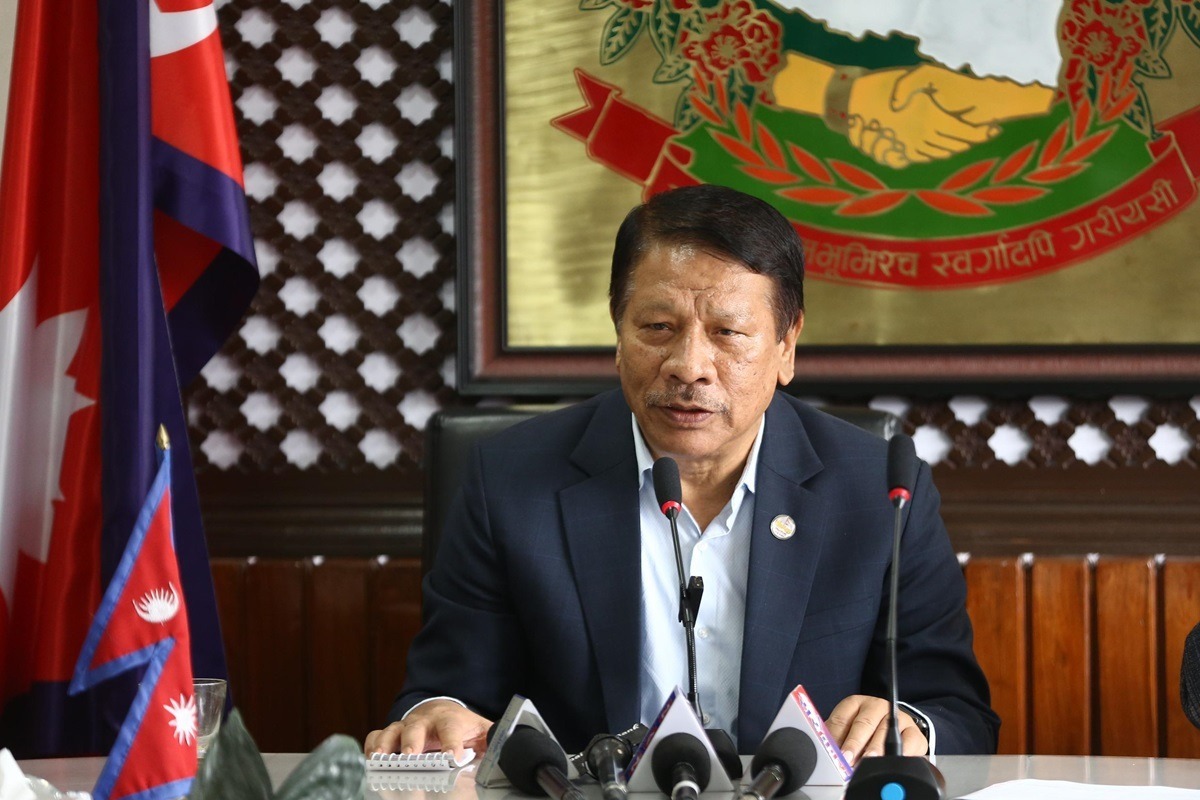
Prakash Man singh
The ministry had allocated Rs 302 million in the name of Ganeshman for the construction of buildings, meeting halls, institutions, parks and other infrastructure. Similarly, nine programs worth over Rs 112 million were named after Mangala Devi. Similarly, Rs 100 million was allocated for the construction of BP memorial buildings in eight districts. As much as Rs 360 million was allocated for programs linked to Madan Bhandari. These programs included the construction of Madan Memorial buildings infrastructures for Madan Bhandari Foundation in Bara, Kapilvastu and Gulmi. Similarly, a budget was allocated to build a Pushpalal Memorial Park in Kirtipur, Kathmandu, and to pave a road under the Pushpalal Memorial Foundation in Ramechhap Municipality.
The government and Minister Singh were heavily criticized in the House of Representatives at that time for pouring money into schemes named after deceased leaders in such a way that certain parties and leaders could use the budget and benefit from it. Even MPs from the ruling party had commented that the image of renunciatory leader Ganeshman was maligned by indiscriminately allocating the budget in fragmented projects in his name.
The budget had also allocated funds for the construction of a foundation and a memorial building named after former Prime Minister Sushil Koirala. As much as Rs 19.965 million was allocated for the Sushil Koirala Memorial Building in Biratnagar and Rs 30 million for the construction of the Sushil Koirala Memorial Foundation Building in Shitganga, Arghakhanchi. Similarly, Rs 30 million was allocated for the Girija Prasad Koirala Memorial Building in Jhapa.
A budget was also allocated for the completion of the remaining work of the Mahendra Narayan Nidhi Memorial Building under construction in Musaharniya Rural Municipality-6, Mukhiyapatti, Dhanusha. As much as Rs 16 million was allocated for the purpose.
A budget of Rs 70 million was allocated for the Krishna Prasad Bhattarai Memorial Building in Birendranagar, Surkhet. A budget was also allocated in the name of Sarbadhan Rai in Okhaldhunga and Harihansh Memorial Foundation Building in Panchthar in the party office.
The Rs 30 million allocated under the title of repairing the Martyrs Memorial Building in Gorkha was actually for the district office of the Maoist Center. The budget allocated for the construction of the Posta Bahadur Bogati Memorial Foundation building in Humla was also for the party office. Similarly, the Maoists had received budget for buildings to be constructed in the name of wartime martyrs in various districts. As much as Rs 30 million was allocated for the construction of the central office of the Martyrs Memorial Foundation in Kathmandu.
Looking at past practices, the budget allocated in this way is spent according to the plans of the concerned party. The buildings and structures built in the names of the deceased leaders are also used by the parties and their sister organizations. In other words, funds from the state treasury are being poured into strengthening the means of political activities of the parties and leaders.
Former Secretary to the Government of Nepal Kewal Prasad Bhandari sees the budget as having deviated from prioritizing the economy and improving the living standards of the people. He says that even if the issues included in the budget cannot be called illegal, ethical questions can be raised about it. “From the perspective of public finance management, our national budget should be spent on lifting the common citizen out of poverty and strengthening the economy,” he says, “For us, this (distribution of budget to programs and institutions named after leaders) is not a priority area. The amount going here and its expenditure should also be in accordance with the law.”
Abuse of power
It is not a problem to open institutions, funds, trusts, councils and centers in the names of people who have contributed to the country and public life. Such institutions are necessary to perpetuate the thoughts, deeds and creations of leaders who have done important work in national life and to energize society. However, the institutions opened in the name of leaders in Nepal do not seem to follow this line of values. Parties and leaders have linked the institutions opened in the name of deceased leaders only to their respective parties, not in the interest of the country and the masses. They are only using it as a means to advance party work and their politics.
On the other hand, such organizations have been taking money from the state treasury without any legal arrangements. The situation is so dire that, when in power, money is openly distributed to such organizations close to their party. It is criticized that such actions of institutions and organizations established in the name of leaders who practiced politics of loyalty based on sacrifice and morality in their active lives have put the reputation of those leaders at stake.
The government has been providing grants not only to build buildings in the name of leaders, but also to institutions opened in their names. The government used to provide such organizations with unconditional and conditional budgets for certain purposes. “Since they can be spent at will, the institutions want to take unconditional grants, and the amount that goes with conditions, too, is not spent as specified,” says former Secretary Bhandari.
There are many examples of arbitrary distribution of money from the state treasury to institutions, trusts and other organizations opened after the names of leaders. The government mainly distributed money to such organizations through the Ministry of Culture, Tourism and Civil Aviation. Looking at the ministry’s five-month data from 27 February 2019 to 31 July 2019, it is seen that the government has distributed Rs 263.5 million to organizations opened in the name of leaders. Of this amount, Rs 42.5 million was released to the Madan Bhandari Foundation, Rs 50 million to the Madan Bhandari Memorial Foundation, and Rs 20 million to the Pushpalal Memorial Foundation.
Similarly, Pushpalal Study Center, GP (Girija Prasad) Koirala Foundation, and Rabindra Adhikari Foundation were handed Rs 10 million each. Likewise, the Sahana Pradhan Foundation received Rs 50 million, Jannayak BP Koirala Memorial Trust received Rs 50 million, and Shailaja Acharya Adarsh Samaj and Shailaja Acharya Memorial Foundation received Rs 40 million each. Manmohan Adhikari Memorial Foundation received Rs 50 million, Terai-Madhes People’s Wear Martyrs Memorial Foundation received Rs 2.5 million, and Post Bahadur Bogati Memorial Foundation received Rs 1 million. These amounts were distributed when the then Prime Minister KP Sharma Oli held the Ministry of Culture, Tourism, and Civil Aviation portfolio with himself.
During the preparation of the 2020/21 budget, the Ministry of Finance had tried to allocate budget to the academies through the Ministry of Tourism. However, it was stopped after employees of the Ministry’s Planning Division protested, saying that the matter could reach the Commission for the Investigation of Abuse of Authority. An employee who has worked in the Planning Division of the Ministry of Tourism for a long time says, “At that time, we protested saying that there was no legal provision for doling out funds to such academies and institutions and that the Authority could arrest the people involved. After that the doling out of funds from the tourism ministry to such institutions has been stopped.” He further says that the institutions opened in the name of leaders are led by former prime ministers and powerful leaders, and the employees are unable to say ‘no’ when influential leaders mount pressure for funds, which is why the government employees are in a big trouble.
In 2017 as well, funds were distributed from state treasury to organizations named after leaders. In that year, various organizations opened in the name of BP Koirala received Rs 28 million from the Ministry of Culture. Of this amount, BP Koirala Memorial Trust received Rs 20 million, BP Museum received Rs 4.5 million, Jananayak BP Koirala Memorial Trust received Rs 500,000, BP Bichar Rastriya Samaj received Rs 20 million, and BP Chintan Pratishthan received Rs 1 million. Similarly, GP Koirala Foundation was given Rs 24 million. Madan Bhandari Foundation received Rs 24 million, and Madan-Aashrit Smriti Pratishthan received Rs 2.5 million.
It seems that not only the Nepali Congress and UML but also organizations close to the Maoist Center received grants from the government. Eight million rupees was handed out to the Posta Bahadur Bogati Memorial Foundation, Rs 7 million each to the Ichchhuk Cultural Foundation and the Nara Bahadur Karmacharya Foundation, Rs 2.5 million to the Tarai-Madhes People’s War Martyrs Memorial Foundation, Rs 500,000 to the Gauri Shankar Khadka Memorial Foundation, Rs 500,000 each to the Basu Shakya Council and the Bhakta Bahadur Memorial Foundation, and Rs 200,000 to the Gauri Shankar Foundation, Jhapa. Similarly, Rs 300,000 seems to have gone to the Gajendra Narayan Singh Foundation.
Political parties and leaders have been directly benefiting from the amounts taken in this way. One example of this is the Tulsilal Memorial Building in Chyasal, Lalitpur. The UML is running its central office in this building, built on land provided by the government. The Council of Ministers meeting on 23 March 2002 granted the Tulsilal Memorial Foundation the right to use over 6341 square meters of land in Chyasal. The Foundation had built the building by raising funds from the Government of Nepal, the Indian Embassy, and local bodies. The UML office has been located in this building since 22 April 2022.
There is a tendency to register non-profit organizations in the names of deceased leaders to receive government budget and allocate budget under the headings of building construction and other things while the party is in government. Such foundations, where leaders in powerful positions are the patrons and leaders, have been taking budget from the government every year. The patron of the Madan Bhandari Foundation is former Prime Minister KP Sharma Oli, while the chairperson of the Pushpalal Memorial Foundation is former Prime Minister Madhav Kumar Nepal. Similarly, the chairman of the Manmohan Adhikari Memorial Foundation is Ishwar Pokharel, and the patron of the Martyrs Memorial Foundation opened by the Maoists is Pushpa Kamal Dahal. The chairman of the Ganeshman Singh Foundation is Prakashman Singh, while the chairman of the GP Koirala Foundation is Sujata Koirala.
The haphazard distribution of funds from the state treasury to foundations established in the name of deceased leaders has been met with criticism. Complaints have even been filed with the Commission for the Investigation of Abuse of Authority alleging that the funds were distributed without making any rules and regulations. Economist Keshav Acharya says that the problem is the tendency to take funds based on power and access without legal arrangements. He says, “There is a practice in other countries as well to run programs in the name of leaders who have made special contributions to the country and public life, but there they work transparently by making policies and regulations. Here in Nepal, they are run on the basis of power.”
Series of irregularities
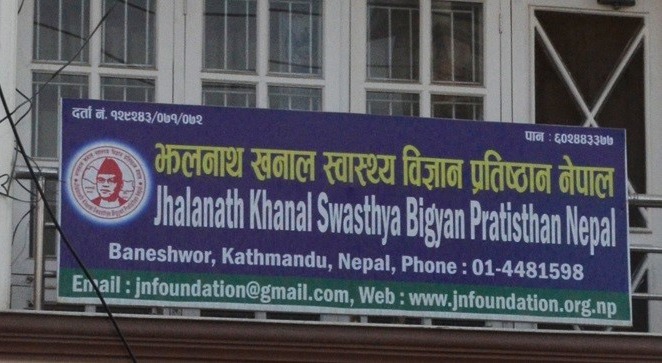
The expenditure of funds received from the state treasury by organizations opened in the name of leaders without legal arrangements is also not without controversy. Corruption was confirmed in the Institute of Health Sciences established in the name of former Prime Minister Jhalanath Khanal.
The institute, established in 2015 in Lalbandi Municipality-6 of Sarlahi, had entered into an agreement with Lalbandi Municipality, Madhes Province Government and the federal government to receive a grant of Rs 720 million in 2020 to breed poisonous snakes and produce antivenom. During an investigation, the Commission for the Investigation of Abuse of Authority found that Rs 179.833 million had been embezzled without using the funds even though the funds were released for snake breeding. On 8 October 2023, a corruption case was filed at the Special Court against seven people, including former Madhes Province Minister Vijay Kumar Yadav. In that case, the Special Court found Yadav, along with the institute’s president Rewati Prasad Panta, general secretary Nawaraj Bhandari, treasurer Neeraj Bhandari and member Devendra Rai guilty on 10 July 2024 and sentenced them to eight years in prison.
The institute has now been renamed the ‘National Council for Health Sciences and Research’.
Economist Acharya says that such institutes in Nepal have been opened by abusing power and the budget allocated to them has not been spent according to the intended purpose. “It is not bad to open institutes in the name of people who contributed to the country, but it has only linked the deceased leaders to the party rather than the country. He says, “It is necessary to make a law and organize how the money will be received and spent.”
Three months after the Gen Z revolt, a 10-point agreement was reached between the government and Gen Z representatives on December 10. One of the points of the agreement mentions investigating the foundations, funds, trusts, councils, and centers opened in the names of public figures and leaders. The agreement also states that institutions that are found to have worked against the public interest and objectives during the investigation should be dissolved and their assets nationalized.
Kalpana Khanal, senior research fellow and economist at the Policy Research Institute, says that all institutions should not be lumped together as bad just because they named after deceased leaders, and that the institutions should be evaluated based on their work. “The justification for the money taken from the state treasury by these institutions should be confirmed; some institutions exist only on paper and do not work,” she says.
Questions have long been raised about the role of foundations and other institutions named after deceased leaders and others that are under the protection of powerful people with access to state resources. However, how the investigation into these institutions, which is included in the agreement between the government and Gen Z, will be implemented has become a matter of concern.