Kathmandu
Monday, July 27, 2026





Here is what the ‘Cooperative Irregularities Investigation Commission, 2026’ found about decades of regulatory failure, missing files, looted savings and a sector meant to be one of Nepal’s three economic pillars.

KATHMANDU: Nepal’s Constitution recognizes cooperatives as one of the three pillars of its socialist-oriented mixed economy. However, in recent years the sector has faced severe challenges including deposit return problems, financial irregularities, weak governance, and loss of public trust.
In response, Sushila Karki’s interim government formed the Cooperative Irregularities Investigation Commission, 2026 on January 16, 2026, under the Inquiry Commission Act, 1969.
The commission thoroughly examined regulatory failures, institutional misconduct, and systemic weaknesses across the cooperative sector and submitted its detailed report, which was released today (May 28).
This explainer will examine the findings of the commission and the broader implications for Nepal’s cooperative sector.
What is this commission and what was it set up to do?
The Cooperative Irregularities Investigation Commission, 2026 was established by the Government of Nepal through a Cabinet decision on January 16, 2026 under Section 3(2) of the Inquiry Commission Act, 1969.
Its primary objective was to investigate the existing problems in Nepal’s cooperative sector, identify the root causes of its deterioration, determine the responsibility of individuals, employees, and office-bearers in cooperative unions and institutions for various irregularities, and recommend necessary corrective measures.
The commission was specifically instructed to carry out this work without interfering with the regular duties and powers of any government agency or official. It also examined the status of implementation of recommendations made by previously formed commissions and committees on similar issues.
The commission established its office at the Cooperative Training and Research Centre in Baneshwor and held its first meeting on January 20, 2026, completing its report within the assigned three-month period.

Cooperative Training and Research Centre. Baneshwor
Through extensive document review, stakeholder consultations, and field observations, the commission produced a comprehensive analysis aimed at restoring credibility and good governance in the sector.
Who were the members of the commission?
The commission was composed of five distinguished members with relevant expertise. Binod Prasad Sharma, a retired High Court Judge from Suryabinayak-5, Bhaktapur, served as Chairperson. Nawraj Sapkota, a retired first-class gazetted government officer from Chanrapur-9, Rautahat, was a member.
Punya Prasad Dangal, an expert in cooperative law from Shankarapur, Kathmandu, served as another member. The two expert members were Nawraj Simkhada from Dharma-7, Dhading, who brought experience in cooperatives, banking, and financial institutions, and Basanta Bahadur Shakya from Kathmandu Metropolitan City Ward 17, who also possessed substantial experience in the cooperative and financial sector.
This composition combined judicial oversight, administrative experience, legal expertise in cooperatives, and practical financial sector knowledge, enabling the commission to conduct a balanced and authoritative inquiry into the complex issues facing the cooperative movement in Nepal.
What specific tasks was the commission given?
The commission received its formal terms of reference on January 20, 2026. It was tasked with studying and examining all registrations, operational scope expansions, mergers, and regulatory actions carried out by the Department of Cooperatives and related offices since the enactment of the Cooperative Act, 1991.
The commission was required to collect detailed information about cooperatives registered under that Act, including particulars of involved employees and office-bearers. It had to investigate procedural weaknesses and serious lapses in registration and regulation processes and recommend legal action against those responsible for grave irregularities.
Additionally, it analyzed the structural transition process following the implementation of the Cooperative Act, 2017. The commission was also mandated to identify legal and structural problems in the cooperative system, review the implementation status of previous commissions’ recommendations, and prepare a practical action plan for reforms.
This comprehensive mandate covered both historical analysis and forward-looking recommendations to strengthen the sector.
How did the commission do its work?
The commission adopted a mixed research methodology combining qualitative and quantitative approaches. It conducted thorough reviews of physical files and old documents from various regulatory offices, analyzed previous commission reports, Supreme Court decisions, and relevant literature.
Extensive stakeholder consultations were held with cooperative practitioners, managers, policymakers, experts, federations, and unions. Four separate focus group discussions were organized to gather diverse perspectives. Field visits were carried out to key offices including the Bagmati Province Cooperative Registrar’s office, Kathmandu Metropolitan City, Lalitpur Metropolitan City, Suryabinayak Municipality, and others.

Bagmati Province Cooperative Registrar’s office, Kathmandu
Data from the COPOMIS (Cooperative and Poverty Management Information System) was also examined, although the commission noted limitations in its completeness and currency. This multi-pronged approach allowed the commission to cross-verify information and develop a robust understanding of both systemic issues and specific cases of irregularity across the country.
What were the major constraints the commission faced while doing its work?
The commission encountered several significant constraints during its inquiry. Severe time and resource limitations restricted the depth of examination possible given the vast scope of the sector. Many cooperative files were poorly organized or missing essential documents, making comprehensive review extremely challenging.
Following federalization, large numbers of files transferred to local governments remained unopened and unprocessed for years, even in offices within the Kathmandu Valley. In some cases, files were abandoned during the transfer process. Most critically, all files of the Bagmati Province Cooperative Registrar’s office in Hetaunda were destroyed in a fire during political unrest in September 2025 Gen Z protests, rendering analysis of that jurisdiction impossible.
The COPOMIS system also suffered from incomplete and outdated data, limiting its utility. These practical obstacles significantly affected the commission’s ability to examine every aspect thoroughly.
How large is the cooperative sector in Nepal, and what role does it play?
Nepal’s cooperative sector has grown substantially since the Cooperative Act of 1991. At its peak, the number of cooperative institutions reached approximately 35,000, leading to the formation of 326 district-level unions, two provincial unions, and 18 thematic central unions.
Following mergers and closures, around 30,000 primary cooperative institutions currently operate, serving more than 10 million members. The total share capital and savings mobilized from members has reached approximately Rs 14 billion.
The sector provides direct employment to around 80,000 people and supports livelihoods for hundreds of thousands more through associated businesses. Studies indicate cooperatives have contributed about 15 percent to the expansion of financial access and around 3 percent to the country’s gross domestic product.
The Constitution of Nepal explicitly recognizes the cooperative sector as one of the three foundational pillars—alongside public and private sectors—of the nation’s socialist-oriented mixed economy, highlighting its intended role in economic and social transformation.
What is the history of cooperatives in Nepal?
The roots of Nepal’s cooperative movement trace back to traditional community practices such as dhikuti, guthi, parma, and grain savings groups based on mutual support. The modern formal history began in 1953 with the establishment of a Cooperative Department under the Ministry of Agriculture.
The first formal cooperative, the Bakhan Credit Cooperative Committee, was formed in Chitwan in 1957 to help flood-affected communities. The first Cooperative Act and Rules were introduced in 2060. Over the decades, the department was shifted between various ministries, reflecting inconsistent policy attention.
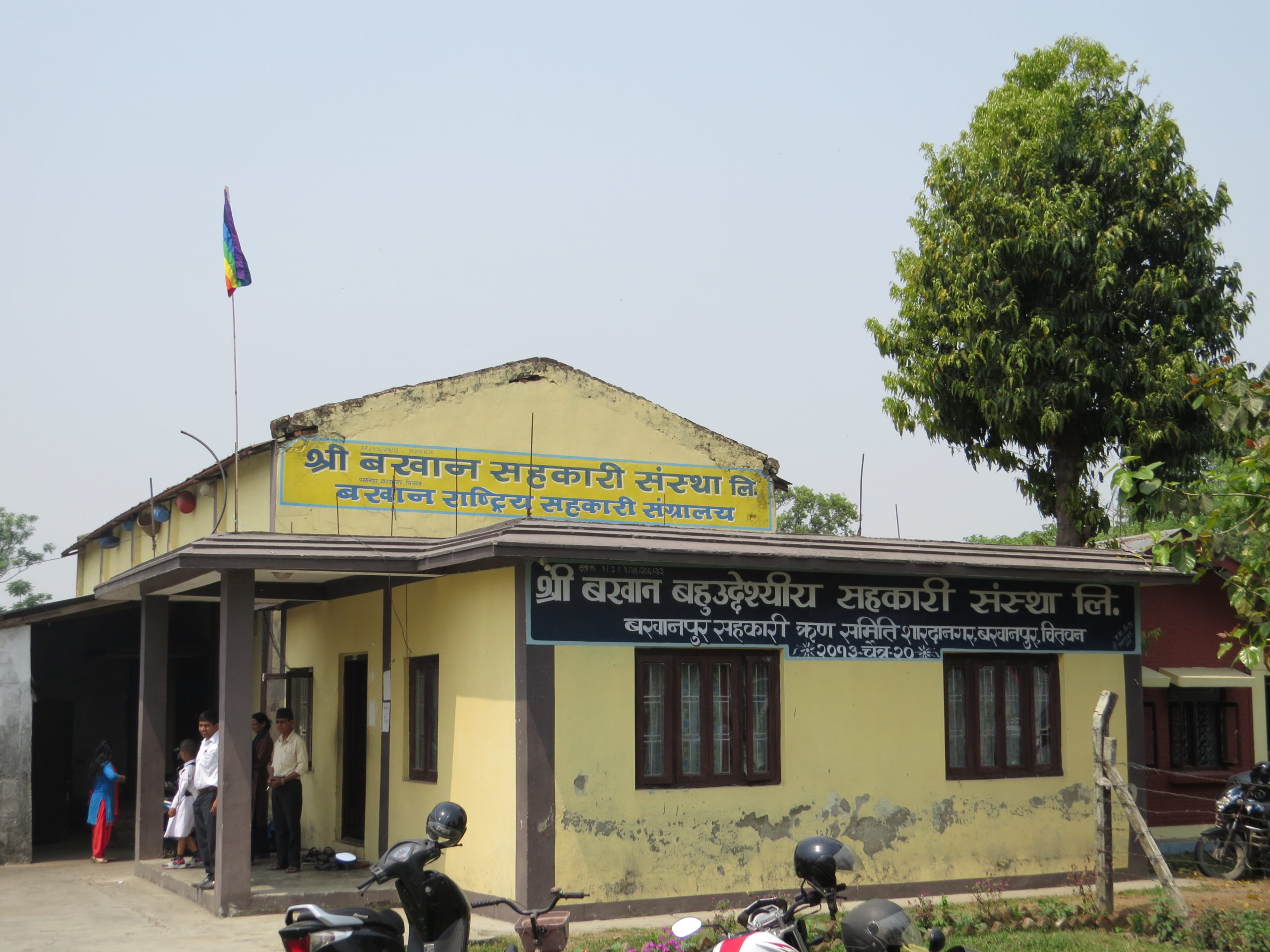
Bakhan Credit Cooperative Committee
A major milestone came with the Cooperative Act of 1991, which promoted autonomy and self-management of cooperatives by reducing direct government control.
The 2015 Constitution’s federal structure led to the Cooperative Act of 2017, which decentralized registration and regulation of smaller cooperatives to provincial and local governments. This evolution aimed to strengthen the sector but also introduced new coordination challenges.
What were the central findings about the regulatory system’s failures?
The commission found deep and systemic failures in the regulatory framework. At the time of registration, authorities rarely conducted proper field verification or needs assessment to ensure cooperatives could function according to cooperative principles.
Many registration files lacked basic required documents, and business plans, when present, were seldom properly analyzed. Registration certificates were sometimes issued with incorrect names, including one case using an invalid Nepali character.
Regulators failed to prevent clear conflicts of interest, such as one individual serving as chairperson of multiple cooperatives simultaneously. Overall, the commission concluded that inadequate scrutiny, poor documentation practices, and insufficient enforcement of existing rules by regulatory bodies enabled widespread irregularities and contributed significantly to the sector’s current crisis.
These failures spanned decades and occurred across multiple levels of government.
What went wrong with the scope expansion and branch opening of cooperatives?
A major finding concerned the unchecked expansion of operational areas. Although savings and credit cooperatives were intended to serve limited geographic areas, usually within a few wards or a single local government unit, regulators routinely permitted nationwide scope from registration or shortly afterward.
This allowed institutions to open branches and service centers in distant districts, collect deposits from people with no genuine membership connection, and divert funds into risky or personal investments. The commission identified this indiscriminate territorial expansion as one of the primary drivers of the financial distress faced by many savings and credit cooperatives.
Unlike commercial banks, which faced stricter controls on branching and mergers from Nepal Rastra Bank, cooperatives were allowed to grow rapidly with minimal oversight, creating institutions larger than some banks but without corresponding regulatory safeguards.
What was wrong with the merger and integration process?
The commission found serious deficiencies in how cooperative mergers were handled. Instead of being used as a tool for genuine institutional strengthening, mergers frequently served to conceal financial weaknesses, unjustifiably expand operational territory, or absorb additional service centers without proper justification or due diligence.
In numerous cases, the merger process remained incomplete, leaving institutions in legal uncertainty. Some distressed cooperatives had absorbed dozens of smaller entities through successive mergers yet continued to face problems. Regulatory officials approved many of these mergers despite clear violations of cooperative principles and procedural requirements.
The commission documented specific cases where such practices led to larger but still troubled institutions, highlighting how the merger process itself became part of the problem rather than a solution.
What happened with the transfer of files and records during federalization?
The transition to federalism under the 2015 Constitution required massive transfer of cooperative files from central and divisional offices to provincial and local governments. The commission found this process was poorly managed and highly chaotic.
Many receiving local bodies never opened the transferred file bundles, with some remaining sealed for nearly a decade even in Kathmandu Valley offices. There were frequent disputes between sending and receiving offices regarding whether files had actually been delivered.
Files were sometimes sent to incorrect jurisdictions. A parliamentary subcommittee had previously documented similar issues during its inspections. In one notable case, an employee abandoned a bundle of files at a hotel after learning of office dissolution during transit. These failures severely hampered accountability and regulatory continuity.
What were the specific findings about savings and credit cooperatives?
Savings and credit cooperatives emerged as the most problematic segment. Many institutions were found to be collecting deposits from non-members, directly violating both the 1991 and 2017 Cooperative Acts, which restrict such activities to genuine members only.
Operators created nominal or “pseudo” members to maintain the appearance of legality while functioning essentially as open financial entities. The required prior approval mechanism from Nepal Rastra Bank for banking-like activities was largely bypassed.

The Nepal Rastra Bank office at Thapathali. Photo: Bikram Rai/Nepal News
Unlike the banking sector, which provides deposit insurance up to Rs 500,000, cooperative savers had no such protection, leaving them fully exposed to institutional failures.
The commission documented how these practices enabled some operators to use cooperatives primarily for personal enrichment rather than member benefit.
What kinds of financial irregularities were found in Nepal’s cooperative sector?
The inquiry commission revealed severe financial misconduct in the cooperative sector, including instances where individual borrowers received loans as high as Rs 140 million from a single institution. It found that more than 49 percent of board members in the examined cooperatives had taken loans from their own institutions, often channeling funds to themselves, their families, and close relatives in violation of cooperative laws.
The report also documented cases of rapid and suspicious lending, including one instance where a single individual received over Rs 10 million in a single day through two separate transactions of Rs 4.9 million and Rs 5.1 million.
In addition, cooperatives were found to be operating dual accounting systems using separate software to conceal real transactions, while distributing dividends based on fabricated profits without maintaining proper loan loss provisions.
What weaknesses in regulation and governance worsened the cooperative crisis?
The commission highlighted serious failures in governance and regulatory oversight as key drivers of the crisis. It found that some cooperative managers handling transactions worth billions had very low qualifications, in some cases only up to SLC level, significantly increasing operational risk.
The Department of Cooperatives was also criticized for failing to enforce its 2020 supervision and monitoring guidelines. Even after inspections, corrective directives were often delayed for up to a year or not enforced at all.
Cooperatives exploited these gaps by submitting repeated identical monthly reports or stopping reporting altogether without facing penalties. The report also noted that many cooperatives operated outside their designated geographical jurisdictions, further weakening accountability and control.
What was found about accounting audits and financial oversight?
The commission determined that the audit system was largely ineffective and performative. Although both the 1991 and 2017 Acts required annual audits by licensed auditors within three months of fiscal year-end and prohibited the same auditor for more than three consecutive years, these rules were routinely circumvented.
Cooperatives passed resolutions delegating auditor selection to management committees to reappoint the same auditors. Regulators never exercised their legal authority to conduct mandatory audits of non-compliant institutions. Auditors often maintained close relationships with the cooperatives they audited and issued clean reports despite serious irregularities.
There was minimal follow-up on problems identified in audit reports, contributing to continued weak financial oversight across the sector.
What did the commission find about governance and data systems?
Governance failures were widespread, including misuse of institutional resources for personal benefit, disproportionate loans to insiders, maintenance of double accounting records, and inadequate loan loss provisioning. Transparency to members was minimal in troubled institutions.
On the data side, the COPOMIS system was found to be unreliable and incomplete. Cooperatives across three levels of government did not consistently upload required information. No comprehensive, up-to-date central database existed, and the system lacked effective early warning mechanisms for detecting financial distress.
These deficiencies left regulators without timely visibility into emerging problems, allowing crises to develop unchecked until they became severe.
The commission emphasized that poor governance combined with fragmented and ineffective information systems created an environment where irregularities could flourish undetected for extended periods.
What does the commission say about previous commissions and their recommendations?
The commission observed that multiple previous commissions, committees, and task forces had identified essentially the same problems in the cooperative sector and provided detailed recommendations for reform. However, implementation of those recommendations remained extremely limited or nonexistent.
This repeated cycle of forming inquiry bodies, documenting issues, producing suggestions, and then failing to act has allowed problems to persist and intensify over decades.
The commission stressed that the lack of meaningful follow-through on past recommendations represents a fundamental reason for the current depth of the crisis.
It concluded that effective implementation of both previous and current recommendations, combined with structural reforms, is essential for any sustainable improvement in the cooperative sector.
What are the commission’s main recommendations for reform?
The commission presented recommendations across three timeframes.
In the short term (within one year), it called for a nationwide audit and classification of all cooperatives, enhanced monitoring of high-risk institutions, creation of a reliable database, immediate intervention in severely distressed cooperatives, and departmental action against officials found to have facilitated misconduct.
It also recommended an immediate halt to new registrations and branch approvals until proper systems are in place.
For the medium term (2-3 years), priorities include amendments to the Cooperative Act and Rules, implementation of digital accounting and member management systems, capacity building for regulatory bodies, and development of a sound merger policy.
Long-term (5+ years) recommendations focus on linking cooperatives to productive sectors like agriculture and energy, promoting them as social enterprises, and achieving full alignment with international cooperative standards.
What action does the commission recommend regarding those responsible for the misconduct?
The commission recommended thorough further investigation and appropriate legal proceedings against both regulatory officials and cooperative operators involved in irregularities. It identified officials at all levels — including Department of Cooperatives staff, deputy registrars, registrars, and provincial and local government officials — who had approved registrations, scope expansions, and mergers in violation of laws and cooperative principles.
Cooperative operators were found to have misused institutions for personal gain and misappropriated member savings. The report includes references to specific cases and individuals appearing in files and calls for full accountability.
The commission emphasized that without holding those responsible to account, lasting reform and restoration of public trust will not be possible.





![NSU protests closure of public library, demands immediate reopening [Photo Feature]](https://english.nepalnews.com/wp-content/uploads/2026/07/1-6.jpeg)