Kathmandu
Tuesday, June 23, 2026





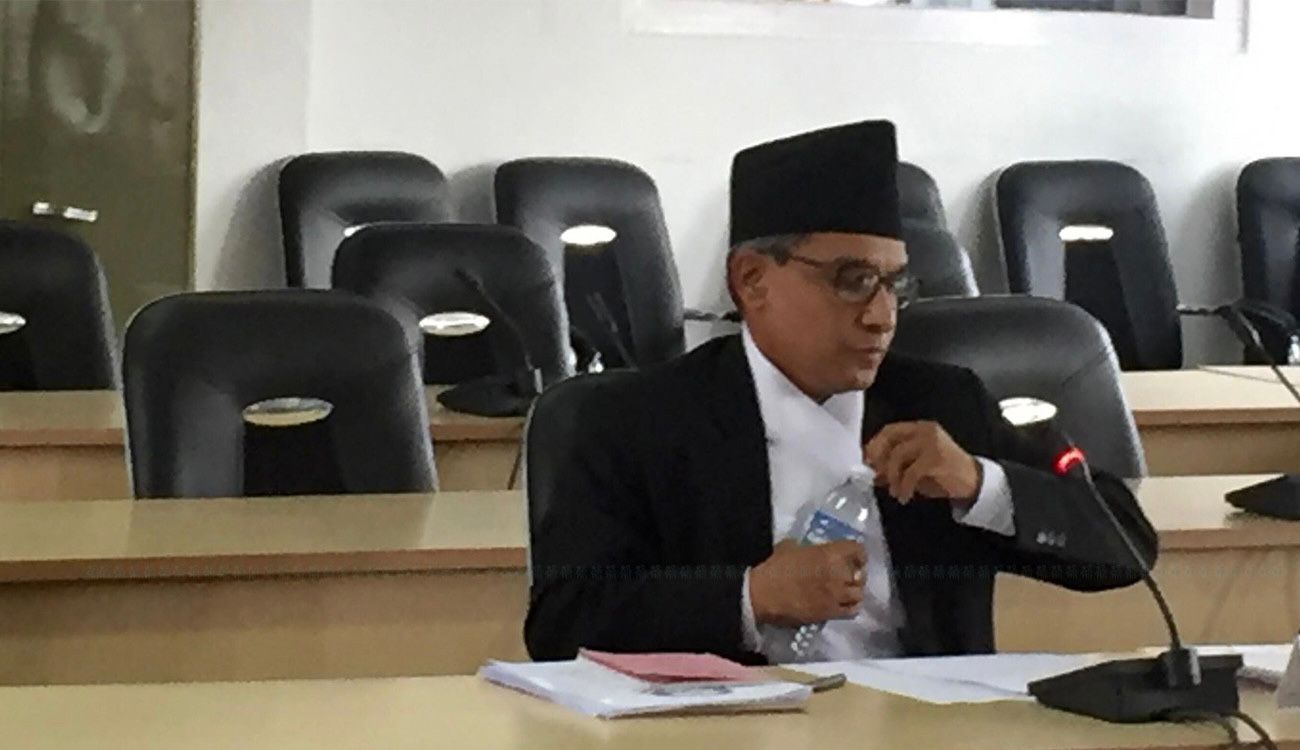
KATHMANDU: In a decision that is already stirring debate within Nepal’s legal and political circles, the Constitutional Council on Thursday recommended Justice Dr. Manoj Kumar Sharma for appointment as the country’s next Chief Justice-bypassing three senior Supreme Court justices in the process including acting chief justice Sapana Pradhan Malla.
The recommendation marks a significant departure from Nepal’s long-standing judicial convention, under which the senior-most Supreme Court justice is typically elevated to the position of Chief Justice. Instead, the council chose Justice Sharma, who stands fourth in the Supreme Court’s seniority ranking.
The move effectively overlooked Acting Chief Justice Sapana Pradhan Malla as well as justices Kumar Regmi and Hari Prasad Phuyal who are also in line of future chief justices.
The decision, however, did not come unanimously. Constitutional Council members Narayan Dahal and Bhishmaraj Angdembe formally registered their dissent, arguing that the recommendation undermines established judicial norms and institutional practice.
Dahal, who serves as Chairperson of the National Assembly, said the council had broken with a long-respected principle of judicial succession.
“There has always been a practice of recommending the senior-most justice as Chief Justice,” Dahal said. “We submitted a written note of dissent because we could not agree with the sudden decision to bypass that tradition and recommend the fourth-ranking justice instead.”
The recommendation is expected to intensify discussions over judicial independence, constitutional convention, and the growing role of political negotiation in Nepal’s top judicial appointments.
Justice Sharma’s nomination will now move forward through the constitutional hearing and parliamentary process before formal appointment.
Who Is Justice Dr. Manoj Kumar Sharma?
Manoj Kumar Sharma was born on June 18, 1970, in Birgunj, Parsa district, and has built a career spanning legal practice, academia, and the judiciary.
A graduate of Nepal Law Campus in Kathmandu, Sharma earned his Bachelor of Law (B.L.) before completing a Master of Laws (LL.M.) from the University of Pune in India. He later obtained a doctorate in Labour Law from Tribhuvan University, specializing in one of the country’s key areas of legal scholarship.
Sharma enrolled as an advocate in 1995 and spent years practicing across multiple fields of law, representing clients and advising companies and institutions on legal and corporate matters. His legal career later transitioned into the judiciary, where he served as an additional judge at the Appellate Courts in Butwal and Patan between June 2013 and December 2015.
Over the years, he has participated in numerous national and international legal conferences, contributing to discussions on judicial practice and legal reform.
On April 19, 2019, Sharma was appointed as a Justice of the Supreme Court of Nepal, joining the country’s highest judicial institution at a time of increasing public scrutiny over governance, constitutional interpretation, and judicial accountability.
Now recommended for the position of Chief Justice, Sharma stands at the center of one of Nepal’s most closely watched judicial transitions in recent years.
The Constitutional Council recommendation will now undergo a parliamentary hearing process. If confirmed by the parliamentary hearing, Manoj Kumar Sharma will serve a full six-year term as Chief Justice of the Supreme Court of Nepal.
If his nomination is endorsed, Sharma will complete the full six-year tenure. Article 129(4) of Nepal’s Constitution states that the term of the Chief Justice shall be six years.
A retirement age limit of 65 years has also been set for the Chief Justice of the Supreme Court.
However, Manoj Kumar Sharma is set to complete his full six-year tenure before reaching the mandatory retirement age, and will retire upon completing his term.