Kathmandu
Wednesday, February 25, 2026





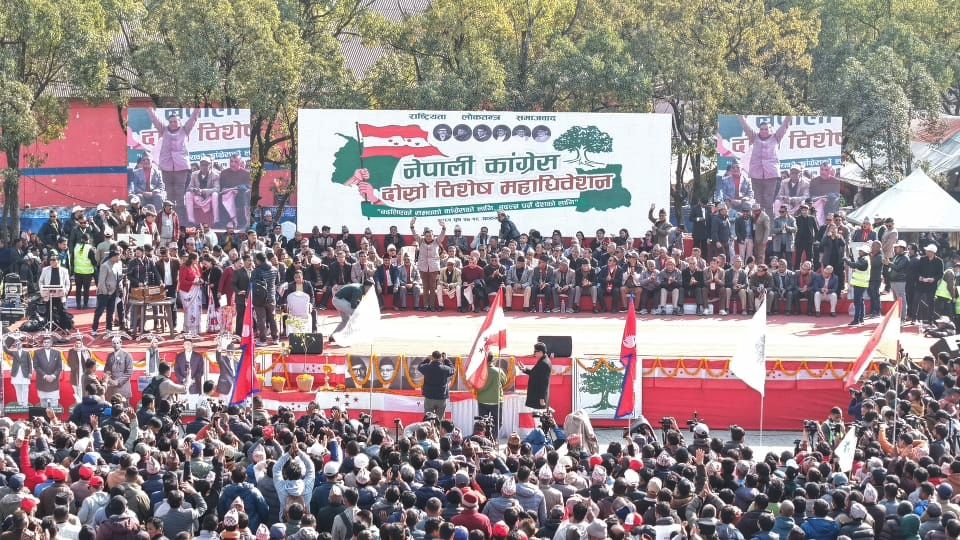
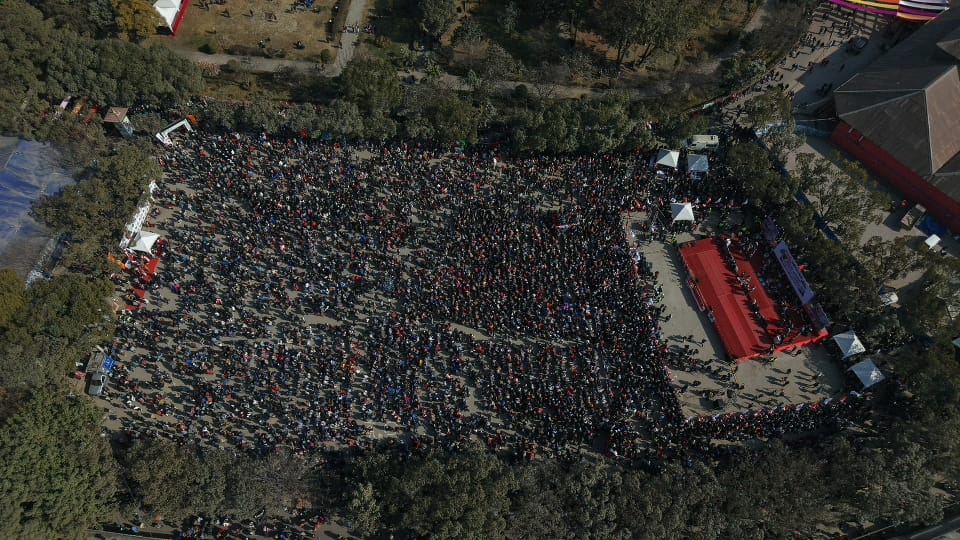
The much-talked about second Special General Convention of the Nepali Congress (NC), Nepal’s oldest political party, has begun in Kathmandu’s Bhrikuti Mandap today. The party carries nearly eight decades of political memory including struggle against the Rana regime, a long fight for democracy, years of jail and sacrifice, victories, defeats, and, also, painful compromises. The same party today finds itself facing one of the most difficult moments in its history, once again.
Yes, once again, the specter of a vertical split, something the NC knows too well, hangs heavily over it.
Parallel processes and rival activities in ‘the grand old party’ that the NC is often referred to as have now become open and unapologetic. What once simmered quietly in factional meetings and whispered complaints has spilled into the public sphere.
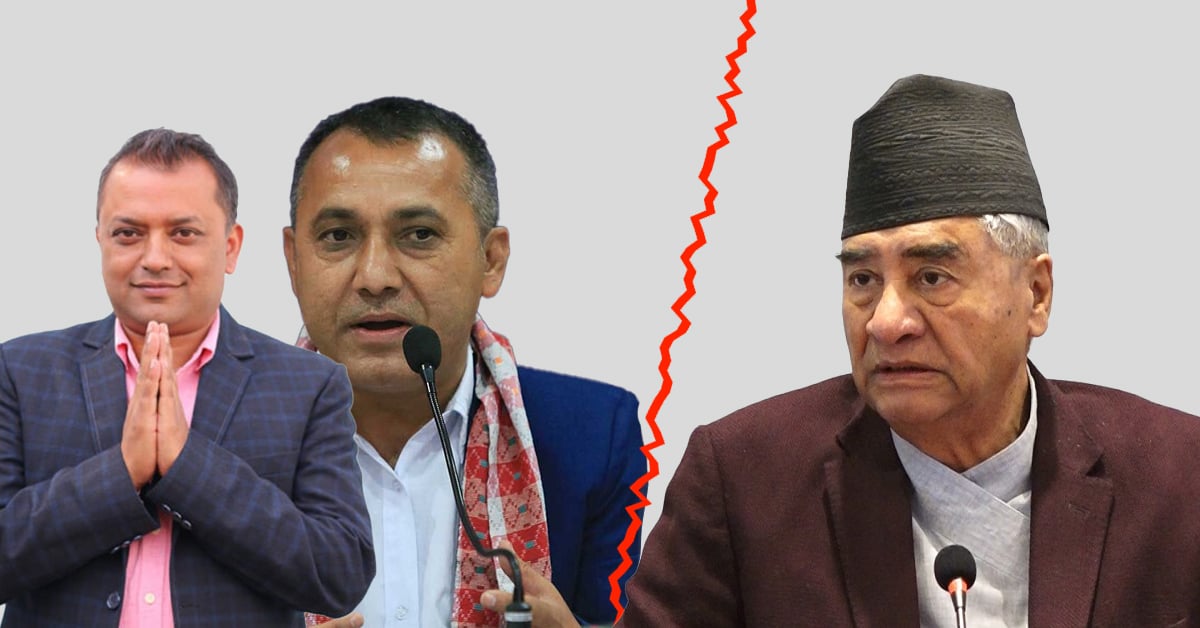
The establishment faction of the NC led by President Sher Bahadur Deuba and the reformist camp led by general secretaries Gagan Thapa and Bishwa Prakash Sharma have come face to face, preparing separately for different kinds of conventions. While the establishment faction wants to hold a regular General Convention after the March 5 polls, the rival faction has gone ahead with its plan of holding a special convention to change the party’s leadership before the polls. This has pushed the party dangerously close to a vertical split. For a party whose strength has historically rested on unity amid diversity, this is a familiar but deeply unsettling moment.
The immediate trigger is procedural but the conflict is profoundly political. A majority of the party’s executive committee has already revised the convention calendar, fixing the dates of the 15th general convention for May 11-14. Acting party president Purna Bahadur Khadka successfully pushed through the proposal, giving the establishment camp a formal roadmap forward. On paper, the party appears to be moving smoothly toward a regular convention.
But politics rarely follows paper alone.
The situation turned sharply complicated after the party’s two general secretaries, Thapa and Sharma, publicly called for a special general convention. Their move was not symbolic, it was confrontational. Despite the party’s executive committee’s decision, both leaders remain adamant that the special convention which begins today will decide the party’s future course, including policy and leadership. With that insistence, the NC has entered what many leaders privately describe as a “grave phase.”
Anxiety is palpable across the party. Grassroots workers, veteran leaders, and even those aligned with opposing factions have now made one common appeal: save the party from a split. That past splits are too painful a memory to be disregarded.
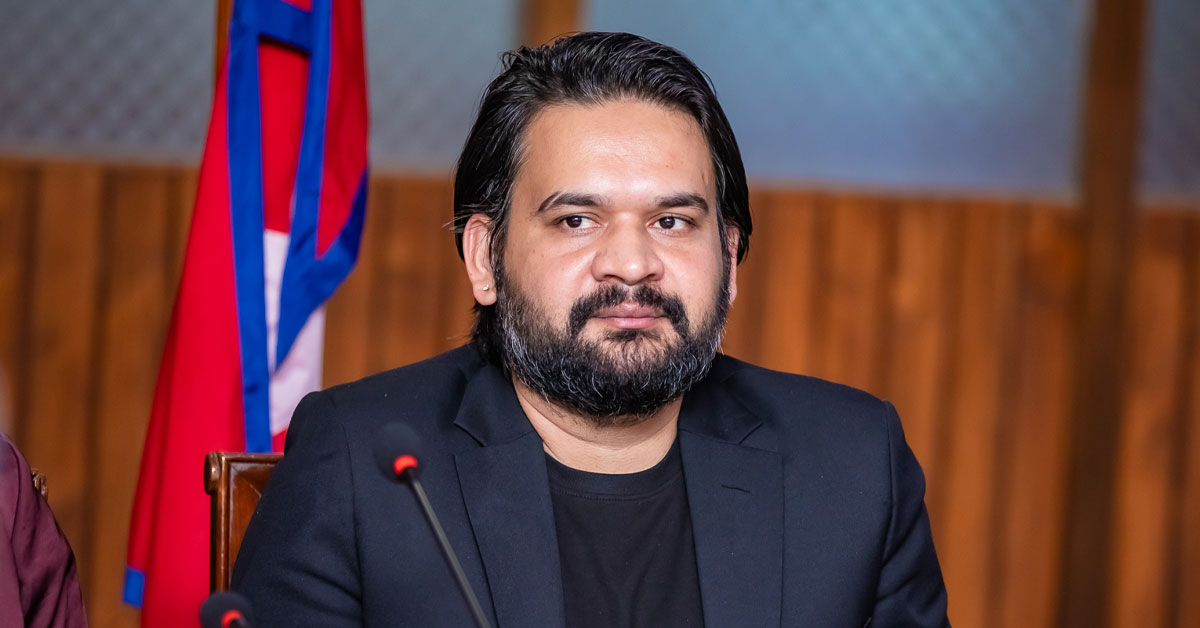
This anxiety is reflected in the words of senior leader Dr Chandra Bhandari. Bhandari, who chose to attend the party’s Executive Committee meeting organized by the establishment last Friday, despite “deep personal reservations”, told journalists afterward that he did not want to sit in the meeting at all, “but, a sense of responsibility toward both the party and the country compelled me to do so.”
“I have spent many years in prison for this party and for this country,” he reminded. “We must address the concerns of those comrades who have gathered in the capital for the special convention, but at the same time we must avoid disintegration of the party.
His words captured the emotional weight of the moment. For leaders like Bhandari, who firmly believes in the NC’s tradition of sacrifice, this is not merely a political failure but a moral one.
But officially, however, the party leadership asserts there is no danger. General Secretary Sharma repeatedly declared that the Nepali Congress would not split. With studied calm, he has promised that within a week or 10 days, the party will appear united again, “smiling,” as he put it.
“We will resolve this issue with a smile,” Sharma said confidently. “According to the party statute, whatever steps we take will be legitimate. I can say this with certainty: the Nepali Congress will not split. It will remain intact.”
At the same time, NC Spokesperson Dr Prakash Sharan Mahat has sought to reassure members by pointing to procedural continuity. He announced that the tenure of the Central Working Committee has been extended until mid-June 2026, as allowed by the party statute, along with extensions for lower-level committees. According to Mahat, delays in distributing active memberships and completing internal elections forced adjustments to the calendar. “The process of the 15th general convention is ongoing,” he said. “Only the timelines have been extended due to circumstances.”
Indeed, beneath these procedural explanations lies a deeper unease that no amount of procedural clarification can erase.
Privately, nearly every senior leader admits that a split is a risk. Publicly, the same incantation is repeated by all: the party will not split; must not split; will not be allowed to split. But political history is full of parties that rarely fracture because someone announces it in advance; they split when some internal dissatisfaction festers unresolved.
Dissatisfaction is now at a boiling point within the NC. As many as 54 percent of general convention representatives formally submitted an application last October, demanding a special convention. In keeping with party statutes, such a convention should have been held by mid-January 2026. Instead, the issue was effectively sidestepped when the Central Committee rolled out the schedule for a regular convention.
Even after that decision, the resistance from within the establishment camp did not completely die down. Now, with the special convention already started, the threat has become alarmingly high. For the establishment, the special convention is unjustified. For the general secretaries and their supporters, the signed application of a majority of delegates provides unquestionable legitimacy.
There are widespread interest and concern over whether this special convention, where decisive debates will take place on the party’s future, leadership, and policies, could push the NC toward a split. However, leaders advocating for a special convention view it not as a move toward division, but as a process of reform.
They argue that the current leadership has already completed its four-year term, and that amid a changing political landscape and the challenges of upcoming elections, the NC cannot go to the people without undertaking fundamental change. From leadership change to a thorough review of policies, these agendas are at the center of the convention.
Those in support of general secretaries Thapa and Sharma believe that their move should not be seen as an impulsive act of rebellion but as a corrective measure. They believe the establishment has become monopolistic in the party, has caused delays in the holding of their conventions, and has obstructed reform in the party. This could be linked to the current political setting in the wake of the Gen Z movement. It is claimed that the youth have called for change, and the NC leadership has not responded to the demands.
The two splits in the past
There are concerns among critics that if there is a convention for exceptional circumstances, there might be a split within the party. This is possible, but history does nothing to assuage this fear. However, a split is not something new to the NC, either. It has already split twice.
The first split was not long after the acquisition of democracy in 1951. After fighting against autocracy under the leadership of the NC and restoring democracy, the party was split by internal conflicts in 1953. In the midst of this division was the leadership struggle within the NC between BP Koirala and Matrika Prasad Koirala. It was ironic that the very political party that had managed to unite the country in opposition to tyranny seemed unable to unite the country in freedom.
The second major split took place in 2002, in even more turbulent conditions. Girija Prasad Koirala was the party president. His rival for the leadership position, Sher Bahadur Deuba, was the prime minister. The country was facing a serious crisis owing to the Maoist insurgency. When Deuba failed to heed the party’s instruction not to extend the state of emergency and dissolved parliament on 22 May 2002, the NC Central Committee expelled him from the party altogether without even giving him an opportunity to present an appeal.
This resulted in Deuba going into outright rebellion. His faction organized a gathering at the Birendra International Convention Center in New Baneshwar, which was aimed at compelling the old establishment. The process of reconciliation did not work. The gathering turned into a full-fledged general convention, expelling Girija Prasad Koirala and electing Deuba as the new party president. The Nepali Congress split again, giving rise to the Nepali Congress (Democratic).
Both splits exhibited the same striking characteristics such as extreme clashes of personalities, leadership conflicts, and an NC-led government in the center of the country’s power. However, the situation today is a little different. This time, the NC has been ousted from the government by the Gen Z revolt. However, leadership conflicts are still as acute.
Deuba’s ‘U turn’
Deuba was the party president at the time of the change in government; he also supported the government led by the erstwhile prime minister KP Sharma Oli. It is important to note that NC General Secretary Thapa was part of the task force established to support the NC-UML government led by Oli. But in the aftermath of the Gen Z uprising, Thapa concluded that meaningful transformation required leadership change. He found an ally in the other General Secretary Sharma.
According to sources, Deuba had realized the importance of leadership change in the party after he and his wife Arzu Rana Deuba were physically assaulted by protesters at their private residence in Budhanilkantha on the second day of the Gen Z revolt. That’s why he made leader Purna Bahadur Khadka the acting president of the party.
But Deuba apparently changed his mind after the election of KP Oli as the CPN-UML chairman by the party’s 15th General convention held in the capital recently. Deuba, according to sources, perhaps thought “If Oli can continue as the leader of the UML in the aftermath of the Gen Z revolt, so can I, as the leader of the NC.” Encouraged by this thin strand of hope Deuba made a U-turn vis-à-vis a change in party leadership, hoping to continue as the leader of the NC. That is why the NC establishment postponed the scheduled general convention after the upcoming general elections slated for March 5.
For both general secretaries, however, the party statute is their final argument: if a regular convention is not held within four years, a special convention becomes mandatory. When the establishment refused to accept this demand, they went ahead and announced the special convention themselves, despite the absence of a formal Central Committee decision.
Is a third split imminent in the NC?
As the scheduled special convention begins today, there are no visible signs of compromise. NC President Deuba has already rejected the request to be present at the special general convention. The message this sends is alarming. Rather than dialogue, the party is now hurtling towards a possible clash, and may even break apart irreparably.
Several general convention representatives of the NC who have arrived in Kathmandu from various parts of the country have already said that the convention may change the party’s leadership. What will Deuba and leaders close to him do in that situation? Will the NC establishment take action against the two general secretaries and leaders close to them? Won’t such a decision lead to a vertical split in the party? One can answer these questions according to one’s convenience and conviction. But what is unquestionably clear is the NC has reached a critical phase.
However, even in this critical phase, there is a strand of hope.
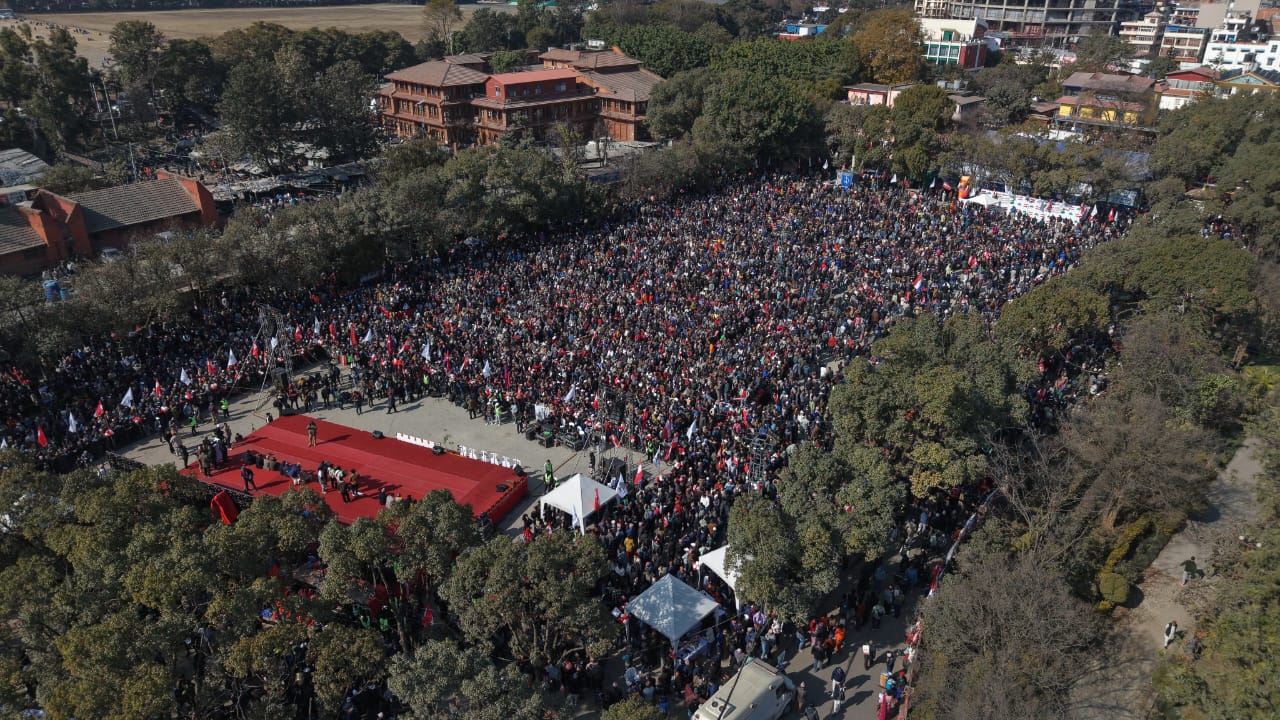
Amid all the din, one individual with a personal promise to allay all the fears, both inside and outside his own party, is General Secretary Sharma. If the special convention leads toward a split, he says, he will be the first to walk out of the convention hall, and stand together with everyone else to save the party.
“The special convention is not aimed at splitting the party. The party will not split,” Sharma insisted on the eve of the special convention. “If a situation arises where a split becomes inevitable, I will be the first to leave the hall. We will all stand together to protect the party.”
It is a promise born of both conviction and anxiety. Whether it becomes a turning point for reconciliation or merely a footnote before another historic fracture remains uncertain.
For Nepal’s oldest political party – a party that has already paid dearly for division – this is a moment of reckoning. History is watching. And so is a nation that still, despite everything, hopes the NC will choose unity over yet another painful split.