Kathmandu
Thursday, February 19, 2026





India became so angry after a Chinese company won the contract to build the Kohalpur–Banbasa road section through a global tender that then Indian prime minister Rajiv Gandhi himself moved to have the contract cancelled. What was that episode?
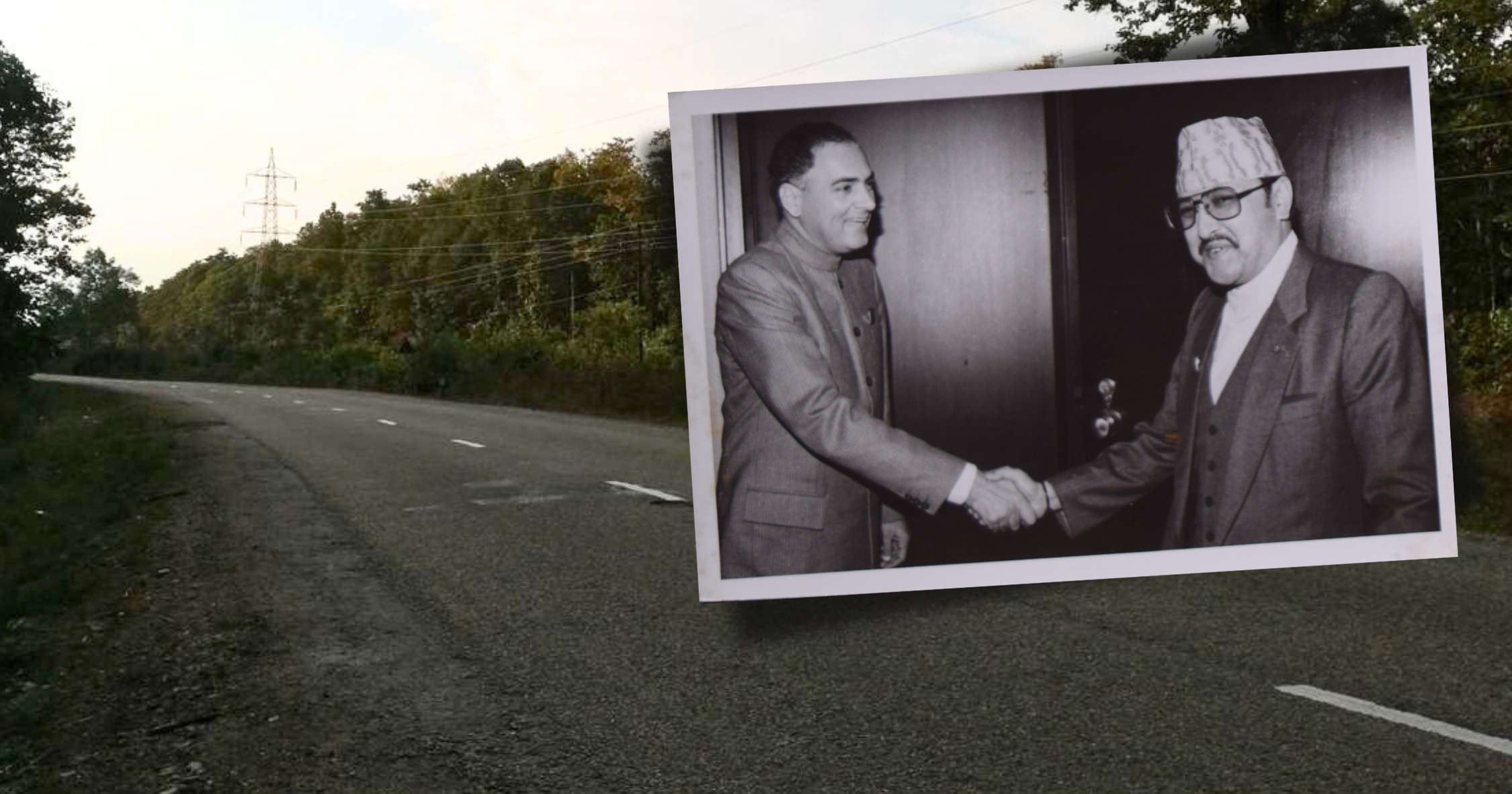
KATHMANDU: After the Indian National Congress (I) won a landslide majority in the 1984 general election, Rajiv Gandhi was appointed prime minister at the age of 38 on October 31 that year. Winning 401 out of 508 seats in the Lok Sabha, Rajiv became prime minister, and the first foreign head of state to congratulate him was King Birendra.
Because he was educated in the United Kingdom and had a youthful outlook, King Birendra believed that Rajiv would hold more liberal views than his mother, former prime minister Indira Gandhi. Rajiv, too, immediately after taking the oath of office, outlined his policy on relations with neighboring countries, saying, “As India and the closest neighboring countries of South Asia share deep historical and cultural ties, I will maintain friendly and cordial relations with them.”
However, in Nepal’s case, the cordiality Rajiv spoke of began to unravel from the very next month after he was appointed prime minister.
The main reason was the Kohalpur–Banbasa road section to be built under the Mahendra Highway in western Nepal.
India had taken responsibility for constructing the Butwal–Kohalpur road section under the Mahendra Highway since the time of King Mahendra. But the Indian company selected for the work took a long time to build the road.
Therefore, when the Government of Nepal decided to construct the 204-kilometer Kohalpur–Banbasa road section with its own investment, it decided for the first time to award the project on the basis of an international contract (global tender). The World Bank and the Saudi Arabian Fund were also prepared to support this project.
King Birendra had returned after receiving higher education in developed countries such as Japan, the UK, and the United States. Hence, he wanted to bring foreign experience into development works. He believed that construction through a global tender would ensure better quality work.
At the same time, he also understood India’s border sensitivities. Therefore, before proceeding with a global tender, then prime minister Lokendra Bahadur Chand and the relevant ministers in his cabinet had consulted the then Indian ambassador Narendra P Jain and others.
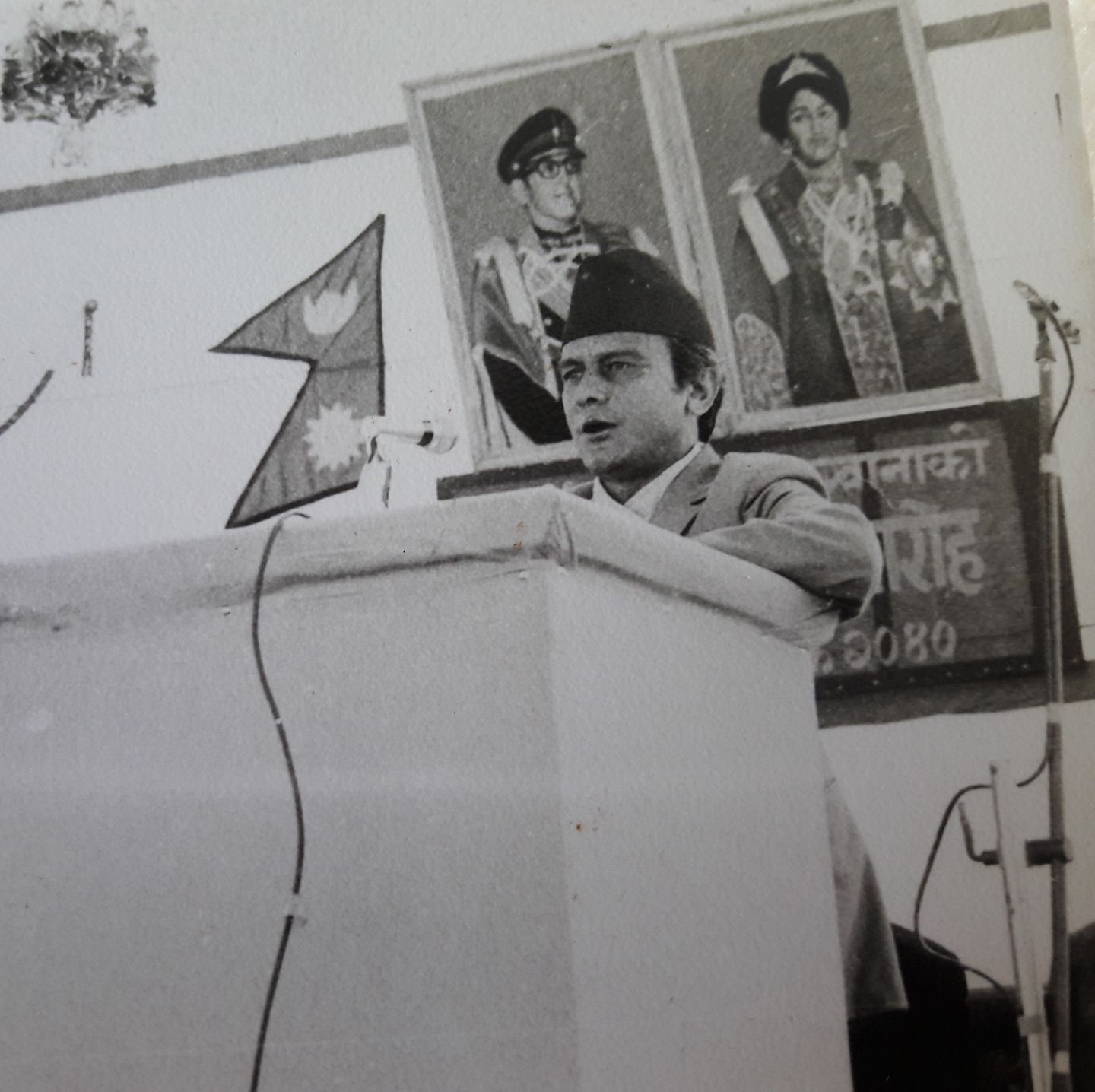
The then Prime Minister, Lokendra Bahadur Chand
At that time, even in India, the practice of using global tenders for development works was limited. In fact, the process was new for them as well. As a result, they did not take the Government of Nepal’s proposal seriously.
After India raised no objection, Nepal issued the tender in 1984. Countries including India participated in the tender process. China’s China Road and Bridge Engineering Company also participated. This was the same company that had, a few years earlier, constructed a marine tunnel route in Chittagong, Bangladesh, and the Karakoram Highway linking Pakistan and China. It had carried out bridge and road network projects in more than ten countries across Asia and Africa.
This company, which had begun international operations in around 1979, won the contract for the Kohalpur–Banbasa road section with the lowest bid of Rs 450 million.
That was apparently enough to provoke India. India began exerting continuous pressure through its ambassador to cancel the contract with the Chinese company. The ambassador pressured the Government of Nepal. This matter moved from the concerned ministry to Prime Minister Chand, and from Chand to the King.
Since discussions had already taken place with the Indian government, King Birendra initially felt assured. But due to persistent pressure, he too found himself in a dilemma. If the contract were cancelled, there was fear of angering the Chinese government; if it were not cancelled, relations with India could deteriorate.
Meanwhile, Rajiv Gandhi sent his special envoy Panjalal Shiv Shankar to Kathmandu. At that time, during a satyagraha carried out by the banned Nepali Congress, bomb explosions occurred in Kathmandu for the first time.
Explosions took place near the southern and western gates of the Narayanhiti Royal Palace, in front of the Annapurna Hotel gate, at the Secretariat of the National Panchayat, and in front of the Singha Durbar gate. Eight people, including National Panchayat member Dambarjung Gurung, were killed in those blasts. Two exile groups – Ram Raja Prasad Singh and the Janabadi Morcha – claimed responsibility. Following the incidents of explosion, the Nepali Congress withdrew its satyagraha program.
Indian newspapers reported that Shankar had come to Nepal to express solidarity against the serial bomb blasts in Kathmandu and other cities of Nepal. But in reality, the purpose of his visit was to halt the contract awarded to the Chinese company. During that visit, he met not only Prime Minister Chand but also the King and presented a proposal.
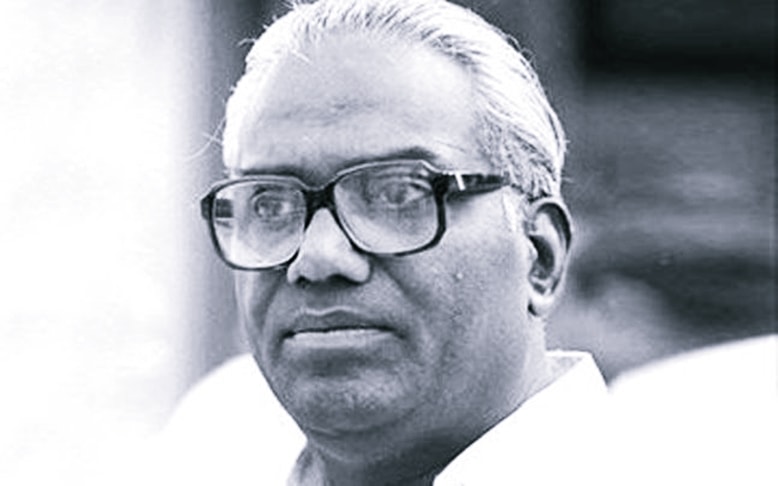
Shivshankar, the then Indian Ambassador
Recalling that incident, former prime minister Chand says, “He had come carrying a letter from Indian Prime Minister Rajiv Gandhi. The Indian side said ‘because it is our border area, you should not give the contract to the Chinese; it should be given to us’.”
In meetings with Prime Minister Chand and the King, Shankar proposed that India would construct the road under grants at the same cost that China had quoted. “He said, ‘We will give the same amount that China has offered,’” Chand recalls.
Initially, Nepal had planned to build the road with a loan. But after India offered to build it as a grant, prolonged discussions took place within the cabinet.
In the ministerial meeting, then Minister for Construction and Transport, Harishchandra Mahat, stood firm like a rock. He argued that under no circumstances should the contract be cancelled, stating that doing so would tarnish Nepal’s image in the international arena.
But when the Indian prime minister himself wrote a letter requesting it, how could Nepal antagonize its close neighbor?
Although Mahat remained firm in his stance, the Government of Nepal agreed to cancel the contract and allow India to construct the road as a grant.
Following this, Mahat resigned from his post on July 18, 1985, citing personal reasons. The King kept his resignation pending for five days in an attempt to persuade him. When he did not relent, on July 22 the King accepted the resignation, assigning the portfolio of Construction and Transport to State Minister Shriprasad Budhathoki and the portfolio of Labor and Social Welfare to Minister of State for Law and Justice Radheshyam Kamaro.
Former prime minister Chand recalls, “Mahatji was a very honest person. He said that since the project had already gone through a global tender, it should not be cancelled, as the Chinese would be angered. What he said was natural.”
In this episode, not only did minister Mahat resign, but India also recalled its ambassador Narendra Prasad Jain. Harishchandra Sarin later came to Nepal as the new ambassador.
While the Indian side appeared pleased by the outcome, Nepal’s relations with China went cold for some time. The then Chinese ambassador, Tu Go Bei, was very angry and even came to the ministry to lodge a protest. “King Birendra was in a very difficult position. If the contract was not cancelled, India would be angry; if it was cancelled, the Chinese company had already secured the contract,” recalls then finance minister Prakash Chandra Lohani.
To mend relations with China, then prime minister Chand sent a message to Nepal’s ambassador in Beijing, Gun Shumsher Rana, asking him to persuade Chinese officials. Subsequently, a delegation led by Pabala Gelielang, vice chairman of the National Committee of the Chinese People’s Political Consultative Conference, visited Nepal.
Recalling what he told them, 82-year-old former prime minister Chand says, “I told the Chinese representatives that if we have not allowed foreigners to go to our northern border with China, then you too should consider India’s border sensitivities.”
At that time, Nepal’s policy was not to allow any foreign tourists to travel to the northern border areas adjoining China.
“I told them – on one side there is a company, on the other side there is a government.
You yourselves say, what should we do? After I said this, they were convinced,” Chand says. “At that time, it was agreed that Nepal would compensate the Chinese company for the costs it had incurred in submitting the tender.”
After all matters were settled, the Government of India allocated funds to construct the Kohalpur–Banbasa road section. However, Chand resigned from the post of prime minister on March 21, 1986. After this, Nepal–India relations became even more complicated. On June 15, 1986, Marich Man Singh was appointed the new prime minister. By this time, a Korean company had already obtained the contract for the Kohalpur–Banbasa road section and had begun work. But India suddenly imposed a blockade on Nepal. After the supply of petrol and essential construction materials such as bitumen was halted for a long time, the Korean company abandoned the project midway.
Construction of the Kohalpur–Banbasa road was finally completed only in the year 2000. At present, efforts are underway to link this road section under the Asian Highway network.