Kathmandu
Saturday, February 28, 2026





Afghan drug trafficker Mohammad Hanif, aka Mohammad Noor, caught in Kathmandu as US authorities press Nepal for extradition, sparking tense diplomatic maneuvering
KATHMANDU: On July 20, 1993, Afghan drug trafficker Mohammad Hanif sought a judicial review in the High Court of Denver, Colorado, claiming he had been wrongfully convicted. The Denver District Court had sentenced Hanif, known in the drug world as Mohammad Noor, to 170 months in prison, equivalent to 14 years and two months. Arguing that the lower court’s decision was flawed, he appealed to the High Court. Representing him was David C. Jaffa, a well-known Denver-based attorney.
During Jaffa’s arguments in court, an episode from Nepal resurfaced: Noor’s Kathmandu connection. He had been arrested in Kathmandu in the third week of April 1991 by the Narcotics Control Bureau (NCB) of Nepal Police. The operation was led by then NCB chief Rabindra Raj Thapa. Recalling the incident, former Assistant Inspector General (AIG) Thapa later said that authorities had initially been unaware that a major international network had already been operating through Nepal as a hub.
The circumstances of Noor’s arrest in Nepal are notable. After the Soviet Union occupied Afghanistan in 1979 and later withdrew in 1989, the United Nations High Commissioner for Refugees arranged resettlement for several Afghan refugees in Nepal. Noor entered Nepal under this refugee framework. Prior to that, he had been living in Europe and fled to Nepal after facing criminal charges there.
At the time, Afghan refugees with United Nations High Commissioner for Refugees (UNHCR) documentation were permitted to stay, and the Nepali authorities did not conduct extensive background investigations. Exploiting weaknesses in the system, Noor resumed drug trafficking operations from Kathmandu. His network extended to India, Europe, and the United States, eventually placing him on the US wanted list.
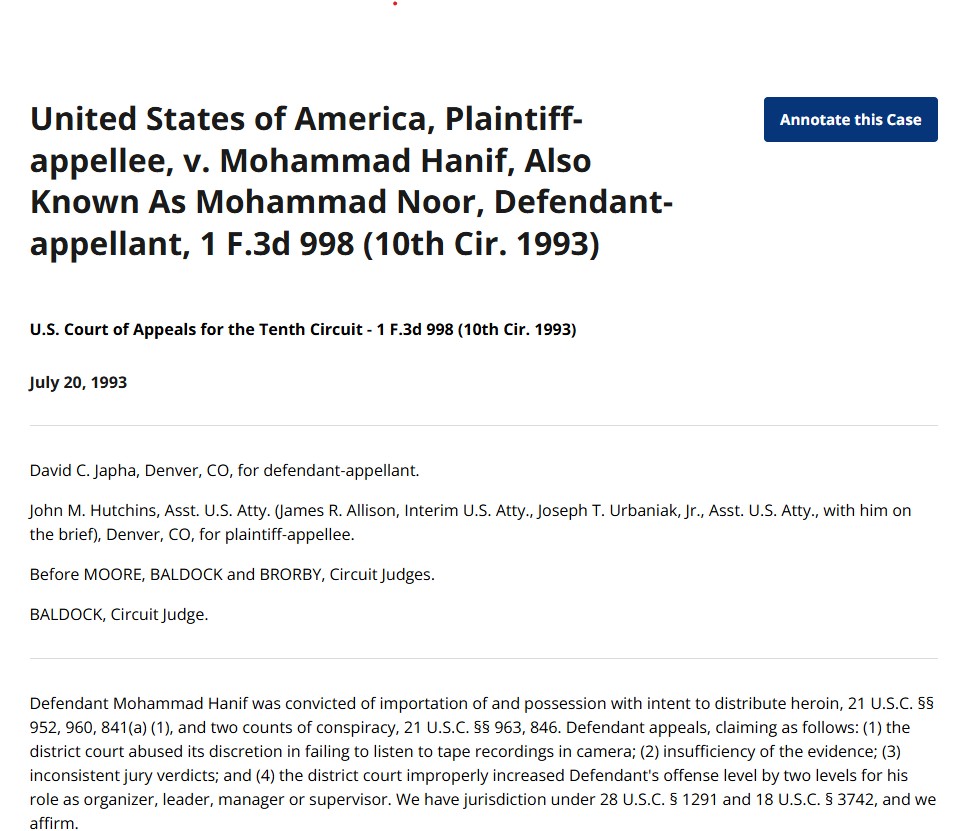
A copy of the case filed against Mohammad Noor in the Denver Court of Colorado, USA. Photo Source: Law.justia.com
During that period, Nepali citizens could obtain German visas upon arrival at German airports. Noor misused this provision by bribing officials and expanding his influence. Airline tickets to Germany were booked in the name of Nepali citizens, but through forged documents and airport collusion, Afghans traveled under those identities. Nepal’s national carrier operated flights to Frankfurt, and upon arrival, the individuals would destroy their documents and seek asylum as refugees.
Noor had turned this into his strongest weapon. He lured innocent Afghans with promises of entry into Europe and used them as drug couriers. Gradually, the matter came to the attention of the Nepali authorities. But the question remained, who would act? Many officials had already become part of his network.
At that time, Rabindra Raj Thapa, who was a Deputy Superintendent of Police, was transferred to the Narcotics Control Bureau of Nepal Police. Following his arrival, the operation to arrest the notorious criminal sought by the United States began. “After I came to the NCB, only the name of one person, Mohammad Noor, kept coming up. Where this man lives and what he does, the police had no information. I mobilized all resources,” said Thapa.
Smugglers worldwide generally follow a similar pattern. When they rent a residence, they choose the home of someone capable of influencing the state machinery. Noor followed the same approach. After a prolonged investigation by the team led by Thapa, it was discovered that Noor was living as a paying tenant in the house of a professor.
A Nepal Police team under the command of Inspector Dhirendra Dewan raided Noor’s residence. During the search, no drugs were recovered. However, a Brown pistol and 12 rounds of ammunition were found.
“After receiving information that a large quantity of drugs was being smuggled from Nepal, we started a crackdown campaign. In that, some Afghans were also arrested. All of them had taken the name of Mohammad Noor in their statements. Based on that, it became easy to raid the residence,” said Thapa. Although only a pistol and bullets were recovered, it became sufficient to file a case against him.
The Nepal Police recommended filing a case against Mohammad Noor at the Kathmandu District Administration Office on the charge of possessing illegal arms and ammunition. However, the Chief District Officer’s office was preparing to release him on bail of Rs 1,200. At that time, the American Embassy in Kathmandu suddenly became active.
A Nepal Police team under the command of Inspector Dhirendra Dewan raided Noor’s residence. During the search, no drugs were recovered. However, a Brown pistol and 12 rounds of ammunition were found.
The American government had been searching for Noor for a long time. After receiving information that the Narcotics Control Bureau of Nepal Police had arrested him, the then Second Secretary of the American Embassy, Todd Greentree, hurried to the NCB office at Maitighar. Subsequently, officials from the USA also arrived and began pressuring authorities to hand him over.
At that time, no extradition treaty had been signed between Nepal and the USA, creating a legal obstacle to transferring him. Despite this, American officials continued to apply sustained pressure on the Nepali authorities.
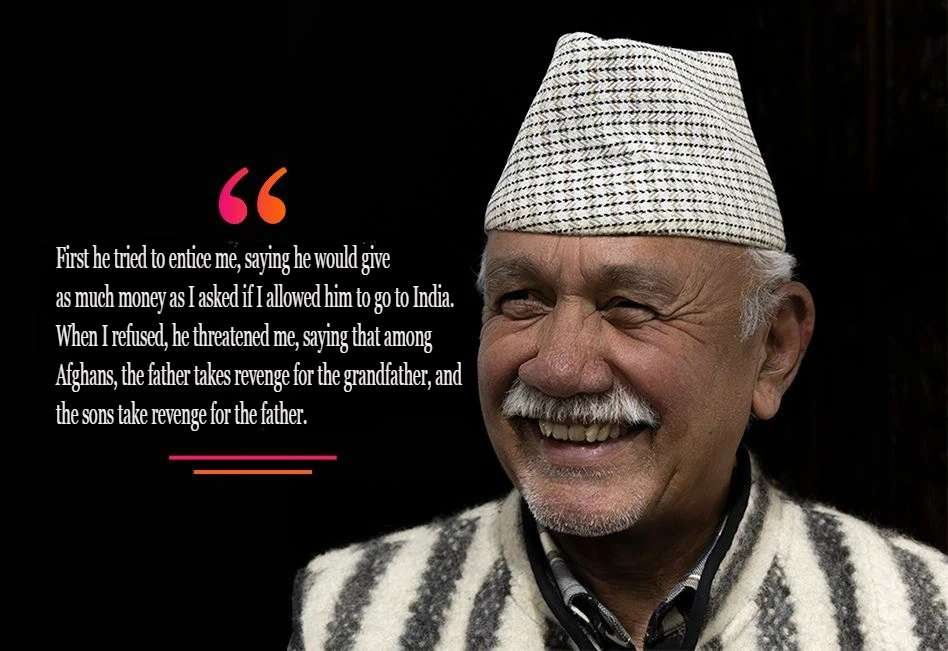
After learning that the USA intended to take him, Noor became fearful and began offering bribes to police personnel. “First he tried to entice me, saying he would give as much money as I asked if I allowed him to go to India. When I refused, he threatened me, saying that among Afghans, the father takes revenge for the grandfather and the sons take revenge for the father,” Thapa added.
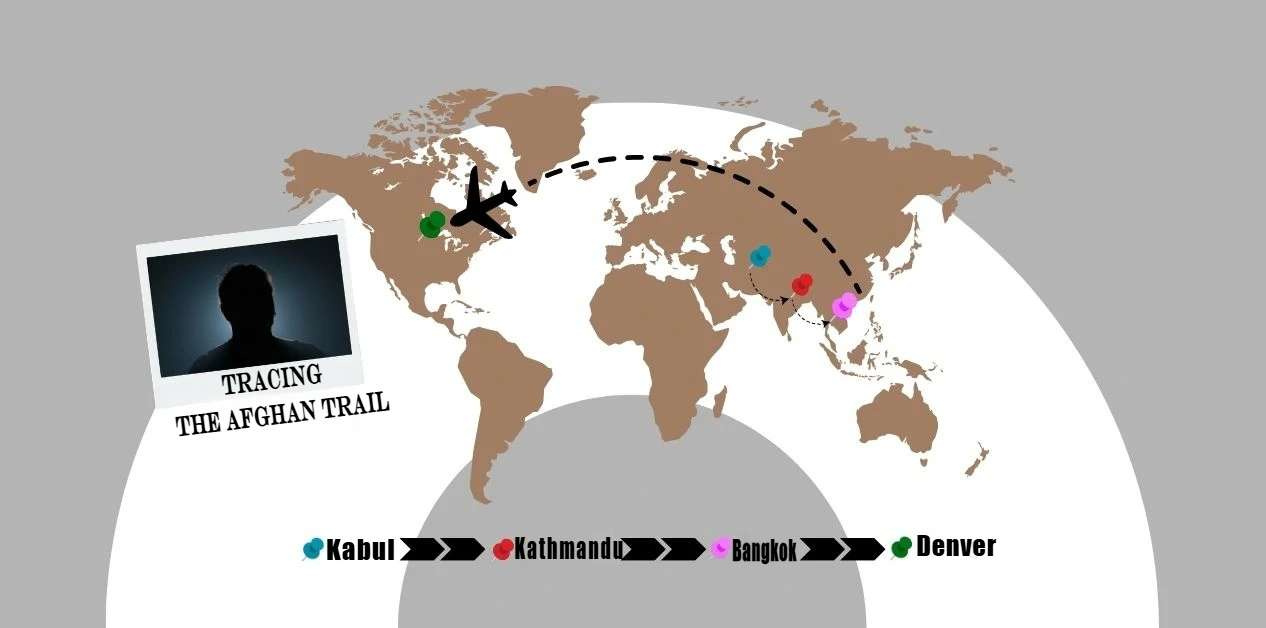
Following American pressure, on the very day Noor was being released, Nepal granted permission to send him to Bangkok, Thailand. An extradition treaty already existed between the USA and Thailand. The plan was to take Noor to Bangkok and from there transfer him to the USA in handcuffs. Two American security personnel were specifically deployed to Nepal for this purpose.
He was taken from Tribhuvan International Airport at 1:00 PM. “Their information system was remarkable. I did not know that the Americans were taking Noor after his release, but the news had already reached his wife. She called and threatened me, saying, “Mister Thapa, where is my husband?” “I replied, How would I know?” said Thapa.
Police recommended filing a case against Mohammad Noor at the Kathmandu District Administration Office on the charge of possessing illegal arms and ammunition. However, the Chief District Officer’s office was preparing to release him on bail of Rs 1,200.
After Noor was taken away, some government lawyers from the USA came to Nepal and stayed at Hotel Yak and Yeti. Thapa recalls that they recorded his statement at that time.
“Since it was a matter related to drugs and I was also the head here, they questioned me. After they went to the USA, they called me as a witness, but the government did not send me,” Thapa adds.
Noor’s case was tried in the Denver District Court in the USA. At that time, 10 drug-related cases were registered against him, meaning he faced 10 counts. Under American federal law, punishment is calculated according to sentencing guidelines based on the quantity of drugs and the seriousness of the charges. In Mohammad Hanif’s case, a sentence of 170 months, equivalent to 14 years and two months, was fixed based on the evidence and the volume of drugs involved.
“The American Embassy had made a big effort. But our then Inspector General of Police, Ratna Shamsher Rana, said there was no need to go,” Thapa further added.
In Thapa’s absence, Noor attempted to escape punishment through an appeal. However, he was unsuccessful. The High Court upheld the sentence imposed by the District Court.