Kathmandu
Saturday, January 31, 2026





Oli panel dominated by blind supporters, Pokharel panel dominated by those with critical views
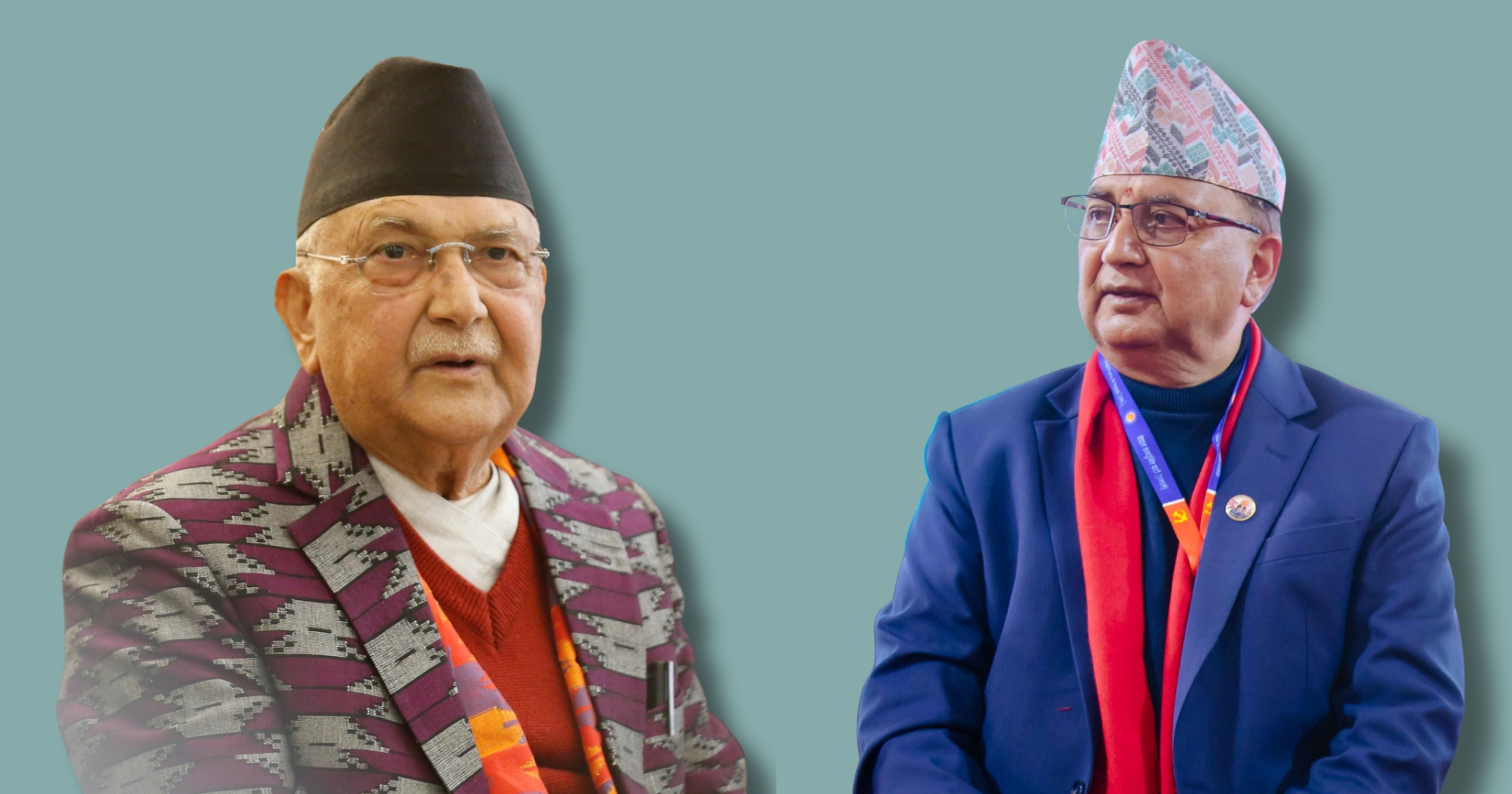
KATHMANDU: An interesting coincidence has emerged in the electoral race of the 11th general convention of the CPN (UML). Most candidates for the positions of office-bearers from the panel of KP Sharma Oli, who is running for party chairmanship for a third time, include the conservative faces of the UML. Ishwar Pokharel’s panel, on the other hand, seems to have a majority of reformists and those with critical thinking.
There is a big difference in the leadership styles of Oli and Pokharel, the two candidates for the chairmanship of the party. Until he became the party chairman, Oli was only the leader of his faction and was a critic of the party establishment. In contrast, Pokharel was active in the UML’s establishment faction. So far, Pokharel has stood in favor of the party’s institutional decisions. He supported the then UML Chairman Manmohan Adhikari, General Secretary Madhav Kumar Nepal, Jhalanath Khanal and KP Sharma Oli when they were party chiefs. This time, however, Pokharel is himself running for the UML chairmanship for the first time.
Pokharel supported the 70-year age limit and two-term limit for executive positions in the UML. This was also an institutional decision of the UML. Pokharel opposed it after Oli, to his own advantage, overturned these provisions implemented by the UML on his own proposal. On December 15, Oli also overturned the decision of the UML’s 10th Statute Convention to reduce the number of party office-bearers. Pokharel has opposed this decision of Oli as well.
Among the vice-chairman candidates of the Oli panel – Bishnu Prasad Poudel, Ram Bahadur Thapa, Guru Baral, Prithvi Subba Gurung and Raghuji Pant – leaders other than Poudel and Pant are considered illiberal and conservative within the UML. Ram Bahadur Thapa, who is considered the military strategist of the Maoists, was criticized for his working style during the armed conflict. He is a supporter of centralized leadership. Thapa’s has not changed his mind even after becoming the vice-chairman of the UML. Thapa is more conservative than other UML leaders.
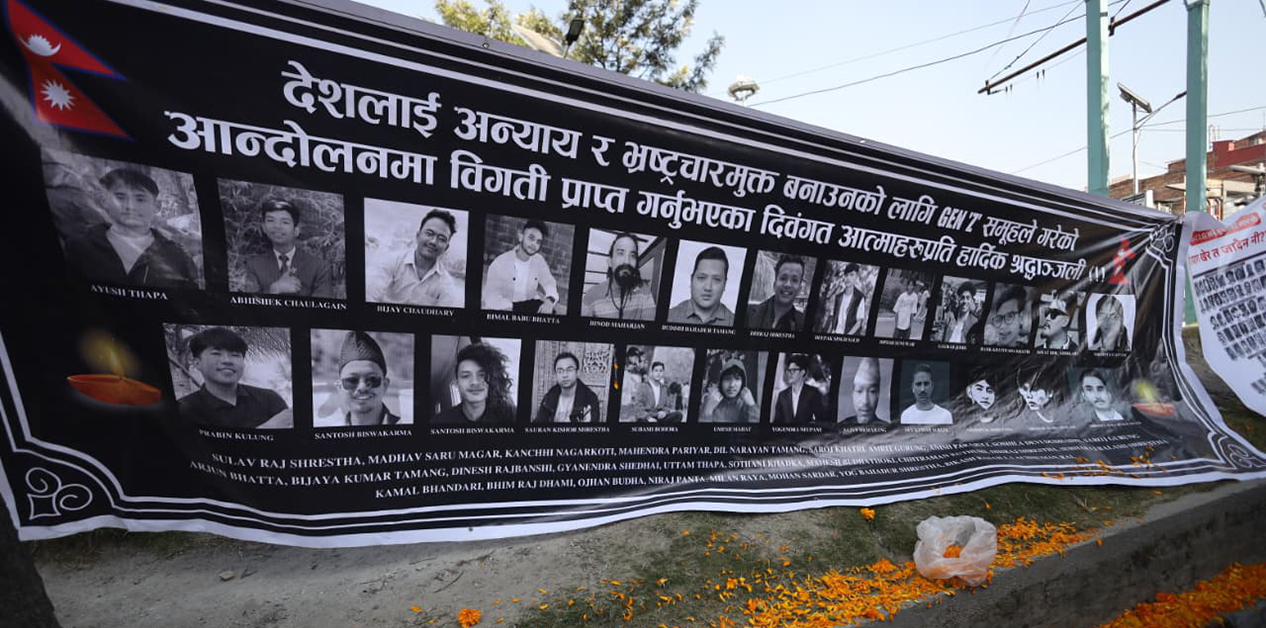
Prithvi Subba Gurung, who was the Minister for Information and Communications during Oli’s last stint as the prime minister, had decided to ban 26 social media platforms before the Gen Z revolt. After Oli, Gurung was targeted by the Gen Z movement for attacking freedom of expression. Now Oli has included him in his list of vice-chairman candidates.
UML leader Guru Baral from Morang, who has not been in the public spotlight much, is an old ally of Oli. He had been active in the Oli group for a long time. Oli made Baral the vice-chairman of the party after the death of the then UML vice-chairman and Constituent Assembly chairman Subash Nembang. This time, efforts are being made to give Baral continuity as vice-chairman. He has so far remained tight-lipped on the controversial actions of Oli and his group.
Arun Nepal, Gokarna Bista, Binda Pandey, Parashuram Meghi Gurung and Tanka Prasad Karki, who have been nominated by the Ishwor Pokharel panel for the vice-chairmanship positions, are relatively liberal leaders. Bista and Pandey have been publicly opposing Oli’s leadership style. Pandey was even suspended by the UML after she criticized businessman Min Bahadur Gurung for donating land to the UML for building a party office.
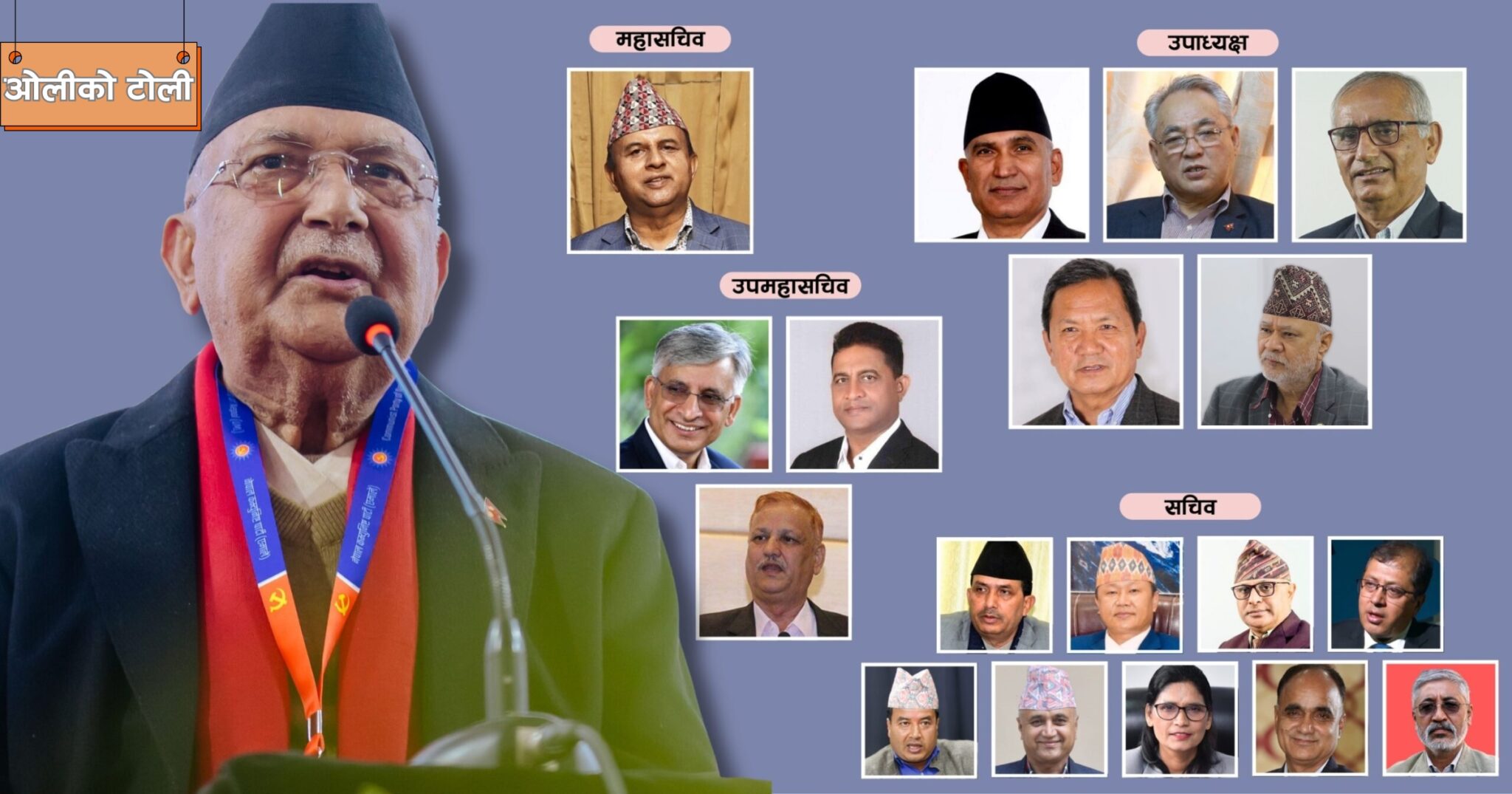
Most of the vice-chairman candidates from the Pokharel panel supported the then general secretary of the UML, Madhav Kumar Nepal. After Oli did not include Rughuji Pant, who was previously in the Oli group, in his group, Pant became a vice-chairman candidate from the Pokharel panel.
There is also a big difference in the leadership style and personality of the two general secretary candidates of the Oli and Pokharel groups. Shankar Pokharel, who became the general secretary from the 10th general convention of the UML, has created an image of an illiberal leader within the UML. Pokharel has been advocating a two-party system, saying that the number of political parties in the country is too high. Pokharel, who supported Oli’s authoritarian style, is considered an intolerant leader towards critics within the party. Because he followed Oli’s illiberal style, Pokharel did not allow Pradeep Kumar Gyawali, another leader from the Oli group, to be the general secretary candidate this time. Gyawali had insisted that Oli makes him the general secretary candidate this time. Of Oli’s two confidants, Gyawali is a more liberal leader than Pokharel in the UML.
After Pokharel became Oli’s choice for general secretary this time too, Gyawali announced his candidacy for the position of central member and left the general convention venue on 15 December. Oli, on the other hand, has made him one of his vice-presidential candidates. When Madhav Kumar Nepal was the UML chief, Oli was the leader of a minority faction, and Pokharel and Gyawali were the ones who have supported him continuously since then. At that time, these two were referred to as Oli’s ‘two hands’ within the UML.
Meanwhile, Surendra Pandey, the candidate for general secretary from Pokharel’s group, is a strong critic of Oli’s leadership style within the UML. Pandey, who is also a former finance minister, is a studious and liberal leader. The most complicated competition in the UML general convention is going to be between Pokharel and Pandey. He is a senior leader in the UML than Pokharel. Pandey, who became the vice-president of UML from the 10th general convention, is also popular within the party ranks.
Deputy Secretary General candidate Bishnu Prasad Rimal, who succeeded in becoming the chief advisor to the Prime Minister four times when Oli was the Prime Minister, is a conservative face of the UML who has not contested any election so far. When Oli was the Prime Minister in 2017, Rimal played a decisive role in creating a ‘war room’ in the Prime Minister’s Office and bringing agencies like the Department of Revenue Investigation, the Department of Money Laundering Investigation, and the National Investigation Department under the Prime Minister’s Office. When he was the advisor, Rimal was said to have made ministers and secretaries appear at the Prime Minister’s Office, made decisions favorable to him, and limited the Prime Minister to a small circle.
When he was the Prime Minister’s advisor, Rimal had criticized another group and critics within the party on social media, calling them ‘kids.’ On occasions, Rimal’s critics have challenged him to contest the election for even ward chairman.
With Oli’s support, Rimal became the deputy general secretary of the UML from the party’s 10th General Convention. This was his biggest leap within the UML. This time too, Oli has tried to repeat him as Deputy General Secretary.
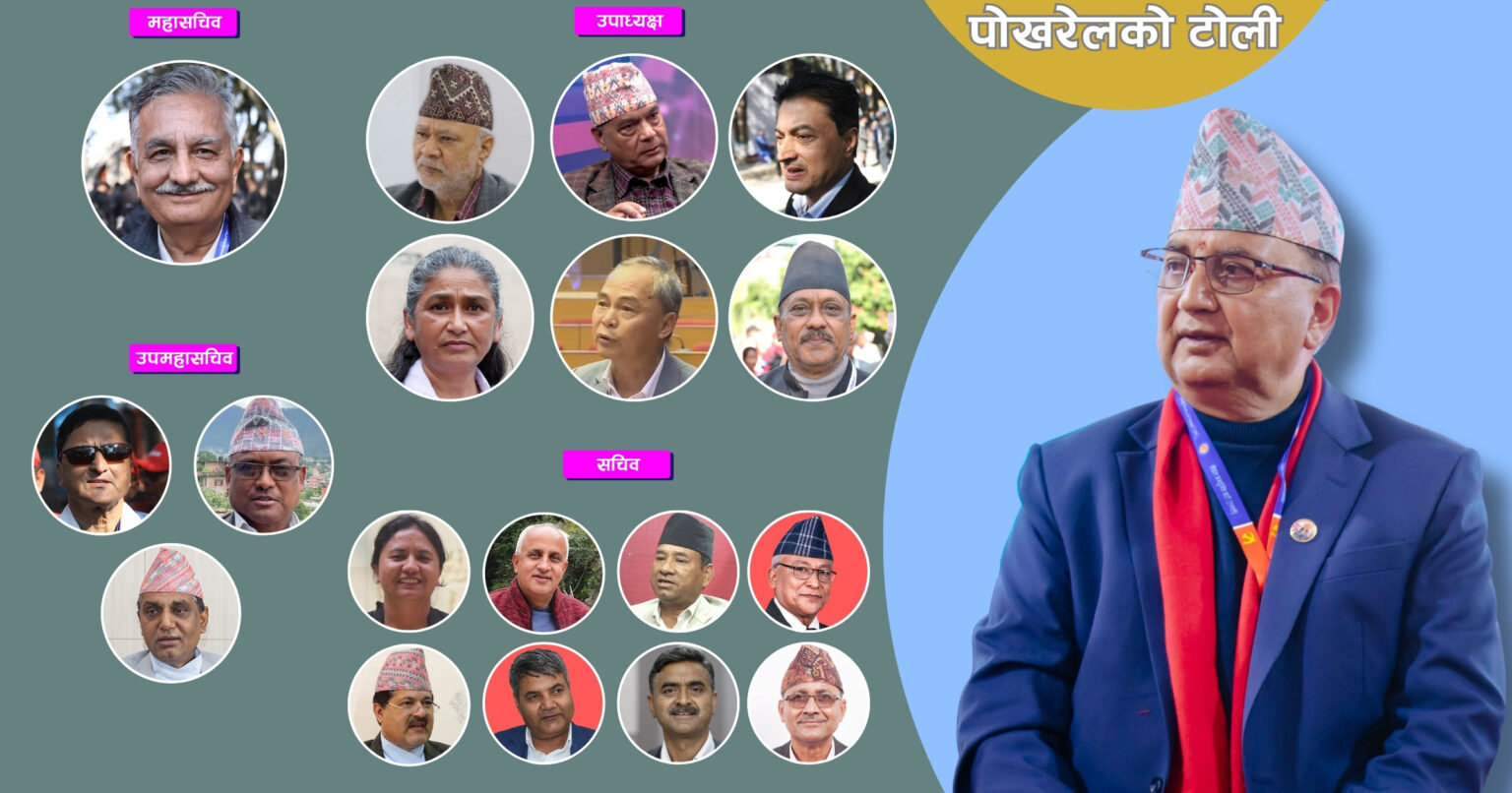
When he was the chief advisor during Oli’s second term as Prime Minister, Rimal had all the other advisors except himself and his group resign midway. He dismissed Oli’s then press advisor Kundan Aryal, public relations advisor Achyut Mainali, press coordinator Chetan Adhikari, and others from Oli’s team, while giving continuity to himself and those close to him. At that time, Rimal and Oli’s unpaid IT advisor Asgar Ali were among those who got continuity. Apart from Rimal, Oli panel’s candidates for Deputy General Secretary Raghubir Mahaseth and Lekhraj Bhatta have also developed a conservative image within the party. Bhatta is a former Maoist. During the Maoist war, a photo of him wearing a combat uniform and carrying a gun was made public.
Economic and political analyst Hari Roka says that there is a fierce competition between liberals and hard-rightists in the ongoing general convention of the UML. He says, “Oli and his team include hard-right and illiberal candidates. Ishwor Pokharel’s candidates, on the other hand, are the liberal faces of the party.”
In Roka’s analysis, the UML has transformed from a liberal leftist party to a liberal democratic party, from a liberal democratic party to a rightist party, and from a rightist to a ultra-rightist party led by Oli. Roka adds, “A hard-core rightist is an extreme individualist. An extreme individualist does not give space to anyone except the yes-men.”
Similarly, Yogesh Bhattarai, who was nominated as a candidate for the post of Deputy General Secretary by the Pokharel panel, has been a constant critic of Oli’s illiberal leadership style. He keeps speaking out for democracy, and the freedom of expression and the press, and against inconsistencies. Bhattarai was of the opinion that Oli should have taken a break from leadership following the Gen Z revolt. Along with him, Pokharel has nominated seasoned UML leaders Baijnath Chaudhary and Anand Pokharel as candidates for the post of deputy general secretary.
For the nine positions of Secretary in the UML, only Oli’s confidants have been included from the Oli panel. Oli has nominated Bhanubhakta Dhakal, Sherdhan Rai, Hikmat Karki, Rajan Bhattarai, Mahesh Basnet, Khagaraj Adhikari, Padma Aryal, Yamalal Kandel and Chhabilal Bishwakarma as candidates for Secretary. Of these, Mahesh Basnet took Oli to Gundu in Bhaktapur, which is Oli’s residence after the Gen Z movement. Most of those nominated by Oli for the secretary position are people who have obtained ministerial, chief ministerial and other positions of benefit from Oli. Most of them are Oli’s blind supporters.
Among the candidates for office bearers of Oli and Pokharel’s panels, Oli’s blind supporters dominate in his panel, while the Pokharel panel is dominated by those who are dissatisfied with Oli and have a critical view within the party. Rachana Khadka, Binod Dhakal, Karna Thapa, Krishnagopal Shrestha, Agni Kharel, Gokul Baskota, Thakur Gaire and Purushottam Poudel are the candidates for the post of secretary from the Pokharel panel.
The election to select the new leadership of UML is being held from 4 pm today. This election will select a new leadership for the UML. Oli and his candidates, who dominated the election results of the 10th general convention held in Chitwan, face a fierce challenge by Senior Vice-chairman Ishwor Pokharel and his panel this time.