Kathmandu
Monday, June 22, 2026





The 16th census that has begun in India could become, much like Nepal’s 1991 census, a turning point for the rights of marginalized groups
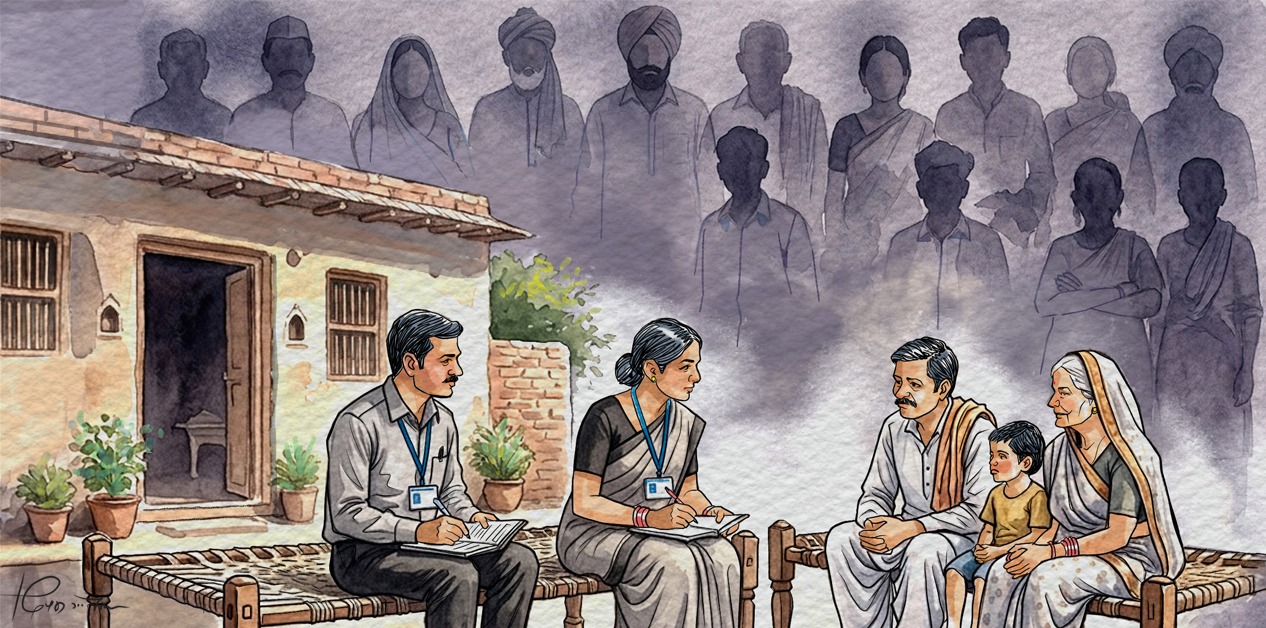
KATHMANDU: India has begun its 16th census after a gap of 16 years. As the most populous country in the world, this census is a matter of interest not only for neighbors like Nepal and China but for the entire world. Until the previous census in 2011, China was the most populous nation, with India following closely. However, in 2023, the United Nations declared India the world’s most populous country, noting its population had reached 1.42 billion compared to China’s 1.36 billion.
It is a global practice to conduct a census every 10 years, and India has traditionally followed this rule. Occasionally, censuses are halted due to war or pandemics. In India, the 2021 census was initially stopped by the COVID-19 pandemic. In Nepal, the census that was supposed to happen in June 2021 was delayed by six months and held in November due to the pandemic. While the pandemic has ended, it remains unclear why India showed reluctance to conduct the census for such a long time afterward.
Since April 1, the first phase of India’s census—the listing of houses and households—has begun. This task will take India six months. Once the household details are obtained, India will deploy approximately 3 million staff across the country in March 2027 to collect population data. This spectacle will be highly interesting to the world. The global population is currently centered on the Asian continent. According to the Office of the Registrar General and Census Commissioner of India, preliminary results will be made public in April next year. Based on current growth rate estimates, India’s population will reach 1.47 billion by then, after which India will formally declare itself the world’s largest population.
Methodology: De-Facto vs. De-Jure
There are two main methods for conducting a census: the De-Facto Method (actual presence) and the De-Jure Method (basis of residence). According to Dhundiraj Lamichhane, Deputy Chief and Spokesperson of the National Statistics Office, Nepal uses the Modified De-Jure method. India, however, conducts its census using the Extended De-Jure method. According to the book “A Treatise on Indian Censuses since 1981”, the British conducted India’s census using the de facto method. Historical records indicate that the British completed Indian censuses using the De-Facto method, and in their final census in 1941, they used an Extended De-Facto method. India has continued using that same method until now.
In the De-Facto method, people are counted exactly where they are found. To ensure no one was double-counted, European countries used to finish censuses in a single night using a massive workforce. Interestingly, they often chose a full moon night (“Moon Night”) to visit every house and count individuals where they stood. In the method used by India, a “cutoff line” is set for a specific day, and respondents are asked, “Where were you on May 1?” The respondent is then counted at that location. In the absence of an individual, family members provide their details.
In Nepal, a person is counted where they have resided for more than six months. For example, if someone from Rupandehi has been in Kathmandu for only five months for study or work, they are counted at their permanent address. But if they have been in Kathmandu for six months or more, they are counted in Kathmandu. This is called the Modified De-Jure method.
The Caste Census!
This Indian census is interesting not just because of the massive population size, but because India is collecting caste details for the first time in a century. Having started censuses under British rule in 1871, India published caste data until 1931. In 1941, caste data was collected but not made public. When India became independent in 1947, the first census was held in 1951, and since then, caste-specific questions were never included.
Prof. Yogendra Bahadur Gurung, former head of the Central Department of Population Studies at TU, explains that independent India stopped collecting caste data because the British had used the “divide and rule” policy by publishing such data to stir conflict between castes. “The Indian understanding was that the British created animosity by making caste data public,” Gurung says. “Therefore, after becoming independent, India removed caste details from the census.”
However, Gurung notes that India does conduct regular surveys of castes through large government structures like the ‘Anthropological Survey,’ which submits reports to the government. “Perhaps because the anthropological reports showed the caste situation to be favorable to the government, Prime Minister Narendra Modi became ready to include the caste questionnaire,” Gurung adds.
Because it is the first time independent India is collecting this data, many are calling this a “Caste Census.” In Indian census history, British-era counts are rarely discussed; the focus is usually on post-independence data. Thus, some Indian media say this is the first time caste accounts are being settled. According to the Pew Research Center, India is 79.8% Hindu, 14.2% Muslim, and about 6% Christian, Sikh, Buddhist, and Jain. Because castes haven’t been officially identified, numbers for castes and languages are mostly estimates. Generally, there are two main groups: Indo-Aryans (72%) and Dravidians (25%), with others at 3%. Within these are about 200 castes.
Nepal’s 1991 census connection
As the caste census debate rages in India, a similar memory is triggered in Nepal: the 9th National Census of 1991. This was a crucial time in Nepal’s history—following the fall of the 30-year Panchayat system and the restoration of multi-party democracy in 1990. Discussions on political, social, ethnic, and linguistic rights began, and communities became serious about their identity. Ethnic groups organized for rights, and for that, they first needed data. In the general election of 1991, the Nepali Congress secured a majority and formed the government. It was during this same period that a census was also conducted. However, in the three censuses carried out during the Panchayat era, data on ethnicity and language were collected.
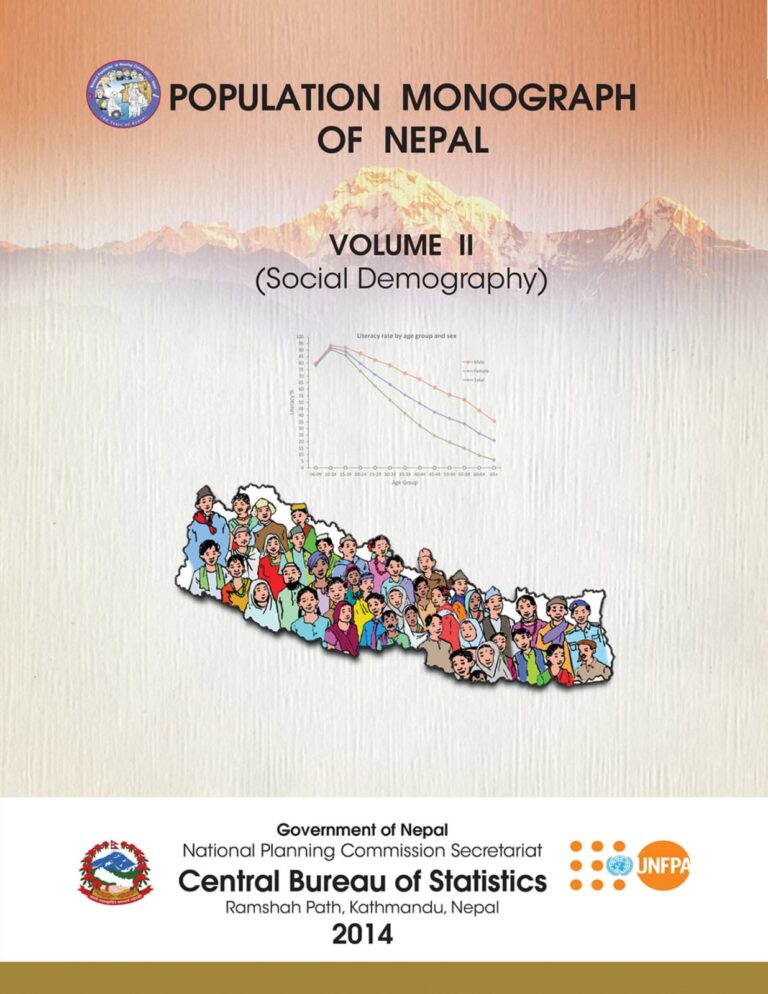
According to Prof. Gurung in the Population Monograph of Nepal 2014, Nepal had collected caste data since its first census in 1911, but it wasn’t published. “Rulers used caste and language data to build strategies and identify the power of ethnic groups, but they didn’t share it with the public,” Gurung says. The state then followed a “One Language, One Costume” policy, fearing that making numbers public would lead to demands for rights and conflict. Data on caste and language was collected in the census, but it was never made public. Therefore, in the post-democracy censuses, data collection was carried out in a way that allowed the population figures of different castes and languages to be published.
That census showed 59 castes and 31 languages in Nepal. Based on this, various ethnic organizations and the Nepal Federation of Indigenous Nationalities was formed. In Madhes, ethnic and community-based organizations were also formed. They fought for their rights. Ethnic data became an important tool for achieving political rights. Everyone launched campaigns within their own ethnic groups to encourage people to record their true caste, surname, and language during the census. Consequently, the numbers grew: 101 castes/92 languages in 2001, 125 castes/123 languages in 2011, and 142 castes/124 languages in 2021. The 1991 census was an unforgettable turning point that led to the mandatory ethnic representation we see today in Nepal’s three-tier governments and parliament.
In India, too, this census could become a turning point for marginalized, backward, and Dalit communities—similar to Nepal’s 1991 census. By understanding the real demographic situation of their caste groups, it could help them demand greater rights from the state. It may also assist in increasing their participation in Parliament and government. Indian citizens may seek a fair share of state resources based on population data after this census.
Despite all these possibilities, it is still not clear why Prime Minister Modi decided to move forward with a caste-based census. However, on the eve of the census, two issues have already spread widely in India. First, whether caste data will help the government design welfare programs for the upliftment of backward communities, or whether it will further strengthen divisions along caste lines based on population numbers.
This issue has also attracted attention from international media. The New York Times, in its April 3, 2026 edition, gave prominent coverage to India’s census, noting that this exercise in the world’s most populous country could reveal the real picture of how wealth and power are distributed in India.
The newspaper also stated that the results of the census could make it necessary to reconsider existing caste-based and gender-related policies in the country. It is being widely speculated that this census, which will reveal caste-wise population data, could reshape the future political landscape of India.
The results of this census will require redrawing of electoral constituencies in India. According to an Al Jazeera report on India’s census, the southern states have experienced declining fertility rates, which has led to relatively lower population growth, and consequently fewer constituencies compared to the northern states.
In contrast, northern India still has a high fertility rate and significant internal migration, resulting in a much larger population. As a result, northern states already have more constituencies than those in the south.
After this census, it is expected that the representation of northern India in the Indian Parliament will increase further, while the representation of southern India may decline. This has also raised concerns about a possible rise in North–South tensions within India.
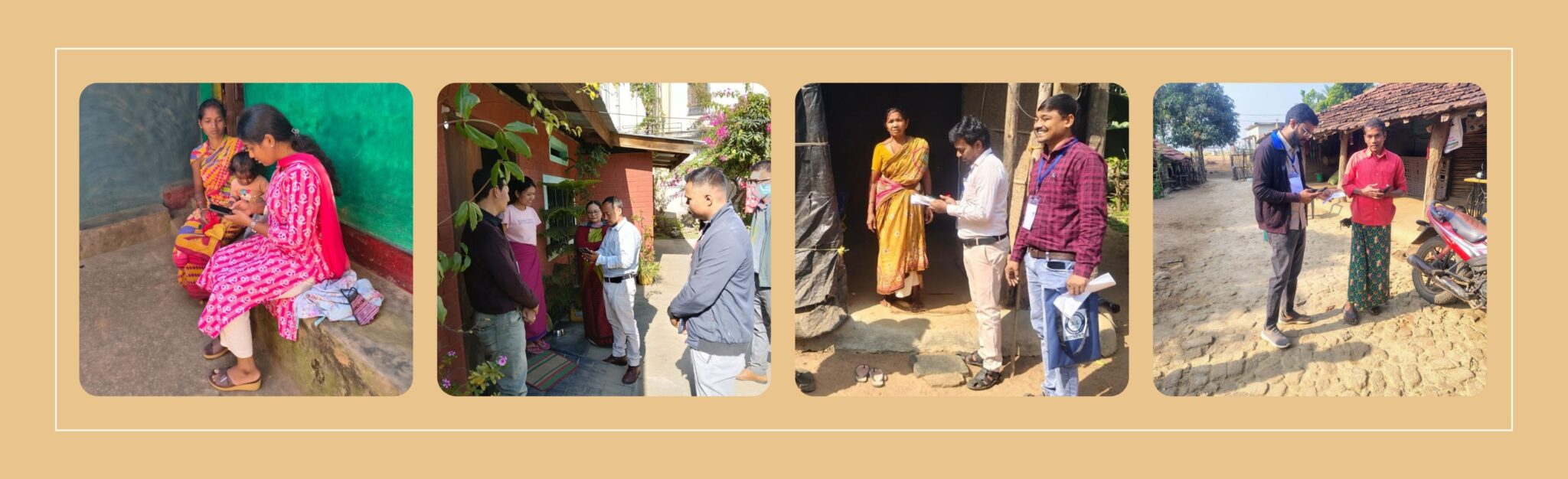
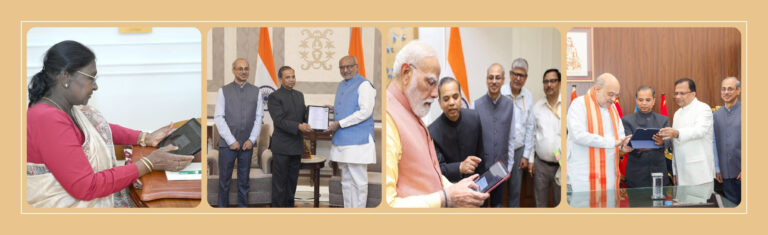
India, the world’s fifth-largest economy, is also highly advanced in the field of information technology. According to the data portal Statista, India’s literacy rate was around 81 percent in 2023. To make the census faster and more reliable, this time the census has been made paperless. Enumerators are collecting data from respondents using tablets or mobile phones. The Census Office has also developed an app through which respondents can fill out the questionnaire themselves. This allows willing respondents to log into the app and update their details. Because of this, India has also called this census a “high-tech census.” The country has deployed school teachers and health workers as enumerators and claims to have fully trained them for the digital census.
Nepal also attempted to conduct its 2021 census digitally. However, due to the lack of electricity, internet access, and digitally capable enumerators in all areas, this practice was only carried out in some wards of the Kathmandu Valley. According to officials from the statistics office, enumerators were not serious about entering data into tablets or mobile devices. As a result, in the name of digital enumeration, proper census work could not be carried out in many parts of Kathmandu. In some places there was overcounting, while in others there was undercounting.
Indian government officials claim that digital census-taking allows data entry and classification to be completed in a short time. However, conducting a digital census for such a large population is itself a challenging task. India, however, has taken on this challenge. Census officials describe the process of collecting personal data from nearly 1.5 billion people as the world’s largest administrative exercise.
Collecting personal details of 1.5 billion people through a 33-question questionnaire is itself a massive achievement. India is carrying out this task by mobilizing more than 3 million personnel. In Nepal, census work is usually completed within about a month. India, however, is taking seven months for the same process. For Nepal’s 2021 census, around 50,000 supervisors and enumerators were deployed. India has deployed 3 million personnel for its census. The personal data of 1.5 billion people is itself a data ocean, and managing and verifying this ocean is also a challenge for Indian census authorities.
Nepal will conduct its next census in 2031, five years from now. For that, India’s current census could also serve as a learning experience for us. Whether Nepal can fully implement the digital census that was piloted in the previous census may be understood from the success or failure of India’s census. On the other hand, Nepal’s constitution also requires that electoral constituencies be redrawn based on census data. India will also undertake the same process based on the results of this census. Therefore, the experience of India’s census can be an important lesson for us as well.
(Journalist Adhikari is a researcher on population affairs)