Kathmandu
Tuesday, July 28, 2026





Kathmandu’s latest eviction drive lays bare a 70-year failure to resolve landlessness in Nepal
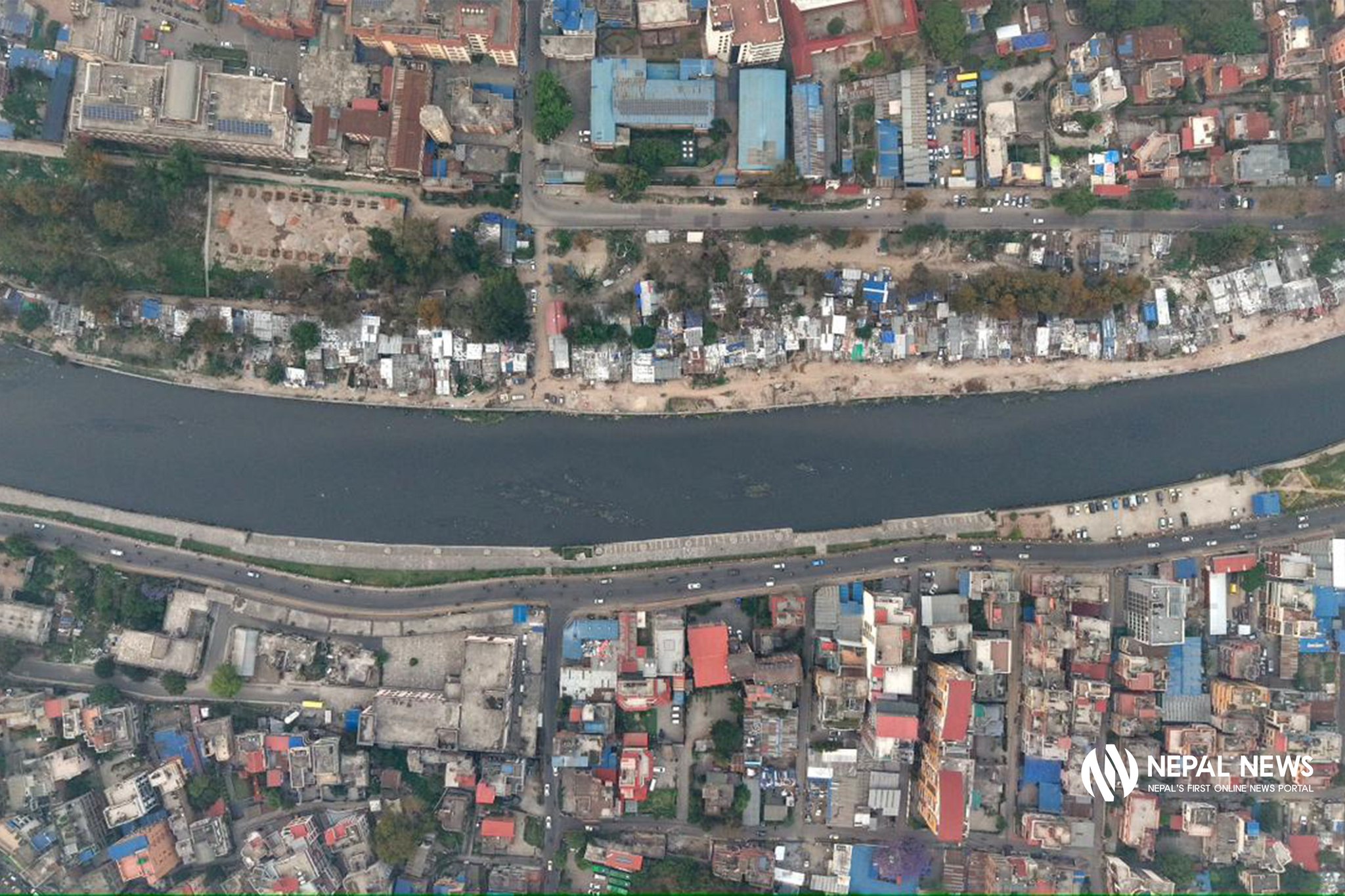
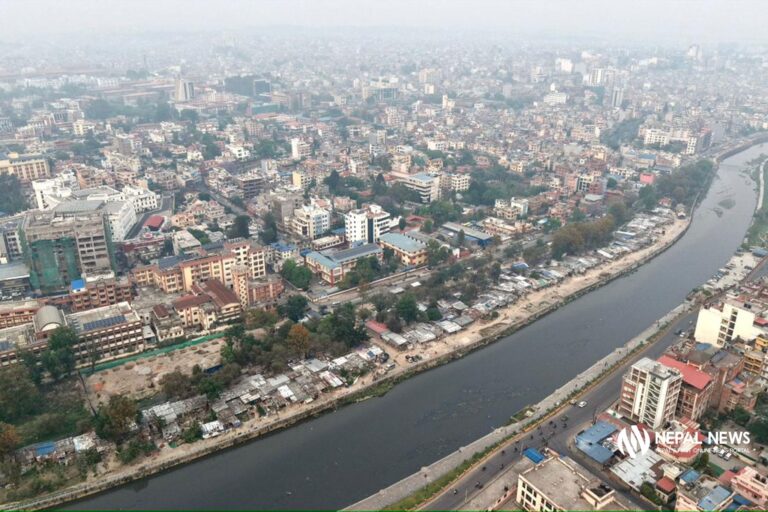
KATHMANDU: On the evening of Thursday, April 23, 2026, the loudspeakers came first. Before the bulldozers, before the surveillance cameras, before any arrests, it was the sound that settled over Thapathali’s riverbank settlement like a slow fog. Teams from the metropolitan police, Nepal Police, and the Armed Police Force moved through narrow lanes between corrugated tin walls and bamboo frames, their speakers crackling with warnings that by six on Saturday morning, the settlement would have to be emptied.
Families who had begun the day in the only homes they had known in Kathmandu spent the night folding clothes, stacking utensils into plastic crates, and arguing quietly about where they could possibly go. Some started leaving that very night.
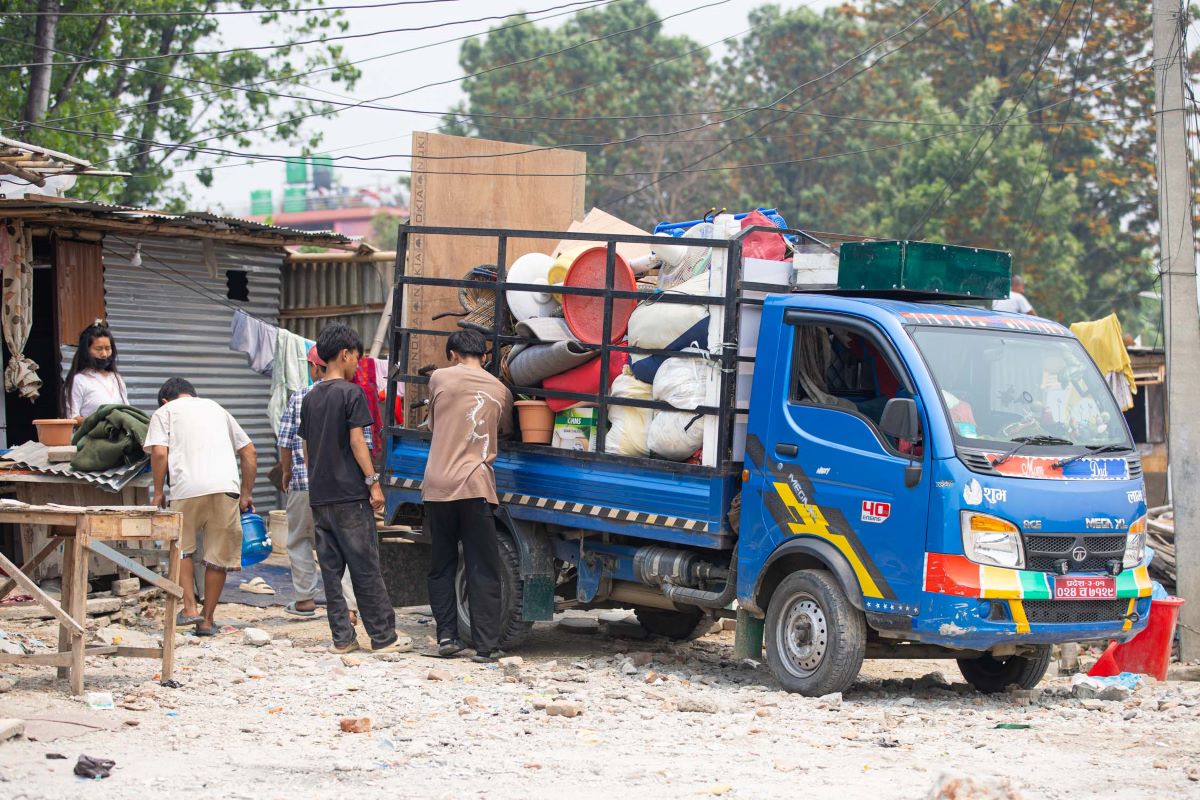
Images that spread on social media showed people loading salvaged furniture onto vehicles in the dark, children clutching school bags, and elderly residents being helped along muddy paths with their belongings tied in bundles. By Friday morning, the settlement that had long resisted repeated eviction drives was beginning to thin out, not so much in surrender as in fatigue and uncertainty.
The loudspeaker announcement marked the official start of what authorities described as the first phase of clearing squatter settlements along the Bagmati riverbanks in Thapathali, Sinamangal, Teku, and Balkhu. At the same time, the government publicly denied that any formal decision had been taken. Government spokesperson and Education Minister Sasmit Pokharel said no such resolution had been passed by the Council of Ministers, reflecting a familiar pattern in Nepal’s squatter politics where administrative action moves ahead even as formal accountability is deflected.

The push carried the imprint of Prime Minister Balendra Shah, who had earlier summoned the heads of Nepal Police and the Armed Police Force and instructed them to clear the Bagmati settlements within days, this time wielding the authority of the federal government that he did not have as Kathmandu’s mayor.
As the operation unfolded, legal and international pressure followed. On Friday, residents of Thapathali along with Gen Z activists filed a writ petition at the Supreme Court seeking an immediate halt to forced evictions, arguing that removing landless families without lawful basis should be stopped and any such notices quashed. They called for an interim order to prevent displacement without prior identification, verification, and alternative arrangements, and to bar the use of force by security agencies.
The same day, Amnesty International urged the government to suspend the eviction plans, warning that the process reflected a dangerous erosion of the rule of law and an increasingly authoritarian approach.
The organization expressed concern over ongoing public announcements to vacate settlements and stated that evictions carried out without meaningful consultation, prior verification, or guaranteed alternative housing undermine stated policy commitments and risk turning a governance challenge into a human rights crisis, stressing that any such actions must comply with international human rights standards.
To understand what is happening at Thapathali this week, you first have to understand that for most of the families living there, the Bagmati riverbank was never their first choice. It was simply the last place that would have them.
Children ask their parents the same question every morning before leaving for school: what will happen if the house is demolished, where will they go? Parents would reassure them that the house would remain standing, that they would one day move somewhere better once they finished their studies and found work. These are the conversations that take place inside ten thousand homes in Nepal’s squatter settlements: hope deferred, anxiety managed, the future kept deliberately vague because the present is already precarious enough.
The landless settlers’ story is not unusual. It is the story of the Maoist decade, of the 2015 earthquake, of drought and debt in the eastern hills, of a young person in the 1990s who heard there was daily-wage work in Kathmandu and got on a bus and never quite found a way to get land under his feet.
It is the story of a country where the top five percent of the population has historically controlled 37 percent of all arable land, where Dalit communities collectively own roughly one percent of land despite comprising more than thirteen percent of the population, and where over 2.1 million people live without formal land rights in some form.
The word the Nepali state uses for these people is sukumbasi, literally one who has no house for shelter, no private land to cultivate, no other reliable means of livelihood. The term carries a weight of condescension that most of those it describes refuse to use for themselves. It was originally a rural designation for someone without farmland, the most devastating possible condition in an agrarian society where land determined everything from food to credit to political voice.
Over decades it expanded to cover urban squatters, freed bonded labourers, conflict-displaced families, and people who have simply been failed by a land system that has never been seriously reformed.
The 1964 Land Act defines a genuine sukumbasi narrowly: someone whose family has not owned land for generations and who cannot purchase any through family income. By that strict legal definition, only around twenty percent of those living in Kathmandu’s riverbank settlements actually qualify for the most targeted forms of state protection and land distribution.
The other eighty percent are what officials call unorganized settlers: people who may own a small plot somewhere in their home district but cannot return to it, people whose landlessness is real but whose paperwork does not fit the official box, people who arrived in the city during a crisis and have nowhere left to go.
The ambiguity of those categories is not a loophole in the system. It is the system, built to deny, defer, and dilute the claims of the landless while allowing the state to gesture towards concern.
Nepal’s land crisis did not emerge from a series of unfortunate accidents. It was designed.
Under the Rana oligarchy and the earlier monarchical regimes that preceded it, fertile land in the Terai and the hills was granted as birta to court favourites, military commanders, religious institutions, and upper-caste elites.
The people already farming that land were rendered legal appendages to the grant, their labour included but their ownership excluded. Indigenous communities, particularly the Tharu people of the western Terai, cultivated land for generations without formal documentation because formal documentation was not how their society organized itself and because the state did not see fit to formalize their claims.
When malaria was eradicated from the Terai in the 1950s and 1960s and a wave of hill migrants moved in, they legally registered land that Tharu farmers had tilled for centuries, often by securing thumbprints of illiterate farmers on blank documents.
The freed Kamaiyas are among the most painful illustrations of how liberation without land delivers only the word and not the thing. The Kamaiya system was hereditary bonded labour in western Nepal, entire Tharu families enslaved across generations in Dang, Banke, Bardiya, Kailali, and Kanchanpur districts.
They worked for landlords in exchange for nothing more than food and clothing, their debts compounding across lifetimes, their children inheriting bondage by birth. Following sustained activism and a landmark demonstration in Dhangadhi in May 2000 involving over 10,000 people, the government formally abolished the Kamaiya system on July 17 of that year, freeing over 30,000 families.
Most of those freed families were immediately evicted by their former landlords from the land where they had lived and worked. The government promised rehabilitation including land. As of 2024, a full twenty-four years after liberation, 2,375 of the 27,570 registered Kamaiya families still had no land at all.
Those who received plots were often given unproductive, flood-prone land inadequate for subsistence farming. The Kamaiyas of Bardiya still live on riverbanks. Their children have grown up in the same condition their parents were supposed to have escaped.
The Haliya story is worse. The Haliya system was the hill counterpart of Kamaiya, hereditary agricultural bonded labour in the far-western hill districts. The government abolished it in September 2008. The rehabilitation programme that followed reached less than five percent of Haliya families.
The roughly 20,000 freed Haliya families were declared liberated without land, skills, or functional social support. Many continued working for their former landlords because no viable alternative existed. An EU-funded advocacy project completed as recently as 2023 was still documenting ongoing rights violations of freed Haliyas.
Then there are the Haruwas and Charuwas of the eastern Terai, adult labourers and their children who work under conditions of effective serfdom that continue despite legal prohibition. Unlike the Kamaiyas and Haliyas, they have never even been formally declared free.
No government has stood before cameras and announced their liberation. Their bondage is normalized, their presence in policy discussions close to nonexistent. The Bonded Labour Prohibition Act of 2002 covers them in principle. Enforcement in the remote eastern Terai is minimal and sporadic.
An ILO study found that in the twelve districts where these systems are most prevalent, approximately twelve percent of an estimated 942,000 households are affected by forced labour conditions. More than 45 percent of Haruwa-Charuwa workers operate without any formal contract.
Women sit at the intersection of all these systems. Though they contribute over 61 percent of agricultural labour nationwide, they control only around five percent of the country’s arable land.
Among Dalits, 36.7 percent of hill Dalits are landless and 41.4 percent of Madhesi Dalits have no land. When marginal, non-viable holdings are included, an estimated 75 percent of Dalits are functionally landless.
These are not statistics about some other country in some other era. They describe the structural condition of millions of people alive right now in Nepal.
Twenty-Two Commissions and a River That Keeps Flowing
Since the first land inspection commission was formed in 1952 under Naradamuni Thulung, Nepal has created 22 commissions, committees, and land reform bodies tasked with resolving landlessness. Fourteen were specifically squatter-focused. Three were broad land reform bodies. Five were land registration and management committees. Together they have distributed approximately 46,600 bighas of government land to around 150,000 families since 2013, a real but wholly insufficient number against the scale of need.
The structural pattern of failure across all 22 bodies is almost tedious in its consistency. Every time a new government takes power, the existing commission is dissolved and a new one formed, staffed with party loyalists.
The then KP Sharma Oli government formed its commission in March 2020. The Deuba government dissolved it eighteen months later and formed another, even while a Supreme Court challenge to that dissolution was pending. This churn destroys institutional memory, verification progress, database continuity, and public trust simultaneously. A dedicated software system developed by one commission to cross-check applications against national land records was simply abandoned by its successor.
The 22nd commission was formed on September 15, 2021 with broader legal authority than its predecessors, including the power to provide apartment-based collective housing in urban areas.
It signed memorandum of understanding with 680 of Nepal’s 753 local governments, registered over a million applications, and identified approximately 81,300 landless Dalits, 156,800 landless squatters, and over 783,000 unorganized settler families. Its term expired in September 2024 without completing distribution. Preparations for a 23rd commission were underway as of early 2026.
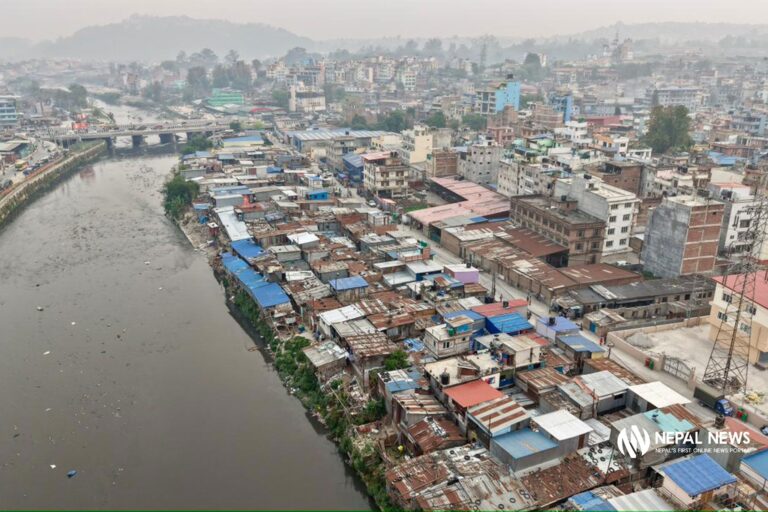
The Kathmandu Metropolitan City’s memorandum of understanding with the 22nd commission to jointly verify valley squatters, which would have created the data foundation for any rights-compliant eviction, was reportedly never properly implemented. The foundation for an eviction without that data is an eviction without accurate knowledge of who is genuinely landless and who is not.
Into this institutional wreckage stepped the Bagmati riverbank settlements. The valley’s squatter population has been growing in direct proportion to the state’s failure to address its underlying causes.
Around 1985 there were an estimated 2,000 squatters in Kathmandu. By 1992 the number had grown to between 8,000 and 10,000. The Maoist insurgency, which began in 1996, proved a major accelerant: conflict-displaced families poured into Kathmandu and occupied public land along river corridors.
By 2003 the city had 63 documented settlements. The political changes of 2006 gave the squatter movement new legitimacy and protection, and their numbers kept climbing. By 2022, the Bagmati riverbank alone was estimated to shelter 35,000 families.
The 2015 earthquake deepened the crisis in ways still unaccounted for. An estimated 900,000 households were severely affected across the hill districts, many of whom lacked secure legal tenure over the land where their homes stood.
Landless families in earthquake-affected areas found themselves doubly dispossessed: homes gone, land never legally theirs to begin with. Many migrated to Kathmandu in the years that followed, adding directly to the riverbank settlement population.
The earthquake also made visible with devastating clarity how tightly landlessness and disaster vulnerability are intertwined. Informal settlements on unstable riverbanks, occupied precisely because no one else wanted that land, expose the poorest families to the greatest seismic, flood, and landslide risk.
The Constitution promulgated just months after the earthquake promised justice to these displaced groups. Reconstruction policy was implemented through channels that systematically excluded those without land titles from the relief they needed most.
When the loudspeakers came to Thapathali in November 2022, they were carrying the political authority of a then-mayor named Balendra Shah who had arrived in office that summer on a wave of public enthusiasm for a different kind of politics. He was an engineer turned rapper turned independent politician, speaking the language of urban reform and institutional accountability in ways that made him feel genuinely unlike what Nepal had produced before.
The eviction drive he ordered that November was a disaster. Over 200 municipal police with bulldozers arrived at the settlement on November 28, having issued a ten-day notice with no alternative housing arrangement in place. Squatters resisted with stones and bricks. Eighteen police officers were injured, including the chief of municipal police. Three required intensive care treatment. The drive collapsed entirely. The police withdrew. Squatters afterwards erected barricades, burned tyres, and chanted slogans demanding Shah’s resignation.
The failure was not incidental. Urban planners noted that the city had not studied past eviction failures, had not consulted its own ward-level officials, had not coordinated with the federal agencies that hold primary jurisdiction over the Bagmati riverbank land, and had not prepared any resettlement alternative.
The High-Powered Committee for Integrated Development of Bagmati Civilization, known as the HPCIDBC, is the federal body that actually controls the Bagmati riverbank corridors. Municipal police were repeatedly deployed on federal land without adequate federal authorization, creating jurisdictional confusion that undermined every attempt.
The most damning case study of this approach predates Shah entirely. In 2012, the government relocated squatters from Thapathali to a resettlement colony at Ichangu Narayan in the Nagarjun hills, spending Rs 230 million on the project. Not a single displaced family moved in.
The site lacked public transport, reliable water, and employment access, and had been designed with no community input whatsoever. The families who were evicted scattered rather than moved to Ichangu. The people who resisted stayed in Thapathali. The lesson that settled into the riverbank community from that experience was simple and has proven durable: resistance works, compliance does not.
Those landless settlers who joined the protests in November 2022 put the community’s position clearly and without ambiguity. They were not saying they would never leave. They were saying the government needed to first arrange somewhere for them to go. That is not an extreme position.
The Supreme Court, in its July 2024 ruling ordering evacuation of riverside settlements, said precisely the same thing: the government must first provide proper housing to genuinely landless families, with direct financial assistance where needed, before clearing settlements.
The court assigned joint responsibility for this to the Ministry of Urban Development and the HPCIDBC. The Patan High Court, in April 2023, refused to block KMC eviction notices but explicitly said petitioners able to prove genuine landlessness could invoke state protection, and that the government would be legally obligated to provide alternative housing in such proven cases.
The courts gave a green light. They also painted the lane.
Prime Minister Balendra Shah is not a man who forgot about Thapathali. When he sat down on Wednesday with Nepal Police’s Inspector General Dan Bahadur Karki and Armed Police Force Inspector General Raju Aryal and told them to clear the settlement by the weekend, he was returning to unfinished business with new tools.
The political moment surrounding his decision tells its own story. On Thursday evening, alongside the loudspeaker announcements urging residents to leave, police began installing CCTV cameras on utility poles near the settlement.
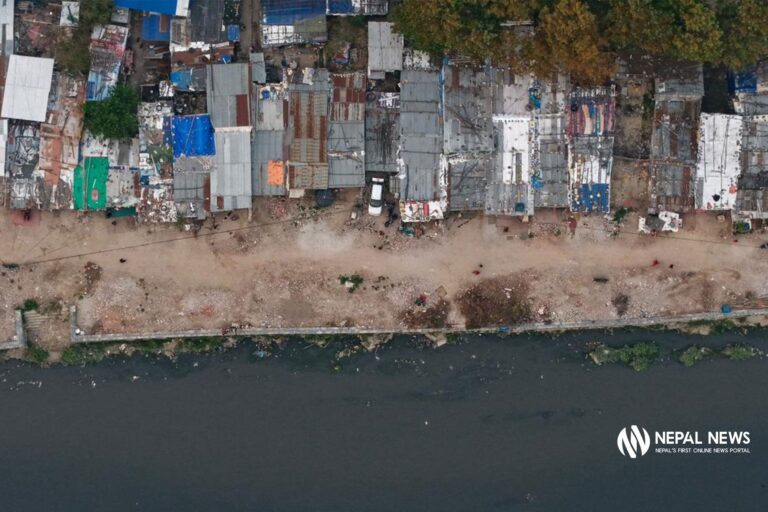
Kathmandu Police spokesperson SP Pawan Bhattarai confirmed the installation, saying it was part of a regular programme to make Kathmandu safer, and that Thursday simply happened to be Thapathali’s turn. The coincidence of timing drew open concern from observers watching young people gather to protest the eviction plans in the very area the cameras were now surveilling.
Also on Thursday, the acting chairman of the Sukumbasi Morcha, Narayan Parishrami, known also as Narayan Pariyar, was arrested. Police spokesman Bhattarai confirmed the arrest was connected to a banking offence investigation, stating that he had been listed as a fugitive and had now been apprehended for questioning.
The arrest happened to coincide precisely with the eve of the eviction. Parishram had previously been accused of using force against police during an earlier eviction attempt. Whatever the legal merits of the arrest, its timing made the political atmosphere around the settlement feel unmistakably like a crackdown.
The ruling RSP leaders have said there is a difference between taking shelter and occupying land. They have focused that the path forward is registration, organization, and protection rather than the present arrangement. The distinction they draw is not unreasonable on its face.
The data genuinely shows complexity: roughly 20 percent of Thapathali’s residents qualify as genuine sukumbasi under the strict legal definition, while others have land elsewhere or have maintained their presence in riverside settlements for reasons that include convenience, proximity to employment, and community solidarity as much as pure destitution.
But the political memory surrounding Rabi Lamichhane is also very present in this moment. GenZ Red Force Nepal, in a statement issued by its central coordinator Smriti Timalsina, reminded leaders including Rabi Lamichhane of the specific promise made during the 2026 election campaign: that RSP would not remove squatters but would instead stand in front of the bulldozers themselves.
Raksha Bam, a prominent figure of the GenZ movement, went on social media to ask Lamichhane directly whether he would come to the settlement and stand behind that promise. Lamichhane had as recently as April 2026 told voters in Kalika Municipality in Chitwan that the squatter issue would be resolved permanently through a dedicated commission after the election, and that long-term solutions would be implemented. The bulldozers were now being prepared before any commission had been formed or any verification conducted.
By Friday morning, April 24, 2026, what was happening in Thapathali had taken on the quality of a quiet emergency. Families who had spent years resisting were now hurriedly moving their possessions, knowing the dozers were coming the next day but not knowing where they would go. The images were of people in motion, carrying things, not arriving anywhere.
This is what eviction without resettlement actually looks like, not in theory but in practice. It does not look like bulldozers and television cameras, or at least not only that. It looks like a father dismantling the home he built with his hands on land he does not own, loading pieces of it onto a vehicle, driving into a city that has no room or plan for him, and calling it leaving. It looks like a grandmother trying to carry what she has accumulated over forty years of daily wage labour in Kathmandu’s construction sites and domestic kitchens. It looks like children who wake up uncertain whether school is happening today.
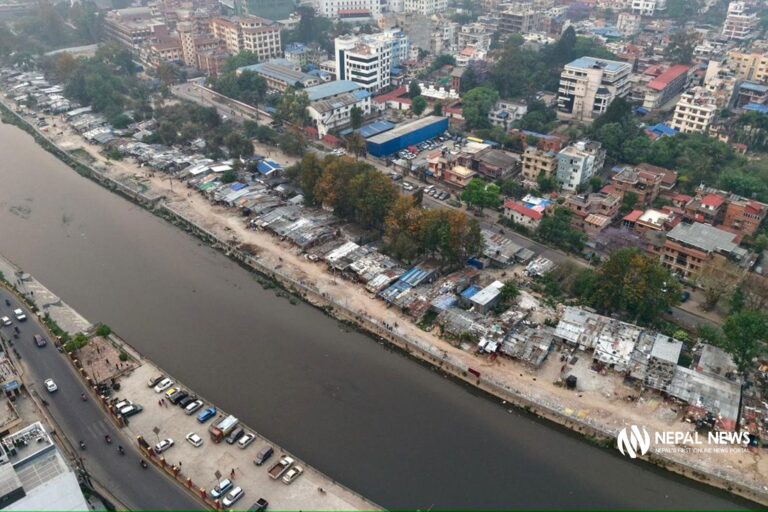
The settlement had around 4,000 families across various sites along the Bagmati in the Kathmandu Valley, with Thapathali being among the most prominent and best organized. The people living there are predominantly internal migrants from districts across the country: Udayapur, Solukhumbu, Dang, Sindhupalchowk, Surkhet, Kalikot, and dozens of other places from which drought, conflict, the 2015 earthquake, or simple landlessness pushed people toward the capital.
They are not squatters by preference. They are squatters by the cumulative failure of the state that was supposed to ensure them a foothold in the country of their birth.
What they had built in Thapathali was not luxury. It was corrugated metal and bamboo and plastic sheeting, structures that flood every monsoon and shake when trucks pass on the bridge. But it was also community, a child’s school, an employer who knew the way to your door, a water source that worked most of the time. The government’s alternative arrangements, when asked about, pointed to a resettlement site. The shadow of Ichangu Narayan hung over that conversation. Nobody who remembered 2012 trusted a resettlement site they had not seen, verified, and chosen.
Nepal’s 2015 Constitution is, on paper, among the more progressive in South Asia when it comes to land rights and housing. Article 37 guarantees every citizen the right to appropriate housing and prohibits eviction from one’s residence except in strict accordance with law.
Article 16 guarantees the right to live with dignity. Article 40 on Dalit rights explicitly mandates the state to provide housing and land to landless Dalits once. The Constitution commits the state to identifying squatters, rehabilitating them, and guaranteeing land and social security to economically backward groups.
The Land Related Problems Resolution Commission warned in early 2025 that evictions without proper resettlement plans violate both constitutional rights and international humanitarian law.
Three UN Special Rapporteurs wrote to the Kathmandu Metropolitan City in January 2023 expressing alarm at forced evictions without adequate housing alternatives. Amnesty International Nepal has consistently documented eviction attempts as potential state-sponsored human rights violations when conducted without prior resettlement.
The gap between what the Constitution promises and what has consistently happened is not a legal gap. It is a political one. Every government since 2015 has had the constitutional mandate, the statutory tools, and the international guidance.
What has consistently been absent is the political will to prioritize the landless over electoral calculations, and the administrative courage to undertake the slow, unglamorous work of verification, resettlement planning, and community consultation that the law actually requires.
The Supreme Court’s July 2024 ruling was important precisely because it tried to close this gap procedurally rather than substantively: you may evict, it said, but you must first provide proper housing. That sequence, housing before eviction, is the difference between a rights-compliant operation and a violation. The question that the weekend’s planned dozers raises is which order the current government intends to observe.
It is worth saying plainly what many land rights advocates in Nepal have said, and what the data accumulated over seven decades of commissions, evictions, resettlement failures, and broken promises makes difficult to deny: the sukumbasi problem has been more useful to Nepal’s political class as a permanent grievance than it would be as a resolved problem.
Every major political party, Nepali Congress, CPN-UML, and the various incarnations of the Maoist party, has promised squatters land and resettlement if voted into power. Every such government has abandoned those promises once in office.
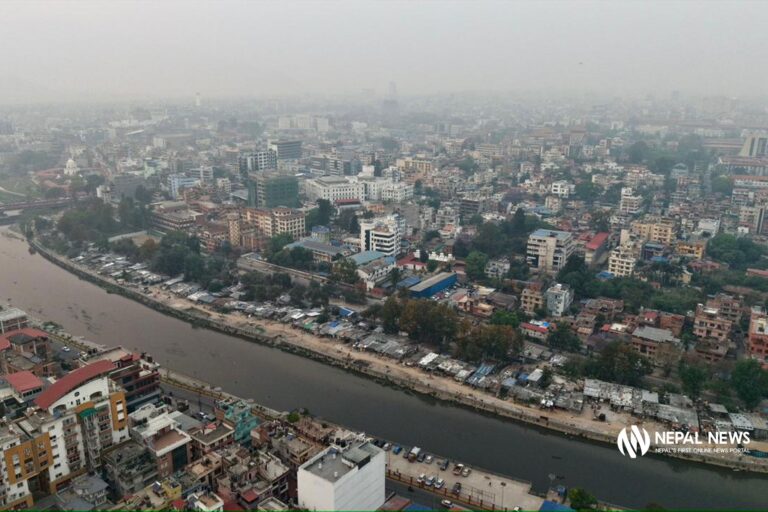
Squatter communities have been mobilized as foot soldiers for street protests, as reliable vote banks whose loyalty could be maintained through promises rather than delivery. Land distribution has become, as one land rights activist described it directly, politically motivated rather than need-based, with genuine landless families repeatedly bypassed in favour of connected applicants.
The RSP came into this political system promising to be different. Rabi Lamichhane’s electoral campaign was built substantially on the language of fighting for ordinary people against the established parties that had failed them. The squatter communities of Kathmandu Valley were among the people who heard that promise and believed it. They are watching now to see what it meant.
Balen Shah’s situation is simultaneously a conflict of interest and a historic opportunity, and which one it becomes will depend entirely on the decisions made in the coming days and weeks. As mayor, he attempted eviction through confrontation and failed. He understands the jurisdictional gridlock that has paralyzed every previous attempt.
As prime minister, he controls both the federal authority that governs Bagmati riverbank land and the political capital of a landslide election victory. He has the power to form a credible new land commission, to mandate resettlement before clearance, to commission an independent and politically insulated verification of who actually qualifies as genuinely landless among the settlement population.
What he appears to have chosen, at least in the opening moves of this week, is the visible exercise of state power: the loudspeaker at night, the CCTV on the pole, the arrest of the squatter federation’s acting leader the day before the dozers were scheduled to arrive, families carrying their belongings into uncertainty while official spokespersons denied that any formal decision had been made.
The Kathmandu story is the loudest story because it has cameras and proximity to government offices and a political class that lives within sight of the settlements it is trying to clear. It is not the worst story.
In the far-western hills, freed Haliya communities still live in remote villages without reliable road access, schools within reach, or healthcare facilities. Their bondage ended on paper in 2008 and continues in practice through the absence of any viable alternative to returning to their former landlords’ fields.
In the eastern Terai, Haruwa-Charuwa families remain trapped in debt cycles that the state has acknowledged but never seriously moved to break. In the Terai’s Kamaiya communities, people who were freed in 2000 are still farming marginal land with poor soil and flood risk, sometimes sharecropping with the same landlords who formerly held them in bondage.
Women across all these geographies experience landlessness through additional layers of exclusion: excluded from land titles under caste hierarchy, excluded from inheritance under prevailing customs, contributing the majority of agricultural labour while owning almost none of the land their labour maintains.
The Bagmati settlements are the political surface of a crisis that runs through almost every district of Nepal, through its paddy fields and its terraced hillsides and its forest margins and its remote mountain valleys.
Clearing Thapathali addresses none of the structural conditions that fill Thapathali back up each time it is cleared. The people who arrived there came from somewhere. If that somewhere is not addressed, there is nowhere for them to go except somewhere else that is, in all material respects, the same situation.
A genuine resolution would require at minimum six things that no government has yet sustained simultaneously: a single national database of landless individuals verified across government tiers, differentiated policy responses by geography and community type, constitutional compliance as a non-negotiable procedural floor, legally binding timelines with independent monitoring, statutory protection of the land commission from partisan interference each time a government changes, and serious engagement with the fact that five percent of Nepal’s population controlling 37 percent of all arable land is not a footnote to the sukumbasi problem but its root.
By Friday afternoon on April 24, 2026, the Bagmati flowed as it has always flowed: brown and carrying whatever the city upstream has thrown into it, indifferent to the argument taking place on its banks. The settlement was thinning out. Some families had gone to relatives in other parts of the city, some to other informal sites, some to a resettlement location whose adequacy remained disputed and unverified.
Narayan Parishram was in police custody. The CCTV cameras were mounted on the poles. The government was both preparing to deploy bulldozers and officially denying it had decided to deploy them. Rabi Lamichhane had not appeared at the settlement with his chest forward. The RSP’s spokesperson had said that taking shelter and occupying land are different things, which is true, and had not explained how the government intended to tell the difference at scale, with verified data, in time.
For parents who had been telling their children that the house would remain standing, the calculus had changed. Whether they moved before the dozers arrived or after, whether they found a place that worked or joined the invisible drift of families who go from one precarious site to another across the city, the question their children asked them every morning before school would not stop being asked. It would simply be addressed to a different address, wherever that turned out to be.
The 22 commissions did not solve this. The Maoist revolution did not solve this. The 2006 political transformation did not solve this. The 2015 Constitution did not solve this. The 2024 Supreme Court ruling has not yet solved this.
The dozers will come. The settlements will be cleared, at least partially, at least in the sites that are most visible, most televised, most useful as evidence of a government that acts. And somewhere in the weeks and months that follow, the slow catastrophe that has been building since before the first land commission in 1952 will continue to produce its predictable outcomes: families without land, cities without plans, commissions without completion, and a river that does not care whose home stands on its bank.
The only question that has ever mattered in Nepal’s sukumbasi crisis is not whether the settlements can be cleared. They can be cleared. They have been cleared before.
The question is whether the people who live in them can finally, after seven decades of documented failure, be given the thing the Constitution promised them, the thing that every commission since 1952 has been formed to deliver, the thing that distinguishes a government from a bulldozer: a place to stand.