Kathmandu
Saturday, December 20, 2025





We are in an age where trailers decide the success of a movie
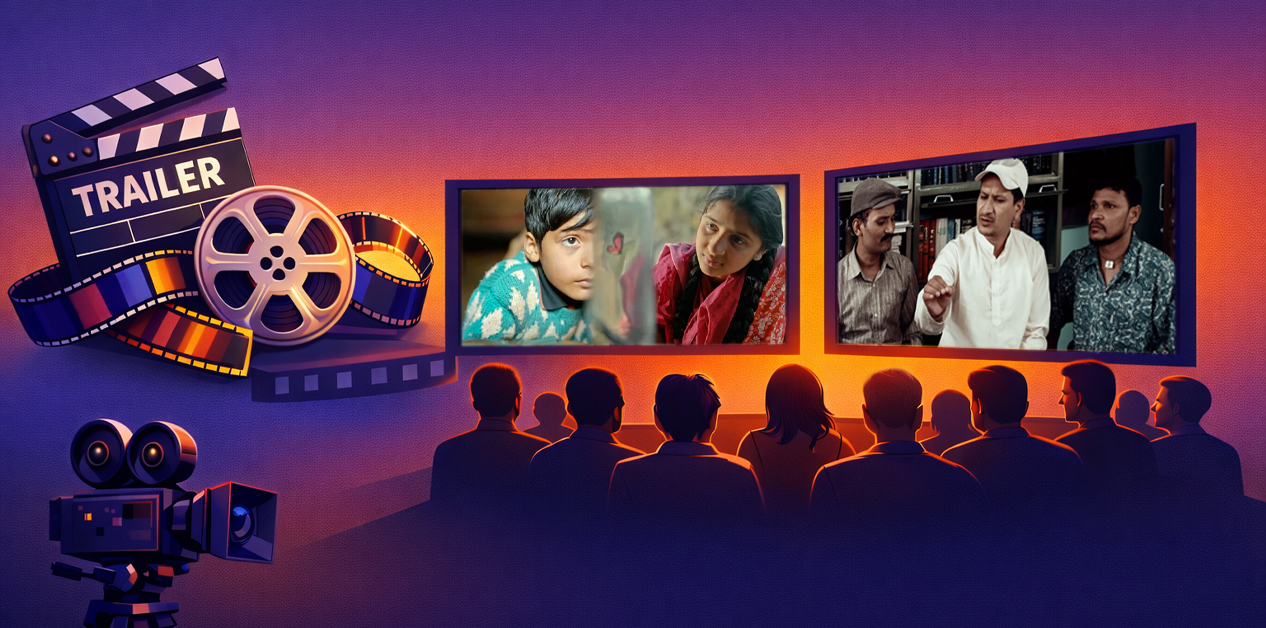
KATHMANDU: Cinema trailers are no longer limited to the theaters; with the access to the internet, they reach millions of viewers at once. The more viewers they reach the more the impact and importance of trailers.
Film director Dipendra Lama says, “Like the general audience, the trailer is the decisive basis for me too in choosing whether to watch a film or not.”
Trailers made to provide information about a film are a powerful means of promotion, which is directly linked to the business of the film. Lama, the director of hit films like 6 Maya Chhapakkai and Dui Numbari, goes so far as to say, “For all the films of mine that pulled audiences, it was because of the trailer. And for those that didn’t, that too was because of the trailer.”
Since it creates an impression about the film, the more attractive and artistic the trailer is, the more it arouses curiosity in the audience.
The defining quality of a trailer is that it conveys the main theme and overall feel of the film to the audience within a short span of time.
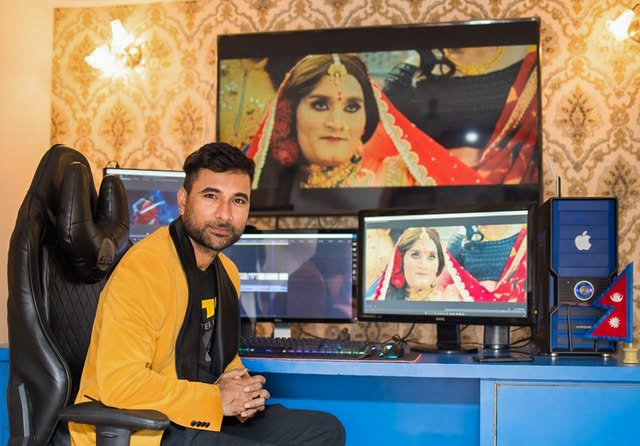
Agencies and experts are involved in the production of trailers from Hollywood to Bollywood. In Nepal, however, there is a shortage of human resource that can edit and prepare trailers, says Sahil Khan, the Nepal’s first film editor to carve the identity of a trailer expert for himself. According to him, he makes 60 to 70 percent of the trailers of the films released in Nepal annually.
Regarding the importance of trailers, he says, “Films with more trailer views have a strong chance of having a good box office opening. That is why it is being taken more seriously in Nepal than before.”
Now, with the influence of social media, if any part or dialogue of a movie trailer is played, it spreads through TikTok and Reels, which contributes to increasing the ‘hype’ of the film.
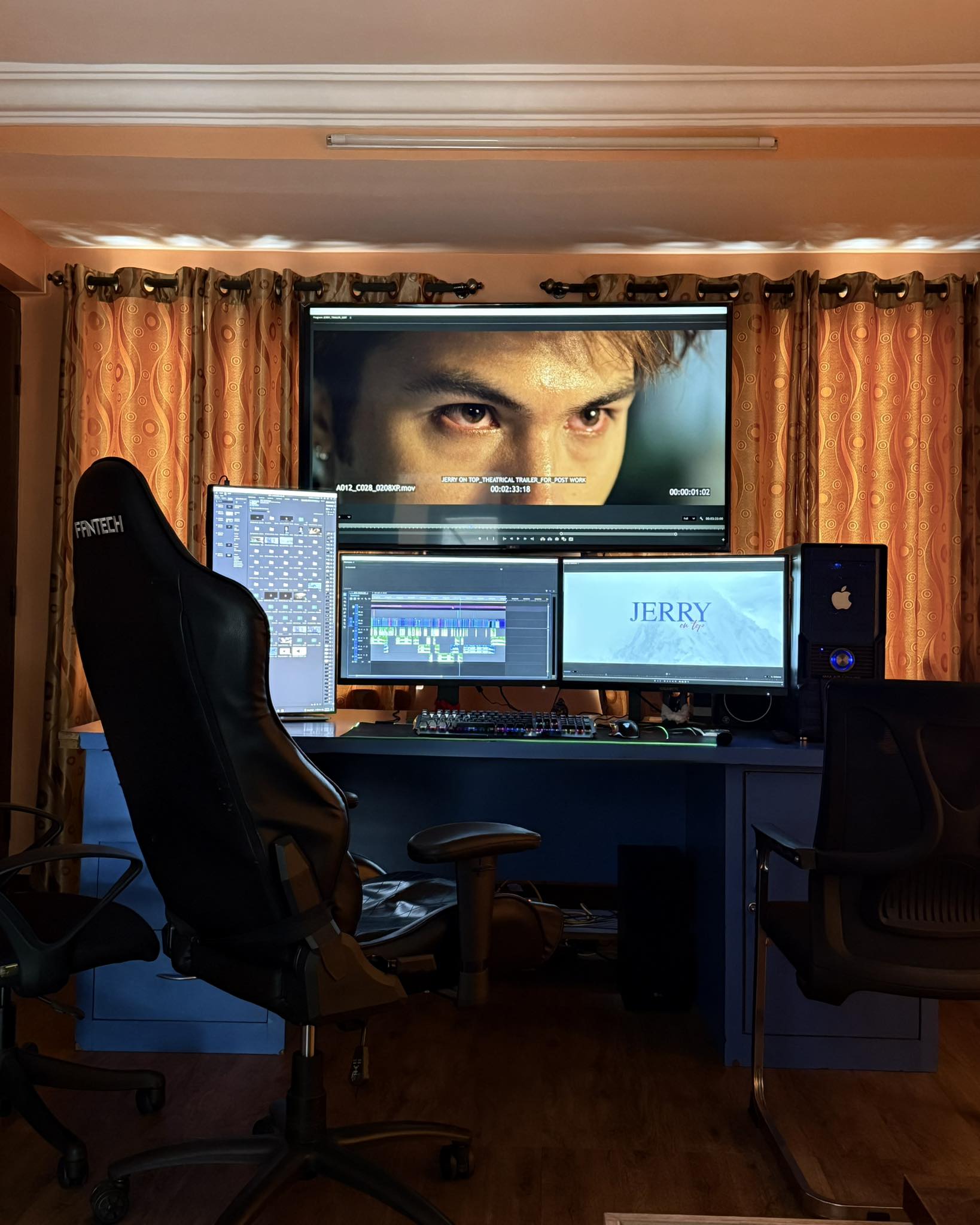
Khan, who has been active in this field for two decades, edited trailers for 35 films last year. This year too, he has already made 20 trailers. These include trailers for films such as Anjila, Jerry on Top, Aa Baata Aamma, among others.
Khan is a film editor who established trailers as a professional genre rather than increasing the number of trailers. Today’s trailers are presented in a storytelling style, giving a sense of beginning, middle and end.
Khan, who entered the film industry in the early 2000s, shares the experience that a trailer was considered a combination of a few songs, a few dialogues, and a few fight scenes back then. “There was no storytelling. The content of the film was not understood, the story would be hidden,” he says.
Mitra D Gurung, who has spent nearly two decades in film editing, has edited dozens of films including the Jatra series, Mahapurush, Paraan, and Ae Mero Hajur 4. He says that nowadays, it is a common practice to give a ‘hint’ of the story in most trailers.
He says, “In the past, 30-second promos would be shown on television. Now, the time limit is not what it used to be. And, mediums like YouTube, TikTok, and Reels have been added.”
Producer/director Ashok Sharma recalls that in the days of reels, trailers were rarely made, and even if they were made, they only reached a small group. He says that with the development of digital technology, trailers became a priority.
“Due to digital technology, the reach and impact of trailers has expanded,” he says, “Nowadays, trailers have a great impact on the promotion of films and even on business.”
According to Khan, trailers have been accepted as a separate genre professionally for the last decade. The first ever trailer he made was for a movie by Rose Rana and he took five thousand rupees for that. Having edited trailers for more than 200 films so far, he says, “Now I charge one hundred and fifty thousand rupees. I work on an average of two to three films a month.”
Who makes trailers better?
Two types of practices are in play in the film industry – either the film editor himself prepares the trailer or an external editor is hired for the job. There are also two schools of thoughts behind these practices. The first holds that the one who edited the film should also cut the trailer.
The second opinion believes that having an external editor make the trailer adds a different perspective. Khan belongs to the latter camp. In his opinion, the trailer editor’s mind is fresher. When one works with a sole focus on the trailer, the mind naturally aligns with that purpose.
Kiran Shrestha, who is involved in editing or cutting trailers for films like Kalo Pothi, Shambala, No Winter Holidays, and Aina Jhyalko Putali, says that it is easier to cut the trailer of the film for the person who has himself edited the film. However, he adds that cutting the trailers of other’s movies teaches new things and gives new perspectives.
Nimesh Shrestha’s name comes at the forefront of the list of those who do both film editing and trailer cutting. Active in the film industry for more than a decade and a half, he is the editor of films like Kabaddi series, Jaari series, Dasdhunga, and Kalo Pothi.
He says that he cuts the trailers of most of the films he has worked on himself. “Even now, the film teams I have worked with want me to cut the trailers to the extent possible.”
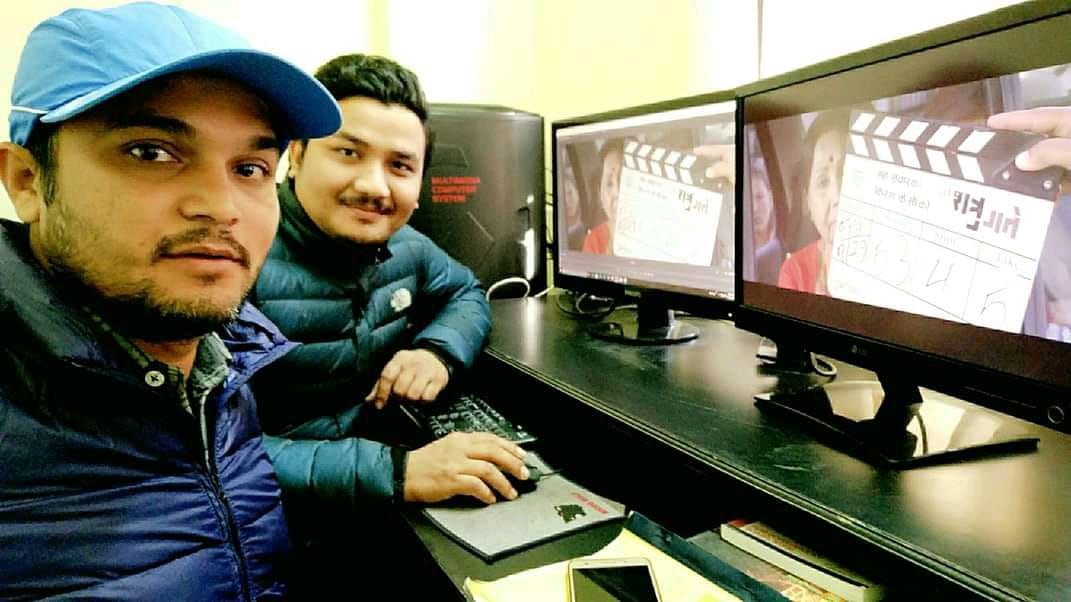
Gurung, a film editor who has been active for the past two decades, prepares the trailers of 75 percent of the films he edits. According to him, there is no fixed rule whether to get the trailers prepared by the film editor or ask others to do the job. He says, “I myself cut the trailers of all films of director Pradeep Bhattarai. He likes to work with me, and I also enjoy cutting the trailers of his films.” He has also cut the trailers of Paraan, the highest grosser this year, and Jhari Pachhiko Indreni, which was released last Friday.
Both Gurung and Nimesh say that they decide whether to edit a film trailer or not depending on their workload, mood, and the will of the film production team.
When there is a need for an external editor, usually Sahil is approached. Editor Nimesh says, “Sahil is dedicated to this work, so giving him the job saves time.”
Usually, it takes three to four days to make a trailer. However, since it requires mood, concept, and energy, he sets aside at least a week to prepare a trailer.
Gurung says, “Making a trailer is a challenging and cumbersome task. Sometimes, you don’t feel like cutting a trailer for a particular film. Even if you set out to do it, you end up feeling stuck. In such situations, the help of a trailer editor is sought.”
Nimesh considers trailer editing to be more challenging and tedious than film editing. “Since it is the most important aspect of a film’s marketing and audience impact, it should not be taken lightly,” he says, “Earlier there was excitement, now the mere mention of a trailer makes me tired. I also find it cumbersome. When I am not in the mood or when I have a lot of other work to do in the film, I am not very enthusiastic.”
Short but challenging
Editors consider the task of attractively condensing a two- to three-hour long film into an average of two minutes and 30 seconds a very challenging.
According to Khan, it takes an average of three to four days to cut a trailer. He says, “It takes time to think about where to start, where to end, what emotions to cut, and at what speed. After that, more than 90 percent of the work is done in one take.”
Nimesh also says that it takes time to create a concept. Once the idea is clear, the actual editing is much faster, he reveals.
However, some trailers take a longer time. It took Khan 18 days to make the trailer of Bhairav. Editor Gurung says it took him eight to ten days to cut the trailer of Jhari Pachhiko Indreni .
He has himself cut the trailers of more than 75 percent of the films he has edited. Previously, trailers were prepared by a team of directors, producers and editors, but of late the trend of entrusting the task to experts has increased. This is establishing trailer editing as a separate genre.
Today’s trailers use the best and strongest scenes and dialogues. There is a competition to make the presentation artistic. And, trailers are made with the intention of providing information about the genre and theme of the film. This is also increasing the competition for artistic presentations.
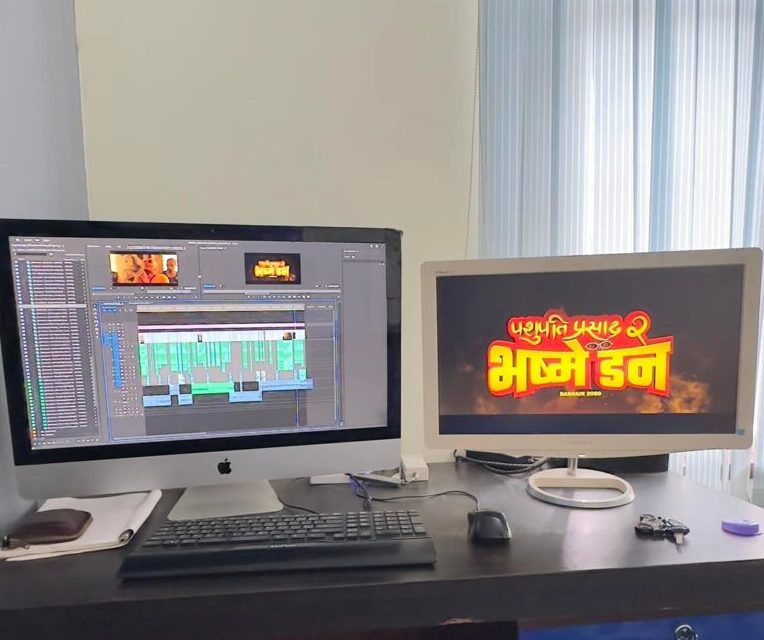
Editors Gurung and Nimesh consider it a good idea to have trailer editors in the film industry because trailer-making is a very creative job.
Director Lama, however, disagrees. He says that he makes the editors of all his films to cut the trailers according to his own ideas. He argues that an outside trailer editor cannot understand the story of a film as much as its director and editor.
He adds, “Even abroad, trailers are made according to a formula. Nepali trailers are also made according to a formula. That is why I sit down with my film editor and make trailers based on my own ideas.”
Trailer vs. Film
Many of the films made in Nepal fail to attract audiences to the theaters. Of the films made around the world, only a few really stand out in the eyes of the audience and critics.
However, trailer editors include the best parts of the film in the trailer. They try to make the trailer of even an average film interesting. Nimesh says that it is not possible to make a trailer dull knowingly because the film is average.
He says that he prepares the trailer of a movie as a separate story. He says that he draws from the plot of the film to create the plot of the trailer version, “Sometimes it matches the film, sometimes it differs. I adopted this style in Jaari 2.”
Khan says, “My effort is ensure that audiences reach the cinema halls and the movie does good initial business.”
According to Nimesh, the audience forgets the trailer once they enter the cinema hall. The story takes over after that.
Khan starts thinking about cutting the trailer of another film after submitting the trailer of one film. That is why the trailer editor does not get emotionally attached to the success or failure of the film.
That is why editors say that a trailer cannot guarantee a film’s success. Even so, the films that do well generally also have trailers that are talked about. However, there are also cases where trailers that trend widely are followed by films that ultimately fail.
Of late, the practice of making trailers trending, even by spending for it, has been on the rise. There are also accusations of misleading the audience in the pursuit of making teasers/trailers a hit. Recently, the actress of Bigul, Benisa Hamal, wrote a Facebook status saying that the trailer of the movie included things that were not in the entire film.
She has written, accusing such practices of misleading promotion by including scenes that are not in the film – “I disagree with the tendency to use themes unrelated to the film or to exploit others’ emotions for publicity. If something that is not in the film is shown in the teaser just for publicity, I do not support such a practice and do not want to be a part of it.”
What actress Hamal said in the context of teasers is worth noting. When the balance between a trailer and the actual film is lost, the image and credibility of the film becomes weak. This can also leave audiences disappointed.