Kathmandu
Saturday, February 7, 2026





As India moved to absorb Sikkim, its last Chogyal (king) sought help from King Birendra. Nepal’s reply was blunt: it was itself trapped under Indian pressure
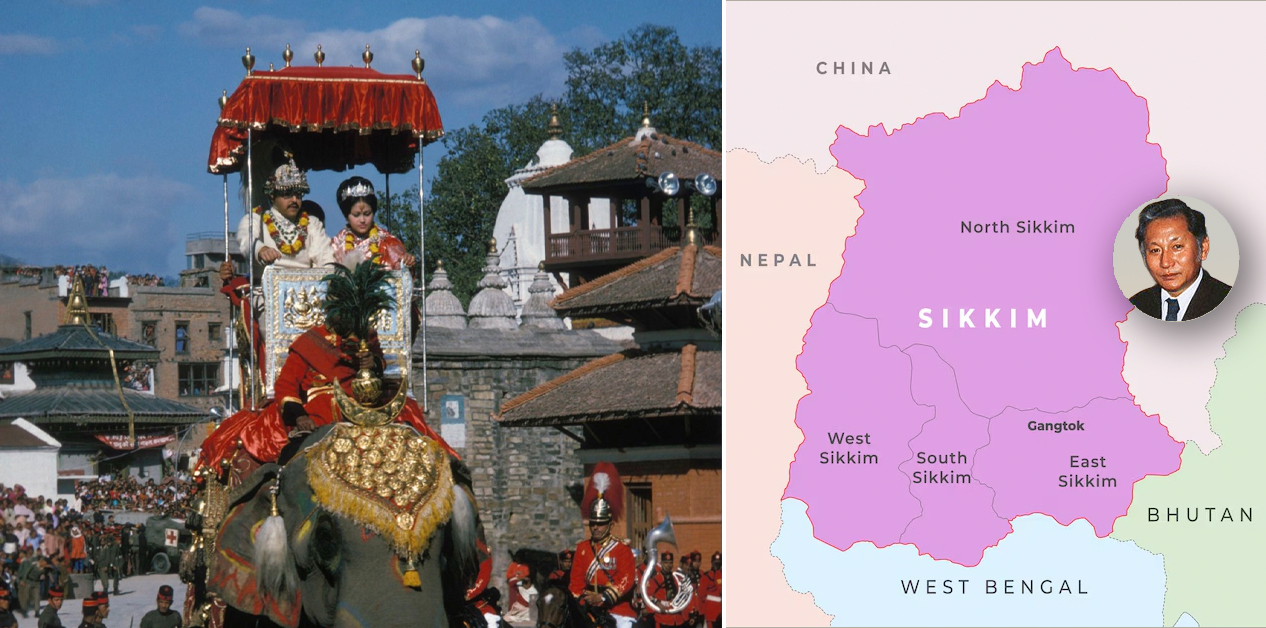
KATHMANDU: With the rise of Indira Gandhi as India’s first woman prime minister, the country that felt the greatest sense of suspicion was Sikkim itself. After the mysterious death of Lal Bahadur Shastri in Tashkent in the then Soviet Union, Indira Gandhi was sworn in as India’s third prime minister on 24 January 1966.
Just nine months before Indira assumed office, Palden Thondup Namgyal had been crowned the Chogyal (king) of Sikkim. Under the 1950 Treaty of Peace and Friendship between India and Sikkim, India had recognized Sikkim as an independent country under its protection. However, after the 1962 war with China, India gradually retreated from this stance and began exerting increasing pressure on Sikkim.
It was amid these uneasy circumstances that Palden was declared the 12th Chogyal of Sikkim. From the very next year after his coronation, Sikkim began to witness an intensifying political crisis in the name of democracy. At the same time, Nepal too was undergoing political turbulence. After King Mahendra ordered the removal of 17 Indian Army check posts from Nepal’s northern border, India imposed an economic blockade on Nepal.
Palden’s father, Tashi Namgyal, the 11th Chogyal of Sikkim, had visited Nepal in 2013 BS (1956 AD) to attend King Mahendra’s coronation. It was the first time the Sikkimese flag was hoisted in Nepal.
Although Nepal and Sikkim shared cordial relations, Nepal was not in a position to provide assistance.
After King Mahendra’s death, Birendra was declared king in 2028 BS (1972 AD). His coronation took place on Falgun 12, 2031 BS (February 24, 1975). Heads of state from around the world were invited, including Chogyal Palden Thondup Namgyal. However, India was displeased with the invitation extended to the Sikkimese king.
India feared that its campaign to annex Sikkim might be thwarted by China. While Kathmandu was abuzz with preparations for King Birendra’s coronation, India—through Prime Minister Lhendup Dorji—was busy organizing a referendum in Sikkim.
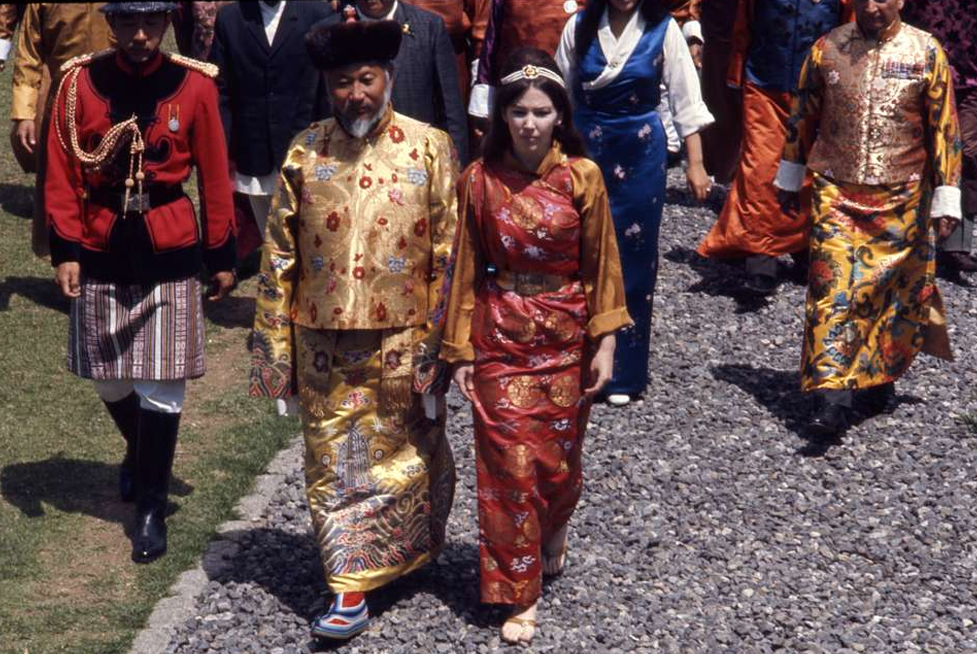
The last King of Sikkim, Palden, and his foreign wife, Hope Cooke.
The Sikkimese king arrived in Kathmandu two days before the coronation, traveling via Kakarbhitta and flying from Biratnagar.He received a warm welcome. During his stay in Kathmandu, the Indian Embassy closely monitored where he stayed and whom he met.
Until the coronation concluded, no political discussions took place between the Chogyal and Nepal’s royal palace. However, after the ceremony, King Birendra and the Chogyal engaged in a long conversation. During this meeting, the Chogyal expressed deep anguish over India’s role and sought Nepal’s support to preserve his rule.
But how could Nepal help when it itself was unable to escape Indian influence? When the Chogyal first met King Birendra at Narayanhiti Palace, then Military Secretary (Retd.) Lt. Gen. Bibek Shah was on duty. Recalling the meeting, Shah said: “After presenting a khada (shawl), the Chogyal almost bowed at the King’s feet. He was grateful for the invitation and deeply worried about Sikkim’s future.”
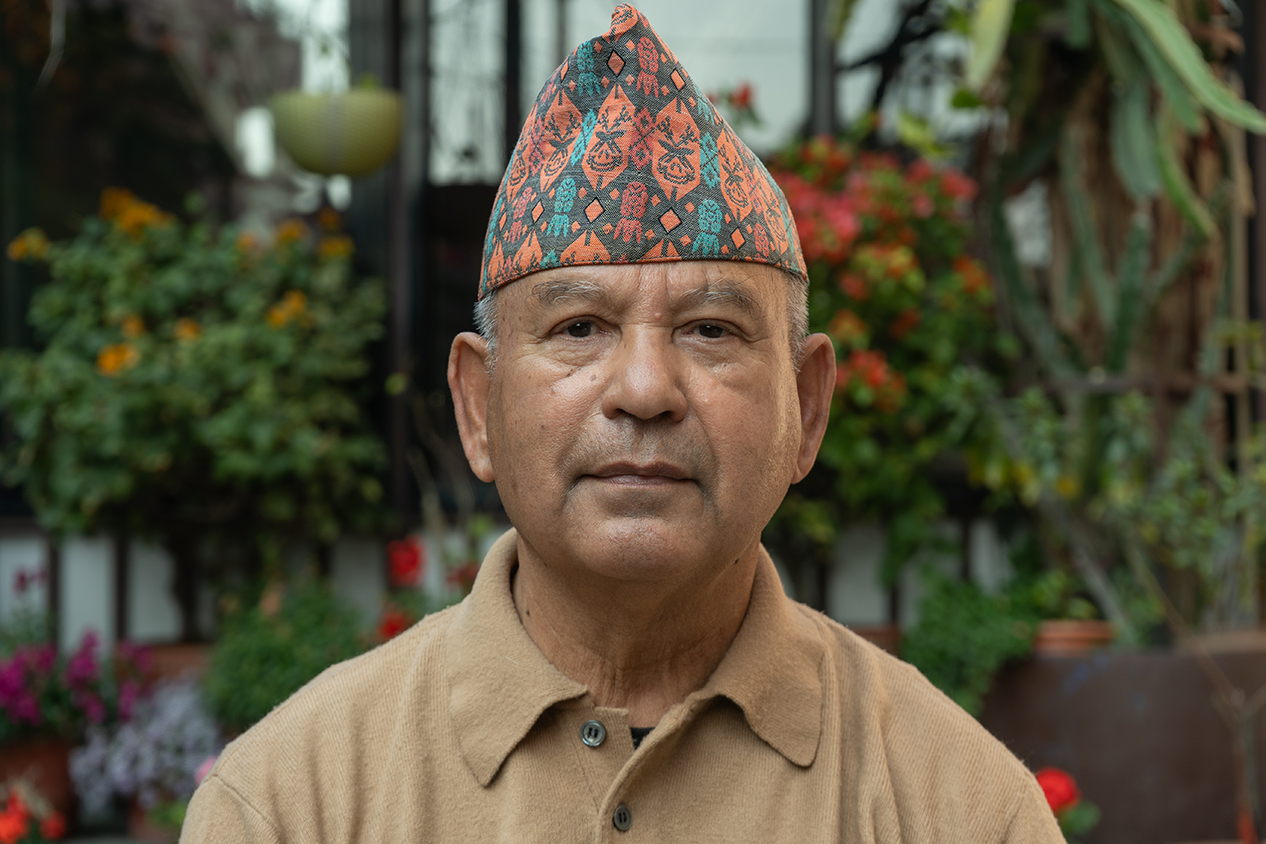
Former military secretary Bibek Kumar Shah/ Photo: Bikram Rai
After the coronation, the Chogyal stayed in Nepal for another five days and met the King again. He appealed to King Birendra to take diplomatic initiatives for Sikkim’s independence and to raise the issue with China. Recalling King Birendra’s response, General Shah says, “King Birendra told him that Nepal itself was under Indian pressure and therefore could not do anything.”
While in Nepal, the Chogyal also managed to meet the Chinese ambassador—an opportunity facilitated by Nepal’s royal palace itself. India was furious over this. On 11 April 1975, Indian Foreign Minister Yashwantrao Chavan issued a statement accusing the Chogyal of deliberately pushing Sikkim toward crisis.
Less than a month and a half after the Chogyal returned from Nepal, a referendum was held in Sikkim on 14 April 1975. Of the 61,133 participants, 59,637 voters (97.55 percent) voted against retaining the monarchy, while only 1,496 (2.45 percent) supported it.
Buoyed by this result, Prime Minister Indira Gandhi succeeded in turning Sikkim into a state of India. On 4 September 1975, she presented a constitutional amendment bill in the Lok Sabha to integrate Sikkim into India’s national framework and grant it representation by two members in the Indian Parliament. The bill was passed with 320 votes in favor and only nine against.
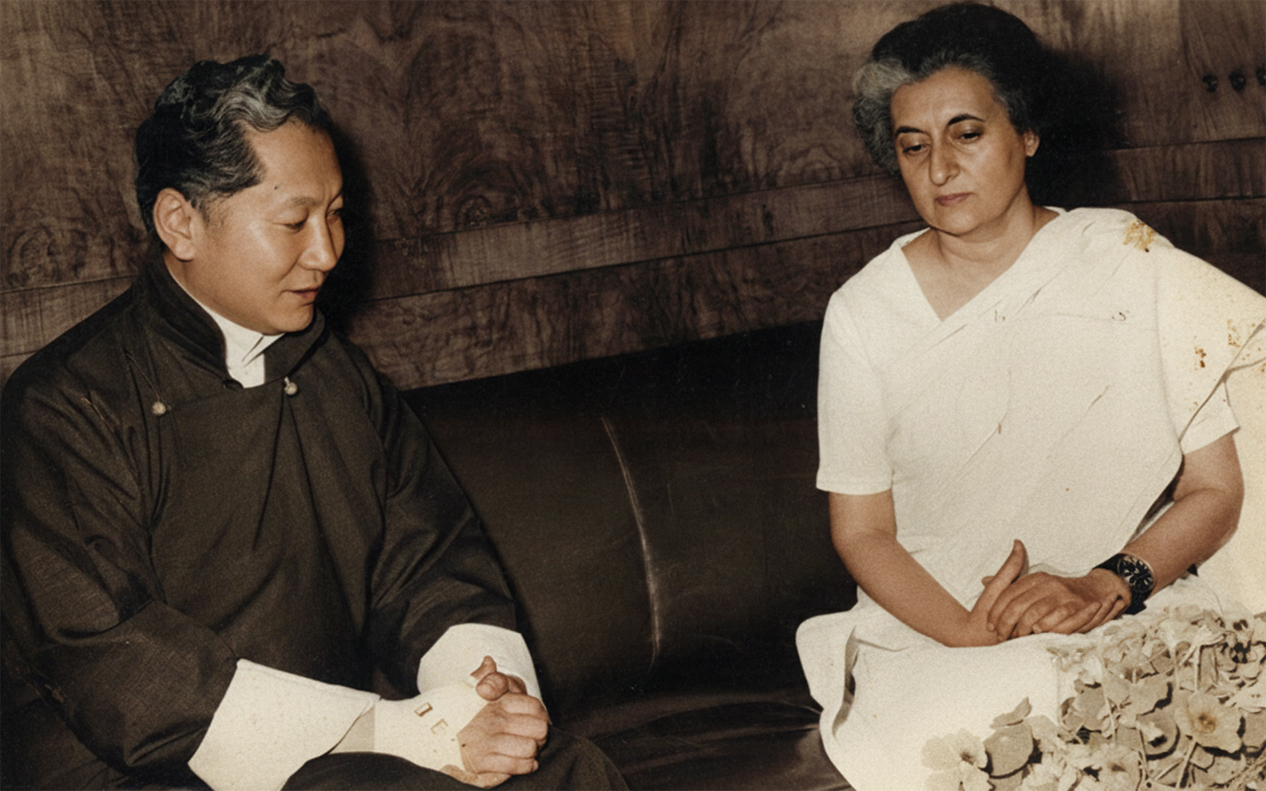
The Chogyal publicly condemned Indira Gandhi’s move. In a letter to the Indian Prime Minister, he wrote: “The steps you have taken to integrate this remote, mountainous protectorate into India’s political system have deeply shocked and distressed my 300,000 subjects.”
He sent two letters to Indira Gandhi through the Indian Political Officer in Gangtok, stating: “Contrary to the repeated assurances given by you regarding Sikkim’s distinct identity and the guarantees provided by the 1950 treaty, the present move to provide parliamentary representation to Sikkim without the genuine consent and approval of the Sikkimese people is extremely unfortunate.”
Indira Gandhi’s decision to make Sikkim India’s 22nd state triggered widespread protests in Nepal as well. Student demonstrations erupted across the country, including in Kathmandu. On 3 September 1975, students attempting to stage a sit-in in front of the Indian Embassy in Lainchaur were dispersed by police. An estimated crowd of around 5,000 protesters raised slogans such as: “Sikkim must retain its independent identity.” “Down with Indian expansionism.” “Down with Indian intervention.” “Nepalis, unite.”
During the police crackdown, Rupa Acharya, a student of Padma Kanya Campus, was injured and hospitalized. In Birgunj, police fired six rounds of tear gas shells to control an agitated crowd. Two policemen were injured, and four demonstrators were arrested. Mahendra Morang Campus in Biratnagar also witnessed a strike.
The annexation of Sikkim sparked heated debate in Nepal’s National Panchayat. Members warned that the direct absorption of a protectorate state had raised serious concerns. Questioning India’s intentions, they said: “France has Monaco which continues to exist. Italy has San Marino. Luxembourg, with an area of just over a thousand square miles, exists as an independent country.”
They also criticized Nepal’s foreign policy, arguing that Nepal’s failure to raise a strong voice over Sikkim could not be considered a successful diplomatic stance. They pointed out that Nepal’s Foreign Ministry spoke out on issues in Latin America and Africa but remained silent on Sikkim.
China strongly condemned India’s action. However, after India—under Prime Minister Rajiv Gandhi—recognized Tibet as an integral part of China, Beijing too fell silent on the Sikkim issue.
Following Sikkim’s annexation, the Nepal government introduced a rule to reinforce national identity. From 10 September 1975, male civil servants were required to wear daura-suruwal and dhaka topi, while female employees were mandated to wear sarees when attending office.