Kathmandu
Friday, January 30, 2026





Instead of fulfilling martyrs’ dreams, complaints are rising that martyrs are being “farmed”
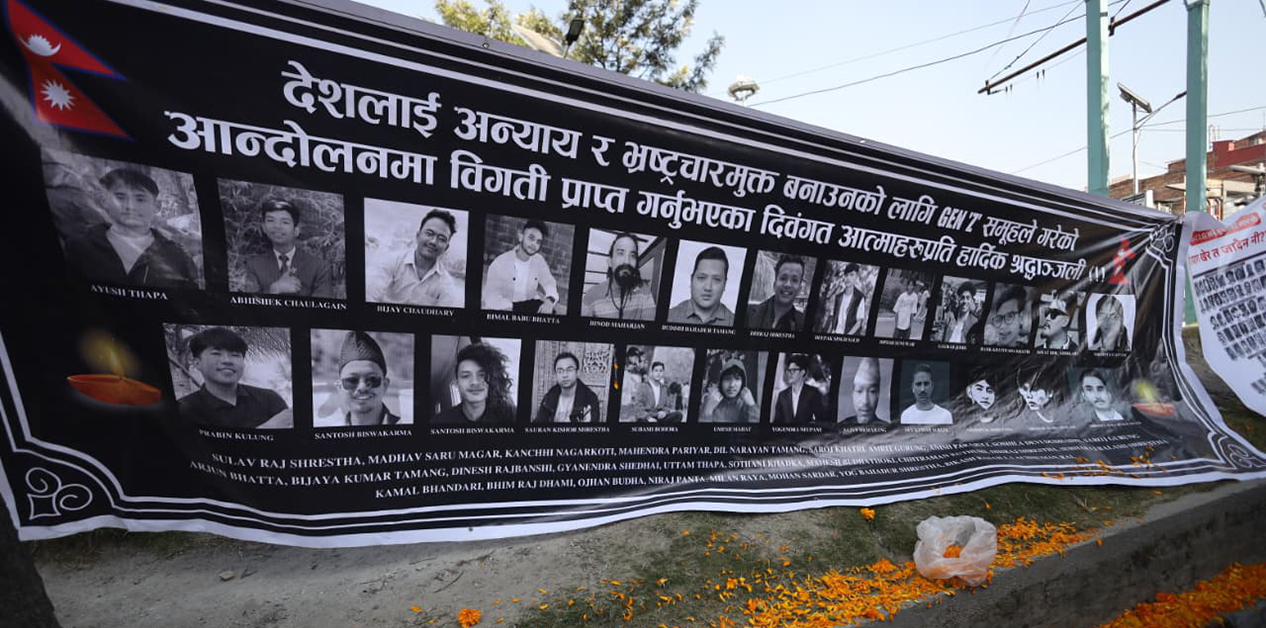
KATHMANDU: During the Gen-Z revolt that took place on September 8 and 9 last year, 76 people lost their lives. On the recommendation of the “Committee Formed to Make Treatment and Relief for the Injured of the Gen-Z Movement Effective,” the government has declared 45 of them as martyrs. According to the committee’s coordinator, Joint Secretary Basudev Ghimire, studies are still ongoing regarding the remaining deceased.
Including the 45 martyrs from the Gen-Z movement, the total number of martyrs in Nepal has now crossed 15,000. Ironically, this list includes not only those who sacrificed their lives for the country, but also people who were killed for other reasons.
The government’s neglect of martyrs has reached such an extent that there is still no consolidated, official record of all declared martyrs. On Thursday, when Nepal News repeatedly contacted Home Ministry Spokesperson Anand Kafle and Information Officer Rama Acharya to ask about the total number of martyrs, they were unable to provide an answer. Information Officer Acharya said it would take time to search for the details. She stated, “We do not have a consolidated record of martyrs; it needs to be searched.”
Lakhan Thapa is considered Nepal’s first martyr. He was hanged from a tree in front of the Manakamana Temple in Gorkha on 2 Falgun 1933 BS by the Rana rulers, accused of spreading propaganda against then Prime Minister Jung Bahadur Rana. However, it was only 125 years later, in 2062 BS (2005), that the government officially declared Thapa a martyr.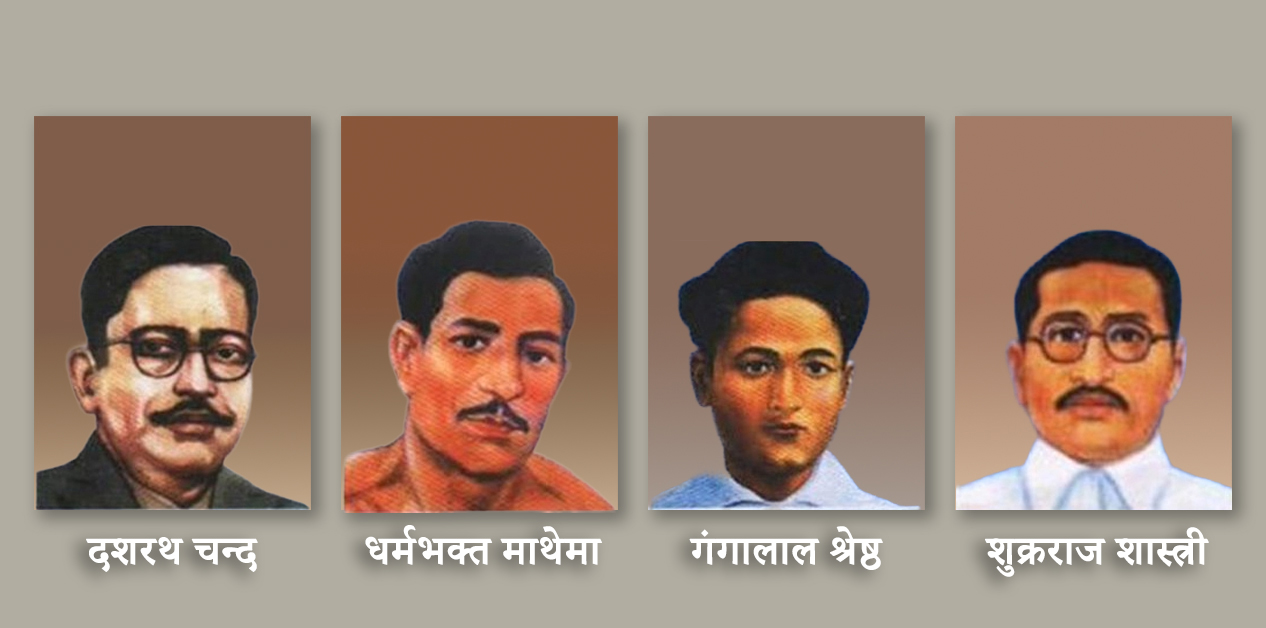
Until before 2046 BS (1990), the term “martyr” in Nepal referred only to four individuals killed during the Rana regime. In 1997 BS, the Rana rulers executed Shukraraj Shastri, Dharmabhakta Mathema, Dasharath Chand, and Gangalal Shrestha for their activities against the autocratic Rana rule. Every year, Magh 16 (January 30 this year) is observed as Martyrs’ Day, and the period up to that date is commemorated as Martyrs’ Week in their memory. Martyrs’ Gate (Shahid Gate) in Kathmandu was built in their honor. Public respect for these martyrs, who sacrificed their lives for the nation, was very high.
After the 2046 (1990) People’s Movement, the number of martyrs increased. The government declared 19 people killed during the movement as martyrs and provided their families with Rs 100,000 each. Similarly, 36 people killed during the 2062/63 (2006) Second People’s Movement were also declared martyrs. Until then, public reverence for martyrs remained strong.
However, after the political change of 2006, a competition began among those in power to declare martyrs. Later, people killed by unidentified groups, those who died in bomb explosions, and even those who died in clashes between student unions were declared martyrs. The practice of “farming martyrs” for political gain flourished.
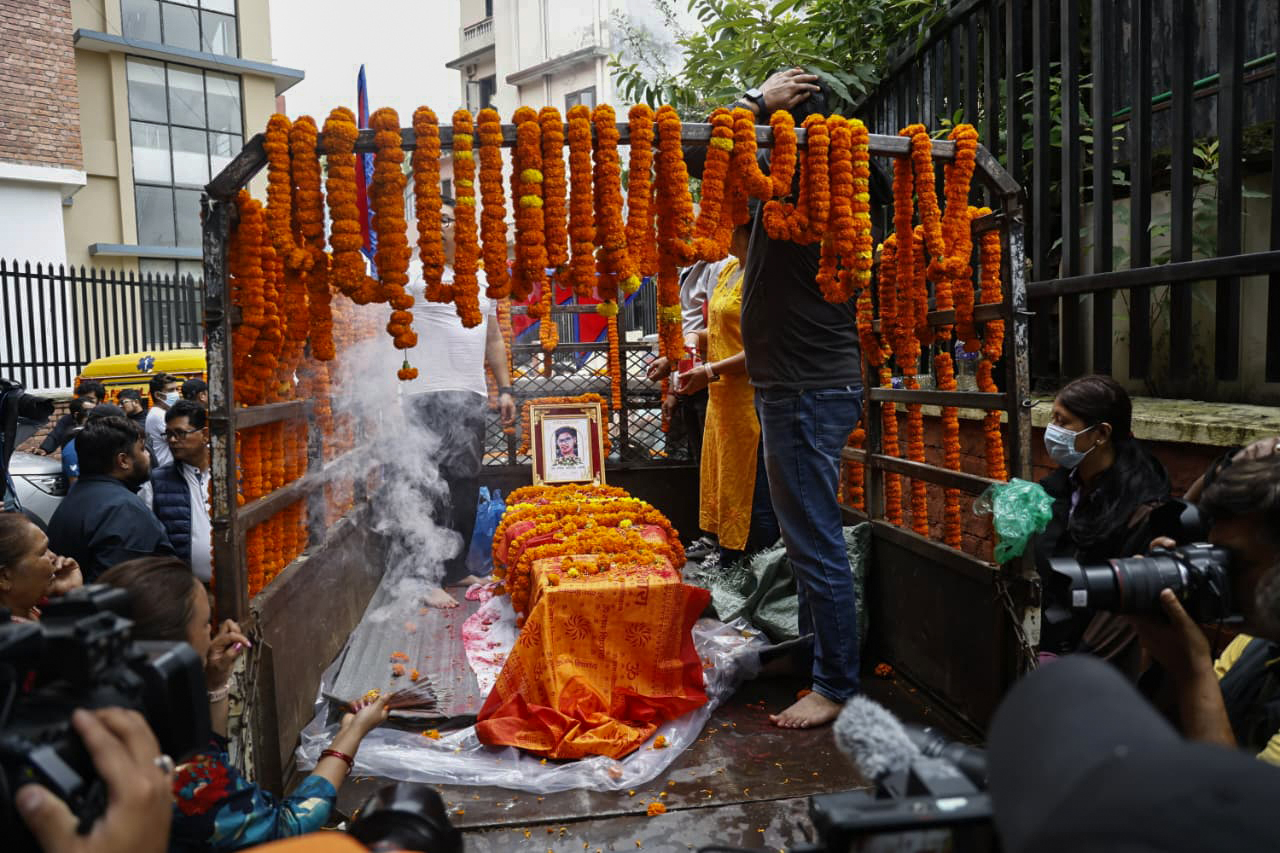
Funeral procession of the martyrs of the Gen-G movement. Photo: Bikram Rai
On 4 March 2008, the government declared 24 people who died during the Madhes Movement as martyrs in a single decision. Later, on 24 December 2008, as many as 6,946 people killed during the Maoist armed conflict were collectively declared martyrs.
On 23 June 2010, another 1,626 people who had died during the armed conflict but were left out of earlier lists were declared martyrs. As those killed by the state under the Maoist banner were rapidly being declared martyrs, voices arose demanding that members of security forces killed during the conflict also be recognized. Consequently, on 28 January 2019, the government declared 2,807 personnel from the Nepal Army, Armed Police Force, Nepal Police, and National Investigation Department who died during the conflict as martyrs.
On 2 March 2016, the government decided to honor people killed by the state in various past incidents as martyrs. Those granted martyr status included Bhimdatta Pant of Dadeldhura (killed on 1 August 1953), Durgananda Jha of Dhanusha (29 January 1964), Ratna Kumar Bantawa of Ilam (9 April 1969), Rishi Devkota “Azad” of Sindhuli (22 February 1981), and Captain Yagya Bahadur Thapa of Okhaldhunga (16 December 1974). On the same day, Bhim Narayan Shrestha (Dhankuta), Surya Nath Yadav (Siraha), Hari Nepal (Taplejung), Chandra Bahadur Puri (Sankhuwasabha), Chandra Dangi (Jhapa), Netra Ghimire (Jhapa), Ramnath Dahal (Jhapa), Birendra Rajbanshi (Jhapa), Krishna Kuinkel (Jhapa), and Narayan Prasad Shrestha (Jhapa) were also declared martyrs.
Similarly, Ram Upadhyay (Siraha), Laxman Upadhyay (Siraha), Leelnath Dahal (Okhaldhunga), Thaginath Dahal (Okhaldhunga), Khagendra Raj Dahal (Okhaldhunga), Gokarna Bahadur Karki (Okhaldhunga), and Shamsher Bahadur Khatri (Gulmi) were granted martyr status by the government.
On 14 August 2016, the government declared 68 people who died during the Madhes Movement as martyrs. Again, on 17 January 2018, as many as 190 people killed in various movements were declared martyrs.
The government also declared construction entrepreneur Sharad Gauchhan, who was murdered due to professional rivalry, a martyr on 13 October 2017. Likewise, Khurshid Alam, a UML leader from Sunsari who was killed by an armed Indian group, was declared a martyr on 22 September 2018.
As even those who died in criminal incidents were being declared martyrs, people who had lost their lives while fighting autocracy and distortions at different times felt ignored. Pressure grew to recognize them as well. In this context, on 12 January 2018, the government decided to declare 16 people killed by the state in Chhintang, Dhankuta, in 1979 as martyrs. Similarly, on 17 Januaryb 2018, as many as 190 people, and on 5 February 2018, as many as 298 people killed at various times were declared martyrs.
In this way, by 7 March 2021, the government had declared a total of 12,197 people as martyrs through repeated decisions. Later, on 9 January 2024, another 2,674 martyrs were added.
Martyr farming
Yogendra Rai, son of Gopal Anand Rai who was killed by the state in Chhintang in 2036 BS (1979), says it is painful that despite so many martyrs, their dreams remain unfulfilled. He says, “Political parties lured our fathers with many promises and pushed them to become martyrs. They benefited by farming martyrs, but they did not fulfill the martyrs’ dreams.”
As parties that came to power began declaring anyone and everyone a martyr for political gain, the government formed a “High-Level Task Force on Defining and Setting Criteria for Martyrs – 2009” under the leadership of Modnath Prashrit. The task force recommended that martyrs be classified and that not everyone who dies should be declared a martyr. However, these recommendations were never implemented.
Former home secretary Govinda Kusum states that although a martyr traditionally refers to someone who sacrifices their life fighting oppression, exploitation, and autocracy, the recent trend of declaring martyrs based on political interests has devalued the very concept of martyrdom. He says, “The word ‘martyr’ should evoke pride. But in recent times, distortions in the name of martyrs have increased.”
Recalling a strange incident he personally witnessed, former secretary Kusum says he has even seen cases where someone listed as a martyr was actually alive. He explains, “One person killed another due to personal enmity. The person who was killed became a martyr. The killer later died of a heart attack in jail—and he too was declared a martyr. Such absurdities exist in our country.”
Since demands have grown to declare anyone who dies—regardless of the cause—as a martyr, he stresses that the state must be sensitive in defining and recognizing martyrs. “In such a situation, the state needs to rethink. Reclassification of martyrs is necessary,” Kusum says.