Kathmandu
Monday, March 2, 2026





29 percent of children in Madhesh Province, which is considered fertile for agriculture and is referred to as Nepal’s ‘granary’ or ‘food basket’, are victims of malnutrition
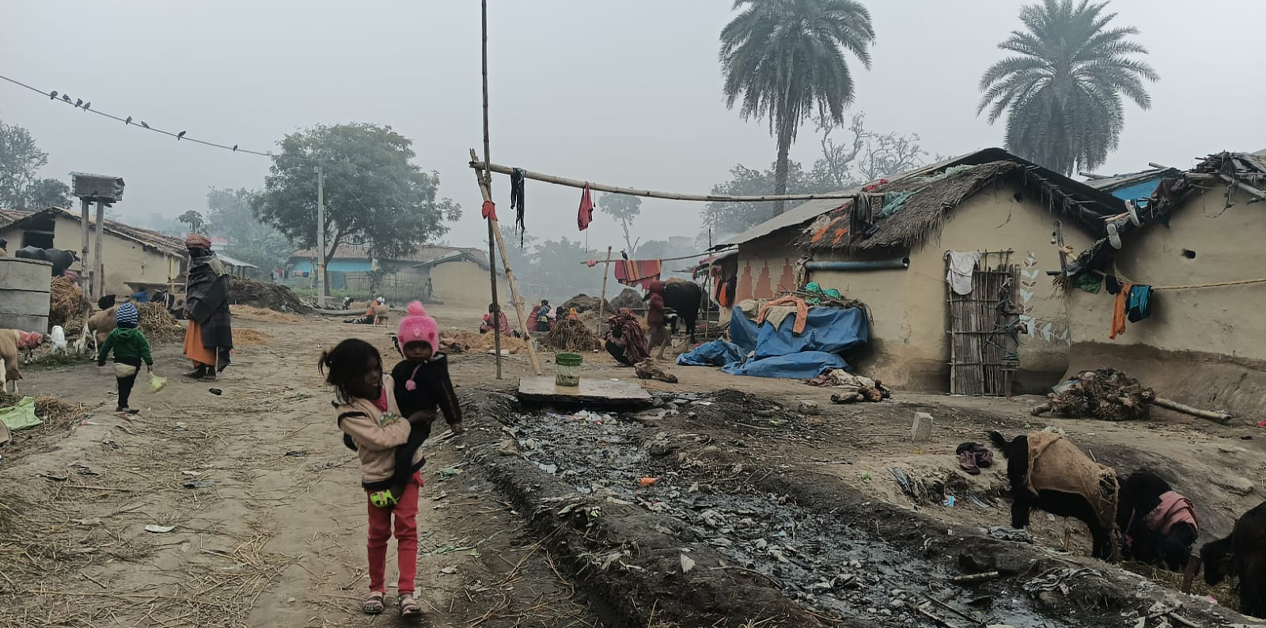
Chandrika Kumari Yadav of Haripur, Siraha, was married at the age of 17. She now has two sons, aged five and three. Because of poverty, Yadav was deprived of proper care and nutrition during pregnancy. She says, “When I was pregnant, my mother used to send a little money from my parental home so I could eat nutritious food. But it was not enough. So I couldn’t eat nourishing food during pregnancy.”
Not only did she suffer from a lack of iron and vitamins during pregnancy, she was also deprived of adequate nutritious food, which made her delivery difficult. As a result, both her sons have had health problems from the very beginning, such as low weight for their height, severe thinness, and frequent illness. Because the mother did not receive nutritious food during pregnancy, and the children did not get proper nutrients after birth, they became victims of malnutrition.
Similarly, Ragini Sah of Rupetha, Janakpurdham Metropolitan City–24, weighed only eight kilograms at 36 months. Her body and limbs were frail, and her eyes lacked brightness. Ragini’s mother, Sunayana Devi, was busy with daily agricultural work and could not devote enough time to her daughter’s care and diet. She would feed her whatever food was available at home in the morning and then leave for work. When Ragini’s weight failed to increase even after three years, her mother took her to the hospital. Doctors concluded that Ragini had been malnourished since birth due to the lack of proper nutrition.
As treatment at home was not possible, Sunayana Devi and Ragini were admitted to the Nutrition Rehabilitation Center of the Madhesh Institute of Health Sciences in Kartik 2081 BS (October–November 2024). After staying there for some time, Ragini’s weight increased from eight kilograms to 12 kilograms. Sunayana Devi says, “Both mother and daughter turned out to be victims of malnutrition. After hospital admission, her weight increased and her health improved.”
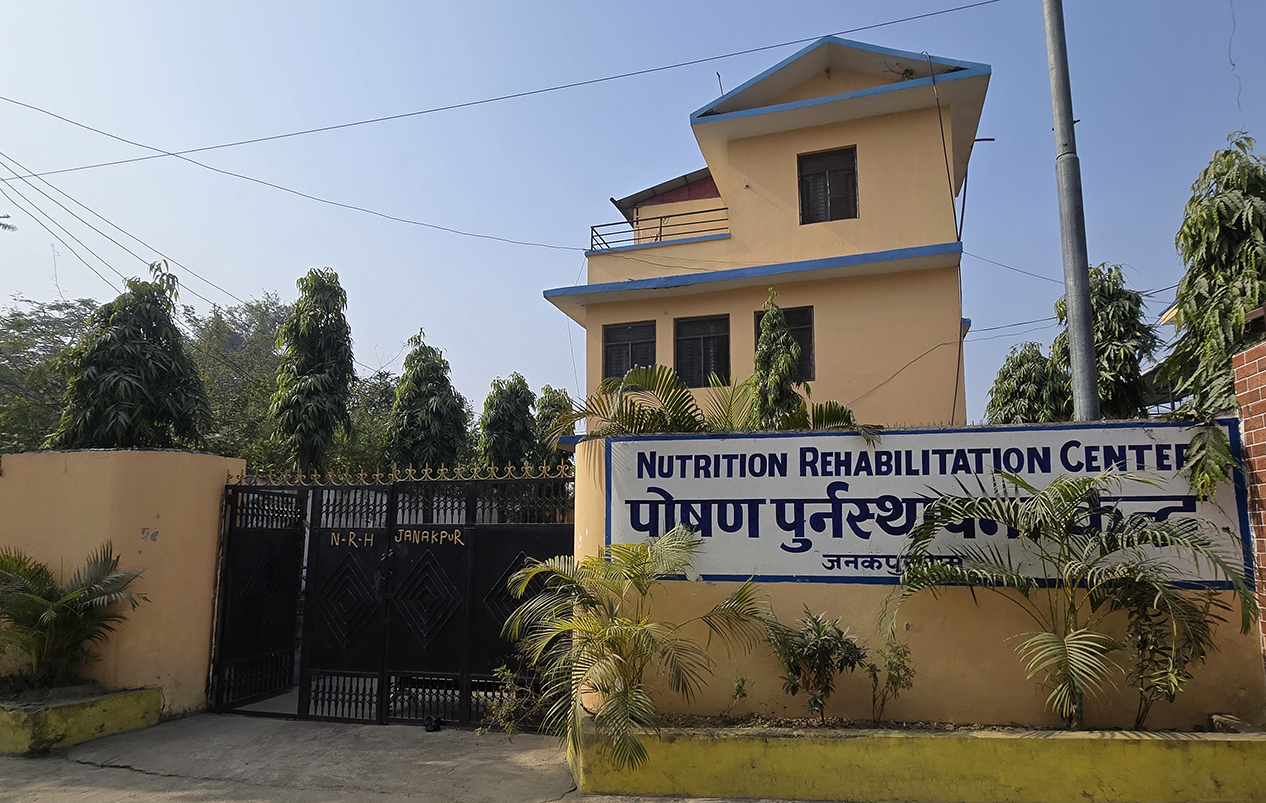
Nutritional Rehabilitation Center in Janakpur
Nikita Raut of Jamuniya-7, Mahottari, is also malnourished like Ragini. She is four years old, but her weight has not increased with age; she currently weighs only eight kilograms. Nikita’s parents are themselves health workers. That a child of a health-worker couple has fallen victim to malnutrition adds another painful dimension.
Because both parents were working, they had even hired a female helper at home to care for the child. Still, Nikita became malnourished. Now, following doctors’ advice, she is being fed according to a regular schedule, which has helped her gain two kilograms, says her mother Sunita. “Even though we work in the health sector, it was heartbreaking that our daughter became malnourished. There were shortcomings on our part in proper diet. We have now begun correcting that,” she says.
There is a wide economic gap between Ragini and Nikita’s families. Ragini’s parents are financially weak, while Nikita’s parents are relatively well-off. Ironically, both children became malnourished due to inadequate care and nutrition.
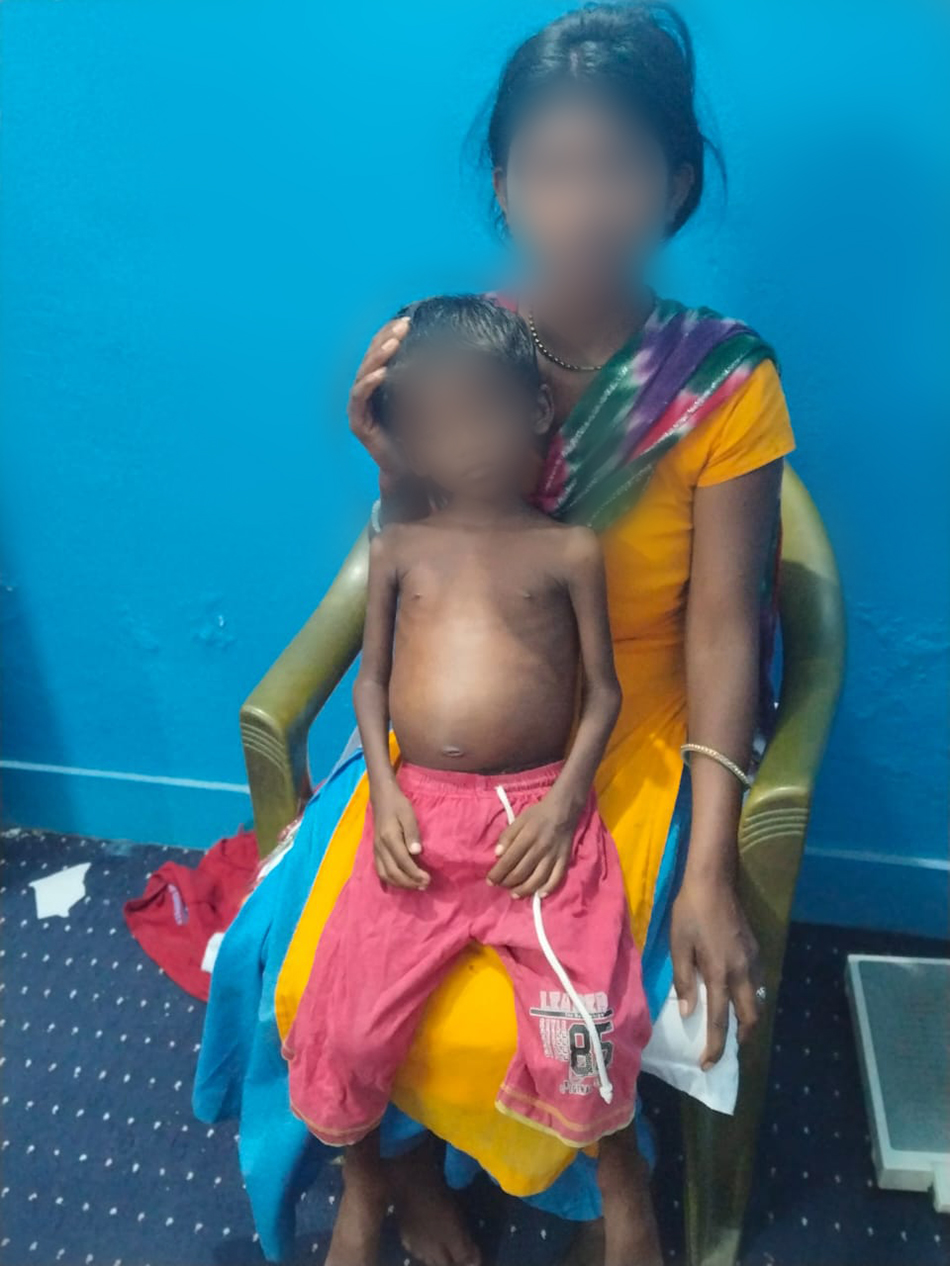
Children admitted to a nutritional rehabilitation center
Poverty alone is not the sole cause of child malnutrition in Madhesh Province. Anemia among many women is another major factor leading to malnutrition in their children. Health worker Dosy Pandey, posted at the Aurahi Rural Municipality health post in Dhanusha, says, “Women not receiving nutritious food during pregnancy is a severe problem in Madhesh. Many women are unaware of the importance of nutritious diets. This has created serious health problems for both women and infants, and that is why many children in Madhesh are suffering from malnutrition.”
The Ministry of Health and Population’s Demographic and Health Survey 2022 shows that Madhesh Province ranks second in malnutrition after Karnali. Karnali is not only geographically remote but also lags behind in poverty, deprivation, and physical infrastructure, making its top ranking in malnutrition somewhat expected. However, the emergence of severe malnutrition in Madhesh, which is considered more accessible, better resourced, and fertile for agricultural production, and known as the country’s ‘granary’ or ‘food basket’, is a serious contradiction.
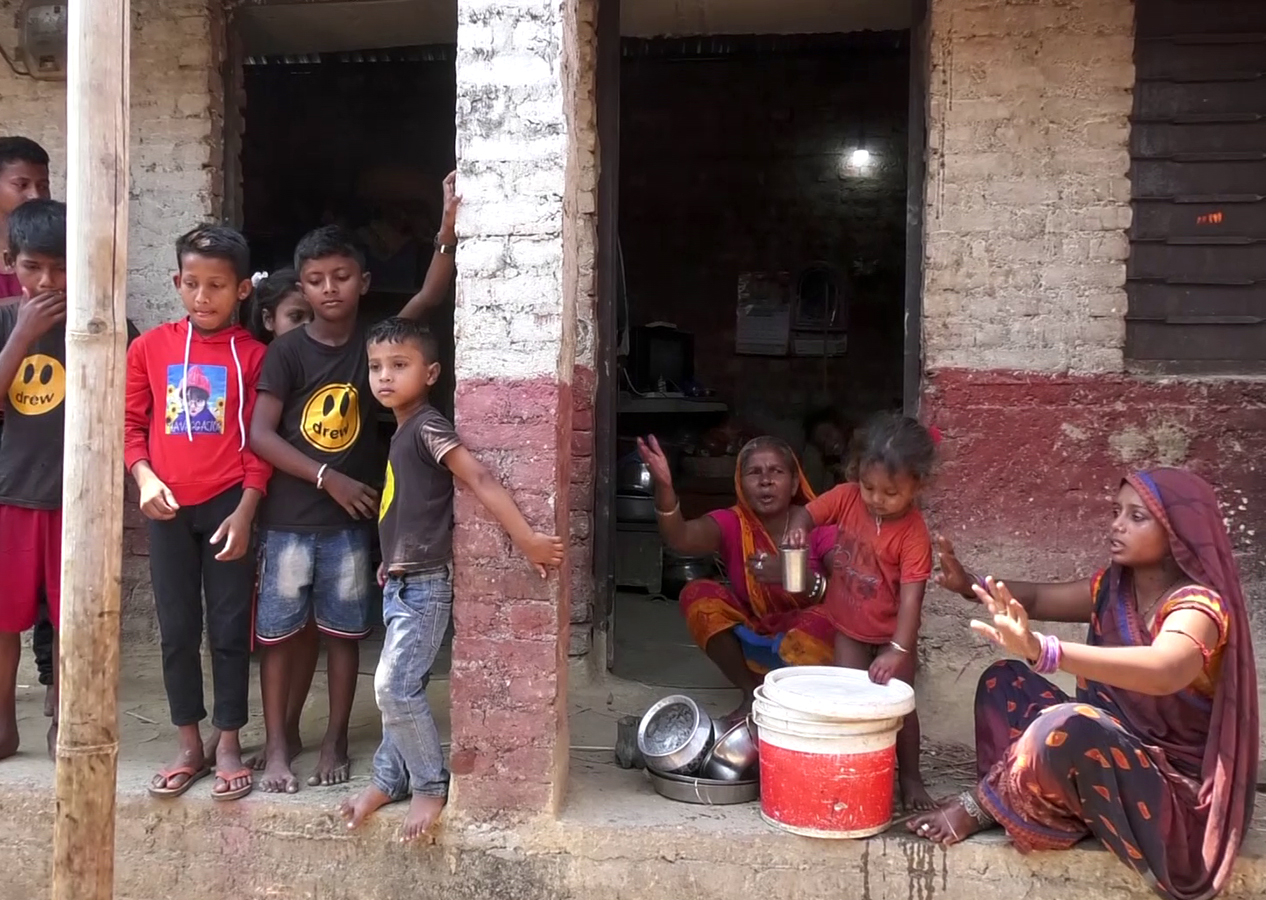
Children of Madhesh Province
Madhesh is regarded as an agriculturally rich province. According to Nepal Rastra Bank’s Provincial Economic Activities Study Report 2081/82 BS (2024/25), agricultural production in Madhesh increased by 10.26 percent compared to the previous year, reaching 6.602 million metric tons. Despite this growth, malnutrition among children in Madhesh has become a grave crisis.
Malnutrition is found not only in rural areas but also among children of educated families in urban areas of Madhesh. According to Binod Yadav, Health Inspector and Nutrition Focal Person at the Madhesh Province Health Directorate, poor families suffer because they cannot eat enough, while richer families suffer because they do not know how to eat properly.
Child marriage, prevalent in Madhesh, is another cause of malnutrition. Around 42 percent of adolescent girls in Madhesh are married before the age of 18. This leads to complications during adolescent pregnancy, according to the Madhesh Profile for Sustainable Development Goals 2082 prepared by the Provincial Policy and Planning Commission. Data from the Madhesh Ministry of Health and Population (2082 BS) shows that stunting in Madhesh stands at 29 percent, compared to the national average of 25 percent.
According to the World Health Organization, a newborn’s length should be at least 45–50 centimeters at birth. By one year of age, height should increase by 25 centimeters; by the second year, by 12.5 centimeters; and during the third, fourth, and fifth years, by seven to nine centimeters annually.
To reduce malnutrition, three Nutrition Rehabilitation Centers have been established in Madhesh, one each at Rajbiraj, Janakpur, and Birgunj. The number of patients coming to these centers shows little difference between poor and wealthy families; children from both groups are brought in. Many parents lack awareness about what and how to feed their children.
Kiran Yadav, manager of the Nutrition Rehabilitation Center at the Madhesh Institute of Health Sciences, says malnutrition has worsened because children are fed junk food available in markets instead of nutritious meals. “Not providing nutritious food and instead giving random market food has made malnutrition severe in Madhesh. Both rich and poor families lack knowledge about diet and lifestyle, and many children suffer because of this,” she says.
A grave problem
Four out of every 10 children in Madhesh are malnourished. It means 40 out of every 100 children suffer from some form of malnutrition. Data from the Nutrition Unit of the Provincial Hospital Janakpur under the Madhesh Institute of Health Sciences shows that these children face various health complications. Each year, 150 to 250 children are admitted to hospitals due to malnutrition, many of whom also suffer from tuberculosis.
According to Nutrition Rehabilitation Center data, 186 children were admitted due to malnutrition in fiscal year 2079/80 BS (2022/23), 216 in 2080/81 BS (2023/24), and 208 in 2081/82 BS(2024/25).
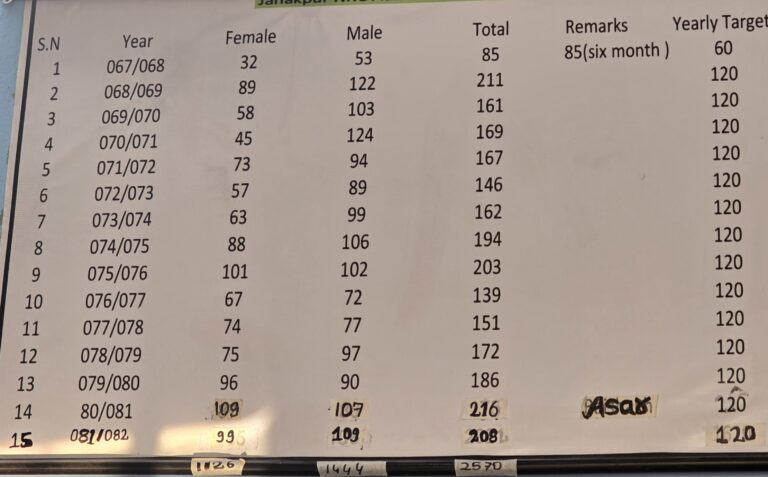
Statistics of patients admitted to the Nutrition Rehabilitation Center to date
Studies by the Institute of Health Sciences show that in Madhesh, 29 percent of children under five are stunted, 27 percent are underweight, 10 percent are wasted, and 51 percent suffer from anemia. The problem of anemia is even more severe among women of reproductive age, with as much as 52 percent of women aged 15–49 in Madhesh being anemic.
Around 140,000 children are born annually in Madhesh Province. The under-five mortality rate stands at 43 per 1,000 live births, according to the province’s Second Periodic Plan. Dr Baidyanath Thakur, Head of Pediatrics at the Provincial Hospital Janakpur, says malnutrition is the main cause of infant mortality in Madhesh. “If malnutrition is mild, we advise dietary improvement and send the child home. In severe cases, we admit them for treatment. Malnutrition leads to heart, respiratory, pneumonia, anemia, and brain development problems in children,” he explains.
Anemia among women of reproductive age increased from 40.8 percent in 2019 to 52.4 percent in 2024. Among children, anemia stands at 50.6 percent, according to government data.
43 percent cannot eat enough in the ‘granary’
In Madhesh Province, 43 percent of farming families cannot meet their year-round food needs from their own agricultural production. According to the National Agricultural Census 2078, of the 738,340 farming households in Madhesh, 43 percent struggle to secure food for the entire year from their own produce.
Out of Nepal’s total population, 6,114,600 people or about 1,156,715 households, live in Madhesh Province. Of these, 738,340 households (63.8 percent) are farming families, cultivating 492,497 hectares across eight districts. The census notes that only 57 percent of farmers can meet year-round food needs from their own production.
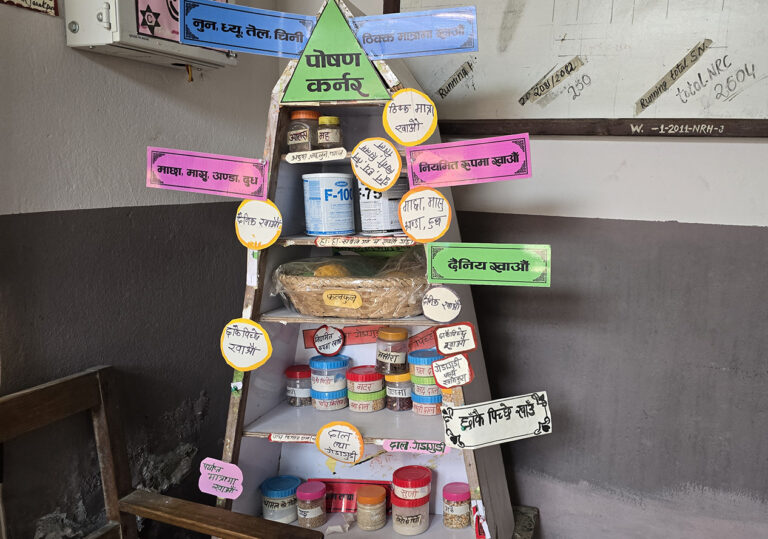
Information on food stored at the nutrition center.
Madhesh has the highest area under paddy cultivation (384,553 hectares), followed by wheat on 247,609 hectares and maize on 33,719 hectares. Yet, children in the same province suffer from malnutrition, a deeply troubling reality.
Life in the Tarai–Madhesh is largely dependent on agriculture, which is why the region is considered the nation’s granary or food basket. However, that children in the granary itself are malnourished is largely due to a lack of awareness, says Nutrition Rehabilitation Center manager Yadav. “What did my children eat? How did they eat? What should they be fed? That responsibility lies with parents. When many parents fail to fulfill it, malnutrition becomes a severe problem,” she says.
Dr Pramod Yadav, Secretary at the Madhesh Ministry of Health and Population and a pediatrician, says that in recent times, the migration of fathers for foreign employment has also created problems in child care. “With fathers abroad and mothers busy with household and farm work, children are often deprived of proper care and nutrition,” he says.