Kathmandu
Tuesday, February 17, 2026





Looking at the data, disability is found most frequently among the Dalit community—and especially among Hill Dalits.
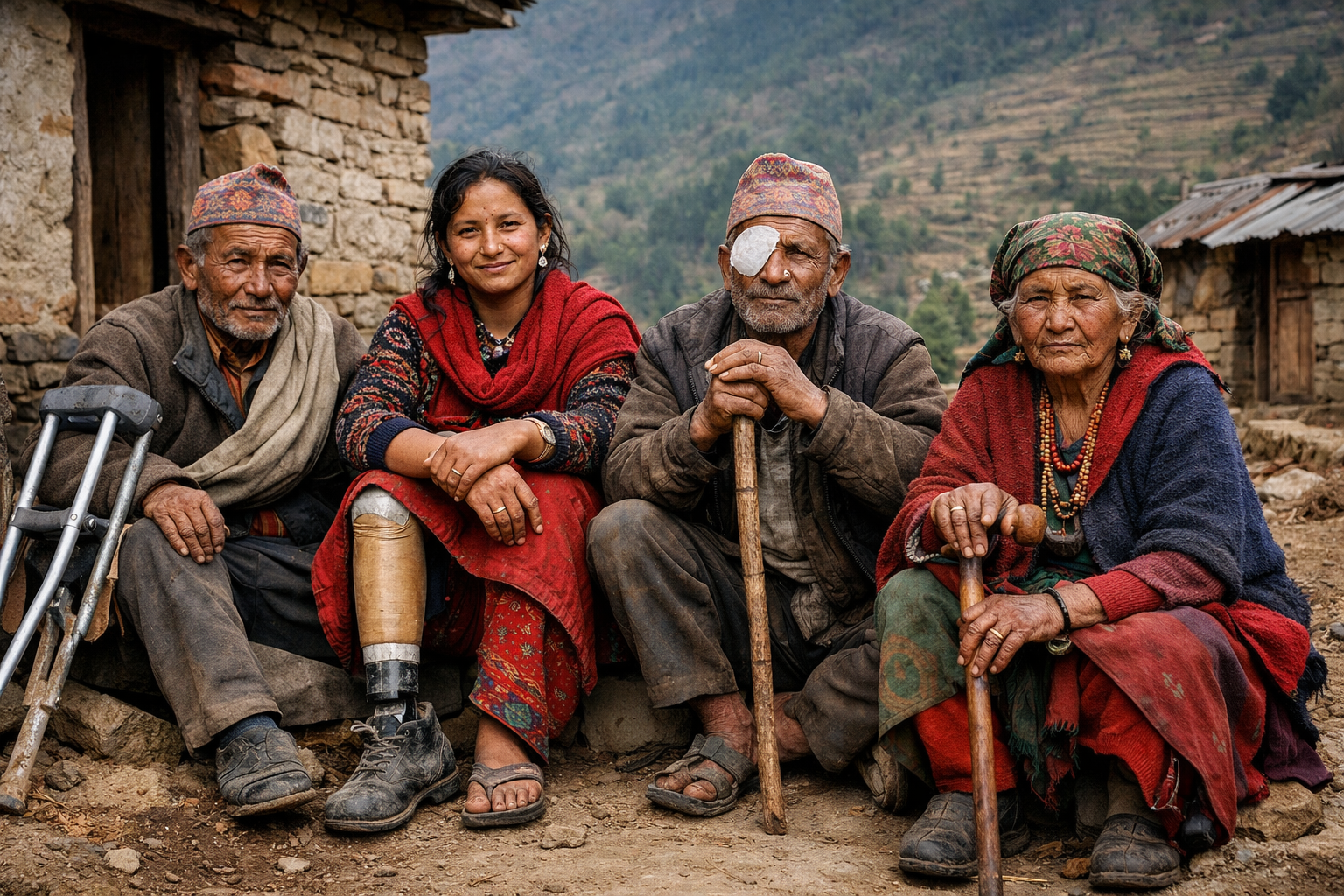
KATHMANDU: Indre Kami of Jiri Municipality–8, Rambole in Dolakha, and his wife Antakumari Kami were riding on a motorcycle to the district headquarters on October 19 to collect their social security allowance.
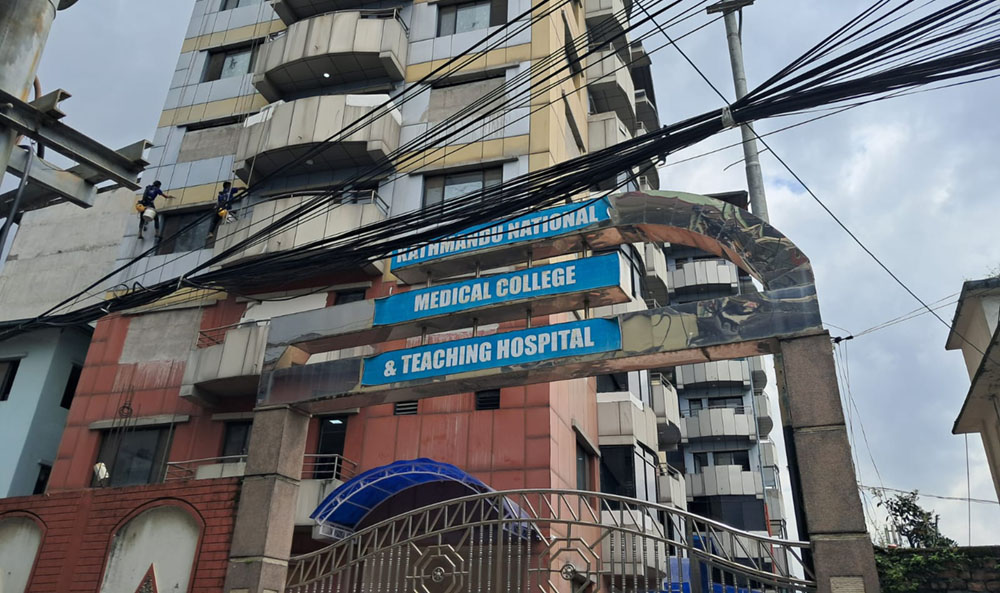
Suddenly, on the way, what appeared to be a leopard or a bear came into view. After the animal attacked, the motorcycle crashed. Sixty-five-year-old Indre and Antakumari were seriously injured. Local people transported them unconscious by ambulance to Kathmandu. After 15 days of treatment at Kathmandu Medical College, they were discharged.
After staying in Kathmandu with their daughter for a few days, their problems worsened. Since December 2, Indre has been undergoing treatment at the Spinal Injury Rehabilitation Centre in Kavre, and he can no longer move his legs. His wife had to have the fingers of her right hand amputated. Both underwent spinal surgery.
The couple, who used to survive by blacksmith work and farming, worry whether they will ever be able to work again. “They say recovery will take time. My wife has lost her fingers. I keep worrying about what life will be like,” says Indre.
In Morang’s Urlabari, Sita Baraili suffered from measles as a child. Because of it, she completely lost vision in one eye and can see only partially with the other.
Sita, who originally hails from Bhojpur, had an uncle who was deaf. “In the villages, most people with disabilities are Dalits,” observes Sita, who is also a member of the National Federation of the Disabled- Nepal.
Data shows that this is not limited to villages—the disability rate is higher among Dalits nationwide. More concerning is that among Dalits, those living in geographically remote hill districts have the highest disability rates.
According to the National Statistics Office, out of Nepal’s total population of 29,164,578, some 2.2 percent or 647,744 people live with some form of disability. However, the disability rate among Dalits is 2.4 percent. Among them, Hill Dalits have the highest rate at 2.9 percent. This means that out of 2,506,612 Hill Dalits in Nepal, about 73,361 live with disabilities.
Among the seven provinces, Hill Dalits in Karnali Province have the highest disability rates. Karnali has a total population of 1,688,412, of which 3.1 percent live with disabilities. Among Hill Dalits there, the figure rises to 3.4 percent. In remote Jajarkot district, 4.9 percent of the population or 9,363 people have disabilities. Among the 55,382 Hill Dalits in Jajarkot, 2,929 people (5.3 percent) live with disabilities.
Across all seven provinces, Hill Dalits consistently show the highest disability rates. Surprisingly, even in Madhesh Province, disability is more prevalent among Hill Dalits than among Madhesi Dalits. While 1.5 percent of the total population of Madhesh Province have disabilities, 2.4 percent of Hill Dalits there live with disabilities. Among Madhesi Dalits, the rate is only 1.5 percent.
In Koshi Province, 2.4 percent of the total population has disabilities, while among Hill Dalits living there, the figure is 2.8 percent. In Bagmati, the overall rate is 2 percent, but 2.5 percent among Hill Dalits. Gandaki has 2.9 percent overall, with Hill Dalits at 3 percent.
Similarly, in Lumbini, among 2.4 percent of the total Dalit population with disabilities, Hill Dalits account for 2.9 percent. In Karnali, 3.1 percent of Dalits live with disabilities, but among Hill Dalits the disability prevalence rate is 3.4 percent. In Sudurpaschim, 2.6 percent of Dalits have disabilities, while Hill Dalits with disabilities stand at 2.9 percent.
No attention, no concern
Why does the Dalit community that has endured social and economic inequality for centuries has a higher rate of disability? And why is disability most prevalent among Hill Dalits? There appears to be little concern or effort to find answers.
Even the National Dalit Commission, constitutionally mandated to work on Dalit rights and empowerment, is unaware of these figures. “We haven’t seen such data,” says the commission’s Spokesperson Sundar Purkuti. “This is something the commission itself should study, but we face budget limitations.”
In Nepal, disability prevalence has increased nearly fivefold over the past 20 years—from 0.46 percent in the 2001 census, to 1.94 percent in 2011, and 2.2 percent in the 2021 census.
The National Federation of the Disabled–Nepal (NFDN), the umbrella organization for persons with disabilities, also lacks awareness of this caste-based disparity. Even the NDFN, which claims to have been working on the overall disability issues, has not conducted such studies. The president of NDFN, Devi Datta Acharya, admits, “We haven’t analyzed disability data by caste, but the fact that Hill Dalits are more affected is a serious issue.”
The UN Convention on the Rights of Persons with Disabilities, 2006, defines persons with disabilities as those with long-term physical, mental, intellectual, or sensory impairments which, in interaction with barriers, hinder their full and effective participation in society on an equal basis with others.
According to the World Health Organization’s 2023 report, an estimated 16 percent of the global population lives with disabilities. In Nepal, disability prevalence has increased nearly fivefold over the past 20 years—from 0.46 percent in the 2001 census, to 1.94 percent in 2011, and 2.2 percent in the 2021 census.
NFDN President Acharya argues that the real number is likely higher, as many people hide disabilities due to stigma. “There might be some weaknesses while conducting the population census. If accurate data were collected, disability among Dalits and Hill Dalits might be even higher.”
The Nepal Demographic and Health Survey 2022 and a sample study by Sharecast Initiative Nepal estimated that 6.7 percent of Nepal’s population has some form of disability.
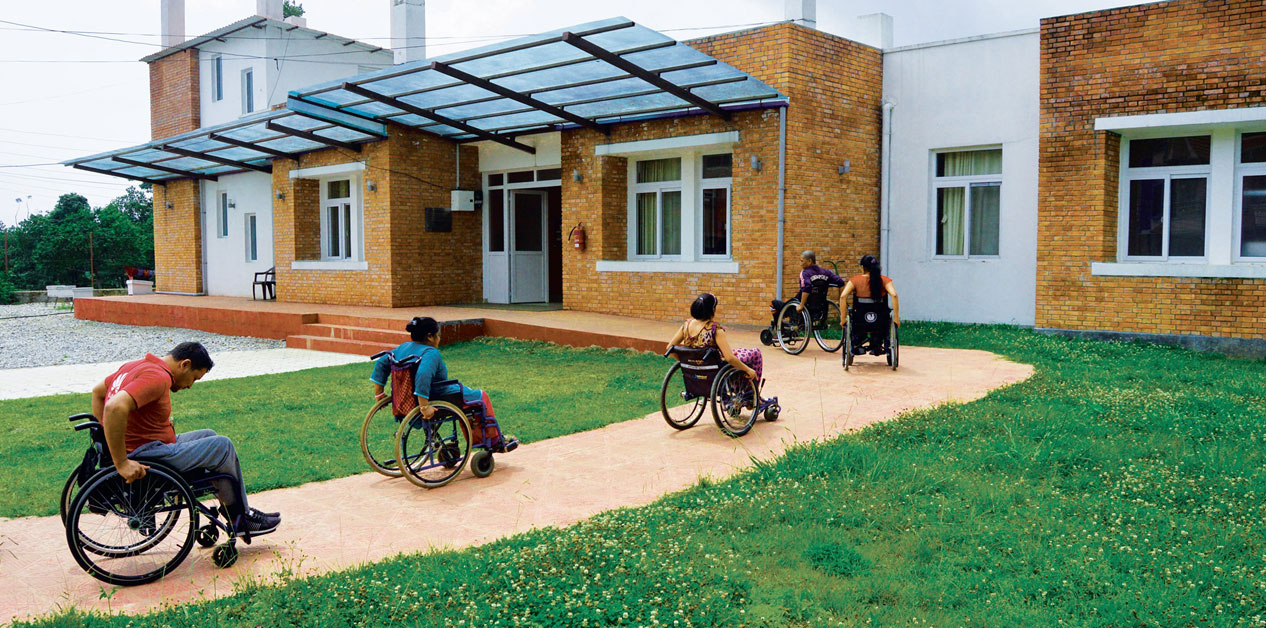
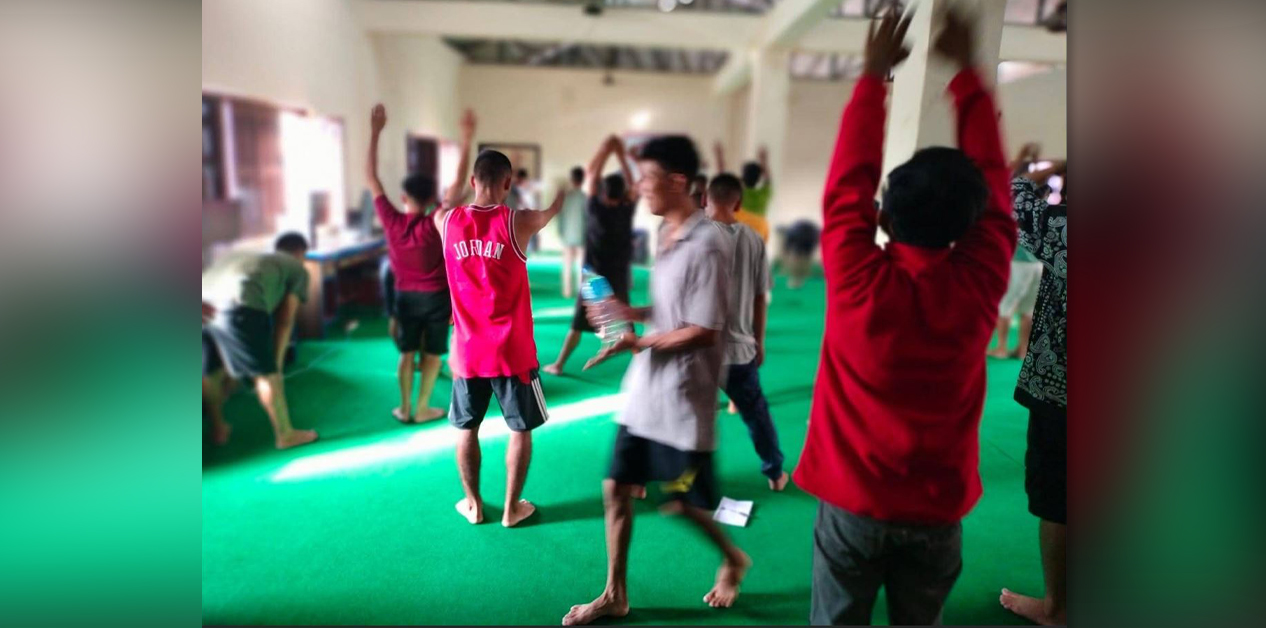
Spinal injury patients arrive at the Spinal Injury Association Nepal. Photo: Spinal Injury Association Nepal
The poorer the community, the higher the disability rate
Durga Sob, founder president of the Feminist Dalit Organization (FEDO), which prepared a Dalit statistical report with the National Statistics Office, says multiple factors contribute to the high disability rate among Dalits—especially Hill Dalits. “Due to poverty, Dalit children are malnourished even during pregnancy. Illiteracy and lack of access to state services worsen the problem. Hill Dalits are even further behind,” she says.
A July 2025 study conducted by Ram Prasad Dhakal, Bijay Aryal, Pitambar Acharya, Yadav Acharya and Devraj Acharya that was published in Discover Public Health Journal also notes that disability rates are higher among poor, malnourished, less educated, and socially marginalized communities.
Dr Raju Dhakal, medical director at the Spinal Injury Rehabilitation Center, says that because various reports show that 80 percent of people with disabilities live below the poverty line, it is natural that the poorest communities have the highest prevalence rate of disabilities. “Dalits are largely below the poverty line in Nepal. Poverty limits access to nutrition, health, and education. Malnutrition during pregnancy and substance use like drinking and smoking may lead to the birth of children with disabilities,” he explains.
According to him, most spinal injury patients come from remote hill areas and are often poor Dalits. Injuries occur while climbing trees, working on steep slopes, building houses, from electric shocks, or road accidents. In hills, reaching hospitals in time after being injured is difficult. “Poverty, illiteracy, and poor access to healthcare are key reasons behind the high prevalence of disabilities in Hill Dalits,” he says.
Available data supports this. According to statistical reports on Dalits, one-fourth of the families in Nepal live under extreme poverty. Over one-third (36 percent) of Dalit households fall into the ultra-poor category, compared to only 18 percent among non-Dalits. This shows that the level of prosperity of Dalits is considerably lower than non-Dalits and the national average.
The Dalit community lags behind in terms literacy as well. Dalit literacy stands at 67.4 percent, significantly below the national average of 76.2 percent.
According to statistics maintained by the Nepal Demographic and Health Survey, 2022, as much as 3.4 percent of the poorest income group lives with some form of disabilities. Similarly, the prevalence rate of disabilities is 3.4 percent in the second income group, 2.8 percent in the middle-income group, 2.6 percent in the fourth income group and 1.6 percent in the richest group.
According to the National Disability Survey, 2022, among those earning less than Rs 10,000 per month, 11.2 percent live with disabilities. Likewise, among those earning Rs 20,000 per month, Rs 30,000 per month, Rs 40,000 per month and over Rs 50,000 per month, the disability prevalence rates are 8.4 percent, 7 percent, 6 percent and 5.1 percent, respectively.
The NFDN’s handbook lists poverty, ignorance, superstition, malnutrition, lack of healthcare access, accidents, and diseases as major causes of disability.
According to statistics maintained by the Nepal Demographic and Health Survey, 2022, as much as 3.4 percent of the poorest income group lives with some form of disabilities.
Sociologist Tilak Bishwakarma also attributes the high disability rate among Hill Dalits to poverty, low awareness, risky occupations, and limited access to healthcare. “Most people of the Dalit community are engaged in risky works due to the lack of education. The high rate of disabilities in the hills compared to the Tarai is because of low access to health care,” he asserts.
The government has classified disability into 12 categories: physical disability, low vision, complete blindness, deafness, partial hearing loss, deaf-blindness, speech and voice-related disability, mental or psychosocial disability, intellectual disability, hereditary bleeding disorder, autism, and multiple disabilities. Data based on this classification were included in the 12th National Census. Among these categories, physical disability is the most prevalent. Notably, physical disability is more common within the Dalit community than both the national average and the non-Dalit population. At the national level, 37.1 percent of persons with disabilities have physical disabilities. However, among Dalits with disabilities, 39.8 percent have physical disabilities. In contrast, among non-Dalits, this figure is lower than the national average, at only 36.7 percent.
Higher among men
Even within the Hill Dalit community—which has the highest disability rate overall—disability is more prevalent among men. At the national level, disabilities are observed among 2.5 percent of men and 2 percent of women. Among Hill Dalits, however, 3.4 percent of men and 2.6 percent of women live with disabilities. In comparison, among Madhesi Dalits with disabilities, 1.8 percent are men and 1.4 percent are women. Similarly, among non-Dalits, 2.4 percent of men and 2 percent of women have disabilities. These figures show that both men and women within the Hill Dalit community have higher disability rates than the national average and other communities, with Hill Dalit men being the most affected.
“Within the Dalit community, especially men are engaged in heavy and hazardous work. This may be the main reason why physical disability is more prevalent, particularly among men,” says Sundar Purkuti, spokesperson for the National Dalit Commission.
Because disability rates are higher among Hill Dalits—especially men—their life expectancy is the lowest.
According to data from the National Statistics Office, Hill Dalit men have the lowest life expectancy of all groups. The Office categorized all caste and ethnic groups into eight groups to calculate life expectancy. The highest life expectancy is found among Hill caste/ethnic groups at 74.3 years. In contrast, Dalits living in the same hill regions have the lowest life expectancy at 67.3 years. Among Hill Dalits, men have the lowest life expectancy of all, at just 63.1 years.
Life expectancy is influenced by factors such as diet and nutrition, access to healthcare, awareness and quality of services, sanitation and clean drinking water, lifestyle, environmental cleanliness, peace and stability, and education. Associate Professor Tilak Bishwakarma notes that even today, basic needs remain unmet in Hill Dalit communities, resulting in the lowest life expectancy.
In Nepali society, disability was once considered the result of “sins from a previous life.” Although this conservative belief is gradually fading, disability has not yet become a state priority. The situation faced by Hill Dalit communities also reflects centuries of state-led discrimination. Although the Constitution guarantees basic rights such as health and education as fundamental rights, poor and Dalit communities continue to face exclusion. Durga Sob, founder of FEDO, states, “The state must pay attention to this serious problem seen in Dalit communities. Many of the basic issues can even be addressed by local governments.”
Despite numerous provisions in the Constitution and other laws aimed at protecting Dalits and poor communities, implementation remains weak. Sociologist Bishwakarma warns that political leaders tend to showcase progress on paper rather than address realities on the ground, increasing the likelihood that the problem will worsen. “To address such issues, all three tiers of government must focus on improving health, education, and awareness among marginalized communities,” he says.