
Kathmandu
Monday, March 2, 2026





According to World Bank data, air pollution is causing losses equivalent to nearly 10 percent of Nepal’s Gross Domestic Product (GDP). Air pollution has also added a very heavy economic burden in terms of healthcare costs. Many families have been devastated.
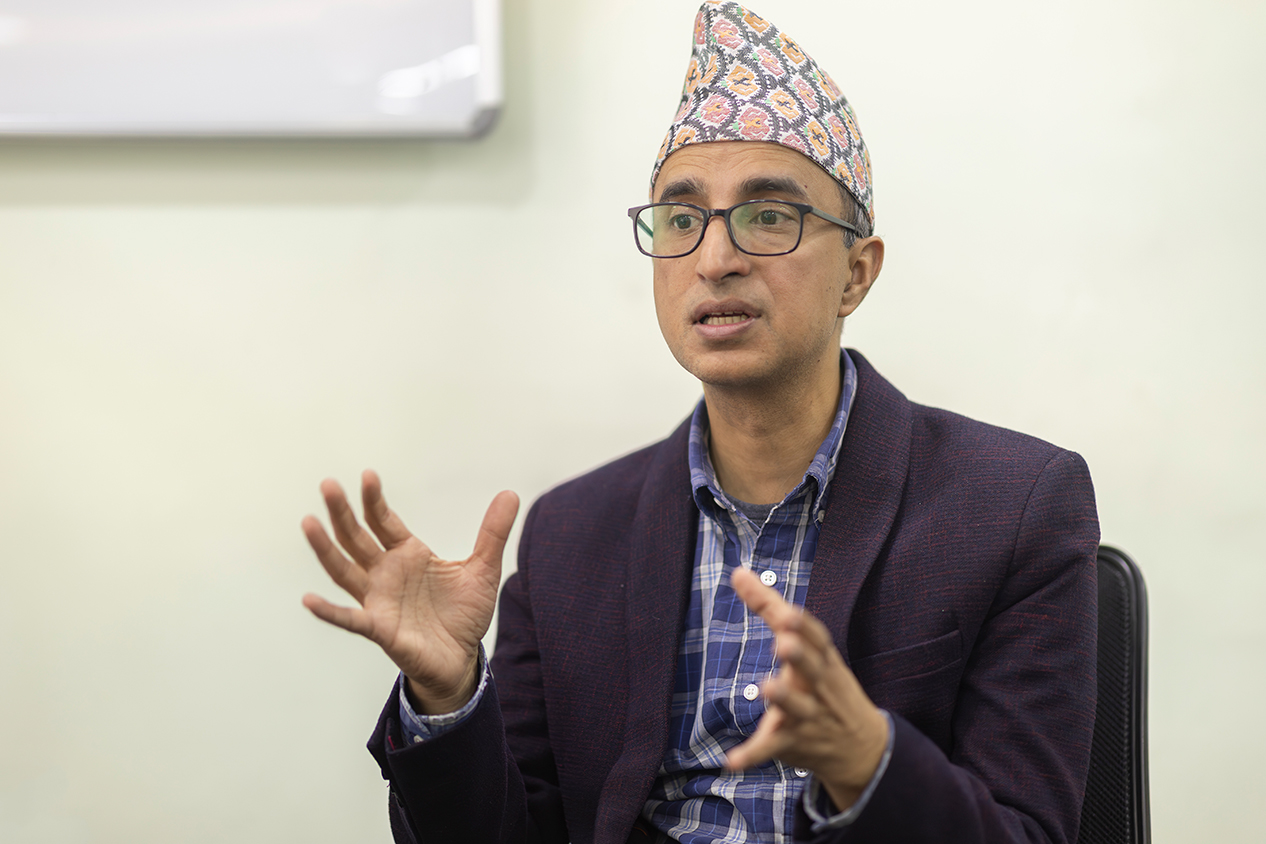
Nepal News’ Bidhya Rai spoke with infectious disease specialist and activist Dr Anup Subedee, a Senior Consultant at Medharma Clinix, about the impact of air pollution on public health, ways to protect oneself from polluted air, and the roles of the government, stakeholders, and civil society. Below is an edited excerpt of that conversation:
Various reports state that more than 40,000 people die every year in Nepal due to air pollution. Air pollution is considered a major cause of death and disability. Where is the government failing in addressing this major public health crisis?
Let’s first look at the numbers. During the COVID pandemic, official data shows that about 12,000 people died nationwide. But due to air pollution, more than 40,000 people are dying every single year.
For nearly six months a year, we are forced to breathe air that is far worse than the standards set by the World Health Organization. Not only the elderly, but even children are experiencing increasing cases of asthma and pneumonia. Studies show that dust and smoke are also increasing mental health problems.
Hospital admissions due to diseases caused by air pollution are increasing, and this number rises even more during winter. Healthcare expenses are rising. Health insurance coverage is limited, and even for those who have it, it is inadequate. Air pollution alone has reduced the average life expectancy of Nepalis by more than three and a half years. In the Kathmandu Valley, life expectancy has decreased by about four and a half years, and in some districts of the Tarai, it has decreased by seven to eight years. Yet, neither the government nor the opposition parties seem concerned.
Because the impacts of air pollution are multi-dimensional, it has been said that a national campaign is essential for its control and reduction. There are many causes: brick kilns, factories and industries, vehicle emissions, open burning of agricultural residues, forest fires, dust and smoke from construction work, and polluted air entering from across the border in the Tarai-Madhesh region.
Unfortunately, there is a clear lack of political will among the government, bureaucracy, and stakeholders to launch such a national campaign. The kind of managerial efficiency, mobilization of resources, capable human resources, and strong leadership needed to reduce pollution simply does not exist. The situation is the same at the federal, provincial, and local levels. Citizens themselves are also not taking sufficient precautions.
Dr Anup Subedee
There is no coordination among the ministries responsible for air pollution control. Roads are dug up in the middle of cities and left open for years, and the dust from them causes immense suffering, yet the government pays no attention. Political parties, leaders, and members of parliament also fail to raise their voices.
Fine particulate matter suspended in the air, known as PM2.5, is considered extremely dangerous. How does it affect the human body?
The dust that rises from roads contains larger particles, which we call PM10. Our bodies have some capacity to stop these particles at the throat or prevent them from reaching the lungs. Even if they reach the lungs, the lung’s filtering mechanisms can trap them and expel them as phlegm, preventing them from entering the bloodstream. Such particles can cause coughing, throat irritation and pain, colds, allergies, sinusitis, and asthma in some people.
However, PM2.5 particles directly enter the bloodstream. From there, they can spread to any organ in the body. They can cause narrowing of blood vessels leading to heart attacks, kidney failure, strokes, paralysis, cancer, and eye problems, among many other risks. Today, some people are developing cancer in their early 20s. Heart attacks and paralysis are occurring at ages 25 or 30. Air pollution is one of the major reasons behind this.
Which groups and age ranges are most affected by air pollution? How dangerous is it for pregnant women?
The groups at highest risk from air pollution are the elderly, children, and pregnant women. If PM2.5 enters the bloodstream of a pregnant woman, it can also enter the fetal circulation, potentially leading to miscarriage. It can cause premature births and low-birth-weight babies. When such children fail to develop properly both mentally and physically, they may suffer health problems throughout their lives.
What kind of economic loss do air-pollution-related diseases cause to families and the state?
According to World Bank data, air pollution causes losses of around 10 percent of Nepal’s GDP. However, further studies are still needed. Air pollution has added a very heavy burden in healthcare expenses. Many families have been ruined.
The average life expectancy of Nepalis is over 71 years, but when the main income earner in a family becomes disabled or dies at the age of 40 due to air pollution, the entire family becomes helpless. Since air pollution is more prevalent in the Kathmandu Valley, the Tarai, and urban areas, daily life in these regions is more severely affected.
It is said that in winter, cold air remains trapped close to the ground, increasing the concentration of both pollution and viruses. Due to Kathmandu’s geographical structure, the city often remains covered by polluted air for weeks. How risky is it to live in such a place?
The fact that more than 40,000 people die in a single year due to air pollution already suggests that this country is not suitable for living, doesn’t it? Even World Health Organization data has declared that “Kathmandu is unfit for living.” That is why air pollution has become such a serious concern.
Those who can afford it may be protecting themselves by installing air purification systems (air purifiers) in their homes, as is done in New Delhi, India. Even in Kathmandu, large non-governmental organizations have installed air purifiers.
What role do neighboring countries play in the air pollution we are suffering from within the country? What should the government do to address this, and what is it doing now?
Of the polluted air in Kathmandu’s atmosphere, about half of 25 percent comes from across the border. In Nepal’s southern Tarai, two-thirds of air pollution comes from polluted air entering from neighboring countries. Pakistan, northern India, southern Nepal, and Bangladesh share a single atmospheric “airshed,” meaning they have a common air cover. Air-polluting elements from all four countries accumulate in the same space and spread like an umbrella covering the region from Bangladesh to Pakistan.
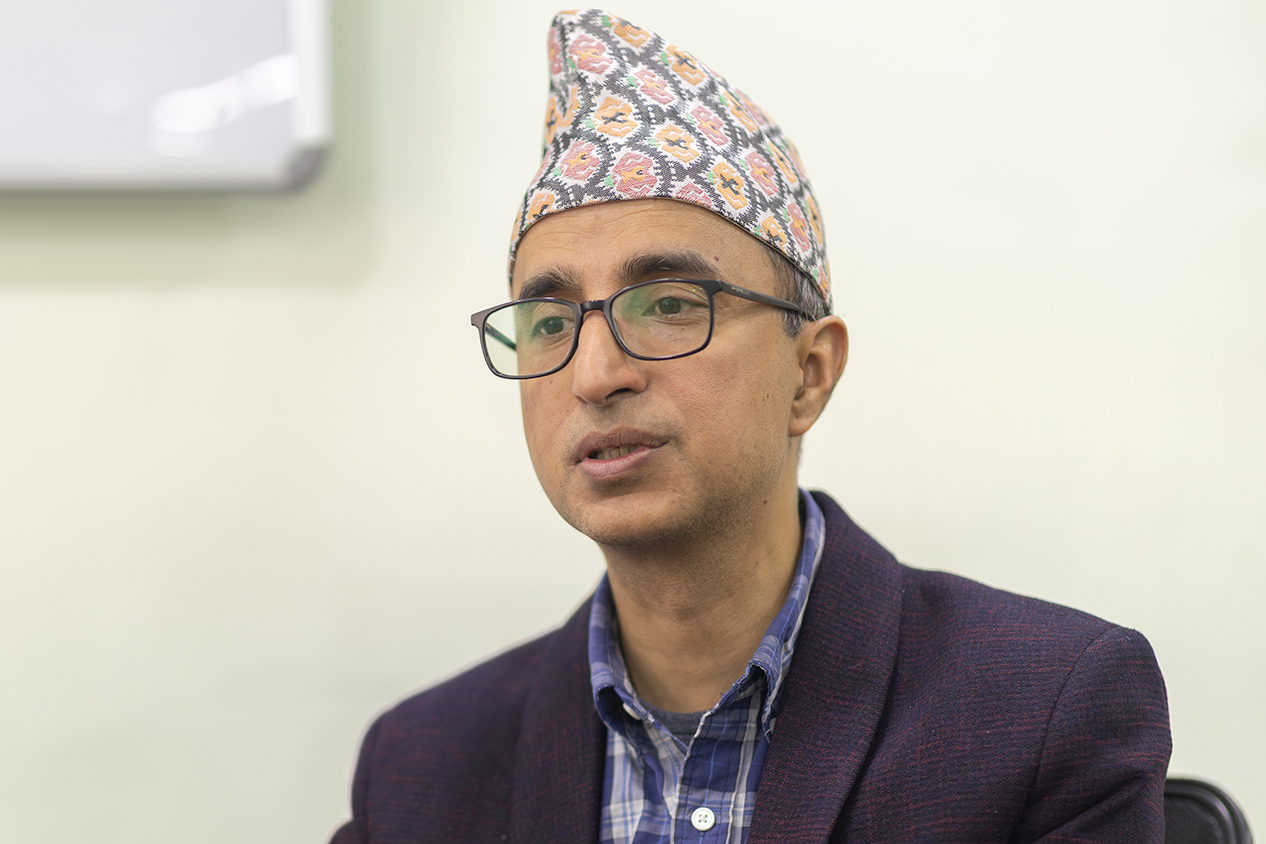
Dr. Anup Subedi
Recognizing this reality, air pollution must be accepted as a shared challenge of all four countries. With the cooperation of the international community and United Nations agencies, all parties must work together in coordination to control and reduce it. This also presents an opportunity to take responsibility and apply moral and diplomatic pressure on neighboring countries to cooperate. For this, Nepal’s government must significantly improve its diplomatic capacity. Unfortunately, we have not even begun serious efforts to reduce the pollution in the Kathmandu Valley that is caused by our own activities.
The impacts of climate change are also increasing. Various reports state that rising global temperatures and pollution are causing migration worldwide. How do you view this?
I do not believe migration is an effective solution to escape air pollution. Causing pollution through our own actions, failing to control it, and then fleeing elsewhere is not a solution. Isn’t it easier and cheaper to control pollution at its source than for people to move away from cities? Citizens cannot afford to be irresponsible. To prevent health crises and future challenges, we must act responsibly to protect the environment.
What immediate precautionary measures can people take to protect themselves from air pollution?
First, when air pollution levels are high, people should avoid going outside, and even while staying indoors, they should keep doors and windows closed. If going outside is unavoidable, one should wear an N95 mask, which fully covers the nose and mouth and prevents PM2.5-type pollutants from entering. If only a surgical mask is worn, polluted air can enter from the sides. If a surgical mask must be used, two masks can be worn together to better cover the nose and mouth. Covering the nose and mouth with cloth does not block PM2.5.
Household air pollution should also be reduced. In urban areas, people should prioritize electric stoves, and in rural areas, improved cooking stoves should be used. Special care must be taken to protect the most vulnerable age groups – the elderly and young children – by creating a safe indoor environment away from dust and smoke. Burning waste materials around the home should be strictly avoided.
What should be the long-term role of stakeholders and the government in controlling air pollution?
The main priority should be to reduce pollution sources that generate smoke and dust. Brick kilns, factories, and industries should be operated using modern, environmentally friendly technologies that produce less pollution. Fuel-based industries should use briquettes made from locally available biomass such as forest leaves and organic waste instead of coal, as these cause less pollution. Public awareness must be raised to prevent human-caused forest fires, and citizens must be conscious and responsible in this regard.
In the context of Kathmandu, regular and effective emission testing of vehicles is essential. Vehicles that do not meet standards must be penalized. Regulations preventing smoke-emitting vehicles from operating on roads must be enforced. The government must create conditions where citizens do not need to rely on private cars and motorcycles/scooters. To achieve this, access to electric public transportation must be expanded, safe and bicycle-friendly roads must be built, and vehicles running on diesel and petrol must eventually be phased out.
The government often avoids responsibility for air pollution control by citing a lack of resources. In such a situation, what can be done even with limited resources?
Once again, I say this: improvement depends on political will. There are many examples where the government has failed to act despite having resources. For instance, the government has been collecting pollution fees for years, yet news repeatedly emerges that billions of rupees collected for this purpose have not been spent as intended. In recent years, a green tax has also been collected.
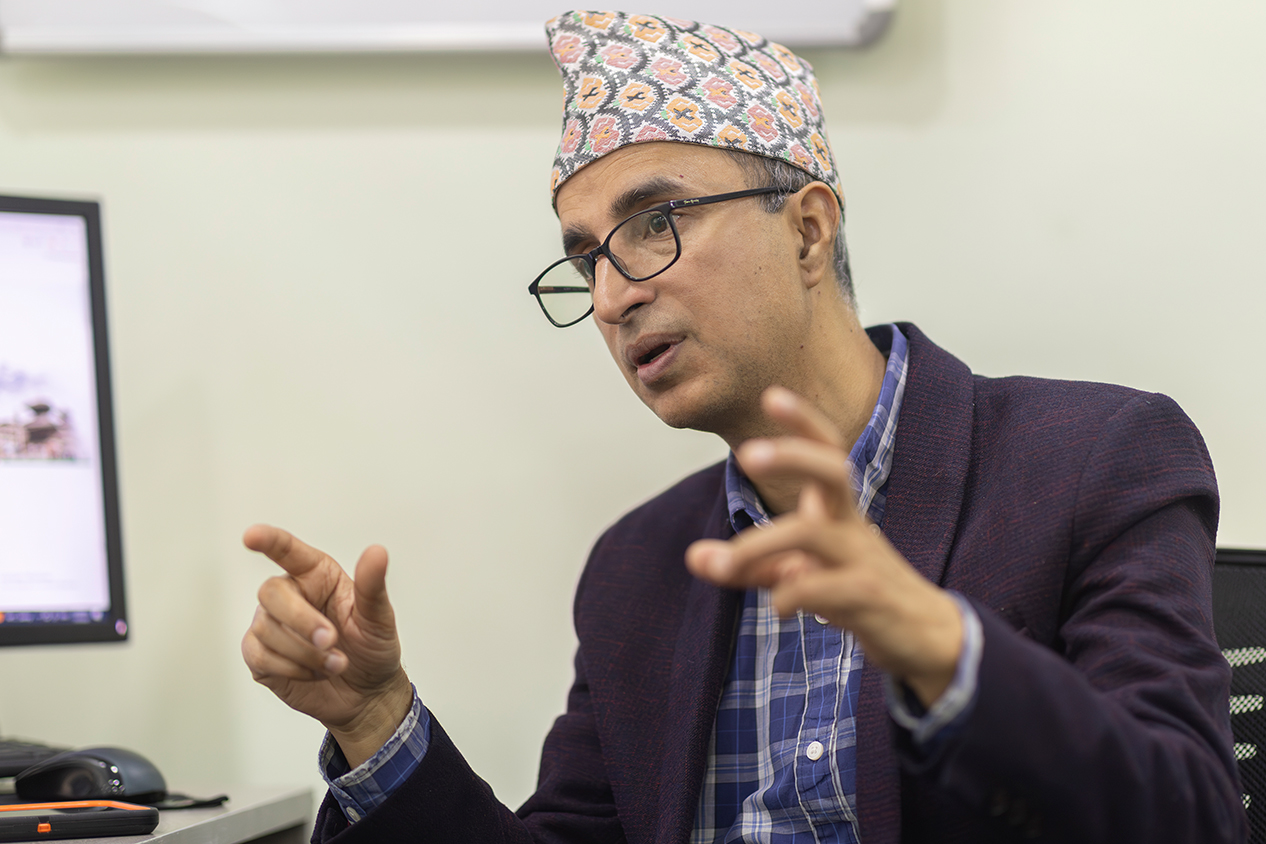
Dr. Anup Subedi
If there is a shortage of manpower, skilled personnel should be recruited through the Public Service Commission and deployed accordingly. So many people are dying prematurely due to air pollution, and citizens are struggling to breathe polluted air. In such circumstances, the government cannot be forgiven for making excuses about lacking resources or manpower.
The Constitution recognizes clean air as a fundamental right. Yet why do citizens remain unaware even after this right has been violated for so long?
What we must understand is that Nepal’s air quality cannot improve without political pressure. Recognizing this, we are already late in launching a broad citizen movement for pollution control. We must question leaders about their policies and action plans to reduce pollution. Leaders should be chosen only after examining what each political party has included in its agenda.
It is true that there has not been sufficient pressure from the citizen level. This is due to a lack of information and data, as well as economic limitations. In Kathmandu, a large segment of the population struggles to make a living unless they work in two or three places, leaving them little time to engage in activism. Civil society has become so deeply politicized that there is little concern for critical thinking or applying pressure on social and environmental issues.
In such a situation, those who are economically capable and able to dedicate time and resources to public-interest movements must take the lead in pressuring the government, ensuring continuous accountability. Only active and effective political campaigns can force leaders to act. There is no alternative.

![Holi celebrations in Basantapur with foreign tourists [Photo Feature]](https://english.nepalnews.com/wp-content/uploads/2026/03/HOLI-1.jpg)