Kathmandu
Monday, January 19, 2026





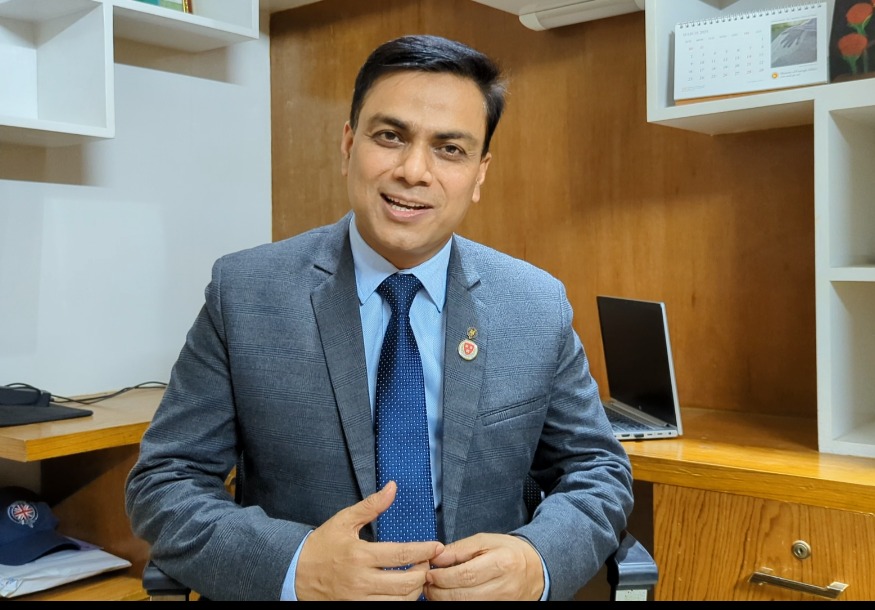
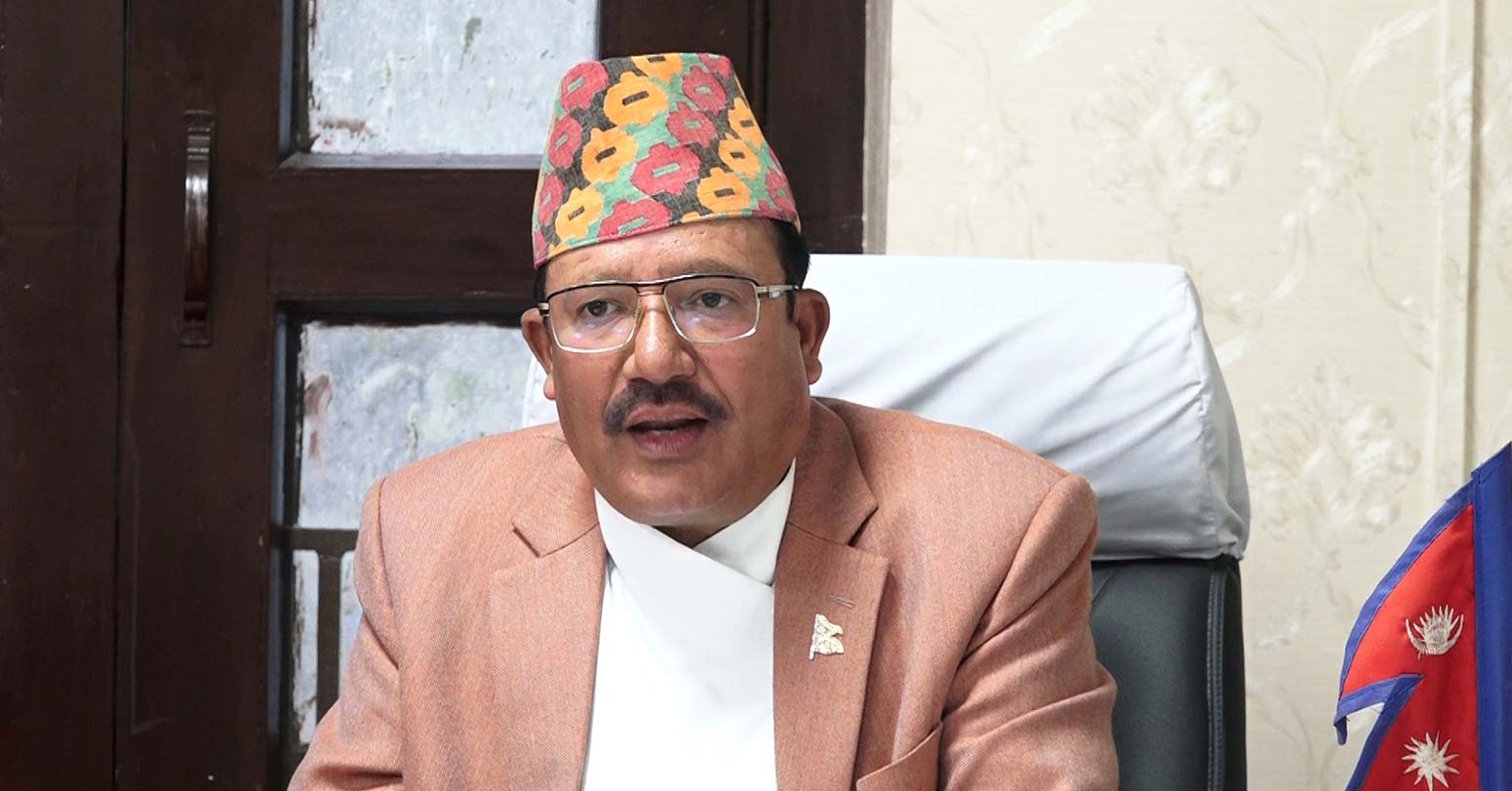
Dr Mohammad Tarikul Islam (MTI) is a Professor of Government and Politics at Jahangirnagar University in Bangladesh. Professor Islam is perhaps one of the rare academics from Bangladesh who has been affiliated with the University of Oxford, the University of Cambridge, LSE, and Harvard University in the capacities of visiting scholar, visiting scientist, and visiting professor. The interim government, led by the Honorable Chief Advisor Professor Dr. Muhammad Yunus, formed eleven reform commissions to address the public demand for the reconstruction of the state. Of these eleven reform commissions, an eight-member Local Government Reform Commission (LGRC) was formed on November 18, 2024, headed by Professor Dr. Tofail Ahmed, as per a gazette notification, to reform the local government system. Professor Dr Mohammad Tarikul Islam was a member of the LGRC. In 2025, the Honourable Chief Advisor received the complete and comprehensive report from the local government reform commission. In an interview with Nepal News, Professor Islam discussed the LGRC’s crucial reform initiatives and sought his thoughts on how to provide a seamless democratic transition through local governments that have undergone reform. Below is an edited excerpt of the discussion:
Is it necessary for Bangladesh’s Presidential Form of Local Government to shift to a Parliamentary Form of Local Government?
An immediate reform is to restructure the local governance system from a presidential system to a parliamentary system, ensure participatory decision-making and collective leadership. Currently, councilors lack authority, which is discouraging qualified individuals from this role. Empowering them for the election of chairman or mayor will attract more qualified candidates. This will indirectly encourage qualified individuals, create a natural progression – those aspiring to become mayors will first serve as councilors, encouraging leadership development at the grassroots level. Like parliament, although it is smaller in nature, each level of local government will have two chambers; one executive and the other legislative, which will make the council the center of debate, discussion and decision-making. Each Parishad (council from Union Parishad to City Corporation) will have a ‘Council Leader’ who will serve as the Chairman or Mayor. Following the formation of the “Chairman Parishad” or “Mayor-Council”, the Speaker will convene an election to select a leader for the “Shadow Council”. The “Shadow Council Leader” will be recognized as the opposition leader in the Parishad or council. All members or councilors, excluding the Chairman, Mayor, and members of the Executive Council, will be eligible to vote for the Shadow Council Leader. Upon the election of the “Shadow Council Leader,” the meeting will be concluded, fixing the schedule for the next session within one week.
The Chairman and Mayors and the members of their Executive Councils shall be full-time employees of the Parishads/Councils, Municipalities and City Corporations. They will be entitled to regular salaries and allowances. The Chairman and Mayors shall be considered as the Chief Executives in their respective Offices. They shall receive salaries/allowances one grade above the grade of the appointed Executive. All other members of the Executive Council shall receive salaries and allowances equal to the salary’s allowances of an entry-level Class I government officer. The Speaker and the Shadow Council Leader shall receive salaries and allowances equal to those of the members of the Executive Council and shall be considered as the full-time officers of the Council. The Chairpersons and the members of the Standing Committees shall serve in an honorary capacity. They may, however, be entitled to receive an honorarium for their attendance in the meetings. If any Chairman, Mayor, Speaker, Shadow Council Leader, member, or councilor opts for providing honorary service or declines to receive salary, they may do so by notifying the Parishad/Council that they will provide services without any remuneration or salary.
How can local government elections become more credible, cost-effective, and time-efficient?
As per the promise of the constitution, no initiative has been taken to create local government institutions simultaneously in all administrative units. As a result, no matter how many institutions have been created at different levels in the country, it has not developed into a ‘real system’. But in the case of holding a fair, transparent and impartial election, the Election Commission, the only institution for election management in Bangladesh, has not been clearly assigned that responsibility. Political parties that have come to power at various times have transformed the organization, financing, management, etc. of local government institutions in the National Parliament into a contradictory and isolated ‘rogue den’ instead of an inconsistent and interrelated system. Therefore, holding inclusive, clean, transparent and free elections in local government has become a huge challenge. A statistic shows that from 2021 to 2024, 2,386 crore taka was spent on the five local parishad elections and 19 lakh 62 thousand manpower was deployed. This cost of local government elections can be easily reduced to 600/700 crore taka and 9 lakh manpower can be deployed instead of 19 lakhs to conduct local elections. Considering the schedule of the five elections, the period of holding elections can be reduced from 225 days to 45 days. In a 365-day year, we spend 225 days only on meaningless elections. The Election Commission has to prepare 15 to 21 rules and codes of conduct for local elections at different times. If proper reforms are made here, all local elections can be completed through one or two rules. A lot of time can be saved by government officials and the government.
How can local government financial management be implemented and function properly?
In many countries around the world, local government institutions have been given the power to collect revenue by levying government taxes on various sectors including homes, businesses, and vehicles. Using this power, they have become financially self-sufficient by collecting local revenue. Many local projects are being implemented in this sense. In Switzerland, about two-thirds of local government revenue comes from direct taxes, mainly from taxes on the income, wealth, and benefits of their citizens and on the local economy. In Bangladesh, local governments need to be given broader tax collection powers. In addition to homes or businesses, they can receive a portion of the taxes collected from the NBR by assisting the National Board of Revenue in collecting personal and corporate income tax and value-added tax (VAT). For this, amendments need to be made to the local government tax schedule.
Can Alternative Dispute Resolution be put into practice in rural Bangladesh?
The concept of village courts is contrary to Article 22 of the Constitution and does not go with the concept of separation of the judiciary. With biased public representatives, lack of judicial knowledge, and fear of common trial candidates in a judicial framework shrouded in greed, the repeal of the Village Court Act is the need of the hour. Appropriately, the Local Government Reform Commission 2024 discussed this important issue and came up with a good reform plan that will replace village courts with alternative dispute resolution (ADR).
ADR is important for rural justice in Bangladesh as it helps reduce the backlog of court cases and provides quick, affordable and easy solutions. ADR can also help in reaching win-win situations for both parties. Establishing a conciliation center in each ward of the Union Parishad will allow the aggrieved party to meet only the arbitrators of his ward. For the traditional arbitration culture of the rural areas, a new approach is needed by coordinating the Upazila Court and the village arbitration system through the Union Parishad. As per the provisions of Section 89A of the Code of Civil Procedure, 1908, court cases are given great importance for settlement by arbitration. In addition, to give more importance to compromise, double points are added to the judge’s decision-making skills. In the case of compromise, the concerned party has to speak directly in the presence of the neighbors who witnessed the incident without any help, so no one feels comfortable telling lies in all respects. The same applies to witnesses.
Locally acceptable individuals from different levels of society such as teachers, doctors, local representatives or any acceptable person will acquire skills by taking training in local mediation under the “Legal Aid and Mediation Services Department” and will play a role in the local society as certified mediators. Local government authorities will encourage the activities of local mediation centers. If the mediation is successful at the local level, the final approval will be given by the Upazila Legal Aid Officer. In addition, if any party feels that they will not settle through the local mediator, then they can do so under the supervision of the Upazila or District Legal Aid Officer. If any mediation fails at the local level, then the Upazila Legal Aid Officer will try mediation again, and if it fails, then he can file a case with the certificate; otherwise, not. Through this process, only litigable matters will go to the institutional court. Conversely, the court can also refer cases to the Legal Aid Officer for settlement.
Can Zila Parishad become more democratic and service-oriented?
To make the Zila Parishad democratic, participatory, and accountable, there is no other option but to bring about changes in the electoral system, as proposed by the Local Government Reforms Commission 2024. According to the existing law, ordinary voters cannot vote in the Zila Parishad elections. The elected representatives of the Upazila, Municipality and Union Parishad under the concerned Zila are voters. If there is a city corporation in a Zila, then the elected representatives of that city corporation are also considered as voters in the elections of the Parishad. The proposal of the Reform Commission states that there will be direct voting for the posts of members in the Zila Parishad. An Upazila under a Zila will be divided into 3 to 5 wards. If it is a large Upazila, 5 wards will be considered there. The rest will be divided into 3 wards. If there are 10 Upazilas in a Zila, then the total number of members in the Zila Parishad will be at least 30. They will be elected by direct vote of the people. Those 30 people will vote in the election for the post of Chairman of the Zila Parishad. Only the elected members will be able to run for this post.
Why is urban local government reform necessary?
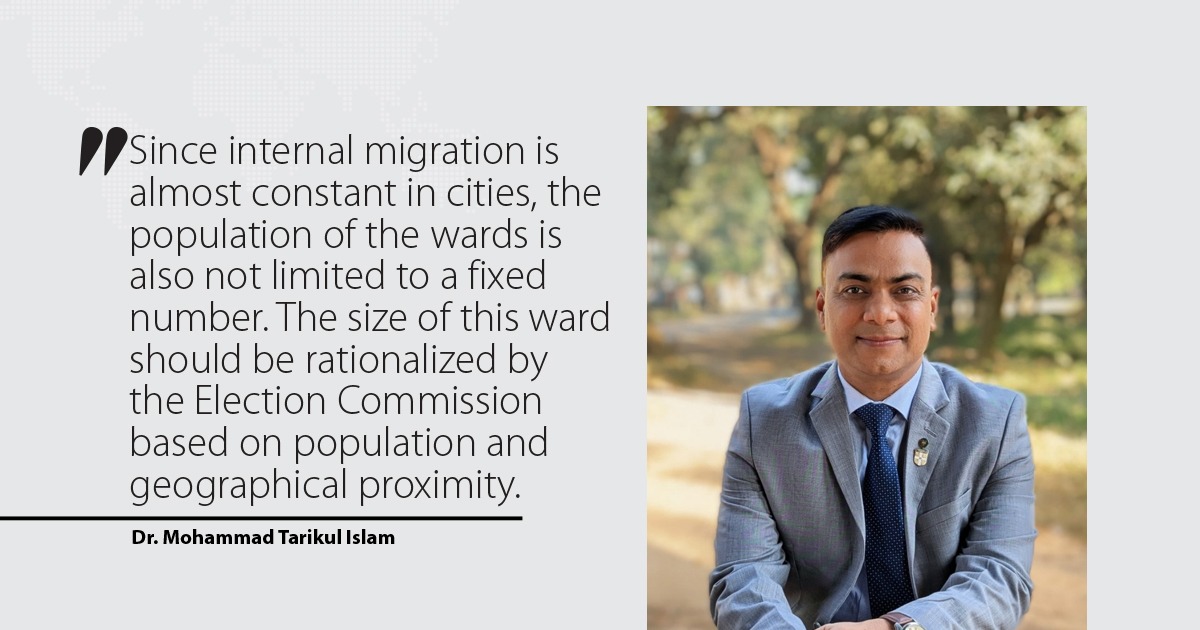
Essential citizen services such as birth, death registration, trade license, waste management, etc., will have to be provided from each ward. There are many differences in size between the wards of the corporation and the municipality. Since internal migration is almost constant in cities, the population of the wards is also not limited to a fixed number. The size of this ward should be rationalized by the Election Commission based on population and geographical proximity. The work of rationalization of the ward can be completed under the supervision of the Election Commission. Based on local government reform commission 2024 report, a scientific master plan is essential for the sustainable development of the city. Formulation of an integrated master plan: Each city corporation should prepare a scientific and sustainable master plan, which will prioritize land use, transportation, housing and environmental balance. Coordination of RAJUK and city corporations: Prevention of illegal establishments and control of urban expansion should be coordinated with RAJUK. Strict implementation of zoning policies: Clear zoning should be determined for residential, commercial and industrial areas.
Why Local Government Service is Essential?
Due to the shortage of manpower in local government institutions, the shortage of skilled and technical personnel, and the lack of proper morale among the staff, it is of utmost importance to strengthen and make effective the human resource structure of local government institutions. In this regard, the Local Government Reform Commission (2024) recommends the establishment of a dedicated service for local government, which may be called the “Local Government Service”. This service will have newly recruited staff based on the needs of local government institutions at various levels, and at the same time, it will be possible to integrate the existing staff from rural and urban areas. By formalizing this specialized service, local government institutions can ensure sustainable functioning, enhance professionalism, strengthen institutional capacity and ensure equitable benefits for all staff. The existing members of the village (UP) and city (Pourashava) police should be integrated into the “Local Government Service” under a fixed pay scale.
The ‘Local Government Service’ may be managed by a special branch/wing of the Local Government Department of the Ministry of Local Government, which may be called the ‘Personnel’/‘Human Resources’ Branch and this Branch will therefore function as the central personnel management agency of the Local Government. The proposed Local Government Commission and the Ministry will carry out the entire work jointly. The existing members of the village and municipal police in the UP and municipal areas will be merged with the “Local Government Service” under a fixed pay scale. Once the village and city police are fully organised, the force known as “Community Police” will be completely abolished. The Local Government Commission, with the assistance of the Local Government Department, will formulate a suitable legal framework for the effective management of the local police force. The local police force will be reorganized under this new framework.
The Local Government Service will be composed mainly of non-cadre officers. After the Public Service Commission completes the selection process for cadre posts, the officers of this service will be recruited to the Local Government Service from among the candidates who have successfully passed the BCS examination and are considered for non-cadre posts. On the other hand, the third- and fourth-class employees will be recruited by the concerned division/wing of the Local Government Department in the manner prescribed by the government at the request of the concerned local government institutions.
Why is it important to have uniform local government laws?
Despite the existence of 5 or 7 separate basic laws and hundreds of subordinate laws, local government has to be run through hundreds of notifications. Due to these complex laws, rules, and circulars, local leaders no longer follow any law. When necessary, they lobby and issue a new circular. Or they collect work through office sit-ins and bribes. Therefore, a user-friendly single law is needed. To ensure good governance and effective administrative decentralization, a strong local government system must be established through democratic participation of the people. Since the constitution has not clearly defined the nature of local government institutions, most of the existing local government institutions lack effectiveness. The Local Government Reform Commission 2024 has correctly identified such complex problems and has proposed practical reform proposals to make the local government organization and laws timely, effective, and more vibrant in the interest of the people.
Can the Local Government Commission serve an oversight function for the accountable local government system?
Although local government institutions in the current system work within their own structures, they often cannot ensure the desired level of development due to legal inconsistencies, administrative obstacles, and a lack of transparency. As a result, the role of a strong and effective commission is very important in improving the quality of local government services and ensuring public participation. A permanent local government commission can maintain coordination between the central government and local governments. The Local Government Commission, as an independent body, can analyze, evaluate, and make recommendations for the development of various aspects of the local government system.