Kathmandu
Sunday, January 25, 2026





Because of the feudal tendency whereby the high command of federal parties makes decisions even on provincial or local political matters, lower-level governments have not been able to function in accordance with the people’s will
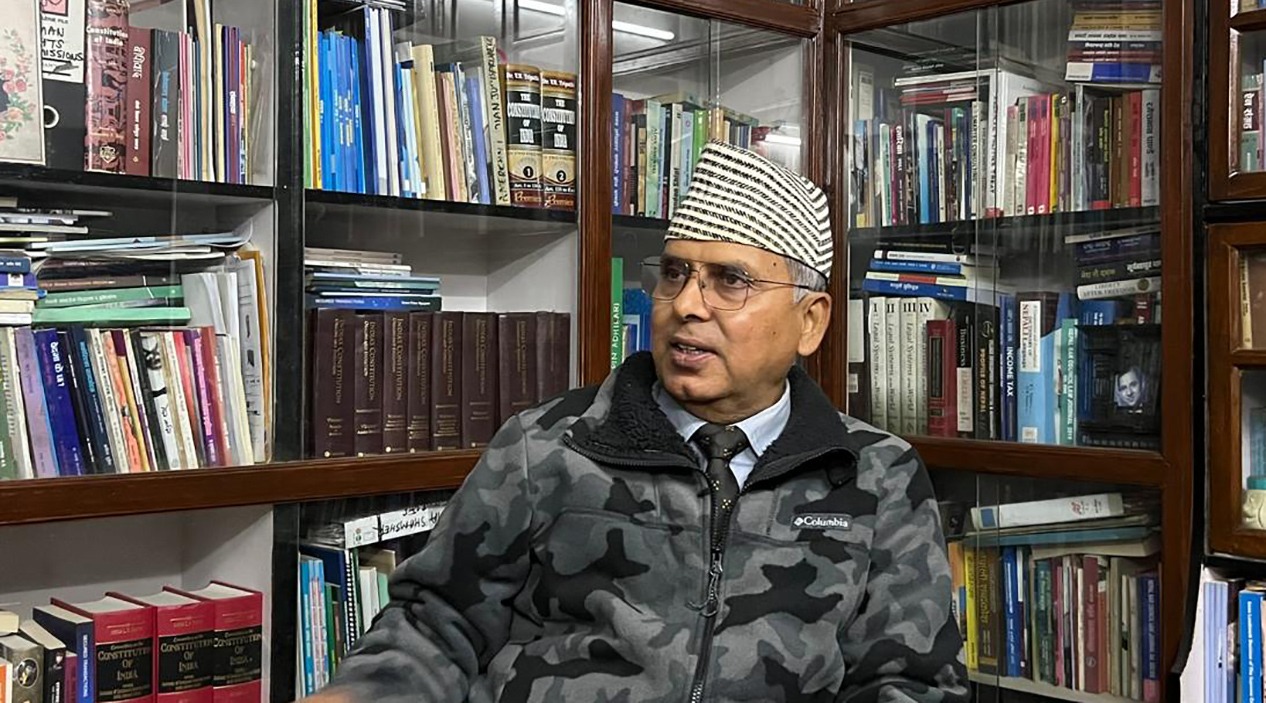
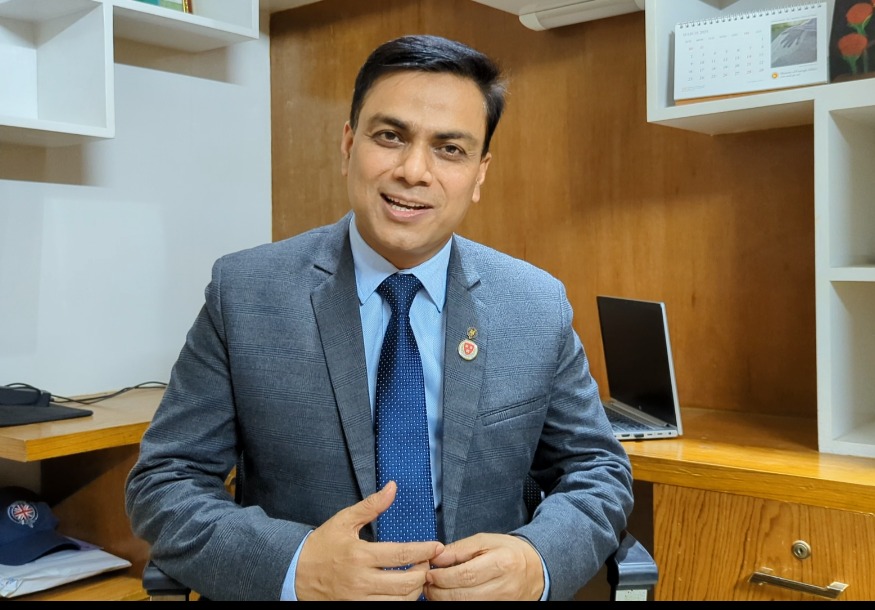
KATHMANDU: A constitutional law PhD, Bipin Adhikari is one of the few jurists in the country who does not change his views according to the maneuvers of rulers and power centers. Even when many feel uncomfortable, he speaks and writes clearly and fearlessly. And importantly, he also teaches at Kathmandu University School of Law. He has gained experience working with United Nations human rights bodies, and taking interest in federalism, fiscal law, institution-building, and internal democracy of political parties. Nepal News’ Rabin Giri spoke with Adhikari about the Gen-Z movement and the upcoming elections. Here is an edited excerpt of that conversation:
“There is an urgent need to amend the election law. The state has to spend a great deal of time, labor, resources, and money to conduct elections. Likewise, when elected representatives fail to complete their term and instead use their position as a stepping stone to climb higher, they make a mockery of the assurances, trust, and commitments they made to voters during elections. This weakens democracy. No one should be allowed to do politics by abandoning voters midway.”
You wrote this on social media platform X on January 19. While political parties, the Election Commission, and even the government seem to treat this phenomenon as normal, why did it strike you as wrong?
The way elections are being conducted now, and the way we are thinking about them, feels very superficial to me. New and old political parties, the state, the government, the Election Commission, and the media all seem unable to grasp these issues properly. I tweeted to draw attention to that.
Those who yesterday went around asking for votes saying, “Vote for me; this is my and my party’s policy and program,” and who won, are today resigning en masse before completing their term and contesting elections again. They have left their work half-finished. What happened to the promises they made to the people yesterday? What happened to the aspirations they showed? Can they run for election again without accounting for any of that?
If this were limited to just two or four individuals like Balen Shah, Harka Sampang, or Renu Dahal, it might still be manageable. But this disease has already spread to provincial assembly members as well. It has reinforced the narrative that politics is nothing but opportunism. Yes, under current law this may not be illegal, but the question is one of morality and sense of duty.
What I was saying is this: we currently have a government formed under special circumstances, whose primary purpose is to conduct elections. Elections must be clean, free, and fair. For that, even if through ordinances, the government should change all aspects that turn elections into a dirty game—that was my expectation. But the government seems to have decided that its job is only to conduct elections, and that it should not take any further risks.
But for a government mandated to conduct elections on March 5, was it really easy to do what you are suggesting at this point?
I had repeatedly suggested, right after this government was formed, that elections should be held only after amending the Political Parties Act, 2073 (2016). I had put forward four suggestions.
The first was internal democracy within parties. Parties that call themselves democratic outwardly are extremely undemocratic internally. To resolve this, it seems necessary to enforce solutions through law. Right now, all parties are being run by leadership in a risky manner. We’ve just seen it—KP Sharma Oli managed one internal party risk somehow, but Sher Bahadur Deuba could not. This problem exists in every party.
Second, the financial sources of political parties. Because there is no transparency here, elections have become highly polluted. Where does party money come from? What is its source? Is it black money or white? Did the donor who invested in the party pay taxes or not? Even if they paid taxes, did they receive licenses, contracts, appointments, or agreements by using the party’s organization? There are no legal provisions forcing all this to be made public. The Election Commission lacks the authority to enforce financial transparency with real power. Political parties are public institutions. They cannot be allowed to operate arbitrarily like private companies. The notion that losses are theirs and profits are theirs should not apply here. The same standards of expenditure accountability that apply to the state should also apply to political parties.
The third issue is inclusion. In the next eight to ten years, Nepal’s state structure will genuinely appear inclusive as per the Constitution. But political parties remain traditionalist. Because the Political Parties Act has not been amended to match the Constitution and laws governing the state, we have failed to make parties inclusive. Inclusion is needed at every level of the party. It has become absolutely essential in decision-making structures such as the high command or central committees.
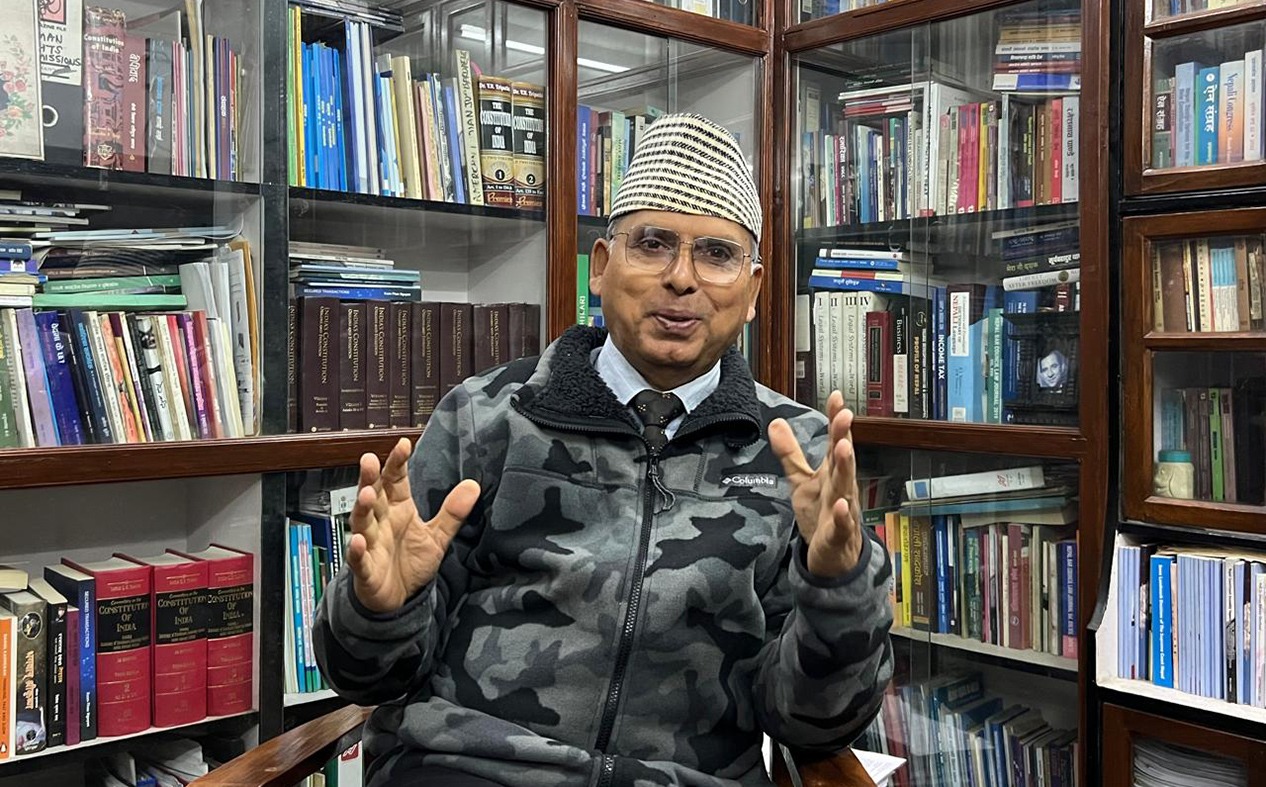
Constitutional expert Bipin Adhikari. Photo Courtesy: Shivashish Adhikari
In the first Constituent Assembly election, party manifestos strongly raised issues of inclusion. In the second, they did so less. In subsequent elections, the agenda has eroded even further. In the most recent election, no party except the Nepali Congress even mentioned inclusion. And even the Congress has not implemented it. For this reason as well, amendment of the Political Parties Act is necessary.
The fourth issue is federalizing political parties. The country has moved to federalism, but political parties have failed to develop autonomous provincial or local chapters. Whether big or small, every party here aims to become a national party. Even those that once openly identified themselves as indigenous-focused or Madhes-focused have moved away from that, saying it is not good, and have become nationally oriented. That is a good thing. But the feudal tendency of federal party high commands making decisions even on provincial or local political matters has prevented lower governments from functioning according to the people’s will.
People vote for provincial assemblies, yet the largest party they elect is unable to form the government. Even in provinces, governments are being formed according to the Kathmandu model. Those who should be in opposition according to the public mandate are leading the government. Federalism has begun to look like a ridiculous experiment. This is affecting provincial development, provincial thinking, identity, and everything else.
Look at what is happening now. The social sphere is where I was born. But in the place where I grew up, developed, studied, and worked, I am considered not trustworthy enough to be a candidate. Instead, I want to contest elections from places where people do not know me socially, where I have never shown my face. There is neither birth nor work there, yet the people there are compelled to vote for me. This is affecting our voting behavior. All these things could have been fixed immediately through ordinances, because political parties were in no position to avoid elections.
Even in such a rare favorable situation—where the Prime Minister is someone chosen by Gen Z, a former Chief Justice, and the Law Minister is also a former Supreme Court justice—why couldn’t the government muster the courage to act?
We tend to think independent individuals are impartial and strong. But the problem with independent individuals is that they have no mass base, no morale, no organization. The morality that must be established between public discipline and ordinary people is something politics provides.
A good judge does not necessarily become a good executive. I am not in favor of personally criticizing the Prime Minister of a short-term government, but she has not been able to take even a single courageous decision. Without reforming election laws, whatever result comes, the change expected by Gen-Z will not arrive—and the government did not want to understand this.
Even as a government formed on the strength of the Gen-Z movement, it could not even say this much: that at least a certain percentage of seats in parliament must be guaranteed for youth, that leadership can be held only for a limited time. If the country is national, then national standards must be established; women and people from different communities must be placed in every local or provincial chapter of every party. We did not even allow space for discussion on these issues. The Prime Minister seemed to think that such matters could bring instability and provoke opposition. But opposition can be managed as well.
Are you saying that even if the results of the upcoming election appear new, the political situation itself will remain old?
What I see is that if new parties come in, Parliament will indeed have more young people, more diversity, and fresher faces than before. Even so, the kind of “new Parliament” we had imagined will still not be formed. Instead, it seems we will need to be even more vigilant on certain issues.
Based on their respective political strength, the new parties that will enter Parliament do not have clear concepts on key issues. Take the Rastriya Swatantra Party (RSP), for example—it is the most mature among the new parties. But what exactly is its political goal? What are its positions on the country’s pressing issues? Some within the party are talking about a Hindu state, others about the monarchy and national reconciliation. Some are saying provinces or electoral constituencies should be delineated on the basis of identity. They are also demanding a directly elected Prime Minister. They are even asking what our independent foreign policy should be.
What is our vision of the state? What are our aspirations? Have we moved toward isolationism, or do we uphold international values? If so, what exactly is our stance on them? One is free to do politics according to one’s beliefs and faith, but elections are precisely the right time to present the public with one’s official position on these and many other issues. Proxy candidates should not be allowed to win elections. In parties where leadership has changed, the new leadership must not keep voters confused on such matters.
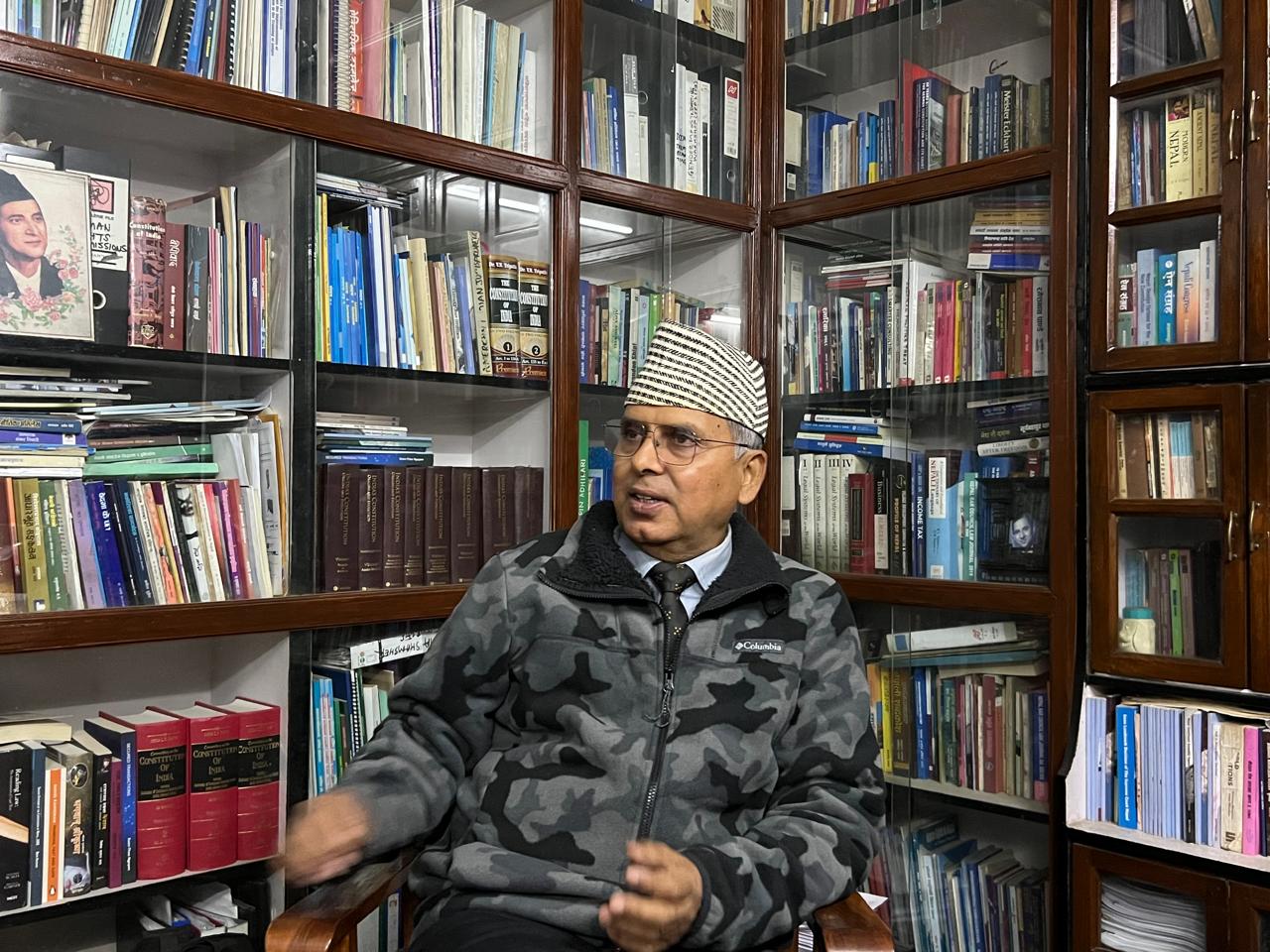
Constitutional expert Bipin Adhikari. Photo Courtesy: Shivashish Adhikari
If the new parties fail to clarify these issues now and do not present their positions to the people, there is a risk that they themselves will fragment after reaching Parliament. This risk also exists because figures like Rabi Lamichhane, C.K. Raut, Kulman Ghising, and Harka Sampang did not enter politics from the grassroots. Those who come up from the grassroots do not make reckless statements. One must understand the national context and think about how ordinary Nepalis are thinking. In other words, one needs a national perspective along with a grassroots perspective, and a grassroots perspective along with a national one.
We must not forget that during the seven-and-a-half years of constitution-making, many extreme and impulsive ideas were sold, and many actions were carried out. But none of those could truly be implemented, nor were they appropriate. Today, when we are getting another opportunity and trying to establish something new, how do we “revisit” that experience? How can we reconstruct the country we are seeking? For that, what should be the standards and norms of organization? This is where the problem lies again. The new parties lack what is needed to cultivate organized practice within a party. In such a situation, what becomes the basis of party unity? How is the mandate received from the people strengthened? In personality-centric parties, such conditions are inevitable.
On one side, there is the “politics of personality worship.” On the other, traders, doctors, engineers, social influencers, lawyers, journalists, and artists are all being compelled to enter politics. Is politics really an area that is easily accessible to everyone?
This is a great misfortune of Nepali society. The representatives we need are those who can transform the conditions of the hungry, the naked, the marginalized, and ordinary citizens. But here, those calling themselves leaders come from an “elitist perspective.”
Politics in Nepal is slipping out of the hands of the social sphere. This is not only a matter of concern—it is a tragedy. Those who represent the people should be those who understand the people: those who live among them, share in their joys and sorrows, go door to door, have some leadership qualities, and are also educated. Leadership should gradually emerge in this way. But in Nepal today, leadership is not emerging from below; it is being imposed from above. People are making direct entries, slipping in from the sidelines. Forcing one’s way into an electoral constituency on the strength of money, fame, and power is a dangerous game. Politics also needs a probation period.
Democracy is something that develops gradually. It is not obtained all at once. Democracy must be institutionalized and culturally internalized through practice over time. Can disorganized leadership—lacking self-established culture, trust, and tradition—really make that happen? Can it make the country strong? Today, tickets are being distributed in such a way that the leadership does not even know a candidate’s ten-year history. A ticket earned by serving the people is a real ticket; a ticket obtained through serving leaders or through buying and selling—is that even a ticket?
Earlier, we used to hear that businesspeople supported parties and candidates by giving donations. Now they themselves are openly entering politics. How should this be viewed?
Politics is a social sphere. It is permissible to invest money in politics, but the real issue is how transparent you are when you invest. Just as during disasters or pandemics you donate openly, in your own name, to the Prime Minister’s Disaster Relief Fund, political funding should also be visible in the same way. That system must be applied in every political party. Otherwise, the money you give will be sought to be recovered illegally with profit. In that case, it must be called bribery—bribery paid in advance.
People from all sectors should have representation in politics, but the threshold must be the social sphere. Those who enter politics on the basis of money will naturally use position and prestige for money. Even if a businessperson enters politics, they will live by business values and exercise authority accordingly.
At present, it appears that every party is bringing in businesspeople to raise funds. Among those who have entered this way, two or four have already begun staking claims to the prime ministership. These businesspeople do not represent ordinary citizens at all. If such people begin to dominate politics, the country’s security itself will be at risk—because highly ambitious individuals can do anything. This is the situation we are in now. Politics has gone down the wrong path.
Is it possible that the main reason wealthy people are entering politics is that politics has been made the ultimate power, and that remaining unaffiliated with any party creates a sense of insecurity?
Yes, this is also visible now. People are seeking a protective shield through politics. Some individuals who have a lot of money, businesses, or have taken risks fear that they might be left vulnerable. Because of that fear, they are funding parties so that “their people” are in politics. They are also pushing their own people into parties. For example, as the Nepali Congress gradually expanded, it included former soldiers, civil servants, businesspeople, farmers—everyone. If you do not represent every sector in this way, you cannot make a party broad-based.
However, Congress had clear organizational rules. The term sukilamukila (elite, well-dressed people) was not first used by Prachanda; it was used earlier by B.P. Koirala. He knew that sukilamukila could enter the party, but power must not slip out of the hands of the people, because they could misuse it. On the other hand, some people may believe that if they remain in power, they will avoid being implicated in corruption or gain certain privileges or protections. Some commentators even say this is affecting our judiciary. That is why elections must be kept pure in every possible way.
Even in the elections being held after the Gen Z movement, the major political parties showed no initiative to ensure visible representation of women, Dalits, and marginalized communities in Parliament. Why this regression?
To implement the spirit of the Constitution, the current Election Act and the Political Parties Act must be properly amended. The Constitution mandatorily ensured the presence of women, Dalits, minorities, and other marginalized communities in local governments. That is why today we see a sharp increase in women, Dalit, and minority leadership at the local level. But political party organizations did not provide the same structure that the Constitution did. Within the parties themselves, inclusive representation of women, Dalits, and other communities could not be ensured. Seats for candidates are vacant, yet parties—which function as laboratories for producing political workers—were under no obligation to recruit them. Parties should not only give leadership; they must also provide training for leadership.
Recently, the Nepali Congress formed a new Central Working Committee. Its statute was also amended. Yet even in this amendment, why was the representation of women, Dalits, minorities, and persons with disabilities limited to merely fulfilling the minimum requirement? Why was there no spirit of moving one step further and becoming exemplary? If this is the condition of a party with as long and democratic a history as the Nepali Congress, one can imagine the state of the others.
The Maoists did do something to bring marginalized people into mainstream politics. But due to a lack of commitment to democratic and nationalist politics, that effort gradually declined and reached rock bottom. Today, even the Maoist party of yesterday no longer exists. The Maoists’ problem was that they talked of revolution, but that revolution could not be grounded in values, democratic practices, and nation-building. They lacked institutions—and institutional values—necessary to expand community consciousness at the same pace.
All parties are founded by leaders; there is no doubt about that. But what matters is whether that leadership is building an organization based on a narrow inner circle or genuinely offering an alternative to the people. Yet even new parties, including the RSP, failed to offer such an alternative. Had they done so, they would have given tickets to Dalits, Indigenous peoples, marginalized youth, and those actively working in the social sector.
When we look at the candidates fielded by so-called alternative new parties, the dominance of the elite class is evident. In such a situation, will they serve the people tomorrow, or will they serve the elite?
That danger does exist. But the elite class in politics is not inherently bad. If leadership emerging from the elite class is genuinely committed to serving grassroots people, leaders like Clement Attlee and Jawaharlal Nehru can also emerge. B.P. Koirala belonged to this class. So did Lenin. If we look back, most revolutionaries of the 19th and 20th centuries came from elite backgrounds, but their orientation was toward the grassroots. If that orientation is absent, leadership from the elite class can become a broker class.
In politics, the dominance must belong to the hungry, the poor, and ordinary people. Two things must be considered. The elite may or may not use political power for the hungry and the poor. They may first choose to fill their own stomachs. Therefore, no one should be treated as an angel. The testing ground is the social sphere. If those who want to enter politics come through the social sector, democracy becomes fertile.
The main demand of the Gen Z movement was the establishment of good governance. Will the newly formed government deliver good governance?
The biggest problem of our country is precisely the dysfunction in governance. Good governance means a governing system capable of fulfilling the guarantees that the Constitution and laws make to citizens. Good governance is the concept of delivering those services. Commitments made by the state should automatically reach ordinary citizens. But our attention has never really gone there—not yesterday, not today, and it is a challenge to imagine how it will tomorrow. Many who speak grandly fail to prove themselves in small, practical matters.
You speak of a well-governed country, but I sense the country itself becoming insecure. Democracy is not something that gets destroyed overnight, but a country can be destroyed. Its language, religion, culture, territorial integrity, sovereignty, and right to self-determination can be lost. I fear that in the new Parliament, there may not be people who feel and defend Nepali nationalism to the extent that older leaders once did. Scaring off the old should not mean underestimating their contributions. Their shortcomings should be corrected. The question is: who will carry forward the legacy of what was good? That is where my concern lies.
The Gen Z rebellion arose because of old mismanagement, but Gen Z has not understood all the causes of that mismanagement. Such understanding comes from experience. The older generation has that experience.
Leaders of new parties say that national development is their core ideology and objective. Can we rely on that claim?
They say they will develop the country—but where is their concern for the country? If India were to impose a blockade for two years, we might not ride motor vehicles, but how would we eat rice? Does this country need railways more, or agriculture? Why does no one talk about the problems of an open border with India? Why is there no discussion about labor permit laws for foreigners in Nepal? In a tolerant country like ours, people are rapidly becoming religiously extremist—wearing saffron, being incited to fight on religious grounds.
If those who are called “new” do not speak about our language, culture, national unity, and independent foreign policy, we cannot rely on them. Deposed kings talk about Nepal as a zone of peace, yet why do aspiring democrats lack that level of confidence?
Not only the dissolved Nepali Congress–UML coalition government, but also some Gen Z activists have been saying that the current Constitution is the cause of political instability. Is constitutional amendment inevitable?
I am a student of law. My stance may sound somewhat traditional. We should not make false claims that we will become progressive by damaging the existing Constitution. When a country becomes unstable, neighbors become stronger—not us. Until yesterday, people said, “Throw away the Constitution made by the king; it must be made by the people.” But this Constitution was made by the people. If we throw it away, what will we bring? Such rhetoric does not establish us as a principled society.
Gen-Z is the “harsh reality” of today’s Nepali society. The Gen-Z rebellion made it clear that this country belongs to them too, not just to old elites. If you do not treat Gen-Z as a constituency, the country will become restless. Doing so requires maturity. It can be institutionalized through effective implementation of the Constitution and necessary amendments—but not through the streets. It must be through parliamentary process.
After the rise of Gen Z, the country has entered a new phase of change. There will be challenges, but are there also opportunities?
Why not? Nepal today is full of opportunities. Elections are being held. The people must choose leaders who can be heroes of the nation, not servants.
Yesterday, everything was a problem—money, technology, capacity, support—none of it existed. Today, none of those problems exist. There is no shortage of educated people either. If a positive and creative environment is created, reconstruction can begin immediately. Nepalis are also a hardworking people. But Nepal’s opportunities must be safeguarded for Nepalis themselves. For a small country like ours, it is enough to have leaders with nationalist, democratic, and development-oriented conduct. History has made Nepal one of the world’s most magnificent and unique countries. How the country is run, however, depends entirely on political leadership.