Kathmandu
Monday, February 2, 2026





‘Three years ago, at the altitude of Everest Base Camp, I wrote on my phone for the first time. I had never imagined that I would write on a phone’

KATHMANDU: Samrat Upadhyay is well-known in Western countries as a fiction writer of Nepali origin writing in English. A professor at Indiana University in the USA, Upadhyay’s seventh and newest creation is the novel Darkmotherland.
Prior to this, he published three story collections titled Arresting God in Kathmandu, The Royal Ghosts, and Mad Country, as well as three novels: The Guru of Love, Buddha’s Orphans, and The City Son.
Upadhyay’s Darkmotherland is set to be launched this coming Saturday at the Dabali of the Pragya Pratishthan. Published in January this year by Penguin Random House in America, the South Asian edition of this novel is being brought to the market by the Nepali publishing house FinePrint. Upadhyay who recently arrived in Kathmandu for the upcoming launch of his latest creation, spoke openly with Prabhakar Gautam of Nepal News earlier this week.
You reached Kolkata before coming here; is there a connection with Kolkata?
My elder sister, who went to Kolkata to study medicine, got married there. Both my sister and brother-in-law are doctors. They even run a small hospital there. My father passed away three years ago, and since then my mother has been living with my sister. I went to Kolkata to meet my mother, sister, and brother-in-law. I spent five days there before coming here.
Who are your relatives in Kathmandu?
From my parents’ side, there is no one. There are only some distant relatives. However, my wife’s maternal home is here. I am currently staying there (Chucchepati).
Could you tell us something about the subject matter of your new novel, “Darkmotherland”?
This novel is very thick; it took me 10 years to finish it. Initially, I started with a different subject. At that time, in 2015, a massive earthquake had occurred in Nepal. Many lost their lives, and many were injured. My father and mother also had to live in a tent for many days.
I started thinking about what would happen if a dictator emerged by taking advantage of the crisis brought by the earthquake. While writing, the personality of that dictator began to dominate. I started losing interest in the previous subject matter. Then, the novel turned to that direction. In America, Trump also emerged as a dictator.
Since it is called Darkmotherland, its setting is in Nepal. However, it has references to both America and Nepal. Woven in a “back and forth” narrative, this is a “dystopian” novel.
What is the reason for the novel being so thick?
I don’t write by creating a plot beforehand. As I kept writing, the novel grew longer and became vast. Perhaps the state of mind I was in at that time, the world of letters I created, gradually expanded. I finished one full draft during the Covid-19 pandemic period. I was surprised myself by the thickness of the book. It will probably reach 760 pages.
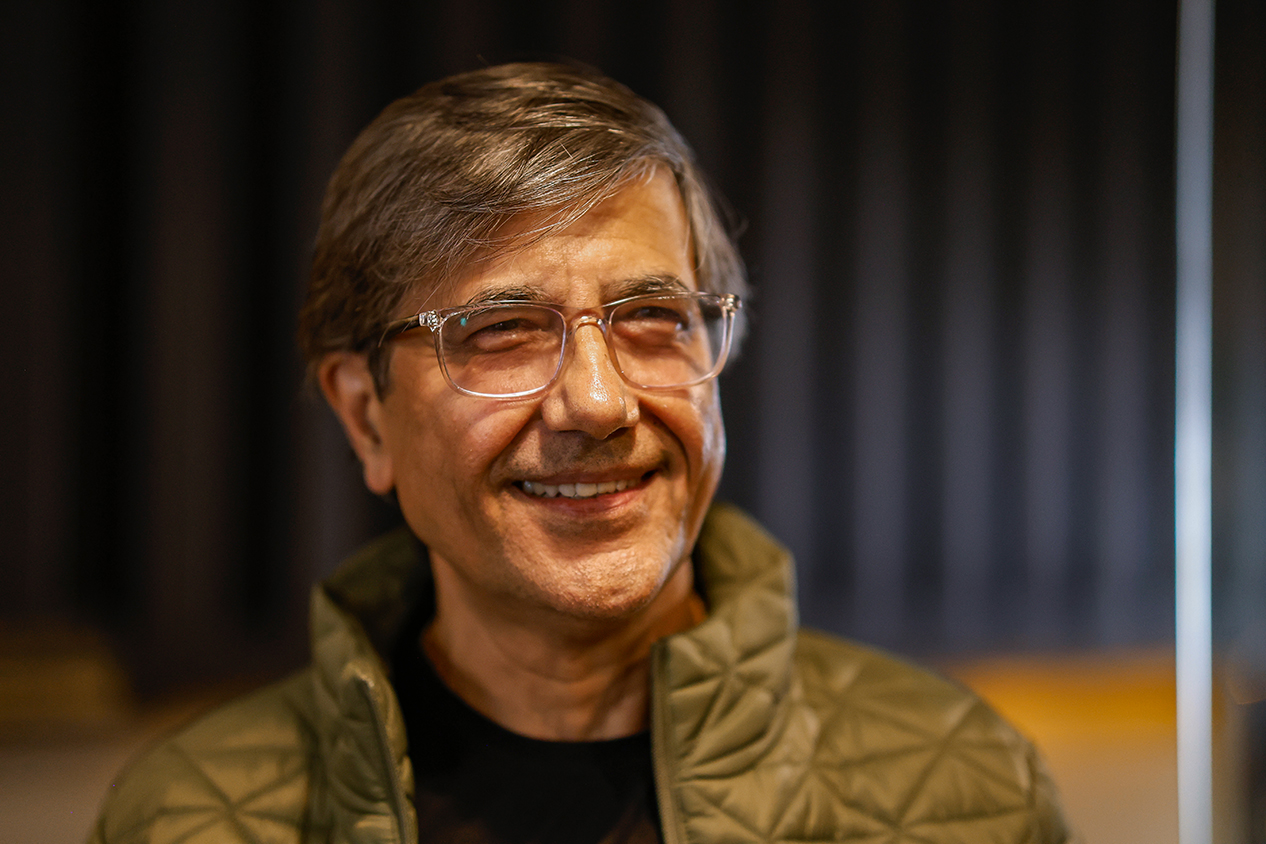
Writer Samrat Upadhyay
Does the thickness of the book make a difference in reaching more readers?
There is a saying: “A novel is as long it needs to be.” After writing Darkmotherland, I have prepared manuscripts for two other novels of about 300 pages. Regarding Darkmotherland, The New York Times published the best review of any of my books so far. Three or four other reviews have also come out. I am being invited to book festivals.
Two months ago, I went to a book festival, and I also participated in the Toronto Book Festival. Recently, I also reached the World Voices Festival in New York.
People don’t easily pick up a thick book. My agent also gave the same suggestion. However, I haven’t felt that the thickness has made much difference.
What kind of work brings you to Kathmandu?
One is a family visit. Another is meeting friends from the time I studied at St. Xavier’s. Besides that, it is literary work: Writing Nepal. I have been involved for more than 10 years in this work, which the La.Lit magazine team has been supporting.
Which books by Nepali authors published in English have you read recently?
Besides Prawin Adhikari and Manjushree Thapa, I haven’t read many. However, Writing Nepal is giving me a lot of ideas about what the new generation of Nepalis is writing in English.
How do you evaluate the writing of the new generation?
I am very optimistic. They have plenty of creative thoughts. There is diversity in subjects. There is no doubt about the talent and capacity of the new generation. Some of the participants and winners of Writing Nepal have even published books. There is room for improvement in things like language and knowledge of subject matter, but it is a happy thing that many are writing in English.
You are teaching creative writing in America. What kind of experiments in creativity are you seeing in our English writing?
When Manjushree’s and my books came out, we became like the first generation to be published from outside in English. That led to our discussion and recognition. People outside also said, “Nepal writing in English.” After that, the number of other writers who should have come in that volume might be small. There are always ups and downs in literature. We must be patient. The writers who are there now, whom I am reading, have talent. A student I taught 10 years ago has just signed a deal to publish a book.
Even in my own career, it wasn’t that I sat down to write and suddenly a book was published. The results came only after writing for a very long time.
Capacity and recognition may not go together. I have many friends and students whose books haven’t been published. Not everyone’s career “takes off” just because they have talent. Therefore, capacity, opportunity, or fame are not necessarily directly interconnected. Literature that lacks fame and recognition can also be of a very high standard.
The history of our English literary writing is also short. It is slow as well. But it has certainly grown since we started.
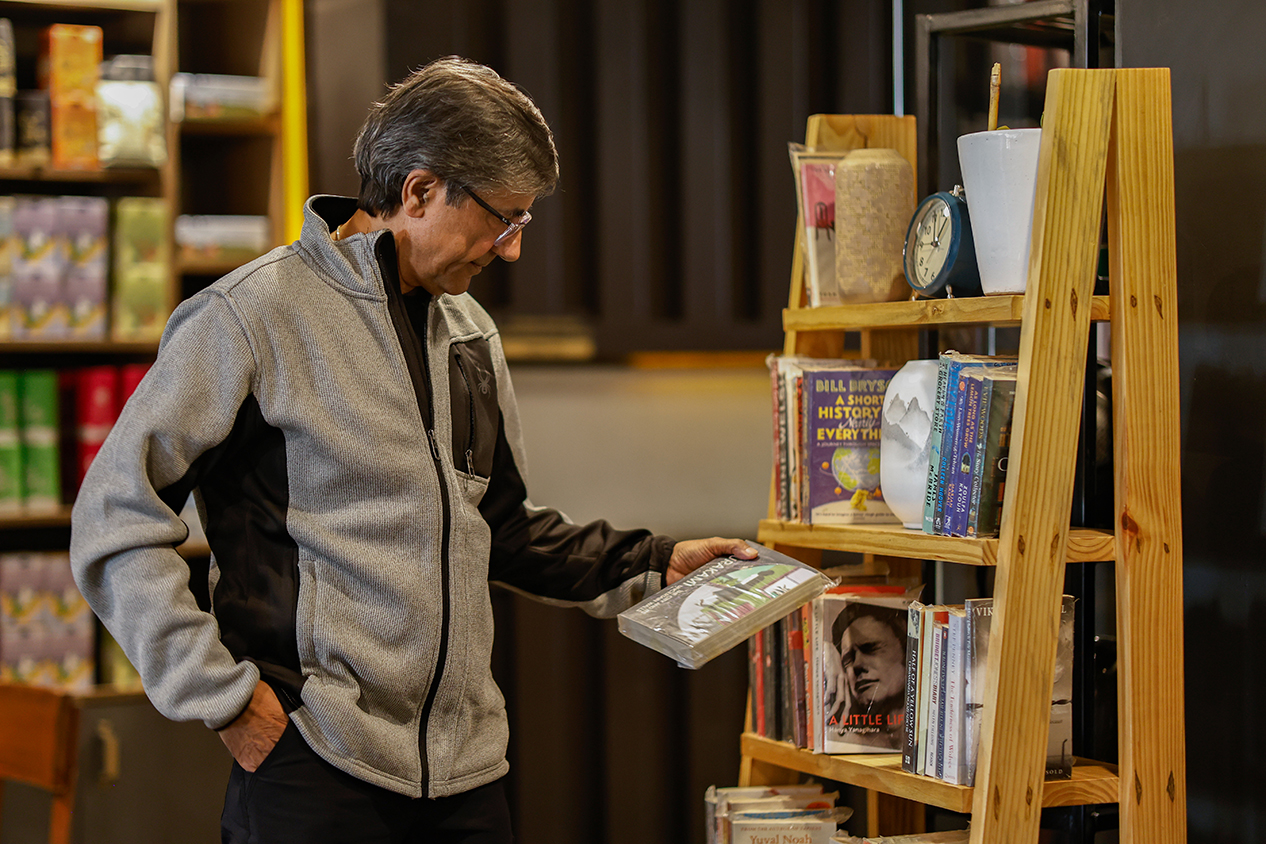
Writer Samrat Upadhyay
What is currently happening in world literature and American literature?
In world literature, books that win the Nobel Prize and the Booker Prize, among others, are very “literary.” In the trend of American publishing and what I see in my students, interest has increased more in dystopian, science fiction, and fantasy genres like The Hunger Games and Harry Potter rather than realistic depictions. My students also talk about writing in these genres.
What could be the reason for the inclination towards fantasy genres rather than realistic ones?
My students call realism boring. They say the more one constructs a world of fantasy, the more fun it is. The success achieved by books like The Hunger Games and Harry Potter might have made young writers feel that this is how they should write. It might have also shown that writing is possible in this way.
In the study of creative writing, realistic writing was heavily emphasized in America for a long time. Fantasy was viewed as second-class literature. That is changing now. This is a cultural change rather than a policy one.
What is seen in the case of Nepal?
Maybe the tendency to be “politically correct” is dominant here? In Nepal, many things like the monarchy, the Maoist movement, and democratic movements influenced the writing here. Among critics, there was an understanding that my first book, Arresting God in Kathmandu, should represent the whole of Nepal. I write what I feel and see. How can I represent the whole of Nepal? That is an impossible thing.
No writer can represent everyone. I used to feel that pressure on young Nepali writers. The insistence that English literature must represent Nepal was even stronger. It felt like putting pressure on young writers to write what they didn’t want to write, rather than what they wanted to. There was also a situation where writing might not be recognized if it didn’t address politics. I don’t think it’s like that now. Diversity is found in subjects.
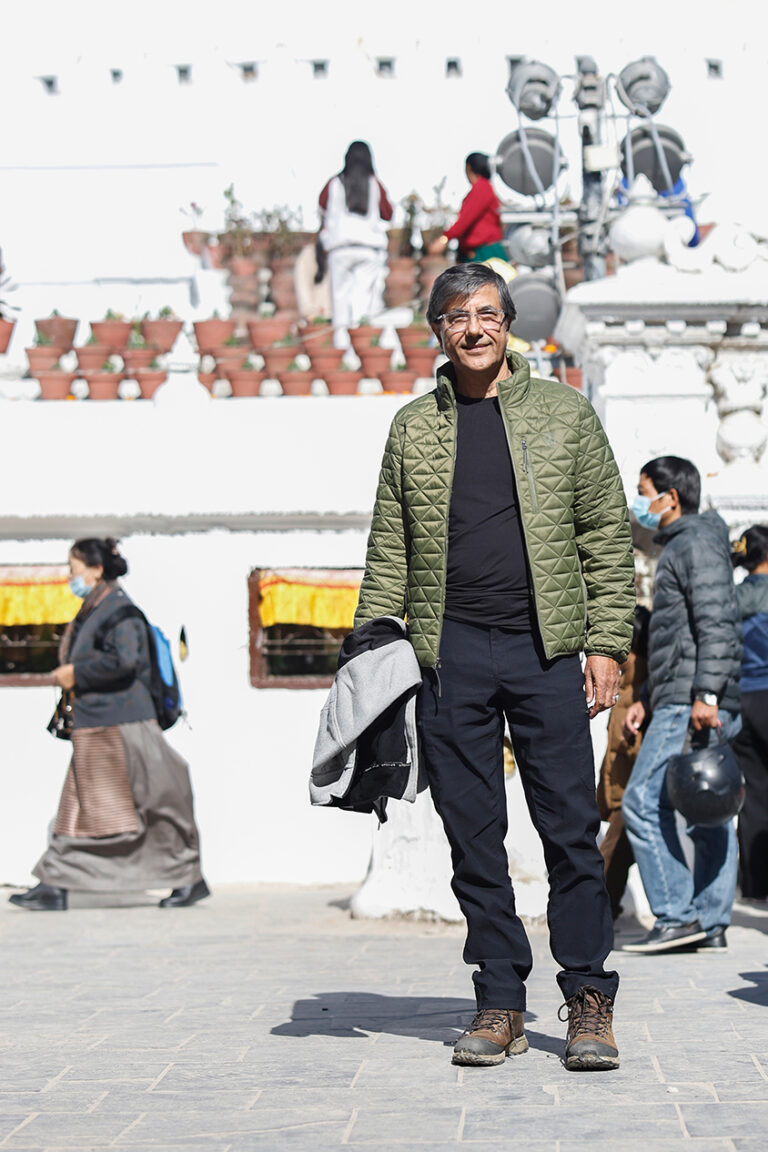
Writer Samrat Upadhyay
In America, there are a large number of writers like you who have left their original homes. This group’s writing is seen to be categorized as identity-based writing in America. Is this a problem or an opportunity for immigrant writers?
It used to be like that. The thought that South Asian writing must be of such style and subject matter was strong. The publisher of Indian-origin Jhumpa Lahiri’s Interpreter of Maladies and my Arresting God in Kathmandu is the same. The editorial team is also the same. Our writing was placed in “ethnic literature,” which was considered different from standard American literature.
There was an idea that South Asian writers must write on specific subjects. For example, arranged marriage. It was the same for African-American writers. Comments like “This story didn’t feel like a ‘Black character'” were common. Because, in their understanding, the notion was that Asian, South Asian, or Black characters are all of the same type. When such tags are attached, it certainly becomes difficult for many like me.
But I also have an interesting experience. Before Arresting God in Kathmandu was published, a story included in it called The Good Shopkeeper was selected by Best American Stories. At that time, I still had a Nepali passport. I was surprised to be included in the selection of American stories; I realized that in this country, they even label Nepalis as “Best American.” In a way, America is also very open.
You once gave a speech titled “The Making of an Immigrant Writer,” didn’t you?
I often give speeches in schools and colleges. The reason is that there is a path for immigrant writers. Many think they should become doctors or engineers. But I tell the new generation, “I followed my passion.” When some ask for advice, I say, “You need to follow your mind.”
Doctors also participate in some programs. They say they used to want to write, but writing was left behind while building a career. My thoughts are also for those who want to return to writing.
How much of an identity crisis do you face in America while writing with the “immigrant” tag?
I reached America at the young age of 21. I have spent more time in America than in Nepal.
With time, the thinking and understanding of writers do not remain static. The world is also changing accordingly. When I went, the access and expansion of technology hadn’t happened. Now, the world has come closer because of the internet. Previously, while writing many things, one had to write in a way that explained them to either Nepali or American readers. Now, much explanation is not needed. Even when writing about America, Nepali readers understand it now. This has made it a bit easier. The distance between Nepal and America has decreased significantly from what it used to be.
Many young people who studied in America are living and writing in Nepal. Many have already settled in America. Their relatives are also there. I come to Nepal about twice a year. This cafe where we are sitting right now (Himalayan Java in Bauddha) isn’t much different from any cafe in America. The drinks and food are similar.
It has been 25 years since your first book was published. You started writing in your school days. What difference do you find in your writing style, subject selection, and purpose of writing while writing continuously?
The biggest change or transformation is that I have become more politically conscious lately. Political movements and changes influence me more than before.
I studied at St. Xavier’s in Kathmandu. Xavier’s had its own elite circle. Although I grew up in a middle-class family, I didn’t have much political awareness until the time I went to America.
Partially, the political upheaval in Nepal also had an influence. The political ups and downs of America also had an effect. It has increased further after the rise of Trump.
The funny thing is, I created a dictator character named PM Papa in Darkmotherland. At that time, Trump had not yet become president. During a trip to Greece, a store clerk asked me, “So, do you think Trump will be a president?”
Even people in Europe were afraid of Trump. I said by estimation, “He becomes president, and he also becomes a dictator.” Unfortunately, Trump won and also became a dictator. I even joke with friends, saying, “See, my prophecy came true.” Trump is the greatest danger to the whole world.
What is the political influence on immigrant writers after the rise of Trump?
It has influenced academics in America itself. Just today, I read news about the University of Texas. The University of Texas is a large university system. It has become entirely right-wing. This is a strategy of the Board of Trustees to suppress progressives. That has started happening at our Indiana University as well.
Such a situation immediately influences those of us who teach and write. Because writing is about pushback. The work of art is to fight against the oppression of the state. Therefore, they are writing by being politically active. They are also mocking Trump just as much. This is the reason why people’s political consciousness increases. American politics was a bit quieter before Trump. It started increasing a bit after the Iraq War. Now, there is a very high-toned awareness. Some writers are facing a situation where they might actually leave America.
Is your objective and purpose of writing still the same as when you entered America, or has it changed?
I have turned 61. At this stage, I feel I am in the most creative time of my career. I feel this is a great blessing for me. Even after having written seven books by this age, I feel I can still write much more. I am writing as well.
Selling books and being discussed are secondary things. I received recognition and awards at the international level too. But no award gives as much joy as sitting down and writing with new concepts. No review gives that.
This feeling of joy itself is my achievement. I also tell my students: this is the main thing you should keep in mind. And this alone is sustainable.
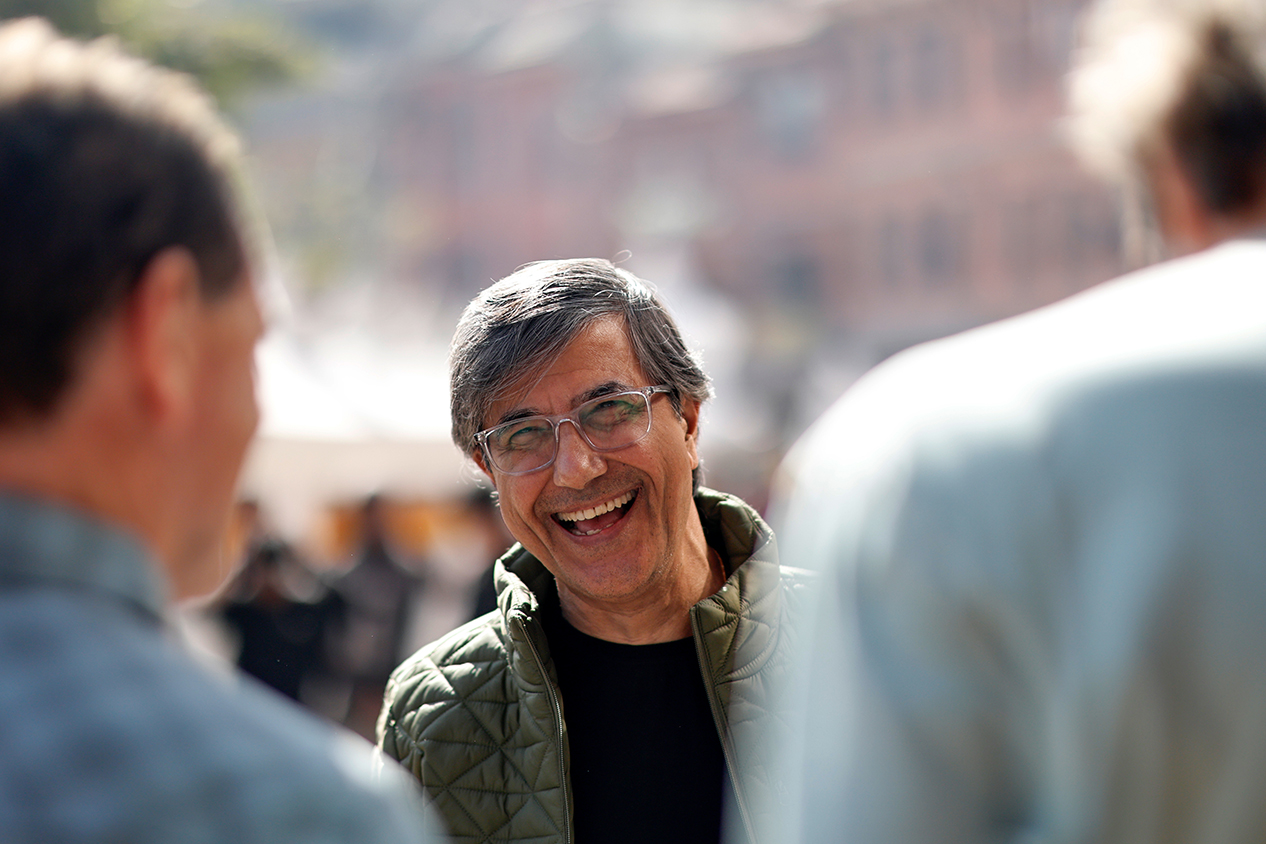
Writer Samrat Upadhyay
What is your writing process? What are the sources for creating stories, subjects, and characters?
I don’t follow many formulas. It’s not that I decide, “I will go to New Road today, then I will look at this, and I will note this down.” I observe things while just wandering around. Small things and changes are noticed; comparisons are made. While writing, those things come spontaneously.
Is there no need for research?
I also do research. For example, regarding political contexts and movements. While writing Buddha’s Orphans, there were things from the time of King Mahendra onwards. I was born in the 1960s; I had also included things from earlier times in the novel. There was also a reference to the 1934 earthquake.
To write all those things, besides reading books, one must also talk to people. I even talked to my wife’s old grandmother. I do such research for every book I write, but only after writing the first draft.
I am also learning with my students. One must also read while teaching and interacting with them. But it’s not that a literary writer should only read in their own field. When I write a novel, I don’t read novels. I read story collections and non-fiction.
Your fiction is centered on Nepal. What motivates you to keep writing about this subject even while living far from Nepal?
I am a fully blended Nepali. I was born and raised here, and the connection with this place, environment, and the people here is still maintained. I feel I understand the Nepali psychology well. These very things motivate me.
How much interest do you have in writing the stories of immigrant Nepalis in America? Indian, South Korean, Chinese, Vietnamese, and Norwegian immigrants are already writing stories for literature and cinema.
I am currently drafting a novel. In that, there is a story of the struggle a Nepali professor faces after reaching America. In another story collection I am about to finish, fifty percent of the stories are about immigrant Nepalis. For me, the inspiration to write must come spontaneously. I don’t write by deciding, “I will write about this.” However, my interest toward immigrant Nepalis is also increasing.
How conscious or subconscious is the matter of including one’s own experiences and encounters within a story?
In the initial draft, this is subconscious. After that, I decide critically what to keep and what not to. In writing, they say that the initial novels are very “autobiographical”!
In my case, the first draft of the novel was on a different subject. I destroyed the novel because it felt poor to me.
It is normal for a writer to bring their experience into writing. But I transform it. In The Guru of Love, I used the setting of my father offering private tuition at home. Because students used to keep coming to the house. I knew the tuition setting very well. However, the main character of the novel is not my father.
After writing your first book, do you still have to struggle as much to write the second?
Yes, one does. Previously, I thought that once a book comes out, writing would just flow. But the exact opposite happened. Every time I write a book, it becomes more and more difficult. One’s own expectations also increase.
In a way, that challenge is also good. It doesn’t let a person remain stagnant. Writers must consciously challenge themselves. This itself is the process of learning. In literature, it doesn’t happen that “this thing has come, now I have become an expert.”
Do you ever feel like you can’t write anymore?
That keeps happening.
How do you move forward at such times?
The practice of writing regularly reduces that problem a bit. I also think that some days are good and some are bad. And I start writing again.
On average, how much do you write daily?
At least one hour when I have classes. But I write a lot during long holiday breaks.
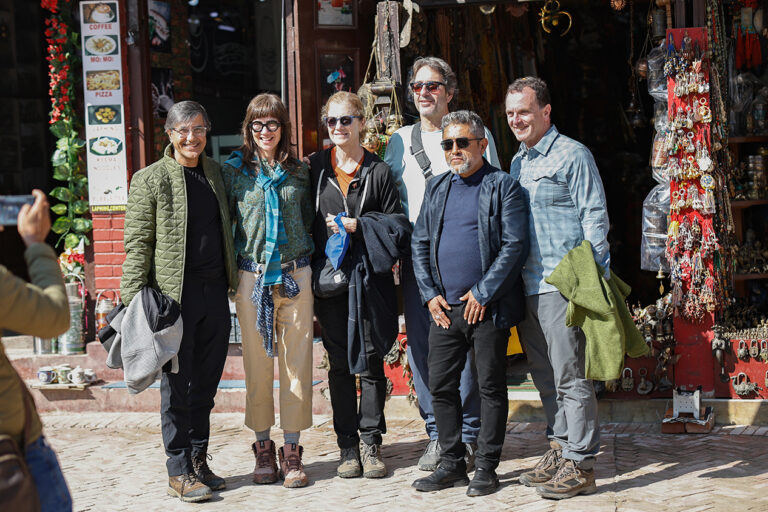
Upadhyay interacting with fans in Bouddha
Is there any rule for writing?
There is no rule as such. There are some stages of writing. In the first stage, I write in my “intuition” or “flow.” I don’t write by making an outline when writing a novel.
After the first draft is made, I focus on what story I am trying to tell. After that, I look at it from a critical perspective and adjust things that need to be adjusted. The final draft of Darkmotherland was reached after more than 20 revisions.
My first draft is usually fast. I let the story go its own way. The pace of the second draft is a bit slower. More hard work is required during the stages of review and rewriting. At this time, it is more difficult than writing initially.
Previously, I used to sit in one place and write. Nowadays, I write anywhere. I write at the airport as well. Three years ago, at the altitude of Everest Base Camp, I wrote on my phone for the first time. I had never imagined that I would write on a phone. Otherwise, I write by hand. I write in an ordinary notebook.
What is the difference between a story and a novel for you? Why should the same writer write in both genres?
A novel is very challenging. One keeps writing until the novel is finished. One also doesn’t know if it will work or not. If one fails after spending a long time, the time goes to waste.
Since it takes a long time to write a novel, I also write stories. Because they can be finished in a short time, writing a story also gives pleasure. However, both have their own beauty. While writing, the subject itself also demands the genre.
What is your daily routine in America?
I wake up in the morning and write for at least one hour. One can choose the teaching time; I take the morning classes. After the teaching work is over at around 12 o’clock, I come home and have lunch. I also sleep for a while. After waking up, I stay busy reading and editing what my students have written.
This is very good for me. As a person who writes literature, I have been able to live by reading literature.