Kathmandu
Wednesday, July 8, 2026





Tibet has become the fulcrum of Nepal's diplomacy. As Beijing tightens its security expectations and Washington presses for greater protection of Tibetan refugees, Kathmandu's strategic room for maneuver continues to narrow.
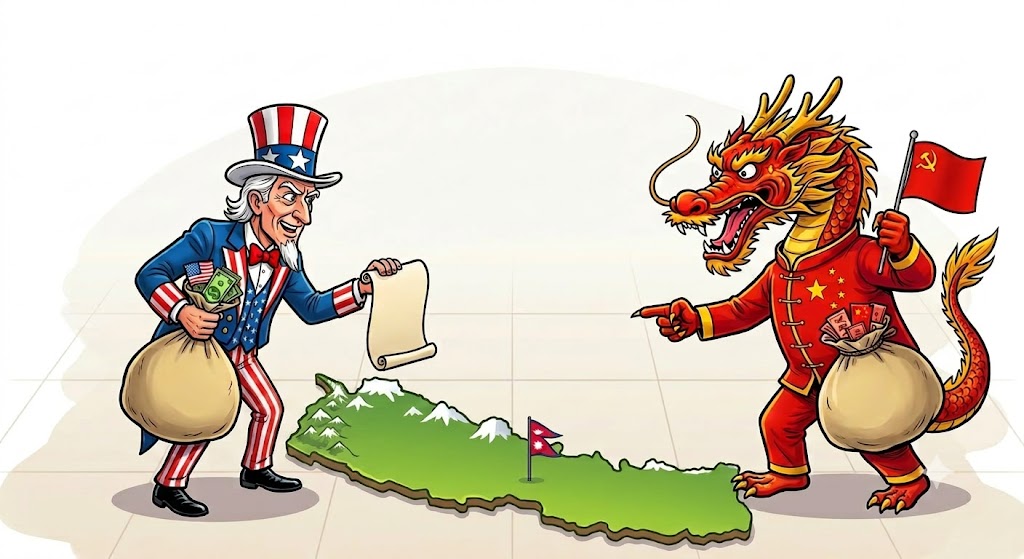
KATHMANDU: As United States intensifies its focus on Tibetan refugee human rights guarantee in Kathmandu and China demands ever firmer assurances that Nepali territory will not be used for activities it deems threatening to its security, Kathmandu finds itself balancing two competing strategic imperatives with little room for error.
The dilemma resurfaced after Foreign Minister Shisir Khanal’s official visit to Beijing last month, coming shortly after the 91st birthday of the Dalai Lama was quietly marked in Kathmandu. Nepal allowed the celebration to take place indoors under tight security, preventing any public demonstration while diplomats from the United States and several other Western countries attended-a carefully calibrated approach intended to avoid provoking either Beijing or Washington.
In Beijing, Chinese Foreign Minister Wang Yi commended Nepal’s unwavering adherence to the One China policy and its support for what Beijing calls its “core interests,” notably Tibet. He also remarked that “close neighbors are better than distant partners”-a diplomatic signal widely interpreted as reflecting China’s unease over Kathmandu’s deepening engagement with the United States.
Kathmandu, for its part, has sought to reassure Beijing that Nepali territory will not be used for anti-China activities. That commitment reflects more than diplomatic courtesy. China’s concerns are rooted as much in geography as in politics. Nepal shares a 1,414-kilometre Himalayan border with China’s Tibet Autonomous Region, as defined by a boundary treaty signed in 1961. Much of the frontier cuts across remote, high-altitude terrain, making comprehensive surveillance and enforcement inherently difficult.
For Beijing, however, the border is more than a geographic boundary. Nepal serves as a critical buffer on Tibet’s key southern flank, helping deter illegal crossings, organized political activism, possible foreign penetration and any cross-border activity that could challenge Chinese authority in Tibet.
Nepal’s Tibet dilemma is rooted in history as much as geography. After the Dalai Lama fled Tibet in 1959, thousands of Tibetans crossed the Himalayas into Nepal, creating one of the region’s largest Tibetan refugee communities. Kathmandu recognized those who arrived before 1990 as refugees, but has granted no such status to later arrivals. Refugee identity cards were last issued in 1995, leaving much of the community in prolonged legal limbo.
The issue was once entangled in the Cold War. As Communist China tightened its grip on Tibet, thousands of Tibetans mounted an armed resistance. Between 1957 and 1969, the USA financed, armed and trained Tibetan guerrillas under the covert program. After the Dalai Lama’s flight to India in 1959, the insurgency operated largely from Nepal’s remote Mustang district, launching raids across the Himalayan frontier. The operation ended abruptly in 1969 as Washington’s strategic priorities shifted following President Richard Nixon’s rapprochement with China, leaving the Tibetan resistance without its principal external backer.
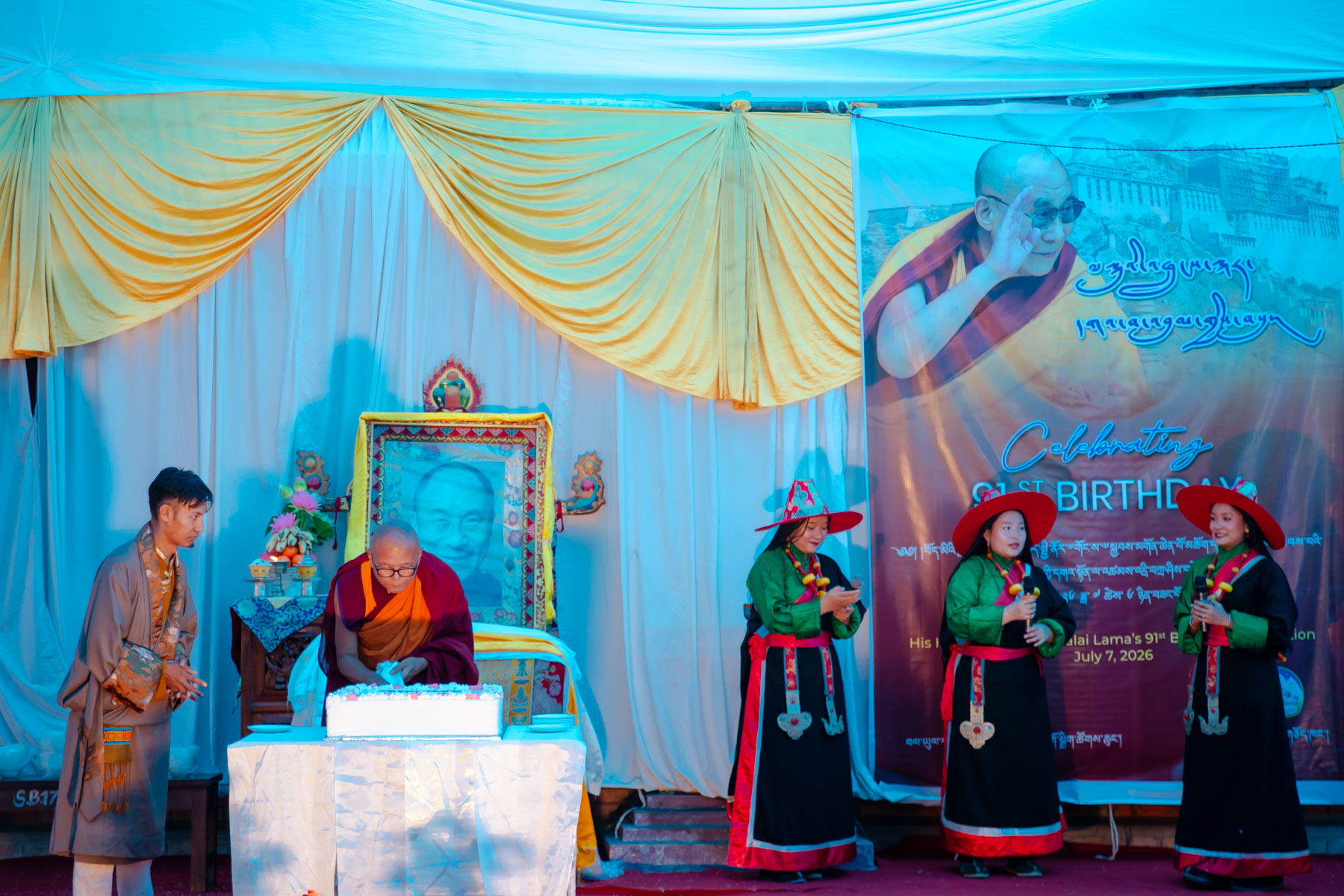
Tibetan community celebrating Dalai Lama’s 91st birthday at Namgyal School in Swayambhu on Monday (July 6). Photo: Nepal Photo Library
Today, official figures put Nepal’s Tibetan refugee population at more than 12,500 across 20 settlements in 21 districts, although some government estimates suggest the community may number closer to 20,000. Yet legal uncertainty persists. According to United States government assessments citing the UN refugee agency, nearly three-quarters of Nepal’s roughly 12,000 registered Tibetans lack valid official documentation, a legacy of decades of restrictive refugee policies.
Although Nepal continues to observe an informal “gentlemen’s agreement” with the UN refugee agency, allowing newly arrived Tibetans to transit safely to third countries, successive governments have applied the arrangement with increasing caution as political and economic ties with China have deepened. The result is a policy that seeks to balance humanitarian obligations with Beijing’s insistence that Nepal’s territory must never become a platform for Tibetan political activism.
Tibet at the heart of China’s periphery strategy
China’s deepening engagement with Nepal is driven by far more than unneighborly diplomacy. At its core lies Tibet. For Beijing, a politically stable, economically resilient and strategically aligned Nepal is indispensable to securing China’s Himalayan frontier and insulating the Tibet Autonomous Region from external influence. This strategic imperative explains Beijing’s growing diplomatic attention to Kathmandu, sustained political engagement and expanding economic footprint.
Yet Nepal occupies a broader place in China’s grand strategy. Beijing increasingly views the country as an important node in its “major-country diplomacy” and its vision of building a “community with a shared future for mankind” within an “equal and orderly multipolar world”-a framework designed to dilute the dominance of the US-led international order while gradually constraining India’s traditional strategic influence in the Himalayas.
Beijing’s expanding security frontier
The Himalayas are no longer merely a geographic frontier; they have become a security frontier for China. Nepal’s sizeable Tibetan exile community has placed Kathmandu at the centre of Beijing’s campaign to extinguish any perceived challenge to Chinese sovereignty. As a result, security-not trade, investment or diplomacy-has emerged as the organising principle of Sino-Nepal relations.
Beijing has consistently pressed Kathmandu to tighten surveillance over Tibetan communities, restrict any demonstrations, curb cross-border activism and prevent any activity linked to the Tibetan government-in-exile or the Dalai Lama.
The issue reached its most sensitive diplomatic moment during Xi Jinping’s visit to Nepal in October 2019-the first by a Chinese president in 23 years. During the visit, Xi warned that any attempt to “split” China would end with “crushed bodies and shattered bones”, remarks widely interpreted as directed primarily at separatist movements in Hong Kong and Tibet. Yet the warning also reflected Beijing’s broader regional security agenda, including frustration that Nepal had not concluded a long-sought extradition treaty that would have enabled the return of individuals accused by China of separatist activities.
That demands greater diplomatic discipline than Nepal has often displayed. Foreign policy cannot oscillate with partisan calculation. For a country situated at the intersection of Asia’s shifting balance of power, consistency is itself a strategic asset.
Kathmandu ultimately declined to sign the extradition agreement amid significant diplomatic pressure from the United States and concerns from international human-rights organisations. Instead, Nepal and China signed a Treaty on Mutual Legal Assistance in Criminal Matters (MLAT), a legal cooperation framework that many rights advocates viewed as laying the institutional groundwork for deeper security collaboration-and potentially, a future extradition arrangement.
Alongside the MLAT, both countries agreed to strengthen border management mechanisms designed to combat illegal crossings. While officially aimed at transnational crime, critics argue these measures have also increased the risk of Tibetan refugees being detained or returned to China, contrary to the principle of non-refoulement.
Security cooperation beyond Tibet
China’s security concerns in Nepal extend well beyond Tibetan activism. Beijing has become increasingly sensitive to what it views as expanding Western strategic influence in the Himalayan republic.
Chinese officials have repeatedly expressed unease over American initiatives, particularly the Millennium Challenge Corporation compact and the proposed State Partnership Program. While Nepal ultimately ratified the MCC compact by Nepal’s parliament on February 27, 2022 despite sustained Chinese hybrid campaign and criticism, the SPP was abandoned in June 2022 after intense domestic political controversy and sustained pressure from Beijing.
Following the MCC’s parliamentary approval, senior Chinese officials privately cautioned Nepali leaders that certain American initiatives, while appearing economically beneficial, could ultimately serve broader geopolitical objectives aimed at containing China. Beijing has consistently sought assurances that Nepal will neither participate in SPP or such security arrangements hostile to Chinese interests nor permit foreign powers to use Nepali territory against China.
Those concerns have become increasingly specific. Chinese diplomats have repeatedly raised issues relating to Tibetan activities inside Nepal, including the legal status of Tibetan refugees and what Beijing characterises as continuing “separatist” activities. Chinese officials have emphasised that Nepal must not become a geopolitical staging ground for forces perceived as hostile to China.
Beijing’s anxiety appears to have intensified following Nepal’s political turbulence and the emergence of the Gen Z protest movement in September 2025. Chinese communist party leaders are increasingly worry that domestic political instability could create greater space for anti-China activism or increased Western influence in Nepal.
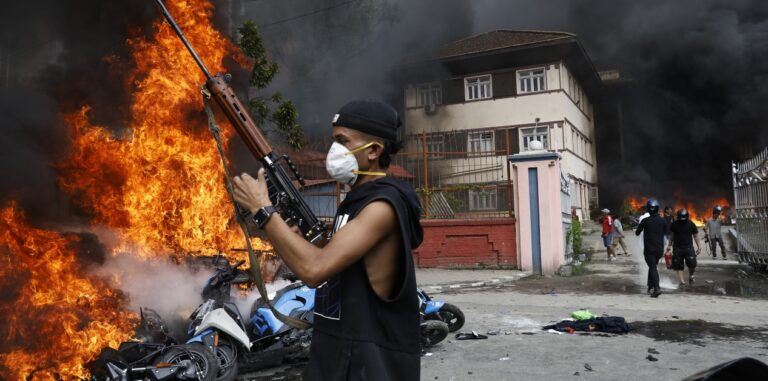
Protesters in front of the Supreme Court on September 9, 2025, the second day of the Gen Z protest. Photo: Bikram Rai
Particular concern was reportedly triggered by congratulatory messages sent by Tibetan exile government to Nepal’s interim political leadership and by visits to Kathmandu by representatives linked to the Tibetan exile community. From Beijing’s perspective, such symbolic gestures risk legitimising actors it regards as advocating Tibetan independence.
Chinese officials have also closely monitored social-media narratives surrounding the Gen Z protests. Viral footage showing youths wearing jackets bearing the initials TOB (Tibetan Original Blood) attracted particular attention. Nepali police subsequently detained several individuals associated with the group, although the legal proceedings remain before the courts. Chinese officials reportedly viewed the episode as further evidence requiring heightened vigilance against possible Tibetan activism in Kathmandu.
Even religious visits have increasingly acquired geopolitical significance. Interim government led by Sushila Kakri after Gen Z protests seeking to preserve stable relations with Beijing with deployed the secret communication channel, quietly restricted visits by several prominent Tibetan Buddhist leaders.
The Chinese Embassy has, on multiple occasions, conveyed concerns though that channel over high-profile visits to Kathmandu by senior Rinpoches, reflecting Beijing’s determination to limit any public activities that could reinforce the international visibility of Tibetan religious institutions.
Tibet remains China’s overriding security concern. Preventing anti-China political activities by Tibetan exiles from operating through Nepali territory has become a non-negotiable element of bilateral relations. Nepal therefore functions not merely as a friendly neighbor but as a critical strategic buffer safeguarding China’s southwestern frontier.
Security, however, is only one dimension of Beijing’s approach. China also seeks to integrate Nepal into its expanding regional economic architecture through the Trans-Himalayan Multi-Dimensional Connectivity Network (THMDCN). Beyond improving connectivity, the initiative serves a larger geopolitical purpose: creating overland access to South Asia, expanding China’s economic reach and reducing the strategic constraints imposed by geography.
Alongside physical connectivity, Beijing is promoting its normative vision of global governance through the Global Development Initiative (GDI), Global Security Initiative (GSI) and Global Civilization Initiative (GCI). Encouraging Nepal’s participation is intended not only to deepen bilateral cooperation but also to gradually align Kathmandu with China’s emerging diplomatic framework. Nepal has embraced development-oriented cooperation under the GDI, while remaining noticeably cautious about the GSI, reflecting concerns that security cooperation could compromise its long-standing policy of strategic non-alignment.
China’s engagement is marked by strategic patience. Beijing treats individual agreements not as isolated transactions but as incremental steps towards long-term geopolitical objectives. Progress is measured over decades rather than political cycles, allowing temporary setbacks to have little effect on broader strategic direction.
This long-term approach is also evident in China’s economic statecraft. Beijing frequently announces ambitious aid packages and investment commitments that substantially exceed actual implementation. The disparity is not necessarily a sign of policy failure. Rather, financial commitments often function as instruments of strategic signaling-reinforcing political influence, sustaining diplomatic leverage and shaping expectations even when projects advance slowly or remain incomplete.
Border governance further illustrates the fusion of China’s security and economic objectives. Infrastructure development along the Himalayan frontier simultaneously strengthens military logistics, enhances surveillance and facilitates trade. But Beijing also exercises increasingly unilateral control over border management, regulating the movement of goods, people and capital according to its own strategic priorities.
The consequences are most visible in Nepal’s northern border communities. Tightened Chinese border controls, stricter certification requirements and heightened security measures have disrupted traditional patterns of cross-border commerce, family ties and seasonal mobility that had existed for generations.
Informal trade networks have weakened, local livelihoods have deteriorated and communities have become increasingly dependent on state-regulated channels. The securitization of the frontier is therefore reshaping not only border management but also the economic geography and social fabric of Nepal’s Himalayan region.
Beyond security, China views Nepal through a geo-economic lens. Nepal possesses significant hydropower potential, rich natural beauty and globally important Buddhist heritage, yet these assets remain underutilized. Greater Chinese investment in infrastructure, tourism and connectivity could help unlock this potential while deepening Nepal’s economic integration with regional markets. Positioned between the world’s two largest emerging economies, Nepal is uniquely placed to become a bridge between China and South Asia. Improved connectivity could channel millions of Chinese tourists and pilgrims-particularly to Lumbini, the birthplace of the Buddha-while facilitating trade and investment across the Himalayas.
For Beijing, therefore, Nepal is not merely a neighbor but a strategic gateway whose stability, prosperity and connectivity reinforce both China’s security interests and its broader regional ambitions.
For Beijing, Tibet has never been primarily about culture, religion or ethnicity. It is about geography, sovereignty and the security of China’s western frontier. From the imperial dynasties to the Communist state, successive Chinese rulers have viewed control over Tibet as essential to securing the periphery and protecting the political core. Since 1949, this strategic logic has shaped military integration, minority policy, economic development and diplomacy with neighboring states.

The roots of this approach lie in imperial frontier governance. While early Qing rulers-maintained stability through the patron-priest relationship and indirect rule, the pressures of Western imperialism and the Great Game transformed Tibet from a loosely governed frontier into a strategic imperative. Beijing increasingly favored centralization, territorial integration, Han migration and administrative control to strengthen the borderlands.
Unlike Xinjiang and Taiwan, Tibet remained outside the formal provincial system because of great-power rivalry, but the collapse of the Qing in 1911 left an unresolved frontier question. That legacy continues to shape Chinese policy today. For Beijing, securing Tibet is not an exercise in managing ethnic diversity but a strategic necessity, where state security consistently takes precedence over cultural accommodation or political autonomy.
Following its military takeover of Tibet, the Communist state moved swiftly to consolidate its western frontier through political, administrative and territorial integration. The 1951 Seventeen-Point Agreement, the creation of the Tibetan Autonomous Region in 1965, and the ethnic classification and regional autonomy system were designed not to accommodate Tibetan identity but to strengthen state control. Rejecting the Soviet model of federalism and the principle of self-determination, Beijing redefined minority status as a cultural rather than political category, making territorial integrity paramount.
China’s post-1978 reforms marked a shift from ideological mobilization to economic modernization, but Tibet remained fundamentally a security question. Under Deng Xiaoping, Beijing recast frontier management through the doctrine of “integration through development”, arguing that economic prosperity would secure political stability. The Western Development Strategy, launched in 2000, epitomized this approach. While presented as an initiative to reduce regional disparities, its underlying objective was to consolidate China’s vulnerable western frontier. The strategy reflected the enduring logic of neiluan waihuan-the belief that domestic instability invites external threats-and therefore linked the security of the political core to the stability of the periphery.
Infrastructure became the principal instrument of state consolidation. Massive investments in railways, highways, airports and energy projects transformed Tibet’s physical landscape while simultaneously enhancing Beijing’s military reach.
The Qinghai-Tibet Railway, the programmer’s flagship project, was far more than an economic corridor. It strengthened logistical access, accelerated troop mobility and deepened administrative integration of the Tibetan Autonomous Region with the Chinese heartland. The expansion of transport networks, military installations and strategic infrastructure underscored that development served national security as much as economic growth.
Economic integration was accompanied by demographic and political transformation. Beijing justified Han migration as essential for Tibet’s modernization, arguing that local labor alone could not sustain development. In practice, however, the influx of skilled Han workers increasingly marginalized Tibetans in their own economy, where limited skills and employment opportunities prevented them from benefiting proportionately from state investment. Simultaneously, large-scale extraction of Tibet’s mineral and water resources further integrated the plateau into China’s national economy while reinforcing central control over a strategically vital region.
Development was reinforced by social engineering and political coercion.
Environmental programs relocated nomadic communities from traditional grazing lands, disrupting livelihoods and weakening long-established social structures. At the same time, the Strike Hard campaign tightened ideological control through restrictions on monasteries, surveillance of religious institutions and suppression of expressions of loyalty to the Dalai Lama. Together, infrastructure expansion, Han migration, resource extraction, ecological resettlement and political repression formed an integrated strategy aimed at consolidating state authority rather than addressing Tibetan identity.
The security logic extended well beyond Tibet’s borders. Following the 2008 unrest, Beijing adopted a far more proactive policy towards Nepal, viewing the Himalayan state as a critical buffer for securing Tibet. Diplomatic engagement increasingly focused on ensuring Nepal’s adherence to the One-China principle, restricting the activities of Tibetan refugees and strengthening security cooperation. At the same time, China’s harder stance towards India, including its more assertive claims over Arunachal Pradesh, reflected the strategic centrality of Tibet in Beijing’s regional calculations.
The Western Development Strategy therefore represented far more than an economic programs. It was the contemporary expression of China’s historical periphery strategy, combining development, military power, demographic change and diplomacy to secure its western frontier. While these policies have substantially strengthened Beijing’s control over Tibet, they have done little to resolve the underlying question of Tibetan identity. Development has reinforced state capacity, but it has not diminished political alienation. As a result, Tibet remains not merely an economic frontier but one of China’s most enduring strategic challenges.
For Beijing, Tibet is central to a broader strategy of securing the periphery. China’s security doctrine rests on a dual imperative: consolidating the internal frontier through minority policy while safeguarding the external frontier through its policies towards India and Nepal. Underpinning both is the principle of neiluanwaihuan—the belief that domestic instability invites external vulnerability. Consequently, the security of the political core has long been seen as dependent on the security of the frontier.
This strategic logic has remained remarkably consistent across successive eras. Imperial China relied on frontier defense, economic development and Han settlement to consolidate its borderlands. After 1949, Beijing abandoned the principle of self-determination in favour of regional autonomy and ethnic classification, embedding Tibet within a unitary Chinese state. The post-reform Western Development Strategy merely extended this historical approach by coupling economic modernization with tighter political and strategic control. Development became an instrument of integration rather than minority empowerment.
The fundamental divide, however, remains unresolved. While Beijing views Tibet as a question of sovereignty and national security, Tibetans continue to seek “Genuine Autonomy” centered on cultural and religious rights. Chinese leaders, including Hu Jintao and Xi Jinping, have consistently dismissed such demands as disguised separatism, reaffirming that sovereignty overrides identity. As a result, Tibet has been treated not as a cultural question but as a strategic frontier requiring stronger state control.
This security-first approach has undoubtedly reinforced Beijing’s authority over Tibet. Yet by prioritizing territorial integration over political accommodation, it has failed to address the underlying question of Tibetan identity. The result is a persistent strategic paradox: the tighter China’s control becomes, the more enduring the Tibet question remains.
Tibet has long been the geopolitical fulcrum of the Himalayas. For more than a century, control over the plateau has served as a barometer of regional supremacy-from the imperial rivalry between Britain, Tsarist Russia and Qing China to the contemporary strategic competition between China and India. For British India, Tibet functioned as an inexpensive but effective buffer protecting the nearly 5,000-mile Himalayan frontier from rival powers.
The strategic equation changed fundamentally after the People’s Liberation Army consolidated control over Tibet in 1950. Faced with an irreversible shift in the regional balance of power, Prime Minister Jawaharlal Nehru abandoned confrontation in favor of accommodation, culminating in the 1954 Panchsheel Agreement and the rhetoric of Hindi-Chini Bhai-Bhai. The policy sought to reduce India’s security vulnerabilities through diplomacy rather than military competition. It proved short-lived. Domestic political pressures, unresolved boundary disputes and India’s decision to grant asylum to the Dalai Lama in 1959 steadily eroded bilateral trust, ultimately leading to the Sino-Indian War of 1962.
The defeat forced India to recalibrate its Tibet policy without abandoning its strategic interests. Since then, New Delhi has pursued a carefully balanced dual-track approach: formally recognizing Tibet as part of China while continuing to host the Tibetan government-in-exile and the Dalai Lama. This apparent contradiction reflects strategic calculation rather than policy inconsistency, reinforced by China’s expanding partnership with Pakistan, its position on Kashmir and its historical support for insurgencies in India’s northeast.
For Beijing, Tibet has never been merely a territorial issue. It is the strategic cornerstone of China’s national security. The primary objective of the 1950 incorporation was to eliminate what Chinese strategists viewed as a vulnerable backdoor through which external powers could contain or destabilize China. Security imperatives-not ideology or historical claims alone-have consistently shaped Beijing’s policy towards Tibet.
That logic was reflected in China’s early investment priorities. During the first quarter-century of Chinese rule, military integration took precedence over economic transformation. Infrastructure spending overwhelmingly favored strategic mobility, with the construction of four major trunk highways linking Tibet to China’s interior through Sichuan, Xinjiang, Qinghai and Yunnan. These arteries were complemented by extensive feeder roads along the Himalayan frontier and a network of military airfields positioned close to the borders with India, Nepal and Bhutan. The objective was clear: to transform Tibet from a remote frontier into an integrated military platform capable of sustaining rapid force projection across the Himalayas.
Governance followed the same strategic logic. The People’s Liberation Army assumed a dominant role not only in defense but also in local administration, embedding a highly securitized political order in which stability and territorial control consistently outweighed developmental considerations.
Once Tibet was firmly secured, China’s strategic horizon expanded beyond the plateau itself. Rather than seeking territorial expansion across the Himalayas, Beijing focused on reshaping the geopolitical environment south of the mountains.
The objective became the gradual transformation of Nepal, Bhutan and, historically, Sikkim into a strategic buffer separating China from India. In effect, Beijing sought to relocate the buffer zone from the Tibetan Plateau to the southern Himalayan rim, bringing its strategic frontier closer to India’s northern doorstep.
This evolving rivalry also created new diplomatic space for the smaller Himalayan states. Nepal, in particular, has leveraged Sino-Indian competition to diversify its external partnerships, reduce dependence on any single power and exercise greater strategic autonomy than was possible under the British imperial order. The competition between Asia’s two giants has therefore expanded Kathmandu’s room for maneuver, even as it has intensified geopolitical pressures on the region.
At its core, the Himalayan rivalry reflects two competing strategic visions. India continues to view Tibet as the indispensable natural buffer shielding the subcontinent, while China seeks to shift its strategic frontier southward by transforming the cis-Himalayan states into its own buffer zone. Nepal, therefore, is not a peripheral player but a pivotal arena where the strategic interests of Asia’s two rising powers intersect.
China’s Himalayan red line
For Washington, Tibet has never been merely a human-rights issue. For more than six decades it has represented a strategic, political and moral concern that continues to shape American policy towards Nepal, even as Kathmandu has moved steadily closer to Beijing on matters involving Tibet.
Washington’s methods have changed dramatically, but its interest has not. Where Cold War policy centered on covert support for Tibetan resistance, contemporary American strategy focuses on human rights, religious freedom and refugee protection. Over the past two decades, Congress has steadily expanded legislation addressing Tibet while increasing diplomatic engagement with Nepal over the status of Tibetan refugees.
The Tibet card returns
For much of the past decade, Washington’s strategy towards China has steadily narrowed around a single overriding objective: containing Beijing’s rise across the Indo-Pacific. That competition is not confined to warships, AI, 5G, semiconductors or tariffs. It increasingly extends into China’s internal vulnerabilities-none more politically sensitive than Tibet.
For many in Washington, Tibet has evolved from a purely human-rights concern into a strategic pressure point. Supporting Tibetan identity, religious freedom and the succession rights of the 14th Dalai Lama is viewed not only as a moral obligation, but also as a way of challenging the Chinese Communist Party’s carefully cultivated narrative of ethnic harmony and political legitimacy. Tibet enjoys unusual international sympathy, allowing Washington to frame the issue simultaneously as one of universal rights and strategic competition.
The legal architecture for that approach has already been laid. The Tibetan Policy and Support Act (2020) explicitly states that the selection of the Dalai Lama’s successor must be determined solely by the Tibetan Buddhist community, free from Chinese interference, while authorising sanctions against Chinese officials who attempt to influence the process. It complements the Reciprocal Access to Tibet Act (2018), which sought to pressure Beijing over restrictions on access to Tibetan regions for American diplomats, journalists and researchers.

The next phase is becoming increasingly clear. As the 14th Dalai Lama approaches the end of his life, Washington’s attention is shifting from preserving Tibetan culture to shaping the geopolitical consequences of his succession. The central question is no longer whether Beijing will attempt to appoint its own Dalai Lama, but whether the Washington backed internationally recognised successor could emerge from exile-most plausibly in India, though Nepal or Bhutan inevitably sit within the wider strategic equation.
That prospect could transform the succession dispute into one of the defining geopolitical contests of the coming decade. The Dalai Lama’s successor would represent not merely a religious authority but a competing source of legitimacy-one recognised by much of the democratic world yet rejected by Beijing.
Recent developments suggest Washington is preparing for precisely that geopolitical contest. In March 2026, a bipartisan group of American lawmakers urged the administration to elevate Tibet within U.S. foreign policy, defend religious freedom in the succession process and counter Chinese disinformation over Tibet. Two months later, Congressmen Jim McGovern and Michael McCaul introduced legislation directing the Secretary of State to advocate greater international recognition for the Central Tibetan Administration, signalling an effort to strengthen Tibetan institutions before the succession crisis unfolds.
For Nepal, these developments carry particular significance. Kathmandu hosts one of the world’s largest Tibetan exile communities outside India while remaining deeply connected on China. It therefore occupies an uncomfortable position where Washington’s agenda and Beijing’s security priorities increasingly collide.
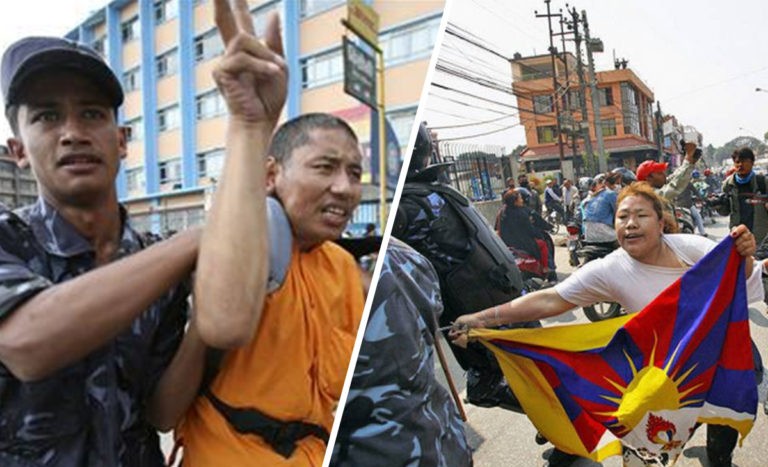
Nepal Police arrest Tibetan refugee demonstrators in Kathmandu prior to Chinese President Xi’s visit to Nepal in 2019. File photo
American officials and human-rights organisations have repeatedly highlighted the precarious legal status of many Tibetans in Nepal, who continue to lack formal refugee documentation, restricting access to higher education, legal employment and international travel. They have also expressed concern over tighter restrictions on religious activity, peaceful assembly and freedom of expression, alongside growing security coordination between Chinese and Nepali authorities and the preventive detention of Tibetans during politically sensitive anniversaries or any high level Chiense visit.
As the United States moves deeper into an election cycle in which China remains one of the few issues commanding bipartisan consensus, Tibet is likely to return as a prominent feature of Washington’s China policy. That could bring renewed diplomatic scrutiny of countries viewed as pivotal to the succession issue-including Nepal.
For Kathmandu, the challenge is becoming increasingly difficult. Every decision concerning Tibetan refugees, religious gatherings or cross-border security cooperation is no longer merely a domestic matter. It risks being interpreted simultaneously through Beijing’s security lens and Washington’s strategic one.
In that sense, the battle over Tibet is no longer confined to the Tibetan plateau. It is increasingly unfolding in the diplomatic space occupied by countries such as Nepal-where great-power rivalry meets the realities of geography.
Growing Congressional pressure
Congressional attention has increasingly focused on Nepal itself. On March 9, 2026, twelve bipartisan members of the US Congress wrote to Riley M. Barnes, Assistant Secretary of State for Democracy, Human Rights and Labor and Special Coordinator for Tibetan Issues.
They argued that thousands of Tibetan refugees in Nepal continue to live without legal status or a realistic pathway to obtain it, making them vulnerable to what they described as the malign influence of the People’s Republic of China.
The lawmakers argued that Nepal’s recent change of government presented an opportunity to resolve decades-long obstacles surrounding refugee registration and legal documentation, urging the State Department to priorities a durable solution for Tibetans living in Nepal.
The pressure has continued. In its Fiscal Year 2027 report, the US House Appropriations Committee called on the State Department to engage the Nepali government in safeguarding Tibetan refugees’ rights. The committee specifically urged Kathmandu to resume the verification and registration process that effectively ceased after 1995, leaving thousands without recognized legal status.
Congress has also continued allocating funding for Tibetan communities in Nepal and India, supporting education, cultural preservation and economic development. Under the Consolidated Appropriations Act, 2026, approximately US$23 million was earmarked for Tibet-related programs. In July 2025, the State Department restored US$6.8 million in assistance for Tibetan communities across South Asia following earlier funding reductions. For Fiscal Year 2027, the House Appropriations Committee proposed US$10 million for cultural preservation inside Tibet and US$8 million for refugee and diaspora programs in Nepal and India.
Successive American administrations have quietly raised the issue with governments led by Sher Bahadur Deuba, Pushpa Kamal Dahal and KP Sharma Oli, encouraging Nepal to reopen refugee verification and issue identity documents. Yet little tangible progress has followed, largely because of Kathmandu’s reluctance to provoke Beijing. Even relatively modest administrative measures-such as issuing travel documents to small numbers of Tibetans-have reportedly generated Chinese concern.
Legal status at the center of US concerns
Washington’s principal concern is no longer refugee resettlement but legal protection. American officials have consistently urged Nepal to formally register Tibetan refugees, issue identity cards, facilitate access to education, employment and banking services, and uphold the principle of non-refoulement under arrangements with the United Nations High Commissioner for Refugees, which prohibits returning individuals to countries where they face persecution.
Thousands of Tibetans who arrived after 1990 remain without recognized refugee status. Many lack access to citizenship documents, travel permits, driving licenses, bank accounts and higher education opportunities, leaving them in prolonged legal uncertainty. Unable to persuade Kathmandu through quiet diplomacy alone, Washington has increasingly attributed the lack of progress to China’s expanding influence inside Nepal. American assessments point to growing restrictions on religious and cultural activities among Tibetan communities and argue that Beijing’s leverage has narrowed Kathmandu’s policy space.
The Consolidated Appropriations Act, 2026 marked another escalation. The legislation authorizes visa restrictions and potential asset freezes against Chinese and South Asian government officials where credible evidence exists of serious human-rights abuses involving Tibetan communities.
Senior American officials have continued raising the issue during visits to Kathmandu. During his 20–22 April visit, Samir Paul Kapur, Assistant Secretary of State for South and Central Asian Affairs, reportedly discussed the challenges facing Tibetan refugees and encouraged Nepal to strengthen legal protections while addressing humanitarian concerns.
That historical legacy still influences Nepal’s diplomacy. Kathmandu has consistently rejected proposals for large-scale third-country resettlement of Tibetan refugees, including a United States initiative first proposed in 2005. While nearly 100,000 Bhutanese refugees were eventually resettled in America, successive Nepali governments have treated the Tibetan issue as fundamentally different, arguing that any policy affecting Tibet carries direct implications for Nepal’s relationship with China.
When Nepal was a Cold War front
American involvement in Tibet emerged during the Cold War as Washington sought to contain communist expansion in the region after China’s takeover of the plateau. From 1958, the CIA covertly armed and trained Tibetan resistance fighters of the Chushi Gangdruk, including at Camp Hale in Colorado, while financing the Tibetan government-in-exile and supporting cross-border guerrilla operations against Chinese forces.
Nepal became a critical base for the resistance. CIA-backed Khampa fighters established themselves in Mustang, receiving weapons, logistics and financial support through covert supply networks. The first CIA airdrop into Tibet from the Mustang operation took place on April 2, 1961, followed by cross-border raids beginning in September that year. Contrary to some accounts, there is no evidence that such operations existed in Nepal before 1961. Indeed, in June 1960 Chinese troops fired on an unarmed Nepal Police patrol near Kora La, triggering a diplomatic dispute between Kathmandu and Beijing.

As Beijing tightened its grip over Tibet and Washington recalibrated its global strategy, Nepal concluded that the Khampa insurgency in Mustang had become incompatible with its doctrine of sovereign neutrality. The geopolitical logic had changed. Following the U.S.-China rapprochement in the early 1970s, Washington no longer viewed Beijing primarily as an adversary but as a strategic counterweight to the Soviet Union. In return for normalising relations, the United States accepted China’s sovereignty over Tibet and quietly abandoned its covert campaign supporting Tibetan resistance.
The policy reversal left the Khampa guerrillas stranded. Successive efforts to persuade them to lay down their arms failed, as many remained committed to the dream of liberating Tibet. The CIA’s final attempt came in 1974, when the 14th Dalai Lama issued an emotional appeal urging the remaining fighters to abandon armed struggle.
Some complied; others refused, convinced that surrender would amount to abandoning their homeland. The episode has since been described by many historians as one of the “orphans of the Cold War”-a reminder of how great powers often discard proxy forces once strategic priorities shift.
The end came swiftly. With one of the CIA’s longest-running covert operations effectively over and determined to reassure Beijing of Nepal’s neutrality, King Birendra ordered the Royal Nepal Army to eliminate the Khampa insurgency in what became known as the Khampa Disarming Mission. It marked not merely the end of an armed rebellion, but the moment when Nepal decisively aligned its Tibet policy with geopolitical reality rather than Cold War ideology.
Resistance leader Wangdu among others commanders refused to lay down arms. Betrayed from within the movement and pursued by Nepali forces, he was killed near Tinker Pass in August 1974, bringing the Tibetan armed insurgency to a definitive end. The episode established a principle that continues to shape Nepal’s Tibet policy: its territory will not be allowed to serve as a base for activities against China.
Neither Washington nor Beijing
For centuries Nepal’s greatest strategic asset was its geography. Today it is also its greatest vulnerability. Once viewed as a remote Himalayan buffer between India and China, Nepal has become an increasingly contested arena where the world’s two most consequential powers-the United States and China-are competing to shape influence, infrastructure and strategic alignment. Kathmandu is no longer merely responding to regional geopolitics; it is increasingly being pulled into them.
China’s overriding objective is clear: ensure Nepal never becomes a platform for activities that could threaten stability in Tibet or challenge Beijing’s security interests. America’s priorities are different. Washington seeks to protection of Tibetan refugees, strengthen institutions, expand development partnerships and deepen its strategic footprint across the Indo-Pacific through economic engagement, governance initiatives and infrastructure financing. Neither power openly demands Nepal choose sides. Yet each increasingly expects Kathmandu’s policies to accommodate its strategic concerns.
That is what makes Nepal’s diplomacy unusually difficult. The challenge is no longer choosing between East and West, but reassuring each that closer ties with the other do not come at its expense.
The competition is no longer confined to diplomacy. It is increasingly expressed through infrastructure, development finance, connectivity, technology, energy, security cooperation and political influence. China’s Belt and Road Initiative offers long-term strategic connectivity, while the American-backed Millennium Challenge Corporation presents an alternative model of transparent infrastructure financing. On paper, these initiatives are economic. In practice, each carries geopolitical significance well beyond roads and transmission lines.
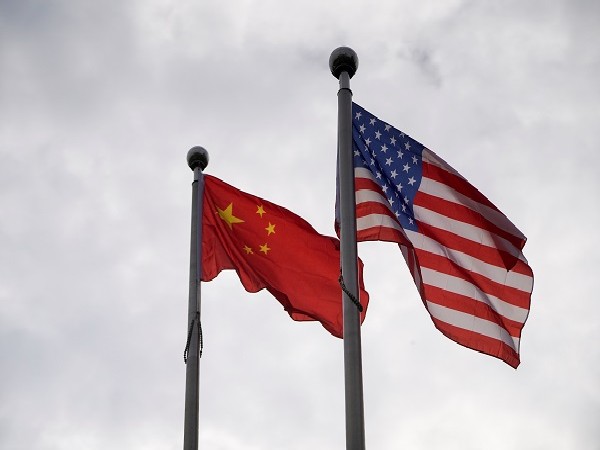
This leaves Nepal navigating one of the most delicate balancing acts in Asia. Every major agreement is scrutinised in Beijing. Every security engagement attracts attention in Washington. Even seemingly technical decisions increasingly acquire strategic meaning. Infrastructure has become geopolitics by other means.
The danger lies not in engaging multiple powers but in allowing engagement to evolve into alignment. Small states often imagine they can play competing powers against one another indefinitely. History suggests otherwise. Great powers may tolerate hedging, but they rarely welcome perceived opportunism. Any impression that Kathmandu is exploiting one relationship to counterbalance another could rapidly erode trust on both sides.
China’s concerns are particularly acute. Beijing views growing American engagement in Nepal through the prism of Tibet and wider Indo-Pacific competition. Initiatives promoting democracy, human rights or religious freedom are not interpreted as isolated values-based policies but as issues carrying direct implications for China’s internal security. From Beijing’s perspective, Nepal’s northern frontier is inseparable from Tibet’s stability.
Washington, meanwhile, increasingly sees Nepal as part of a broader regional effort to protect tibetian refugees, promote resilient infrastructure, democratic governance and diversified economic partnerships. As strategic competition with China intensifies globally, Nepal inevitably acquires greater importance than its economic size alone would suggest.
The uncomfortable reality is that Nepal can no longer assume external powers view it simply as a small Himalayan state. Each increasingly evaluates Kathmandu through the wider lens of strategic competition.
Domestic politics further complicate this equation. Weak institutions and inconsistent foreign-policy messaging create opportunities for external actors to cultivate influence. Strategic ambiguity can be useful in diplomacy; strategic inconsistency is far more dangerous. The risk of diplomatic miscalculation rises sharply in inexperience leadership.
This makes institutional strength just as important as diplomatic skill. Nepal’s greatest vulnerability is not its geography but its fragmented decision-making. A coherent national strategy commands respect abroad; competing domestic narratives invite external leverage. Great powers exploit uncertainty wherever they find it.
The country’s long-standing doctrine of non-alignment therefore requires reinvention rather than repetition. Neutrality today does not mean remaining equidistant from every power; it means remaining equally independent in decision-making.
That demands greater diplomatic discipline than Nepal has often displayed. Foreign policy cannot oscillate with partisan calculation. For a country situated at the intersection of Asia’s shifting balance of power, consistency is itself a strategic asset.
The stakes are rising. As rivalry between Washington and Beijing deepens, the space available for small states to manoeuvre may gradually narrow. Nepal’s room for strategic ambiguity will become increasingly constrained as both powers seek greater clarity about Kathmandu’s long-term orientation.
The country’s challenge is therefore not simply balancing China and the United States. It is avoiding the far more costly mistake of convincing either that Nepal has chosen against them.
Nepal’s foreign policy future will depend less on its ability to extract concessions from competing powers than on its ability to preserve credibility with all of them. Geography may have placed Nepal between giants. Diplomacy will determine whether it remains a bridge between them-or becomes another fault line in their rivalry.