Kathmandu
Monday, July 27, 2026





Why reopening Nepal's royal massacre investigation is easier said than done and why promises like Sudhan Gurung's have a way of dying quietly
KATHMANDU: Sudhan Gurung had been back in office for less than a day when he made the announcement. The Home Ministry would revisit unresolved cases and reopen old criminal files, he said. And then, almost as a rhetorical crescendo, came the pledge that immediately swallowed everything else: the Narayanhiti massacre of June 2001 would be investigated again.
The room or at least the news cycle responded exactly as he must have anticipated. Here was a politician who had spent 48 days outside the ministry under a cloud, returning not with a defensive crouch but with what looked like a frontal attack on the past. It was, by any measure, a bold opening move. Whether it was anything more than that is the question Nepal now sits with.
The honest answer, stripped of the political theatre, is deeply uncomfortable. The case is not just cold. It is, in ways both practical and structural, nearly impossible to prosecute and possibly impossible to resolve to any standard that would satisfy the public, the courts, or history. That is not pessimism. That is simply what 25 years of accumulated difficulty looks like when you examine it without the comfort of political rhetoric.
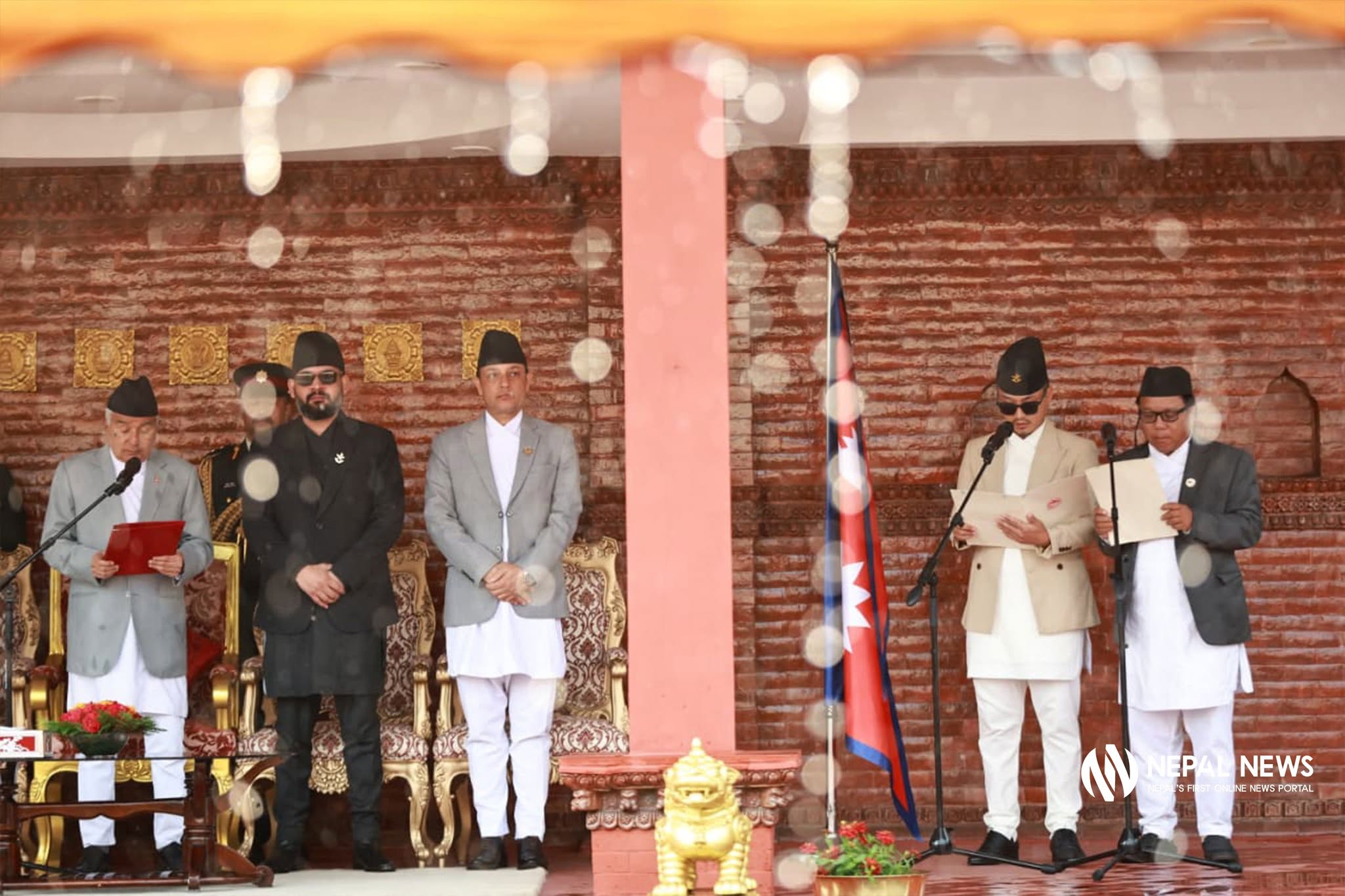
Sudhan Gurung takes oath as Minister for Home Affairs and Mahabir Pun as Minister for Science, Technology and Innovation at Shital Niwas on June 9
Start with the evidence. Or rather, start with the absence of it.
When the original inquiry committee led by then Chief Justice Keshav Prasad Upadhyaya and Speaker Taranath Ranabhat was convened in the days immediately following the massacre, it was given something between a week and ten days to complete its work. This was not a forensic investigation in any meaningful modern sense.
The crime scene at Tribhuvan Sadan was not sealed and preserved with the rigour that a case of this magnitude demanded. Eyewitnesses were spoken to, but under conditions shaped by grief, shock, political anxiety, and the fact that the new king had himself ordered the inquiry. Ballistics were examined, but there was no independent laboratory scrutiny of the kind that would be expected today.
The 53-page report that emerged was not a forensic document. It was closer to an administrative summary one that reached a definitive conclusion about the perpetrator despite operating under terms of reference that, as a former Supreme Court registrar later acknowledged, did not formally empower the committee to name a murderer at all.
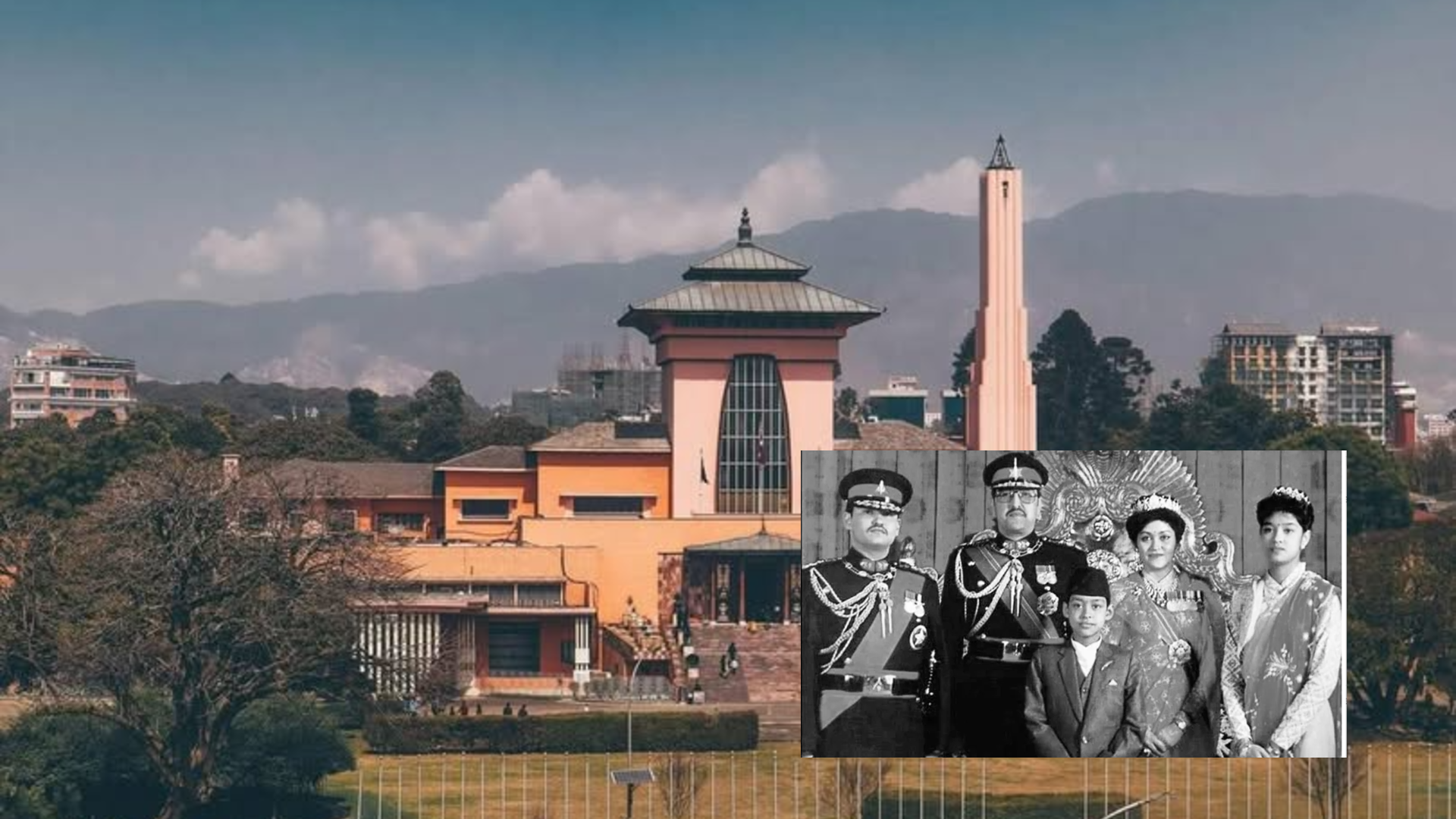
That was 2001. Now consider what 25 years has done to whatever physical evidence did exist. The Narayanhiti Palace itself is a museum. Visitors walk through corridors where a royal family once lived. The site of the killings, Tribhuvan Sadan, is part of a heritage complex managed by the state.
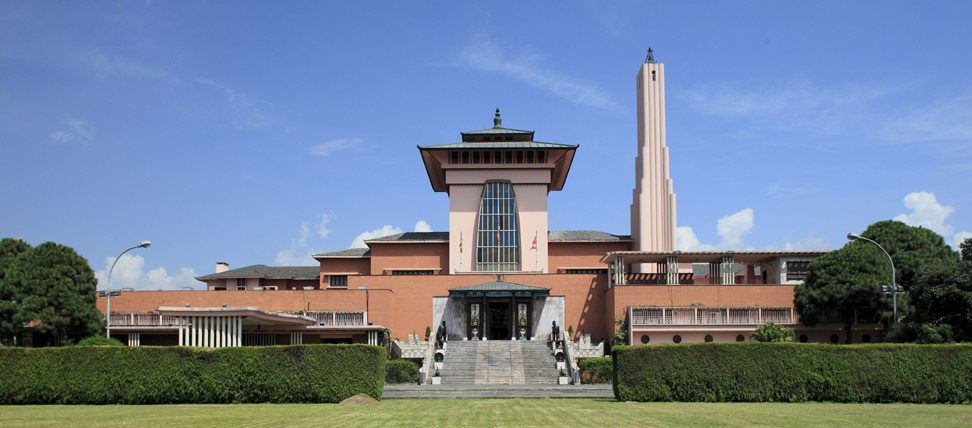
Narayanhiti Palace. File photo
Any residual forensic trace that might have survived the initial investigation has almost certainly been lost to time, foot traffic, renovation, and simple decay. There is no chain of custody for physical evidence because nobody established one at the time. You cannot walk into a case that was never properly preserved and simply restart it.
The witness problem is, if anything, worse. The people who were present that night in 2001 palace staff, security personnel, surviving members of the royal family have lived with their memories and their accounts for a quarter century. Memory is not a fixed recording. It degrades, fills in gaps, reshapes itself around what people subsequently read, hear, and believe.
Some of the key witnesses are dead. Others are old. And all of them, if called to testify again today, would face the extraordinary challenge of separating what they genuinely saw and heard from what they have told themselves they saw and heard across years of revisiting the night.
The then Prince Paras, who was present in the palace during the massacre, has never given a fully open public account of his experience of that night. His mother, Komal, survived a gunshot wound. She is alive but has not spoken publicly in ways that would constitute usable testimony for a new investigation. The surviving members of the royal family are private citizens in a republic that abolished the monarchy. Whether they can be legally compelled to testifyand whether any of them would do so voluntarily is an open question with no obvious answer.
And then there is the deepest problem of all. The person officially named as the perpetrator is dead. The then Crown Prince Dipendra died on June 4, 2001, three days after the massacre. He never regained consciousness. He never made a statement. He was never questioned. He cannot be tried, convicted, acquitted, or confronted with alternative evidence. Whatever a new investigation concludes about his guilt or innocence, it cannot touch him.

Dipendra Bir Bikram Shah Dev
If a new inquiry decides that the original conclusion was correct, Nepal has confirmed what it already knows and closed a door that cannot be locked. If a new inquiry produces evidence that Dipendra did not act alone or did not act at all it opens a question of criminal accountability for living people that would require an entirely different legal process, with entirely different evidentiary standards, and an entirely different political reckoning.
This brings us to Gurung himself, and the question of why he said what he said.
Politicians do not make announcements like this by accident. The royal massacre is not a routine cold case. It sits at the intersection of Nepal’s most unresolved historical trauma, its complicated transition from monarchy to republic, and the ongoing fault line between those who want the Shah dynasty returned to power and those who regard the republic as a non-negotiable achievement. To announce, on your first day back in office, that you intend to reopen this particular file is to plant a flag in the middle of that fault line. It is maximally visible and maximally symbolic.
Gurung returned under a cloud. The controversy that forced his April resignation undisclosed investments in micro-insurance companies was not the kind of story that simply goes away. An investigation committee examined it. He was reappointed after the cabinet acknowledged the committee’s report, a report that has not been made public. In that context, what does a Home Minister do on day one? He does not talk about his investment in micro-insurance companies. He talks about Narayanhiti.
This is not necessarily cynical in the narrow sense. Gurung may well believe, personally, that the massacre deserves a fresh look. Many Nepalis do. But the timing and the framing of sweeping declarations about reopening every criminal file and zero operational specifics about how the massacre investigation would actually work carry the unmistakable texture of political positioning rather than institutional planning. Real investigations are announced with terms of reference, with appointed heads, with a legal basis. What Gurung announced was closer to a mood, and moods do not solve crimes.
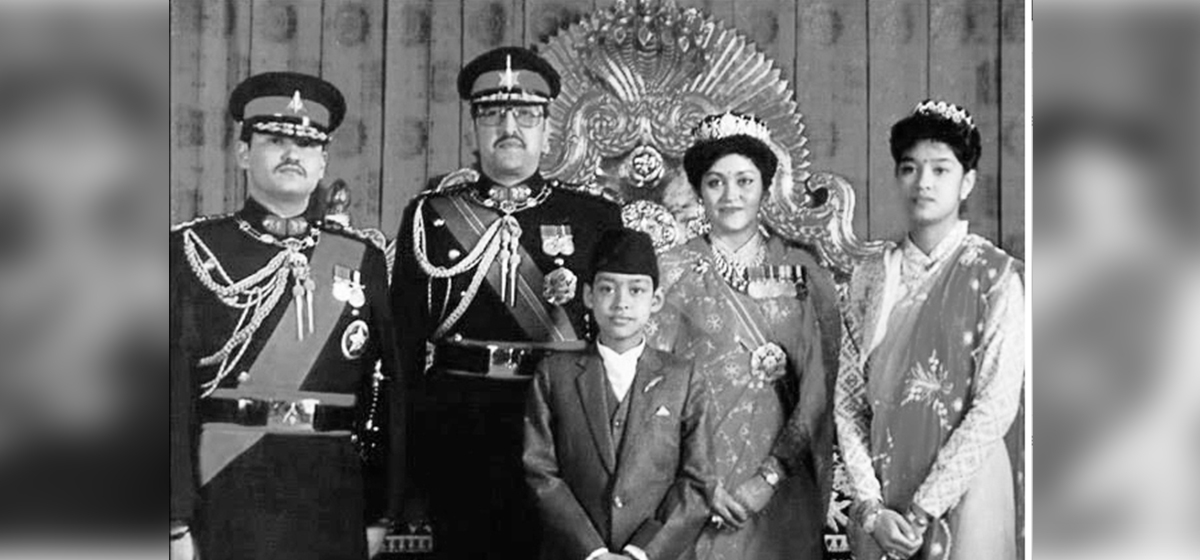
Prince Dipendra, King Birendra Bir Bikram Shah Dev, Queen Aishwarya Rajya Lakshmi Devi Shah, Princess Shruti, and Prince Nirajan
Nepal’s own record on high-profile criminal accountability is not encouraging. Consider the case of Nirmala Panta, the 13-year-old girl raped and murdered in Kanchanpur in 2018. Her case became a national symbol of justice denied. There were protests. There was sustained public pressure. Politicians made promises. Multiple police investigations were conducted. The case dragged through years of procedural failure, contradictory police reports, allegations of cover-up, and frustrated demands from the girl’s family and civil society. As of today, no one has been convicted for Nirmala Panta’s murder. No one has been held accountable. The case remains, in practical terms, unsolved.
If Nepal’s institutions cannot bring a murder case from 2018 to a conviction—a case with a known victim, a relatively recent crime scene, living witnesses, and sustained public attentionwhat realistic basis is there for believing those same institutions can crack open a mass killing from 2001 with degraded evidence, dead witnesses, a dead primary suspect, and political complications that dwarf anything surrounding the Nirmala case?
The comparison is not rhetorical. It is a genuine institutional stress test. What Nirmala Panta’s case reveals is a systemic failure of investigative capacity and political will, not just a single investigative failure. The CIB, the Nepal Police, successive home ministers, successive governments all of them circled the case and none of them resolved it. If that is the baseline, the royal massacre is not a harder version of the same problem. It is a categorically different order of difficulty.
The international record on reinvestigating historic political killings is not reassuring either. Consider the assassination of Swedish Prime Minister Olof Palme in 1986. Sweden is a country with functioning, independent institutions, serious forensic capacity, and no shortage of political will to solve the case. The investigation went on for 34 years. It consumed enormous state resources.
Several suspects were pursued, charged in one case, and ultimately acquitted. In 2020, Sweden’s chief prosecutor announced that the suspected killer was Stig Engström — a man who had died in 2000. The case was closed not with a conviction but with a declaration of suspicion against a dead man. No trial. No accountability. A conclusion that satisfied almost nobody.
The murder of Italian journalist and activist Pier Paolo Pasolini in 1975 was officially attributed for decades to a young man who confessed and was convicted. He later recanted. Multiple reinvestigations followed over the subsequent 45 years, producing competing theories about organized crime, political conspiracy, and state involvement. None of them produced a different conviction. The case exists in a permanent state of historical dispute, its official conclusion widely doubted and its true explanation likely beyond recovery.
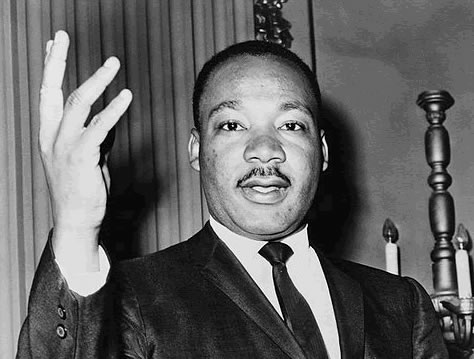
Martin Luther King Jr
The assassination of Martin Luther King Jr. in 1968 in the United States was officially concluded to be the work of James Earl Ray, who pleaded guilty. Ray later reclaimed his innocence. The King family themselves came to believe he did not act alone. Multiple investigations, congressional inquiries, and civil proceedings followed over the decades. No alternative perpetrator was ever charged. The official conclusion stands, contested and questioned, with no resolution in sight.
What these cases share is a common architecture of failure. Each involved a crime of enormous public significance. Each generated intense public pressure for resolution. Each was revisited multiple times by credible institutions with genuine investigative capacity. And each ended without the kind of definitive, legally actionable resolution that the public demanded. The passage of time is not neutral. It actively works against truth. Witnesses die. Documents are lost or destroyed. Physical evidence degrades. The cultural memory of an event calcifies into competing narratives that are almost impossible to dislodge.
Nepal’s royal massacre has all of these factors working against resolution, and then some. It involves royalty, which means political sensitivities that extend beyond Nepal’s borders. The theories about foreign involvement — never substantiated, never fully dismissed — carry implications for Nepal’s relationships with neighbouring countries. India features heavily in the conspiracy landscape, and any investigation that took those theories seriously would require a kind of regional cooperation that is, to put it generously, unlikely to be forthcoming.
The abolition of the monarchy and the creation of the republic in 2008 means the very constitutional framework within which the massacre occurred no longer exists. Investigating a crime of the ancien régime through the institutions of a new republic is not just legally complicated. It is philosophically strange.
There is also the question of what success would actually look like. Suppose, for the sake of argument, that a new investigation produced credible evidence that the official account was substantially incomplete — that Dipendra did not act alone, or that the massacre was facilitated by someone with access and motive. What then? Any living person implicated would have access to legal representation and would challenge both the evidence and the process.
A conviction would require a standard of proof that 25-year-old evidence almost certainly cannot meet. An acquittal would leave Nepal worse off than before, having opened the wound without being able to close it. And a conclusion that merely confirms what was said in 2001 Dipendra did it, acting alone — would feel, to the substantial portion of the public that never believed the original report, like a whitewash conducted under different management.
This is the trap at the heart of Gurung’s announcement. There is no version of a reinvestigation that is simultaneously politically achievable, legally credible, and publicly satisfying. The three goals pull in different directions. A politically safe investigation will not be credible. A legally rigorous investigation will not produce actionable results. A publicly satisfying investigation would require a level of transparency and institutional independence that Nepal’s current political ecosystem has not demonstrated the capacity to sustain.
None of this means the announcement is worthless. There is value in acknowledging, officially and with institutional weight, that the 2001 inquiry was inadequate. There is value in reviewing the 53-page report publicly and identifying, for the historical record, what the original committee did not examine and could not resolve.
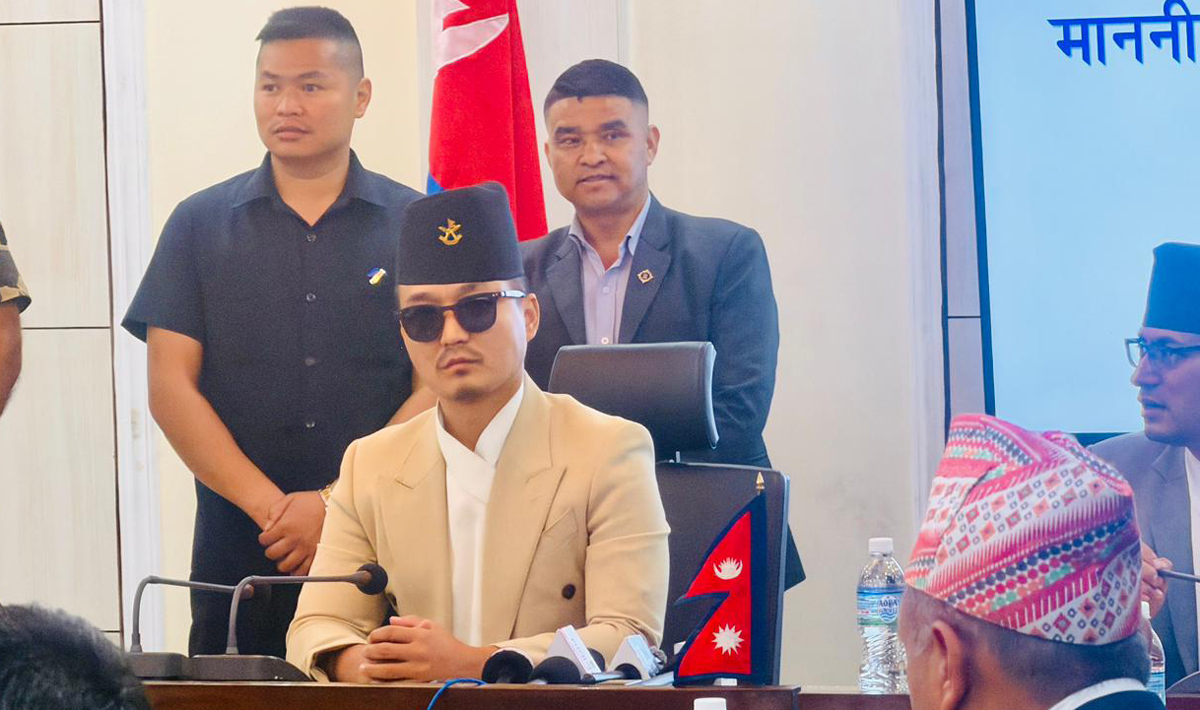
In a press conference immediately after taking the oath of office, Sudhan Gurung announced the inquiry into the royal palace massacre
A thorough, honest review not a criminal reinvestigation, but a historical reckoning could give Nepal something it has never had: a public accounting of what the original inquiry did and did not do, and why. That is not justice. But it might be the most that is honestly available.
What it is not, despite what the announcement implied, is a path to the truth. The truth the full, legally established, evidentially grounded truth of what happened inside Tribhuvan Sadan on the night of June 1, 2001 is almost certainly gone. Not hidden. Gone. Lost to time, to death, to the particular failure of institutions that did not treat the case with the seriousness it deserved when the trail was still warm. Sudhan Gurung can order a review. He can convene a commission. He can hold press conferences and make further pledges. What he cannot do is reverse 25 years of evidentiary decay and institutional failure.
That is the hardest truth about cases like this one. They do not wait. Every passing year narrows the possibility space. And Nepal, for reasons that are partly institutional, partly political, and partly the product of the specific chaos that surrounded the massacre itself, waited too long.
The announcement will fade. Another news cycle will arrive. Gurung will move on to other fights. And the Narayanhiti Palace will stand, as it has for 25 years, a museum of something that was never fully explained.
![NSU protests closure of public library, demands immediate reopening [Photo Feature]](https://english.nepalnews.com/wp-content/uploads/2026/07/1-6.jpeg)