Kathmandu
Tuesday, January 27, 2026





Khila Nath Dhakal
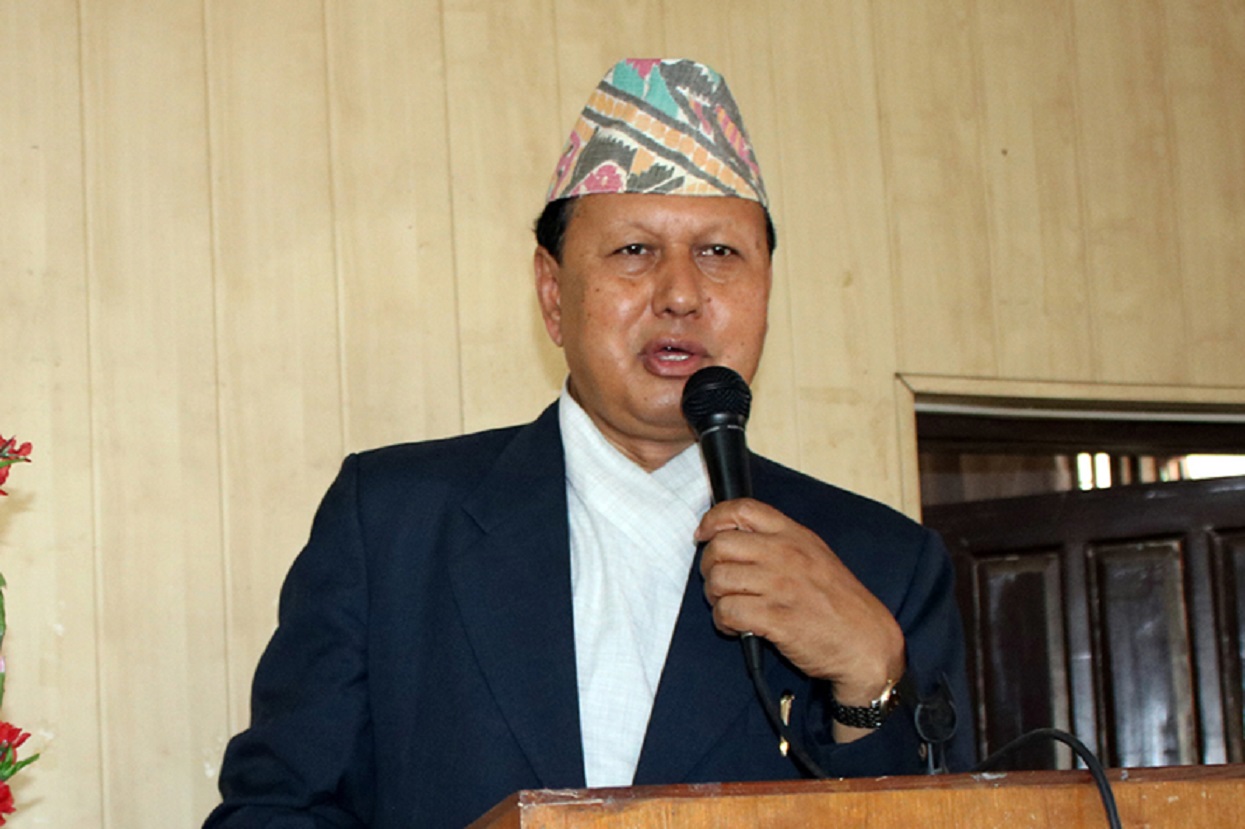
KATHMANDU: A corruption case has been filed against Congress lawmaker and former minister Mohan Bahadur Basnet along with 15 others.
On Thursday, the Commission for the Investigation of Abuse of Authority (CIAA) filed a case in the Special Court seeking compensation and penalty amounting to NPR 3.21 billion against Basnet and others.
The case alleges that Basnet and others were involved in corrupt practices during the procurement of the Telecommunication Traffic Monitoring and Fraud Control System (TERAMOX) while Basnet held the ministerial post, CIAA spokesperson Rajendra Kumar Paudel said.
Among those charged are former Nepal Telecommunications Authority chairpersons Digambar Jha and Purushottam Khanal, former member Dhanraj Gyawali, and Tika Prasad Upreti.
Also implicated are Authority directors Bijay Kumar Rai, deputy directors Rewati Ram Pantha and Suresh Basnet, Hiranya Prasad Bastakoti, and Achyutananda Mishra.
Further, directors Surendralal Hada, Dipesh Acharya, and deputy director Sandeep Adhikari have been charged, the spokesperson added.
The CIAA has also filed charges against consulting company Vanrise Solution, its CEO Jamal Anouti, its Nepal agent office, chairman Dilip Kumar Gurung, and director Tej Prasad Kharel. All are facing demands for compensation and punishment totaling NPR 3.31 billion.
“It was found that the then minister, contrary to the intention of Section 34(C) of the Nepal Telecommunications Regulations, 1997 (2054 BS), unilaterally and abusing official authority, included additional programs in the annual plan for fiscal year 2074/75 B.S. that were neither proposed by the Authority nor decided to be included in the budget and programs under consideration in the Nepal Telecommunications Authority. This intervention infringed upon the rights of the autonomous institution formed under the Nepal Telecommunications Act, 1996 (2053 BS), causing harm and loss to the Authority,” the charge sheet states.
Similarly, according to the CIAA’s claim, Section 45 of the Telecommunications Act, 1996 (2053 BS) and Regulation 14 of the Nepal Telecommunications Authority Financial Administration Regulations, 2017 (2073 BS) prescribe the procedure for preparing the Authority’s annual program and budget, including their formats. However, it was found that the actions taken were contrary to these regulations.
“Without conducting any feasibility study on the suitability of the projects, without estimating costs or budgets, without certainty about whether the project would be implemented or not, without proposals from the concerned institution, without legal or policy provisions necessary for system operation, without consultation or coordination with stakeholders, without disclosing sources or heads of expenses for the program, without detailing the program duration, without specifying the modality for budget operation, without confirming expected outcomes after program implementation, and without taking the opinions of ministry and Authority officials or conducting any investigation, the annual program was arbitrarily expanded to include a program for VoIP control with suitable materials and system,” alleges the CIAA.