Kathmandu
Monday, February 2, 2026






KATHMANDU: Stay updated with Nepal News’ evening briefing, bringing you the day’s most important developments from Nepal and across the globe. From politics and economy to sports, entertainment, and culture, we deliver a concise roundup of the top news you need to know.
National Assembly Approves 3 Election-Related Ordinances
The National Assembly unanimously approved three ordinances during its session on Monday. Home Minister Om Prakash Aryal presented the Voter List (Amendment) Ordinance 2026, the House of Representatives Member Election (First Amendment) Ordinance 2026, and the Nepal Special Service Act (Second Amendment) Ordinance 2026. The approval was formalized after Chairperson Narayan Prasad Dahal put the proposals to a vote. These legal frameworks are essential for the upcoming general elections. Following the unanimous endorsement, the National Assembly adjourned, with the next meeting scheduled for February 6 at 1:15 PM.
EC Issues Nine New Clarification Notices
The Election Commission (EC) has sought clarifications from nine additional individuals for violating the Election Code of Conduct 2026. Among them is Bajura candidate Hemraj Thapa, accused of using threatening language against the Bagmati Chief Minister. Another candidate, Balendra Shah (Balen) from Jhapa-5, received his second notice following reports of plainclothes police officers campaigning for him. Additionally, the Nepali Communist Party was questioned for painting party symbols outside an election office in Sindhupalchowk-1. To date, the commission has issued 29 clarification notices, with 14 responses received. Cases involving misleading media reports have been forwarded to the Press Council Nepal for action.
EC Issues Second Notice to Balen Shah
The Election Commission (EC) has issued a second clarification notice to Balendra Shah (Balen), the Rastriya Swatantra Party (RSP) candidate for Jhapa-5. The commission acted after receiving audio-visual evidence allegedly showing plainclothes police officers campaigning for him and accompanying his wife during election outreach. Shah has been given three days to explain the situation. This follows a broader crackdown where nine individuals were questioned for violating the Election Code of Conduct 2026. The commission has warned that any misuse of state resources or security personnel for campaigning will lead to strict legal penalties.
Transport Issues Lead to Severe LPG Shortage in Kathmandu
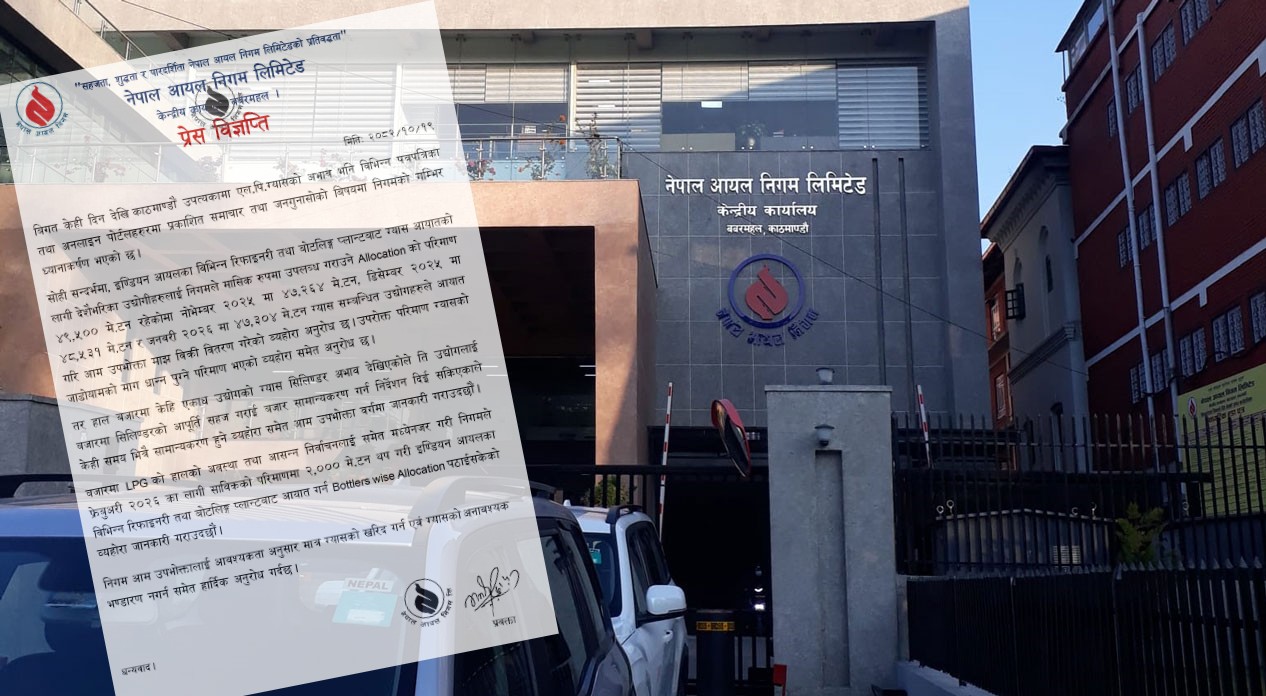
A severe shortage of Nepal Gas has impacted consumers in the Kathmandu Valley for two weeks due to transportation delays from India. Hundreds of consumers carrying empty cylinders have been gathering at the Balaju Industrial District office as local depots remain empty. The Nepal LPG Gas Industry Association stated that while the daily demand is 8 to 10 bobtail trucks, logistics issues with Indian transporters have disrupted the supply chain. The Nepal Oil Corporation has directed industrialists to resolve the crisis immediately and warned against black marketing. Officials claim that regular supply has resumed, but it will take several days for the market to stabilize.
3 Customs Officials of TIA Arrested With Bribes
The Commission for the Investigation of Abuse of Authority (CIAA) arrested three officials, including Customs Officer Indra Neupane, at the Foreign Postal Customs Branch of Tribhuvan International Airport (TIA) for taking bribes. Alongside Neupane, office assistant Ganesh Prasad Pudasaini and non-gazetted first-class officer Chhabi Prasad Rijal were taken into custody. Investigators recovered Rs 268,288 in cash and 23 mobile phones from the suspects. The arrests followed complaints that staff were harassing and extorting service providers sending parcels abroad. Spokesperson Suresh Neupane confirmed that Rs 146,420 was seized from Pudasaini’s office alone, including Rs 10,000 identified specifically as bribe money.
Nearly 3,000 Recruits Absent from Election Police Training
Out of 133,980 temporary election police personnel selected to support Nepal Police, at least 2,995 individuals failed to report for basic training, which began on Sunday. The 40-day training program is critical for the upcoming elections on March 5. Significant absences were noted in Bagmati (643), Madhesh (617), and Koshi (508). These recruits are entitled to a salary of Rs 34,000 for the term, along with a clothing allowance and a daily ration of Rs 869.40. The government plans to mobilize a total of 190,000 regular security personnel alongside over 149,000 temporary recruits to ensure national election security.
US Citizen Arrested for Extorting Political Leaders’ Names
The Department of Immigration arrested US citizen Young-Ho Lee in Kathmandu on Monday. Lee is accused of operating a website that used the names of prominent Nepali leaders, including KP Sharma Oli, Gagan Thapa, and Arzu Rana Deuba, to solicit international donations. Under the guise of a college and missionary work, he allegedly collected funds for religious activities through his company, Come Seed Nepal Private Limited. Lee, who has visited Nepal over 50 times since 2011, falsely claimed his institution was affiliated with Tribhuvan University. Director Tikaram Dhakal of the department confirmed that further investigations into Lee’s business visa and financial activities are underway.
New Environment Plan: Local Wood Mandatory and Wildlife Pests Named
The Ministry of Forests and Environment unveiled a 34-point ‘Immediate Improvement Action Plan’ on Monday. A key directive makes the use of domestic wood mandatory in the construction of all federal, provincial, and local government buildings to promote national production. The plan also includes banning plastic bottles in the Singha Durbar complex, declaring red monkeys and wild boars as “agricultural pests,” and preparing a carbon trade agreement with South Korea. Furthermore, the ministry will propose relief funds for victims of human-wildlife conflict and introduce insurance for consumers involved in fighting forest fires to enhance environmental safety.
Bagmati Province to Host First National Pangolin Conference
The Ministry of Forests and Environment of Bagmati Province will organize Nepal’s first National Pangolin Conference on February 9. Scheduled to take place in Madi of Chitwan District, the event is coordinated by the Division Forest Office and will gather over 200 experts, conservationists, and community forest representatives. The conference aims to address challenges facing the endangered pangolin, often called the “farmer’s friend,” and will conclude with the ‘Madi Declaration.’ Secretary Kedar Baral of the ministry emphasized that while large wildlife often receives more attention, the provincial government is now prioritizing the habitat protection and conservation of smaller, high-risk species like the pangolin.
IGP Karki Urges Police to Serve with Renewed Commitment
During a convocation ceremony for police inspectors, Inspector General of Police Dan Bahadur Karki stated that the Nepal Police has ‘dusted itself off’ to return to the service of citizens with renewed vigor. He emphasized that despite numerous challenges and past “burns,” the force remains resilient and dedicated to its duties. IGP Karki instructed the new officers to be mindful of the depth of public expectations and the increasing complexities of internationalized organized crime. He stressed that the police must adapt to new security challenges while maintaining an unwavering commitment to the law and the safety of the Nepali people.
Gulmi to Vaccinate 2,465 Girls Against Cervical Cancer
The Health Office in Gulmi has finalized preparations to administer the HPV vaccine to 2,465 girls between February 6 and 14. The campaign targets girls in Grade 7 to 10, as well as out-of-school girls aged 10 to 14. Public Health Inspector Tara Bahadur Karki of the office noted that the vaccine, which costs the state over Rs 9,000 per dose, will become part of the regular immunization schedule starting next year. Dron Bahadur Khatri, Coordinator of the District Vaccination Coordination Committee, urged all stakeholders to ensure quality information reaches the target groups to maximize the effectiveness of this preventive health measure.
Local Unit Provides Rs 3,000 Incentive for Girl Child
The Beldandi Rural Municipality of Kanchanpur District has introduced a Rs 3,000 incentive for mothers who give birth to a daughter to combat gender discrimination and illegal sex-selective abortions. Under the ‘Vice-Chairperson’s Gift’ program, which started in the fiscal year 2022/23, at least 353 mothers have received this allowance, including 40 in the current fiscal year. Vice-Chairperson Shanti Nath explained that parents must present marriage and birth registrations to claim the fund, which also helps reduce child marriage. Additionally, the municipality provides free ambulance services for pregnant women and a monthly allowance of Rs 2,500 for unmarried women over the age of 35.
Health Insurance Board Caps OPD Services at Rs 25,000
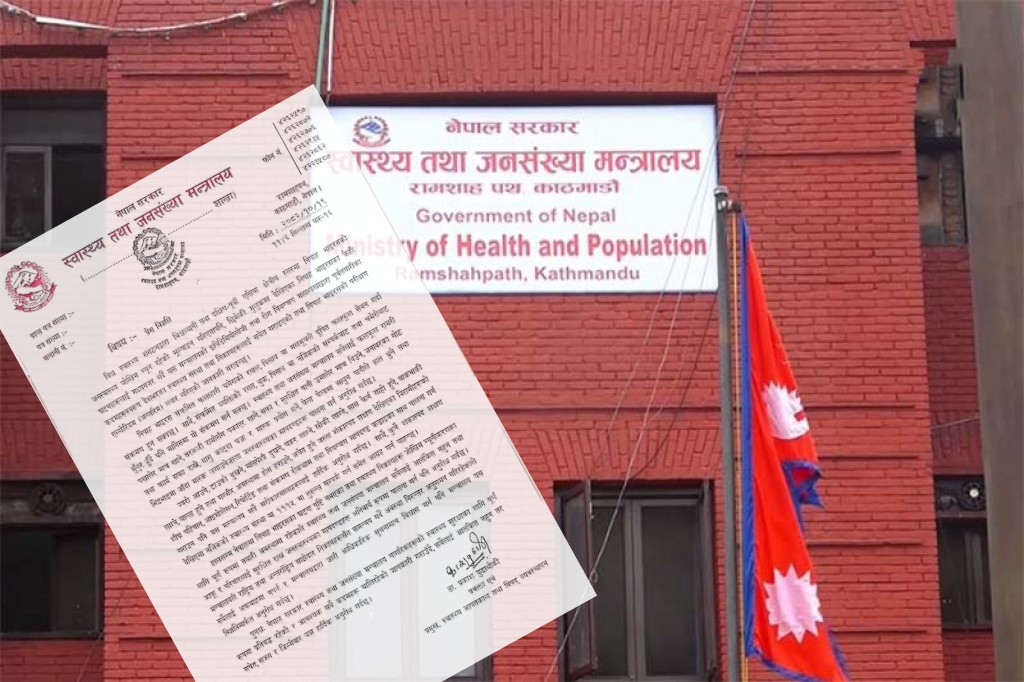
The Health Insurance Board has introduced a new regulation capping outpatient (OPD) service coverage at Rs 25,000 per year. Information Officer Bikesh Malla of the board announced on Sunday that the rule will take effect on February 13. Previously, there was no specific limit within the total coverage. The decision aims to control a financial deficit, as 71 percent of insurance claims are for OPD services. While the board’s income is approximately Rs 14 billion, annual expenditures exceed Rs 24 billion, leading to payment delays. Currently, a premium of Rs 3,500 covers a family of 5 for up to Rs 100,000 in total treatment costs.
National Foundation for Indigenous Nationalities Marks 25 Years
The National Foundation for Development of Indigenous Nationalities (NFDIN) announced it will celebrate its silver jubilee with the ‘Nepal Indigenous Knowledge Conference/Festival 2026.’ During a press meet on Monday, Vice-Chairperson Resham Gurung stated that 81 research papers covering 15 thematic areas, including language, culture, and climate change, will be presented on February 8. The event aims to document indigenous knowledge and integrate it into national development. The closing ceremony will be attended by Prime Minister Sushila Karki. Over 800 activists, scholars, and researchers from Nepal and abroad are expected to participate in the discussions and heritage conservation sessions.
‘Gobar Ganesh’ Movie Earns Rs 13.6 Million in Three Weeks
The film Gobar Ganesh, directed by Marichman Shrestha, has successfully earned Rs 13.6 million in its three weeks of screening. By the second Saturday, the total gross collection stood at Rs 11.4 million. By the third Saturday, revenue reached Rs 13.6 million, with 48,053 tickets sold. Starring Barsha Siwakoti, Pujan Ghimire, Padam Tamang, and Sitadevi Timalsina, the story follows a village man’s struggle in the city to fulfill his mother’s dream.
Dalai Lama Wins First Grammy, Draws Global Praise
The Dalai Lama has won his first Grammy Award for the spoken-word album Meditations: The Reflections of His Holiness the Dalai Lama, bringing pride to Tibetans in exile and admirers worldwide. The 90-year-old spiritual leader, who has lived in exile in McLeod Ganj, Himachal Pradesh of India, since 1959, was honored at the 68th Annual Grammy Awards in Los Angeles. Tibetan parliament-in-exile Deputy Speaker Dolma Tsering said the recognition will help spread his message of compassion and universal brotherhood. Created with sarod maestro Amjad Ali Khan and his sons, the album blends reflective spoken word with music. The Dalai Lama said he views the award not as personal but as a call to shared human responsibility.
South Korea’s K-Pop Makes Grammy History with ‘Golden’
K-Pop reached a global milestone as Golden, from Netflix’s hit K-Pop Demon Hunters, won the first-ever Grammy for a K-Pop song, taking Best Song for Visual Media. Performed by fictional band Huntr/x, it topped Billboard charts and drew 480 million Netflix views. Other notable winners at the Los Angeles ceremony included Yungblud, The Cure, FKA Twigs, Kendrick Lamar, and eight-year-old Aura V. Blackpink’s Rosé, despite three nominations, left empty-handed. The event marked broader recognition of K-Pop, following the inclusion of artists like Seventeen’s Woozi and Enhypen’s Jungwon into the Recording Academy’s voting body.
Regional Math Debate League to Start in February 2026
The Global Math Debate League (GMDL) has announced its 2026 regional and national schedule, starting February 4 in Jhapa. The league, which promotes critical thinking and logical reasoning through mathematics, will hold regional rounds in Chitwan (February 7-8), Butwal (February 10-11), and Pokhara (February 13-14), concluding with a Kathmandu round on February 16. The national finals will take place in Kathmandu on February 21 and 22. Partners include Britannica Inc., Foodmandu, and TBG Nepal. Co-founder Divesh Bathija stated that the goal is to transform math from a rote-learning subject into a tool for real-world problem-solving and debate.
Bangladesh Nears Final of SAFF U-19 Women’s Championship
Bangladesh moved closer to the final of the SAFF U-19 Women’s Football Championship after defeating India 2-0 at Pokhara Stadium on Monday. Captain Arpita Biswas scored the opening goal in the 29th minute, followed by a 40th-minute goal from Alpi Akter, who was named player of the match. Despite several opportunities, India failed to capitalize on its finishing. In the second match of the day, Nepal faced Bhutan, leading 1-0 at halftime. The tournament features teams from Nepal, India, Bhutan, and Bangladesh, with the top sides competing for the regional title in Pokhara.
Satdobato and Chitlang Play Goalless Draw in National League
Satdobato Youth Club and Chitlang Football Club shared points after a goalless draw in the ANFA National League at the Satdobato headquarters on Monday. Both teams now hold 5 points from 5 games. In another match on the same day, APF Club defeated Sankata Club 2-1. The league features 13 ‘A’ Division clubs alongside provincial teams such as Kankrebihar Youth Club and Nava Janajagruti. The winning team of the tournament is set to receive a cash prize of Rs 5 million. Competition remains tight as clubs fight for the top spot in the national rankings.
Germany Faces Transport Chaos as Workers Strike in Freezing Cold
Tens of thousands of public transport workers across Germany went on strike Monday, halting bus and tram services nationwide amid freezing temperatures. The Verdi union, representing 100,000 workers, demands shorter shifts, longer breaks, and higher pay for night and weekend work. The walkout affects 150 municipal transport companies in all but one federal state, including Berlin, Hamburg, and Bremen. While urban rail and long-distance Deutsche Bahn services ran normally, commuters struggled for alternatives. Talks resume February 9, with union leaders warning of further industrial action if demands are unmet.
U.S. Oracle Plans USD 50B Fundraising Amid AI Expansion
Oracle shares fell about 4% in premarket trading as the U.S. tech giant outlined plans to raise USD 45-50 billion to expand cloud infrastructure for clients including AMD, Meta, Nvidia, OpenAI, TikTok, and xAI. Funding will mix equity and debt, including at-the-market programs and bonds, aiming to maintain Oracle’s investment-grade rating. Analysts warn margins may be pressured, with free cash flow projected positive only by FY29. The move follows a bondholder lawsuit and a spike in Oracle’s credit default swap costs, reflecting investor concern over high AI-related spending and uncertain returns.
Singapore Launches National Space Agency to Boost Space Economy
Singapore will inaugurate its National Space Agency on April 1 to harness opportunities in the global space economy. Run by the Ministry of Trade and Industry, the agency will develop space capabilities, legislation, and regulations to support innovation and business. Singapore’s strengths in advanced manufacturing, aerospace, microelectronics, precision engineering, and AI position it to capitalize on growing investments in space technology, which surged globally in 2025. The nation currently hosts 70 space companies employing around 2,000 professionals across the sector’s value chain.
China Executes Bai Mafia Members Over Myanmar Scam Operations
China executed four members of the Bai family mafia, notorious for running scam centers in Myanmar. Convicted alongside 21 relatives for fraud, homicide, and injuries in Guangdong province, the clan had operated 41 compounds for casinos and cyberscams. Their criminal activities caused six Chinese deaths, one suicide, and multiple injuries. Last November, five Bai members, including patriarch Bai Suocheng (who later died of illness), were sentenced to death. China recently executed 11 Ming family members as part of its crackdown on Southeast Asian scam operations, where violence and torture were routine.